Reviewed · BEIJING TOURS
10-Day China Tour to Beijing, Xian, Chengdu and Shanghai
China’s greatest hits arrive in one well-packed trip: the Great Wall, Terracotta Army, giant pandas and Shanghai’s skyline. You begin in imperial Beijing, move by high-speed rail through Xi’an to Chengdu, then finish among the old lanes and tall towers of Shanghai.
I like the smart mix of transport and sights. The trains cover Beijing to Xi’an and Xi’an to Chengdu, while a flight handles the longer Chengdu to Shanghai hop. I also like the private format, with your own group, a guide, driver and air-conditioned vehicle. The catch is the pace: this is a busy 10 days, with early starts, long sightseeing blocks and several hotel changes.
Key Points Before You Book
- Mutianyu Great Wall with cable-car transport: You get three hours at one of China’s major landmarks, with the round-trip cable car arranged.
- Four very different cities: Beijing gives you imperial monuments, Xi’an adds archaeology and old city walls, Chengdu brings pandas, and Shanghai supplies modern drama.
- Two high-speed rail journeys: Beijing to Xi’an takes about 4.5 hours, and Xi’an to Chengdu takes about four hours.
- Private touring: Only your group participates, so guides can manage airport transfers, railway stations and local sightseeing directly.
- A carefully balanced final stop: Shanghai includes the Bund, a Huangpu River cruise, Yu Garden and Zhujiajiao Water Town.
- A full package at $2,979: Hotels, domestic transport, guides, drivers, nine breakfasts, three lunches and entrance tickets are included, but international airfare, visa fees and gratuities are extra.
Beijing Begins With Imperial Scale
Your first day is deliberately light. A guide meets you at Beijing Capital Airport, transfers you to the hotel, and leaves the rest of the day open. After an international flight, that spare time matters. You can rest, adjust to the time difference and get ready for an early sightseeing schedule.
Day two goes straight to the political and religious heart of old Beijing. Tiananmen Square takes about 30 minutes, enough to grasp its enormous scale and central place in modern China. It is a broad, formal space rather than a place for wandering aimlessly, so your guide adds useful context.
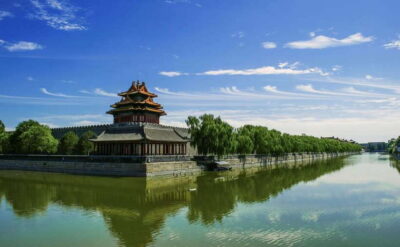
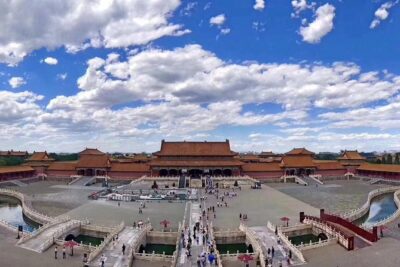
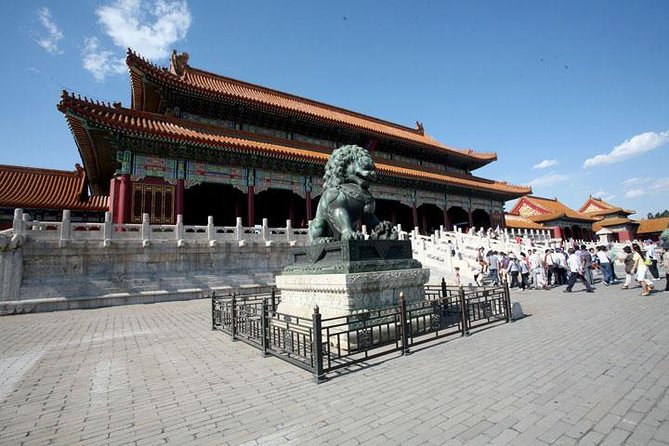
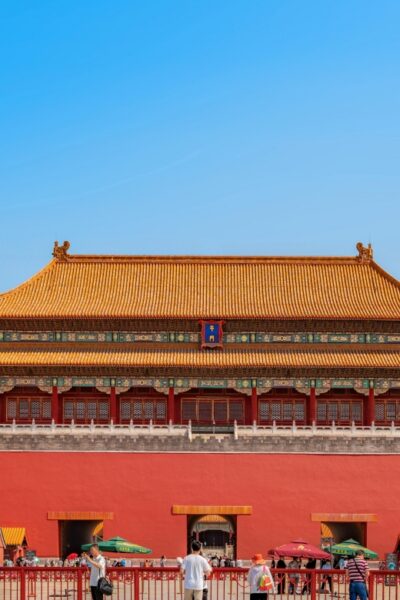
From there, you enter the Forbidden City, now called the Palace Museum. Allow three hours. The great value here is not simply the number of halls and courtyards. It is the way the complex shows how imperial government worked, with ceremonial spaces, official rooms and private quarters arranged behind successive gates.
The site is large, and three hours gives you a solid introduction rather than every corner. Wear comfortable shoes and keep your attention on the buildings, courtyards and painted details instead of trying to collect every name.
After lunch, the Lama Temple offers a different side of Beijing. This well-preserved lamasery brings together Han, Manchu, Mongolian and Tibetan design elements. At 90 minutes, the visit is long enough to look closely without making the day feel like one giant palace tour.
The Temple of Heaven closes the day with another 90-minute visit. Emperors once came here to pray for good harvests, and the buildings were designed around ceremonies tied to heaven and agriculture. I like the change in mood: after the formal power of the Forbidden City, this is a place where architecture and ritual explain the ruler’s relationship with the natural world.
A few more Beijing days to line up
- From Beijing: Mutianyu Great Wall Tours with Options
★ 4.9 · 9,216 reviews - Beijing: Forbidden City Tour(Group/Private)-Tickets Included
★ 4.8 · 7,974 reviews - Beijing: T-Square & Forbidden City Group or Private Tour
★ 4.8 · 4,446 reviews
Mutianyu, Olympic Beijing and the Hutongs
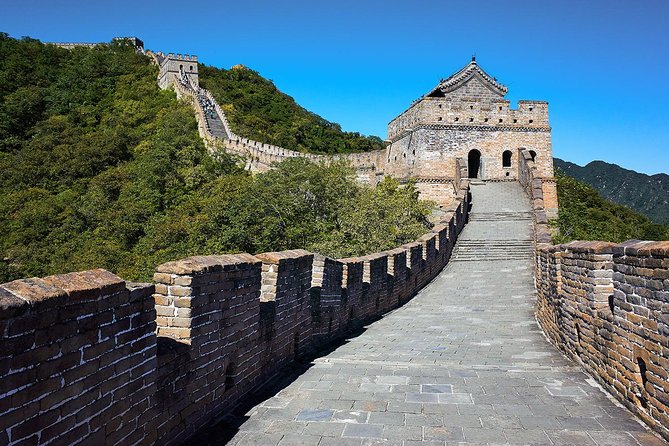
Day three is one of the trip’s biggest physical highlights. You spend about three hours at Mutianyu Great Wall, with the round-trip cable car arranged. That removes much of the hardest uphill approach and gives you more time on the wall itself.
The Great Wall is not a quick photo stop. You will want time to look along the ridges, study the watchtowers and understand how the wall follows the high ground. The cable car makes the visit more manageable, but you should still expect walking and uneven surfaces.
Back in central Beijing, you stop at the Bird’s Nest National Stadium for about 20 minutes. Admission is not included, and the plan is mainly to see the structure from a distance and take photographs. That is a fair use of time, since going inside would add cost and make an already full day longer.
The Hutong tour gives the day a more local feel. A rickshaw carries you through narrow lanes lined with old courtyard homes. These neighborhoods show a quieter side of Beijing, with lower buildings and a slower rhythm than the imperial monuments and broad modern avenues.
The contrast is the point. In one day, you see a defensive wall in the hills, a modern Olympic landmark and traditional residential lanes. I like that range, though the schedule leaves little room for a long, unplanned walk through the hutongs.
The Summer Palace and a Comfortable Rail Move
On day four, the Summer Palace takes about two hours. This former imperial garden is built around graceful water and garden views, with pavilions and larger ceremonial structures spread through the grounds. It is a gentler morning after the Great Wall.
In the afternoon, you board a high-speed train to Xi’an. The journey takes around 4.5 hours. This is one of the tour’s practical strengths. Instead of losing a day to a road transfer or a domestic flight, you travel between city centers while watching China pass outside the window.
Bring fruit, snacks, a book or a device for a film. The train ride is included, but food beyond the tour’s specified meals is not. You should also treat this as a real travel day. Even with efficient rail service, the station transfer, boarding process and arrival in Xi’an take time.
Xi’an and the Terracotta Army
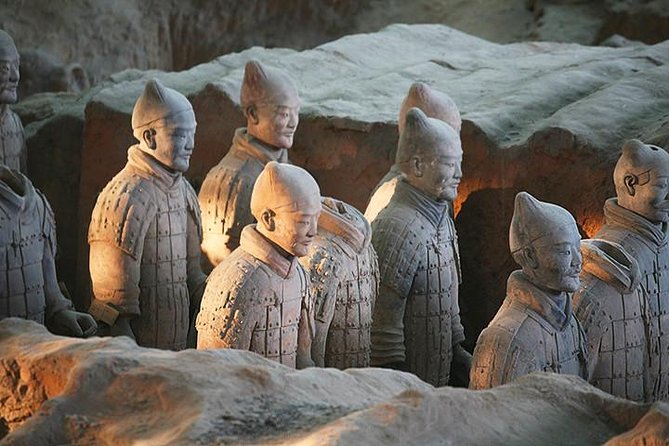
Xi’an earns its place on the route with the Museum of Qin Terra-cotta Warriors and Horses. You spend about four hours there, including the excavated pits filled with life-sized warrior figures and ancient weapons.
This is the kind of sight that rewards a guide. The figures are impressive as objects, but the larger story comes from how the pits, armies and burial project fit together. Four hours gives you time to move between the displays without rushing through one of China’s most important archaeological sites.
The Big Wild Goose Pagoda follows, with about an hour at this ancient square brick pagoda. It has endured for more than 1,300 years and remains one of Xi’an’s defining landmarks. The visit is shorter and more focused than the Terracotta Army, making it a good afternoon stop.
The day ends at Grand Tang Dynasty Ever Bright City, a popular pedestrian area near the pagoda. People dress in traditional clothing, and the setting is designed for evening strolling, food and photographs. It is more modern entertainment than archaeological site, so keep your expectations in the right place. I see it as a chance to watch how Xi’an presents its past to today’s city life.
A very different day in Beijing:
- All-Inclusive Tour: Tiananmen Square, Forbidden City, Great Wall
★ 5.0 · 2,873 reviews - MuBus: Mutianyu Great Wall ENG/ESP/RUS Guided Bus Tour
★ 5.0 · 2,361 reviews - 4-Hour Small Group Tour to Forbidden City with Entry Tickets
★ 5.0 · 1,863 reviews - Beijing: Tiananmen Square Registration Service(Ticket)
★ 4.5 · 1,704 reviews
Xi’an’s Wall, Mosque and Food Quarter
Day six begins at Xi’an City Wall, one of China’s most complete surviving urban fortifications. The visit lasts about 2.5 hours, including time in the City Wall Park to observe everyday local routines.
The wall gives you a different view of Xi’an. Instead of standing inside a museum or temple, you see the city from above, with the old defensive structure defining the historic center. The park portion also slows the morning down after the intense Terracotta Army day.
The Great Mosque takes about 30 minutes. It is one of China’s oldest and best-preserved Islamic mosques, with a setting that reflects Xi’an’s long role as a meeting point for cultures and trade routes. The short visit works well as a focused stop.
Then you have about an hour in the Muslim Quarter on your own. This is your chance to buy handicrafts and try halal dishes and local snacks at your own cost. I would save room for this section, since guided meals rarely give you the same freedom to choose small bites and unusual flavors.
Later, a high-speed train carries you to Chengdu in about four hours. Your Chengdu guide meets you at the station and helps with the arrival transfer. The rail connection keeps the route efficient, though this is another long day with sightseeing followed by station time.
Chengdu’s Pandas and an Ordinary Afternoon
The Giant Panda Breeding Research Base is the main reason Chengdu appears on this route. Pickup is early because pandas tend to be more active in the morning. That early start is worth respecting: the schedule is built around the animals rather than around a leisurely hotel breakfast.
You spend about two hours at the base. The visit gives you a chance to see giant pandas and learn about work with these rare, endangered animals. It is a family-friendly stop, but it is not only for children. The appeal comes from watching the animals at close range and seeing a major conservation center as part of the city visit.
Afterward, you head to Xiaojiahe Residential District for a slower afternoon of about three hours. Lunch is at your own cost at Yongle Rest, and the plan is to spend time as local residents do. This is a valuable change from famous sights. You get a look at ordinary neighborhood life rather than another grand monument.
The downside is that the panda visit and the residential afternoon depend on timing and personal interest. If pandas are your main goal, two hours may feel short. If you prefer famous historic sights, the community visit may seem less immediately exciting. For me, the contrast gives Chengdu more character than a quick panda-only stop would.
Shanghai Arrives by Air
Day eight starts with an escorted airport transfer from Chengdu and an economy-class flight to Shanghai. After arrival, your local guide takes you to the hotel for check-in. This makes the day less flexible than a train day, but flying is the sensible choice for this distance.
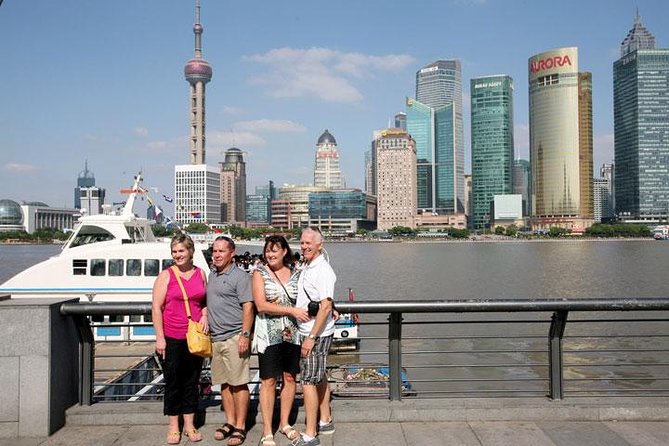
The Bund provides your first Shanghai image. On the west bank of the Huangpu River, its early 20th-century buildings preserve the city’s former international commercial character. Give yourself time to look across the water as well as back at the older facades.
A one-hour Huangpu River cruise follows. It connects the two faces of Shanghai in one view: historic buildings on one side and a wall of modern skyscrapers on the other. I like this pairing because the cruise explains Shanghai faster than a string of separate photo stops.
Shanghai’s Old Streets and Zhujiajiao
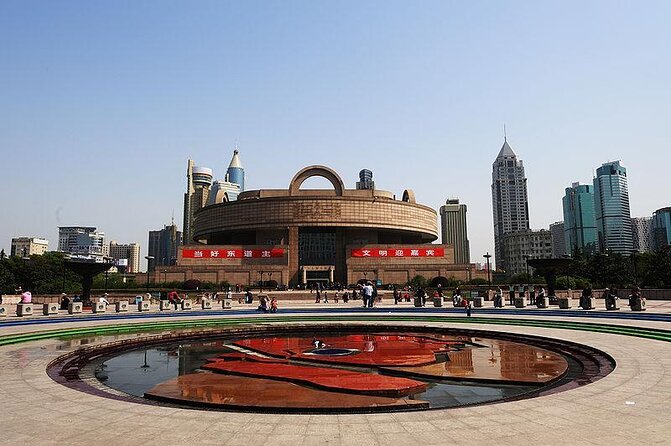
Day nine begins at Shanghai Museum, with two hours among Chinese art from ancient periods. The museum gives needed context after several days of monuments and outdoor sites. You can see objects at a measured pace rather than racing from one enormous landmark to another.
Yu Garden comes next for about two hours. Its Nine Zigzag Bridge, granite and white jade details, and mid-lake pavilion make it a compact example of classical garden design. An a la carte farewell lunch is included around noon, with the value specified in the tour arrangements. That means you should check the exact meal value and any excess before ordering.
The afternoon goes to Zhujiajiao Ancient Town, about two hours from Shanghai. It is known for folk homes built along waterways and preserves more of the past than the modern city center. The visit rounds out the trip nicely, shifting from Shanghai’s monumental skyline to a smaller town shaped by canals and older residences.
Your final day is simple. A guide and driver take you from the hotel to the airport according to your international flight schedule. If you want to try the maglev train to Pudong Airport, that option can be arranged, but the listed tour price does not include international airfare.
What the $2,979 Price Really Covers
At $2,979 per person, the trip is not a budget independent tour. But the price covers a great deal: twin-share hotel accommodation, professional guides, experienced drivers, private air-conditioned transport, entrance tickets, two high-speed rail journeys, a domestic economy flight, nine breakfasts, three lunches and two bottles of water per person per day.
The private format is the main value. You are not joining a large bus group, and only your own party participates. That matters most on airport days, at railway stations and during a packed sightseeing schedule. A guide can keep the day moving and help with transfers that would otherwise take time and patience.
The package is less valuable if you want to choose every hotel, meal and sightseeing stop yourself. Three lunches are included, while other meals are generally your responsibility. Gratuities are recommended but not included, and you also pay for international flights and China visa fees.
The tour requires at least two people per booking and uses twin-sharing rooms. It is not suitable for people over 80, and the operator says most travelers can participate, with public transportation nearby. Confirmation is provided at booking, and passport details are required for everyone.
The cancellation terms are strict: the experience is non-refundable and cannot be changed for any reason. I would not book until your dates, passports and international flights are firmly settled.
The Pace, Guides and Best Fit
This trip suits you if you want China’s major sights arranged in a single, private package. It is especially useful for a first visit, for couples or families who prefer help with rail and airport transfers, and for anyone who wants to combine famous monuments with a few everyday settings.
You should be comfortable with early mornings and long days. The Great Wall includes walking, the Forbidden City covers a large area, and several sightseeing days finish with a train ride or flight. The schedule is carefully filled, but it is not designed for slow mornings or spontaneous detours.
Guide support is a major part of the experience. The trip includes local guides in each destination, and airport and station handoffs are planned along the way. Emily is one named guide associated with the welcoming arrival experience, and personal assistance at that first airport transfer can be particularly useful after a long international flight.
The overall rating is five out of five from 17 reviews, with 100 percent recommending it. That is a small sample, so I would treat it as encouraging rather than final proof. The stronger point is the trip’s design: it joins four very different cities without asking you to arrange complicated domestic transport yourself.
Should You Book This China Tour?
Book it if you want the Great Wall, Terracotta Army, pandas and Shanghai in one organized journey, and if private guides and included transport are worth paying for. The route has a clear rhythm: imperial Beijing, archaeological Xi’an, panda-focused Chengdu and modern Shanghai.
Skip it if you want a relaxed trip, extensive free time or complete control over meals and hotels. Ten days is enough for a strong first look, not enough to know each city in depth. For a first China visit with limited vacation time, though, this is a practical and unusually broad package.
FAQ
How long is the China tour?
The tour lasts approximately 10 days, beginning with airport pickup in Beijing and ending with a transfer to the Shanghai airport.
Which cities does the tour visit?
The route includes Beijing, Xi’an, Chengdu and Shanghai. It also visits Zhujiajiao Ancient Town near Shanghai.
Are train and flight transportation included?
Yes. One high-speed train from Beijing to Xi’an, one high-speed train from Xi’an to Chengdu, and one economy-class flight from Chengdu to Shanghai are included.
Are hotels and meals included?
Twin-sharing hotel accommodation and nine breakfasts are included. Three lunches are included, while other meals are not included unless specified during the tour.
Is this a private tour?
Yes. Only your group participates, with professional guides, an experienced driver and an air-conditioned vehicle.
What is not included in the price?
International airfare, China visa fees and gratuities for guides and drivers are not included. The Bird’s Nest admission ticket is also not included.
Recently listed in Beijing
- Small-Group 1-day Jinshanling Great Wall 6km Hiking tour★ 5.0 · 4 reviews
- Temple of Heaven Tickets Booking★ 5.0 · 4 reviews
- Jinshangling Great Wall Of Beijing Tickets And Other Option★ 4.0 · 4 reviews
- Beijing Night Walking Tour★ 5.0 · 4 reviews
- Beijing: Private Biking Tour Along Central Axis of Beijing★ 4.8 · 4 reviews
- Private Layover Tour to Mutianyu Great Wall from Beijing Airport★ 5.0 · 5 reviews
- Fantastic Private Trip to Mutianyu Great Wall (English Service)★ 5.0 · 5 reviews
- Beijing: Private Tour to Jinshanling Great Wall with Option★ 4.7 · 5 reviews
Beijing Tours, compared.
Forbidden City Tour(Group/Private)-Tickets Included
Read our review →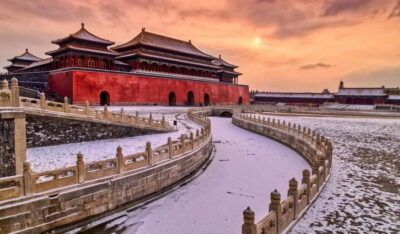
T-Square & Forbidden City Group or Private Tour
Read our review →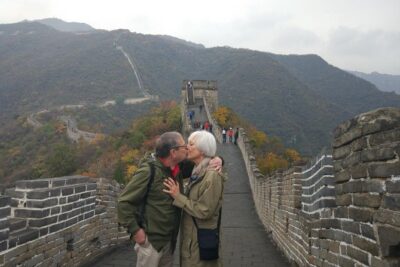
All-Inclusive Tour: Tiananmen Square, Forbidden City, Great Wall
Read our review →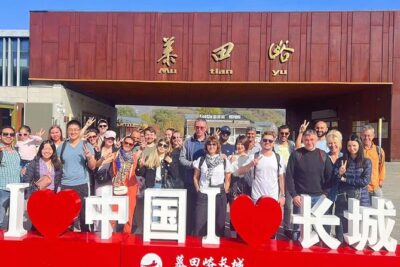
MuBus: Mutianyu Great Wall ENG/ESP/RUS Guided Bus Tour
Read our review →
4-Hour Small Group Tour to Forbidden City with Entry Tickets
Read our review →