
Reviewed · BEIJING TOURS
Beijing: Private Biking Tour Along Central Axis of Beijing
Beijing’s central axis is best understood from a bicycle. This route links the imperial heart of the city with hutongs, lakes, old towers, and streets where daily life continues beyond the grand monuments. You cover about 20 kilometers, though the historic axis itself is about 7.8 kilometers long.
I like the contrast between Tian’anmen and the Forbidden City on one hand, and the ordinary residential lanes on the other. I also like the small-group format, limited to eight people, which gives an English-speaking guide room to adjust the pace and explain what you are seeing. The main caution is practical: one rider found the bikes too small, so this tour may be less comfortable if you need a larger frame or a very precise fit.
Key points to know before you book
- The central axis links old Beijing together: Bell and Drum Towers, Wanning Bridge, Jingshan Hill, the Imperial Palace, and Yongdingmen form the historic north-south line.
- You see Beijing beyond the postcard stops: Hutongs, local markets, shops, family homes, and ordinary side streets add useful context.
- The ride covers a lot of ground: Expect about 20 kilometers in three hours, not a short, relaxed pedal around one neighborhood.
- The imperial views are mostly exterior: Tickets for tourist sights are not included, so plan on seeing many major buildings from outside unless you pay separately.
- Amber and Jacky are named guides: Amber receives special praise for clear communication, flexibility, and an enjoyable three-hour outing.
- The meeting point matters: You meet at Exit D of Ciqikou Station on Line 5, not at your hotel.
Why Beijing’s central axis makes a smart bike route
The central axis is the organizing line of old Beijing. It runs north to south through the former imperial city, beginning at the Drum and Bell Towers and continuing through Wanning Bridge, Jingshan Hill, the Forbidden City, and south toward Yongdingmen Gate.
That layout helps you read the city. The imperial buildings sit along the formal center, while hutongs branch away into neighborhoods where ordinary residents live. On foot, you could spend most of a day covering only part of this ground. By bike, you can connect the major sights and still turn into quieter lanes.
The tour description calls the route the dragon’s backbone of Beijing, a Fengshui line that shaped the old city. You do not need to be an expert in Fengshui to appreciate the idea. The route gives you a clear thread through Beijing’s older architecture instead of a string of unrelated stops.
Expect a lively ride rather than a gentle park outing. The advertised distance is around 20 kilometers, while the central axis itself is 7.8 kilometers. That difference suggests the tour includes side streets, hutongs, markets, and connected sights. Ask your guide at the start how much time will be spent on the main axis and how much on the neighborhood option.
More Bike Tours in Beijing
- The Hutong Experience by Bike
★ 5.0 · 163 reviews - Beijing Highlights-Private Beijing Bike Tour
★ 4.5 · 21 reviews - Modern Beijing Discovery by Bike
★ 5.0 · 13 reviews
Starting at Ciqikou Station on Line 5
The meeting point is Exit D of Ciqikou Station on Beijing’s Line 5. You are responsible for getting there, and the instructions are unusually practical: set Exit D of Ciqikou Station as your destination in Alipay if you take a taxi, or show the driver the Chinese address, 磁器口地铁站D出口.
Your guide meets you at the station exit and provides a shared bike and mineral water. Pickup refers to service from this meeting point, not hotel pickup. Build in enough time to find the correct exit, especially if you are not familiar with Beijing’s large metro stations.
This arrangement keeps the tour simple and avoids a long hotel transfer. It also means you should arrive ready to ride. The activity lasts three hours, so losing time at the start can make the later stops feel rushed. Amber has been especially accommodating when a group arrived late because of another tour, but I would not treat that as a reason to cut things close.
The group limit is eight people. That is small enough for instructions and questions without the slow shuffle of a large coach group. It also matters on a bike, since a compact group is easier to keep together around city streets.
Tian’anmen Square and the southern imperial approach
The first major part of the ride brings you to Tian’anmen Square and Tian’anmen Gate. The gate is instantly recognizable by the large portrait of Chairman Mao, and the surrounding government and cultural buildings give the square its immense formal scale.
You will see the Parliament building, the National Museum, and other structures around the square. These are powerful sights even from the outside, but remember that entry tickets are not part of the tour. The itinerary is built around cycling and viewing the architecture, not a guided interior visit to every major attraction.
This is a good place to listen closely to your guide. A local explanation can help you understand why the square feels so different from the narrow hutongs only a short ride away. The contrast is the point: one section presents the state in monumental form, while the side lanes show the smaller scale of daily Beijing.
Access and crowd controls around Tian’anmen can affect the exact route. The supplied information does not promise entry into the square or any particular interior building, so treat this part as an exterior sightseeing stop. If seeing a specific museum or the Forbidden City inside is essential to you, arrange a separate ticket and allow separate time.
The Forbidden City moat and corner turrets
The route continues around the impressive outer areas of the Forbidden City. You can expect views of the formal entrance, the moat, and the four corner turrets, which are among the most graceful structures visible from outside the palace complex.
The corner turrets are especially rewarding from a bicycle because you can see them in relation to the moat and the long defensive walls. They are not just isolated photo stops. Their placement helps explain the strict geometry of the imperial city.
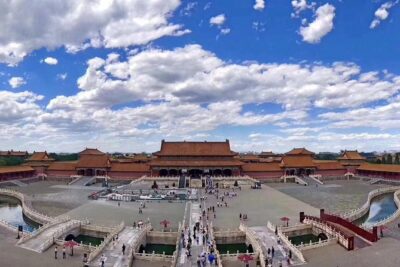
The formal entrance gives you a sense of the scale reserved for the emperors. After the open space of Tian’anmen, the walls and water create another strong change in mood. You are still near the center of Beijing, but the architecture becomes more controlled and enclosed.
No admission ticket is included for tourist sights. That keeps the $67 price focused on the guide, bike, water, and route, but it also limits what is covered. If you want to enter the Forbidden City, you will need to handle that separately. The biking tour works best as a city overview, especially if you plan a later visit inside the palace grounds.
A very different day in Beijing:
- From Beijing: Mutianyu Great Wall Tours with Options
★ 4.9 · 9,216 reviews - Beijing: Forbidden City Tour(Group/Private)-Tickets Included
★ 4.8 · 7,974 reviews - Beijing: T-Square & Forbidden City Group or Private Tour
★ 4.8 · 4,446 reviews - All-Inclusive Tour: Tiananmen Square, Forbidden City, Great Wall
★ 5.0 · 2,873 reviews
Ancient commercial streets and the Jinghang Canal
The ride also includes old commercial streets, with temples and stores beside the Jinghang Canal. The canal is described as the world’s longest man-made canal, and its presence adds a useful layer to the tour. Beijing was not shaped only by palaces and gates. Water routes helped connect the city to wider trade and movement.
You might find this section more relaxed than Tian’anmen, though the exact pace depends on traffic and the group. Shops and temples beside the water show how older urban routes can remain part of modern city life. The attraction here is the setting and connection between places, not a single must-see monument.
The tour does not include meals, so do not expect a food stop as part of the three-hour schedule. You can budget for personal purchases if you want to browse the shops or buy something along the way, but those costs are your responsibility.
Drum and Bell Towers, Beijing’s old timekeepers
At the northern end of the central axis, the Drum and Bell Towers recall the city’s old system for announcing the time. The information describes these as twin towers and calls the Drum Tower a place where you can climb to look over Beijing, depending on the chosen route and ticket arrangements.
The towers help make the central axis easy to understand. The imperial city did not simply begin at the palace gates. Its northern end included civic structures that organized the rhythm of old Beijing. The bells and drums once marked time for the city, a simple detail that makes the towers more than impressive old buildings.
Entry tickets are not included. If your group climbs the Drum Tower, confirm with the guide whether a ticket is required and whether the schedule allows it. The tour also needs to cover a substantial distance, so time inside an attraction may reduce time in the hutongs.
Hutongs where ordinary Beijing life continues
For me, the hutongs are the part that keeps this from being a standard monument circuit. The lanes connected to the central axis are described as homes for ordinary people, and the second route option focuses more strongly on local markets, family life, and neighborhood streets.
Hutongs let you see Beijing at human scale. Instead of monumental gates and broad squares, you get narrow lanes, small stores, local markets, and residential entrances. The tour does not promise entry into a private home, so think of the family-life element as a chance to encounter local neighborhoods rather than a guaranteed house visit.
The second option also mentions climbing the Drum Tower and looking over the part of Beijing where ordinary people live. That sounds best for you if local life matters more than collecting every imperial photo. The first option gives more weight to the full central-axis circuit and the major historic structures.
Because both options are described in broad terms, confirm your preferred focus when you meet the guide. A three-hour tour cannot give every stop equal time. If you want more hutongs, say so early. If Tian’anmen and the Forbidden City moat are your priority, make that clear too.
What the guide adds to the ride
A bike gets you from one place to the next, but the guide supplies the link between them. Amber is singled out for clear communication, a good sense of fun, and flexibility with timing. That matters on a city ride, where the practical value of a guide lies in keeping the route understandable and the group moving.
Jacky also led a highly praised outing. You may not be able to request a particular guide, but Amber and Jacky are both named among the available guides in the tour information. The language offered is English.
A guide is also useful for deciding how to handle the two route styles. The central-axis option is broader and more architectural. The hutong option puts more attention on markets and local neighborhoods. A good conversation at the beginning can help match the outing to your interests.
Do not expect a private car or a fully customized sightseeing day. This is a small shared-bike tour. The group can be limited to eight, but the route still has to work for different riding speeds and interests.
The bikes, distance, and physical demands
The bike is included, along with mineral water. One practical weakness is fit. A rider found the bikes too small, and that is worth taking seriously when the route covers about 20 kilometers. A poor fit can turn a fun city ride into an uncomfortable one.
If you are tall or particular about saddle height, ask to check the bike before setting off. The supplied information does not specify bike sizes, gears, helmets, or child seats, so do not assume those details are provided. The tour is listed as wheelchair accessible, but the information does not explain how the cycling portion is adapted. Confirm the arrangements directly if accessibility is important for your booking.
Three hours and 20 kilometers call for a reasonable level of cycling comfort. You will likely spend much of the outing moving between stops rather than lingering at each one. The route is a good choice if you want broad coverage of central Beijing, but less suitable if you prefer a slow, photo-heavy walking tour.
Is $67 a fair price?
At $67 per person, the value depends on how much you want explained and how difficult you would find this route on your own. The fee includes an English-speaking guide, pickup from the stated meeting point, a shared bike, and mineral water. It does not include food, personal spending, or admission tickets.
For a visitor with only a short time in Beijing, the price can make sense. You cover Tian’anmen, the Forbidden City exterior, old commercial streets, the canal, drum and bell towers, lakes, bridges, and hutongs in one outing. You also avoid piecing together the route yourself.
The value is weaker if you mainly want to enter the Forbidden City or spend long periods inside museums. Those tickets are extra, and a bike route cannot replace a full palace visit. Think of this as a guided orientation to old Beijing, with the added benefit of local neighborhoods.
Free cancellation is available up to 24 hours before the start time, and you can reserve while paying later. Those terms are useful if your Beijing schedule is still shifting. Check the available starting times before booking because the activity lasts three hours and the tour begins at a fixed station meeting point.
Who should book this Beijing bike tour?
I would choose this outing if you want to connect the city’s major historic areas in one morning or afternoon. It suits active sightseers who would rather pedal than follow a flag through a large group.
It is also a strong pick if you want both official Beijing and ordinary Beijing. The grand squares and palace walls provide the visual headline, while the hutongs and markets give you a better sense of how the city extends beyond the imperial center.
You may want another format if you dislike cycling in city settings, need a guaranteed larger bike, or want extensive interior visits. The distance is not trivial, and tickets are separate. Families and older riders should also confirm the bike fit and accessibility arrangements before paying.
Should you book it?
Book this tour if you want a fast, active introduction to old Beijing and like the idea of mixing imperial architecture with hutongs. The small group, English guide, and broad route give you more local context than a simple bike rental.
Before booking, decide which route matters most. Choose the central-axis circuit for Tian’anmen, the Forbidden City moat, formal entrances, lakes, and towers. Choose the hutong-focused option if markets and everyday neighborhoods are your main goal. Then confirm the bike size, ticket plans, and exact emphasis with the guide at the meeting point.
For $67, this is a sensible choice for coverage and local explanation, not for a deep interior tour of Beijing’s major monuments. If that matches your priorities, it is a practical way to see the city’s old backbone without spending the whole day on foot.
FAQ
Where does the tour meet?
The meeting point is Exit D of Ciqikou Station on Line 5.
How can I tell a taxi driver where to go?
Set Exit D of Ciqikou Station on Line 5 as the destination in Alipay, or show the driver 磁器口地铁站D出口.
How long does the biking tour last?
The tour lasts three hours.
How far do you ride?
The advertised route covers about 20 kilometers. The historic central axis itself is about 7.8 kilometers long, with additional riding through connected streets and neighborhoods.
Is an English-speaking guide included?
Yes. An English-speaking live guide is included. Amber and Jacky are named guides associated with the experience.
How many people are in the group?
The group is limited to eight participants.
Are bikes and water included?
Yes. A shared bike per person and mineral water are included.
Are meals and attraction tickets included?
No. Meals, personal expenses, and tickets for tourist sights are not included.
Recently listed in Beijing
- Small-Group 1-day Jinshanling Great Wall 6km Hiking tour★ 5.0 · 4 reviews
- Temple of Heaven Tickets Booking★ 5.0 · 4 reviews
- Jinshangling Great Wall Of Beijing Tickets And Other Option★ 4.0 · 4 reviews
- Beijing Night Walking Tour★ 5.0 · 4 reviews
- Private Layover Tour to Mutianyu Great Wall from Beijing Airport★ 5.0 · 5 reviews
- Fantastic Private Trip to Mutianyu Great Wall (English Service)★ 5.0 · 5 reviews
- Beijing: Private Tour to Jinshanling Great Wall with Option★ 4.7 · 5 reviews
- Beijing Evening Acrobatic Show in Red Theater + Private Transfer★ 4.5 · 5 reviews
Beijing Tours, compared.

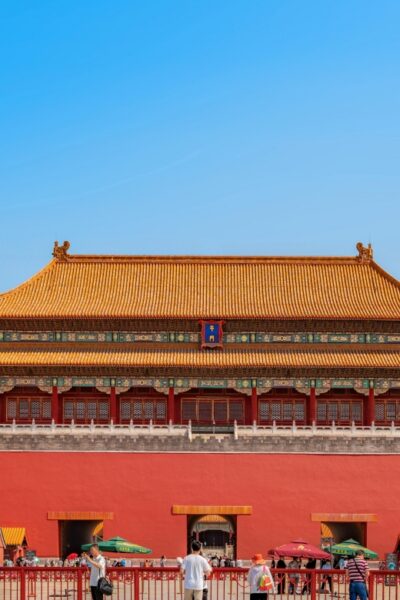
Forbidden City Tour(Group/Private)-Tickets Included
Read our review →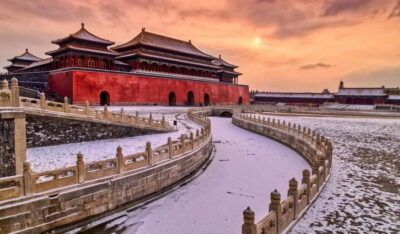
T-Square & Forbidden City Group or Private Tour
Read our review →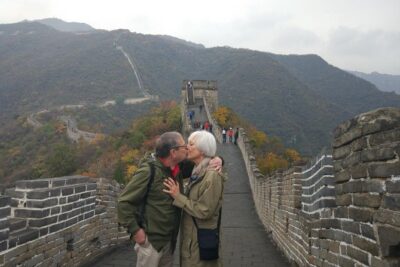
All-Inclusive Tour: Tiananmen Square, Forbidden City, Great Wall
Read our review →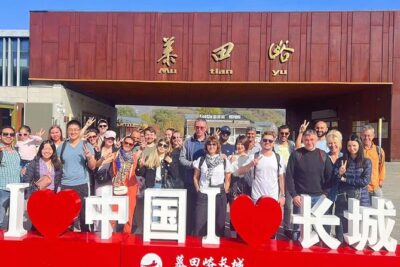
MuBus: Mutianyu Great Wall ENG/ESP/RUS Guided Bus Tour
Read our review →
4-Hour Small Group Tour to Forbidden City with Entry Tickets
Read our review →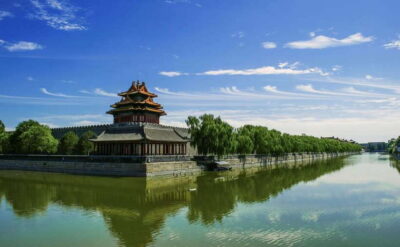
Beijing Full Day Tours: Tiananmen Sq, Forbidden City, Great Wall
Read our review →Browse the lists this tour appears in