
Reviewed · SHENZHEN TOURS
200-year-old Hakka Residence Tour +Ancient Buddhist temple
Shenzhen is famous for glass towers and fast trains, but this tour takes you to an older China, where a 200-year-old Hakka residence still shows how families lived, studied, cooked, and worshipped. The visit also includes a tranquil Buddhist temple dating back about 1,000 years and views of the Longgang River wetlands.
I like the unusual mix of stops. The Hakka compound gives you a close look at rooms, kitchens, furniture, and old classrooms, while the temple offers a quieter change of pace. I also like the small group, limited to five people, and the chance to ask guide Jimmy or his colleague detailed questions in English.
The main consideration is that this is a walking tour, not a relaxed ride through town. You need comfortable shoes, and the 2.5-hour schedule may feel short if you prefer to linger at every building. Meals and water are not included, so bring your own.
Key points at a glance
- A 25,000-square-meter Hakka compound: Walk through a large Luo Clan residence with more than 300 rooms and much of its original layout.
- A working glimpse of imperial-era life: See old furniture, an intact kitchen, and classrooms once used for Confucian study.
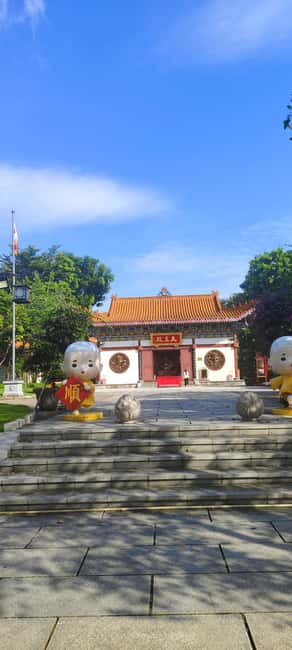
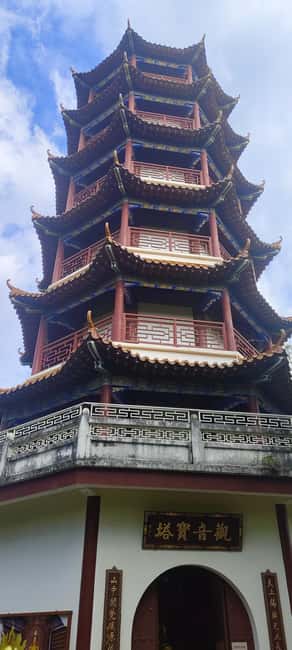
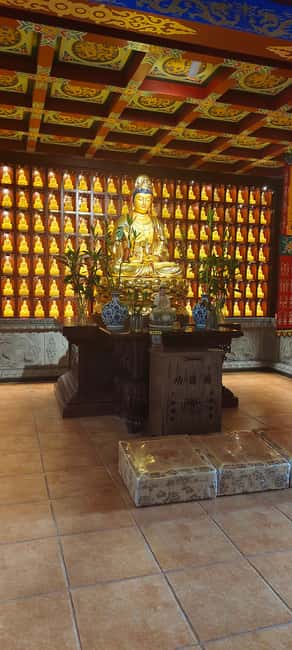
- A 1,000-year-old Buddhist temple: Explore several monastery structures and a pagoda dedicated to a female deity.
- Longgang River wetlands: See how a polluted river was restored through wetland creation and water filtration.
- Small English-speaking group: The tour is limited to five participants, with site-to-site transportation included.
- Easy access from central Shenzhen: Meet at 2pm at Nanlian Metro Station, Line 3, Exit C1, about 60 minutes by MTR from Luohu.
Leaving modern Shenzhen behind
Shenzhen changed from a small settlement into a major modern city in roughly 30 years. That speed brought impressive infrastructure, but it also removed much of the old town. This tour is useful because it takes you beyond the familiar image of Shenzhen as a technology center.
You meet at 2pm at Nanlian Metro Station, Line 3, Exit C1. From Luohu, the MTR journey takes about 60 minutes, so allow extra time to reach the meeting point. The station location is practical, but it is not in the central sightseeing core. You should plan your day around the tour rather than trying to squeeze it between several downtown attractions.
From the start, the experience has a local, history-focused feel. It is not designed as a grand sightseeing circuit with a long list of monuments. Instead, you spend time in one substantial residential complex, one old temple, and the river area nearby.
The group size matters here. With no more than five participants, you can ask questions without trying to catch a guide’s attention across a crowd. Previous visitors especially valued Jimmy’s clear English, humor, patience, and ability to explain Chinese history in an accessible way. The tour may also be led by a female colleague, and the same practical advantage applies: you get direct contact with an English-speaking guide.
A few more Shenzhen days to line up
- Shenzhen Tech Tour: Explore the Future
★ 5.0 · 49 reviews - Customizable Private Shenzhen Tour with Local guide and Car
★ 5.0 · 48 reviews - Shenzhen Private Flexible Day Tour with Guide and Driver Service
★ 5.0 · 41 reviews
Walking into the Luo Clan residence
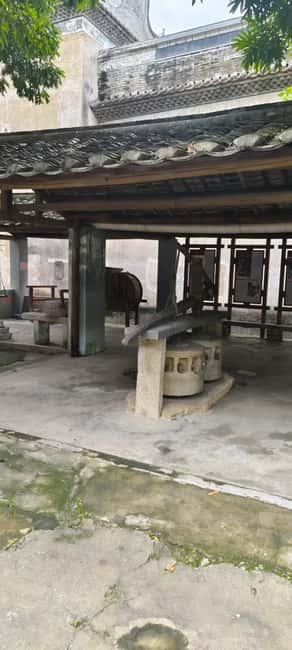
The Hakka residence is the heart of the tour. Hakka communities migrated from central China toward the Shenzhen area about 500 years ago, bringing distinctive customs, family structures, and building traditions with them. The residence visited here was built by the Luo Clan about 200 years ago.
Its scale is immediately important. The complex covers more than 25,000 square meters and contains over 300 rooms. This is not a single preserved house with a few old objects. It is a large residential setting that helps you understand how an extended clan could live within one organized compound.
As you walk through the site, pay attention to the layout rather than rushing toward the most photogenic doorway. The arrangement of rooms, shared spaces, and work areas gives you clues about family life in imperial China. The original plan remains visible, which makes the visit more useful than a display of isolated antiques.
Furniture is still in place in parts of the complex. That detail helps turn the buildings from empty shells into homes. You can picture the difference between formal rooms, domestic areas, study spaces, and places used for cooking or storage. Exact room functions may be explained by the guide as you go, so this is a good part of the tour for questions.
The old kitchen and Confucian classrooms
Two features give the residence special interest: the historic kitchen and the classrooms connected with Confucian study.
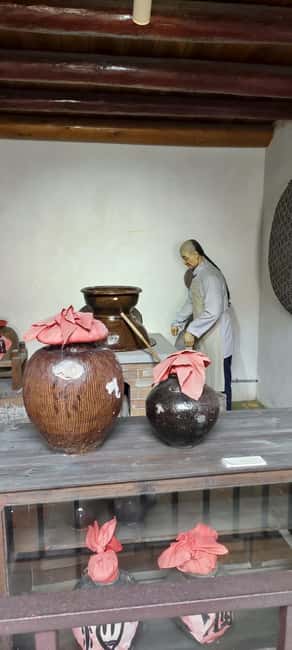
The kitchen remains intact and is described as ready for cooking. It offers a practical view of daily life, something that grand halls often fail to provide. A kitchen tells you about routine, labor, and family organization. It also gives the tour a grounded quality. You are not just looking at architecture. You are seeing where ordinary household work took place.
The classrooms add another layer. Children studied Confucianism there, reflecting the importance of education and moral teaching in traditional Chinese society. These rooms help explain why a family residence could also function as a place of learning. The complex was tied to family identity, work, religion, and education, not simply shelter.
I find this part particularly valuable if you have already seen imperial palaces or formal temples in China. Palaces show power from above. This residence gives you a more modest view of how local people arranged their lives. It is an important difference, and one that makes the tour feel less like a standard monument stop.
The setting is also well suited to photography. The old buildings and preserved rooms provide plenty of visual detail, but the real reward comes from understanding what you are seeing. Ask Jimmy or the other guide to explain the household layout, the classrooms, and the function of spaces that might otherwise appear plain.
A quiet visit to the 1,000-year-old Buddhist temple
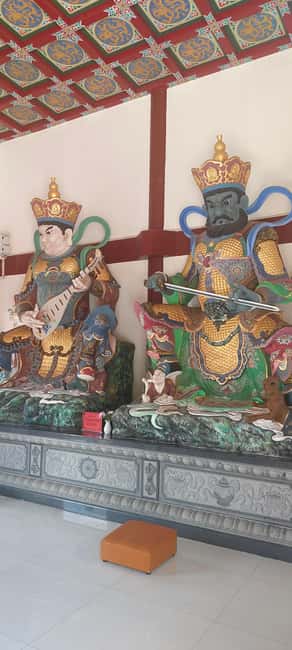
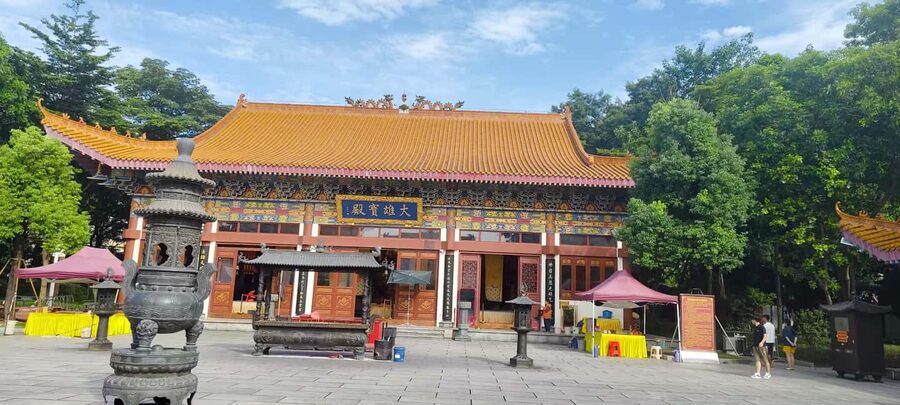
The temple provides a sharp contrast to the residence. After the busy detail of family life, you move into a more peaceful religious setting. The monastery is made up of several structures rather than one lone hall, so you can see how different buildings work together as a sacred complex.
The temple is about 1,000 years old, though parts of it have been renovated. That combination is worth keeping in mind. Renovation can change the appearance of an old religious site, but it also keeps the buildings usable and cared for. Here, the restored structures give you a chance to walk around, observe the architecture, and learn about local worship without needing to hurry through a packed city attraction.
A pagoda dedicated to a female deity is one of the distinctive features. You can make a wish there, as local worshippers do when praying for luck and fortune. You do not need to treat this as a performance or a religious obligation. It is simply a chance to observe a living tradition and decide how you want to take part.
The temple is also a good place to slow down. The tour is short, and the residence can offer a lot to absorb. At the monastery, give yourself a moment to notice the structures, the atmosphere, and the way the site is used. The guide can explain the religious background and answer questions about the buildings.
If your main goal is to see a large collection of famous Buddhist art, this may not be the right excursion. The appeal is the setting, the age, the group of structures, and the chance to learn about local prayer. It is a calm historical stop rather than a museum visit.
A very different day in Shenzhen:
- Shenzhen Tech Tour: Robotaxi, Drone Delivery & Innovation Demos
★ 5.0 · 18 reviews - From Hong kong to Shenzhen tour with Flexible Itinerary / English
★ 5.0 · 16 reviews - Shenzhen Self-Guided Tour with Private Car and Driver Service
★ 5.0 · 10 reviews - Historia and Entertain Tour of the Youngest City of China
★ 4.8 · 9 reviews
Following the Longgang River wetlands
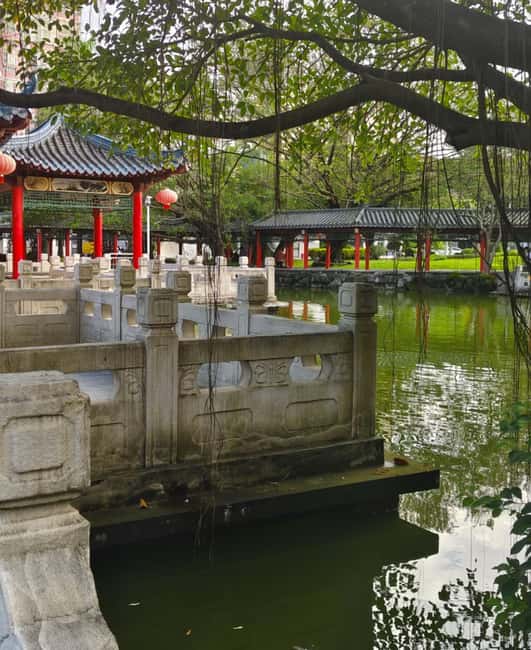
The final element is the Longgang River, a natural waterway that runs toward the Shenzhen River, which separates Shenzhen from Hong Kong. Its recent environmental story gives the stop more meaning than a simple riverside view.
The river was once among the most polluted in Shenzhen. During the last decade, it was rehabilitated through the creation of wetlands that help filter pollution and return the waterway to a more natural state. The tour uses this area to show a different side of Shenzhen’s past and present.
I like the way this stop broadens the subject. The residence explains community life, and the temple explains religious tradition. The river shows how the city has tried to repair damage caused by rapid growth. Together, the three places create a compact story about old Shenzhen, modern Shenzhen, and efforts to protect the environment.
You should expect scenery rather than a formal nature program. The supplied details do not promise wildlife viewing, a boat ride, or a long wetland walk. Think of it as a chance to enjoy the river setting and understand the restoration project. The views should be a welcome change after visiting enclosed buildings, but the experience depends on the conditions and the amount of time available.
What the $47 price includes
At $47 per person, this tour sits in a reasonable range for a short guided outing, especially because transportation between the sites is included. You are paying for an English-speaking guide, local historical explanation, and help connecting three places that would be harder to understand as separate stops.
The small group strengthens the value. A group capped at five allows the guide to respond to your questions and adjust explanations to your interests. That is especially helpful at the Hakka residence, where the meaning of a kitchen, classroom, or room arrangement is not always obvious without context.
The tour does not include meals or water. This is easy to manage, but it is worth remembering before you leave the metro station. Bring water and consider eating beforehand, since the meeting time is 2pm and the activity lasts about 2.5 hours.
The tour also offers free cancellation up to 24 hours before departure and a reserve-now, pay-later option. Those policies make it easier to fit the outing into a changing Shenzhen schedule. They do not change the basic practical point: you need to get to Nanlian Station on time and be ready to walk.
Who will enjoy this Shenzhen history tour?
I would recommend this experience to you if you want to see a side of Shenzhen beyond modern architecture, shopping, and technology. It suits visitors who enjoy old homes, religious buildings, local customs, and explanations that connect individual details to a wider story.
It is particularly good for first-time visitors who feel that the city’s modern face tells only half the story. The Hakka residence gives you a clear introduction to local settlement and family life, while the temple and river add religious and environmental context.
It also works well for repeat visitors. If you have already seen Shenzhen’s central districts, this is a way to spend part of a day in a different setting without committing to a full-day trip.
The tour may be less suitable if you want a slow, private visit with long photography stops. The schedule is fixed at around 2.5 hours, and the walking format keeps things moving. Pregnant women are specifically advised not to take part, and anyone with difficulty walking should consider the physical demands before booking.
Comfortable shoes are essential. The tour information describes it as a walking tour, so do not treat the included transportation as door-to-door service for every moment. Bring water, wear practical clothing, and keep your afternoon free enough to reach Nanlian Station without rushing.
Booking advice and final verdict
I would book this tour if I wanted a compact, well-explained history outing from Shenzhen and valued a small English-speaking group. The strongest reasons are the unusually large Hakka compound, the preserved kitchen and classrooms, and the chance to compare family life, religious tradition, and river restoration in one afternoon.
The best guide experience appears to come from Jimmy or his colleague. Jimmy has been praised for clear English, humor, patience, and a strong interest in teaching. Those qualities matter here because the sites are most rewarding when someone explains what the rooms and buildings meant.
I would skip it if your priority is modern Shenzhen, food, shopping, or a completely unstructured afternoon. I would also avoid it if walking is difficult or if you need a full meal and drinks included.
For the right visitor, $47 is fair value. You get transportation between sites, a maximum group of five, and access to places that reveal a quieter, older side of Shenzhen. Pack water, meet at Nanlian Station before 2pm, and expect a short but substantial lesson in Hakka life, Buddhist tradition, and urban environmental repair.
FAQ
Where does the tour meet?
The meeting point is Nanlian Metro Station on Line 3, Exit C1. The Chinese name is 南联站 C 1出口.
What time does the tour start?
The meeting time is 2pm. The activity lasts about 2.5 hours.
How far is Nanlian Station from Luohu?
The meeting point is about a 60-minute MTR ride from Luohu.
Is transportation included?
Yes. Transportation between the tour sites is included. Transportation to the meeting point is not listed as included.
Is the tour offered in English?
Yes. The live tour guide language is English.
How large is the group?
The tour is limited to five participants.
Recently listed in Shenzhen
- 1 day Car Hire in Shenzhen with Driver (10 hours)★ 3.0 · 5 reviews
- Shenzhen Private Shopping Tour with Local Shopping Guru★ 5.0 · 5 reviews
- Shenzhen Customized Local Tour with Transfer★ 5.0 · 6 reviews
- Private Transfer in Shenzhen with English Service★ 5.0 · 6 reviews
- Huaqiangbei Insider Tour: Explore Shenzhen’s Tech Wonderland★ 5.0 · 6 reviews
- Shenzhen:8h City Walk & Future Experience Highlights Trip★ 4.4 · 6 reviews
- Iconic Shenzhen Skyscraper – Ping An Finance Center★ 3.4 · 6 reviews
- ShenZhen: Tallest Building with Luxury Meal on Highest Floor★ 4.7 · 7 reviews
Shenzhen Tours, compared.
Customizable Private Shenzhen Tour with Local guide and Car
Read our review →
Shenzhen Private Flexible Day Tour with Guide and Driver Service
Read our review →
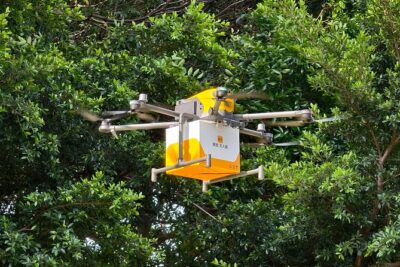
Shenzhen Tech Tour: Robotaxi, Drone Delivery & Innovation Demos
Read our review →
From Hong kong to Shenzhen tour with Flexible Itinerary / English
Read our review →
Shenzhen Self-Guided Tour with Private Car and Driver Service
Read our review →
Historia and Entertain Tour of the Youngest City of China
Read our review →
Shenzhen Private Day Tour with Car Service Tech+Culture+Shopping
Read our review →Browse the lists this tour appears in