Reviewed · BEIJING TOURS
Beijing: Confucius Temple and the Impercial College E-ticket
Beijing’s Confucius Temple and Imperial College give you two historic institutions in one quiet, walkable visit. The most striking detail is the collection of 198 stone tablets, carved with the names, birthplaces, and ranks of 51,624 successful imperial examination candidates.
I like the simple entry system: show your QR code and original passport at the attraction. I also like the low $7 price, which buys access to Yuan Dynasty architecture, Confucian ceremonial halls, exhibitions, and the former national education center.
The main consideration is that this is an admission ticket, not a guided tour. You explore independently, and the available information does not name a guide. An audioguide may be available for purchase at the temple entrance, but you should not expect a live explanation to accompany you.
Key details before you go
- Two institutions in one visit: Confucius Temple sits on the left, while the Imperial College sits on the right, following an old ceremonial layout.
- Yuan Dynasty foundations: The temple dates to 1306, and the Imperial College was built in 1308.
- A remarkable examination record: The temple’s tablets preserve 51,624 names, birthplaces, and ranks of Jinshi degree holders.
- Easy digital entry: Bring the QR ticket and your original passport or ID document.
- Self-guided pace: You can look around independently, with an audioguide possibly available at the entrance.
- Good value at $7: The ticket covers both cultural sites for one day, with free cancellation up to 24 hours before entry.
Why this pair of sites matters
I think this visit works best when you see it as a lesson in how imperial China linked education, government, religion, and social status. Confucius Temple honored the philosopher whose teachings shaped official learning. The Imperial College trained the scholars who hoped to serve the state.
The two sites were built in the Yuan Dynasty, in the early 14th century, and together they cover a large compound. The layout follows the traditional idea of temple on the left and college on the right. That arrangement is not just a planning choice. It connects reverence for Confucius with the practical work of educating officials.
You will not find a modern attraction designed around constant entertainment. Instead, you get gates, courtyards, halls, tablets, arches, and displays. The experience rewards a slower pace. I would allow much of the day if you read the exhibits carefully, though the ticket itself is valid for one day and does not require a fixed tour schedule.
A few more Beijing days to line up
- From Beijing: Mutianyu Great Wall Tours with Options
★ 4.9 · 9,216 reviews - Beijing: Forbidden City Tour(Group/Private)-Tickets Included
★ 4.8 · 7,974 reviews - Beijing: T-Square & Forbidden City Group or Private Tour
★ 4.8 · 4,446 reviews
Entering through the Confucius Temple
Beijing Confucius Temple was built in 1306 and served as the place for memorial ceremonies honoring Confucius during the Yuan, Ming, and Qing Dynasties. The compound covers more than 22,000 square meters, with about 7,400 square meters of buildings arranged across three courtyards.
The route follows a central south-to-north axis. You pass through the Teacher Gate, then Dacheng Gate, Dacheng Hall, and finally Chong Sheng Temple. Each gate and hall helps you understand the formal order of the site. This was not a casual neighborhood school. It was a state-supported ceremonial center tied to the official education system.
The courtyards give the visit its rhythm. Instead of moving from one unrelated display to the next, you progress through a sequence of gates and open spaces. I like this kind of arrangement because the buildings explain the institution before the written displays do.
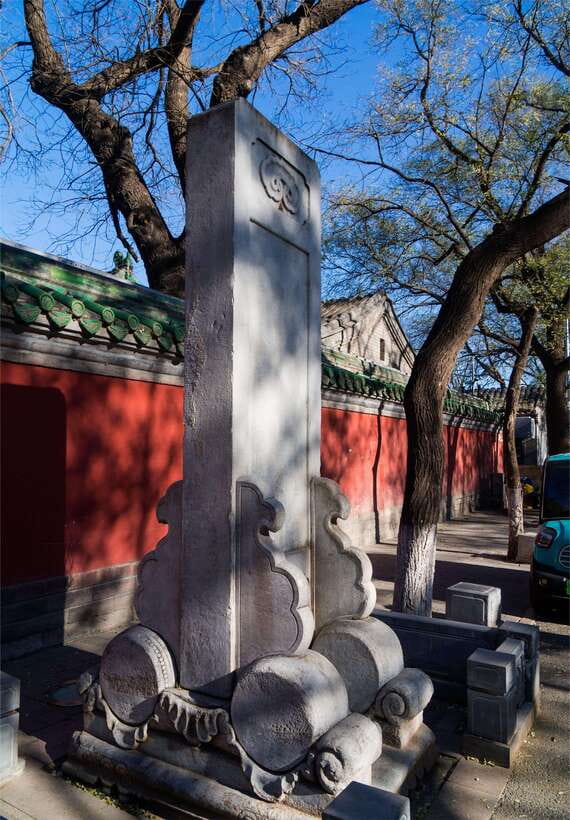
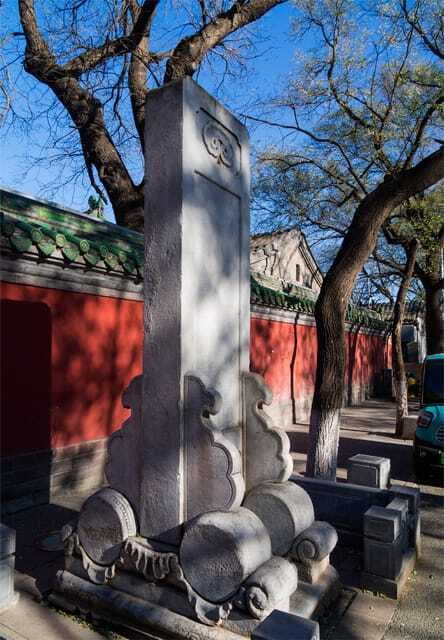
The most distinctive feature is the group of stone tablets in the front courtyard. There are 198 tablets, arranged in four groups on either side. Together, they record 51,624 names, birthplaces, and ranks of Jinshi candidates.
The Jinshi degree was connected with the highest level of the imperial examination system. These inscriptions turn an abstract idea, the examination route into government service, into something you can see. The names are not just decoration. They are useful records for studying China’s examination system and the people who passed through it.
You may not be able to read every inscription, but the scale alone is powerful. Take time to look at the rows rather than rushing straight toward the main hall. This is one of the strongest reasons to visit the temple, especially if you are interested in education, government, family ambition, or the way written records shaped Chinese society.
Dacheng Hall and the temple exhibitions
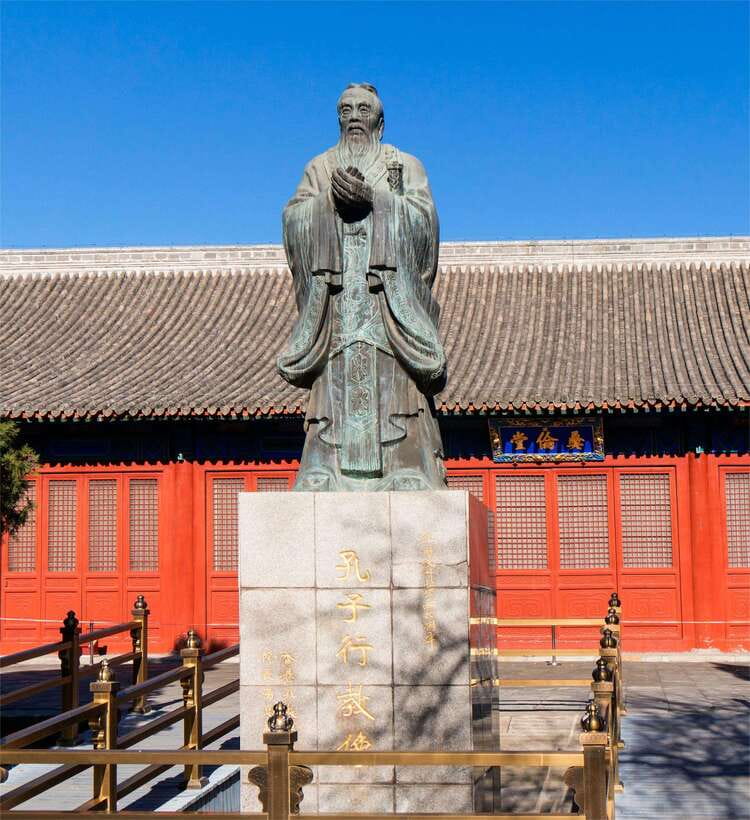
Dacheng Hall is the central focus of the temple complex. The site currently includes an exhibition on the restored Dacheng Hall, an exhibition about Confucius, and an exhibition on the history of Beijing Confucius Temple.
These exhibitions add context to the architecture. Without them, you could easily see the temple as a series of attractive old buildings. With them, you get a better sense of why the halls mattered and how the site functioned over time.
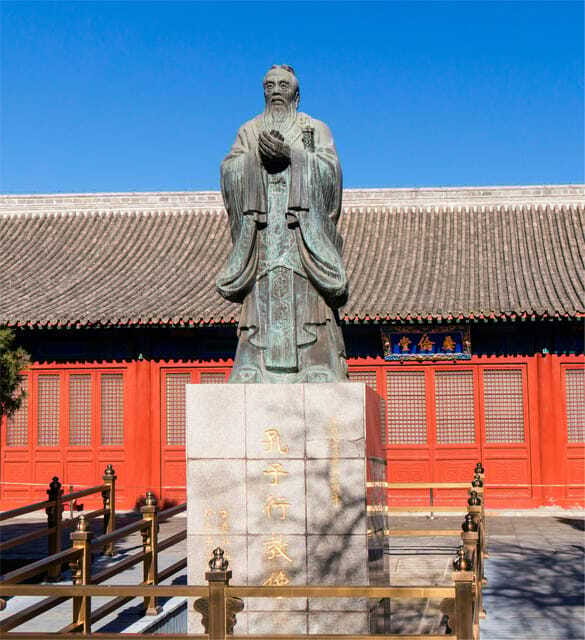
The exhibition about Confucius is useful for visitors who know his name but little about his role in Chinese culture. The temple was not built as a general museum. Its purpose was tied to ceremonies, official learning, and respect for a philosophical tradition that influenced the state for centuries.
The restoration display should also help you pay attention to the building itself. Rooflines, gates, courtyards, and decorative details carry more meaning once you understand that the hall was part of a formal ritual setting.
You may be able to buy an audioguide at the temple entrance. That is worth considering if you prefer spoken explanations, since this ticket does not include a live guide. The available information does not identify a guide by name, so plan this as an independent visit rather than a personal tour.
Crossing into the Imperial College
The Imperial College, known in Chinese as Guozijian, was the highest educational institution and the state education administration center during the Yuan, Ming, and Qing Dynasties. It was built in 1308, just two years after the Confucius Temple.
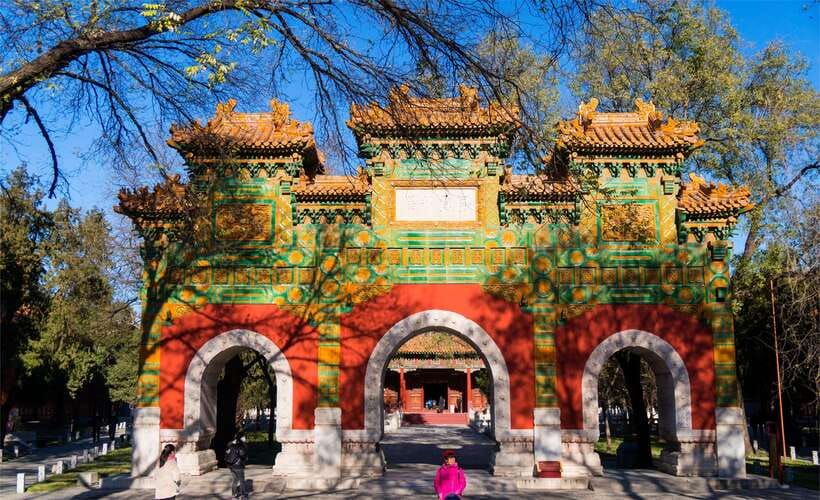
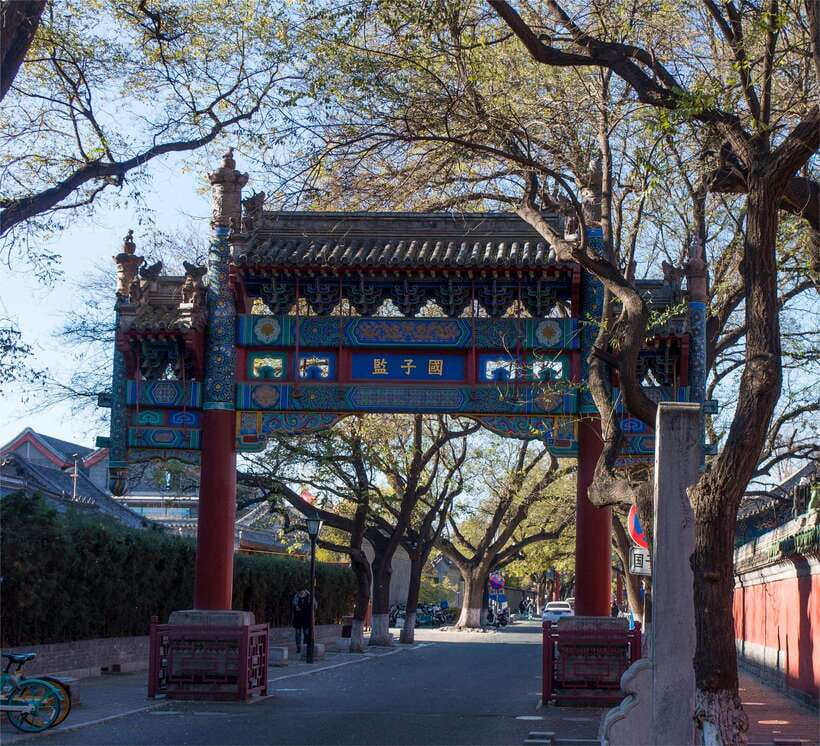
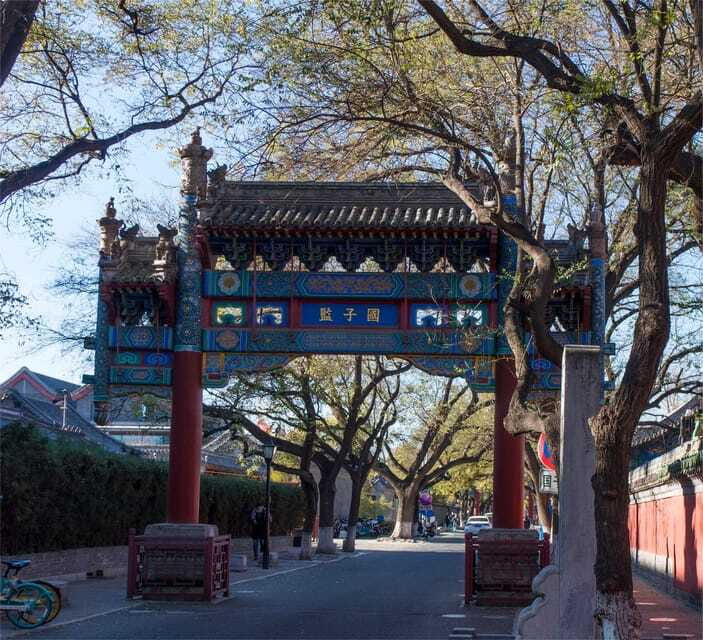
The college covers about 28,000 square meters and also has three courtyards. Its central route passes through Jixian Gate, Taixue Gate, the Glazed Memorial Arch, Biyong Hall, Yilun Hall, and Jingyi Hall.
This section helps explain what happened after Confucian learning was honored in the temple. The college represented the organized education system that prepared scholars for government service. You can see the two institutions as connected parts of one official world: the temple provided ceremony and moral authority, while the college provided education and administration.
The Glazed Memorial Arch is an important marker along the central axis. The halls beyond it continue the ordered progression through the compound. Beside the central route are two halls, six main rooms, an Imperial Tablet Pavilion, and Bell and Drum Pavilions arranged in a traditional symmetrical pattern.
I find symmetry especially helpful at sites like this. It gives you a clear route and makes the layout easy to follow without a guide. Look to both sides as you walk. The smaller buildings and pavilions are part of the design, not background scenery.
The Imperial College may appeal most to visitors who want more than a temple visit. It explains the machinery behind the scholar-official system and makes the examination tablets at the Confucius Temple easier to understand.
A very different day in Beijing:
- All-Inclusive Tour: Tiananmen Square, Forbidden City, Great Wall
★ 5.0 · 2,873 reviews - MuBus: Mutianyu Great Wall ENG/ESP/RUS Guided Bus Tour
★ 5.0 · 2,361 reviews - 4-Hour Small Group Tour to Forbidden City with Entry Tickets
★ 5.0 · 1,863 reviews - Beijing: Tiananmen Square Registration Service(Ticket)
★ 4.5 · 1,704 reviews
The imperial examination story
The examination display is one of the highlights for this ticket. The imperial examination system offered a route for educated men to gain official rank, although access to preparation and education was not equal across society.
The stone tablets provide a concrete record of those who achieved the Jinshi rank. Each name connects to a birthplace and official rank, giving the collection value beyond its visual appeal. You can think of the tablets as a permanent roll of honor and a historical database carved in stone.
This is also where the temple and college make the most sense together. At the temple, you see the names of successful candidates. At the college, you see the institution that formed part of the state education system. The pairing lets you connect aspiration, study, ceremony, and government.
I recommend reading the examination exhibition before spending too much time on the tablets. A little context makes the inscriptions more meaningful. If you visit with children or teenagers, the examination theme can also provide a clear way to discuss how societies choose officials and reward academic success.
Do not expect every detail to be easy to absorb in one glance. The subject includes formal titles, long historical periods, and large numbers of names. You will get more from the visit if you accept that some sections call for quiet attention rather than quick photographs.
What the $7 ticket really gives you
At $7 per person, this is a strong-value cultural admission for Beijing. You receive access to two major historic compounds rather than a single hall or isolated exhibit. The ticket is valid for one day, so you can set your own pace instead of following a short timed circuit.
The value depends partly on your interests. If you enjoy architecture, education, Confucian thought, or imperial government, the price is easy to justify. If you want a high-energy attraction with performances or a large number of interactive features, this may feel more restrained.
The ticket includes the tourist attraction entry. It does not include a guide or an audioguide. Since an audioguide may be purchased at the temple entrance, bring a little flexibility if you want more interpretation.
The booking terms also reduce the risk of committing too early. You can reserve and pay later, and cancellation is allowed up to 24 hours before the visit for a full refund. Availability should be checked for the starting time, even though the ticket itself is valid for one day.
Passport entry and practical planning
The most important practical instruction is simple: bring your original passport. You need to enter with the passport and electronic ticket, and the QR code is used for admission.
A photo or copy may not be enough, so keep the original document with you. Have the QR code ready on your phone and make sure you can display it clearly at the entrance.
The ticket is listed as wheelchair accessible. That makes the experience possible for more visitors, though the compound includes historic gates, courtyards, and traditional buildings. If you need a particular route or assistance, confirm the details before arrival.
The booking is for a private group, but the ticket is not described as a private guided tour. In practical terms, you should think of it as a private booking or admission arrangement that lets you visit independently.
Because no transport service is included in the information provided, you should make your own way to the attraction. The price covers the entrance ticket, not transportation, meals, or a named guide.
Who will enjoy this visit most
I would recommend this experience to you if you want a quieter cultural stop with a clear historical theme. It suits visitors who like to read displays, compare architectural details, and understand how institutions worked.
It is also a good choice if you have already seen Beijing’s most famous imperial sights and want a different angle on the city. The focus here is not imperial luxury. It is education, ceremony, records, and the training of officials.
Families can make good use of the examination story, especially if children are interested in schools, tests, or old systems of government. The large number of tablets may be less engaging for very young children unless you explain the idea behind them.
I would be more cautious about recommending it to anyone who wants a live storytelling experience. The ticket is self-guided, and the listed information does not include a guide’s name or guided commentary. An audioguide may help, but it costs extra if available.
My main strengths and reservations
The strongest part is the combination of the two compounds. You do not simply see a temple and then another historic building. You follow the connection between Confucius, official education, examinations, and government service.
The tablets are another major strength. Their number, 198, and the total of 51,624 recorded Jinshi candidates give the temple a distinctive feature that is difficult to reduce to a quick photograph. I would plan extra time for this section.
The QR entry is convenient, especially for an international visitor carrying a passport. The low price also makes the visit easy to add to a Beijing itinerary without making a large financial commitment.
The main weakness is the lack of an included guide. Some halls and names may be hard to understand without background information. If you prefer a fully explained visit, look for the audioguide at the entrance and allow time to use it.
The 4.4 rating from 92 bookings points to a generally positive experience, but I would still match your expectations to the product. This is a historic site ticket with exhibitions, not a performance, food tour, or guided neighborhood walk.
Should you book the Confucius Temple and Imperial College ticket?
Book it if you want an affordable, self-guided visit focused on Yuan Dynasty architecture, Confucian culture, the imperial examination system, and the institutions that educated China’s officials. The paired layout and stone tablets give the visit a clear purpose, while the QR entry keeps the practical side simple.
Skip it if your priority is a live guide, a packed schedule of activities, or a highly interactive museum. For everyone else, $7 is a reasonable price for two connected historic sites, especially if you take time with the 51,624 names and use the available exhibitions to put them in context.
Bring your original passport, save the QR code, and consider the audioguide at the entrance. That small bit of preparation will help you get much more from this quiet but meaningful Beijing stop.
FAQ
How much does the Confucius Temple and Imperial College ticket cost?
The ticket costs $7 per person.
How long is the ticket valid?
The ticket is valid for one day. You should check availability for the available starting times.
What do I need to bring for entry?
Bring your original passport or ID card, along with the electronic ticket and QR code.
Can I enter with only the QR code?
You need both the electronic ticket and your original passport for entry. The QR code is used as part of the admission process.
Is this a guided tour?
No live guide is included in the activity information. You visit independently, and an audioguide may be available to purchase at the temple entrance.
What does the ticket include?
It includes admission to the tourist attraction, covering Beijing Confucius Temple and the Imperial College.
Is the site wheelchair accessible?
The attraction is listed as wheelchair accessible.
Can I cancel the booking?
Yes. You can cancel up to 24 hours in advance for a full refund. You can also reserve now and pay later.
Recently listed in Beijing
- Small-Group 1-day Jinshanling Great Wall 6km Hiking tour★ 5.0 · 4 reviews
- Temple of Heaven Tickets Booking★ 5.0 · 4 reviews
- Jinshangling Great Wall Of Beijing Tickets And Other Option★ 4.0 · 4 reviews
- Beijing Night Walking Tour★ 5.0 · 4 reviews
- Beijing: Private Biking Tour Along Central Axis of Beijing★ 4.8 · 4 reviews
- Private Layover Tour to Mutianyu Great Wall from Beijing Airport★ 5.0 · 5 reviews
- Fantastic Private Trip to Mutianyu Great Wall (English Service)★ 5.0 · 5 reviews
- Beijing: Private Tour to Jinshanling Great Wall with Option★ 4.7 · 5 reviews
Beijing Tours, compared.

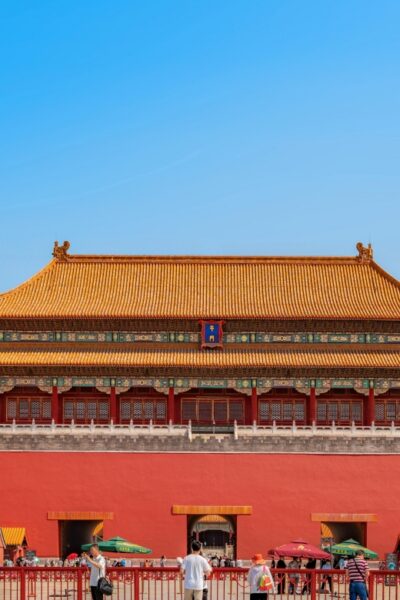
Forbidden City Tour(Group/Private)-Tickets Included
Read our review →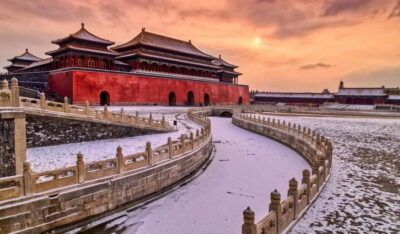
T-Square & Forbidden City Group or Private Tour
Read our review →
All-Inclusive Tour: Tiananmen Square, Forbidden City, Great Wall
Read our review →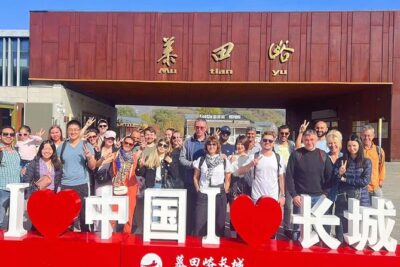
MuBus: Mutianyu Great Wall ENG/ESP/RUS Guided Bus Tour
Read our review →
4-Hour Small Group Tour to Forbidden City with Entry Tickets
Read our review →