Reviewed · BEIJING TOURS
Beijing liulichang : Learn Calligraphy orCarving from Master
Liulichang’s old lanes give this experience its charm, but the real treat is sitting down with a master artisan and making something yourself. You can practice brushwork, paint a silk fan, or carve a personal Chinese seal, rather than simply buying a souvenir from a shop.
I like the small-group format, which gives you time to ask questions and get patient help. I also like the careful practice built into the seal-carving class: you work on spare stones before touching the final one. The main consideration is that transportation is not included, and the workshop offers one main art choice, so decide in advance which activity suits you best.
Key points at a glance
- Meet Bruce Gao at Liulichang East Street: Look for the Sino-Voyages sign at the small square entrance, then begin with a short walk through the district.
- Choose one of three art forms: Try calligraphy, paint a silk round fan, or carve your own Chinese name chop.
- Practice comes before the final piece: Seal-carving participants can rehearse on other stones before working on the proper seal.
- Take home something you made: Your artwork becomes a personal souvenir, not a factory-made keepsake.
- Expect calm, patient instruction: The activity lasts about two to two and a half hours and runs in English or Chinese.
- Plan your arrival: You must make your own way to Liulichang, and children under five cannot join.
Why Liulichang makes a fine setting for an art lesson
Beijing can be a tiring city to sightsee in. Large monuments, wide roads, crowded shopping streets, and long transfers fill many itineraries. Liulichang offers a slower change of pace.
The meeting point is at the entrance to Liulichang East Street, where you look for a guide holding a Sino-Voyages sign. The experience begins with a brief walk through the area before you enter the studio. That opening matters. You get a sense of the old cultural district first, then see how the workshop fits into the neighborhood rather than arriving at an anonymous classroom.
The activity description calls Liulichang an ancient cultural district, and the setting is clearly part of the appeal. This is a place associated with traditional arts, calligraphy, painting, and old-style craft shops. You are not only buying a brush or admiring a carved stamp behind glass. You are given a chance to sit down and use the tools yourself.
The walk is brief, so do not book this expecting a full historical tour of Beijing. Its purpose is to set the scene and lead you into the studio. If you want a long architectural or shopping tour, you will need to plan that separately.
A few more Beijing days to line up
- From Beijing: Mutianyu Great Wall Tours with Options
★ 4.9 · 9,216 reviews - Beijing: Forbidden City Tour(Group/Private)-Tickets Included
★ 4.8 · 7,974 reviews - Beijing: T-Square & Forbidden City Group or Private Tour
★ 4.8 · 4,446 reviews
Three ways to become the maker
The central choice is simple: calligraphy, fan painting, or seal carving. All materials for your selected class are included, and the instructor explains the cultural meaning behind the art form as you work.
The best option depends on the kind of souvenir you want and how comfortable you feel with careful handwork. You do not need previous experience. Curiosity is enough, though patience helps.
Calligraphy: slow brushwork on rice paper
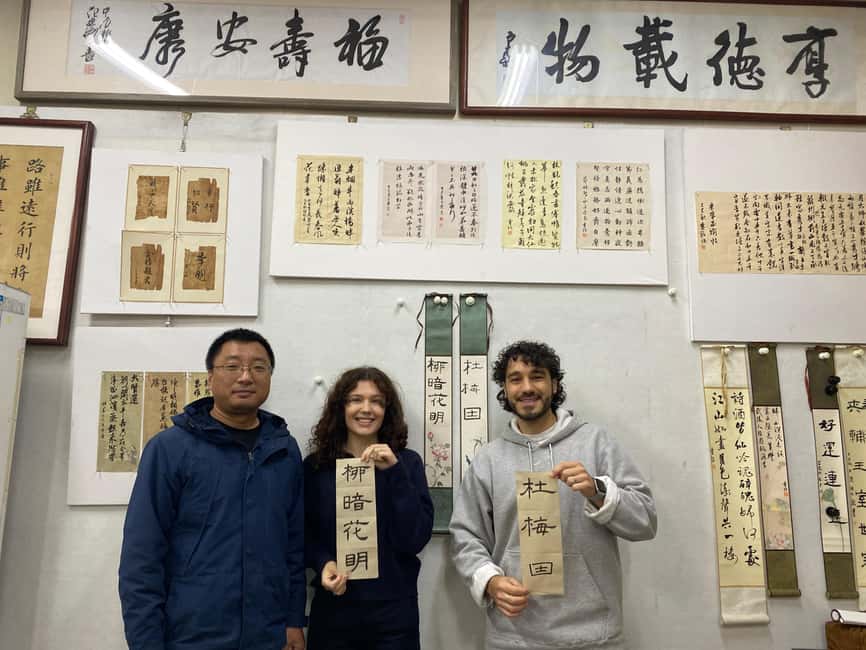
The calligraphy class is built around focus and control. You learn how to hold and guide a traditional brush, then practice writing a meaningful Chinese proverb or your own name.
This is not simply a lesson in copying symbols. Chinese calligraphy treats the movement of the brush as part of the art. The pressure, direction, and rhythm of each stroke matter. Even a short name or proverb can take time because you are learning to make each line deliberate.
Your finished piece is made on rice paper, giving you a light and easy souvenir to carry home. It also has a personal angle. A proverb can represent a value or hope, while your name gives the artwork a direct connection to your trip.
You may also use calligraphy practice as preparation for seal carving. One participant found the chance to write the characters before carving them especially useful. That makes sense: you are not carving random designs, but characters whose shape you need to understand.
Calligraphy suits you if you like quiet activities and want a souvenir with a clear link to Chinese language and visual culture. It is less suited to anyone looking for quick results. Brush control takes concentration, and the finished piece may look more personal than perfect.
Fan painting: a useful souvenir with an artistic purpose
Fan painting offers the most decorative route. You paint a design on a delicate silk round fan, with classic subjects such as bamboo or orchids suggested as choices.
The fan gives you a practical object as well as a painting. It can be displayed, carried, or used, though you should treat the silk carefully after bringing it home. Its round shape also makes the finished work feel distinct from a standard sheet of paper.
This choice may be the easiest fit for someone who wants color and a clear image rather than written characters. Bamboo and orchids are traditional motifs, so the activity gives you a recognizable connection to Chinese art without requiring you to read Chinese.
Still, painting on silk is not a shortcut to an instant masterpiece. The material is delicate, and you will need to follow the instructor’s guidance. The value comes from making the object yourself, with the inevitable small variations that show it was made by hand.
Choose the fan if you want a souvenir that feels decorative and useful. It is also a good option if you prefer painting to writing or carving.
A very different day in Beijing:
- All-Inclusive Tour: Tiananmen Square, Forbidden City, Great Wall
★ 5.0 · 2,873 reviews - MuBus: Mutianyu Great Wall ENG/ESP/RUS Guided Bus Tour
★ 5.0 · 2,361 reviews - 4-Hour Small Group Tour to Forbidden City with Entry Tickets
★ 5.0 · 1,863 reviews - Beijing: Tiananmen Square Registration Service(Ticket)
★ 4.5 · 1,704 reviews
Seal carving: the most hands-on choice
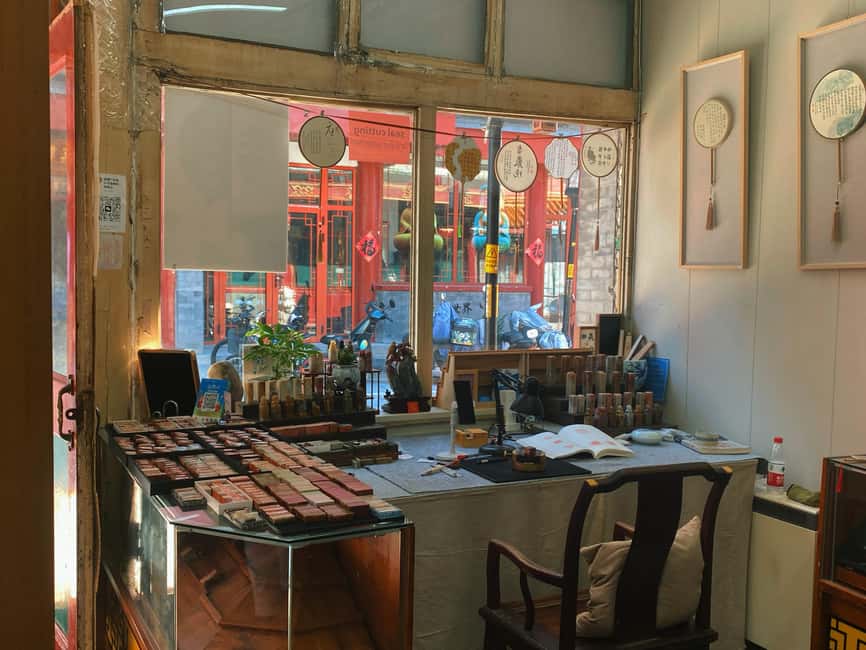
Seal carving is the most distinctive option in the workshop. You create a Chinese name chop, a traditional stamp used as a personal signature.
The process involves carving characters into a stone. This requires care, but the practice stage is reassuring. You can work on other stones before beginning the final piece, giving you time to get used to the tools and pressure.
That practice is one of the strongest practical details of the experience. Seal carving has little room for careless movement, and starting directly on the final stone would make the class stressful for a beginner. Rehearsing first lets you learn from mistakes while the stakes are low.
One participant also had help from three interpreters while working with the master. That detail suggests the support can be hands-on when language makes technical instruction harder. The listed teaching languages are English and Chinese, and the activity is designed for beginners, but seal carving still involves unfamiliar terms and movements. Do not hesitate to ask for a demonstration more than once.
Your finished seal is a particularly personal keepsake. It carries your chosen Chinese characters and can be used to stamp artwork or paper after you return home. The craft also feels less common than buying a printed scroll or mass-produced souvenir.
Choose this class if you enjoy tools, patience, and a little risk. It is probably the most rewarding choice for someone who wants to say, I made this from a stone, rather than I bought this in Beijing.
What the two to two and a half hours feel like
The meeting point comes first. Go to the small square entrance of Liulichang East Street and look for the Sino-Voyages sign. Since transportation is not included, allow enough time to find the street entrance and meet the guide without rushing.
The opening walk through Liulichang is short. Use it to get your bearings and ask questions about the district before the studio lesson starts. Bruce Gao is named as one of the people involved in the experience, and his patient, encouraging approach is specifically highlighted in the available feedback. Bruce and a friend may lead or assist, though staffing can vary.
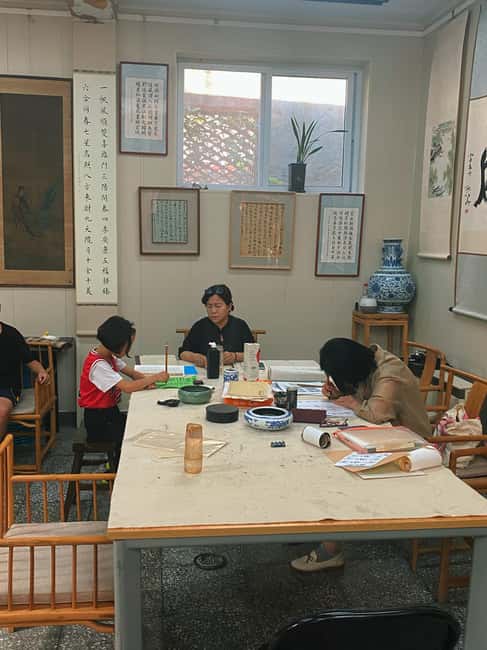
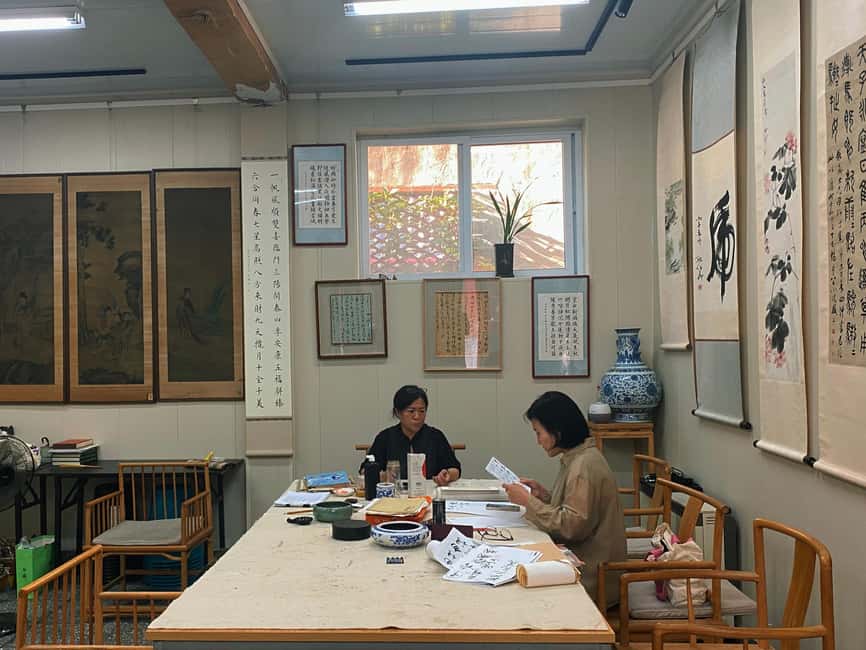
Inside the studio, you choose your art form and receive the needed supplies. The setting is described as tranquil and traditional, which makes the class a useful break from Beijing’s louder public spaces. You can expect instruction from an artisan, cultural context about the craft, and time to work on your own piece.
The exact pace depends on your selection. Calligraphy includes brush practice and writing a proverb or name. Fan painting gives you time to create a motif on silk. Seal carving includes practice stones before the final carving. The schedule allows enough time for instruction and making, but not for an advanced course in any of the three arts.
A small group or private format is available. That is important for this kind of activity. Your work may need correction at close range, and you may have questions about brush angle, paint application, or carving pressure. A large class would make those moments harder. With fewer people, you have a better chance of receiving direct help.
At the end, you leave with your handmade item. The artwork may not look like a master’s piece, and that is part of the point. The value is in the process, the lesson, and the memory attached to the object.
How much value you get for $75
At $75 per person, this is not the cheapest souvenir activity in Beijing. It is also not priced like a simple craft table where you receive materials and work alone.
Your fee covers a two to two and a half hour session, all materials, an expert artisan, cultural explanation, and one finished piece. The small-group setting adds value because you are paying for personal instruction, not just access to a room.
I think the price makes the most sense if you care about the making process. If all you want is a Chinese fan, seal, or piece of calligraphy, you can likely find finished items elsewhere. If you want to understand how the object is created and leave with your own version, the workshop offers more.
Seal carving may offer the strongest value because the finished item is highly personal and the practice stage requires real instruction. Calligraphy offers a lower-cost-feeling material, but its meaning can be more intimate if you write your own name or a proverb that matters to you. Fan painting is a good middle ground for a visual souvenir.
The private or small-group option could also affect the value. If you prefer direct attention, it may be worth choosing a smaller format when available. The activity does not include transportation, so add the time and cost of getting to Liulichang when planning your day.
Who will enjoy this most
I would choose this for anyone who wants a cultural activity with a finished result. It works especially well for solo visitors, couples, families with older children, and small groups of friends who want something quieter than another major sight.
It is also a useful choice for a repeat visit to Beijing. If you have already seen the major palaces, squares, and temples, a craft lesson gives you a different way to spend an afternoon.
The class suits beginners. You do not need to know Chinese, and instruction is available in English or Chinese. The help is most valuable during the practical parts, where the position of a brush or carving tool matters more than a long lecture.
Children under five are not allowed. Older children may enjoy the activity, but the listing gives no specific age guidance beyond that restriction. Consider your child’s patience before booking, especially for seal carving, which calls for slow and careful work.
The activity is wheelchair accessible, though transportation to the meeting point remains your responsibility. If you need a private setting or have particular mobility needs, confirm the arrangement when booking.
Small details that can improve your visit
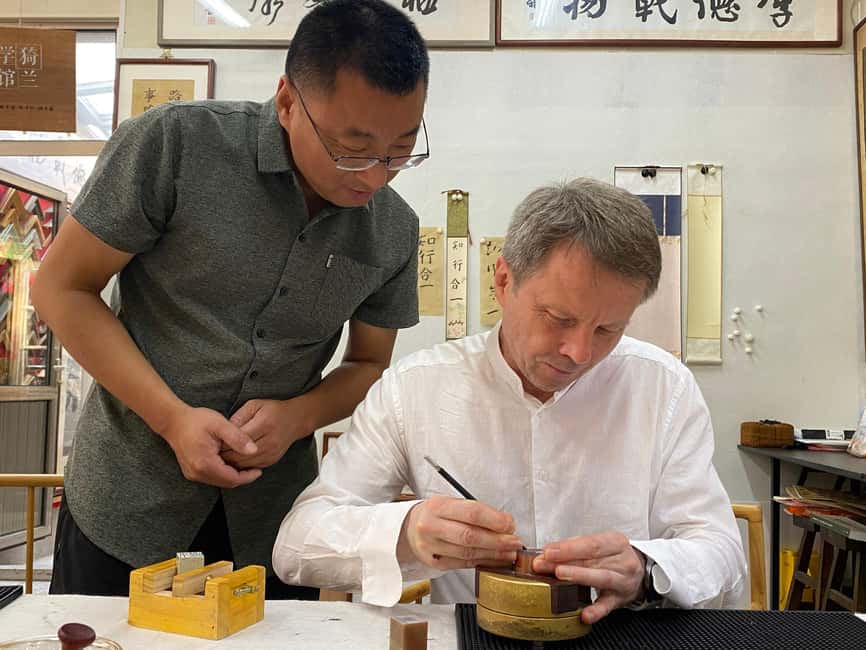
Choose your art form before arriving, but stay open to the instructor’s advice. If you are undecided, think about the kind of object you want to bring home: rice paper, silk fan, or carved seal.
For seal carving, make full use of the practice stones. Do not rush to the final piece. The rehearsal is not wasted time; it is where you learn the pressure and movement needed for the actual carving.
If you choose calligraphy, decide whether you want your own name or a proverb. A name creates a direct personal link, while a proverb can make the piece easier to display as a decorative work.
If you choose fan painting, ask about the available motifs and select one you can handle within the class time. Bamboo and orchids are listed choices, and both suit the shape and tradition of the fan.
Keep the meeting point details handy. Liulichang East Street has a district feel rather than a single obvious attraction, so finding the small square entrance is more important than simply arriving somewhere in Liulichang. Look for the Sino-Voyages sign.
The experience allows free cancellation up to 24 hours before the start, and you can reserve while paying later. Those terms help if your Beijing schedule is still shifting.
Should you book this Liulichang workshop?
Book it if you want to slow down, meet an artisan, and make a souvenir with your own hands. The strongest choices are seal carving for a memorable personal object, calligraphy for a reflective and language-based activity, and fan painting for a decorative keepsake.
I would skip it if you want a major sightseeing tour, a long history lecture, or a guaranteed professional-looking artwork. This is a beginner workshop, not an art-school course. You will get the most from it if you accept a few imperfect strokes and enjoy the act of learning.
The calm studio, patient guidance, and practice time make the $75 price reasonable for someone who values personal instruction. Arrange your own transport, choose your preferred art form, and meet Bruce Gao or the Sino-Voyages guide at Liulichang East Street. For a creative half-day addition to Beijing, this is a thoughtful choice.
FAQ
Where does the activity begin?
Meet at the small square entrance of Liulichang East Street. Look for the guide holding a Sino-Voyages sign.
Is transportation included?
No. You are responsible for getting to the Liulichang meeting point.
How long does the workshop last?
The experience lasts about two to two and a half hours, including the short introduction to Liulichang and the studio activity.
Which art forms can I choose from?
You can choose calligraphy, fan painting, or seal carving.
Can I make my own Chinese name seal?
Yes. The seal-carving option lets you create a Chinese name chop, a traditional personal stamp.
Do I need previous artistic experience?
No. The activity is suitable for beginners, and no prior experience is required.
What languages are available?
Instruction is available in English and Chinese.
Can I take my artwork home?
Yes. Your personalized handmade artwork is included and is yours to take home.
Can young children join?
Children under five are not suitable for this activity.
Is the workshop wheelchair accessible?
Yes, the activity is listed as wheelchair accessible. Transportation to the venue is not included.
Recently listed in Beijing
- Beijing Mutianyu Great Wall Private Tour with Lunch★ 5.0 · 5 reviews
- Customized Private Beijing Layover City Tour★ 5.0 · 5 reviews
- Private Tour to Gubei Water Town and Simatai Great Wall with Cable Car and Lunch★ 5.0 · 5 reviews
- Forbidden City with Hutong Cuisine Private Walking Tour★ 5.0 · 5 reviews
- Beijing Acrobatics Show At Red Theater★ 4.5 · 5 reviews
- Beijing: Top Michelin Vegetarian Restaurant Reservation★ 5.0 · 5 reviews
- Exclusive Private Photography & Video Tour to The Forbidden City★ 5.0 · 5 reviews
- Cuandixia Village Day Trip with Private English Speaking Driver Service★ 4.0 · 5 reviews
Beijing Tours, compared.

Forbidden City Tour(Group/Private)-Tickets Included
Read our review →
T-Square & Forbidden City Group or Private Tour
Read our review →
All-Inclusive Tour: Tiananmen Square, Forbidden City, Great Wall
Read our review →
MuBus: Mutianyu Great Wall ENG/ESP/RUS Guided Bus Tour
Read our review →
4-Hour Small Group Tour to Forbidden City with Entry Tickets
Read our review →