
Reviewed · CHENGDU TOURS
Half day Chengdu Dumpling Class: Make from Scratch
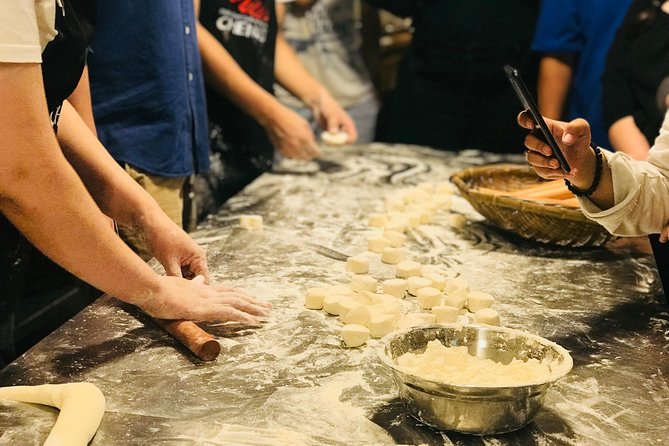
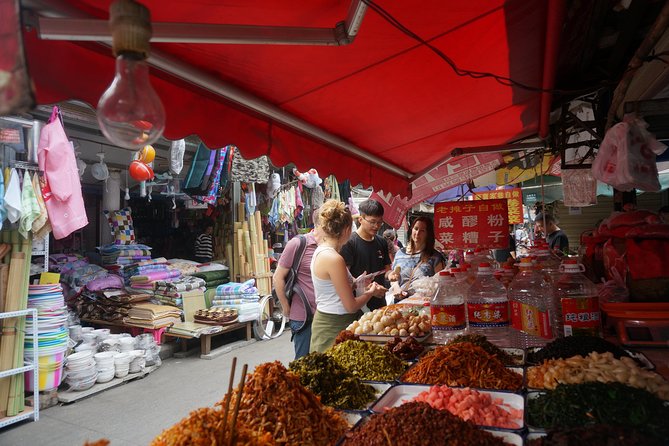
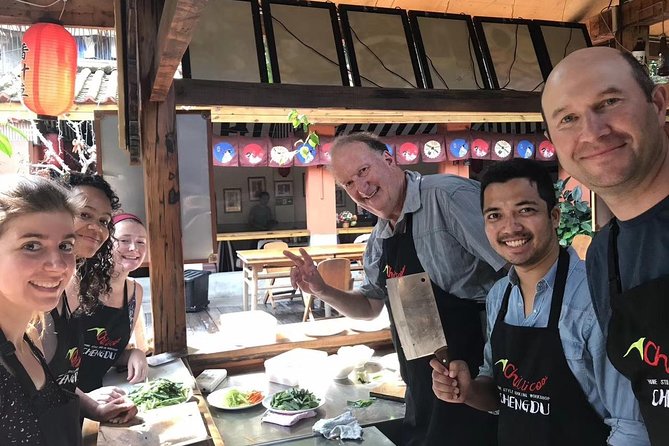
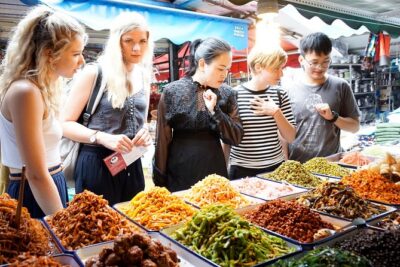
Chengdu’s dumpling class begins before the kitchen. You’ll explore a real local spice market, complete a few food-related challenges, and learn how Sichuan ingredients shape the meal you’ll soon make. Then you’ll head to a traditional courtyard kitchen, where a professional chef guides you through fillings, dough, folding, and cooking.
I like the market-to-table format, since you see the ingredients in their everyday setting before handling them yourself. I also like the relaxed extras: local jasmine tea, snacks such as sunflower seeds and spring rolls, and a beer, Coke, or Sprite with the finished meal.
The main consideration is the meeting point. Pickup and drop-off are not offered if your hotel is outside Chengdu’s second ring road, and the activity begins and ends at Liangjiaxiang in Jinniu District. With a maximum group size of 20, the class may feel less personal on a full departure than it did for guests who had a small group.
Key points to know before booking
- A market visit comes first: Learn about Sichuan spices and ingredients while shopping in a working local market.
- Your meal is hands-on: The morning class produces lunch, while the afternoon class produces dinner.
- Guides may include Lance or Jerry: Both have led guests through the market and cooking portions, with English support available on some departures.
- The setting is a traditional courtyard: Tea is served before the cooking begins, following a local custom of welcoming visitors.
- The meal includes drinks and snacks: Expect jasmine green tea, local snacks, and one beer, Coke, or Sprite.
- The group can reach 20 people: Small groups may get more personal attention, but the advertised maximum is worth keeping in mind.
Why the market visit makes the class worthwhile
Many cooking classes rush you straight to a prepared kitchen. This one starts with the ingredients. That change matters in Chengdu, where spices, sauces, aromatics, and fresh produce are central to the food you eat every day.
Your guide takes you through a local spice market and gives you challenges to complete along the way. The exact challenges are not specified, so you should expect a playful way to identify or learn about ingredients rather than a formal market tour with a fixed script.
You’ll learn about different Sichuan spices and other ingredients used later in the class. That gives you a useful connection between the market stall and your plate. Instead of seeing chili, seasonings, and fillings as anonymous items in a kitchen, you get a chance to recognize them before cooking.
This part also gives you a look at ordinary food shopping in Chengdu. It is not described as a sightseeing market built for visitors. That is a plus if you want a more everyday setting, though it also means the experience may feel less polished and predictable than a cooking studio alone.
The market stop is especially helpful if you are curious about Sichuan food but do not know where to begin. You can ask questions while standing beside the ingredients, then see how those ingredients are used minutes later. The connection is simple, but it makes the cooking lesson easier to remember.
More workshops and classes in Chengdu:
- Half-Day Chengdu Cooking Class with a Local Market Visit
★ 5.0 · 465 reviews - Chengdu: Cooking Class with Fresh Market Half Day Experience
★ 5.0 · 42 reviews - Half-Day steamed Buns Cooking Class with a Local Market Visit
★ 5.0 · 26 reviews
Meeting Lance or Jerry in Chengdu
The experience begins at Liangjiaxiang in Jinniu District, Chengdu, postal code 610051. The activity ends back at this same meeting point, so you need to plan your route in both directions.
One departure had Lance meeting the group at a metro stop, which made the starting point easy to find. Jerry has also led the experience, beginning with a short introduction to Chengdu before taking the group into the market. Guide assignments can vary, but these names give you a sense of the people who may lead your class.
English support is available based on the experience details and guest accounts. Still, guide availability and teaching style can change from one date to another. If language support is important to you, check the booking details before paying.
The tour does not offer hotel pickup and drop-off when your hotel is outside the second ring road. Even if your hotel is inside that area, the published meeting point remains the safest place to plan around. Allow time to reach Liangjiaxiang without cutting things close.
The class is listed as lasting about four hours, though the overview gives a four-to-five-hour range. This is long enough for a market visit, tea, instruction, cooking, and a sit-down meal. Do not schedule a tight attraction immediately afterward.
Entering the courtyard kitchen for tea
After the market, you move to a traditional Sichuan-style courtyard. Before cooking, you are served local green tea with jasmine. This is presented as a local custom for welcoming friends and visitors, not just a quick drink while you wait for the chef.
That pause helps set the pace. You have time to settle in after the market and look over the cooking space before handling dough and fillings. The kitchen has been described as cozy, spotless, and professional, though the available information does not give a detailed equipment list.
Local snacks are also included. Examples given are sunflower seeds and spring rolls. These are small touches, but they help turn the class into a social meal rather than a bare cooking demonstration.
The courtyard setting is one of the better reasons to choose this class over a standard cooking studio. You are not only learning a recipe. You are also spending time in a style of home and neighborhood setting associated with Sichuan life.
Still, keep your expectations practical. The class is built around dumplings, spices, and a meal. It is not a broad course in Sichuan cooking, and the information does not promise a tour of the courtyard’s architecture or a long cultural lecture.
Learning fillings, dough, and folding
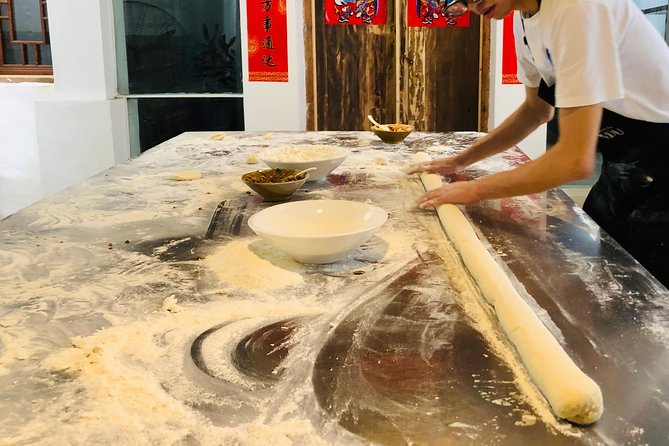
Once you are in the kitchen, a professional chef guides the cooking process. Chef Lee is named in one account, while another mentions a Chinese chef demonstrating the fillings and folding. The exact instructor may vary, but the central format is clear: you make the dumplings yourself rather than simply watching someone else cook.
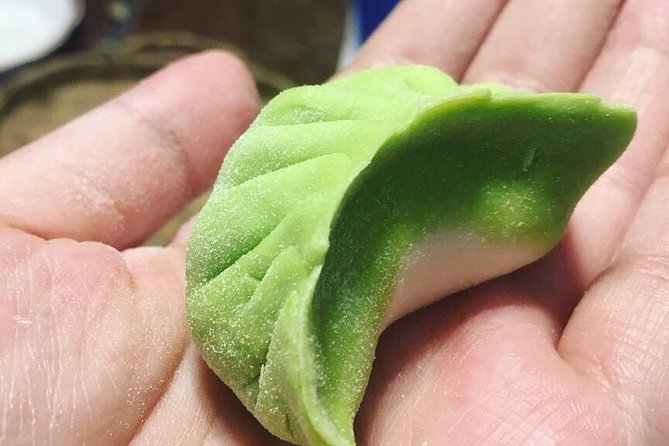
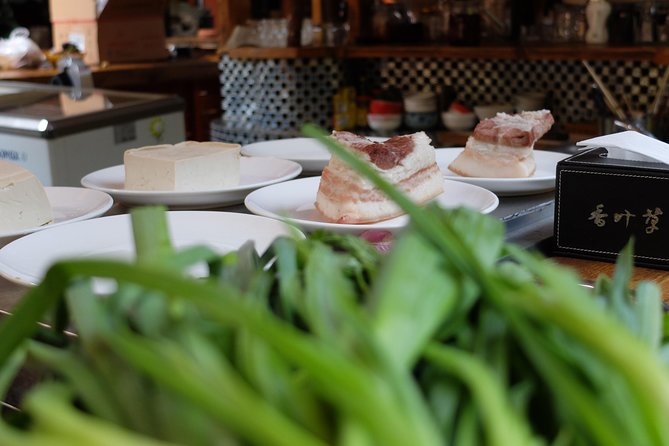
The work begins with the filling and dough, followed by shaping and folding. You should expect instruction in proper folding skills, with the chef demonstrating the process before you try it. This is where the class becomes more than a tasting.
Dumpling folding looks easy until you try to keep the edges sealed and the filling contained. A patient instructor matters. Jerry and his cooking partner were praised for making the experience approachable, while Lance and Chef Lee were singled out for helping create a memorable class.
Vegetarian requests were accommodated for a small group. That is useful if you do not eat meat, but you should give your dietary needs when booking or as early as possible. The available details do not promise a full range of allergy-free or vegan options.
The class is suited to beginners because the point is to learn by doing. You do not need to arrive with professional kitchen skills. You should, however, be ready to participate. This is not the right choice if you want a completely passive meal with someone else doing the work.
A few more Chengdu days to line up
- Chengdu: Giant Panda Breeding Research Base Ticket
★ 4.5 · 580 reviews - Tuktuk Food Tour Through Chengdu’s Local Eats
★ 5.0 · 435 reviews - Private Half-Day Chengdu Panda Breeding Center Tour with Optional Volunteer
★ 5.0 · 353 reviews - Chengdu: Sichuan Opera Shu Feng Yan Yun Evening Show Ticket
★ 4.7 · 185 reviews
Eating lunch or dinner you made yourself
The timing changes the meal. A morning class includes lunch, while an afternoon class includes dinner. In both cases, you make the meal yourself and eat the dumplings afterward.
That is the payoff of the class. You have seen the ingredients at the market, handled the fillings, practiced the folds, and then sat down to eat the result. The final plate may not look perfect, but that is part of the fun. Your dumplings carry the memory of the process.
A free beer, Coke, or Sprite is included, along with tea. The experience also includes snacks during the visit. Alcohol choices appear limited to one beer, so do not book this as a drinking-focused food tour.
The class description refers to dumplings rather than a larger multi-course Sichuan feast. You should judge the $70 price with that in mind. The fee covers about four hours, market guidance, instruction from a professional chef, ingredients, snacks, tea, a meal, and a beverage. For someone who values an activity and cultural context, that is a fair package. If you only want an inexpensive bowl of dumplings, it is not.
Is $70 a good value in Chengdu?
At $70 per person, this is not a bargain meal. You can eat cheaply in Chengdu, and a plate of dumplings alone will cost far less. The value here comes from the full sequence, not from the food quantity.
You are paying for time with a guide, a visit to a local market, an introduction to Sichuan ingredients, kitchen instruction, a courtyard setting, and the chance to eat what you made. The included tea, snacks, and drink add a little practical value.
The price makes the most sense if you are in Chengdu for only a short stay and want one activity that combines food and local context. It also works well for people who like returning home with a skill rather than only a photograph.
Group size affects the value. The maximum is 20 people, which is large enough that individual coaching could be limited on a busy date. On the other hand, small departures are possible. One class had only two participants, and the menu was adjusted to suit vegetarian preferences.
Group discounts are available, so the price may work better for couples, families, or friends booking together. Ask how the discount applies before booking, since the supplied details do not state the size of the reduction.
Timing, transport, and the small practical details
Plan on four to five hours from start to finish. The class begins and ends at Liangjiaxiang, so your transport planning is straightforward once you reach the meeting point.
The activity is near public transportation. One guide met participants at a metro stop, which suggests public transit can be useful for the start, but the exact station instructions are not provided here. Check the confirmation message carefully for the meeting instructions attached to your date.
Mobile tickets are accepted, and confirmation is sent when you book. The activity can be booked in advance, and it averages about seven days of advance booking. That does not mean you must reserve exactly a week ahead, but it is sensible to avoid leaving this popular small-group activity until the last day.
Service animals are allowed. The tour requires good weather, likely because part of the market route takes place outdoors. If poor weather cancels the activity, you are offered another date or a full refund.
Free cancellation is available if you cancel at least 24 hours before the start time. Within 24 hours, you receive no refund, and changes are not accepted. The cutoff uses Chengdu local time.
Who will enjoy this dumpling class most?
I would choose this for a first visit to Chengdu, especially if you want a food activity that gives you some local background without taking a full day. The market visit keeps the experience connected to the city, and the cooking lesson gives you something active to do.
It is a good match for couples and friends, since folding dumplings is more enjoyable when you can compare your shapes and fillings. Families may also like it, though the four-hour duration and kitchen participation may be a lot for very young children.
Vegetarians should consider it because one small group received a tailored menu. Still, you should state your needs ahead of time rather than assume the same arrangement will apply automatically.
I would be more cautious if you have limited mobility, although the information confirms service animals and access to public transportation but does not describe step-free access, seating, or kitchen accommodations. Ask the provider directly if those details matter to you.
This is also not the best pick if your main goal is an advanced cooking course. The emphasis is on a fun introduction to dumplings and Sichuan ingredients, not on professional technique or a long list of recipes.
Should you book the Chengdu dumpling class?
Book it if you want to shop, cook, and eat in one connected experience. The market visit gives the class a stronger sense of place than a kitchen-only lesson, while the courtyard, tea, snacks, and handmade meal add a pleasant local rhythm.
The strongest parts are the guides, the chef-led instruction, and the chance to adapt the menu when possible. Lance and Jerry have both been associated with warm, helpful introductions, and Chef Lee is specifically named as an instructor. Just remember that the group may reach 20 people, pickup may not cover your hotel, and the $70 price reflects an experience rather than a cheap meal.
For a food-focused afternoon or morning in Chengdu, I think it is a sound choice. Confirm the meeting point, dietary arrangements, and guide language before you book, then leave enough time afterward to enjoy the city without rushing.
FAQ
How long does the Chengdu dumpling class last?
The activity lasts about four hours, with the overview giving a possible range of four to five hours.
Where does the class start and finish?
It starts at Liangjiaxiang in Jinniu District, Chengdu, China, and ends back at the same meeting point.
Is hotel pickup included?
Pickup and drop-off are not offered if your hotel is outside Chengdu’s second ring road.
What meal do I make during the class?
A morning class includes lunch, while an afternoon class includes dinner. You make the dumplings yourself and eat them during the activity.
Are drinks and snacks included?
Yes. The experience includes local jasmine green tea, snacks such as sunflower seeds and spring rolls, and one beer, Coke, or Sprite.
How many people can join the class?
The maximum group size is 20 people. Smaller groups are possible.
Can vegetarians join?
Vegetarian menus have been accommodated for participants, but you should provide your dietary requirements when booking or contact the provider ahead of time.
What is the cancellation policy?
You receive a full refund if you cancel at least 24 hours before the start time. Cancellations or changes made within 24 hours are not accepted for a refund. If poor weather causes the provider to cancel, you are offered another date or a full refund.
Recently listed in Chengdu
- Full-Day Tour of Leshan’s Giant Buddha from Chengdu★ 5.0 · 5 reviews
- Unique One-Day Tour: Interactive Experience with Red Pandas★ 5.0 · 5 reviews
- Chengdu Nightlife Experience with a Local: Bars, Clubs & Culture★ 5.0 · 5 reviews
- Half-Day Tour at Chengdu Panda Breeding Research Base★ 4.0 · 5 reviews
- Private Day Tour: Dujiangyan Panda Base Volunteering from Chengdu★ 4.0 · 5 reviews
- Private Day Tour: Chengdu Panda and Leshan Buddha★ 4.0 · 5 reviews
- One Day Giant Panda Leisure Private Tour in Chengdu★ 5.0 · 5 reviews
- Chengdu: Giant Panda Base Reservation and Entry★ 5.0 · 5 reviews
Chengdu Tours, compared.

Half-Day Chengdu Cooking Class with a Local Market Visit
Read our review →

Private Half-Day Chengdu Panda Breeding Center Tour with Optional Volunteer
Read our review →
Sichuan Opera Shu Feng Yan Yun Evening Show Ticket
Read our review →
Private Chengdu Day Tour: Giant Pandas and Jinsha Site Museum
Read our review →
Visiting Dujiangyan Yaan Wolong Panda Base Optional Volunteering
Read our review →
Chengdu Sichuan Opera Show Ticket – Shu Feng Ya Yun
Read our review →Browse the lists this tour appears in