
Reviewed · BEIJING TOURS
Beijing: Peking University Campus Guided Walking Tour
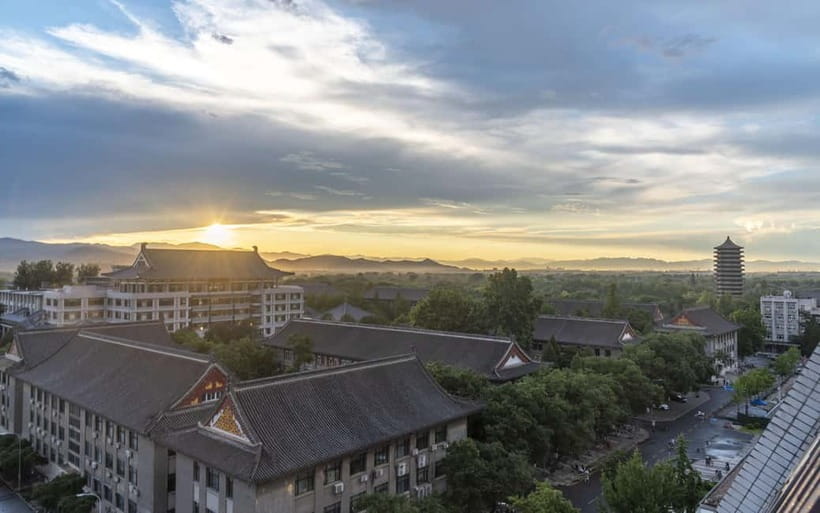
The most interesting part of this Peking University campus tour is the way it turns a famous university into a readable place. You are not simply shown a lake, pagoda, and grand buildings. A current student guide explains how the campus grew from Yenching University, how its gardens were planned, and why certain old symbols still matter.
I like the small group of up to 10 people, which should make it easier to hear and ask questions. I also like the route from the East Gate to the West Gate, because you cross the campus rather than circle one small area. The main thing to consider is the two-hour limit. Peking University covers a lot of ground, and one recent participant noted that the permitted campus hours limited how long they could explore.
Key points at a glance
- Walk from the East Gate to the West Gate: Meet by the stone lion on the right side of the entrance and finish at the opposite side of campus.
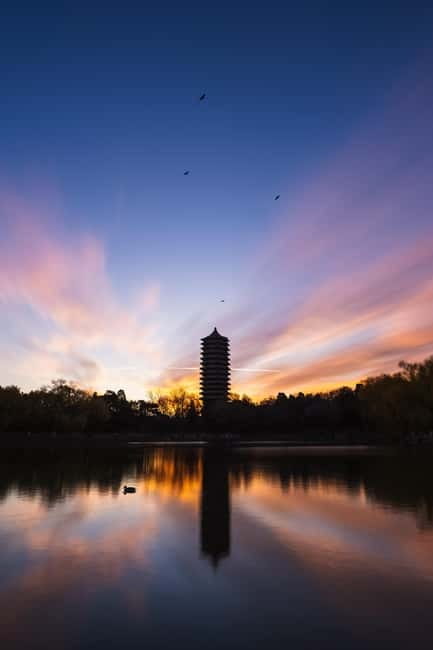
- See Boya Pagoda and Weiming Lake: These are among PKU’s most recognizable sights, and the guide explains their cultural meaning.
- Learn from a current student: The tour focuses on campus traditions, student life, famous alumni, and modern PKU.
- Visit the library and Cai Yuanpei statue: These stops connect the university’s daily academic life with its political and educational past.
- Decode the gardens: Courtyards, traditional Chinese planting, and building layouts are explained as part of a larger idea of harmony between nature and study.
- English, small-group format: The tour lasts two hours, costs $39 per person, and allows cancellation up to 24 hours before departure for a full refund.
Why Peking University is worth two hours
Peking University, usually called PKU, is one of China’s best-known universities. For a visitor, that reputation can feel distant. A campus gate and a famous name do not tell you much on their own.
A guided walk changes that. The university becomes a place shaped by educational reform, political change, old Chinese design, and the routines of students who study there today. You get a look at both the symbolic PKU and the working campus behind the name.
The tour is especially useful if you have already seen Beijing’s imperial monuments and want a different side of the city. The Forbidden City shows power from above. Peking University shows how education, scholarship, and public life have been valued in modern China.
You will spend the full two hours on foot. That matters because the stops are spread across a large campus, and comfortable shoes are not just a polite suggestion. Bring a camera as well, since the pagoda, lake, gardens, old structures, and formal statues offer some of the most pleasant photographs in Haidian District.
More Walking Tours in Beijing
- Beijing Hutong Walking Food and Beer Tour at Hidden Restaurants
★ 5.0 · 1,132 reviews - Private Beijing Walking Tour of the Forbidden City with 7 Options
★ 5.0 · 675 reviews - Forbidden City Private Walking Tour with Optional Sights
★ 5.0 · 400 reviews
Meeting the guide at the East Gate
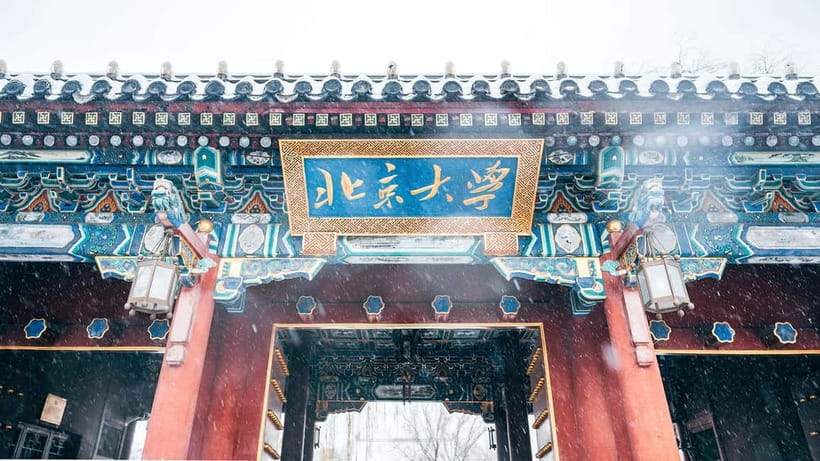
Your starting point is Peking University East Gate, written in Chinese as 北京大学东门. The meeting spot is specific: find the stone lion on the right side when you are facing the gate entrance.
That detail is useful. University gates can be crowded and visually confusing, especially if you are trying to match a guide’s message while standing outside a large entrance. Go directly to the stone lion rather than waiting somewhere along the street.
The tour is conducted in English. It is led by a current student, giving you a chance to hear about campus life from someone connected to the university now, not only through old facts. Henry is the guide named most often in the supplied booking comments. He is described as friendly, patient, clear, and good with families, including a group with four children.
That personal approach seems to be a major part of the experience. Henry has also taken time to explain the campus carefully and, in one case, invited participants to eat in the school cafeteria. Treat that as a possible extra rather than a promised part of the tour. Food and drinks are not included, and the formal tour ends at the West Gate.
Boya Pagoda and Weiming Lake
The walk includes two of PKU’s signature sights: Boya Pagoda and Weiming Lake. Together, they give the campus its most recognizable setting.
Boya Pagoda is about a century old, and its presence adds an older visual marker to a university known for modern scholarship. The guide does more than point it out. You learn why it matters within the campus and how it fits with the surrounding water, trees, paths, and academic buildings.
Weiming Lake is the scenic heart of the route. Its value is not only photographic. The lake helps explain the way PKU uses natural features to create a setting for study and reflection. The tour connects the water and surrounding gardens with the traditional Chinese idea of bringing nature and human work into balance.
This is one place where the guide’s interpretation matters. Without context, you might see a pleasant lake beside a pagoda. With context, you can look at the campus layout as a deliberate composition. The arrangement of water, structures, and open space carries meaning.
The route is still a walking tour, not a long stop at each landmark. If you want extensive time for photographs, you may need to work quickly or accept that you will not capture every angle. The two-hour schedule is designed to cover several key areas rather than provide a slow photography session.
The Bell Pavilion, Hua Biao, and Qilin statues
The Bell Pavilion adds another layer to the campus story. It is an older cultural feature, and the guide explains its place among PKU’s symbols and traditions.
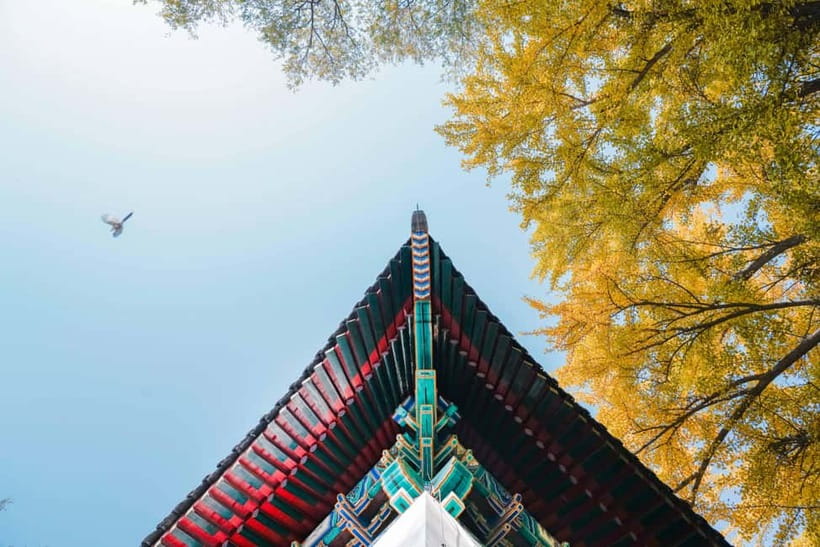
You will also see Hua Biao, or ornamental pillars, along with Qilin statues. These details are easy to pass without a guide. Their shapes and placement are tied to Chinese cultural ideas, and the tour helps you read them rather than treat them as decoration.
This is where the walk becomes more than a pleasant campus stroll. Chinese architecture often communicates through symbols, position, and proportion. A pillar, animal figure, courtyard, or gate may signal ideas about protection, status, learning, or harmony. The guide introduces those meanings in a practical way, using the actual campus around you.
The payoff is simple: after the tour, you may notice design details elsewhere in Beijing that you would previously have missed. That makes this experience useful beyond PKU itself.
A very different day in Beijing:
- From Beijing: Mutianyu Great Wall Tours with Options
★ 4.9 · 9,216 reviews - Beijing: Forbidden City Tour(Group/Private)-Tickets Included
★ 4.8 · 7,974 reviews - Beijing: T-Square & Forbidden City Group or Private Tour
★ 4.8 · 4,446 reviews - All-Inclusive Tour: Tiananmen Square, Forbidden City, Great Wall
★ 5.0 · 2,873 reviews
The library and Cai Yuanpei’s legacy
The tour includes the grand Peking University Library, one of the campus buildings most closely tied to learning and research. You get a sense of the institution’s academic identity here, rather than seeing only its picturesque outdoor spaces.
The library also helps balance the tour. Boya Pagoda and Weiming Lake are visually appealing, but the library reminds you that PKU is an active center of study. This is not a museum campus preserved only for sightseeing. Students use the university as a place of work, classes, reading, and daily routines.
Another important stop is the Statue of Cai Yuanpei. Cai was a revolutionary former president of Peking University, and his role connects the university with major changes in Chinese education and public life.
The guide explains why he remains an important figure at PKU. This is a strong stop for visitors interested in modern Chinese history, since the story moves beyond buildings and scenery into the people who shaped the institution.
You should expect an interpretive visit, not a formal lecture. The guide brings together the university’s past, its educational ideals, and its current identity. That format suits most visitors, though anyone seeking a specialist academic history may want more time than two hours allows.
From Yenching University to modern PKU
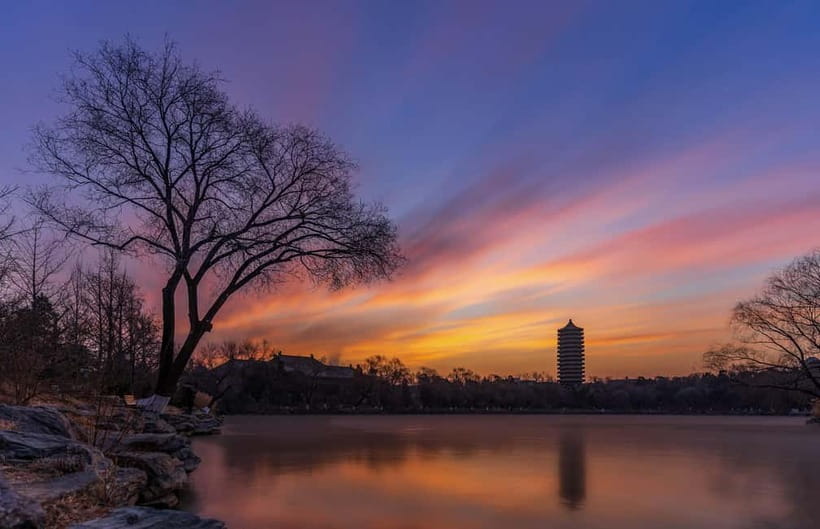
One of the most useful historical threads is PKU’s connection to Yenching University. The tour explains how the campus evolved from those earlier roots into the university you see today.
That background gives meaning to the mixture of buildings, gardens, symbols, and academic traditions. You are not looking at one period frozen in place. The university reflects several stages of Chinese education and institutional change.
The route also touches on the campus’s connections to Yuanmingyuan, the Old Summer Palace, and to Heshen, the notorious Qing Dynasty official. These links add surprising depth to a place that might otherwise seem separate from Beijing’s imperial past.
The Heshen connection is especially useful for visitors who have already toured Beijing’s palaces and gardens. It shows that the city’s history does not sit in neat boxes. Imperial politics, private wealth, damaged heritage sites, and modern education can all meet in the story of one campus.
The guide’s job here is to keep those links understandable. You do not need prior knowledge of Chinese history to follow the walk, but you will get more from it if you know that Beijing’s universities often occupy places shaped by earlier dynasties and foreign educational projects.
Reading the traditional gardens
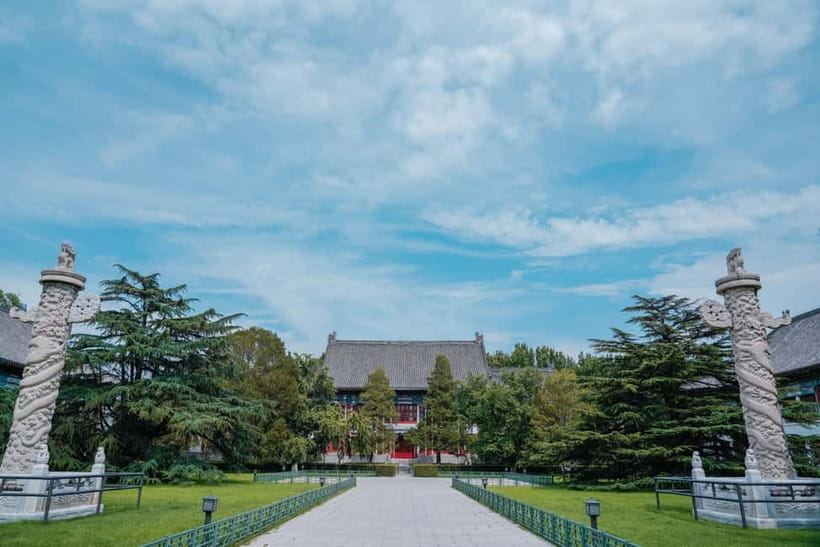
The gardens and courtyards are not filler between major landmarks. They are part of the tour’s main idea.
You learn how traditional Chinese gardens use water, planting, walls, views, and pathways to shape the way people experience a place. Building layouts are also discussed in relation to harmony between nature and scholarship.
For you, this means the tour offers a way to look at the campus at several levels. You can enjoy a quiet path or courtyard as scenery, then learn why its position and design may have been chosen. The setting becomes a lesson in how architecture can support concentration and calm.
Do not expect every garden feature to be explained in exhaustive detail. The tour has to cover the lake, pagoda, pavilion, statues, library, and historical background within two hours. Still, this design focus is one of the more distinctive reasons to choose a campus walk instead of a standard city sightseeing tour.
It also suits architecture lovers who want more than large imperial buildings. PKU’s appeal comes from the relationship between the old and the practical, the formal and the natural.
What the student perspective adds
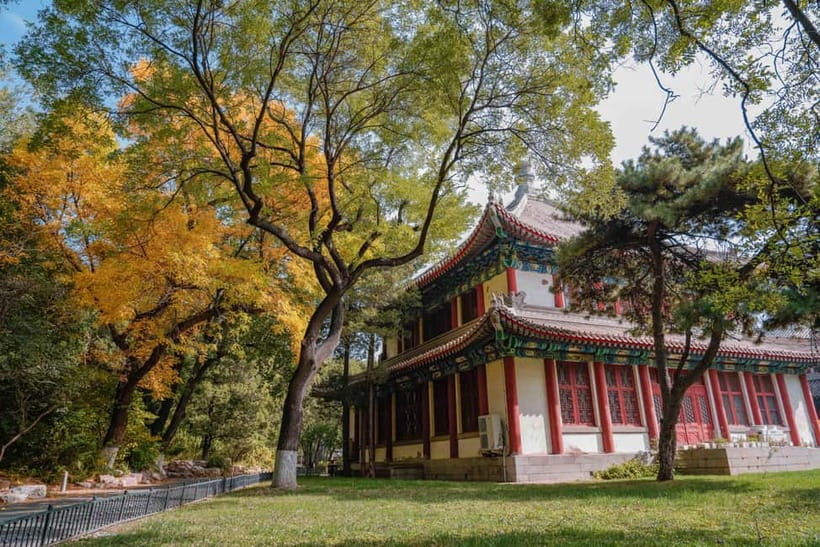
A current student guide can explain things a standard history guide may not. You hear about academic culture, campus traditions, famous alumni, and student experience as parts of one living institution.
That perspective makes the visit worthwhile for families with older children, prospective students, and anyone curious about university life in China. One booking group specifically praised Henry’s patience with four children, which suggests that the pace and personal contact can work well for families.
The tour also gives you room to ask questions. A group capped at 10 people is small enough to feel more like a guided conversation than a speech delivered to a crowd. That is valuable at a university, where your questions may be as interesting as the planned route.
The student angle does have a limit. A current student can speak from experience, but the experience may depend on the individual guide and the day’s campus conditions. The supplied information names Henry in several recent bookings, but it does not guarantee that he will lead every departure.
The English language format is clear. If you need a tour in another language, this is not the right choice.
How the two-hour route feels
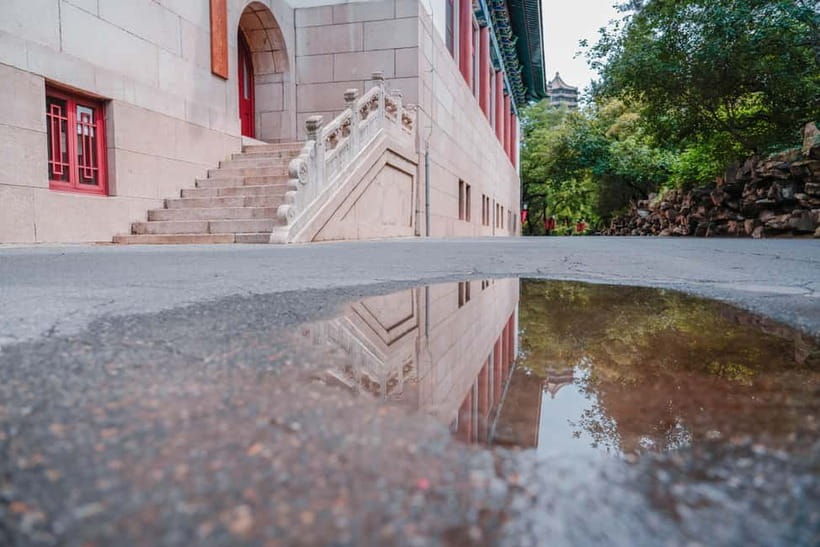
The tour begins at the East Gate and finishes at the West Gate. That point-to-point design is practical if you plan your Beijing day around the university and do not want to return to the entrance.
You will walk through the campus while stopping at the major historic and cultural sites. The route includes:
- The East Gate meeting area
- Boya Pagoda
- Weiming Lake
- The Bell Pavilion
- Hua Biao ornamental pillars
- Qilin statues
- Peking University Library
- The Statue of Cai Yuanpei
- Traditional gardens, courtyards, and other campus landmarks
- The West Gate finish
The order in which these stops are visited may vary, so think of this as the planned coverage rather than a guaranteed minute-by-minute sequence.
Two hours is a sensible introduction. It is long enough to understand the campus and see key places, yet short enough to fit into a busy Beijing schedule. It is not long enough to explore every corner or linger at each stop.
That trade-off matters most to repeat visitors, university enthusiasts, and photographers. If you want a full day at PKU, this tour will feel like a beginning. If you want context and a strong first look, the length is a good fit.
Is $39 good value?
At $39 per person, this is not a free campus stroll, but the price can make sense if you value interpretation and access to a living academic setting.
You are paying for two hours with an English-speaking guide, a small group, and explanations that connect the visible campus to Chinese history, architecture, and student life. A self-guided walk would show you the same broad sights, but it would not necessarily explain the meaning of the Hua Biao, Qilin statues, gardens, or Cai Yuanpei’s role.
The price is easier to justify if you are interested in education, modern Chinese history, or architecture. It is also useful for families who want a structured visit and a guide patient enough to answer questions.
The value is weaker if you only want photographs of Weiming Lake and Boya Pagoda. You could spend less time and simply enjoy the grounds, assuming you can enter under the conditions of your visit. This tour earns its fee through the stories and explanations.
Food, drinks, and transportation to and from the university are not included. Plan those costs separately. The experience itself ends at the West Gate, so consider what you want to do next before you start.
You can reserve now and pay later, and cancellation is free up to 24 hours in advance. Those terms are useful if your Beijing schedule may change.
Who should book this PKU walk?
I would recommend this tour to several kinds of visitors.
History fans will appreciate the links between Yenching University, Yuanmingyuan, Heshen, and modern PKU. The tour adds a different chapter to a Beijing visit filled with imperial sites.
Architecture and garden lovers will enjoy learning how courtyards, natural features, pillars, statues, and building layouts work together. The guide helps you understand why the campus looks the way it does.
Families may find the small group and personal student guide easier than a large sightseeing tour. Henry’s patience with four children is a useful sign for parents, though the pace remains a walking pace across a working university.
Prospective students and educators will get a direct look at PKU’s academic atmosphere and traditions. The current student perspective is particularly helpful here.
I would be more cautious if you have limited mobility or dislike walking, since the entire experience takes place on foot and the tour covers a campus route between two gates. The supplied information does not give an accessibility assessment, so ask the provider before booking if you have specific needs.
You should also choose something else if you want a broad Beijing tour with transportation. This experience stays focused on Peking University and does not include transfers.
Practical tips for a better visit
Meet at the correct stone lion, on the right side when facing the East Gate. Arriving with that landmark in mind will make the start less stressful.
Wear comfortable shoes. The advice is repeated for good reason: this is a two-hour walking experience, not a short garden stop.
Bring a camera, but keep your attention on the guide as well. The best part of the walk is often the explanation of what you are seeing, not simply the view itself.
If you are visiting with children, tell them beforehand that this is a history and culture walk as well as a campus visit. The statues, lake, pagoda, and gardens provide visual variety, while the university stories give the route its purpose.
If you are hoping to eat in the school cafeteria, ask the guide whether that is possible on your day. Henry invited one group to do so, but food is not part of the included tour.
Finally, allow for the possibility that campus access hours may restrict the route or the time available. One recent participant specifically noted that limited hours prevented a longer exploration. The two-hour plan is firm enough that you should not count on extending it.
Should you book the Peking University campus tour?
Book it if you want to understand what you are seeing, not just take pictures of a famous university. The combination of Boya Pagoda, Weiming Lake, the library, Cai Yuanpei, traditional gardens, and a current student guide gives you a thoughtful look at PKU’s past and present.
At $39, it is best value for curious visitors who enjoy history, design, education, and personal stories. The small group and English format are practical strengths, and Henry appears to be a particularly warm and capable guide when assigned.
Skip it if you want a quick photo stop, a full-day campus exploration, or transportation included. For everyone else, this is a focused way to see a side of Beijing that most standard sightseeing routes leave out.
FAQ
How long does the Peking University campus tour last?
The tour lasts two hours.
Where does the tour begin?
It begins at Peking University East Gate, 北京大学东门. Meet at the stone lion on the right side when facing the gate entrance.
Where does the tour finish?
The walk finishes at Peking University West Gate.
Is the tour conducted in English?
Yes. The tour has a live English-speaking guide.
What sights are included?
The route includes Boya Pagoda, Weiming Lake, the Bell Pavilion, Hua Biao ornamental pillars, Qilin statues, Peking University Library, the Statue of Cai Yuanpei, and traditional gardens and courtyards.
How large is the group?
The tour is a small-group experience limited to 10 participants.
Recently listed in Beijing
- Small-Group 1-day Jinshanling Great Wall 6km Hiking tour★ 5.0 · 4 reviews
- Temple of Heaven Tickets Booking★ 5.0 · 4 reviews
- Jinshangling Great Wall Of Beijing Tickets And Other Option★ 4.0 · 4 reviews
- Beijing Night Walking Tour★ 5.0 · 4 reviews
- Beijing: Private Biking Tour Along Central Axis of Beijing★ 4.8 · 4 reviews
- Private Layover Tour to Mutianyu Great Wall from Beijing Airport★ 5.0 · 5 reviews
- Fantastic Private Trip to Mutianyu Great Wall (English Service)★ 5.0 · 5 reviews
- Beijing: Private Tour to Jinshanling Great Wall with Option★ 4.7 · 5 reviews
Beijing Tours, compared.

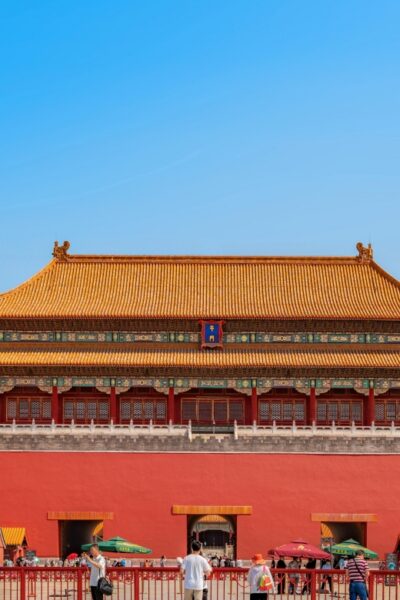
Forbidden City Tour(Group/Private)-Tickets Included
Read our review →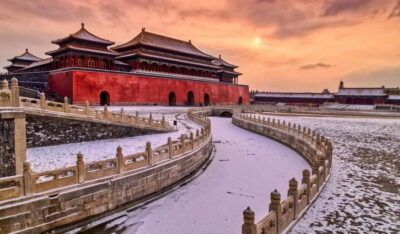
T-Square & Forbidden City Group or Private Tour
Read our review →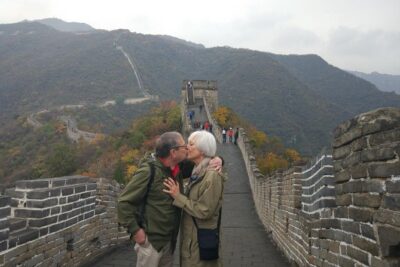
All-Inclusive Tour: Tiananmen Square, Forbidden City, Great Wall
Read our review →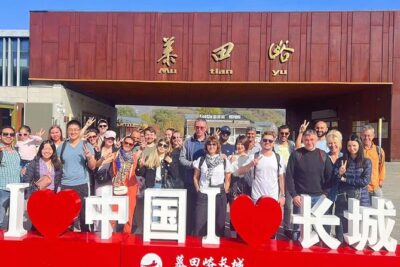
MuBus: Mutianyu Great Wall ENG/ESP/RUS Guided Bus Tour
Read our review →
4-Hour Small Group Tour to Forbidden City with Entry Tickets
Read our review →
Beijing Full Day Tours: Tiananmen Sq, Forbidden City, Great Wall
Read our review →Browse the lists this tour appears in