
Reviewed · SHAOLIN TEMPLE TOURS
Beijing:Bullet Train Day Tour to Shaolin Temple&Martial Arts
Shaolin Temple is not a quick Beijing attraction. It is a Henan pilgrimage by high-speed train, with a famous monastery, more than 240 burial pagodas, and a live kung fu show packed into one very long day. I like the smooth station handoffs and the chance to see a major Buddhist site without arranging China’s rail system alone. I also like that the tour includes the temple entrance and battery bus, which saves time on a tight schedule.
The catch is the clock. You spend about six hours on trains, another three hours in road transfers, and roughly 2.5 hours touring the temple. That makes this a strong choice for a determined first visit, but a tiring one for anyone hoping for a quiet spiritual retreat or a slow look at every building.
Key points to know before booking
- About 15 hours door to door: Plan on an early start, a late return, and very little spare time.
- Six hours by bullet train: The second-class round trip connects Beijing and Zhengzhou, but the train ride is still a major part of the day.
- A real handoff system: A Beijing driver takes you into the correct waiting area, and your Zhengzhou guide meets you at the arrival hall with your name.
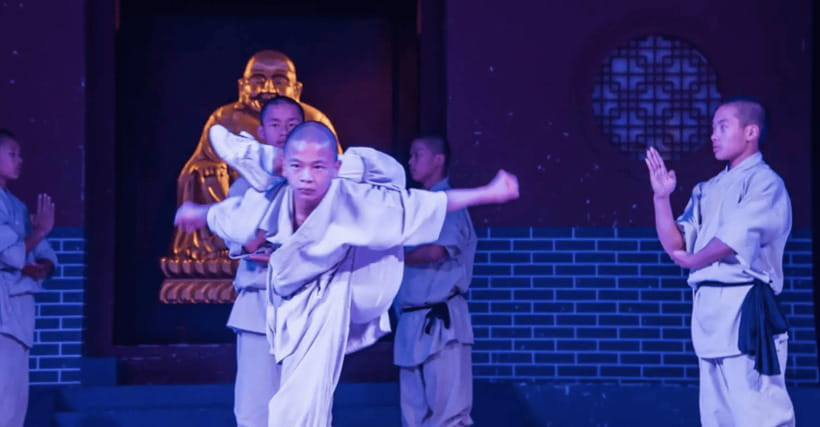
- Kung fu comes first: The monk performance at the theater is scheduled before the temple walk, so you get the headline attraction early.
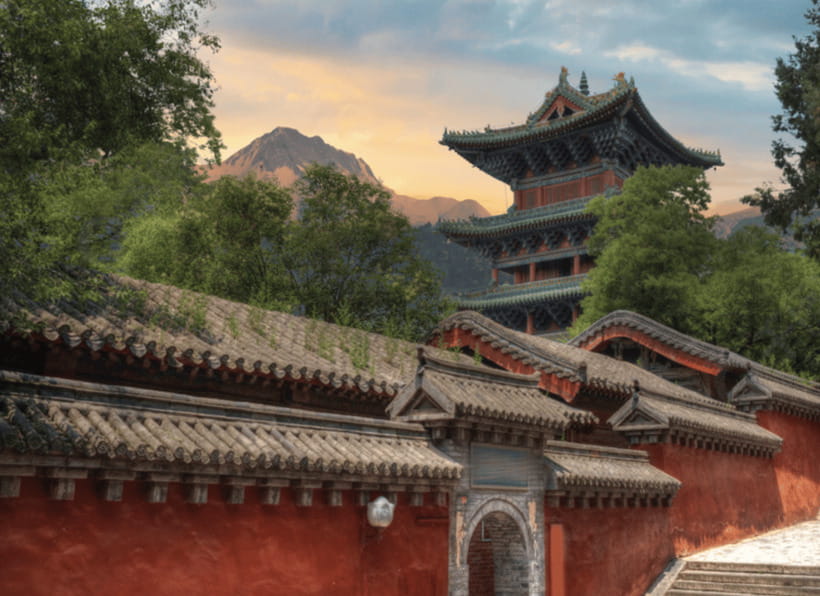
- The Pagoda Forest is the visual highlight: More than 240 tomb pagodas from several Chinese dynasties make this more than a standard temple visit.
- Bring documents and cash-flow patience: Your passport or ID is needed, photocopies are required for train tickets, and a refundable $100-per-person deposit secures those tickets.
Why this day trip is worth the effort
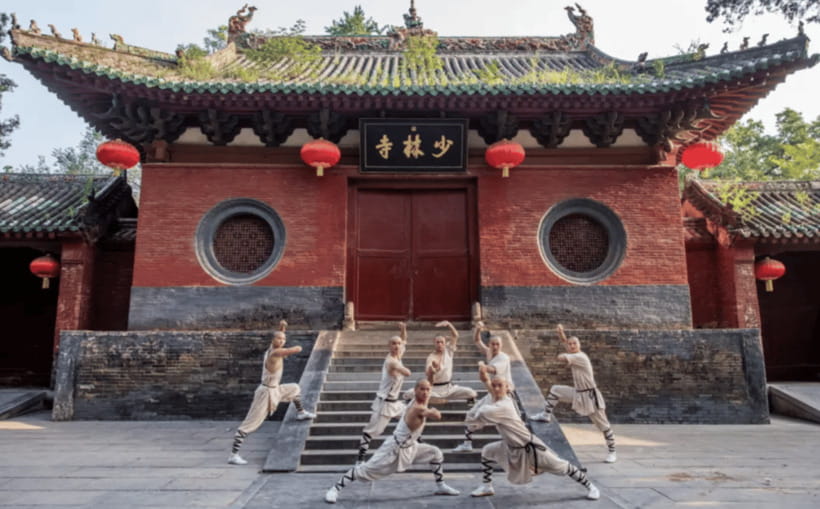
Shaolin Temple carries two powerful identities. It is an old Buddhist monastery, first constructed in 495 A.D., and it is widely recognized as the birthplace of Chinese kung fu and a center of Chan Buddhism. The tour works because it gives you both sides: the religious buildings and stories, followed by the physical spectacle that made Shaolin famous around the world.
I like this combination. A kung fu show alone could feel like a stage attraction, while a temple visit without context might leave you wondering why the place matters. Here, your guide connects the martial arts tradition with the temple’s people, buildings, and Buddhist past.
You should also set your expectations correctly. This is not a private meditation visit, and the experience can feel busy or commercial around the main entrance and theater. One poor-weather departure was judged harshly, with the temple feeling more like a crowded transport hub than a spiritual place. Rain can change the mood of any outdoor historic site, so check the forecast before committing to this demanding day.
More Shaolin Temple trips:
- Private Tour: Longmen Grottoes, Shaolin Temple & Kungfu Show
★ 4.8 · 17 reviews - Luoyang Private Day tour to Longmen Grottoes and Shaolin temple
★ 5.0 · 17 reviews - Luoyang Private Day Tour to Shaolin Temple&Longmen Grottoes
★ 5.0 · 10 reviews
The Beijing station handoff at the start
Your Beijing driver meets you in the lobby of your downtown hotel, holding a sign with your name. The driver takes you to Beijing West Railway Station and accompanies you to the correct waiting area, checking that your tickets are in order before you board.
That support matters more than it may sound. Beijing West is large, and a first-time rail departure can involve finding the right entrance, waiting area, and platform flow. You still take the train on your own, but the driver’s job is to get you through the first confusing part.
The booking process has one unusual condition. A $100 deposit per person is required to secure the train tickets, and it is refunded on the tour day. Once those tickets have been purchased, cancelling does not recover the deposit, even though the regular cancellation rule allows a full refund up to 24 hours in advance under the stated terms.
Send the required photocopy of every passenger’s passport in time for ticket purchase, and carry your passport or ID on the day. Infants aged zero to three are free, but they do not receive a separate train seat.
What six hours on the bullet train really means
The train between Beijing and Zhengzhou takes about 2.5 to 3.5 hours each way, with the advertised schedule commonly described as roughly 2.5 hours. Second-class seats are included, and the train gives you a practical break from the road portion of the trip.
Still, this is not a minor transport detail. The round trip accounts for around six hours of your day, so you should rest before departure and prepare for a full travel day rather than a light excursion. Food is not included, so bring something to eat or budget for your own meals during the journey.
The train is also what makes this tour possible from Beijing. Shaolin Temple lies far enough away that a private road trip would be slower and less comfortable, while the bullet train cuts across the longest part of the route. You pay for that convenience with a schedule that leaves little room for delays or extra sightseeing.
Meeting your guide in Zhengzhou
At Zhengzhou, your local English-speaking guide waits at the exit of the arrival hall with a sign showing your name. From there, you transfer by vehicle toward Shaolin Temple, a drive of about 1.5 hours.
This second handoff is one of the tour’s strongest practical features. You do not have to find the temple on your own after getting off the train, and the guide can begin explaining the area during the drive. The countryside views offer a change from Beijing and Zhengzhou, though the road transfer adds another substantial block of time.
The local guide is based in Zhengzhou, not with you on the Beijing train. That distinction is important: the Beijing driver handles the station transfer, you ride the train independently, and the Henan guide takes over after arrival.
Past departures have involved a Beijing driver named Sun and a Henan guide named Gavin, with Bloem helping coordinate the arrangements. Staff can change, so treat those names as useful context rather than a guarantee. The key service to look for is the same: a driver at each end and an English-speaking guide in Henan.
More bullet train day trips:
- Suzhou Private Day Trip from Shanghai with Bullet Train Option
★ 5.0 · 366 reviews - Private Suzhou Day Trip from Shanghai by Bullet Train with All Inclusive Option
★ 5.0 · 283 reviews - Beijing to Xi’an See Terracotta Warriors with Bullet Train Round Trip Transfer
★ 5.0 · 238 reviews - Flexible Hangzhou Private Tour from Shanghai by Bullet Train
★ 5.0 · 220 reviews
The Shaolin kung fu theater
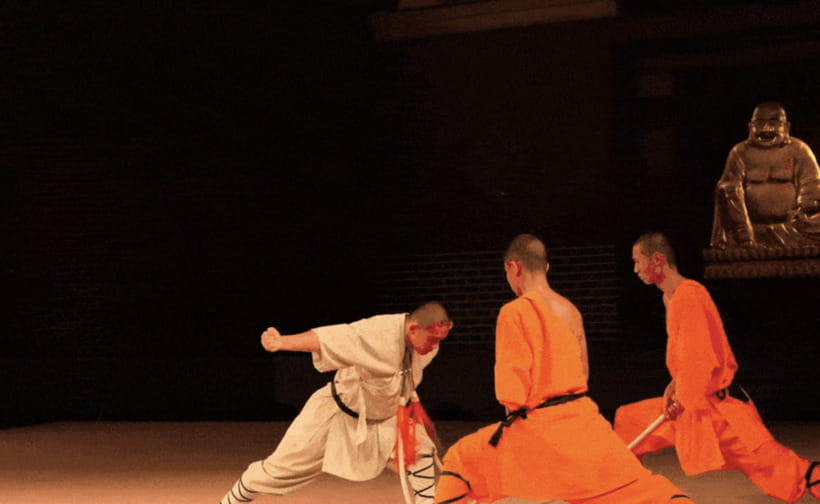
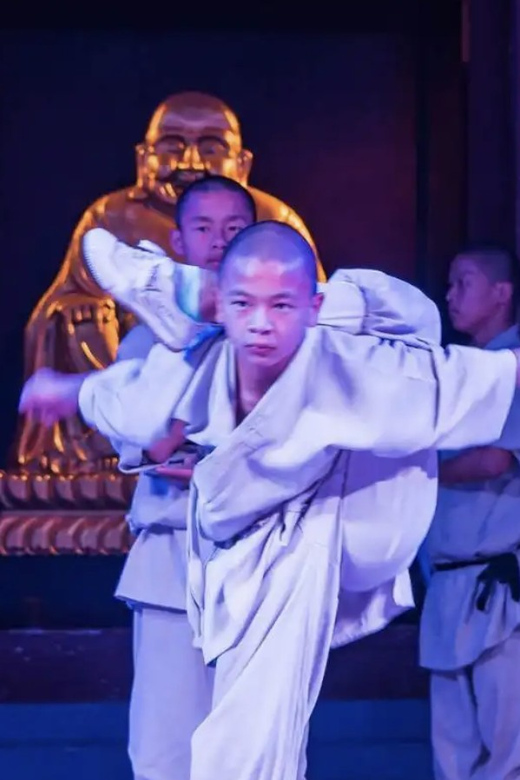
The first activity at Shaolin is the kung fu performance. You watch monks demonstrate martial arts at the theater before touring the temple buildings.
This order is sensible. You get the most familiar Shaolin experience immediately, then see the religious setting that gives the martial arts its cultural frame. A past departure also included an extra one-hour kung fu lesson with a monk, but that is not listed as a standard inclusion, so do not book this trip expecting the lesson.
The show is a performance, not a lesson in Buddhist practice. It is designed to demonstrate skill, strength, and movement, and it can be the most entertaining part of the day. If you are mainly interested in architecture, ritual, and quiet courtyards, you may find the theater less compelling than the temple walk.
I would keep both parts in your plan. The show explains the modern public image of Shaolin, while the halls and pagodas give you the older setting behind it.
Walking through the halls and courtyards

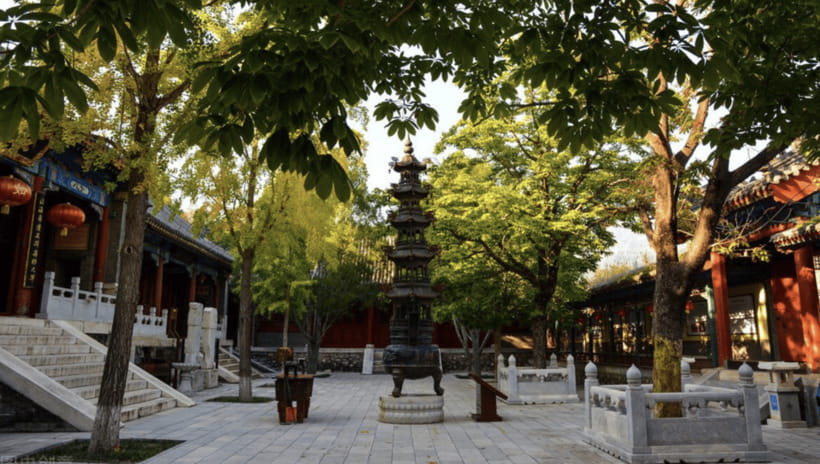
After the performance, your guide leads you through the temple grounds. The route includes the Hall of Heavenly Kings, Mahavira Hall, the Bell Tower, the Drum Tower, the Thousand-Buddha Hall, and the Abbot Room.
A guide makes a real difference here because the buildings can otherwise become a procession of names and roofs. You receive background on the temple’s culture, people, and religious role, along with stories tied to the site’s long past. The supplied tour time for the guided Shaolin visit is about 2.5 hours, so expect an overview rather than a slow architectural study.
The temple’s story begins in 495 A.D., when it was first constructed. It later became associated with the Indian master Batuo after Emperor Xiaowen of the Northern Wei Dynasty arranged for the temple to accommodate him. The site is also presented as the origin of Shaolin kung fu and a cradle of Chinese martial arts.
That history gives the visit weight, but the setting may not always feel serene. Shaolin is famous, and the central areas can feel organized for large numbers of people. One especially wet visit left a poor impression, with the original temple area seeming more like a subway station than a place of spiritual calm. I would come for the history and setting, not for guaranteed silence.
Wear shoes you can walk in and allow for outdoor exposure. The experience is not suitable for wheelchair users, and the schedule includes several transfers in addition to the temple grounds.
The Pagoda Forest and its layers of time
The Pagoda Forest is one of the best reasons to make the long trip. It contains more than 240 tomb pagodas for eminent monks and abbots, built in different sizes and styles across the Tang, Song, Jin, Yuan, Ming, and Qing dynasties, from 618 to 1911.
You do not need to be a specialist to appreciate what this means. Instead of seeing one restored monument, you see a long sequence of Buddhist memorials spread across different eras. The variety gives you a direct sense of how the temple remained important over centuries.
It is also one of the strongest photo opportunities of the day. The pagodas provide a quieter visual counterpoint to the theater and main halls, though your available time depends on the group’s pace and the return train schedule.
The included battery bus helps here. It reduces walking between parts of the site and makes it possible to cover more ground during a short visit. That is useful, but it also reinforces the basic character of this tour: you are covering a major site efficiently, not wandering without a plan.
The return to Beijing and the value of $348
After the temple visit, your guide takes you back to Zhengzhou Railway Station for the return train. At Beijing West, your driver meets you again and transfers you to your downtown hotel.
The price is $348 per person. That is a serious day-trip cost, but it includes the expensive and complicated pieces: second-class round-trip bullet train tickets, Beijing hotel transfers, Zhengzhou station transfers, an English-speaking guide, the Shaolin Temple entrance, and the battery bus.
I see the price as payment for coordination as much as sightseeing. You avoid booking the rail journey, finding station help, arranging a vehicle for the long Henan transfer, and navigating the temple without an English-speaking guide. For a private group, that convenience can be worth more than saving money through independent arrangements.
Food is not included, and the tour does not promise a separate meal stop. Bring food for the train and keep the day simple. The trip is already long enough without adding a restaurant detour.
The main value question is your available time. If Shaolin is one of your top priorities and you have no room for an overnight stay in Henan, this tour makes a distant destination reachable from Beijing. If you have several days in China, spending a night closer to the temple would likely give you a calmer visit, but that option is not part of this experience.
Who should book this Shaolin day trip?
I would recommend it to you if you want Shaolin Temple specifically, have limited time, and prefer having the transport chain handled for you. It suits adults and older children who can tolerate a 15-hour day, enjoy a mix of culture and performance, and do not mind spending much of the day in transit.
It is also a good fit if you are uneasy about China’s rail stations. The Beijing driver escorts you to the correct waiting area, the Zhengzhou guide meets you at the arrival hall, and the return transfers repeat the process in reverse.
I would hesitate if you want a slow religious visit, dislike long train days, or have mobility limitations. Wheelchair users should not book this experience, and anyone sensitive to rain, crowds, or a tightly timed schedule should check conditions carefully before paying for the train tickets.
The strongest praise belongs to the logistics and the guide support. A smooth handoff from Beijing to Zhengzhou, followed by a well-organized drive to Shaolin, can turn a difficult independent journey into a manageable one. The cultural payoff is real, but it depends on accepting that the show, the temple, the pagoda forest, and the rail journey all compete for one day.
Final verdict: a bold day trip for Shaolin fans
Book this tour if you want to say you saw Shaolin Temple from Beijing and you accept the stamina test. The Pagoda Forest, monk kung fu show, and English commentary give the day substance, while the station transfers remove much of the logistical stress.
Do not book it expecting a restful spiritual escape. This is a long-distance cultural sprint. Rest well, send the passport copies early, bring food, watch the weather, and treat the $100 ticket deposit as money that becomes nonrefundable once the rail tickets are bought. With those limits in mind, the tour offers a practical way to reach one of China’s most famous Buddhist and martial arts sites in a single day.
FAQ
How long does the Beijing to Shaolin Temple tour take?
The full experience lasts about 15 hours, including hotel transfers. The day includes roughly six hours of round-trip bullet train travel, about three hours of road transfers, and approximately 2.5 hours touring Shaolin Temple.
Are the bullet train tickets included?
Yes. Round-trip second-class bullet train tickets between Beijing and Zhengzhou are included. A $100-per-person deposit is required to secure the tickets and is refunded on the tour day.
Do I travel on the train with a guide?
No. You take the train on your own. A Beijing driver helps you reach the correct waiting area, and your English-speaking local guide meets you at Zhengzhou Railway Station.
Where does the guide meet me in Zhengzhou?
The guide waits at the exit of the arrival hall holding a sign with your name. The guide then accompanies you by vehicle to Shaolin Temple.
Is food included?
No. Food is not included in the tour price, so you should bring food or arrange your own meals during the day.
What documents do I need?
Bring your passport or ID card. A photocopy of every passenger’s passport is required to purchase the train tickets.
More train trips in China
- Shanghai: Southern Great Wall Day Trip by Bullet Train
★ 4.9 · 179 reviews - Shanghai: All-Inclusive Suzhou Day Trip by Bullet Train
★ 5.0 · 137 reviews - Shanghai: Southern Great Wall Day Trip by Bullet Train
★ 5.0 · 124 reviews - Shanghai: Private Guided Tour to Hangzhou by Bullet Train
★ 5.0 · 108 reviews
Recently listed in China
- Nanjing By Night: Qinghuai River Cruise with Authentic Dining Experience★ 5.0 · 5 reviews
- 1 day Car Hire in Shenzhen with Driver (10 hours)★ 3.0 · 5 reviews
- Beijing Mutianyu Great Wall Private Tour with Lunch★ 5.0 · 5 reviews
- Flexible Hangzhou Private Day Tour with Lunch★ 5.0 · 5 reviews
- Customized Private Beijing Layover City Tour★ 5.0 · 5 reviews
- Private Tour of Shanghai Highlights and Zhujiajiao Water Town in One Day★ 5.0 · 5 reviews
- 4-Hour Suzhou Private Flexible Tour with Garden and Boat Ride Option★ 5.0 · 5 reviews
- Private Tour to Gubei Water Town and Simatai Great Wall with Cable Car and Lunch★ 5.0 · 5 reviews
Shaolin Temple Tours, compared.
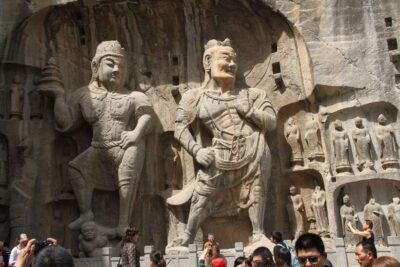
Private Tour: Longmen Grottoes, Shaolin Temple & Kungfu Show
Read our review →
Luoyang Private Day tour to Longmen Grottoes and Shaolin temple
Read our review →
Luoyang Private Day Tour to Shaolin Temple&Longmen Grottoes
Read our review →
Luoyang Longmen & Shaolin Private Day Tour from Xian by HSR Train
Read our review →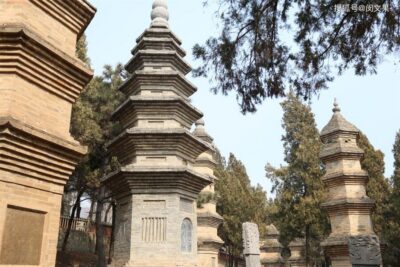
Private Tour to Shaolin Temple & Longmen Grottoes
Read our review →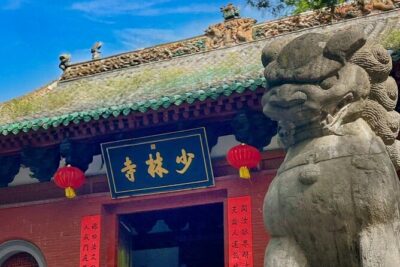
Zhengzhou Private Day Tour to Shaolin Temple and Longmen Grottoes
Read our review →
Form Xi’an To Luoyang Longmen Grottoes & Shaolin Temple Day Tour by Bullet Train
Read our review →
Luoyang private car for Longmen Grottoes and Shaolin temple
Read our review →Browse the lists this tour appears in