
Reviewed · HONG KONG TOURS
Mahjong 101 Class for Beginners Workshop
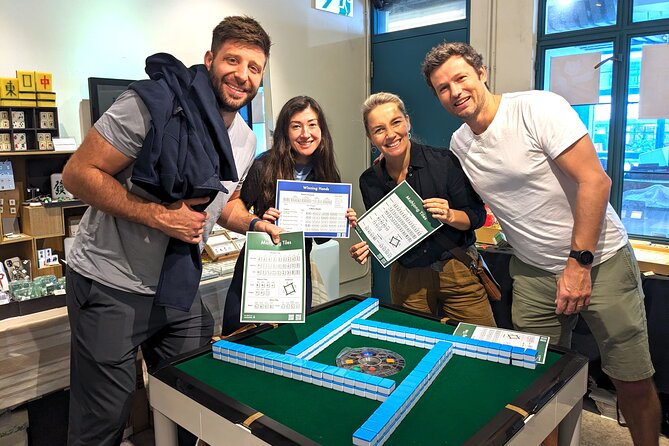
Mahjong is not a quick card game with pretty tiles. It is a fast-moving contest of memory, judgment, luck, and social manners. At Glocal Mahjong, inside the historic PMQ complex, you learn the Cantonese version from the ground up, with an electronic table making the lesson easier to follow.
I like the small private format, since you can ask basic questions without holding up a large class. I also like the setting: Glocal Mahjong is both a teaching shop and a mini mahjong museum, so the lesson connects the rules to Hong Kong culture. The main drawback is the price, $85.28 per person for about two hours, which is fair for a private class but high if you only want a quick look at the tiles.
Key points at a glance
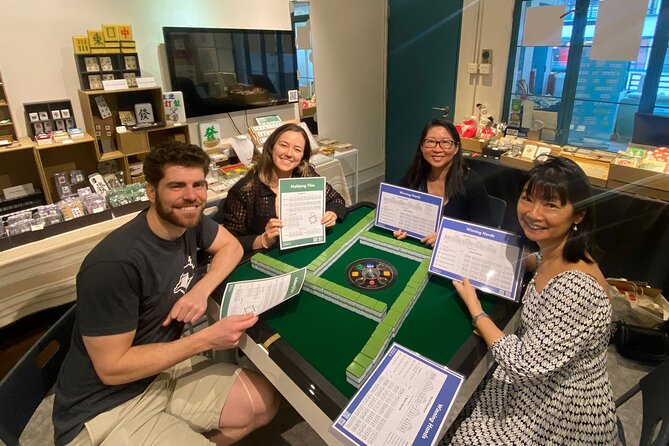
- A private Cantonese mahjong lesson: Your group has the instructor’s attention rather than competing with a large class.
- Held at Glocal Mahjong in PMQ: The shop combines a mahjong theme with a small museum display.
- Marco leads the class: The lesson includes game history along with practical instruction.
- You learn the useful basics: Tile recognition, winning, etiquette, and basic scoring are all covered.
- An electronic table is provided: This helps demonstrate the mechanics and keeps the game moving.
- A two-hour introduction: It gives you a proper start, but not enough time to master every scoring variation.
Why this PMQ setting suits a mahjong lesson
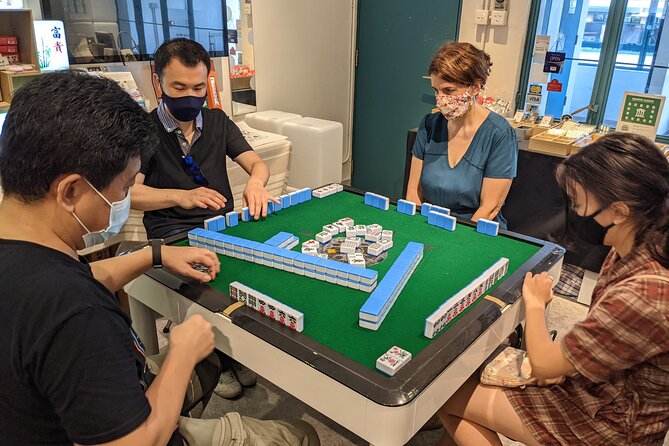
The class takes place at Glocal Mahjong, listed as 一筒 麻雀, at S405 on the fourth floor of PMQ, 35 Aberdeen Street in Central. PMQ is a restored historic site and one of the more recognizable cultural addresses in Hong Kong. That matters here because mahjong is not treated as an isolated puzzle. The setting places it inside a wider look at local life, design, and tradition.
Glocal Mahjong serves as both a shop and a mini mahjong museum. Before or after the lesson, you may find the displays useful for putting the game in context. The exact size of the collection is not specified, so do not expect a full-scale museum visit. Think of it as a compact cultural layer added to a hands-on class.
I like that combination. A lesson in a plain meeting room could teach you the rules, but the PMQ setting gives the experience a stronger sense of place. You are learning an important Hong Kong game in a location built around local creative culture, not in a generic classroom.
The meeting point is also near public transportation. You return to the same place when the two-hour activity ends, so the plan is easy to fit between Central sightseeing, shopping, or a meal.
More workshops and classes in Hong Kong:
- Organic Chinese Dumpling Class with Market Walk
★ 5.0 · 88 reviews - Organic Xiao Long Bao Soup Dumpling Class & Market Walk
★ 5.0 · 62 reviews - Tea Tasting and Pairing Concept Workshop
★ 5.0 · 57 reviews
What happens during the two-hour class
The class is designed for beginners, and the progression is sensible. You begin by learning to recognize the tiles. That sounds simple, but it is the essential first hurdle. Mahjong uses several suits and special tiles, and beginners need to identify them quickly before strategy can make much sense.
From there, the instructor explains the basic structure of a game. You learn how tiles are drawn and discarded, how combinations are formed, and what is required to win. The supplied details do not promise that you will complete a full competitive game, so I would view this as a firm introduction rather than a full training course.
The class also covers basic winning patterns. You will start to see why mahjong is more than matching identical pictures. You must watch your own hand, notice what other players discard, and decide when to hold a useful tile or let it go. Luck matters, but your choices shape the chances you create.
The electronic mahjong table is an important practical feature. It provides the equipment and lets the instructor demonstrate the game without relying only on verbal explanations. For a first lesson, that can reduce confusion around dealing, tile movement, and the rhythm of play.
You will also cover basic scoring rules. Cantonese mahjong can become complicated once you move into detailed scoring systems, special hands, and local variations. A two-hour class cannot cover every fine point, but it can explain the foundation you need to understand why one winning hand is worth more than another.
Basic etiquette is part of the lesson too. This is valuable because mahjong is a social game. Knowing when to act, how to handle the tiles, and how to behave at the table is just as useful as knowing how to form a hand. The etiquette section helps you avoid treating the game as a solitary tile puzzle.
Marco’s history lesson adds useful context
One especially useful detail is the guide’s name: Marco. His instruction includes an account of how the game began, not just a list of rules. That historical background gives the lesson a human angle and helps explain why mahjong has remained important in Hong Kong social life.
I would pay attention to this part even if your main goal is simply to play. A game becomes easier to remember when you understand why people care about it. The story of mahjong helps connect the tiles to family gatherings, social competition, and the customs that surround the table.
The available information does not give Marco’s full credentials or specify how long he has taught. It does show that his class covers both practical play and the origins of the game. That blend is useful for visitors who want a cultural activity rather than a bare rules briefing.
The lesson also introduces modern adaptations and the game’s wider appeal. You gain some sense of why mahjong attracts players around the world while still keeping its strongest connection to local tradition.
Cantonese mahjong, not a generic tile game
Make sure the Cantonese version is what you want. Mahjong has several rule sets, and they are not interchangeable in every detail. This class focuses on Cantonese mahjong, which makes it a good choice if you want a Hong Kong-centered introduction.
You should not expect this lesson to make you an expert in every form of mahjong. It teaches the basic rules and techniques needed to understand this particular tradition. If you already play another version, some ideas may feel familiar, but the scoring and winning rules can still differ.
For a complete beginner, the class provides a useful framework:
- Recognize the tiles.
- Understand the aim of a hand.
- Learn how a winning hand is formed.
- Follow basic table etiquette.
- Apply introductory scoring rules.
- Notice the role of strategy and chance.
That is a realistic amount for two hours. You will leave with enough structure to keep learning, though you may still need practice before you can play confidently without help.
A few more Hong Kong days to line up
- Hong Kong: Victoria Harbor Symphony Unlimited Drink Cruise
★ 4.3 · 1,873 reviews - Lantau Island Day Trip – Big Buddha & Tai O
★ 4.5 · 1,328 reviews - Hong Kong: Victoria Harbour Evening Cruise with Drinks
★ 4.6 · 1,260 reviews - Hong Kong: City Highlights Guided Tour w/Entry Fees & Lunch
★ 4.4 · 1,178 reviews
What the electronic table changes for beginners
Traditional mahjong involves many small actions, and beginners can lose track quickly. The electronic table is intended to make the lesson more manageable. It provides the table itself, so you do not need to arrange or bring equipment.
It should also help the instructor show you how the game works in real time. Instead of hearing a rule in the abstract, you can see how tiles are handled and how a round develops. That is particularly useful for learners who understand games better by watching them unfold.
There is a tradeoff. An electronic table may feel less old-fashioned than a hand-arranged set of tiles. If your dream is to experience only the traditional physical ritual, this modern equipment may seem less atmospheric. If your goal is to learn without getting bogged down in setup, it is a practical advantage.
The class promises an introduction to both tradition and innovation, so the electronic table fits the wider purpose of the venue. You get the cultural background of mahjong along with a modern teaching tool.
The private format and who will benefit most
This is a private activity, meaning only your group takes part. The provider also describes the classes as small and cozy. Those details matter because beginners often need to ask the same question twice, especially when several tile types and scoring terms arrive in quick succession.
A private format is particularly helpful if your group has mixed confidence levels. One person can ask about winning patterns while another checks a basic tile rule, without worrying about taking time from strangers. It also makes the lesson more social for couples, families, or friends traveling together.
Group discounts are available, though the exact discount is not stated. If you are booking for several people, check the final price before assuming the per-person rate will drop by a certain amount.
I would recommend this class most strongly for:
- First-time mahjong players.
- Visitors interested in Hong Kong culture through a hands-on activity.
- Friends or families who want a shared indoor lesson.
- People who enjoy strategy games but need a clear introduction.
- Anyone curious about the social rules around mahjong.
It may be less suitable if you already play Cantonese mahjong regularly. You might still enjoy the museum setting and cultural background, but the beginner-level instruction could repeat material you know.
The activity is also listed as suitable for most people, with no special physical demands noted. Confirmation arrives within 48 hours, subject to availability, so leave some room in your schedule if your plans are not fixed.
Is $85.28 a fair price?
At $85.28 per person, this is not a cheap casual activity. The right question is what you receive for the fee. You are paying for about two hours of private instruction, use of an electronic table, a small-group setting, and cultural context at a specialist mahjong venue.
That is better value if you are genuinely curious about the game and want to leave able to explain its basic structure. It is also more worthwhile if you are traveling with friends and can use the private format together. The cost buys more than a short demonstration, though it does not promise advanced play or a full tournament-style session.
If you only want to see mahjong tiles or take a quick photograph, the price will feel high. PMQ itself can be visited without booking this class, and the museum element is compact rather than a full afternoon attraction.
I see the price as reasonable for a focused private workshop, especially for people who value instruction. It is less compelling for casual sightseers who are not sure they want to learn the game.
The activity is booked, on average, 14 days ahead. That suggests you should reserve before arriving in Hong Kong if the timing matters. The mobile ticket is convenient, and confirmation is sent within 48 hours when space is available.
Practical planning before you book
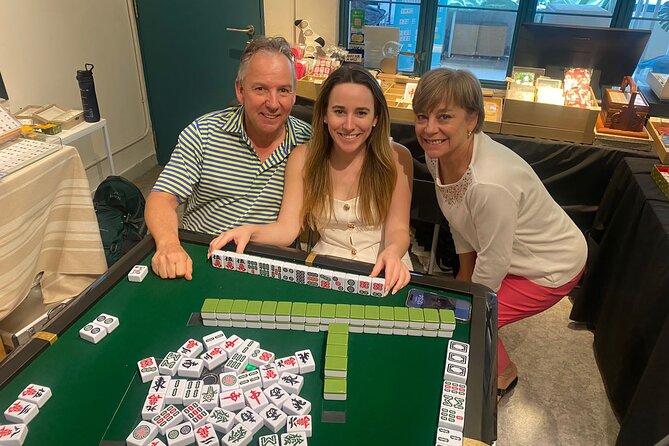
Allow the full two hours, even if the class sounds compact. Beginners often need time to absorb the tile names, hand structure, and scoring terms. Rushing off immediately afterward could make the session feel less relaxed.
The class begins and ends at Glocal Mahjong in PMQ. Since the venue is in Central and near public transportation, it should fit neatly into a day focused on the district. Give yourself enough time to find S405 on the fourth floor rather than arriving at the last moment.
This experience requires good weather, according to the booking conditions. That is an unusual condition for an indoor lesson, so keep it in mind when building your schedule. If poor weather causes cancellation, you are offered another date or a full refund.
Free cancellation is available up to 24 hours before the start time. Canceling later, or making changes within that final 24-hour period, does not qualify for a refund. The cut-off follows Hong Kong local time.
What you will remember after the lesson
The most lasting part may not be a perfect winning hand. It may be the change in how you see mahjong. At first, the tiles can look like a wall of symbols. After an explanation of suits, combinations, etiquette, and scoring, you begin to see a system.
You also gain a better sense of why mahjong remains social. The game asks you to read the table, react to other players, and make choices with incomplete information. That mix of skill and luck explains its staying power better than a quick demonstration ever could.
The class also gives you a practical way to connect with Hong Kong culture. You are not only looking at an old custom from the outside. You are learning how the game works and why its rules, manners, and strategies matter.
Should you book Glocal Mahjong’s beginner class?
Book it if you want a hands-on cultural lesson and have a real interest in learning Cantonese mahjong. The private format, Marco’s historical explanation, specialist setting, and electronic table make the two hours more useful than a quick introduction in a crowded group.
Think twice if your budget is tight or if you already know the game well. At $85.28, the class needs to be more than a novelty to justify the cost. For beginners visiting Hong Kong, though, it offers a focused way to understand a local tradition and leave with the basics of a game you can continue practicing.
FAQ
Where does the mahjong class take place?
The class begins and ends at Glocal Mahjong, 一筒 麻雀 S405, fourth floor, PMQ, 35 Aberdeen Street, Central, Hong Kong.
How long does the activity last?
The class lasts approximately two hours.
What type of mahjong will I learn?
You will learn Cantonese mahjong, including basic rules, techniques, winning, etiquette, and scoring.
Is the activity private?
Yes. Only your group will participate in the activity.
Is equipment provided?
Yes. The lesson uses an electronic mahjong table provided by Glocal Mahjong.
Can I cancel for a full refund?
Yes, if you cancel at least 24 hours before the experience start time. Cancellations or changes made less than 24 hours before the start time are not refunded.
Recently listed in Hong Kong
- Small-Group Gong Relaxation Experience in Hong Kong★ 5.0 · 5 reviews
- Family-Friendly Tolo Harbour Cycling Adventure★ 4.0 · 5 reviews
- Different Tastes of Hong Kong★ 4.5 · 5 reviews
- Hong Kong Layover City Tour with 2-way Airport Express Transfer★ 3.0 · 5 reviews
- Hong Kong Private Departure Transfer: Hotel to Airport★ 4.5 · 5 reviews
- Ma On Shan Climbing Adventure★ 5.0 · 5 reviews
- Small-Group Tour: Hong Kong Local Markets Hopper [PROMOTION]★ 4.0 · 5 reviews
- Hong Kong Night Tour with a Local: Private & 100% Personalized★ 5.0 · 5 reviews
Hong Kong Tours, compared.

Victoria Harbor Symphony Unlimited Drink Cruise
Read our review →

City Highlights Guided Tour w/Entry Fees & Lunch
Read our review →
Dukling, Antique Boat Tour in Victoria Harbour
Read our review →
Big Bus Hong Kong Open Top Hop-On Hop-Off Sightseeing Tour
Read our review →
Big Bus Hop-On Hop-Off Tour & Optional Peak Tram
Read our review →
Hong Kong Day Tour: City Landmarks & Highlights
Read our review →Browse the lists this tour appears in