
Reviewed · TEMPLE OF HEAVEN TOURS
Beijing: Temple of Heaven Park ticket(day tour/guide opt)
The Temple of Heaven is not just another imperial palace. It is a carefully planned ritual complex where Beijing’s emperors once asked heaven for good harvests. I like the Echo Wall, a simple curved wall that turns a quiet voice into a small acoustic trick, and the Circular Mound Altar, whose stone rings express the old Chinese view of the cosmos. The main drawback is that the ticket choices can be confusing, and arriving late can leave you with only the outer park.
I also like the flexibility. You can buy a basic entrance ticket, add an English guide or guidebook, reserve a restaurant, or pair the visit with the Summer Palace or Mutianyu Great Wall. But check the exact option and entry time carefully: one visitor arriving around 8 p.m. could see the illuminated grounds but was told the temple buildings were already closed.
Key points to know
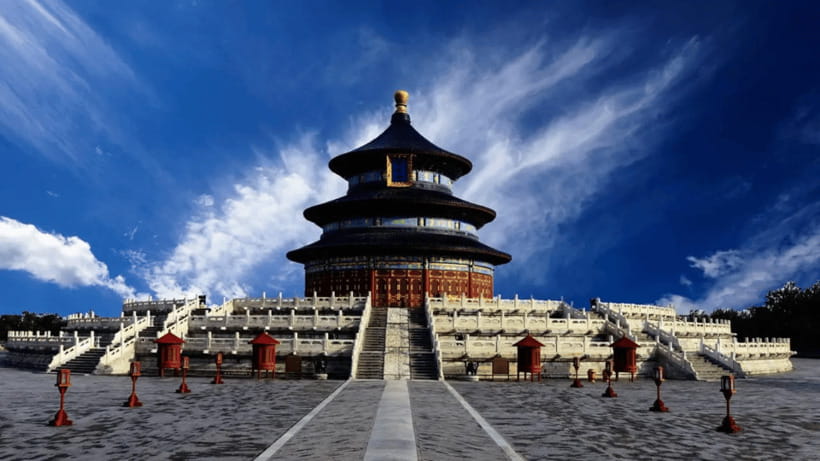
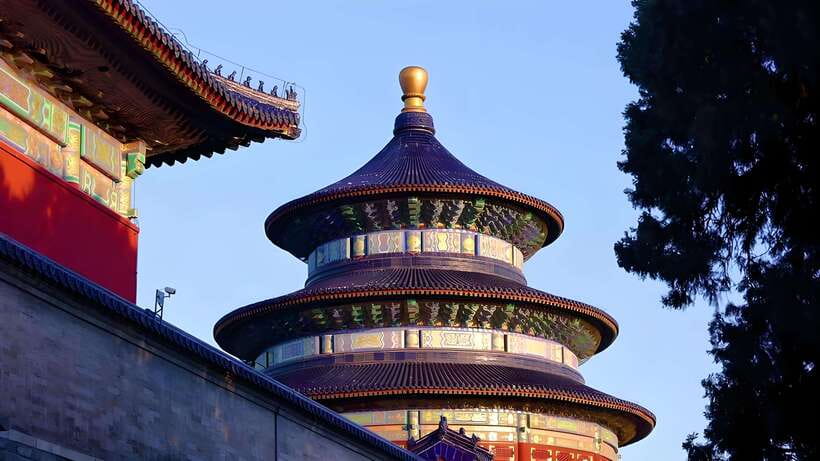
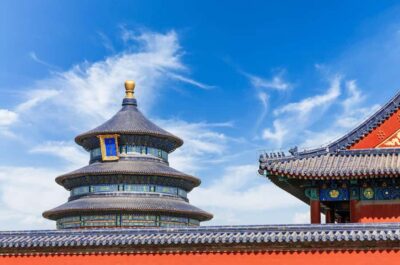
- The Hall of Prayer for Good Harvests is the main visual prize: Its triple-tiered blue roof is one of Beijing’s most recognizable sights.
- The Echo Wall works best when the area is quiet: The curved wall around the Imperial Vault creates the park’s most memorable sound effect.
- The Circular Mound Altar is about numbers and heaven: Its open-air design and circular stone platforms carry symbolic meaning.
- Several ticket formats are available: Choose entry only, a combo ticket with an English guide or guidebook, dining reservations, or a longer day tour.
- The East Gate is the easiest metro arrival: Temple of Heaven East Gate Station on Line 5 is about 100 meters from the entrance.
- Monday planning matters: The park is closed on Mondays, and the evening lights appear only on Fridays, Saturdays, and holidays after 7:30 p.m.
Why the Temple of Heaven feels different from Beijing’s palaces
The Temple of Heaven was built in 1420 during the Ming Dynasty for imperial ceremonies. Emperors came here to worship heaven and pray for good harvests, not to live. That purpose explains the wide open courtyards, long avenues, circular forms, and strong north-south layout.
The site was first called the Temple of Heaven and Earth. In 1530, it was renamed the Temple of Heaven. The complex became a UNESCO World Heritage Site in 1998, and today its gardens offer a calmer change from Beijing’s dense central streets.
I find the setting especially useful for understanding how imperial power worked. The emperor was presented as the link between heaven and earth. A successful harvest was not just an economic matter. It was proof that the ruler had kept the proper relationship with the heavens.
The park is large enough that your choice of entrance matters. You can make the visit a focused two to three-hour outing, or spend much of a day walking through the ceremonial buildings, gardens, corridors, and food stops around the gates.
More Temple of Heaven visits:
- Beijing: The Temple of Heaven or Summer Palace Entry Ticket
★ 4.6 · 1,286 reviews - Beijing Classic Full-Day Tour including the Forbidden City, Tiananmen Square, Summer Palace and Temple of Heaven
★ 4.0 · 610 reviews - Temple of Heaven Ticket
★ 5.0 · 482 reviews
Choosing the right ticket and tour option
At about $5 per person for the basic experience, the entrance ticket offers very good value if you already know your way around Beijing. The included areas are the Temple of Heaven Park, Hall of Prayer for Good Harvests, Echo Wall, and Circular Mound Altar.
You can also choose from several formats:
- Entrance ticket only
- Combo ticket with an English guidebook
- Combo ticket with an English guide
- Combo ticket with a restaurant and bar reservation
- One-day Temple of Heaven and Summer Palace tour
- One-day Temple of Heaven and Mutianyu Great Wall tour
The basic ticket suits independent visitors who want to move at their own pace. The English guide or guidebook makes more sense if you want help with the ritual symbolism, the meaning of the structures, and the connection between the buildings.
A restaurant reservation can be useful if food is part of your plan, but it changes the visit from a simple sightseeing stop into a longer day with a fixed meal element. For a first Beijing visit, the Summer Palace combination offers two major imperial sites. The Mutianyu option is better if you want to mix history with a Great Wall outing.
Do not assume that every option uses the same meeting point or schedule. The meeting place depends on what you book, so read the selected format before leaving your hotel.
East Gate route: the best all-around plan
For most people, I would use the East Gate. Temple of Heaven East Gate Station on Line 5 is only about 100 meters from the entrance, with Exit A listed as the closest route.
The detailed East Gate route begins with the Seven Star Stone and continues through the Seventy-Two Corridors. These sections help you see that the complex was not simply a collection of grand buildings. It was a working ceremonial environment with paths, service spaces, kitchens, and places for officials and imperial staff.
From there, the route includes the North Kitchen and the Imperial Palace before reaching the Hall of Prayer for Good Harvests. The order is useful because you gradually move toward the park’s most famous structure instead of arriving at it without context.
After the Hall, continue to the Imperial Vault of Heaven, where the Echo Wall circles the structure. Then walk toward the Circular Mound Altar, the open-air ceremonial platform at the southern end.
The route also includes the Palace of Abstinence, Hundred Flowers Garden, and Longevity Pavilion. These extra stops make the East Gate plan worthwhile if you have several hours. If you are short on time, you can focus on the Hall of Prayer, Imperial Vault, Echo Wall, and Circular Mound.
North Gate route: the faster ceremonial circuit
The North Gate route is the practical choice when you want the major sights without wandering through every corner. Qiaowan Station on Line 7 is listed as about 700 meters from the North Gate entrance, with Exit C as the route to use.
The fast circuit takes you to the Imperial Palace, Hall of Prayer for Good Harvests, Gate of Prayer for Good Harvests, Chengzhen Gate, Imperial Vault of Heaven, Echo Wall, and Circular Mound.
This route puts the famous ceremonial buildings first. That is useful for families, photographers, or anyone fitting the Temple of Heaven between other Beijing plans. The tradeoff is less time for the corridors, gardens, and quieter details found on the longer route.
The South Gate is another option, but it is about 1,200 meters from Exit B of Jingtai Station on Line 14. That longer approach may suit your wider itinerary, but it is not the simplest metro arrival if the Temple of Heaven is your main destination.
A few more Beijing days to line up
- From Beijing: Mutianyu Great Wall Tours with Options
★ 4.9 · 9,216 reviews - Beijing: Forbidden City Tour(Group/Private)-Tickets Included
★ 4.8 · 7,974 reviews - Beijing: T-Square & Forbidden City Group or Private Tour
★ 4.8 · 4,446 reviews - All-Inclusive Tour: Tiananmen Square, Forbidden City, Great Wall
★ 5.0 · 2,873 reviews
Hall of Prayer for Good Harvests: the essential stop
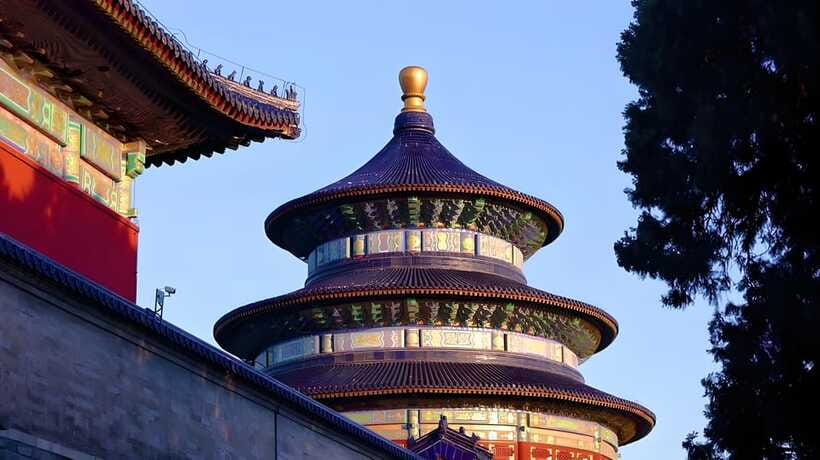
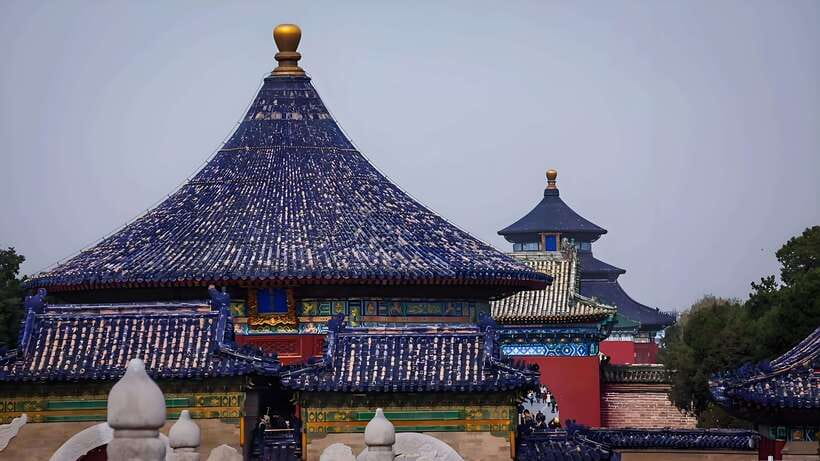
The Hall of Prayer for Good Harvests is the building most people picture when they hear Temple of Heaven. Its circular form and layered blue roof were designed to suggest heaven. The color is not random decoration. Blue was linked with the sky, while the structure’s shape and position reinforced the ritual purpose of the site.
Give yourself time to look up and around rather than taking one quick photograph and moving on. The building’s effect comes from proportion, repetition, and the broad stone terrace beneath it.
This is also the busiest part of the route. If you want clearer photographs, early arrival is sensible, though the supplied information does not promise a particular crowd level at any hour. The key point is that the Hall is a major included sight, so a late arrival risks losing the best part of the visit.
The buildings may close before the outer park does. That distinction matters. A late evening ticket can sound generous if it shows a broad entry window, but access to the main temple areas may end earlier. One visitor arriving around 8 p.m. was able to enter the garden but not the temple itself. Treat the final entry time as a real deadline, not a suggestion.
Imperial Vault and the Echo Wall
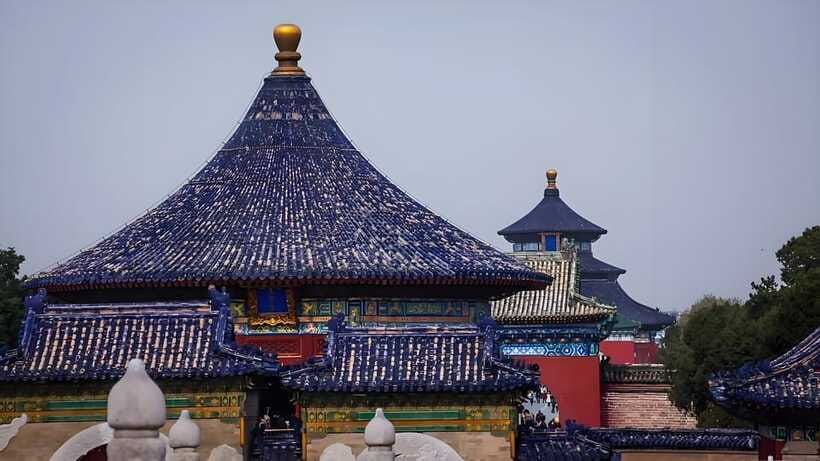
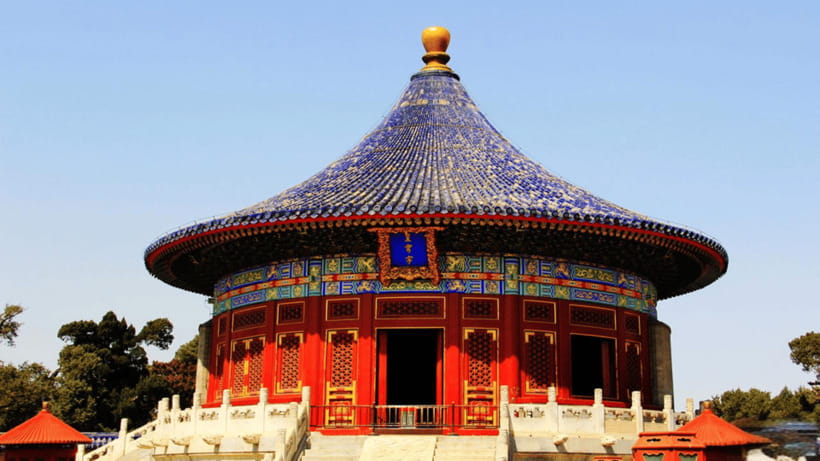
The Imperial Vault of Heaven is smaller than the Hall of Prayer for Good Harvests, but it plays an important role in the ceremonial sequence. The Echo Wall curves around it, creating the park’s best-known sound effect.
When conditions are quiet, a voice spoken near one section of the wall can carry along the curve. It is a clever example of architectural acoustics, but it is not magic and it does not work equally well when the area is crowded or noisy.
I would approach this stop with modest expectations and patience. You may need to wait for a quieter moment, and the effect is more interesting when you understand the shape of the wall rather than treating it as a quick photo point.
The area also shows how the Temple of Heaven combines practical design with ritual meaning. The circular enclosure, the central hall, and the surrounding wall create a controlled space between the human world and the imagined realm of heaven.
Circular Mound Altar and the symbolism of numbers
The Circular Mound Altar is an open-air platform built for imperial offerings to heaven. Its circular shape reflects the traditional idea that heaven was round, while the square earth was represented elsewhere in Chinese cosmology.
The altar’s design uses circles, levels, and groups of stones in a way that makes numbers part of the experience. You are not simply walking onto a platform. You are entering a space planned around celestial order and the emperor’s role in ritual.
The Circular Mound is at the southern end of the main ceremonial axis. After the Hall of Prayer and Imperial Vault, reaching it gives the visit a clear sense of progression. The open platform also feels different from the enclosed halls, especially when you pause to look back along the long approach.
This is one reason I prefer allowing more than a rushed hour. The buildings are famous, but the connections between them are what make the Temple of Heaven special.
Food stops around the four gates
The surrounding food suggestions can turn a sightseeing morning into a fuller Beijing outing. Plan ahead, since some places use a queue number system.
Near the West Gate, Tiantan Fuyan is associated with a Temple of Heaven Cake, especially the strawberry flavor. It is suggested as an afternoon tea stop, while roast duck is available for dinner. If you want to eat there after visiting the Palace of Abstinence, obtain a number on your phone first so you can use the waiting time inside the park.
Near the East Gate, Tiantan Fuyin offers Divine Beast Ice Cream and a glitter lollipop. These are mainly photo-friendly treats, a simple choice for families or anyone wanting a playful break.
Dongmen Yinsan Douzhi is Michelin recommended and offers a taste of old Beijing with fried dough rings. Douzhi is a traditional fermented mung bean drink, so it is worth approaching as a local specialty rather than expecting a familiar sweet beverage.
Near the South Gate, Nanmen Shabu-shabu serves hand-cut lamb in a copper pot with clear soup. Get a number in advance if you plan to eat there, since waiting can interfere with the rest of your day.
These food stops are optional. If your main goal is the architecture, do not let a meal reservation force you into a schedule that feels rushed. If you enjoy food exploration, they add a more local dimension to the visit.
Add Lama Temple, Ditan, or Wudaoying Hutong
The Temple of Heaven pairs easily with several nearby Beijing stops. Lama Temple Noodles is two subway stops away and is described as a long-established place for a filling noodle meal.
At Ditan’s west gate, look for tanghulu, the familiar candied fruit snack on a stick. It is a small treat, but it gives your day a different taste from the formal imperial complex.
Wudaoying Hutong offers coffee and a more relaxed setting for a short break or street photography. The suggested surrounding route is useful because the Temple of Heaven itself can feel formal and monumental. A hutong stop gives you a chance to sit, eat, and see another side of central Beijing.
Do not try to force every stop into one day. The Temple of Heaven plus one nearby food or neighborhood stop is a comfortable plan. Add the Summer Palace or Mutianyu Great Wall only if you are prepared for a much longer day.
Timing, closures, and practical preparation
The park is closed on Mondays, so check the day before you set out. Evening lighting is available only on Fridays, Saturdays, and holidays after 7:30 p.m.
The night view can be attractive around the illuminated temple buildings, but late entry has a clear risk. The garden may be dark, and the main temple areas may no longer admit people. If you want both the buildings and the lights, arrive early enough to see the interior areas first, then remain for the evening illumination if the schedule works.
Bring your passport, since it is listed as required. A power bank and sunscreen are also sensible additions for a large outdoor complex. Drones are prohibited.
You can cancel up to 24 hours in advance for a full refund, and the reserve-now, pay-later option lets you keep plans flexible. The activity is valid for one day, and a small-group format is available for selected options.
The language support varies by choice. An English guide or English guidebook is available in certain combo formats, but do not assume the basic entrance ticket includes a guide.
Who should book this Temple of Heaven experience?
I would recommend it most strongly for a first Beijing visit, families with children, couples who enjoy photographs, and people who want to combine sightseeing with food stops.
Families may prefer the North Gate fast route because it covers the major buildings without requiring every garden and corridor. Couples and photographers should consider the East Gate route, especially if they want time around the Hall of Prayer, Echo Wall, and the gardens.
Independent visitors who are comfortable using the Beijing Metro can save money with the basic ticket. The roughly $5 price is excellent for access to four major areas, especially when you arrive early enough to use the full day.
An English guide or guidebook is worth considering if imperial ritual, symbolism, and architecture are central to your interest. The buildings are beautiful even without explanation, but the visit becomes more meaningful when you understand why the complex uses circles, open altars, colored roofs, and a strict ceremonial route.
The paired day tours are for people who want a ready-made schedule. Temple of Heaven plus the Summer Palace gives you two imperial sites. Temple of Heaven plus Mutianyu Great Wall gives you a broader Beijing day. These options reduce planning, but they leave less freedom for lingering over food, photography, or the quieter corners of the park.
Should you book it?
Book the basic Temple of Heaven ticket if you want one of Beijing’s best-value cultural stops and can manage your own route. Choose the East Gate for the fullest experience, or the North Gate if you want the main ceremonial buildings quickly.
Add the English guide or guidebook if you want the symbolism explained. Choose a combined day tour only when you prefer a fixed schedule and want to see the Summer Palace or Mutianyu Great Wall on the same day.
The one warning is timing. Monday closures, early temple-area closing, and limited evening lights can change the experience. Arrive well before night, carry your passport, and check the exact ticket option. Do that, and the Temple of Heaven gives you striking architecture, thoughtful symbolism, a fun acoustic trick, and a clear look at imperial China without a large price tag.
FAQ
How much does the Temple of Heaven ticket cost?
The listed entrance ticket price is $5 per person. Other options, including guide services, restaurant reservations, and full-day tours, may use different prices.
Is the Temple of Heaven open every day?
No. The park is closed on Mondays.
What does the entrance ticket include?
The listed inclusion covers Temple of Heaven Park, the Hall of Prayer for Good Harvests, the Echo Wall, and the Circular Mound Altar.
Is an English guide included?
An English guide or English guidebook is available with selected combo ticket options. The entrance-only option does not list guide service as included.
Which metro station is closest to the Temple of Heaven?
Temple of Heaven East Gate Station on Line 5 is the closest listed metro stop. Exit A is about 100 meters from the East Gate.
Can I visit the Temple of Heaven at night?
Night lighting is available on Fridays, Saturdays, and holidays after 7:30 p.m. However, the temple buildings may close before the outer garden, so arriving around 8 p.m. may leave you with access only to the darkened grounds.
What should I bring?
Bring your passport, power bank, and sunscreen. Drones are prohibited.
Recently listed in Beijing
- Beijing Mutianyu Great Wall Private Tour with Lunch★ 5.0 · 5 reviews
- Customized Private Beijing Layover City Tour★ 5.0 · 5 reviews
- Private Tour to Gubei Water Town and Simatai Great Wall with Cable Car and Lunch★ 5.0 · 5 reviews
- Forbidden City with Hutong Cuisine Private Walking Tour★ 5.0 · 5 reviews
- Beijing Acrobatics Show At Red Theater★ 4.5 · 5 reviews
- Beijing: Top Michelin Vegetarian Restaurant Reservation★ 5.0 · 5 reviews
- Exclusive Private Photography & Video Tour to The Forbidden City★ 5.0 · 5 reviews
- Cuandixia Village Day Trip with Private English Speaking Driver Service★ 4.0 · 5 reviews
Temple of Heaven Tours, compared.
The Temple of Heaven or Summer Palace Entry Ticket
Read our review →
Beijing Classic Full-Day Tour including the Forbidden City, Tiananmen Square, Summer Palace and Temple of Heaven
Read our review →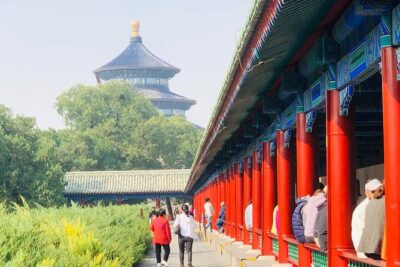
Temple of Heaven, Summer Palace, Lama Temple, Hutong Tours
Read our review →
All Inclusive Private Day Tour: Tian’anmen Square, Forbidden City, Temple of Heaven and Summer Palace
Read our review →
Beijing Private Tour of Temple of Heaven, Tian’anmen Square, Forbidden City
Read our review →Browse the lists this tour appears in