
Reviewed · SHANGHAI TOURS
3-Hour Private Tour to Jewish Ghetto and Shanghai Bund
Shanghai’s Jewish quarter tells a remarkable story: thousands of European Jewish refugees found a place in Shanghai during the years before and during World War II. This private tour connects the Jewish Refugees Museum with the old stone-gate lanes of Little Vienna, then shifts to the Bund’s grand British-Jewish landmarks.
I like two things here. First, the private format lets you set a comfortable pace, especially inside the museum. Second, the ride between sites saves time in a spread-out city and gives you a guide to explain how Jewish, Chinese, British, and European stories meet in Shanghai. The main drawback is that the tour is short for such a large subject, and pickup is limited to downtown hotels.
Key points
- The Jewish Refugees Museum anchors the tour: Expect photographs, films, personal items, and the former Ohel Moishe Synagogue.
- Little Vienna is seen on foot: Old stone-gate homes, back lanes, a former Jewish park, and the old JDC center bring the story outside the museum.
- The Bund adds a second chapter: The Peace Hotel connects the tour to the Sassoon family and Shanghai’s British-Jewish art-deco past.
- Private transport keeps the day efficient: Groups of one to four use a local premium Uber, while larger parties receive an air-conditioned minivan.
- Guide quality matters: Guides named in the feedback include Mason, Sunny, Lea, Annie, Aron, Robert, and Ruby, with Mason, Sunny, and Lea receiving especially strong praise for clear historical explanations.
- The price is reasonable for a private outing: At $90 per person, the value is strongest for two or more people who want a focused history tour without arranging transport themselves.
Why Shanghai’s Jewish story deserves a place in your schedule
Shanghai is often presented through its skyline, shopping streets, and imperial-era gardens. This tour gives you another way to read the city. It shows how Shanghai became a refuge for European Jews at a time when many countries were closing their borders to people fleeing persecution.
The subject is not treated as a single museum visit. You move from documents and personal objects to streets where refugees actually lived, then to the waterfront buildings tied to wealthy Jewish families. That change of setting helps you see the difference between refugee life, communal support, and the financial power that shaped the Bund.
I especially like the chronological approach described by several guests. A good guide can explain the arrival of European Jews, the growth of the community, life during wartime, and what happened afterward without turning the tour into a pile of disconnected dates.
The story also adds a human scale to Shanghai. A photograph or family item inside the museum is moving, but seeing the old stone-gate housing afterward helps you picture daily life. You are not only learning what happened. You are seeing the kinds of buildings and streets that formed the setting.
More three hour outings in Shanghai:
- Shanghai: 3-Hour Old Shanghai City Tour
★ 4.9 · 45 reviews - Private 3 hour bike tour with coffee break
★ 4.5 · 38 reviews - 3-Hour Shanghai Bund Swift Tour with River Cruise or Skyscraper
★ 5.0 · 26 reviews
Inside the Jewish Refugees Museum and Ohel Moishe Synagogue
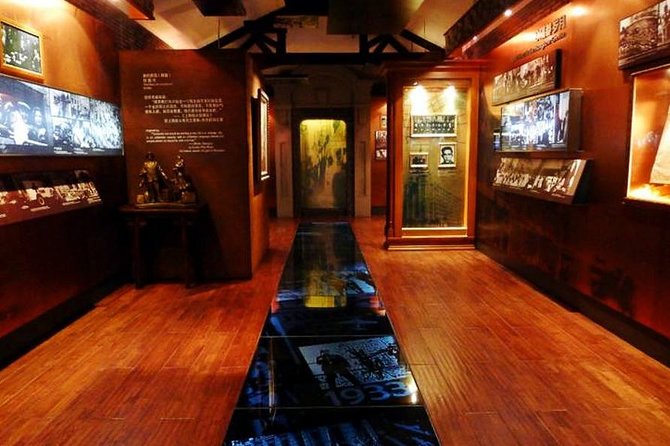
The museum is the heart of the experience, and the schedule allows about 1 hour and 20 minutes here. Admission is included, so you can spend your attention on the material rather than on ticket arrangements.
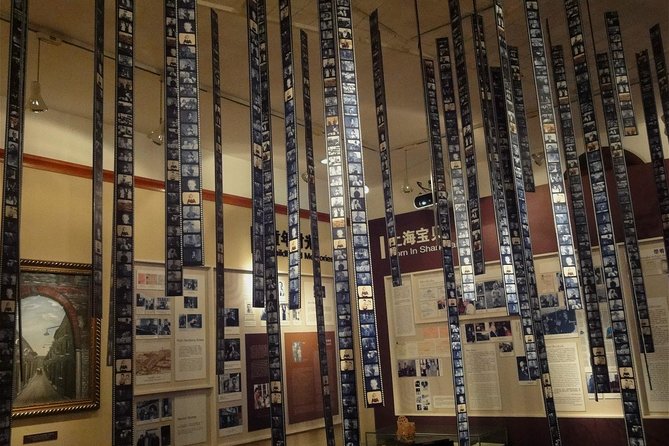
The site is associated with Ohel Moishe Synagogue, a former Jewish religious center. Its displays include photographs, films, documents, and personal belongings connected with Shanghai’s Jewish refugees. The collection brings together both public history and private memory, which is why the museum works best with a guide who can explain the setting and place the objects in order.
I would allow yourself time to look closely. One of the tour’s strengths is that the private format can be adjusted to your pace. Mason, for example, was praised for allowing time to explore the photographs and artifacts rather than rushing from display to display. That matters here, since the subject can feel emotionally heavy and the objects deserve more than a quick glance.
Guides such as Sunny, Lea, Annie, Aron, and Mason are repeatedly singled out for clear explanations. The best version of this tour is not a lecture delivered at full speed. It is a conversation in which you can ask about the refugee community, China’s role, Jewish migration to Shanghai, or the links between European and Shanghai history.
The museum may be the most rewarding stop for anyone with a family connection to wartime Europe. One person found a family friend’s name among the roughly 20,000 refugees associated with Shanghai. You should not expect to find a particular name, but the collection can make a broad historical subject feel personal.
A practical point: this is a specialist museum, not a general introduction to Shanghai. If your main interest is classical Chinese art, old temples, or modern architecture, the subject may not fit your priorities. If you care about Jewish history, World War II, migration, or overlooked chapters of Chinese history, it is likely to be the strongest stop.
Walking through the former Jewish district
After the museum, the tour spends about an hour around the former Jewish district. This is where the subject leaves the display cases and enters the city itself.
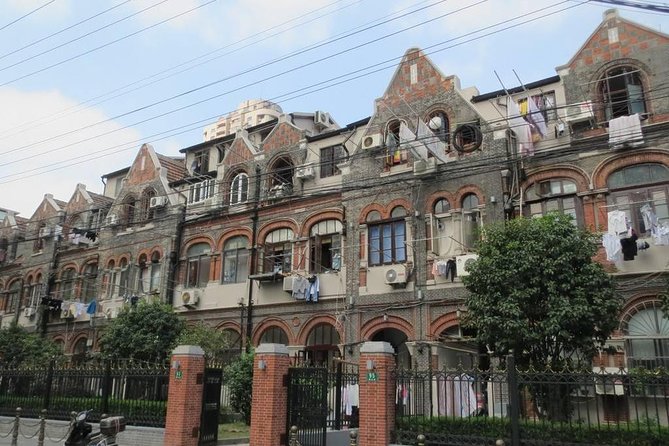
You will see the old Jewish park and former JDC center, then walk through local back streets lined with stone-gate houses. These buildings once housed thousands of refugees. Their narrow lanes and shared residential form provide a useful contrast with the grand structures along the Bund.
The architecture is one reason this section works so well. One guide helped visitors compare these stone-gate homes with more traditional Chinese neighborhoods elsewhere in Shanghai. You may find the contrast just as telling: the buildings reflect the city’s mixed past, with European influence adapted to local urban life.
The walking portion also gives you a more ordinary view of Shanghai. The neighborhood is not presented as a frozen open-air museum. It remains part of the city, and the tour’s value comes from seeing historic structures alongside present-day life.
One particularly revealing experience described in the tour material involved seeing the former living quarters of a Jewish refugee whose family still lives there. That detail connects the past to the present, while also showing you something about housing conditions in Shanghai today. Access and exact stops can vary, so treat this as a possible feature rather than a guarantee.
Wear shoes you can walk in and dress for the weather. The tour operates in all weather conditions, and the lanes may be more comfortable in the morning or later afternoon than during the hottest part of the day. The operator offers both morning and afternoon departures, so choose based on your wider Shanghai plans and the day’s forecast.
The Bund, Peace Hotel, and Jewish finance
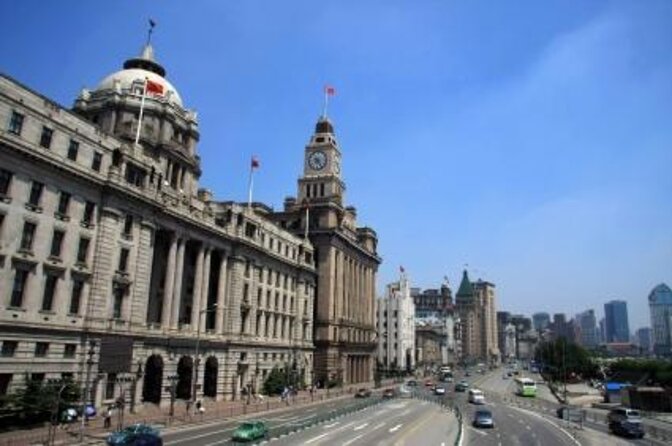
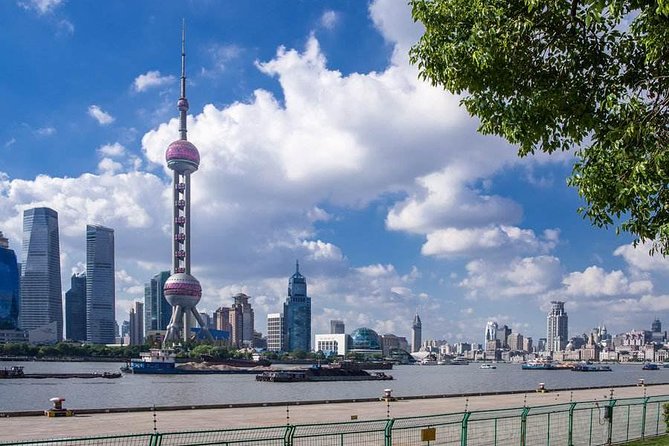
The final stop lasts about 50 minutes and takes you to the Bund, known locally as Wai Tan. The shift is striking. You move from modest residential lanes to the waterfront’s monumental stone buildings and broad river views.
The tour focuses on the Peace Hotel, linked with the Sassoon family and described as a high point of British-Jewish influence in Shanghai. You will also look at the Bund’s art-deco heritage and the role of British-Jewish financial interests in shaping this famous stretch of the city.
This is not a full Bund architecture tour, and that is worth understanding before you book. The Bund portion is a focused addition to the Jewish story, not a long survey of every building or a dedicated photography walk.
Still, it gives the experience a useful second perspective. The Jewish community was not made up only of refugees living in crowded districts. Wealthy Jewish families also helped shape Shanghai’s commercial and architectural identity. Seeing both sides in one outing makes the city’s social divisions easier to understand.
Your guide may also use the Bund to explain elements of Shanghai culture and the British colonial period. That broader context helps if you are new to the city. If you have already taken a detailed Bund tour, this section may repeat some familiar architectural background, but the Jewish connection gives it a different purpose.
A few more Shanghai days to line up
- Authentic Local Food Tour in Central Shanghai
★ 5.0 · 1,382 reviews - Zhujiajiao Water Town and Shanghai City Private Day Tour
★ 5.0 · 1,016 reviews - Private Shanghai Full Day City Tour with Old and New Highlights
★ 5.0 · 995 reviews - Shanghai: Hop-on Hop-off Bus Ticket and Optional Attractions
★ 3.4 · 692 reviews
What the private format adds at $90 per person
The listed price is $90 per person. That is not the cheapest way to see the museum, but the calculation changes when you consider what is bundled in: a private English-speaking guide, downtown hotel pickup, local transport between locations, and admission to the Jewish heritage sites.
For one person, the cost is harder to justify unless this subject is a major priority. For a couple, family, or small group, the private arrangement offers better value because you are not sharing the guide’s time with strangers. You can ask questions freely, pause over an important photograph, and keep the pace manageable.
The transport is practical rather than luxurious. Parties of one to four travel in a local premium Uber. Groups larger than four receive an air-conditioned minivan. This saves you from arranging separate rides between the museum, former district, and Bund, and it is particularly useful if you do not yet know Shanghai’s streets.
The tour lasts about 2 hours and 30 minutes to 3 hours. The scheduled stops total roughly 3 hours and 10 minutes on paper, so allow some flexibility for transfers and the actual pace of your visit. The experience is compact enough to fit around another activity, but it is not a casual 90-minute introduction.
Pickup is offered only from hotels in downtown Shanghai. Hotels in areas such as Jiading, Songjiang, Qingpu, Jinqiao, and Chuansha are excluded, as are airport, Disneyland, and other outlying locations. If you stay outside the central area, the guide can arrange a downtown meeting point, but hotel drop-off is not included.
The tour is private, and most people can participate. Children must be accompanied by an adult. Since you will walk through the former neighborhood and Bund area, plan for outdoor conditions even though transport connects the main locations.
Choosing the right guide and departure time
The guide can shape the entire experience. Names associated with especially strong feedback include Mason, Sunny, Lea, Annie, and Aron. Mason is praised for his command of the museum and for giving people time with the exhibits. Sunny is described as clear and engaging on Jewish migration and China’s support for refugees. Lea is noted for presenting the story in chronological order and simple language.
Robert was also praised for combining the museum with the old neighborhood and its architecture. Aron received strong marks for detailed knowledge and a warm manner. Ruby was remembered as energetic and fun. These names do not guarantee who will lead your tour, but they show the sort of guide experience the operator aims to provide.
English is the stated tour language. One Spanish-speaking guest found the guide patient and clear despite taking the tour in English, but you should still book with realistic expectations about your own listening comfort.
Morning and afternoon departures are available. Morning may suit you if you want cooler walking conditions and a quiet start. Afternoon works well if you are fitting the tour around another morning plan, though the timing of your booking should allow enough room for hotel pickup and transfers.
The tour is recommended 29 days ahead on average. If your schedule is fixed, booking early is sensible, especially if you want a particular departure time or are traveling with a larger party.
Who will get the most from this experience
I would choose this tour if you want a focused look at a side of Shanghai that is easy to miss. It suits people interested in Jewish history, World War II, migration, architecture, family research, and the complicated links between China and Europe.
It is also a good choice early in your Shanghai stay. The guide can help you understand the city’s foreign concessions, residential neighborhoods, commercial center, and wartime role. Afterward, the Bund and other historic districts may make more sense.
Families can take it, provided children are accompanied by an adult and are ready for a museum and walking tour. The subject is serious, so younger children may need help staying engaged. Older children and teenagers interested in history could find the mix of personal stories, buildings, and city streets more memorable than a standard sightseeing loop.
I would look elsewhere if you want a broad first-day tour covering the Yu Garden, modern skyline, shopping streets, and major temples. This experience has one clear theme. That focus is its strength, but it also means you should not expect a general tour of Shanghai.
Booking advice and final verdict
Book this tour if the Jewish history of Shanghai is important to you, or if you want a history-focused outing that connects a museum with real streets and landmark buildings. The museum is the essential stop, while Little Vienna supplies the human setting and the Bund shows how Jewish influence also reached Shanghai’s commercial elite.
At $90 per person, I see the best value for a small private group that wants transport and a guide without piecing the day together. Confirm that your hotel is in the downtown pickup zone, leave room for the full three hours, and bring shoes suited to walking.
I would book it for the clear focus, private pace, and chance to ask questions. I would skip it only if your time in Shanghai is extremely short or your interests lie mainly in traditional Chinese sights rather than modern migration and Jewish heritage.
FAQ
How long does the Jewish Ghetto and Bund tour last?
The experience lasts approximately 2 hours and 30 minutes to 3 hours. The listed visits include about 1 hour and 20 minutes at the Jewish Refugees Museum, 1 hour in the former Jewish district, and 50 minutes at the Bund.
What is the price of the tour?
The price is $90 per person.
Is the tour private?
Yes. Only your group participates in the private tour.
Is hotel pickup included?
Hotel pickup is included for hotels located in downtown Shanghai. Pickup is not included for outlying areas such as Jiading, Songjiang, Qingpu, Jinqiao, and Chuansha.
What happens if my hotel is outside downtown Shanghai?
The guide can provide instructions for meeting near the downtown area. Pickup from locations such as Pudong Airport and Disneyland hotels is not included.
What transportation is used between the stops?
Groups of one to four people travel in a local premium Uber. Groups larger than four receive an air-conditioned minivan.
Are entrance fees included?
Admission to the Jewish Refugees Museum and the Jewish heritage sites listed for the tour is included.
Are morning and afternoon departures available?
Yes. You can choose from flexible morning or afternoon departure times.
Can I cancel for a full refund?
You can cancel at least 24 hours before the local start time for a full refund. Cancellations or changes made less than 24 hours before the start time are not refunded or accepted.
Recently listed in Shanghai
- Shanghai Era Theatre Acrobatics Show Ticket★ 5.0 · 5 reviews
- Shanghai in a Day: A Whirlwind Tour of the City’s Highlights★ 5.0 · 5 reviews
- Hangzhou Jiuxi and Hupao Spring Hiking Day Trip from Shanghai by Bullet Train★ 5.0 · 5 reviews
- Private Street Food Walking Tour with Shanghai Tower Option★ 5.0 · 5 reviews
- 3-Hour Private Tour: The Bund and Shanghai Tower★ 5.0 · 5 reviews
- Online Cooking Class Fried Rice by Sunflower Li★ 4.5 · 5 reviews
- Zhouzhuang and Tongli Water Town Private Transfer Service from Shanghai★ 5.0 · 5 reviews
- Suzhou and Tongli Water Town Private Tour from Shanghai with Options★ 5.0 · 5 reviews
Shanghai Tours, compared.
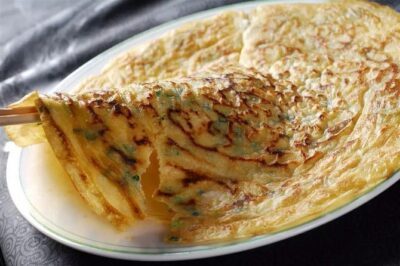
Authentic Local Food Tour in Central Shanghai
Read our review →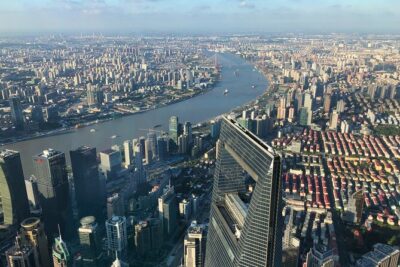
Zhujiajiao Water Town and Shanghai City Private Day Tour
Read our review →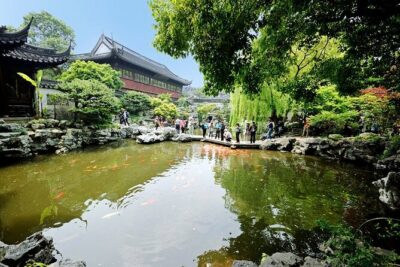
Private Shanghai Full Day City Tour with Old and New Highlights
Read our review →
Hop-on Hop-off Bus Ticket and Optional Attractions
Read our review →
Shanghai Private Tour: Zhujiajiao Water Town and Boat Ride
Read our review →
Huangpu Night Cruise: Cozy Vibe & Modern Shanghai Glow
Read our review →
Browse the lists this tour appears in