Reviewed · SHANGHAI TOURS
Shanghai Coffee & Breakfast Tour
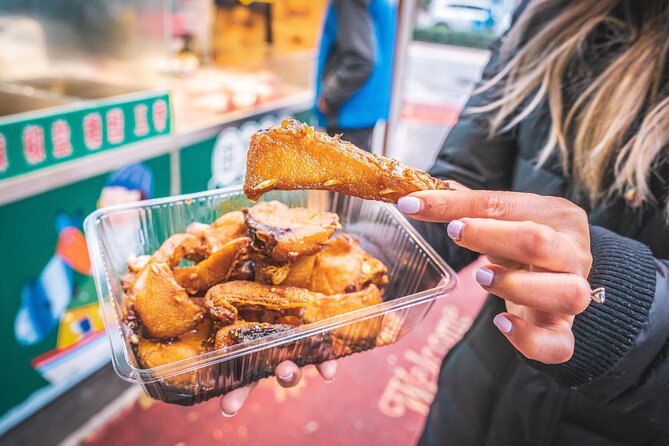
Shanghai’s best breakfast may be found at a street counter, not a hotel buffet. This three-hour morning walk leads you through old neighborhood lanes and courtyard communities, stopping at more than six local food and coffee spots for beef pancakes, savory crepes, doughnut sticks, tea, and two specialty coffees.
I like the small maximum of 10 people, which gives you room to ask questions and keeps a food stop from feeling like a group exercise. I also like the mix of old and new: traditional breakfast stalls sit alongside modern cafés, and the route ends with a visit to Xiahai Temple.
The main drawback is dietary flexibility. A vegetarian option is available if you request it in advance, but this tour is not recommended for vegan or gluten-free diets. You’ll also walk about 2 kilometers, often outdoors in whatever weather Shanghai sends your way.
Key points at a glance
- Ten local breakfast dishes: Try a broad sample of Shanghai morning foods rather than filling up at one restaurant.
- Two specialty coffees and a pot of tea: The route reflects Shanghai’s fast-growing coffee culture as well as its older food traditions.
- Small groups of 10 or fewer: You get a more personal morning with time for questions and conversation.
- Old neighborhood streets: Walk through local community areas and courtyard neighborhoods away from the city’s grand tourist avenues.
- Xiahai Temple included: The temple adds a quiet cultural stop after the food tasting.
- A substantial morning meal: The included food is intended to cover breakfast and lunch, so arrive hungry.
Why Shanghai breakfast is the real introduction

Shanghai can look polished and modern at first glance, with glass towers, shopping streets, and sleek cafés. But the city’s daily rhythm is easier to understand at breakfast, when residents grab something hot from a small counter on the way to work.
That is what makes this experience useful. You are not simply sitting down for one famous dish. You move through a neighborhood and see how breakfast fits into ordinary life. A quick pancake, a cup of tea, or a fried dough stick can tell you more about the morning routine than a formal meal in a dining room.
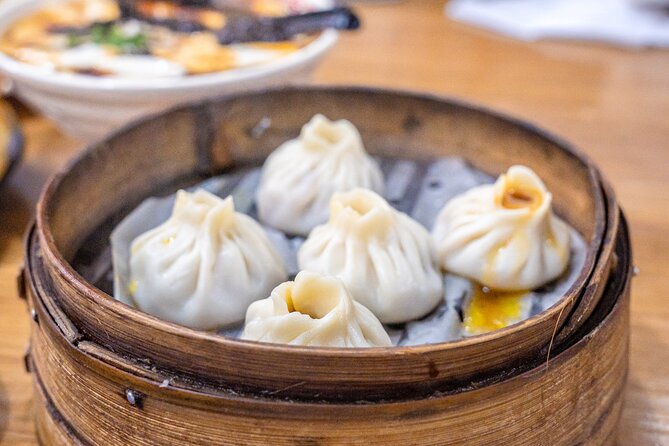
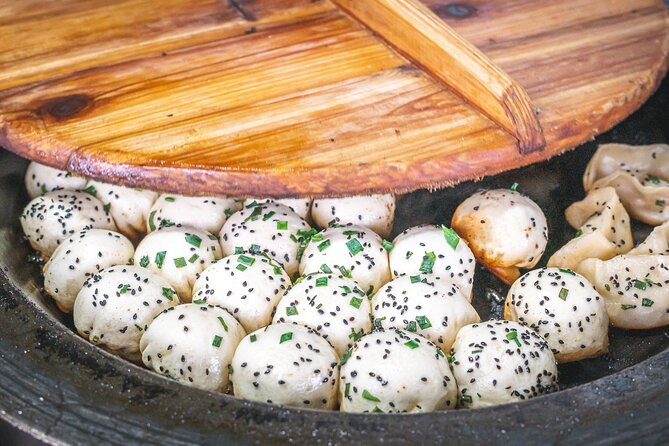
The food is served across several stops, with 10 traditional dishes in total. You might begin with something crisp and savory, then move on to a filled pancake, a crepe, or a dough-based snack. The exact order can vary, but the point is variety. You get small portions from different places instead of one oversized plate.
I would treat this as both a food tour and a gentle orientation to Shanghai. The guide explains what you are eating and gives context about the community around you. That makes the tour especially helpful early in your stay, when you are still learning how local meals work.
More coffee stops in Shanghai:
- Private 3 hour bike tour with coffee break
★ 4.5 · 38 reviews - Shanghai Coffee & Breakfast Tour
★ 5.0 · 5 reviews
Walking through Old Shanghai at 8:30 am
The tour starts at 8:30 am near Wuding Road in Jing’an, at a meeting point by a cosmetics shop. You should allow extra time to reach it, since morning traffic can slow taxis and cars. Public transportation is nearby, but you need to plan the final walk carefully.
The route covers roughly 2 kilometers over about three hours. That is not a demanding distance, but the experience is on foot, with stops at small eateries rather than one fixed restaurant. Wear comfortable shoes and dress for the weather. The tour runs in rain or shine.
The neighborhood setting is one of the strongest parts of the morning. Instead of keeping you on a grand avenue, the walk takes you through older community areas and courtyard-style neighborhoods. These are the places where you can get a better sense of how Shanghai’s residents live between the major sights.
I like this kind of walking because it gives you time to notice small details. You might see the way a food stall handles a morning rush, how residents use shared neighborhood spaces, or how old buildings sit beside newer cafés. The tour is not built around landmark photography. Its value comes from seeing the city at work.
The route also gives the guide room to talk about the changes taking place around Shanghai’s older districts. Traditional food businesses and newer coffee shops now share the same streets. That contrast is not a side note. It is one of the clearest ways to understand the city’s present-day character.
Six food stops and ten dishes
The food portion is generous. You visit more than six food and coffee stops, with tastings spread across seven locations. Together, the portions provide enough food for breakfast and lunch, although you should think of it as a long tasting breakfast rather than two separate meals.
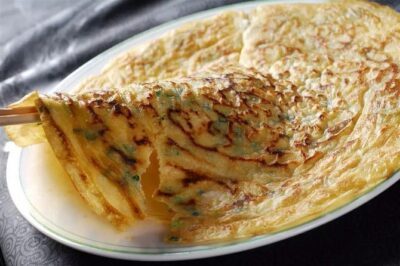
The food named for the tour includes beef pancakes, savory crepes, and doughnut sticks. These are the sort of everyday foods that work well in the morning because they are filling, portable, and quick to serve. You do not need to know the Chinese names in advance. Your guide can explain what each dish is and how it is normally eaten.
The beef pancake should appeal to anyone who likes a crisp exterior with a savory filling. A Shanghai-style savory crepe gives you a different texture and often a softer, more folded bite. Doughnut sticks are another useful introduction to Chinese breakfast culture, especially when paired with tea or another morning drink.
The advantage of several stops is that you can compare styles. One vendor may offer a simpler version, while another has a different texture or preparation. You also get a better feel for the pace of the neighborhood. Breakfast here is practical, fast, and varied.
The food is not presented as a formal tasting menu. Expect local counters, casual eateries, and street-food settings. That means the surroundings may be basic, and seating may not be available at every stop. If you need a quiet, comfortable restaurant meal, this may feel rough around the edges. If you want to see how breakfast is actually bought and eaten, that informality is part of the appeal.
The tour includes bottled water, which is useful on a warm day. Since the combined food is substantial, I would avoid eating a full breakfast before you arrive. A small snack is fine if you need one, but you want enough room to try the later dishes.
Shanghai’s coffee culture beside old food traditions
Coffee is not an afterthought here. Shanghai has a large café scene, and this route uses specialty coffee to show how quickly local tastes are changing. You receive two specialty coffee drinks, along with a pot of tea.
The coffee stops are paired with traditional food rather than treated as a separate café crawl. That makes the experience more interesting. You see a city where an old breakfast stall and a modern coffee shop can both serve the same morning crowd, just in very different ways.
The route includes cafés with local-style coffee ideas, not only standard international drinks. The information provided does not promise a fixed coffee menu, so I would not book this expecting one exact beverage. Instead, expect the coffee portion to reflect Shanghai’s current café culture and its willingness to adapt familiar drinks.
I like this balance because it keeps the tour from turning into a narrow history lesson. You get the older neighborhood, the food people have eaten for generations, and a look at the newer habits shaping urban life. The two coffees also add real value to the $65 price, especially if you enjoy specialty drinks.
Still, coffee quality and preference can be personal. If you only want traditional Chinese breakfast, the café stops may feel like a detour. If you are interested in how Shanghai combines local habits with newer food trends, they add an important layer.
A few more Shanghai days to line up
- Authentic Local Food Tour in Central Shanghai
★ 5.0 · 1,382 reviews - Zhujiajiao Water Town and Shanghai City Private Day Tour
★ 5.0 · 1,016 reviews - Private Shanghai Full Day City Tour with Old and New Highlights
★ 5.0 · 995 reviews - Shanghai: Hop-on Hop-off Bus Ticket and Optional Attractions
★ 3.4 · 692 reviews
Local guides who make the route personal
The guide matters a great deal on a food walk. Jia Chen is specifically associated with this experience, as is Anis. Both are described as friendly English-speaking guides who provide local information and history while leading the group through less touristy parts of Shanghai.
That personal element is especially useful at street stalls. Menus may be limited, signs may be difficult to read, and dishes can look unfamiliar. A guide helps you understand what you are ordering, how the food fits into the local breakfast routine, and what to notice in the neighborhood.
The small group size helps here. With 10 people or fewer, you can ask about ingredients, local customs, or the buildings along the route without having to shout across a crowd. The guide can also keep the tasting moving at a sensible pace.
I would still keep your expectations realistic. This is a three-hour food and walking tour, not a full study of Shanghai history. You will get useful background tied to the streets and dishes in front of you, but the main focus remains food, daily life, and the changing neighborhood.
Xiahai Temple gives the morning a quiet finish
The tour includes entrance to Xiahai Temple, adding a cultural stop after the food tasting. This changes the pace nicely. After several small eateries and coffee counters, a temple visit gives you time to slow down and consider another side of local life.
The temple is not presented as the main attraction, and that is probably the right way to view it. You should not book this solely for a major temple tour. Its value is in how it rounds out the morning, moving you from everyday breakfast culture to a place of worship and local tradition.
Because the temple visit is included, you do not need to arrange a separate ticket. The route ends about a 10-minute walk from Changping Road Subway Station, which makes it easier to continue sightseeing or return to your hotel after the tour.
The end point is not the same as the start, so plan your morning around a one-way walk. That is convenient if you want to continue exploring Jing’an, but less convenient if you leave luggage or other belongings near the meeting point.
What $65 buys you
At $65 per person, this is not the cheapest way to eat breakfast in Shanghai. You could spend far less at a single street stall. The value comes from the range of inclusions and the guidance.
Your price covers more than six food and coffee stops, 10 food tastings, enough food for breakfast and lunch, two specialty coffees, a pot of tea, bottled water, an English-speaking guide, a small group, and admission to Xiahai Temple. If you bought comparable food and drinks on your own, you might still spend less, but you would lose the explanations, ordering help, and neighborhood route.
I see the price as fair for someone who wants an easy introduction to local food without spending time researching each stop. It is also a useful first-day activity because the guide can give you ideas for what to eat later in your trip.
The value is weaker if you already know Shanghai’s food scene, speak Chinese, or prefer to choose each dish yourself. It is also less suitable if you want a restaurant-based brunch with plenty of seating. This is a guided street-food morning, and the price reflects access and organization as much as the food itself.
Who should book this Shanghai food walk?
I would recommend it to first-time visitors who want an early look at Shanghai beyond the major sights. It suits people who enjoy trying several foods, walking through ordinary neighborhoods, and asking questions as they go.
It is also a good match for coffee drinkers who want to see how Shanghai’s café culture fits alongside traditional breakfast habits. The mix of two specialty coffees, tea, and local dishes gives the morning more range than a standard food tour.
Families and older adults can join if they are comfortable walking 2 kilometers and standing at casual food stops. Most people can participate, but the route is not designed around a fully accessible vehicle or hotel pickup.
Vegetarians should request the option when booking. I would not choose this experience for a vegan or gluten-free diet, since the tour is specifically built around foods that may contain meat, wheat, or shared preparation areas.
The best practical tip is to start with an empty stomach, wear supportive shoes, and bring clothing suitable for changing weather. Give yourself extra travel time before 8:30 am because rush-hour traffic can be slow.
You can cancel for a full refund up to 24 hours before the start time. Changes made within 24 hours are not accepted, and the tour requires a minimum number of participants. If that minimum is not met, you are offered another date or experience, or a full refund.
Should you book the Shanghai Coffee & Breakfast Tour?
Book it if you want local food, neighborhood walking, and context in one compact morning. The strongest parts are the small group, the wide range of breakfast dishes, the contrast between old eateries and modern cafés, and the personal guidance associated with Jia Chen and Anis.
Skip it if you need vegan or gluten-free food, dislike casual street-side eating, or want a relaxed sit-down brunch. For everyone else, $65 buys a well-filled morning and a useful look at Shanghai’s everyday side, with Xiahai Temple providing a pleasant cultural finish.
FAQ
How long does the Shanghai Coffee & Breakfast Tour last?
The tour lasts about three hours and starts at 8:30 am.
Where does the tour start?
It starts near Wuding Road in Jing’an, at the listed meeting point by a Proya cosmetics shop. You should plan your route carefully because morning traffic can add time.
Where does the tour end?
The tour ends near Changping Road Subway Station, about a 10-minute walk from the station.
How much walking is involved?
You will walk about 2 kilometers. Comfortable walking shoes are recommended.
Is a vegetarian option available?
Yes. A vegetarian option is available, but you need to request it when booking. The tour is not recommended for vegan or gluten-free diets.
What is included in the price?
The price includes more than six food and coffee stops, 10 food tastings, enough food for breakfast and lunch, two specialty coffee drinks, a pot of tea, bottled water, an English-speaking guide, a small group of no more than 10 people, and entrance to Xiahai Temple.
Recently listed in Shanghai
- Shanghai Era Theatre Acrobatics Show Ticket★ 5.0 · 5 reviews
- Hangzhou Jiuxi and Hupao Spring Hiking Day Trip from Shanghai by Bullet Train★ 5.0 · 5 reviews
- Shanghai in a Day: A Whirlwind Tour of the City’s Highlights★ 5.0 · 5 reviews
- 3-Hour Private Tour: The Bund and Shanghai Tower★ 5.0 · 5 reviews
- Private Street Food Walking Tour with Shanghai Tower Option★ 5.0 · 5 reviews
- Online Cooking Class Fried Rice by Sunflower Li★ 4.5 · 5 reviews
- Zhouzhuang and Tongli Water Town Private Transfer Service from Shanghai★ 5.0 · 5 reviews
- Suzhou and Tongli Water Town Private Tour from Shanghai with Options★ 5.0 · 5 reviews
Shanghai Tours, compared.
Authentic Local Food Tour in Central Shanghai
Read our review →
Zhujiajiao Water Town and Shanghai City Private Day Tour
Read our review →
Private Shanghai Full Day City Tour with Old and New Highlights
Read our review →
Hop-on Hop-off Bus Ticket and Optional Attractions
Read our review →
Shanghai Private Tour: Zhujiajiao Water Town and Boat Ride
Read our review →

Huangpu Night Cruise: Cozy Vibe & Modern Shanghai Glow
Read our review →