Reviewed · BEIJING TOURS
Beijing: YuanMingYuan Park (Garden of Gardens) e-Ticket
Yuanmingyuan, the Old Summer Palace, is most moving where beauty and loss meet. I like the chance to walk through a vast Qing Dynasty garden shaped by both Chinese design and European-style buildings, and I like having a flexible day rather than being tied to a tour group. The English visual guide, sent by Panda, helps you understand what you are seeing.
The main drawback is scale. The park is huge, and you can easily spend four and a half hours or more without seeing everything. If you want a detailed historical explanation at every stop, this basic ticket may feel too bare, since it includes no live guide or audio guide.
Key points to know before you go

- A Qing imperial retreat: Yuanmingyuan was built in the 18th century as a royal garden and summer residence.
- Ruins with real historical weight: The palace was looted and burned in 1860 during the Second Opium War.
- A full day is useful: The park is large enough to require careful pacing and a simple route plan.
- Chinese and European styles meet: Expect traditional gardens alongside the famous stone ruins.
- The ticket is self-guided: Admission includes an English text and visual guide, but no live guide or audio commentary.
- Bring your passport or ID: You need a passport or identity card for this experience.
Why Yuanmingyuan feels different from Beijing’s other palaces
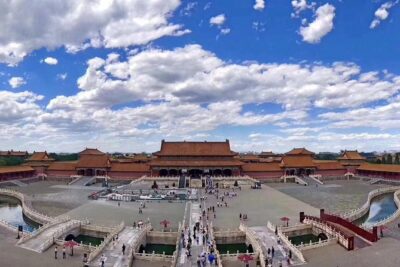
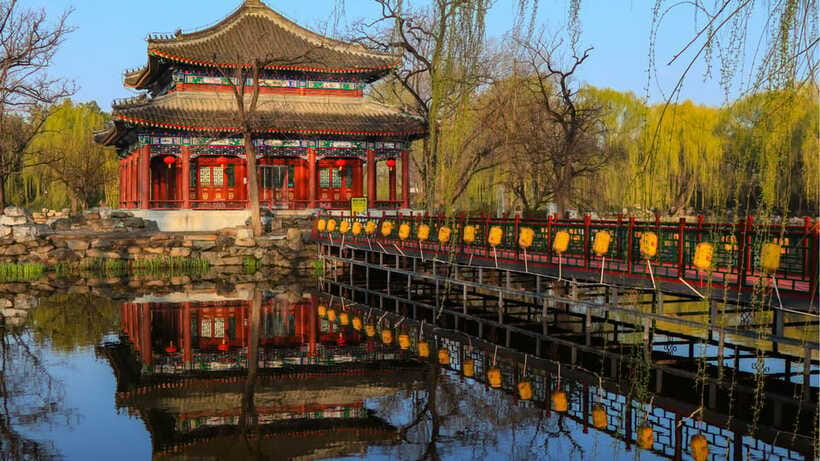
Beijing has several imperial sights, but Yuanmingyuan offers a less polished experience. You are not simply walking through restored halls and formal courtyards. Instead, you move through gardens, lakes, plantings, bridges, and fragments of buildings that tell a painful story.
The park was created in the 18th century under the Qing Dynasty. It was planned as a large royal retreat, with different garden areas joined by water and paths. The name Yuanmingyuan is often translated as the Garden of Gardens, a fitting title for a place designed to gather many forms of beauty in one enormous setting.
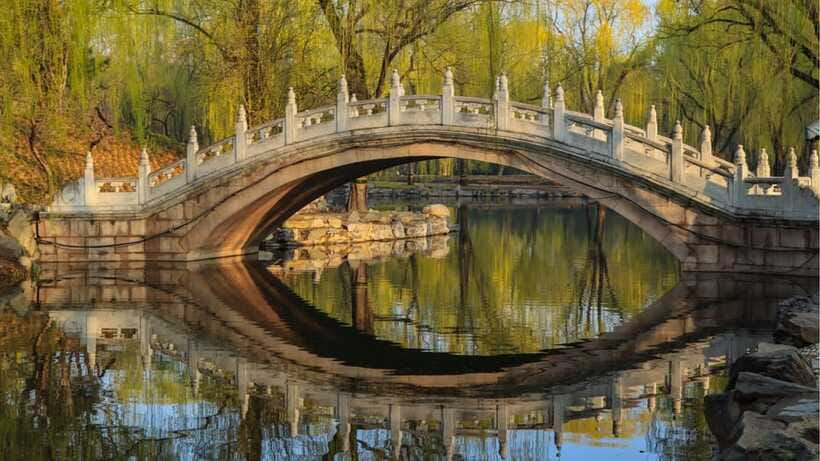
I find the combination especially effective because the natural setting is not just decoration. Ponds, bridges, flowers, and open views soften the hard facts of imperial power and military destruction. You may be admiring a quiet stretch of water one moment, then looking at broken marble structures that recall the palace’s violent end.
That contrast gives the visit its character. You come for architecture and scenery, but you leave with a clearer sense of how fragile grand buildings can be.
A few more Beijing days to line up
- From Beijing: Mutianyu Great Wall Tours with Options
★ 4.9 · 9,216 reviews - Beijing: Forbidden City Tour(Group/Private)-Tickets Included
★ 4.8 · 7,974 reviews - Beijing: T-Square & Forbidden City Group or Private Tour
★ 4.8 · 4,446 reviews
The Qing Dynasty garden at its greatest scale
Yuanmingyuan was more than a single palace building. It was a broad royal garden filled with pavilions, lakes, bridges, halls, and carefully arranged views. The setting reflects the refined taste of Qing rulers, who used gardens as places for retreat, ceremony, leisure, and cultural life.
You can expect long stretches of greenery and water rather than a compact sequence of monuments. That is pleasant if you enjoy walking outdoors, but it also explains why the park can feel confusing. One visitor needed more than four and a half hours with the basic ticket and still did not see everything.
I would not treat this as a quick stop between two other major sights. Give yourself enough time to slow down. The garden’s appeal comes from changes in mood and scenery, not from checking off one building after another.
The scale also changes how you should plan your visit. Pick the areas that matter most to you before you enter. If the ruined European-style buildings are your priority, leave enough energy for that section. If you care more about flowers, lakes, and garden views, allow time to wander without rushing from one landmark to the next.
The famous ruins and the story of 1860
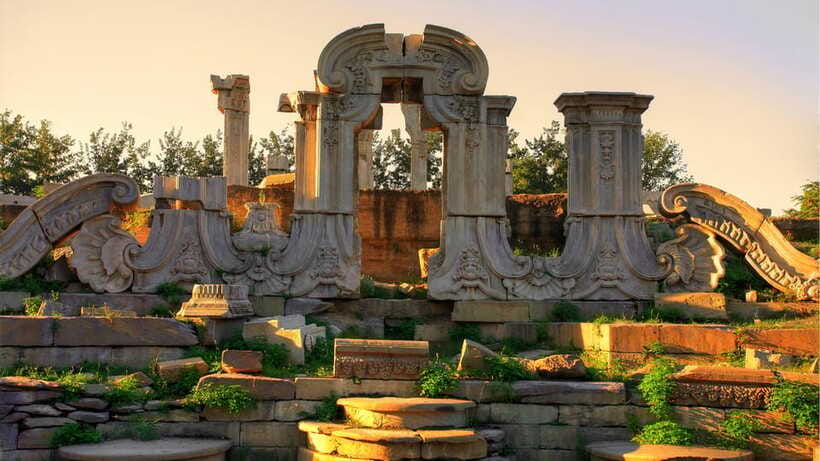
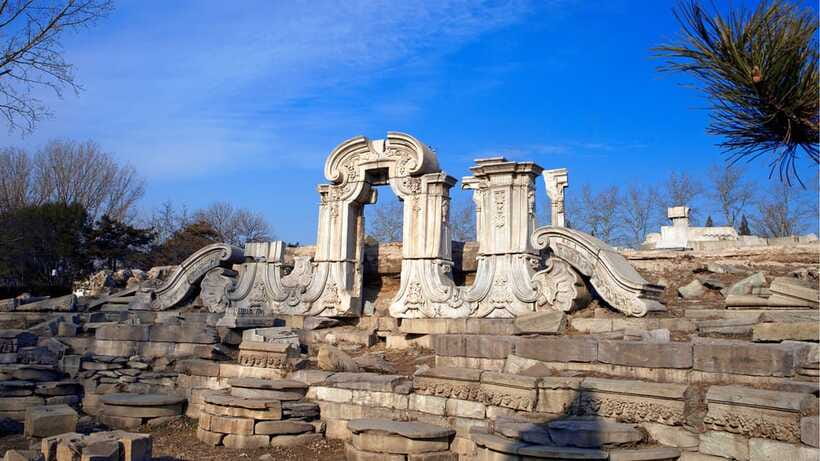
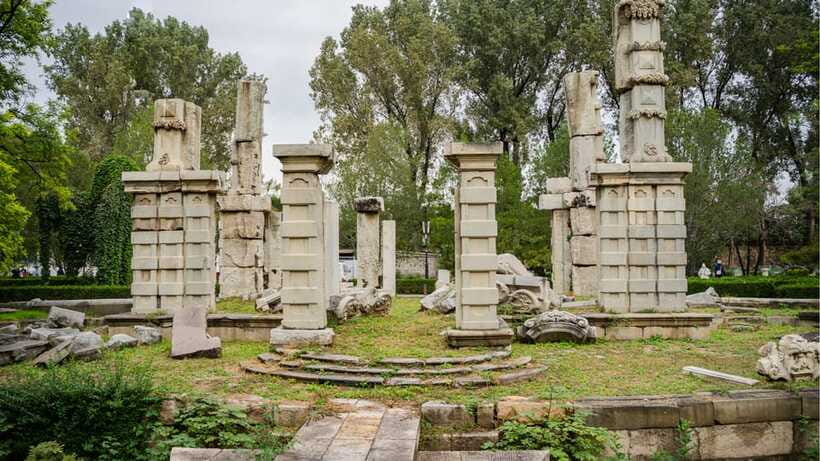
The most powerful part of Yuanmingyuan is its ruined architecture. During the Second Opium War in 1860, foreign troops looted and burned the palace. The destruction removed much of the original complex, leaving behind broken stonework, damaged sculptures, and the remains of once-grand structures.
These ruins do not feel like ordinary old buildings. Their condition is part of the message. You are looking at physical evidence of a major rupture in Chinese history, not a carefully restored imperial setting.
The European-style ruins are especially striking because they reveal the palace’s unusual design mix. Qing garden planners incorporated Western architectural ideas into an otherwise Chinese royal garden. Marble halls and European forms were placed within a setting of ponds, bridges, trees, and Chinese garden composition.
That mixture makes the ruins easy to recognize, but the emotional effect matters just as much. The scattered stone elements and overgrown areas create a quiet, melancholy mood. I would resist rushing through with a few photographs. Take time to read the English guide and consider what was lost, what survived, and why the site is preserved in its damaged form.
Chinese garden design meets European architecture
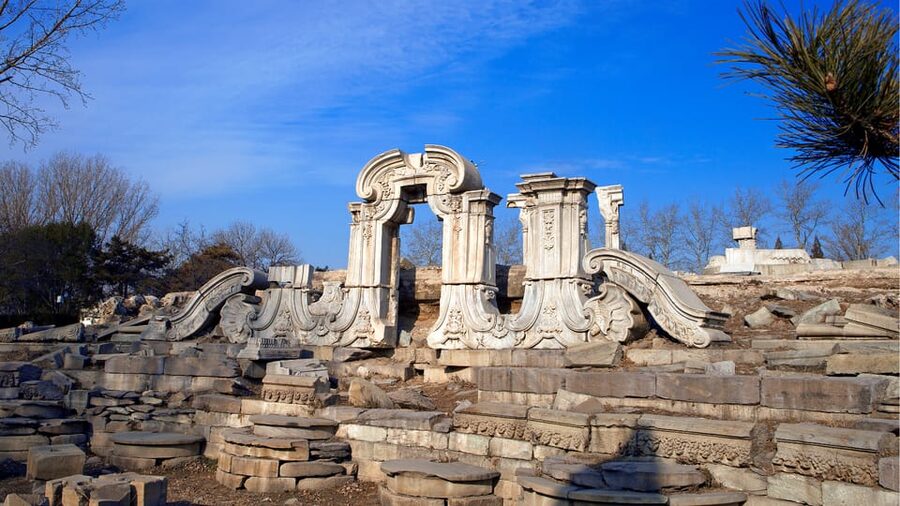
Yuanmingyuan is valuable for anyone interested in how cultures influence one another. The park does not present Chinese and European styles as two separate exhibits. They appear together within the same royal setting.
Traditional Chinese garden ideas shape the wider experience through water, bridges, framed views, and changing scenes. The Western-style ruins bring a different visual language, with stone construction and European-inspired forms. The result is unusual, and it helps explain why the site was considered so important before its destruction.
You should keep your expectations realistic. The ruins are not intact palace interiors, and you will not find every original artwork or priceless object in place. The appeal is the relationship between surviving fragments and the surrounding garden.
For me, that is where the visit earns its modest price. You are not paying only to enter a park. You are gaining access to a place where imperial ambition, international conflict, garden design, and historical memory all occupy the same space.
A very different day in Beijing:
- All-Inclusive Tour: Tiananmen Square, Forbidden City, Great Wall
★ 5.0 · 2,873 reviews - MuBus: Mutianyu Great Wall ENG/ESP/RUS Guided Bus Tour
★ 5.0 · 2,361 reviews - 4-Hour Small Group Tour to Forbidden City with Entry Tickets
★ 5.0 · 1,863 reviews - Beijing: Tiananmen Square Registration Service(Ticket)
★ 4.5 · 1,704 reviews
How to handle a park this large
A one-day duration gives you flexibility, but it does not automatically make the park easy to navigate. The grounds are large enough that you can lose your sense of direction, particularly if you follow paths without first deciding what you want to see.
I would use the English text and visual guide before setting off. It can help you identify the principal areas and understand the difference between a garden view and a major historic ruin. Keep your passport or ID card with you, since it is required for the activity.
Plan for substantial walking. The supplied information does not specify a fixed route, meeting point, transport within the park, or a required starting time. Check the available time when booking, then allow yourself room to pause at the water, flowers, and ruins.
A basic admission ticket works best for independent visitors who like choosing their own pace. It is less suitable if you want someone to explain every building as you go. The absence of a live guide and audio guide is not a problem for everyone, but it is an important part of the decision.
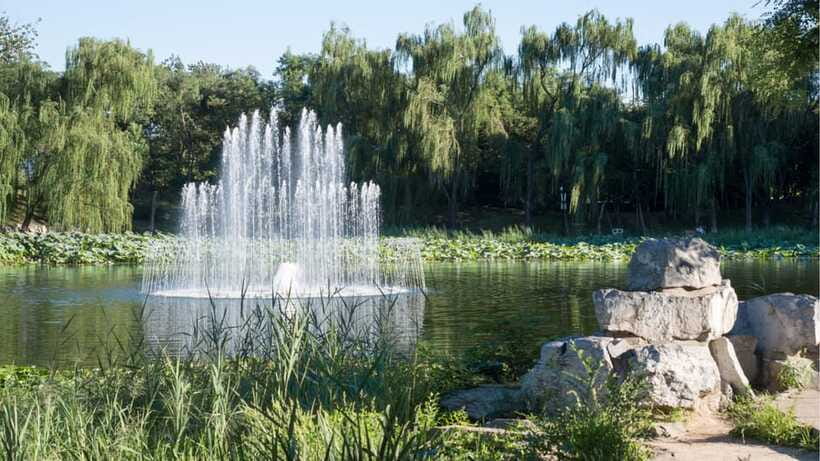
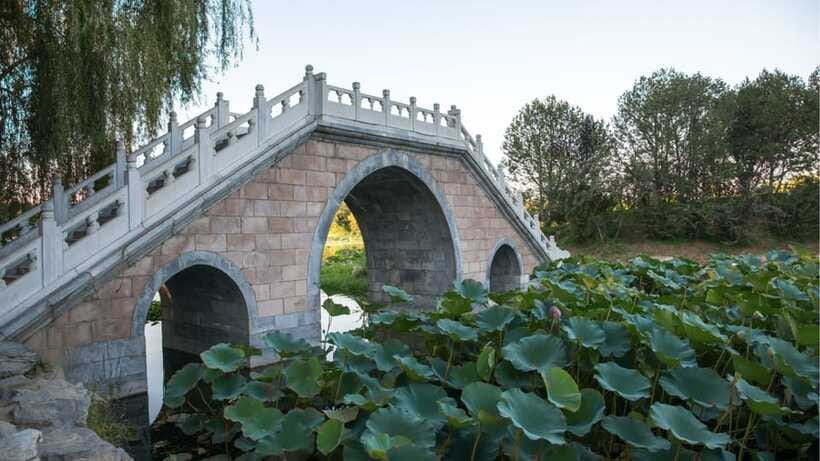
If you are visiting in warm weather, the water and lotus areas can be a highlight. One June visit was especially appreciated for its large water lilies. These natural details are easy to overlook if you focus only on the destruction, so build in time for both sides of the park.
What the English guide adds
The included guide is textual and visual, not a guided tour. That distinction matters. You receive information to read while exploring, but you remain responsible for finding your way and choosing how long to stay at each area.
This arrangement suits you if you enjoy independent sightseeing. You can stop when something catches your eye, take a break, or spend extra time around the ruins without waiting for a group.
It may feel limited if you want detailed storytelling about the Qing emperors, the individual buildings, or the events of 1860. A live guide could add more context and answer questions on the spot, but that service is not part of this ticket.
The ticket support itself appears to be straightforward. Panda, the contact associated with the experience, sends the e-ticket and PDF guide and can resend them if you misplace them. Panda also provides advice when needed. That practical help is useful in Beijing, where keeping digital booking details organized can save time at the entrance.
You should check that you have received both the admission details and the guide before heading out. The activity is designed to let you skip the ticket line, but you still need the correct ticket information and identity document.
Is the $9 price good value?
At $9 per person, this is an inexpensive way to enter one of Beijing’s major historic garden sites. The value is strongest if you plan to spend several hours exploring rather than treating Yuanmingyuan as a short photo stop.
You are paying for admission and basic English support, not a fully narrated tour. That keeps the price low, but it also means you need to bring curiosity and patience. The park rewards time more than convenience.
I consider it good value for three types of people. History fans get a site tied to the Qing imperial court and the Second Opium War. Garden lovers get water, bridges, flowers, and broad outdoor views. Independent sightseers get freedom without the cost or schedule of a private guide.
The value is weaker if your priority is a compact collection of intact buildings. Much of Yuanmingyuan’s power comes from ruins and open garden space, so anyone expecting a fully restored palace may leave disappointed. One four-star assessment described the site as having little history to see, which reflects a real issue: the historical meaning is significant, but the surviving structures are limited.
Who should book this e-ticket?
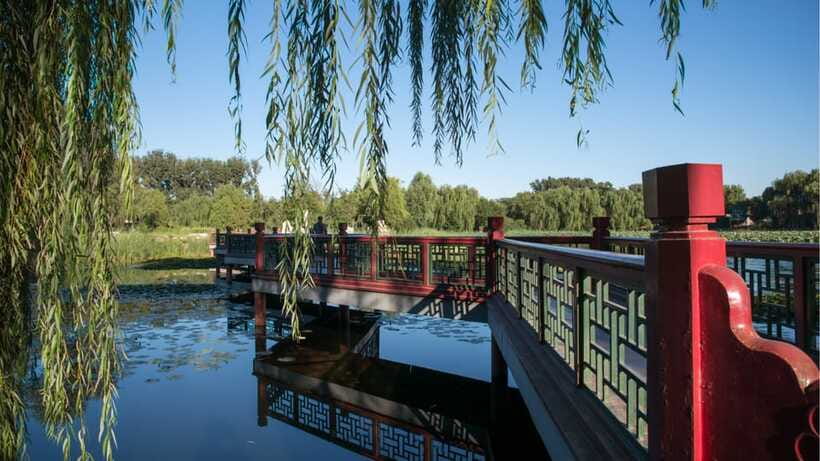
I would choose Yuanmingyuan if you want a quieter, more reflective side of Beijing’s imperial past. It is particularly well suited to people who enjoy walking, photography, garden design, and sites where the damage is part of the story.
You should also consider it if you have already seen more polished palace sights and want something different. Yuanmingyuan gives you a broader sense of how royal garden culture worked, while also showing the cost of war and looting.
Families and casual sightseers can enjoy the ponds and open spaces, but the size may test younger children or anyone who dislikes long walks. Since there is no live guide, you may need to explain the story yourself or use the supplied English material together.
I would not make it your first choice if you have only a short amount of time in Beijing and want a tightly packed monument visit. The park needs patience. Its rewards come gradually.
Practical booking details that matter
The experience lasts one day, with starting times based on availability. The supplied information does not give a fixed itinerary or meeting time, so check the booking details carefully before you go.
Admission to Yuan Ming Yuan Park and the English text and visual guide are included. A live tour guide and audio guide are not included.
You must bring a passport or ID card. The ticket is intended to let you skip the ticket line, which is useful when you already know you want to explore on your own.
The booking has free cancellation up to 24 hours before the experience for a full refund. You can also reserve now and pay later, allowing you to hold the plan without paying at the time of booking.
My verdict on Yuanmingyuan Park
Yuanmingyuan is not a tidy palace museum. It is a huge garden with fragments, flowers, water, and a difficult past. That combination can be deeply affecting, but only if you give the place enough time and accept that much of the original palace is gone.
I like the $9 e-ticket because it keeps the visit flexible and affordable. The English guide and responsive ticket help from Panda add practical value, especially if you need the PDF resent or want basic advice. The main limitation is the lack of a live or audio guide, along with the park’s easy-to-miss scale.
Book it if you want imperial history in an outdoor setting, enjoy independent sightseeing, and can spare several hours. Skip it if you need a short, fully narrated visit with intact buildings at every turn. For the right visitor, Yuanmingyuan offers one of Beijing’s most thoughtful walks: beautiful, spacious, and marked by loss.
FAQ
What is included with the Yuanmingyuan e-ticket?
The ticket includes admission to Yuan Ming Yuan Park and an English textual and visual guide.
Is a live tour guide included?
No. The activity does not include a live tour guide.
Is an audio guide included?
No. An audio guide is not included.
How long does the experience last?
The listed duration is one day. You should check availability for the starting times.
What identification should I bring?
Bring your passport or ID card.
Can I skip the ticket line?
Yes. The activity includes skip-the-ticket-line access.
Can I cancel for a full refund?
Yes. You can cancel up to 24 hours in advance for a full refund.
Can I reserve now and pay later?
Yes. The booking option allows you to reserve your spot and pay later.
Recently listed in Beijing
- Temple of Heaven Tickets Booking★ 5.0 · 4 reviews
- Small-Group 1-day Jinshanling Great Wall 6km Hiking tour★ 5.0 · 4 reviews
- Beijing Night Walking Tour★ 5.0 · 4 reviews
- Jinshangling Great Wall Of Beijing Tickets And Other Option★ 4.0 · 4 reviews
- Private Layover Tour to Mutianyu Great Wall from Beijing Airport★ 5.0 · 5 reviews
- Beijing: Private Biking Tour Along Central Axis of Beijing★ 4.8 · 4 reviews
- Fantastic Private Trip to Mutianyu Great Wall (English Service)★ 5.0 · 5 reviews
- Beijing: Private Tour to Jinshanling Great Wall with Option★ 4.7 · 5 reviews
Beijing Tours, compared.

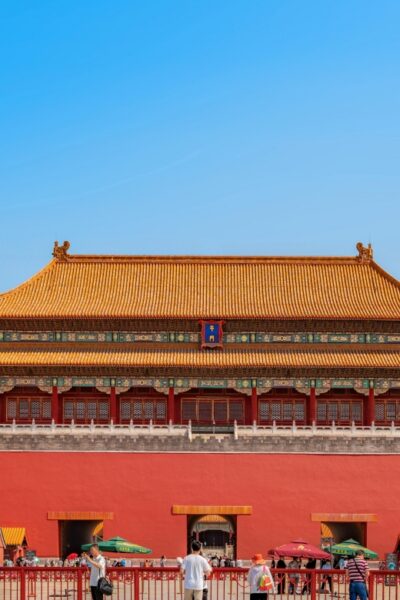
Forbidden City Tour(Group/Private)-Tickets Included
Read our review →
T-Square & Forbidden City Group or Private Tour
Read our review →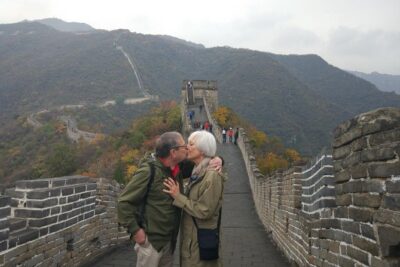
All-Inclusive Tour: Tiananmen Square, Forbidden City, Great Wall
Read our review →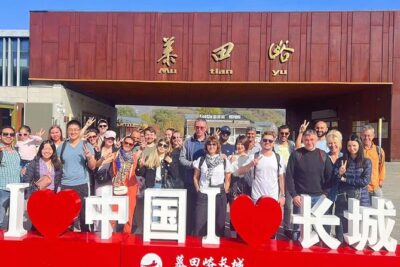
MuBus: Mutianyu Great Wall ENG/ESP/RUS Guided Bus Tour
Read our review →
4-Hour Small Group Tour to Forbidden City with Entry Tickets
Read our review →