Reviewed · SHANGHAI TOURS
Red Route Tour- Chinese Communist Party
The most revealing part of this Shanghai tour is the contrast between the Communist Party’s birthplace and the polished restaurants and boutiques now surrounding it. You walk through Xintiandi’s fashionable lanes to the modest site where the Party’s First National Congress took place, then follow the story to a collection of Cultural Revolution posters.
I like the private format, since your guide can shape the history around your questions. I also like the practical hotel pickup and the chance to see two very different sides of Shanghai in only three hours. The main drawback is that subway or taxi fares, admission, food, and your ride back to the hotel are not included in the $85 price.
Key points to know before booking
- The tour begins at the Party’s First National Congress site in Xintiandi, where modern Shanghai makes an unusual setting for a major political landmark.
- Historian guide Penny is specifically praised for clear, lively explanations, along with useful restaurant and shopping suggestions.
- The Propaganda Poster Art Centre covers the Cultural Revolution era through an extensive collection of printed material.
- This is a private tour for your own group, not a large scheduled coach outing.
- Hotel pickup is included, but transport between stops, admission, and hotel drop-off are extra.
- Plan for steady walking, and wear comfortable shoes.
From fashionable Xintiandi to the Party’s first meeting place
Your guide meets you at your centrally located Shanghai hotel. From there, you head to Xintiandi, an area known for stylish restaurants, boutiques, and preserved older buildings. It is an effective first stop because the political setting is easy to miss if you only see the neighborhood as a dining and shopping district.
The walk to the birthplace of the Chinese Communist Party puts history into a real city setting. You are not beginning in a distant museum or a broad lecture hall. You are moving through streets where old architecture and current commercial life sit side by side.
That contrast gives the opening its force. The location connected to the Party’s First National Congress is modest, while the surrounding district is polished and expensive-looking. Your guide explains why this place matters and helps connect the building to the larger story of China’s modern political development.
The stop itself has no admission charge according to the tour details, but the experience depends heavily on the guide’s explanation. The building and neighborhood can offer only so much on their own. I would pay close attention to the timeline here, especially if you are not already familiar with the events that led to the Party’s formation.
A few more Shanghai days to line up
- Authentic Local Food Tour in Central Shanghai
★ 5.0 · 1,382 reviews - Zhujiajiao Water Town and Shanghai City Private Day Tour
★ 5.0 · 1,016 reviews - Private Shanghai Full Day City Tour with Old and New Highlights
★ 5.0 · 995 reviews
Why the Communist Party birthplace matters
The first congress site is not simply another historic address. It gives you a physical starting point for understanding how a political movement began, developed, and later shaped the country. The tour presents the site as the cradle of the Chinese Communist Party, then uses it to set up the later stops.
This is also where a private guide earns the fee. You can ask about the political figures, the period, and the way China presents this history today. The tour does not promise a fully detached account. One useful point made about the later museum is that its material reflects official history, so you should treat the tour as an informed introduction rather than a complete political study.
That does not make the visit pointless. Quite the opposite. Official displays, historical sites, and propaganda material can tell you a great deal about how the Party explains its own rise. A good guide can help you notice what is shown, what is emphasized, and how the story is arranged.
Penny is the guide name most closely associated with this experience. Her approach is described as concise and lively, with a clear timeline through Chinese history. That matters because the subject can quickly become a blur of dates, leaders, campaigns, and political changes.
A short ride across Shanghai, with costs to watch
The move from Xintiandi to the Shanghai Propaganda Poster Art Centre is made by subway or taxi. This gives you a glimpse of Shanghai beyond the first neighborhood, but it also means you need to budget for local transport.
The price is listed at $85 per person. For a private three-hour tour, that can be fair if you value a personal guide and want historical context rather than simply visiting a museum alone. The included hotel pickup also saves you the trouble of finding the starting point, which is useful during a first stay in Shanghai.
Still, the price is not all-inclusive. Transportation to and from the attractions is extra, and hotel drop-off is not provided. Food and drinks are also on your own, and admission is listed separately. Check the final booking details for the current museum admission charge and carry a way to pay for the subway or taxi.
The private arrangement is especially useful for two or more people who share an interest in political history. Group discounts are offered, though the available details do not specify the discount amount. Since only your own group participates, you avoid the stop-and-start rhythm of a large bus tour.
Cultural Revolution posters at the Propaganda Poster Art Centre
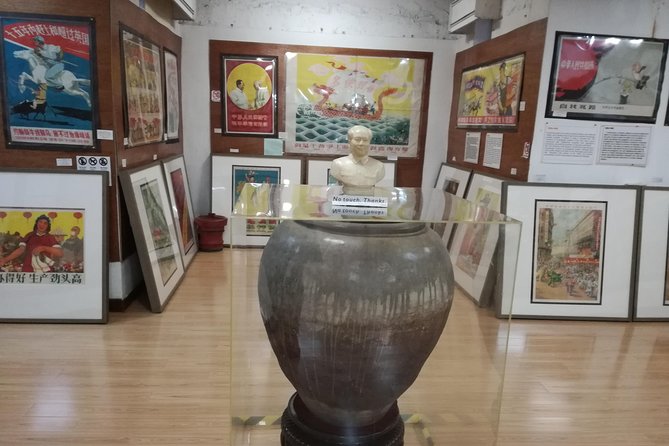
The Propaganda Poster Art Centre is the strongest museum stop on the route. Its collection includes material from the Cultural Revolution, a period when political images and slogans were part of daily public life.
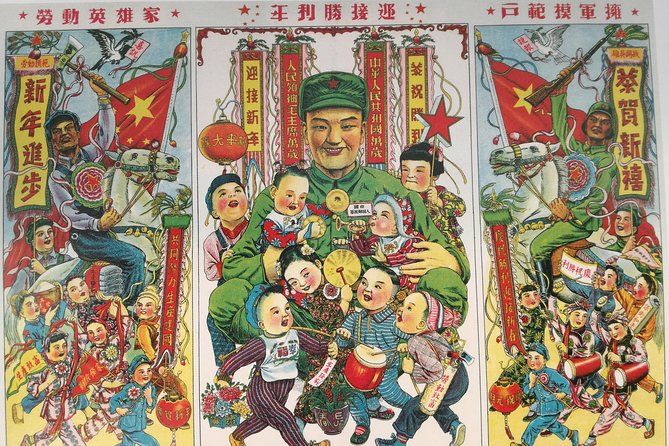
Posters can make political history easier to grasp because they show how ideas were presented to ordinary people. You see the colors, symbols, heroic figures, and repeated messages used to promote the Party and its campaigns. The collection also gives you a chance to study propaganda as design, not just as text.
Allow your guide’s commentary to do more than translate labels. The value here lies in connecting the images to the wider timeline. Penny is praised for explaining the material clearly and for offering context about colonial influence, modern Chinese history, and the reasons the Communist Party gained such a firm hold.
The museum may be small enough that you can focus closely on individual pieces rather than rushing through a huge institution. At the same time, the subject can be intense. If you prefer art museums with little political content, this will feel narrow. If you want to understand how images helped support a political system, it is likely to be the most memorable part of the afternoon.
One practical point: the tour information says admission is not included. The museum is therefore not simply a free add-on, even though some of the outdoor or neighborhood stops do not charge admission. Confirm the current ticket arrangements before you go.
A very different day in Shanghai:
- Shanghai: Hop-on Hop-off Bus Ticket and Optional Attractions
★ 3.4 · 692 reviews - Shanghai Private Tour: Zhujiajiao Water Town and Boat Ride
★ 5.0 · 661 reviews - Eat Like A Local: Shanghai Night Food Tour
★ 5.0 · 616 reviews - Huangpu Night Cruise: Cozy Vibe & Modern Shanghai Glow
★ 4.3 · 520 reviews
XinTianDi BeiLi and the city around the history
XinTianDi BeiLi appears among the stops, tying the tour back to the Xintiandi area. The value of this portion is less about a separate major attraction and more about the setting around the political birthplace.
You pass restaurants and boutiques on the way to the Communist Party site, so the area gives you a quick lesson in Shanghai’s layers. The neighborhood is attractive and convenient, but its present-day commercial character can make the historic address feel easy to overlook. Your guide helps bridge that gap.
This is a good reason to avoid treating the tour as a list of buildings. The experience works best as a connected walk through a changing part of Shanghai. You see how a politically important site now fits into a district built for leisure, shopping, and dining.
The tour does not include a meal, but the guide may offer restaurant recommendations afterward. Penny is also praised for giving suggestions about shopping and places to eat, which can be useful if you have only a short stay and want help planning the rest of your day.
What the three-hour schedule feels like
Three hours is enough for a focused introduction, not a full course in Chinese political history. You should expect a compact route with walking, a local transfer, and discussion at the main sites.
The exact amount of time at each stop may depend on your questions, traffic, and how you move between locations. Since the tour uses subway or taxi, the pace will not be entirely predictable. Wear comfortable walking shoes, as advised, and avoid scheduling an important evening reservation too tightly afterward.
Most people can participate, and the route is near public transportation. Children must be accompanied by an adult. The tour details do not provide specific information about wheelchair access or other mobility arrangements, so ask the provider before booking if that matters for your group.
Hotel pickup is available from centrally located Shanghai hotels. If your hotel is outside that area, confirm pickup before you pay. The return trip is not included, so plan to continue on your own from the final stop.
How the guide shapes the experience
The subject is serious, but the guide’s delivery can make or break it. Penny receives especially strong praise for being attentive, helpful, and clear. Her explanations are described as a lively walk through the Chinese historical timeline rather than a dry recital of dates.
That style suits this route. The Party’s origins, colonial influence, and Cultural Revolution material are easier to follow when someone keeps linking one period to the next. You can also ask for clarification when a display uses political language that is unfamiliar or when the official account leaves you wanting more context.
The guide’s role is not limited to history. Restaurant and shopping recommendations after the tour add practical value, especially if you are new to Shanghai. I would use the final minutes to ask for help with your next meal or neighborhood visit, rather than saving every question for the museum.
The experience is best for people who want explanation. If you simply want attractive streets and famous buildings, there are easier sightseeing tours. Here, the point is to understand why the locations matter and how they fit into China’s modern story.
Is $85 a fair price for this private history tour?
At $85 per person, the tour is not the cheapest way to see Xintiandi or visit a poster museum. You could visit parts of the route independently for less, provided you are comfortable arranging transport, finding the sites, and researching the background yourself.
The value comes from the private historian guide. You receive hotel pickup, a tailored conversation, and a route that links the Party’s birthplace with political art from the Cultural Revolution. For a couple, family, or small group with serious interest in Chinese history, that combination can justify the cost.
The value is weaker if you dislike guided interpretation or already know the subject well. You will also pay extra for transport and admission, so compare the final cost rather than judging the $85 alone.
I would book it early if the dates matter. It is commonly reserved about 34 days ahead, suggesting that advance planning is sensible. Confirmation is normally provided at booking, though reservations made within five days of the tour may require up to 48 hours for confirmation, subject to availability.
Who should book the Red Route Tour?
I would recommend this tour to you if you want a focused introduction to the Communist Party, prefer a private guide, and like seeing history in the middle of a working city. It is particularly suitable for first-time visitors who want help organizing modern Chinese history before exploring more of Shanghai.
It also suits teachers, history students, and anyone interested in political posters, state messaging, or the Cultural Revolution. The museum collection gives the tour a concrete visual center, while Xintiandi provides the physical starting point.
I would hesitate if your main goal is architecture, food, or broad city sightseeing. The tour is built around political history, and some of the material may feel one-sided because it follows official historical presentation. You should go ready to ask questions and compare perspectives later.
Cancellation is free if you cancel at least 24 hours before the local start time. Changes or cancellations made within 24 hours are not accepted for a refund.
Final verdict: a strong choice for serious history fans
Book the Red Route Tour if you want Shanghai history explained by a private guide rather than left to labels and guidebooks. The combination of Xintiandi’s Party birthplace, Cultural Revolution posters, and Penny’s clear storytelling gives you a useful three-hour framework for understanding modern China.
Keep the extra costs in mind, allow time for walking and local transport, and do not expect a neutral academic survey of every viewpoint. For the right reader, the tour offers a focused and thoughtful look at how the Communist Party began, how it presented its message, and how those stories remain visible in Shanghai today.
FAQ
How long does the Red Route Tour last?
The tour lasts approximately three hours.
Is hotel pickup included?
Yes. Pickup is included from your centrally located Shanghai hotel.
Is hotel drop-off included?
No. The tour does not include drop-off at your hotel after the experience.
How do you travel between the attractions?
The tour uses the subway or a taxi between some locations. Transportation to and from the attractions is not included in the price.
Is this a private tour?
Yes. Only your own group participates in the activity.
Who guides the tour?
A professional historian guide leads the tour. Penny is specifically associated with the experience and is praised for her clear explanations and practical Shanghai recommendations.
Can I cancel for a full refund?
Yes, if you cancel at least 24 hours before the experience’s local start time. Cancellations or changes made less than 24 hours before the start are not eligible for a refund.
Recently listed in Shanghai
- Shanghai Era Theatre Acrobatics Show Ticket★ 5.0 · 5 reviews
- Hangzhou Jiuxi and Hupao Spring Hiking Day Trip from Shanghai by Bullet Train★ 5.0 · 5 reviews
- Shanghai in a Day: A Whirlwind Tour of the City’s Highlights★ 5.0 · 5 reviews
- 3-Hour Private Tour: The Bund and Shanghai Tower★ 5.0 · 5 reviews
- Private Street Food Walking Tour with Shanghai Tower Option★ 5.0 · 5 reviews
- Suzhou and Tongli Water Town Private Tour from Shanghai with Options★ 5.0 · 5 reviews
- Online Cooking Class Fried Rice by Sunflower Li★ 4.5 · 5 reviews
- Zhouzhuang and Tongli Water Town Private Transfer Service from Shanghai★ 5.0 · 5 reviews
Shanghai Tours, compared.

Authentic Local Food Tour in Central Shanghai
Read our review →
Zhujiajiao Water Town and Shanghai City Private Day Tour
Read our review →
Private Shanghai Full Day City Tour with Old and New Highlights
Read our review →
Hop-on Hop-off Bus Ticket and Optional Attractions
Read our review →
Shanghai Private Tour: Zhujiajiao Water Town and Boat Ride
Read our review →
Huangpu Night Cruise: Cozy Vibe & Modern Shanghai Glow
Read our review →