
Reviewed · CHONGQING TOURS
Chongqing 1941 theatre: Tea Art Performance with Folk Art
The most unusual part of this 45-minute Chongqing show is the tea service itself. You sit with a covered bowl of local-style gaiwan tea while performers bring out a 1.2-meter long-spout teapot, play pipa music, tell stories with money boards, and present Sichuan drama with kung fu. I like the close-up setting, where a front-row seat can put you right into the action, and I like the mix of stage arts rather than one long opera.
The main caution is value. The listed price is $31 per person, yet one recent buyer reported saving about $45 by purchasing at the venue. That claim does not reveal the local ticket price, so check directly before booking online. The audience can also be small, which may make the room feel less lively, though it gives the performers more chance to interact with you.
Key points before you book
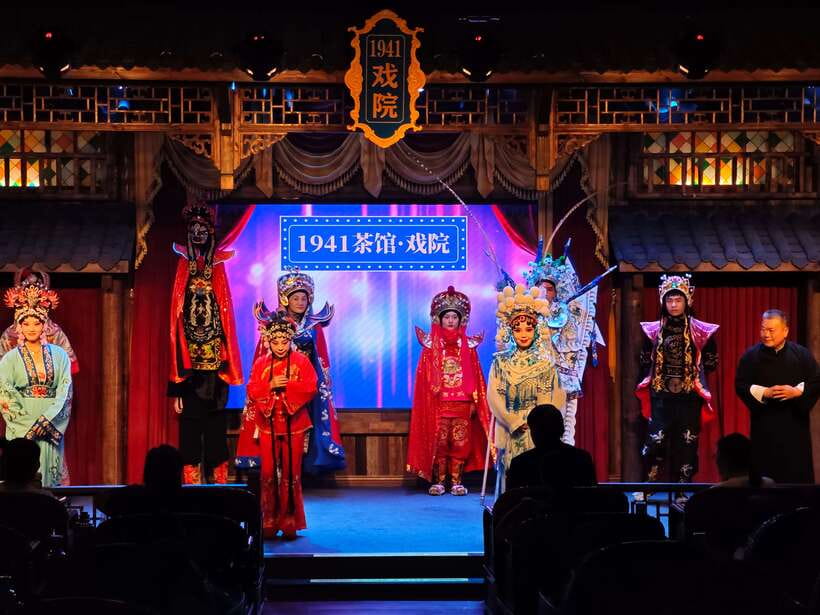
- A short sampler of Chinese folk arts: Expect opera, kung fu, magic, folk customs, music, storytelling, and face changing in one compact program.
- Tea and a snack are included: You receive a covered bowl of tea and a small snack, usually nuts and similar bites.
- Front-row seats can be interactive: One visitor was invited to interact with performers throughout the show and take a photo afterward.
- The long-spout tea act is the visual oddity: A 1.2-meter teapot turns tea pouring into a display of balance and control.
- The show is mainly in Chinese: Much of the action is visual, but spoken storytelling will be easier to follow if you understand Chinese.
- Arrive early: The meeting point is the Yutian building garage entrance beside the time elevator, followed by a ride to the eighth floor. Arrive 30 minutes early, since late arrivals do not receive the tea.
A compact introduction to Chongqing folk entertainment
This performance works best as a quick cultural sampler. In less than an hour, you move through several old-style entertainment forms rather than settling into a single long production.
You might see traditional music, opera, magic tricks, local customs, singing, storytelling, and physical performance. The result is closer to a stage variety show than a formal tea ceremony. That matters when you set expectations. You are not booking a quiet lesson on tea preparation, and you are not attending a full-length Sichuan opera. You are getting a brisk selection of recognizable Chinese stage traditions, served with tea.
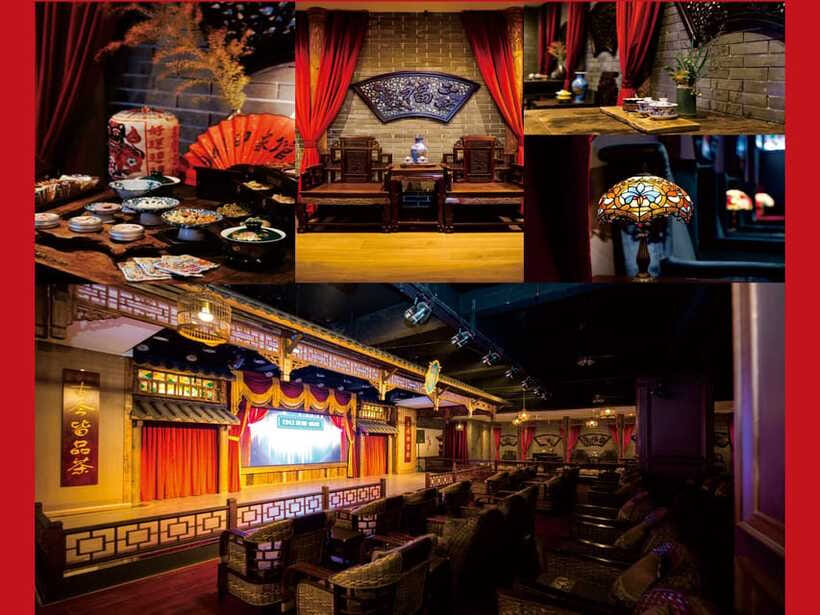
The setting is indoors at Chongqing 1941 Theatre. That makes this a useful rainy-day or hot-weather choice, and it avoids the need to spend a whole evening on a single performance. The listed length is only 45 minutes, so you can fit it around meals, sightseeing, or an evening walk.
The host or greeter speaks Chinese, and the listed activity language is Chinese. Even without Chinese, the visual acts should be fairly easy to follow. Face changing, kung fu, tea pouring, music, and magic do not depend on a translated script. Singing and storytelling are different. You can enjoy their rhythm and delivery, but the finer points may pass you by.
A few more Chongqing days to line up
- Chongqing Wulong National Park Private Tour
★ 5.0 · 87 reviews - Chongqing: Two Rivers Night Cruise- Yangtze & Jialing Rivers
★ 4.5 · 64 reviews - Chongqing deep explore & private car service including meals
★ 4.9 · 51 reviews
Finding the theatre and getting settled
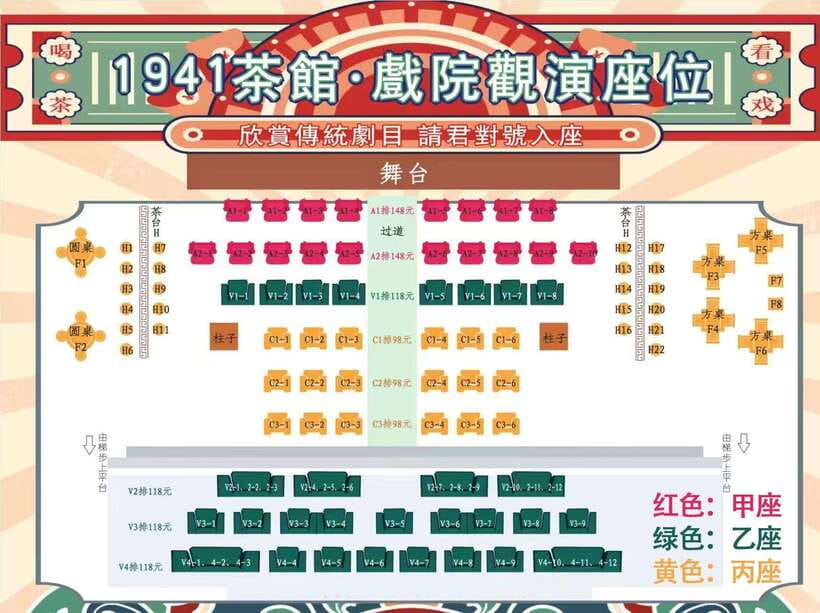
The meeting point is the Yutian building garage entrance next to the time elevator. From there, you go to the eighth floor. This is not a street-side meeting point that you can casually stumble upon, so allow time to identify the building and entrance.
Arriving 30 minutes before the start is important for two reasons. First, you need to find the correct entrance and reach the theatre. Second, the tea is part of the experience, but it will not be provided if you arrive late.
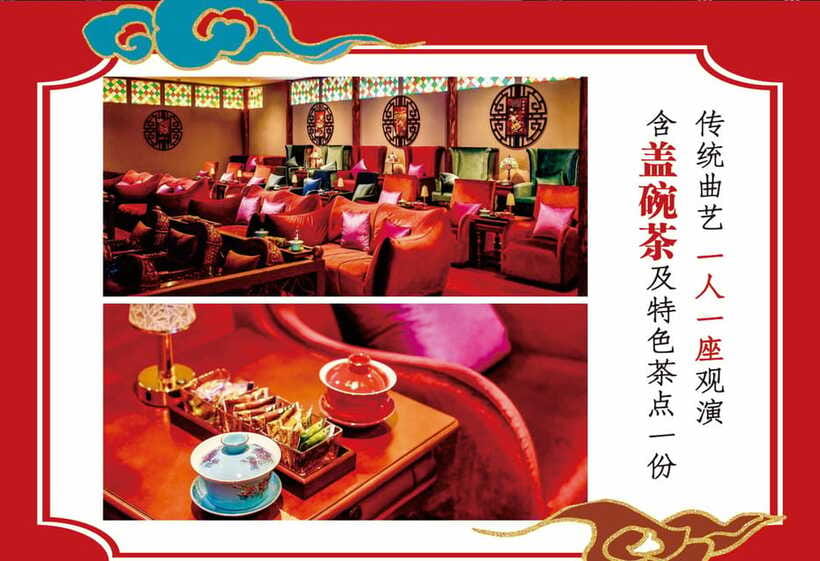
Once seated, you receive a covered bowl of tea and a special snack. A covered bowl, or gaiwan, is a traditional Chinese tea vessel with a lid used to steep and drink the tea. It can take a little practice to handle without touching the hot sides, so let the tea cool and use the lid carefully.
The snack is not a meal. It is described as a small accompaniment, and one account identifies the food as nuts and similar items. If you are hungry, eat beforehand. The tea and snack add a pleasant local touch, but they will not replace lunch or dinner.
The opening tea performance and the 1.2-meter teapot
The long-spout tea act is likely to be the most memorable image of the program. A tea artisan uses a teapot about 1.2 meters long, turning the simple act of pouring into a performance.
This kind of act is valuable because it shows tea service as a physical skill, not just a drink placed on a table. Watch the control of the pot, the distance between the spout and the bowl, and the timing of the pour. It gives you a clearer sense of how Chinese tea culture can include display and theatre as well as taste.
You also get to drink authentic Chongqing-style gaiwan tea during the show. The covered bowl is not a decorative prop. It is part of the service, so this is a chance to experience tea in a traditional format while watching the action.
Do not expect a long explanation of tea varieties or a hands-on tea workshop. The emphasis is on performance. If you want detailed instruction on brewing, this is not the right format. If you want a drink, a snack, and a lively demonstration, it fits well.
Sichuan drama, kung fu, and changing faces
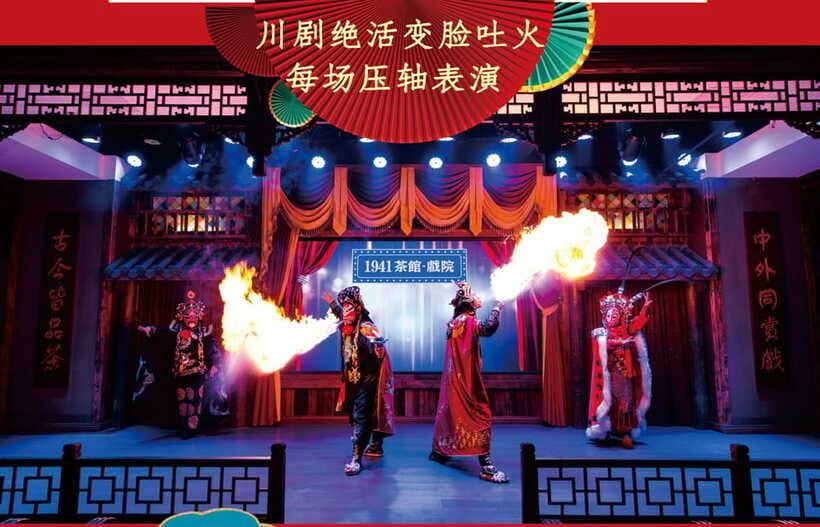
One featured act is the Sichuan drama Human Good, presented with kung fu. The exact staging can vary, but the combination points to a theatrical scene with movement, character, and martial arts rather than a purely spoken play.
Kung fu gives the show a physical edge. It also helps bridge the language gap. You may not understand every line, but athletic movement, costume, gesture, and stage business remain clear.
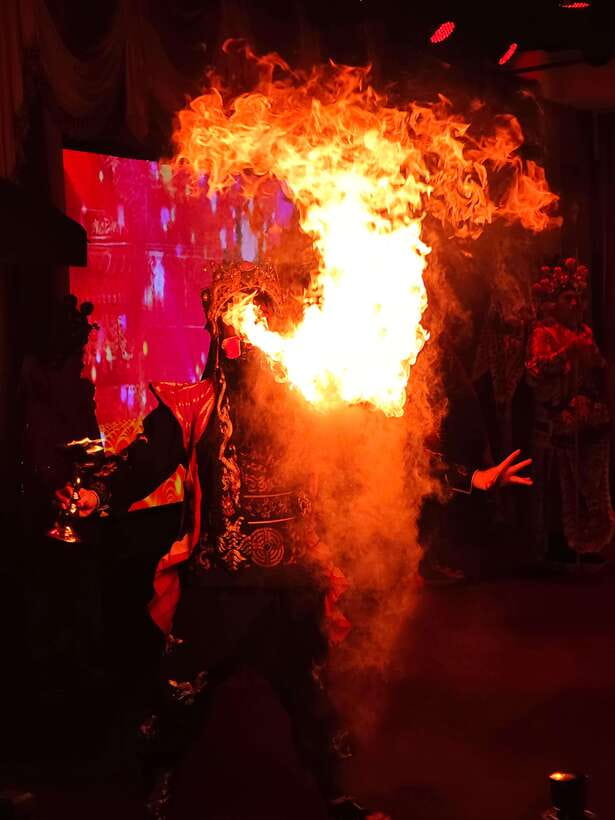
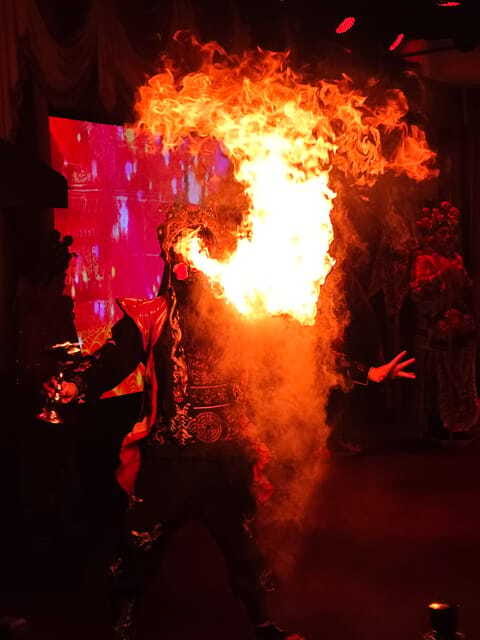
Face changing is another major draw. The performance includes unpredictable facial makeup changes, and the close setting may bring the technique near your seat. One particularly memorable possibility is being allowed to touch the face of a face-changing performer. This is not guaranteed, so treat it as a lucky extra, not part of the promised schedule.
A front-row seat can make a real difference here. One visitor described constant interaction from the front, followed by an invitation to take a picture with the performers. The trade-off is that a front seat can put you on display. If you prefer to watch quietly, choose a place farther back if seating allows.
A very different day in Chongqing:
- Chongqing: 1-day Essential Guided City Tour without Car
★ 5.0 · 44 reviews - Chongqing private luxury city tour: Must-sees All in One
★ 5.0 · 39 reviews - Chongqing: Magic Night View and Secret Viewing Spots Tour
★ 5.0 · 27 reviews - All-In-One Chongqing Trendy Spots Private Tour
★ 5.0 · 26 reviews
Pipa music and money-board storytelling
The pipa performance brings a gentler change of pace. The pipa is a traditional Chinese plucked string instrument, and the program describes its sound as beautiful and sonorous, with interwoven tones.
This is a good contrast to the kung fu and magic. Listen for the layered effect created by the plucked strings. It is not simply background music between acts. The pipa gives the program a traditional musical center and lets you hear an instrument strongly linked with Chinese performance culture.
The Quyi money-board act combines singing and storytelling. Quyi is a broad term for Chinese narrative performance, and the money board provides rhythm as the performer speaks or sings.
This section will be easiest for Chinese speakers to appreciate because words and storytelling carry much of the meaning. Still, the beat, gestures, and delivery give you something to follow. If you enjoy seeing how traditional performance mixes music and spoken narrative, this act adds useful depth to the faster stage tricks.
The program’s variety is its main strength. You are not asked to spend 45 minutes trying to understand one long plot. Instead, each act offers a new sound, costume, skill, or stage effect.
Magic, folk customs, and the small-room effect
The show also includes magic and folk customs. These sections help keep the program moving and broaden it beyond opera and music.
Magic is especially useful in a performance aimed at an international audience because it communicates through action. Folk customs can be harder to interpret without explanation, but they offer glimpses of local ideas about dress, ritual, humor, or public entertainment.
The small audience has two sides. A less crowded room can feel intimate, and performers may have more freedom to speak with people in the front rows. It can also reduce the energy in the room. One account described the audience as somewhat small, while still noting that the performers gave their best.
I would not choose this activity if you need the charged atmosphere of a packed theatre. I would choose it if you value proximity and a chance of direct interaction. The room size matters most to people who enjoy being part of a show rather than sitting anonymously in a large auditorium.
How much value do you get for $31?
At $31, the price is reasonable only if you want a short cultural show with tea and several different acts. You are paying for convenience, a seat, the performance, tea, and a small snack. The 45-minute format also limits the time commitment.
The value becomes less clear if you compare it with a simple local theatre ticket. The program is brief, and one purchaser reported that buying at the location could be about $45 cheaper. That figure is unusual beside the listed $31 price, and it may reflect a different local price or booking comparison, so do not treat it as a confirmed discount. Still, it is enough reason to ask at the theatre or compare prices before paying.
If the online price is your easiest option, the booking flexibility may have value. You can reserve now and pay later, and cancellation is free up to 24 hours before the start. That helps if your Chongqing schedule is still shifting.
The price is easier to justify for a first visit to China, a family group, or anyone who wants many folk arts in one sitting. It is harder to justify if you have already seen a longer Sichuan opera program or want an in-depth tea class.
Who will enjoy this 45-minute show?
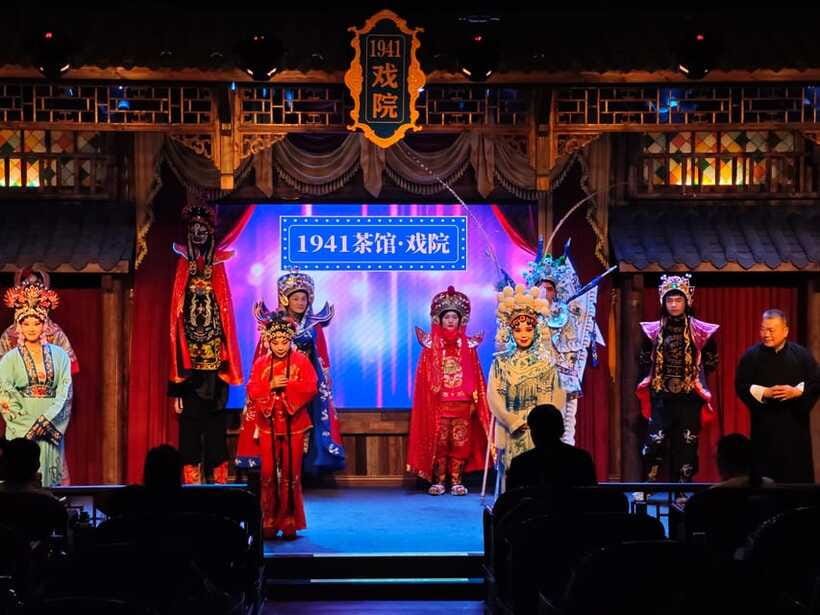
I would recommend it most to people who want a short, varied introduction to Chinese performing arts. It suits families, first-time visitors, and anyone who prefers visual entertainment to a long, untranslated play.
It is also a good match for a tight itinerary. Forty-five minutes is long enough to give you several distinct impressions but short enough to fit between other plans. Since the activity is indoors, it offers a practical change from Chongqing’s outdoor sightseeing.
Chinese speakers will get more from the money-board storytelling, singing, and spoken comedy. English speakers can still follow the physical arts, music, tea work, magic, and face changing, but the program should not be mistaken for an English-language presentation.
The activity is wheelchair accessible. Transportation is not included, so you need to make your own way to the Yutian building meeting point. Personal expenses beyond the included tea and snack are also your responsibility.
Timing, seating, and useful practical advice
Arrive 30 minutes early, not at the advertised start time. Use that buffer to locate the garage entrance, find the time elevator, reach the eighth floor, and get seated with your tea.
If you want performer interaction, ask about front-row seating when you arrive. A front seat may bring you closer to face changing and other acts, and it may increase your chance of being included. If you dislike audience participation, sit farther back when possible.
Have something to eat before the show. The included snack is small, with nuts and similar items rather than a substantial serving. If you have a nut allergy, the supplied information does not confirm alternative snacks, so ask the staff before accepting the food.
Keep your schedule flexible after the show if you want a photo with performers. A picture opportunity has been offered after the performance, but it should be viewed as an extra rather than a guaranteed part of every visit.
The show is indoors, and the host or greeter speaks Chinese. There is no named guide or English-language commentary listed, so do not book this expecting a personal tour or detailed translation.
Should you book Chongqing 1941 Theatre?
Book it if you want a short, visual, and varied taste of Chongqing folk entertainment, especially if tea, face changing, kung fu, and traditional music appeal to you. The tea service, long-spout pot, front-row interaction, and photo chance give the experience more character than a basic stage ticket.
Think twice if you want a full Sichuan opera, a substantial meal, detailed English explanations, or a large and energetic audience. Also compare the $31 online price with the theatre before booking, since a major local price difference has been reported.
For most people, the decision comes down to expectations. Treat this as a compact variety show with tea, not a grand theatre evening. With that in mind, it can be a convenient and enjoyable addition to a Chongqing visit.
FAQ
How long does the Chongqing 1941 Theatre performance last?
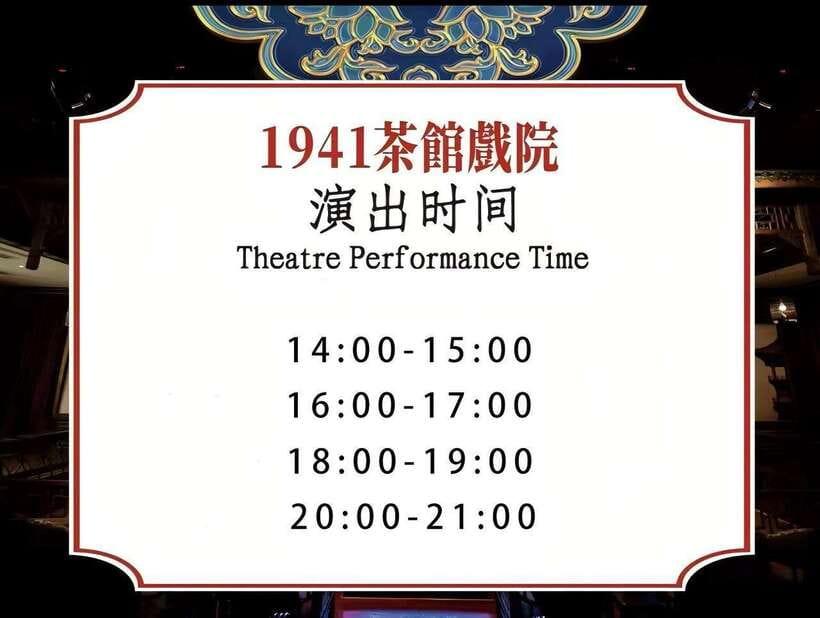
The performance lasts 45 minutes.
What is included in the ticket?
The ticket includes the traditional performance, one covered-bowl tea, and one special snack per person.
What happens if I arrive late?
Tea will not be provided if you arrive late. You should arrive 30 minutes before the scheduled start.
Where is the meeting point?
Meet at the Yutian building garage entrance next to the time elevator. The activity takes place on the eighth floor.
Is transportation included?
No. Transportation to and from the activity is not included.
Is the performance in English?
The listed activity language is Chinese, and the host or greeter is Chinese-speaking.
Can wheelchair users attend?
Yes. The activity is listed as wheelchair accessible.
What kinds of performances are included?
The program includes tea art, Sichuan drama with kung fu, pipa music, Quyi money-board singing and storytelling, magic, folk customs, traditional music, opera, and face-changing elements.
Can I cancel the booking?
Yes. You can cancel up to 24 hours in advance for a full refund. You can also reserve now and pay later.
Recently listed in Chongqing
- Chongqing Local Food Tour Adventure★ 5.0 · 5 reviews
- Private Day Tour to Ciqikou, Liziba, Jiefangbei etc. in Chongqing★ 4.5 · 5 reviews
- True Taste of Chongqing: Offbeat Walks & Hotpot in One Day★ 5.0 · 6 reviews
- Chongqing Wulong Exploration Private Day Tour With the Lunch★ 5.0 · 6 reviews
- Chongqing: Qingyu Banquet Experience with Show and Dinner★ 4.8 · 6 reviews
- Chongqing Luxury Hot Spring and Massage Luxury Meal Private Tour★ 5.0 · 6 reviews
- Chongqing: Trendy Spots, Cableway & Ferry Private Tour★ 5.0 · 7 reviews
- Chongqing: Illuminated Night Tour with Cruise or Hot Pot★ 4.8 · 7 reviews
Chongqing Tours, compared.


Two Rivers Night Cruise- Yangtze & Jialing Rivers
Read our review →
Chongqing deep explore & private car service including meals
Read our review →

Chongqing private luxury city tour: Must-sees All in One
Read our review →
Chongqing Wulong: All inclusive luxury private trip to 2 spots
Read our review →Browse the lists this tour appears in