
Reviewed · CHONGQING TOURS
Chongqing: Surreal Urban, Ancient Town, and Secret Viewpoint
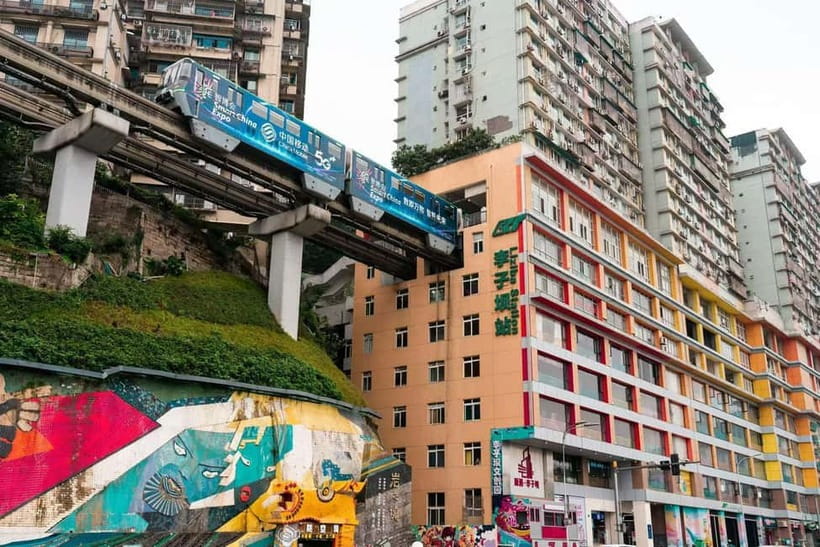
Chongqing’s strangest sight is also its simplest: a monorail train slips straight through a high-rise apartment block. This day tour lets you see that famous Liziba view, then ride the train yourself before moving on to river crossings, old streets, and a city built on steep hills.
I like the mix of big-name sights and local corners, especially Kuixing Tower and Longmenhao Old Street. I also like the human touch. Guides such as Diego, Hao, Linxin, Flora, and Sofia have helped visitors chat with locals, find quieter spots, take photos, and adjust the day to personal interests.
The main drawback is the pace. You cover a lot in roughly 10 hours, and Chongqing’s hills, crowds, stairs, and traffic can make this a tiring day. Lunch is not included, and some congested areas may require a taxi instead of the private vehicle.
Key points to know before you book
- Liziba gives you Chongqing’s signature photo: Watch the monorail pass through a residential building, then ride it for the full 8D city effect.
- Kuixing Tower turns confusion into sightseeing: Its stacked roads and buildings make you question which floor you are on.
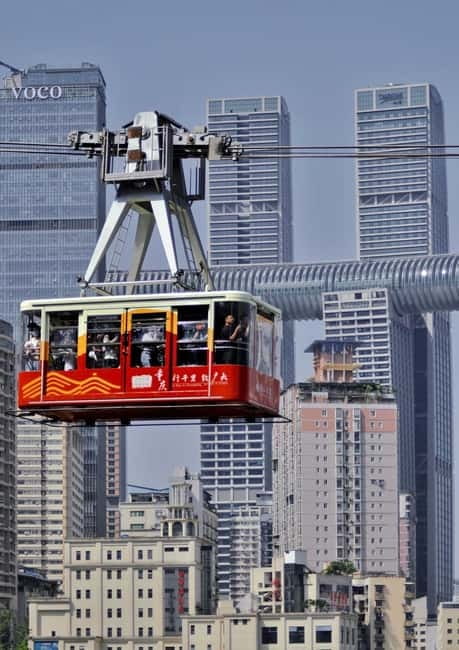
- The Yangtze cableway is more than a ride: It links the riverbanks while giving you broad views of water, towers, and hills.
- Ciqikou adds old Chongqing flavor: Expect historic lanes, shops, food smells, and plenty of people.
- The Urban Planning Exhibition Gallery explains the city: Its huge model and multimedia displays make Chongqing’s unusual shape easier to understand.
- Your guide shapes the experience: Diego, Hao, Linxin, Flora, and Sofia are named guides associated with especially personal, patient, or photo-friendly touring.
Why this one-day Chongqing route works
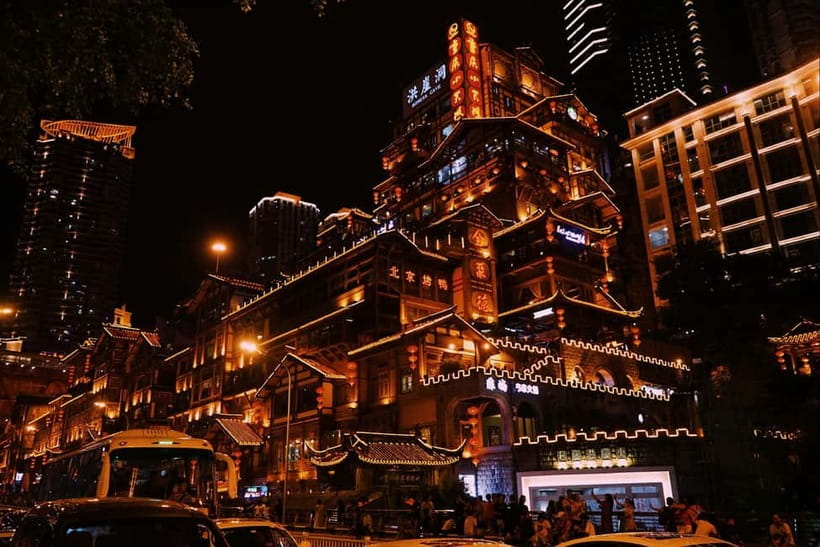
Chongqing is difficult to understand from a standard sightseeing bus. Roads twist around hills, buildings sit at different heights, and a place that looks nearby on a map may require a long ride or a steep walk.
This tour makes that odd geography the main subject. You see the city from above on the cableway, from inside the monorail, from old riverfront streets, and through a large planning model. Each stop gives you another piece of the puzzle.
The day lasts about 10 hours and includes pickup and drop-off anywhere in Chongqing city. A group can range from one to 12 people, so the experience may feel quite personal with a small party but less nimble when full.
Guiding is available in English, Chinese, Spanish, Japanese, Korean, Russian, French, and Italian. That range matters in Chongqing, where a guide can do more than explain history. The right person can help with directions, local conversation, food choices, and the practical business of getting through a busy city.
A few more Chongqing days to line up
- Chongqing Wulong National Park Private Tour
★ 5.0 · 87 reviews - Chongqing: Two Rivers Night Cruise- Yangtze & Jialing Rivers
★ 4.5 · 64 reviews - Chongqing deep explore & private car service including meals
★ 4.9 · 51 reviews
Liziba, where the train enters the apartment block
Start with Chongqing’s most famous urban illusion at the Liziba Monorail Viewpoint. A train appears to enter a residential building, an image that has made this part of the city famous far beyond China.
The sight works because it is not a movie trick or a temporary display. The monorail and the building were planned together, with the transport line passing through a section of the high-rise. From the viewpoint, you can wait for a train, frame the shot, and watch it disappear into the structure.
The experience goes one step further because you ride the monorail yourself. That changes the stop from a photo opportunity into a short piece of everyday city life. From inside the train, you get a different sense of how closely Chongqing’s transport, homes, roads, and hills are packed together.
Bring your camera, but do not spend the whole stop staring at a screen. The best part is the sudden movement of the train and the odd realization that people live around this remarkable bit of engineering.
Liziba can draw crowds, so patience helps. Your guide can also help you find a useful angle and keep the stop moving instead of letting one photo take over the morning.
Kuixing Tower and the city’s vertical trickery
Kuixing Tower is a quieter stop with a very different mood. It sits in Yuzhong District and was once a place where locals prayed for success in their studies.
The real attraction is the way Chongqing breaks your sense of height. You may seem to be at ground level, then discover that another road or entrance connects to what feels like a much higher floor. The city’s nickname, 8D Magic City, makes more sense here than at almost any other stop.
From Kuixing Tower, you can look toward the Jialing River and see old and new Chongqing layered together. The setting is calmer than the major photo stops, giving you a chance to pause and get your bearings.
I particularly like this part of the route because it explains why Chongqing feels unlike a normal hill city. The slopes are not simply scenic backdrops. They shape streets, buildings, transport, and daily movement.
The footing and levels deserve attention. Comfortable shoes are important, and anyone who dislikes stairs or confusing routes should tell the guide early. This experience is not suitable for wheelchair users, and the city’s vertical layout can be demanding even for people who walk well.
Crossing the Yangtze by cableway
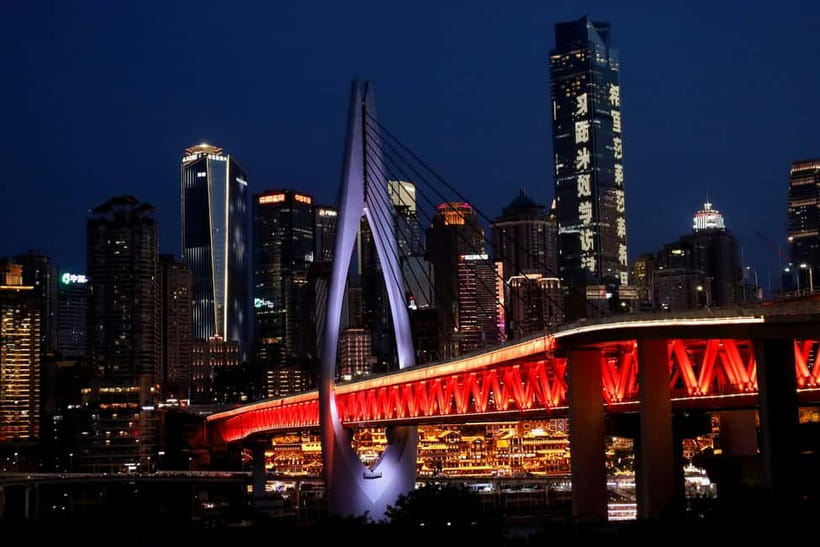
The Yangtze River Cableway is the day’s most memorable ride for many people. Known locally as the city’s air bus, it carries you above the river between Chongqing’s two banks.
As the cabin moves over the water, you get a broad view of the Yangtze, the city towers, and the hills rising behind them. It is a rare way to see Chongqing as a whole rather than as a series of steep streets and close-up buildings.
The cableway ticket is included, which improves the value of the tour. You do not need to work out the ticketing yourself, and your guide can help you make sense of the route and the crowds.
The practical catch is popularity. The cableway is an icon, so waiting and crowded cabins are possible. If you want a quiet private crossing, this is not it. The reward is the view and the feeling of using a transport link that has become part of Chongqing’s identity.
Keep your camera ready, but remember that views change quickly as the cabin moves. If you are sensitive to heights, you should know that the ride is exposed above the river. The tour does not present it as a thrill ride, but the height is part of its appeal.
A very different day in Chongqing:
- Chongqing: 1-day Essential Guided City Tour without Car
★ 5.0 · 44 reviews - Chongqing private luxury city tour: Must-sees All in One
★ 5.0 · 39 reviews - Chongqing: Magic Night View and Secret Viewing Spots Tour
★ 5.0 · 27 reviews - All-In-One Chongqing Trendy Spots Private Tour
★ 5.0 · 26 reviews
Ciqikou Ancient Town, food, shops, and old port-town character
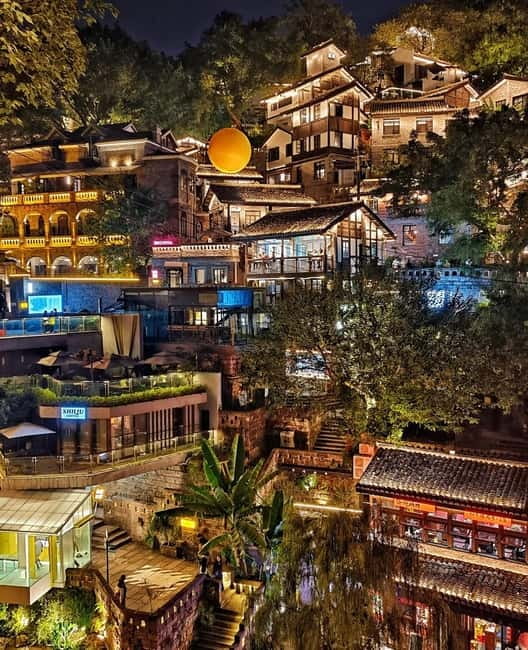
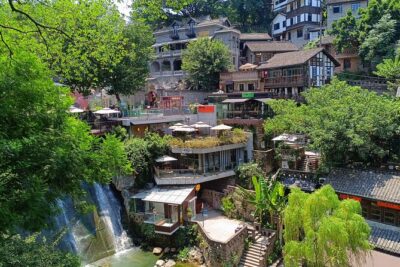
Ciqikou Ancient Town brings you back to street level. This was an important port town, and its old lanes still provide a useful contrast to Chongqing’s towers and elevated roads.
You can walk through historic-style buildings, browse shops, and sample local flavors. Two local snacks and drinks are included during the day, but lunch is not. Your guide can recommend local dishes, which is helpful because the food choices can be hard to sort out when you are surrounded by busy storefronts and unfamiliar names.
Ciqikou is lively and popular. That gives it energy, but it also means you should not expect an empty old town. Some shops are aimed at sightseers, so keep your eyes open for the smaller details: older building fronts, narrow lanes, food preparation, and the way people use the streets.
I would treat Ciqikou as a place to wander rather than a museum visit. Let the guide explain its role as a port, then allow time for snacks, photos, and a little browsing. If you want a more polished shopping stop, you may enjoy it. If you want untouched old streets, the crowds and commercial side may disappoint.
The Urban Planning Exhibition Gallery
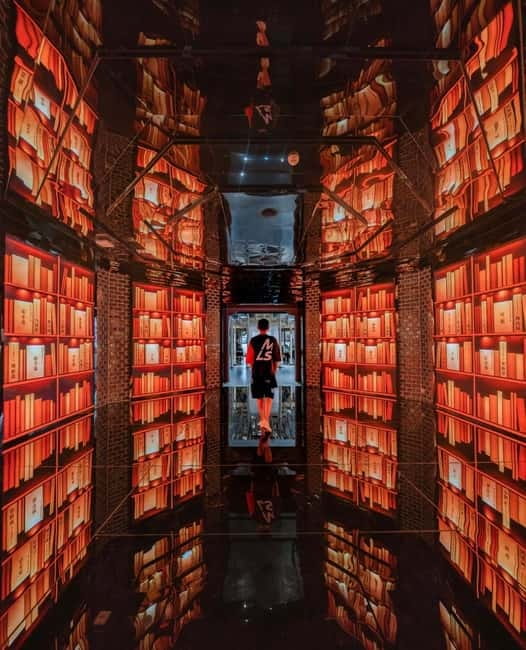
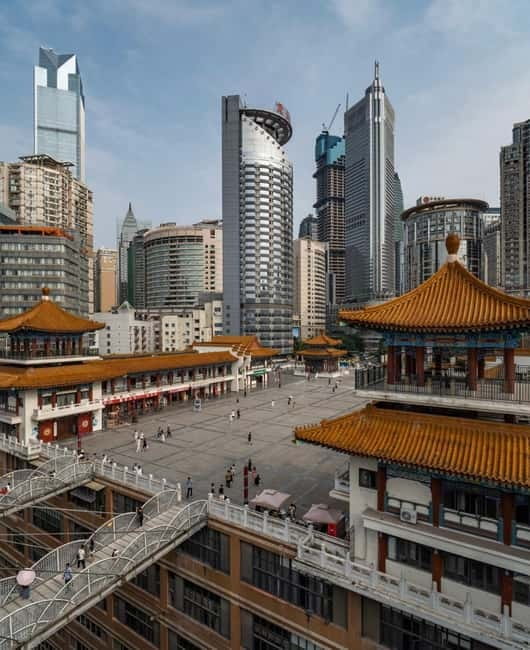
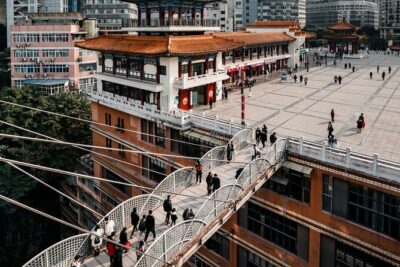
The Chongqing Urban Planning Exhibition Gallery is the stop that gives the whole day some structure. Its large city model and multimedia displays show how Chongqing developed into a mountain city shaped by two major rivers and difficult terrain.
After seeing the city in fragments, you can use the model to connect the pieces. The monorail, bridges, high-rises, hills, and river crossings stop looking like random oddities and begin to look like solutions to a very hard planning problem.
This is a good indoor break during a long day. It also suits visitors who want more than photos. You can learn about the city’s past, current development, and plans for the future through interactive exhibits and rotating displays.
The gallery also provides broad riverfront views. Take time for the promenade outside, where you can watch riverboats and look back at the contrast between modern towers and steep, layered hillsides.
I like having this museum in the itinerary because it adds context without turning the day into a lecture. If you are mainly interested in food and street scenes, you might find the displays less exciting than the cableway or Ciqikou. Still, it helps explain the city better than another lookout would.
Longmenhao Old Street and a slower side of Chongqing
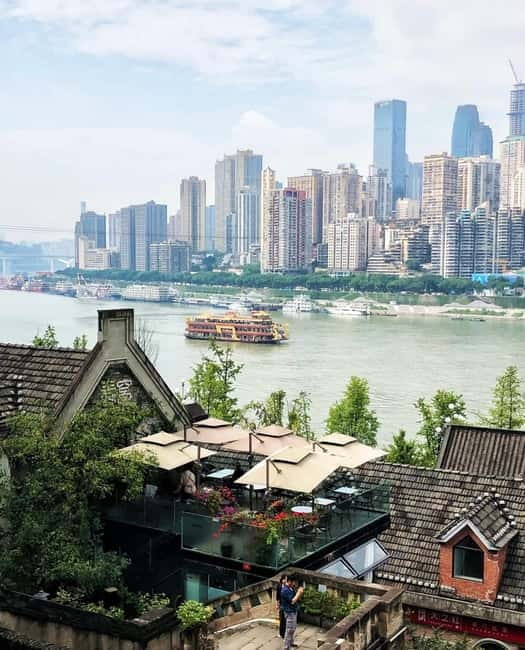
Longmenhao Old Street changes the rhythm again. Restored buildings, old trees, cafes, indie bookstores, artist studios, and a local teahouse give this riverfront area a more settled feel.
The teahouse is particularly useful if you want contact with ordinary local life. Sofia, one of the named guides, has helped visitors talk with people there while they drink tea, chat, and play cards. That kind of exchange can be more revealing than a formal monument because you see how a neighborhood is used when nobody is performing for an audience.
Longmenhao also gives you a chance to slow down after the cableway and Ciqikou. The buildings have a historic feel, but the area is not presented as a frozen relic. Cafes, books, and studios give it a current life.
The stop may appeal most to people who enjoy atmosphere over checklists. You will not get the same dramatic photo as at Liziba, but you may come away with a better sense of Chongqing’s riverfront character.
Guides who make the day easier
The guide can make or break a route this busy. Diego is described as friendly, patient, and especially helpful for Spanish speakers. He has also helped visitors reach the places they wanted without feeling rushed or unsafe.
Hao received special praise for looking after an older family member throughout the day. That suggests a useful point for families: tell the guide about walking limits, interests, and comfort needs before you begin.
Linxin is associated with a personal approach, picking up on a visitor’s interests and steering conversation toward those subjects. Flora is noted for finding quieter local places and taking photos, which could suit you if crowds are a concern.
Sofia’s strength is local interaction and storytelling. At Jiaotong Teahouse, she helped create a natural conversation with local people, while at Liziba she helped find a good angle for the monorail photo.
These details do not mean you can guarantee one particular guide unless the booking confirms it. They do show what to ask for: a language match, patience with older relatives, help with photography, or a preference for less crowded corners.
Transport, walking, food, and the real pace
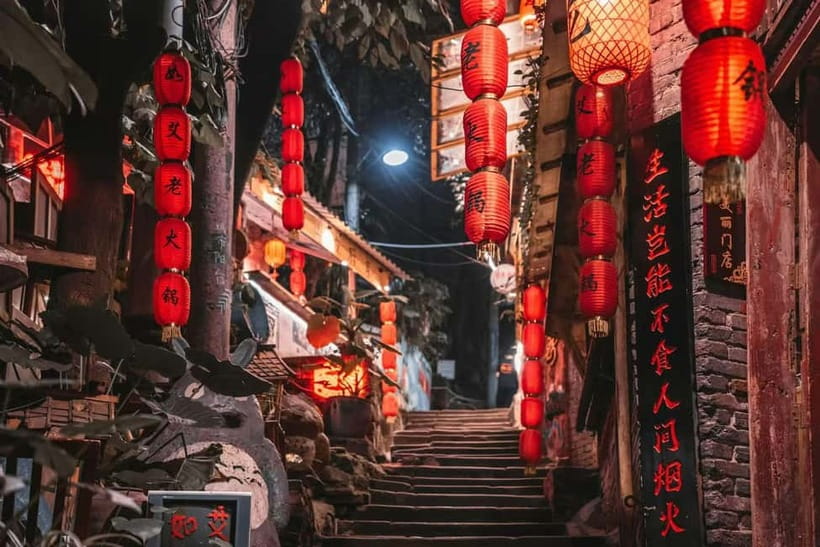
Pickup and drop-off are available anywhere in Chongqing city. That removes one of the hardest parts of planning this route independently, especially when several stops sit in different districts.
Do expect some changes in transport. Chongqing traffic can be difficult, and certain congested areas may be reached by taxi instead of a private car. Flexibility is part of the deal.
Wear comfortable walking shoes. You will move through viewpoints, stations, old lanes, museum areas, and riverfront streets. The city’s slopes and unusual levels make a short distance feel longer than expected.
The tour includes two local snacks and drinks. Lunch is separate, so plan to use the guide’s food suggestions rather than assuming a full meal is built into the price. This gives you more choice, but it also means the day’s $216 per person price does not cover every expense.
At that price, the value depends on your priorities. For a solo visitor or a small group, the cost buys a full day of transport help, multilingual guiding, two ticketed attractions, local food pointers, and a route that would be awkward to organize alone. The Yangtze cableway and Urban Planning Exhibition Gallery tickets are included.
For a group of 12, the per-person cost may feel easier to justify. For a budget-minded visitor who is comfortable using Chongqing’s public transport and choosing stops independently, it is a substantial premium. You are paying for time, coordination, and a guide who can adapt the day, not just for admission tickets.
Who should book this Chongqing day tour?
I would recommend it if you have only one full day in Chongqing and want a strong first look at the city’s most unusual sights. It also suits you if you want help with language, transport, photography, or local conversation.
Families may appreciate the pickup service and personal care from guides such as Hao. Spanish speakers can request a suitable language guide, with Diego a notable example from the available guiding team. If you dislike crowds, ask for the quieter approach used by guides such as Flora, while understanding that Liziba, Ciqikou, and the cableway remain popular places.
I would think twice if you need step-free access, dislike long days, or want a slow food-focused visit. The route covers a lot, and the city itself adds physical effort through hills, stairs, traffic, and changing levels.
Book this tour if you want Chongqing explained through its strangest and most useful sights: a train in a building, a cableway over the Yangtze, old port-town lanes, and a city model that makes the whole place click. Skip it if you prefer to explore at your own pace and are happy to solve the transport puzzle yourself.
FAQ
How long does the Chongqing tour last?
The experience lasts approximately 10 hours, including the major sightseeing stops, transport between areas, and guided exploration.
Is pickup included?
Yes. Pickup and drop-off are available from anywhere in Chongqing city. Staff confirm the pickup details the evening before.
What languages are available?
Guiding is available in English, Chinese, Spanish, Japanese, Korean, Russian, French, and Italian.
Is lunch included?
No. Lunch is not included, but the guide provides recommendations for local delicacies. Two local snacks and drinks are included during the day.
Are attraction tickets included?
The ticket for the Yangtze River Cableway and admission to the Chongqing Urban Planning Exhibition Gallery are included.
Is the tour suitable for wheelchair users?
No. The experience is not suitable for wheelchair users. Comfortable walking shoes are recommended, and you should be prepared for crowds and changing transport arrangements in congested areas.
Recently listed in Chongqing
- Chongqing Local Food Tour Adventure★ 5.0 · 5 reviews
- Private Day Tour to Ciqikou, Liziba, Jiefangbei etc. in Chongqing★ 4.5 · 5 reviews
- True Taste of Chongqing: Offbeat Walks & Hotpot in One Day★ 5.0 · 6 reviews
- Chongqing Wulong Exploration Private Day Tour With the Lunch★ 5.0 · 6 reviews
- Chongqing: Qingyu Banquet Experience with Show and Dinner★ 4.8 · 6 reviews
- Chongqing Luxury Hot Spring and Massage Luxury Meal Private Tour★ 5.0 · 6 reviews
- Chongqing: Trendy Spots, Cableway & Ferry Private Tour★ 5.0 · 7 reviews
- Chongqing: Illuminated Night Tour with Cruise or Hot Pot★ 4.8 · 7 reviews
Chongqing Tours, compared.
Two Rivers Night Cruise- Yangtze & Jialing Rivers
Read our review →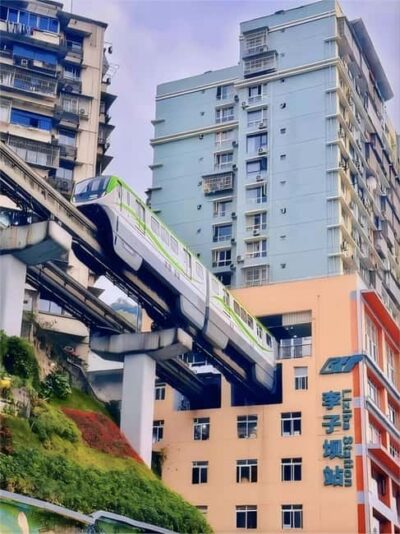
Chongqing deep explore & private car service including meals
Read our review →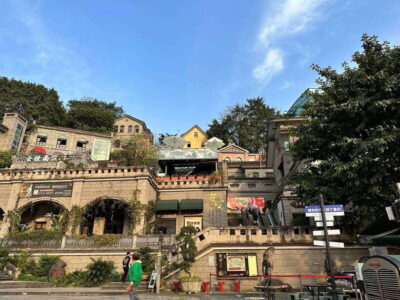
Chongqing private luxury city tour: Must-sees All in One
Read our review →
Chongqing Wulong: All inclusive luxury private trip to 2 spots
Read our review →Browse the lists this tour appears in