
Reviewed · GUANGZHOU TOURS
Guangzhou: Textile Hub and Garment Factory Half-day Tour
Guangzhou’s Zhongda Textile Hub shows how fabric, labor, orders, and small factories can work together at remarkable speed. In the right setup, cloth can become a finished garment in about 48 hours. You get to see that system up close rather than hearing about it in a classroom.
I like the direct access to fabric sellers and factory owners, and I like that the tour goes beyond shop fronts into urban villages where workers live and work. The drawback is simple: two hours goes quickly, and the hub can feel chaotic, with heavy foot traffic and e-scooters moving through tight spaces.
Key points to know before you go
- Fabric to finished clothing in about 48 hours: Follow the steps from material selection to sewing, labels, boxes, and final orders.
- A real working textile district: Zhongda Textile Hub is packed with fabric sources and connected businesses, not arranged as a visitor attraction.
- Direct contact with the trade: Speak with order takers and factory owners about how small orders and fast changes are handled.
- A look inside urban village work life: See how flexible labor and close working distances support quick production.
- Small English-speaking group: The group is limited to 10 people, with an expert guide leading the walk.
- Good value for industry-minded visitors: At $89 for two hours, the tour makes the most sense if you want practical sourcing insight or business contacts.
Why Zhongda explains Guangzhou’s China Speed
If you want to understand fast fashion production, start with the supply chain rather than a finished shirt. Zhongda Textile Hub puts many links close together: fabric sellers, label makers, packaging suppliers, order takers, sewing rooms, and garment factories.
That closeness is the main lesson. A designer or buyer does not need to send every question across a city or wait for one large company to manage the whole job. People in the district can coordinate through personal contacts and quick decisions.
The tour presents this as a self-driven system rather than a single factory with one manager controlling every step. You see how small businesses cooperate, respond to orders, and adjust when a customer needs a different fabric, label, quantity, or delivery speed.
I find this useful because it gives you a better way to read the district. At first, the textile city may look like a huge collection of stalls. With an industry guide, you begin to see how each stall fits into a much larger production chain.
The 48-hour figure should be understood as the tour’s example of what this local network can achieve, not a promise that every custom garment will be finished in exactly two days. Orders, fabric availability, design work, and production size all matter. Still, the speed is the point: the short distances between suppliers and makers make rapid responses possible.
More half day trips in Guangzhou:
- Half-Day Mini Group Xian Tour to Terracotta Warriors Museum
★ 5.0 · 467 reviews - Half-Day Chengdu Cooking Class with a Local Market Visit
★ 5.0 · 465 reviews - Private Half-Day Chengdu Panda Breeding Center Tour with Optional Volunteer
★ 5.0 · 353 reviews
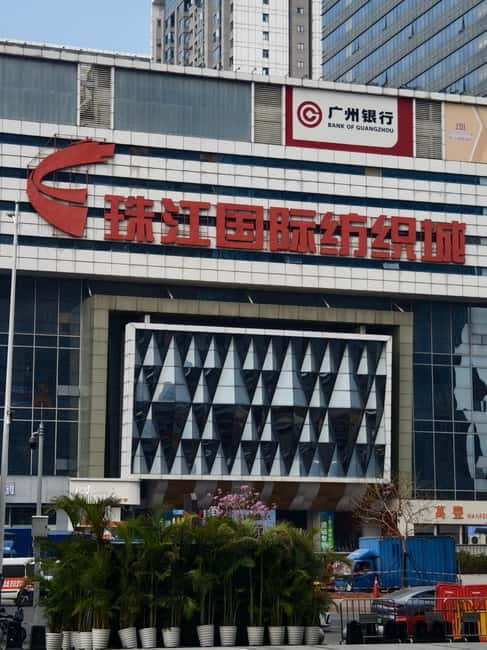
Starting at Zhujiang International Textile City
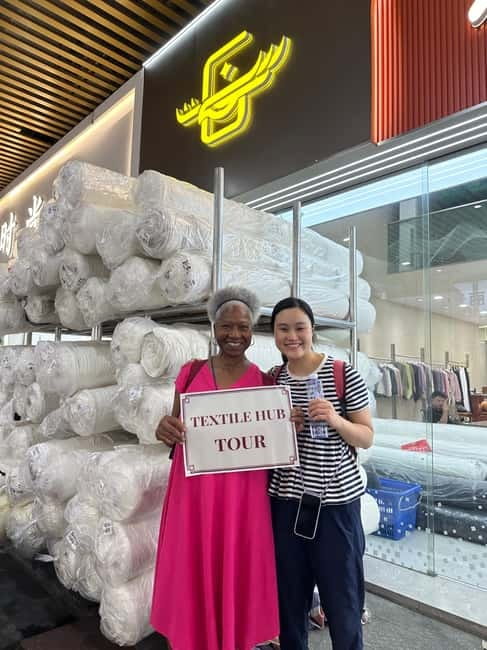
The meeting point is the main entrance of Zhujiang International Textile City Area A, written in Chinese as 珠江国际纺织城A区正门. It sits at a traffic-light intersection. Look for the shop named 恒泰超泓. Your guide will wait outside with a sign marked Textile Hub Tour and the company name, Authentic Tour Asia.
This detail matters. Zhongda is large, crowded, and full of signs in Chinese, so arriving at the correct entrance will save time. If you use Didi, enter 海珠合生新天地 as the destination. That shopping mall is directly across the street from the meeting point.
By subway, take Line 11 to Yijing Lu Station, or 逸景路站. Leave through Exit C, then walk west for about 10 minutes along the main road. The directions describe walking with your back to the morning sun, which means you should head opposite the direction you face after leaving the station.
Plan to arrive ready to walk. Comfortable shoes are not just a polite suggestion here. The tour involves about two hours on foot through a working commercial district, and you will be moving between textile businesses and production spaces.
Inside the one-hour textile hub walk
The first guided portion takes place in the textile hub itself. You can expect to see fabric sources and learn how buyers choose among different materials. The experience is not limited to looking at rolls of cloth. It connects fabric choice to the later work of cutting, sewing, labeling, and packing.
One useful part of the visit is the chance to see how many small specialist businesses operate near one another. A fabric seller may not make finished clothing. A label supplier may not handle sewing. A packaging business may not deal with design. Yet together, these businesses can support one garment order.
You can ask questions directly through your guide. The tour is conducted in English, and the guide helps explain what the businesses do and how they fit together. Ceciliaye has led this experience and is described as especially good at explaining the production process. Guide assignments can change, so do not assume she will lead every departure.
The hub is a place of business, not a quiet museum. Expect a fast and crowded setting, with e-scooters and people carrying goods through the walkways. That can make it harder to stop for long periods or take in every detail. It also gives the visit its value. You are seeing the supply chain at work, with real orders and real movement around you.
The tour can also cover how labels and boxes are made. These details may sound minor, but they show that garment production involves far more than cloth and sewing machines. Branding, packing, and delivery all need to be ready for an order to leave the factory.
For a hobby sewer, this section can be just as useful as the factory visit. You can compare fabrics, ask how materials are selected, and see how a piece of clothing begins before it reaches a cutting table.
Into the urban villages and flexible production network
The tour also goes into urban villages connected to the textile trade. These areas offer a look at the live-work pattern that helps the district respond to changing orders.
The important point is not simply that workers live close to their jobs. The arrangement supports flexibility. Small production teams can adapt to different quantities and deadlines without the fixed structure of a giant factory. The tour uses this setting to explain how Guangzhou’s garment trade can react quickly when a buyer changes an order.
You should expect the urban village portion to feel less polished than a standard sightseeing stop. It is a working neighborhood, and the focus is on how people and businesses function there. Tight lanes, active movement, and limited space are part of the setting.
This is also where the tour becomes more social and less like a normal factory visit. You are not only looking at machines. You are seeing the surroundings that allow workers, order takers, and small business owners to stay close to one another.
For anyone studying supply chains, this is one of the most useful parts of the experience. It shows that speed can come from proximity and cooperation, not only from expensive equipment or large corporate systems.
A few more Guangzhou days to line up
- Guided Cycle Tour of Guangzhou
★ 5.0 · 164 reviews - Customised Private Guangzhou City Tour with Flexible Itinerary
★ 5.0 · 107 reviews - Gulong Gorge Skywalk Glass Bridge and Waterfall View Private Tour
★ 5.0 · 103 reviews - Private Guangzhou Full Day City Tour with Old and New Highlights
★ 5.0 · 62 reviews
Seeing garments made in a small factory
The second guided hour takes you to garment factories where you can watch clothing being produced. Factory access can vary according to the working arrangements on the day, but the experience is built around seeing the production process and meeting people who handle orders.
One especially worthwhile detail is the pattern stage. Designers send patterns to the factory, and the patterns are laid out on fabric before cutting. You can then see how workers sew the pieces together one part at a time.
This makes the process easy to understand. A finished shirt or dress looks simple when it hangs in a shop. Inside the factory, it is a set of separate pieces that must be placed, cut, sewn, checked, labeled, and packed in the right order.
The factory owner may show you the workroom and explain how production is organized. You can speak with order takers and learn how a small factory receives and handles business. That direct exchange is a major reason to choose this tour instead of simply walking through a fabric market alone.
The experience does not promise a full technical training course. You may not examine every machine or follow one garment from raw fabric to shipment in complete detail. The visit is short, so think of it as a guided working example of the larger system.
Still, the factory stop gives the tour a practical edge. You see the people doing the work, not just the finished products. If you are building a clothing brand, planning production, or trying to understand supplier relationships, those conversations may help you ask better questions later.
What the factory visit can teach a hobby sewer
You do not need to work in fashion to get something from the tour. The factory process is accessible if sewing is your hobby or you simply want to know how mass-produced clothing is made.
The visit can show you several stages:
- Selecting different fabrics
- Sending patterns from designers
- Laying patterns onto fabric
- Cutting fabric for production
- Sewing garment pieces together
- Making labels
- Preparing boxes and packaging
That range is useful because it links small home sewing projects with industrial production. The scale is different, but the basic logic is familiar: choose the material, place the pattern, cut carefully, assemble the pieces, and finish the item.
The main difference is the number of people and businesses involved. A hobby sewer may handle most steps alone. In Zhongda, each task can belong to a different specialist or small company. The tour helps you see why that division of labor can make large orders move quickly.
Is $89 a fair price for two hours?
At $89 per person, this is not a cheap market walk. You are paying for access, interpretation, and a small group capped at 10 people. The guide’s role is important because the district can be difficult to understand without context.
If you already source clothing in Guangzhou and have strong local contacts, you may be able to visit fabric shops and factories on your own. In that case, the tour may offer less financial value unless you want a quick introduction or new connections.
For a first-time sourcing professional, fashion entrepreneur, supply chain manager, retailer, or designer, the price is easier to justify. You receive an organized introduction to a major textile cluster, factory access, English-language help, and contact with people involved in actual production.
The value also depends on your questions. Bring a clear interest in fabrics, order sizes, production steps, labels, packaging, or factory relationships. A passive walk will still show you plenty, but a curious buyer can gain much more from the same two hours.
The small group is another plus. With no more than 10 participants, you have a better chance to hear explanations and speak with the guide. That matters in narrow, noisy spaces where a large group would be awkward.
Walking, safety, and practical limits
Wear comfortable shoes and prepare for a quick pace. There is a lot of walking, and the setting includes e-scooters moving through busy areas. Stay alert and keep your belongings secure, especially when the group is moving between crowded spaces.
Smoking is not allowed on the activity. Meals and drinks are not included, so eat beforehand or plan food separately. Private transportation is also not included.
The tour is not suitable for wheelchair users. The walking route through textile businesses, urban villages, and factory areas may be difficult for anyone who needs step-free access or wide, even paths.
The tour lasts two hours and returns to Zhujiang International Textile City. Starting times vary, so check availability when booking. Free cancellation is available up to 24 hours in advance, and you can reserve now and pay later.
Who should book this Guangzhou textile tour?
I would choose this experience if you work in fashion, retail, manufacturing, or supply chain management. It is also a strong fit if you are trying to enter those fields and want a clear look at how production works on the ground.
It suits fashion entrepreneurs who want to understand where fabric, labor, labels, and packaging meet. It can also help retail buyers see why Guangzhou can respond to changing orders so quickly.
If you sew as a hobby, the tour offers a rare look at bulk garment production. The pattern layout and sewing stages may be the highlights for you.
I would be more cautious if you want a relaxed cultural walk, a polished visitor center, or a long factory tour focused on one product. This is a short, active business visit in a noisy working district. You need to enjoy close quarters and accept that access may depend on what factories and businesses are operating at the time.
Should you book it?
Book this tour if you want to understand Guangzhou’s garment trade through real places and direct conversations. The best parts are the close-up view of fabric sourcing, the visit to a small garment factory, and the chance to ask order takers and owners how fast production works.
At $89, it makes the most sense when the information could affect your business, sourcing plans, or understanding of fashion production. For a casual sightseer, the cost may feel high for two hours. For a serious learner or buyer, the time saved and contacts gained can make it worthwhile.
FAQ
How long does the Guangzhou Textile Hub tour last?
The tour lasts two hours. It includes two guided portions of about one hour each and returns to Zhujiang International Textile City.
Where is the meeting point?
Meet at the main entrance of Zhujiang International Textile City Area A, or 珠江国际纺织城A区正门. Look for the shop named 恒泰超泓 at the traffic-light intersection. The guide will hold a Textile Hub Tour sign with the Authentic Tour Asia company name.
How do I reach the meeting point by Didi?
Enter 海珠合生新天地 as your Didi destination. The shopping mall is directly across the street from the meeting point.
Which subway station should I use?
Take Line 11 to Yijing Lu Station, or 逸景路站. Use Exit C, then walk west for about 10 minutes along the main road.
Is the tour conducted in English?
Yes. The tour has a live English-speaking guide. Ceciliaye has led the experience, though a specific guide is not guaranteed for every departure.
What does the price include?
The $89 price includes the expert industry guide, hands-on industry understanding, fabric source visits, and opportunities to meet garment factory owners. Private transportation, meals, and beverages are not included.
Is the tour suitable for wheelchair users?
No. The tour is not suitable for wheelchair users. You should also wear comfortable shoes because the route involves substantial walking.
Recently listed in Guangzhou
- Chimelong International Circus Ticket with Transfer★ 5.0 · 5 reviews
- Seven Star Crag and Dinghu Mountain private day tour from Guangzhou★ 5.0 · 5 reviews
- Guangzhou Private Safari Tour with Ride and Giant Panda viewing★ 5.0 · 5 reviews
- All Inclusive Kaiping Diaolou Heritage Private Day Trip from Guangzhou★ 5.0 · 5 reviews
- Guangzhou Pearl River Night Cruise and Canton Tower Night Tour★ 5.0 · 5 reviews
- Kaiping Private Day Tour From Guangzhou★ 4.8 · 6 reviews
- Guangzhou Chimelong: Safari Park/Paradise(Optional Day Tour)★ 4.7 · 6 reviews
- Private Guangzhou Night Tour with Canton Tower and Pearl River VIP Class Cruise★ 5.0 · 6 reviews
Guangzhou Tours, compared.
Customised Private Guangzhou City Tour with Flexible Itinerary
Read our review →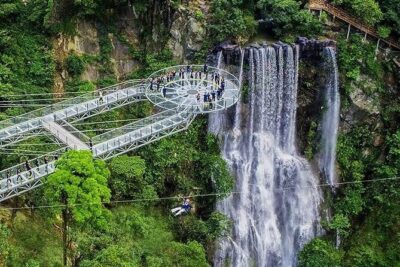
Gulong Gorge Skywalk Glass Bridge and Waterfall View Private Tour
Read our review →
Private Guangzhou Full Day City Tour with Old and New Highlights
Read our review →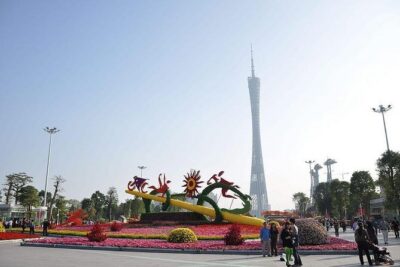
Reputable Private Guangzhou Tour Guide Service by Xaq
Read our review →
Guangzhou Baiyun Airport Guangzhou Hotels:Private with Meet & Great Service
Read our review →

Pearl River 1-hour Night Cruise (Optional Piers)
Read our review →Browse the lists this tour appears in