
Reviewed · BEIJING TOURS
Beijing Historic City Guided Walking Tour + Calligraphy Creation
Beijing’s old city makes more sense on foot, and this tour takes you through the parts that grand sightseeing buses miss. You move from the 1807 Huguang Guild Hall into narrow hutongs, old shopping streets, art shops, food stalls, and Qianmen’s restored commercial center. The focus is daily life, not just imperial monuments.
I like the small-booking format, which can make it easier to ask questions and keep up in the lanes. I also like the route’s variety: historic theater, residential alleys, calligraphy shops, street food, and modern cafes all appear within three and a half hours.
The main point to understand is the tips-based price. The $5 fee only reserves your place. A tip of 160 to 200 RMB, about $20 to $25, is suggested, so the real cost is higher than the headline price. Also, Tiananmen Square is not visited, even though the walk ends nearby.
Key points at a glance
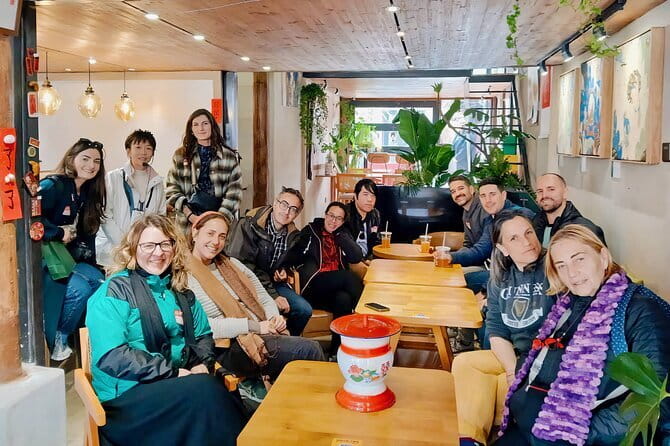
- A hutong-first view of Beijing: Spend about an hour in old residential lanes rather than racing between major monuments.
- Six central stops in 3.5 hours: The route links Huguang Guild Hall, Liulichang, Yangmeizhu Byway, Dashilan, and Qianmen.
- A guide-led history lesson: English-speaking guides such as Kris and Hao explain past and present city life through stories and local details.
- Calligraphy and old Beijing culture: Liulichang offers a natural setting for the calligraphy element named in the tour title.
- Street food and commercial streets: You may have chances to sample local food while walking through Dashilan and Qianmen.
- Tiananmen clarification: The walk finishes near the square, but entering Tiananmen requires a separate reservation made at least one day ahead.
Why this route gives you a better feel for old Beijing
Many first visits to Beijing revolve around the Forbidden City, the Great Wall, and Tiananmen Square. Those places matter, but they do not tell you everything about how the city worked at street level.
This walk gives you a different angle. You see the old lanes where homes, small businesses, food sellers, and neighborhood life once shared the same tight space. You also see how older streets have been repaired, repackaged, or turned into shopping areas for modern visitors.
That contrast is the heart of the experience. One moment you may be looking at a traditional alley, and soon after you are walking past a polished pedestrian street with famous shops and modern boutiques. The guide’s job is to explain what changed, what survived, and why Beijing’s old center looks the way it does today.
The pace also helps. Three and a half hours is long enough for context but short enough to fit around other sightseeing. The route is made up of several brief stops, with the longest section, the hutong walk, lasting about an hour.
More History Tours in Beijing
- Beijing Historical Tour II including Summer Palace, Lama Temple & Panda Garden
★ 4.0 · 187 reviews - Beijing Historical Tour I – Forbidden City, Tiananmen Square & Temple of Heaven
★ 4.0 · 120 reviews - Beijing Culture: Tea Ceremony, Heritage Instrument & Calligraphy
★ 5.0 · 57 reviews
Starting at Huguang Guild Hall and its old opera stage
The tour begins at Huguang Guild Hall, at 3 Hu Fang Lu, at 10:00 a.m. Built in 1807, the guild hall once served merchants and officials from Hubei and Hunan provinces. These regional guild halls were more than meeting rooms. They gave people from the same part of China a place to gather, conduct business, and maintain cultural ties in the capital.
You have about 20 minutes here. The opera stage is the main visual draw, with its detailed traditional design and strong connection to Beijing’s performing arts. This is a useful opening because it places the walk in a wider social setting. Beijing was not only a court city. It was also a meeting point for people arriving from across China.
Do not expect a long indoor museum visit. The stop is brief, and the admission is included at no extra cost. Its value comes from the guide’s explanation and from seeing a historic building before entering the surrounding streets.
The meeting point is close to public transport, which helps if you are staying elsewhere in central Beijing. It is worth arriving early enough to find the entrance without rushing, especially since the tour begins at a fixed time.
One hour in Beijing’s hutongs
The hutong section is the core of the walk. You spend about an hour moving through old alleys and traditional residential areas, where the scale of the city changes completely.
Instead of wide roads and formal monuments, you see narrow lanes and the less polished side of Beijing. The guide explains older housing patterns, local customs, and how these districts fit into the city’s development. This is where the tour’s theme of urban planning becomes most useful. You are not just looking at old buildings. You are considering the pressure between preserving neighborhood character and making room for modern Beijing.
The hutongs are also the place where the walk feels most local. The tour description points to street food sellers and everyday life, and the food-related comments indicate that sampling may be part of the experience. Since the exact food stops can vary, bring a little cash if you want to buy something independently, but do not treat food tasting as a guaranteed meal or a substitute for lunch.
This section may not match your expectations if you want a parade of Beijing’s biggest sights. One person could reasonably expect Tiananmen Square and instead find the hutong focus surprising. That is not a flaw if you want neighborhood life, but it is important to know before booking.
The route’s walking conditions also matter. Hutongs are narrow, and the tour keeps moving through streets rather than stopping at one site for a long lecture. Wear comfortable shoes and be ready for outdoor conditions. The experience requires good weather, and poor conditions can lead to a new date or a refund.
Liulichang, where Beijing’s art trade comes into view
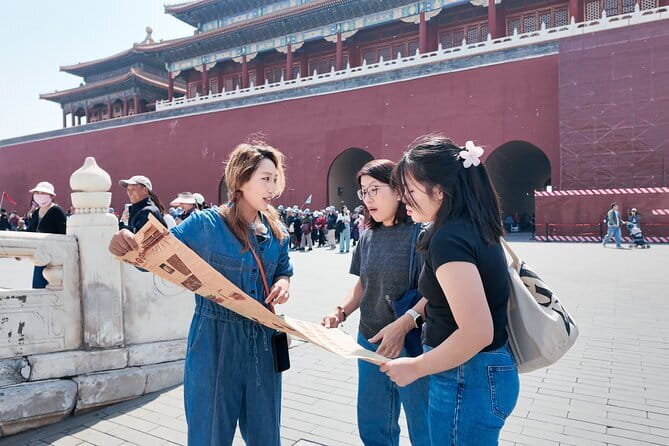
After the hutongs, the group spends about 40 minutes on Liulichang Street. This is one of Beijing’s best-known traditional cultural shopping streets, with shops connected to calligraphy, painting, antiques, and related arts.
For anyone interested in Chinese writing, this is likely the most relevant part of the route. The tour title includes a calligraphy creation, and Liulichang provides the natural cultural setting for that activity. However, the supplied details do not state exactly what materials are provided, how long the creation lasts, or whether you take a finished piece home. Ask for those specifics before booking if calligraphy is your main reason for joining.
Even without a detailed workshop, Liulichang adds something important to the walk. You see how traditional arts are sold and presented today, rather than only viewing them behind glass. The guide can also help you understand the difference between a street aimed at cultural shopping and a regular souvenir market.
The drawback is that antique and calligraphy shops can feel commercial. That is part of the street’s story, but it may not appeal to you if you prefer quiet historic buildings with no retail activity. The tour is strongest when you treat Liulichang as a look at Beijing’s living cultural economy, not as a guaranteed place to find a valuable antique.
More Walking Tours in Beijing
- Beijing Hutong Walking Food and Beer Tour at Hidden Restaurants
★ 5.0 · 1,132 reviews - Private Beijing Walking Tour of the Forbidden City with 7 Options
★ 5.0 · 675 reviews - Forbidden City Private Walking Tour with Optional Sights
★ 5.0 · 400 reviews - Beijing Private Hutong Food Walking Tour
★ 5.0 · 299 reviews
Yangmeizhu Byway and the city’s newer creative side
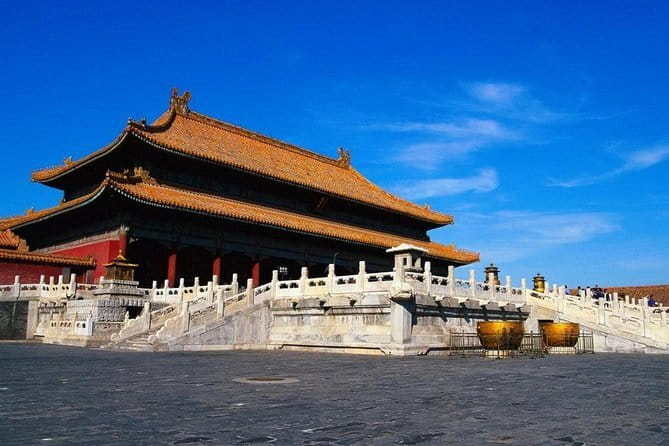
Yangmeizhu Byway receives about 20 minutes. It adds a modern note to the route, with boutique shops, art studios, and cafes set among older streets.
This short stop helps prevent the walk from becoming a simple tour of preserved relics. Beijing’s old center has not been frozen in time. It continues to attract new businesses and creative projects, some of which share space with traditional homes and older street patterns.
Twenty minutes is enough to get a feel for the area, but not enough for extended shopping or cafe time. Think of it as a visual bridge between old neighborhood Beijing and the newer businesses that now operate inside historic districts.
I would pay attention here to the guide’s comments about urban change. The interesting question is not simply which shop looks appealing. It is how a former residential or traditional commercial area changes when cafes, studios, and boutiques move in. That gives the route a practical city-planning angle rarely found on a basic sightseeing walk.
Dashilan Street and old commercial Beijing
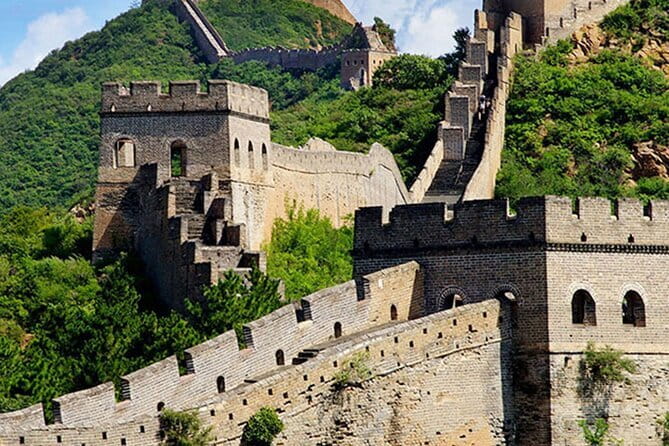
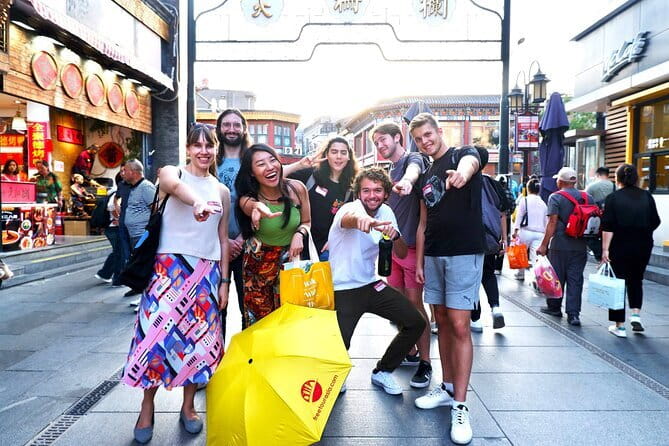
Dashilan Street is another 20-minute stop, but its role is different from Yangmeizhu Byway. This is a major old commercial center, filled with established shops, newer stores, local food, and pedestrian traffic.
The street helps you understand Beijing as a trading city. Its appeal is not just architectural. It is the mix of shopping, food, movement, and brand names associated with old Beijing. The tour also highlights time-honored brands, so this is one of the places where that theme should become easier to see.
You may want to return here after the tour if a shop or food item catches your eye. The stop is too short for a relaxed meal, serious shopping, and a full explanation of every storefront. Keep the first visit focused on orientation, then decide if you want to come back on your own.
Food is one of the better reasons to pay attention during this part of the walk. The experience may include street food sampling, but the available details do not specify which foods or how many tastings. If you have dietary restrictions, ask the guide what can be accommodated rather than assuming every sample will suit you.
Qianmen Walking Street and the final view of old Beijing
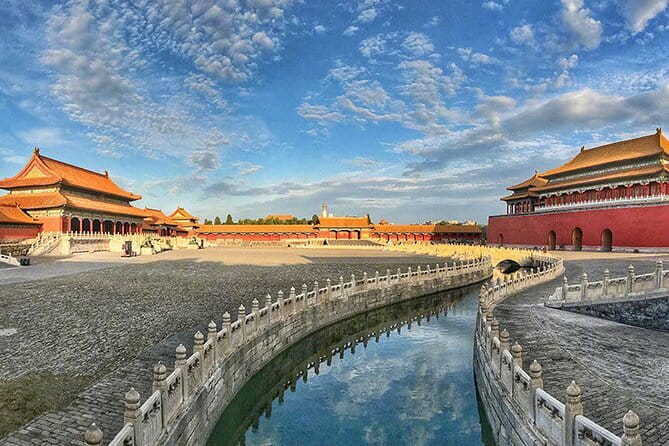
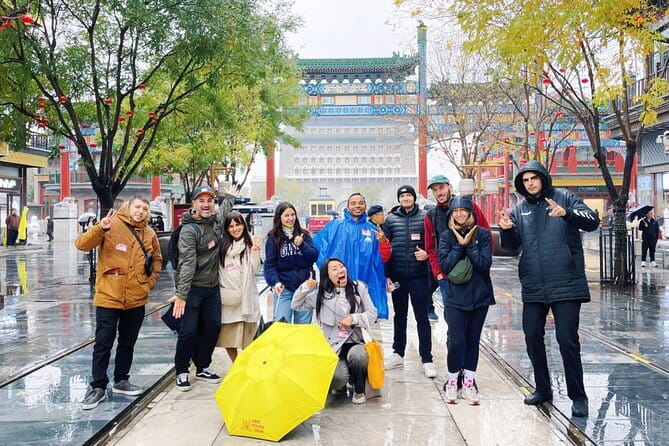
The last stop is Qianmen Walking Street, about 20 minutes away. Qianmen sits south of Tiananmen Square and combines restored historic architecture, shopping, restaurants, and heavy pedestrian use.
This is a fitting finish because it shows the most polished version of old Beijing. The street presents an older commercial image in a modern setting. You can compare it with the quieter hutongs from earlier in the morning and decide which version of the city feels more convincing to you.
The route ends at Zhengyangmen, near Qianmen Metro Station on Lines 2 and 8. That is practical for continuing your day. You are close to Tiananmen Square, central shopping areas, and public transport, but the tour does not enter the square.
That last detail deserves attention. If Tiananmen Square is a must-see, you need to make your own reservation at least one day ahead. Same-day reservations are not possible, so do not assume the walking tour will get you inside simply because it finishes nearby.
The guide makes the difference
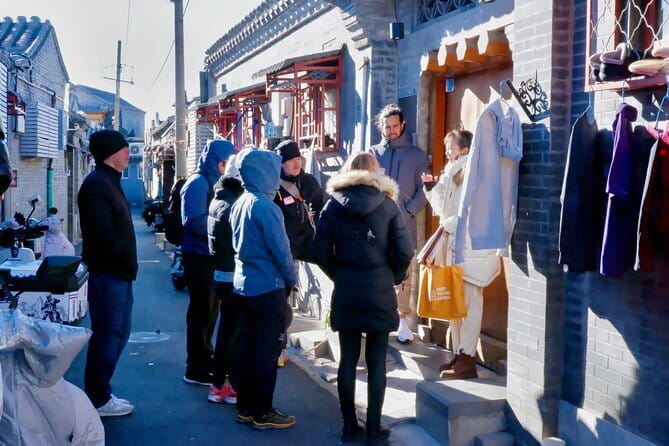
The tour includes a local English-speaking guide, and the guide’s storytelling is central to its value. Kris and Hao are names associated with the experience, and the feedback about them points to a patient, clear style with plenty of historical detail, anecdotes, and explanations of Chinese life past and present.
Hao, in particular, is described as keeping the group moving and engaged even in cold weather. That matters because this is an outdoor walk, not a series of indoor attractions. Kris is also praised for organizing the stops well and mixing history, culture, food, and small local details.
Your guide may be someone else, so you should not book solely on the hope of getting a particular person. The useful qualities to expect are local insight, English explanations, and a willingness to answer questions as the group moves through the city.
The route can also change in feel depending on group size. Each booking is limited to six people, while the additional tour information lists a maximum of 50 participants for the activity. If you are booking for more than six people, contact the provider about a private tour rather than assuming one booking will cover everyone.
What the $5 price really means
The $5 price is attractive, but it is not the full tour cost. It is a reservation fee for a tips-based walking tour. The suggested tip is 160 to 200 RMB, or about $20 to $25, depending on the guide’s work and your judgment of the experience.
At that total, the value depends on what you want. You are not paying for a formal package with listed entrance fees, transport, or a guaranteed meal. You are paying for a guided route through several central neighborhoods, explanations of Beijing’s past and present, and the convenience of having a local person connect the pieces.
The included stops have no separate admission charge listed. That keeps the structure simple and makes the experience cheaper than many full sightseeing tours. On the other hand, the tip-based model means you should budget honestly instead of treating the $5 fee as the final price.
I see this as good value for an introduction to central Beijing on foot, particularly if you have limited time and want more than a standard monument checklist. It is less suitable if you want private guiding, guaranteed food tastings, or a formal calligraphy class with clearly listed materials and instruction time.
Who should book this walk
I would choose this tour if you want to understand Beijing’s neighborhoods, shopping traditions, and city changes in one morning. It suits first-time visitors who already plan to see the major imperial sights but want a closer look at street life.
It also works well for visitors with only a short stay. The end point near Qianmen and the Qianmen Metro Station makes it easy to continue sightseeing after lunch. The route offers several useful orientation points without requiring a full day.
You should think twice if your main goal is Tiananmen Square, the Forbidden City, or a long museum visit. None of those experiences is part of this walk. You should also confirm the calligraphy details if that activity is essential to your booking decision.
Bring comfortable walking shoes, dress for the weather, and allow time for food or shopping only if your own schedule permits. The tour requires good weather, and free cancellation is available up to 24 hours before the start time. If you cancel later, the payment is not refunded. Poor weather or failure to reach the minimum number of participants can lead to a new date or a full refund.
Should you book the Beijing historic city walk?
Book it if you want the human-scale side of Beijing: hutongs, old trade streets, calligraphy culture, local food, and stories about how the city is changing. The route is varied, the central ending is useful, and guides such as Kris and Hao bring strong local explanation to the walk.
Skip it if you expect Tiananmen Square, a major palace, or a fully specified calligraphy workshop. Also remember that the advertised $5 is only the reservation fee. With the suggested tip included, this is still a reasonably priced introduction to old Beijing, but you should understand the payment model before you go.
FAQ
Where does the Beijing walking tour begin?
It begins at Huguang Guild Hall, 3 Hu Fang Lu, Xicheng District, Beijing.
What time does the tour start?
The tour starts at 10:00 a.m.
How long does the walking tour last?
The experience lasts approximately 3 hours and 30 minutes.
Where does the tour finish?
It ends at Zhengyangmen near Qianmen Walking Street and Qianmen Metro Station.
Does the tour enter Tiananmen Square?
No. The tour ends in front of Tiananmen Square but does not enter it.
How can I visit Tiananmen Square after the tour?
You must make your own reservation at least one day in advance. Same-day reservations are not possible.
Is the $5 price the full cost?
No. The $5 booking fee reserves your spot. The tour uses a tips-based model, with a suggested tip of 160 to 200 RMB, about $20 to $25.
How many people can join a booking?
A shared booking is limited to six people. If your group has more than six people, you should contact the provider about a private tour. The activity information also lists a maximum of 50 participants.
Can I cancel for a refund?
Yes. You can cancel at least 24 hours before the local start time for a full refund. Cancellations or changes made less than 24 hours before the start time are not accepted.
Recently listed in Beijing
- Beijing Mutianyu Great Wall Private Tour with Lunch★ 5.0 · 5 reviews
- Customized Private Beijing Layover City Tour★ 5.0 · 5 reviews
- Private Tour to Gubei Water Town and Simatai Great Wall with Cable Car and Lunch★ 5.0 · 5 reviews
- Forbidden City with Hutong Cuisine Private Walking Tour★ 5.0 · 5 reviews
- Beijing Acrobatics Show At Red Theater★ 4.5 · 5 reviews
- Beijing: Top Michelin Vegetarian Restaurant Reservation★ 5.0 · 5 reviews
- Exclusive Private Photography & Video Tour to The Forbidden City★ 5.0 · 5 reviews
- Cuandixia Village Day Trip with Private English Speaking Driver Service★ 4.0 · 5 reviews
Beijing Tours, compared.

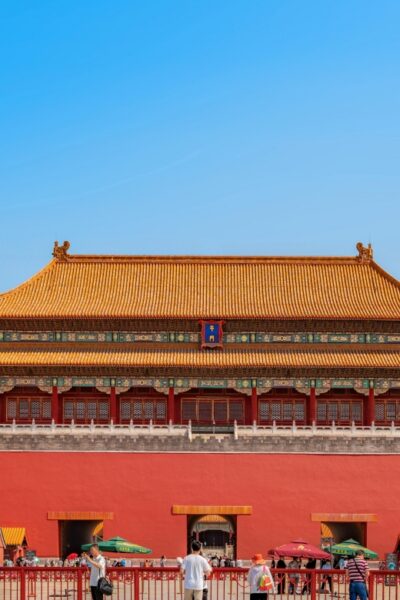
Forbidden City Tour(Group/Private)-Tickets Included
Read our review →
T-Square & Forbidden City Group or Private Tour
Read our review →
All-Inclusive Tour: Tiananmen Square, Forbidden City, Great Wall
Read our review →
MuBus: Mutianyu Great Wall ENG/ESP/RUS Guided Bus Tour
Read our review →
4-Hour Small Group Tour to Forbidden City with Entry Tickets
Read our review →
Beijing Full Day Tours: Tiananmen Sq, Forbidden City, Great Wall
Read our review →Browse the lists this tour appears in