
Reviewed · TEMPLE OF HEAVEN TOURS
Beijing: Temple of Heaven Park Ticket with guide(optional)
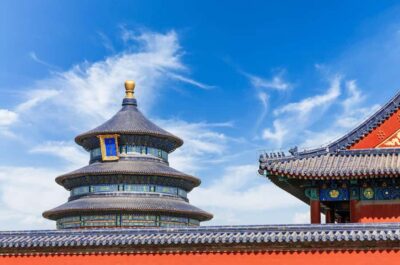
The Temple of Heaven is one of Beijing’s most satisfying historic sights because it is both grand and surprisingly calm. The blue-tiled Hall of Prayer for Good Harvests is the star, but the surrounding cypress trees, broad paths, and ceremonial spaces help you understand how imperial China pictured the universe.
I like the chance to see the round-heaven and square-earth design in the park itself. I also like the small-group format, limited to 10 people, and the option of an English-speaking guide who can explain why each altar mattered. The main caution is ticket clarity: several bookings have required extra payment or a separate purchase for the temple buildings.
Key points to know before you book
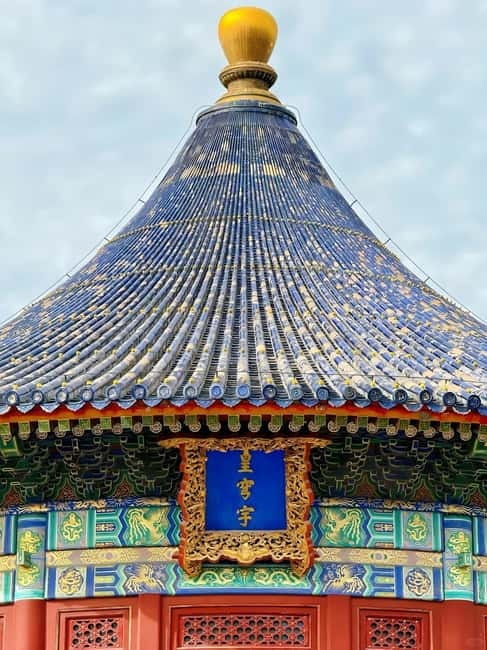
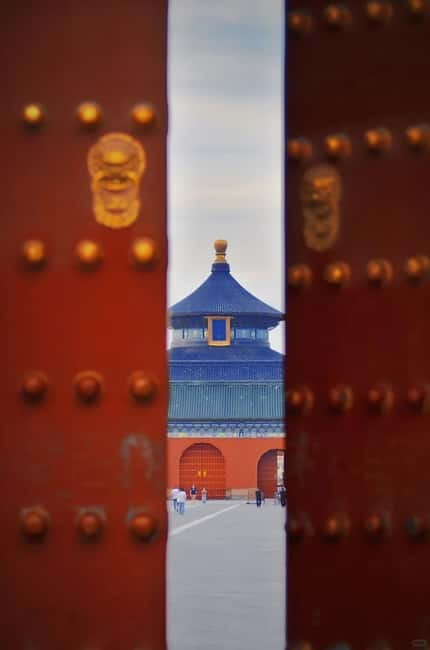
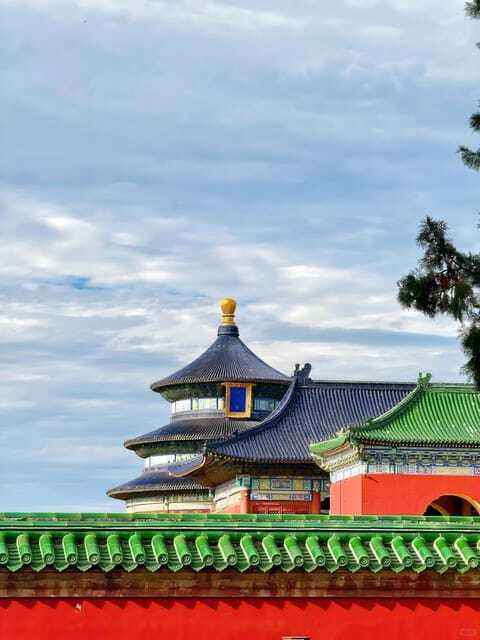
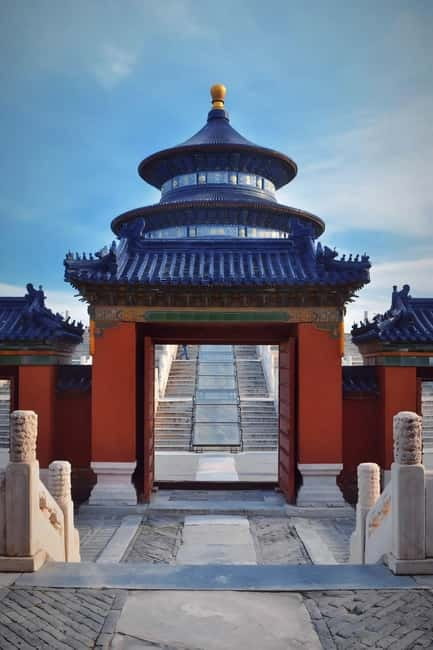
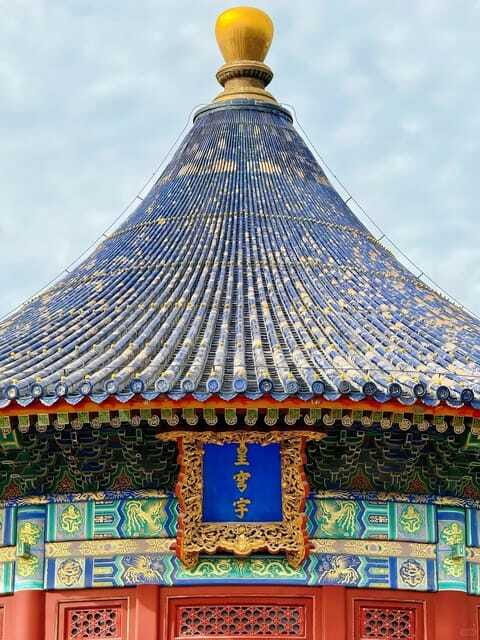
- The Hall of Prayer for Good Harvests is the main attraction: This blue, circular wooden building is the image most associated with the Temple of Heaven.
- The park and temple attractions may be ticketed separately: Check exactly what your booking includes, especially if you arrive after 4:30 p.m.
- The Circular Mound Altar gives the site its cosmic meaning: It was used for the emperor’s Winter Solstice ceremonies.
- A guide adds context to otherwise quiet courtyards: The live tour is in English and usually works best for visitors who want more than photographs.
- Metro access is straightforward: Use Tiantandongmen Station on Line 5 or Tianqiao Station on Line 8, then confirm the correct gate.
- Allow at least three hours: The park is large, and rushing between the principal buildings takes away much of the experience.
Why the Temple of Heaven deserves time in Beijing
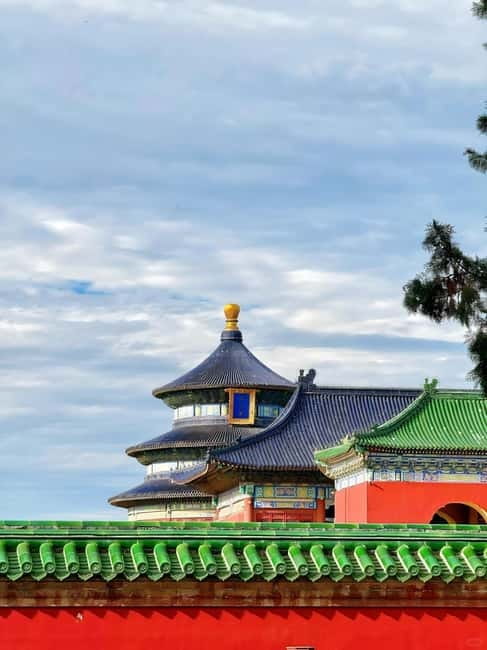
The Temple of Heaven is not simply another old building in the capital. It was the place where Ming and Qing emperors performed ceremonies to ask Heaven for good harvests. The complex was first built in 1420, during the reign of the Yongle Emperor, and was renamed the Temple of Heaven in 1530.
At 273 hectares, it is the largest surviving ancient sacrificial architecture complex in China. That size matters. You are not walking from one doorway to another. You are crossing long ceremonial routes, passing through two sets of altar walls, and moving between open spaces designed to make the emperor appear small before Heaven.
The park’s shape carries a message. The northern section is circular, while the southern section is square. This reflects the old Chinese belief in round Heaven and square Earth. You can understand the idea much better when you see the geometry laid out beneath your feet than when you read it in a museum caption.
I especially like that the site has two personalities. The main buildings draw crowds and cameras, but the park also has quiet paths and old cypress trees. The atmosphere can feel more like a public garden than a royal ceremonial ground, which gives the visit a welcome change of pace after Beijing’s dense city streets.
More Temple of Heaven visits:
- Beijing: The Temple of Heaven or Summer Palace Entry Ticket
★ 4.6 · 1,286 reviews - Beijing Classic Full-Day Tour including the Forbidden City, Tiananmen Square, Summer Palace and Temple of Heaven
★ 4.0 · 610 reviews - Temple of Heaven Ticket
★ 5.0 · 482 reviews
Getting there by Metro Line 5 or Line 8
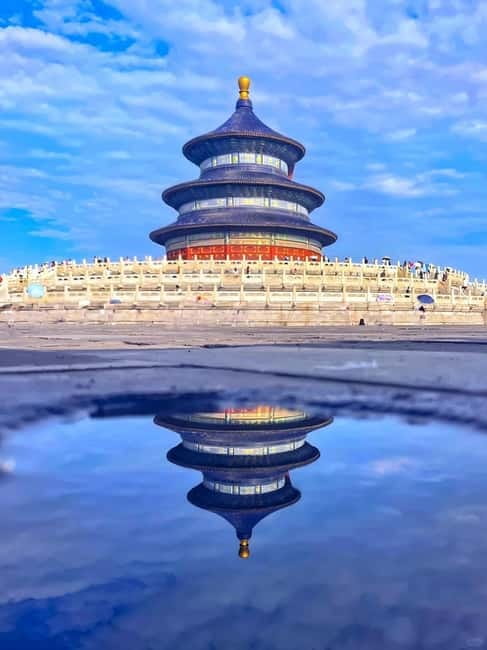
You have two practical metro choices. The nearest option for many visitors is Tiantandongmen Station on Line 5, also described as the Temple of Heaven East Gate station. You can also use Tianqiao Station on Line 8.
The exact gate matters more than it may seem. The park is large, and entering at the wrong side can add a long walk before you reach the central sights. Confirm the meeting point and entrance gate after booking, and do not rely only on the QR code in the GetYourGuide app. The QR code is not the actual admission ticket for this activity.
You need to provide your name and passport number. Bring your passport with you. The meeting point is sent after booking, so check your email or WhatsApp messages before setting out.
One useful lesson from the booking problems is to plan the arrival details early. A visitor who reaches the wrong gate, misses a message, or assumes the app QR code is sufficient may lose time at the entrance. Public holidays and local events can also affect transport, so give yourself extra time on those dates.
The three-hour route through the ceremonial heart
The guided portion is listed as three hours, while the full activity may take from three to eight hours. That wider range likely reflects the difference between a focused visit and a slower park experience, along with ticket timing and the optional guide arrangement.
A sensible route begins with the central ceremonial buildings and then moves toward the southern altar areas. Your guide should help connect the buildings rather than simply point them out. The value is in knowing what happened at each place and why the layout is so carefully controlled.
You will spend time outdoors, walking along broad routes and between separated attractions. Food is not included, so plan your meal separately. The activity information does not specify a restaurant stop or refreshments.
Hall of Prayer for Good Harvests and the northern route
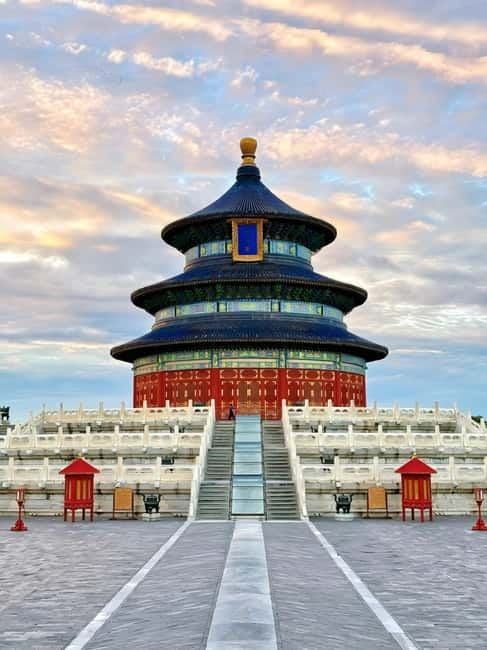
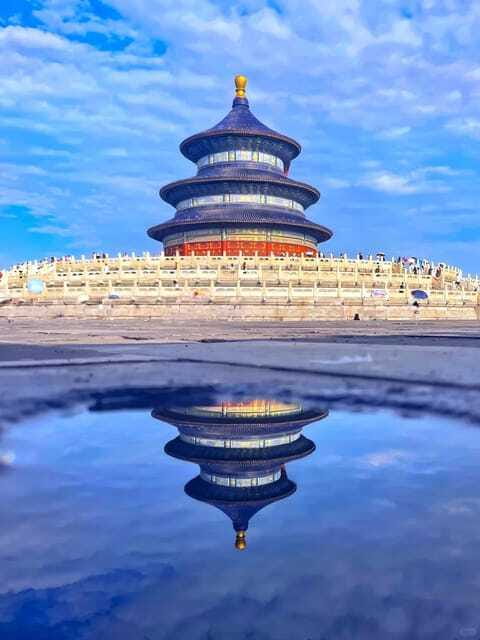
The Hall of Prayer for Good Harvests is the visual centerpiece. Its circular form, blue roof, and three-tiered profile make it one of Beijing’s most recognizable buildings. It was connected with spring prayers for a good harvest, and its design reinforces the building’s link with Heaven.
This is the stop where a guide can make the greatest difference. Without explanation, you see a striking blue building. With context, you begin to notice the careful use of circles, symmetry, and height. The building is not just decorative. Its form helped express the emperor’s role in communicating with Heaven.
The surrounding space is also part of the experience. Avoid treating the hall as a quick photograph and leaving. Look at the scale of the approach, the open paving, and the way the building is separated from ordinary city life. The broad space creates ceremony even when no ceremony is taking place.
The park’s ancient cypress trees soften the formal architecture. They also make the northern area feel less severe. If you have time beyond the guided route, slow down here instead of racing straight to the next building.
A few more Beijing days to line up
- From Beijing: Mutianyu Great Wall Tours with Options
★ 4.9 · 9,216 reviews - Beijing: Forbidden City Tour(Group/Private)-Tickets Included
★ 4.8 · 7,974 reviews - Beijing: T-Square & Forbidden City Group or Private Tour
★ 4.8 · 4,446 reviews - All-Inclusive Tour: Tiananmen Square, Forbidden City, Great Wall
★ 5.0 · 2,873 reviews
Circular Mound Altar and the southern ceremonies
The Circular Mound Altar is a more open and austere site than the Hall of Prayer for Good Harvests. It was used for worship on the Winter Solstice, and its circular terraces make the round-heaven idea especially clear.
There is less visual shelter here, so the experience depends more on the design and the explanation. The altar’s open stone platforms focus attention upward and outward. Your guide can explain how the emperor’s position at the center related to the wider structure of the empire and the natural world.
This is one of the places where the Temple of Heaven feels different from a palace. There are no richly furnished rooms to inspect. Instead, the meaning comes from alignment, height, distance, and ritual movement. If you prefer grand interiors, you may find this section quieter than expected. If you enjoy architecture and symbolism, it can be one of the most rewarding stops.
Palace of Abstinence and the Divine Music Office
The Palace of Abstinence was where the emperor stayed before ceremonies. Its purpose was preparation and ritual discipline. That detail helps you picture the ceremony as a carefully controlled event that began before the emperor reached the altar.
The Divine Music Office was used to rehearse ceremonial music and rituals. This is an easy stop to overlook, but it adds an important human element. Imperial worship depended not only on buildings and the emperor, but also on musicians, officials, rehearsals, and strict timing.
Together, these sites widen the story. The Temple of Heaven was not one hall surrounded by empty space. It was a working ceremonial complex with accommodation, music, movement, and preparation built into its plan.
The advertised highlights also refer to the Palace of Heavenly Purity. That name is usually associated with another major Beijing palace complex, while the Temple of Heaven route specifically lists the Palace of Abstinence. I would clarify this point before paying if seeing the Palace of Heavenly Purity is important to you. The Temple of Heaven’s own Palace of Abstinence is the relevant imperial preparation site here.
Opening hours and the ticket issue
The park and its individual attractions keep different hours. From November 1 through March 31, the park is open from 6:30 a.m. to 9 p.m., while the attractions operate from 8 a.m. to 4:30 p.m.
From April 1 through October 31, the park opens earlier, at 6 a.m., and closes at 9 p.m. The attractions remain open until 5:30 p.m. These hours make an early visit possible, but an early park entry does not mean every building is open.
Ticket type is the most important practical detail. Bookings made before 4:30 p.m., except on Monday, are described as combined tickets that include the attractions inside the park. At other times, the purchase may be a basic park ticket only.
That distinction explains the disappointing experiences connected with this activity. One person received no ticket and had to buy one at the park office. Another found that the temple area was not included and paid an additional fee. A separate comment also described the booking as covering the park but not the temple.
My advice is simple: read the ticket wording carefully and ask the provider to confirm, in writing, that the Hall of Prayer for Good Harvests, Circular Mound Altar, Palace of Abstinence, and Divine Music Office are included. If you arrive late in the day, expect the possibility of a basic entry ticket rather than the combined option.
Is $39 a fair price?
At $39 per person, this can be reasonable if you receive the combined admission and a three-hour English guided visit. The guide matters because the park’s meaning is tied to ritual, geometry, and imperial ceremony, not only to what you can see at a glance.
The value drops quickly if the price covers only park entry and you must buy the temple attractions separately. In that case, you are paying for a service that may not deliver the main sights you came to see.
The group limit of 10 is a positive feature. A small group should make it easier to hear explanations and ask questions than a large coach tour. Still, the activity information does not provide a guide’s name. If you want a named guide or a specific meeting arrangement, ask before booking.
The experience includes admission and an information service fee. Food is not included. You also need to handle your own metro journey to the meeting point.
How the guide changes the visit
The optional English guide is most useful at the Circular Mound Altar, Palace of Abstinence, and Divine Music Office. The Hall of Prayer for Good Harvests needs little introduction as a building, but the surrounding ceremonial system is harder to understand without help.
A guide can also keep the visit organized. The site is large, and it is easy to spend too long at the first building or miss one of the listed stops. A three-hour route should give you a structured introduction, while a longer stay lets you revisit favorite areas at your own pace.
The published material does not name the guide, so do not assume you can request a particular person. One highly positive comment in the supplied feedback praised a guide called Any, but that comment clearly described a Terracotta Army visit in Xi’an, not this Beijing activity. It should not be used as evidence that Any leads this tour.
That confusion is worth noting because it shows why you should judge this experience by the Temple of Heaven details, not by unrelated guide comments attached to the same provider.
Who should book this Temple of Heaven visit?
I would choose this tour if you want a focused introduction to Beijing’s imperial ritual sites and prefer explanations in English. It suits first-time visitors, couples, families with older children, and anyone who wants a small group rather than a large sightseeing bus.
It also works well if you have half a day available. The park’s broad paths and open ceremonial spaces give you a break from indoor museums and crowded commercial streets.
You may prefer a simple self-guided ticket if you already know Chinese history, want to photograph at your own speed, or plan to arrive very early. In that case, the guide and service fee may not add enough value.
Mobility needs should be manageable because the activity is described as wheelchair accessible. Even so, the complex is large, and the route involves movement between several separated sites. Ask the provider about the exact route if you require a precise accessibility arrangement.
Should you book it?
Book this experience if the provider confirms that you are getting the combined attractions ticket and an English guided tour. The Hall of Prayer for Good Harvests, Circular Mound Altar, Palace of Abstinence, and Divine Music Office together make a strong half-day visit, and the small group is a useful size.
I would not book without checking the ticket details, meeting gate, and delivery of the actual admission instructions. The QR code alone is not enough, and the mixed feedback includes serious complaints about missing or incomplete entry.
The Temple of Heaven itself is absolutely worth your Beijing time. This particular package is worth $39 only when the ticket and guide arrangements are clear. Ask the right questions before paying, then give the park at least three hours. That is enough time to see the main ritual buildings without turning the visit into a hurried march.
FAQ
Where is the Temple of Heaven Park?
It is at No. 7 Tiantan Inner East Road in Dongcheng District, Beijing.
Which metro stations serve the Temple of Heaven?
You can get off at the Temple of Heaven East Gate station, Tiantandongmen, on Line 5. Tianqiao Station on Line 8 is another option.
How long does the experience take?
The stated duration is three to eight hours. The guided tour itself is listed as three hours.
What sights are included in the route?
The listed must-see sites are the Altar of Prayer for Good Harvests, Circular Mound Altar, Palace of Abstinence, Divine Music Office, and Hall of Prayer.
What are the Temple of Heaven opening hours?
From November 1 through March 31, the park is open from 6:30 a.m. to 9 p.m., and its attractions are open from 8 a.m. to 4:30 p.m. From April 1 through October 31, the park is open from 6 a.m. to 9 p.m., and attractions are open from 8 a.m. to 5:30 p.m.
Is the ticket always a combined ticket?
No. Bookings made before 4:30 p.m., except on Monday, are described as combined tickets including the park attractions. Other times may provide only a basic park ticket. Confirm this before booking.
What do I need to bring?
Bring your passport. Your name and passport number are essential for the booking, and the GetYourGuide QR code is not the actual ticket.
Recently listed in Beijing
- Small-Group 1-day Jinshanling Great Wall 6km Hiking tour★ 5.0 · 4 reviews
- Temple of Heaven Tickets Booking★ 5.0 · 4 reviews
- Jinshangling Great Wall Of Beijing Tickets And Other Option★ 4.0 · 4 reviews
- Beijing Night Walking Tour★ 5.0 · 4 reviews
- Beijing: Private Biking Tour Along Central Axis of Beijing★ 4.8 · 4 reviews
- Private Layover Tour to Mutianyu Great Wall from Beijing Airport★ 5.0 · 5 reviews
- Fantastic Private Trip to Mutianyu Great Wall (English Service)★ 5.0 · 5 reviews
- Beijing: Private Tour to Jinshanling Great Wall with Option★ 4.7 · 5 reviews
Temple of Heaven Tours, compared.
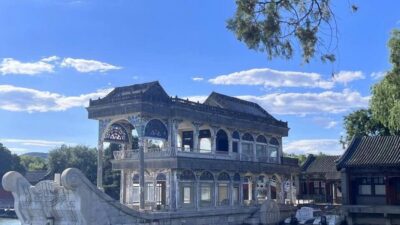
The Temple of Heaven or Summer Palace Entry Ticket
Read our review →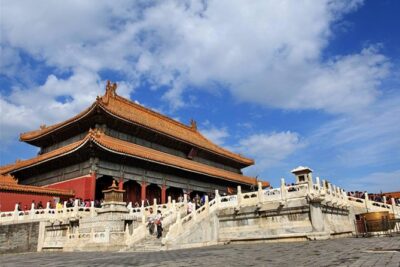
Beijing Classic Full-Day Tour including the Forbidden City, Tiananmen Square, Summer Palace and Temple of Heaven
Read our review →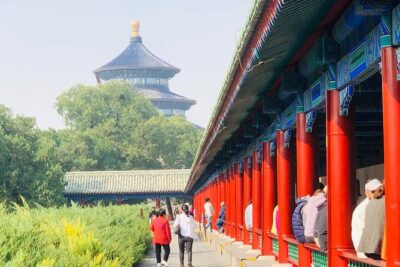
Temple of Heaven, Summer Palace, Lama Temple, Hutong Tours
Read our review →
All Inclusive Private Day Tour: Tian’anmen Square, Forbidden City, Temple of Heaven and Summer Palace
Read our review →
Beijing Private Tour of Temple of Heaven, Tian’anmen Square, Forbidden City
Read our review →Browse the lists this tour appears in