
Reviewed · SHANGHAI TOURS
French Concession Guided Walking Tour | China’s 1st & Best Rated
Shanghai’s Former French Concession is best understood on foot, where grand villas, old lane houses, former clubs, and everyday streets sit side by side. This three-hour walk traces that mix from the former French Club to Tianzifang, with stories about famous residents, ordinary families, and the area’s changing fortunes.
I like the small booking limit of four people per reservation, which should make it easier to ask questions and keep up with the guide. I also like the route itself: the contrast between elegant Sinan Mansions, crowded Huaihai Road, and humble Shikumen lanes gives you a fuller picture of Shanghai than a photo stop alone.
The main consideration is the tip-based price structure. The $5 charge reserves your place, but the tour is not fully paid for at that point. You are asked to decide the guide’s tip, with 150 to 200 RMB, or about $20 to $25 USD or euros, suggested as a fair amount.
Key points at a glance
- Former French Club: Step inside the historic building now associated with the Okura Garden Hotel and hear how it fit into the district’s social life.
- Seven contrasting stops: The route moves from old residences and political villas to shopping streets, theaters, lane houses, and art-filled Tianzifang.
- Tip-based format: Pay $5 to reserve your spot, then plan on a voluntary tip of 150 to 200 RMB for the guide.
- English-speaking guides: Aubrey, Dinna, and Celina are among the guides associated with especially warm, story-focused tours.
- Convenient finish: The walk ends at Tianzifang, near Dapuqiao Station on Metro Line 9, where you can eat, shop, or continue sightseeing.
- Good introduction to Shanghai: You get architecture, social history, local anecdotes, and a useful orientation to one of the city’s most interesting districts.
Why the Former French Concession works best as a walking tour
The French Concession is not one single attraction with a gate and a ticket booth. It is a broad part of Shanghai made up of streets, residences, commercial avenues, old institutions, and small lanes. That makes it rewarding, but also easy to misunderstand if you simply wander without context.
A guide helps connect the pieces. You might pass a handsome building and see only its façade. On this walk, you hear about the people who used it, the role it played, and how the neighborhood changed over time. The focus is not only on celebrities or grand architecture. The route also includes local alleyway residences, traditional lane houses, and the daily side of the district.
The three-hour length is useful. You have enough time to cover several parts of the Former French Concession without turning the outing into an all-day commitment. At the same time, the schedule is active, with seven stops and walking between them, so wear comfortable shoes and expect to stay on the move.
More Walking Tours in Shanghai
- Shanghai City Guided Walking Tour | China’s 1st and Best Rated
★ 5.0 · 285 reviews - Shanghai Highlights Walking Tour With A Real Local
★ 4.9 · 153 reviews - Shanghai Breakfast Walking Tour of Former French Concession
★ 5.0 · 139 reviews
Starting at Huaihai Zhong Lu and finding the old French Club
The meeting point is at 887 Huai Hai Zhong Lu, at the side entrance, in Huangpu District. The stated start time is 10:00 in the morning. The area is close to public transportation, which makes the start practical if you are staying elsewhere in central Shanghai.
The first portion introduces the Former French Concession through several connected sights. You visit the former French Club, see the first road in the concession, pass through the area once known as Little Moscow, and look at local alleyway residences. That mix gives the walk a useful rhythm: one grand institution, one historically important street, one district shaped by political change, and one look at ordinary housing.
The former French Club is the clearest architectural anchor at the beginning. It offers a way to picture the social world of the concession, when clubs and formal institutions helped define who had influence and where people gathered. The guide’s anecdotes are important here because a building like this can otherwise feel distant and decorative.
Aubrey is one guide you might meet on this route. The information provided about the experience identifies Aubrey as an enthusiastic interpreter of Shanghai’s history, architecture, and French Concession. Dinna is another guide associated with the walk, and the yellow umbrella is a useful visual marker if she is leading your group. Celina also leads walks with this operator, including a broader Shanghai highlights route.
Guide assignments can vary, so you should not book on the assumption that one named person is guaranteed. Still, the guide team appears to be a major part of the experience, especially if you enjoy asking questions rather than simply following a script.
The former French Club and the Okura Garden Hotel
A scheduled 20-minute stop takes you into the elegant former French Club, now connected with the Okura Garden Hotel Shanghai. The attraction here is not simply the building’s appearance. You hear how the club fit into the cultural and social development of the French Concession.
This is a good example of why the tour uses stories rather than a list of dates. A former club tells you about social divisions, public life, and the changing identity of the neighborhood. The guide brings the setting closer to human scale with anecdotes about the people who used the space and the events that shaped it.
Because this is an active hotel setting, the exact access or viewing experience could depend on conditions at the site. The schedule treats admission as included and free, but you should follow the guide’s instructions and avoid expecting a long interior visit. The value is in understanding the place within the district, not in spending an hour inside.
Huaihai Road, Shanghai’s answer to a grand European boulevard
The next 20-minute stop reaches Huaihai Road Commercial Street. It is presented as the Oriental Champs-Élysées, a phrase that points to its role as a major shopping avenue and public corridor.
This part of the route shifts from old buildings to modern city life. You get a sense of how the French Concession’s street plan and commercial identity continue to shape Shanghai today. The road is energetic and commercial, so it may feel less quiet than the residential lanes later in the walk.
The guide’s local anecdotes are what make this stop worthwhile. Without explanation, Huaihai Road can look like another large shopping street. With context, it becomes part of the story of how Shanghai adopted, adapted, and eventually moved beyond its foreign concession past.
The 20-minute time slot is enough for orientation, but not for serious shopping. If you want to browse stores, treat the tour as an introduction and return later on your own. The route has more ground to cover.
A very different day in Shanghai:
- Authentic Local Food Tour in Central Shanghai
★ 5.0 · 1,382 reviews - Zhujiajiao Water Town and Shanghai City Private Day Tour
★ 5.0 · 1,016 reviews - Private Shanghai Full Day City Tour with Old and New Highlights
★ 5.0 · 995 reviews - Shanghai: Hop-on Hop-off Bus Ticket and Optional Attractions
★ 3.4 · 692 reviews
Shikumen Museum and the everyday side of Shanghai
The Shikumen Museum offers one of the most useful contrasts on the walk. Shikumen houses are traditional lane residences built around shared alleys, and they reveal a more compact, communal form of urban life than the grand villas associated with the concession.
Here you look at lane houses and alleyways while learning about local living conditions. This is where the tour moves away from famous names and polished façades. You begin to see how the district worked for ordinary residents, not only for political figures, club members, and wealthy families.
I especially like this stop for first-time visitors because it helps explain Shanghai’s residential character. The city’s modern towers can dominate your first impression, but older lanes show how people lived in close quarters and how neighborhoods were organized before the current high-rise era.
The drawback is that the stop is brief, about 20 minutes. You will gain a clear introduction rather than a full museum visit or detailed study of Shikumen architecture. If this style of housing interests you, ask questions while you are there and consider leaving extra time at Tianzifang, where the same architectural tradition appears in a commercial setting.
Shanghai Culture Square and the surprising canidrome past
Shanghai Culture Square is another stop with a strong change-of-use story. The site was once a canidrome, where greyhound races were held, and it is now a center for arts and culture.
That transition says a great deal about Shanghai’s shifting public identity. A place built for spectacle and racing later became associated with theater and cultural events. The guide uses the site to show how the city repurposes old spaces rather than allowing their stories to disappear.
The scheduled visit lasts about 20 minutes. You should think of it as a historical explanation and exterior orientation, not as a performance visit. No theater ticket is included, and the tour does not promise a show.
This stop also adds variety. After the commercial scale of Huaihai Road and the close lanes around Shikumen housing, Culture Square gives you a more open civic setting. The route keeps asking you to compare different versions of Shanghai.
Sinan Mansions and the villas of public figures
Sinan Mansions is one of the more elegant stretches of the walk. The area contains restored early 20th-century villas along tree-lined avenues, and it once housed prominent political and cultural figures.
The restored setting makes it easy to appreciate the Former French Concession’s residential side. Villas here offer a different experience from the lane houses at the Shikumen Museum. One suggests private gardens, status, and individual homes. The other points to dense shared living.
A guide adds needed context because restored villas can look timeless when they are anything but. Their stories connect architecture with the political and cultural figures who lived in the area, while also showing how Shanghai has chosen to preserve and reuse parts of its past.
The 20-minute timing gives you room to admire the streets and hear the main stories. It is not a long architectural survey, and you may want to return independently if you are interested in taking photographs or examining the villas more carefully.
Tianzifang, where the walk turns toward art and cafés
The final stop is Tianzifang, a maze of narrow lanes filled with art studios, small shops, and cafés. It occupies a former residential area and retains Shikumen features, but its current role is much more commercial and creative.
This is a practical place to end because you can choose what to do next. The tour finishes at 210 Nong, Taikang Lu, in the Tianzifang area, near Dapuqiao Station on Metro Line 9. You can stop for food, browse shops, or use the metro to continue your day.
Tianzifang is also a useful final comparison. Earlier, the route shows lane housing as a place of everyday life. Here, similar forms and narrow passages have become part of Shanghai’s shopping and arts scene. That contrast is interesting, but it also means the area can feel crowded and commercial rather than purely residential.
The guide’s role is to help you see beyond the cafés and storefronts. You get a sense of what the area was before its current arts-and-shopping identity, while still having time afterward to explore at your own pace.
What the $5 reservation really buys you
The listed price is $5 per person, but that amount is a reservation fee rather than the complete cost of the walking tour. The experience runs on tips, and the suggested amount is 150 to 200 RMB, or about $20 to $25 USD or euros.
That makes the tour inexpensive compared with many conventional three-hour guided walks, but only if you understand the arrangement before booking. I would budget the suggested tip from the start rather than treating it as an optional surprise at the end. The tip is voluntary, but it is the main way the guide is compensated for the work.
At the suggested level, the total remains good value for a three-hour English-language introduction covering seven parts of the French Concession. You receive a local guide, historical interpretation, and a route that would be difficult to plan efficiently from scratch.
The value depends heavily on what you want. If you prefer a private guide with a fixed all-inclusive price, this format may feel less clear. If you like social walking tours and the freedom to reward a guide based on the experience, the low reservation fee is appealing.
Bookings are limited to groups of up to four people. If your own party is larger than four, you need to contact the operator about arranging a private tour. The overall activity allows up to 30 people, so the exact group size may vary even though each booking is capped at four.
The pace, meeting details, and weather factor
The walk starts at 10:00 and lasts about three hours. The listed stop times add up to roughly two hours and 40 minutes, leaving the remaining time for walking between locations and short transitions.
That pace gives you broad coverage rather than long visits. You will see many parts of the district, hear a steady stream of stories, and finish with a useful sense of direction. You should not expect extended museum time, a sit-down meal, or long pauses at every building.
The tour is near public transportation at both practical ends. The start is on Huaihai Zhong Lu, and the finish is near Dapuqiao Station on Line 9. The exact starting address is China, Shanghai, Huangpu District, Huai Hai Zhong Lu, 887, side entrance.
Good weather is required. If poor weather cancels the experience, you are offered another date or a full refund. You can also cancel for a full refund if you do so at least 24 hours before the start time. Changes or cancellations made within 24 hours are not accepted for a refund, and the experience can also be canceled if its minimum number of participants is not reached.
Who will get the most from this walk
I would choose this tour if you are visiting Shanghai for the first time and want more than a quick look at the Bund and the skyline. The route gives you a strong introduction to one district, with architecture, social history, local anecdotes, and practical orientation in one morning.
It also suits you if you have only a few free hours. One particularly useful feature is the efficient route through several contrasting locations. You can fit it into a business trip or a short city stay without giving up a full day.
The walk is a good match for anyone who likes asking questions. The warm, personal style associated with guides such as Aubrey, Dinna, and Celina is especially valuable if you want to talk with a real local guide rather than listen to a fixed audio recording.
You may want a different experience if you dislike tip-based tours, prefer a slow pace, or want extensive time inside museums and historic buildings. The route covers a lot, but each stop is short. It is an orientation walk with stories, not a specialist architectural seminar.
Should you book the French Concession walk?
Book it if you want a low-cost, three-hour introduction to Shanghai’s most layered historic district and you are comfortable planning for a separate tip. The mix of the former French Club, Huaihai Road, Shikumen housing, Culture Square, Sinan Mansions, and Tianzifang gives you more range than a simple villa walk.
I would be especially inclined to book if you have limited time, enjoy local anecdotes, or want to finish somewhere with food and shops. Keep your expectations realistic: the $5 fee only reserves your place, the pace is fairly active, and the final amount should include a 150 to 200 RMB tip.
For a first visit to the Former French Concession, this is a sensible way to get your bearings and learn what deserves a longer return visit.
FAQ
How long does the French Concession walking tour last?
The tour lasts approximately three hours, beginning at 10:00 in the morning.
How much does the tour cost?
The booking price is $5 per person. The experience is tip-based, with a suggested guide tip of 150 to 200 RMB, or about $20 to $25 USD or euros.
Where does the tour start?
The meeting point is at the side entrance of 887 Huai Hai Zhong Lu in Huangpu District, Shanghai.
Where does the tour end?
The tour ends in the Tianzifang area at 210 Nong, Tai Kang Lu, near Dapuqiao Metro Station on Line 9.
What places are visited?
The route includes the Former French Concession, the former French Club at the Okura Garden Hotel, Huaihai Road Commercial Street, the Shikumen Museum, Shanghai Culture Square, Sinan Mansions, and Tianzifang.
Can I cancel for a refund?
Yes. You can cancel at least 24 hours before the start time for a full refund. Poor weather or failure to reach the minimum number of participants may also lead to a different date or a full refund.
Recently listed in Shanghai
- Private Tour of Shanghai Highlights and Zhujiajiao Water Town in One Day★ 5.0 · 5 reviews
- 4-Hour Private Shanghai Shopping Tour with Local Expert★ 5.0 · 5 reviews
- Shanghai to Beijing Bullet Train Ticket with Hongqiao Station Transfer★ 5.0 · 5 reviews
- Shanghai Hongqiao Airport To Shanghai Hotel:Private transfer with Meet service★ 5.0 · 5 reviews
- Shanghai Coffee & Breakfast Tour★ 5.0 · 5 reviews
- Private Shanghai Hightlight Day Tour with English-speaking Guide★ 4.5 · 5 reviews
- Xitang Water Town Self-Guided Tour from Shanghai with Private Transfer★ 5.0 · 5 reviews
- Private Shanghai Foodie Adventures with Rooftop Bar Hopping★ 5.0 · 5 reviews
Shanghai Tours, compared.

Authentic Local Food Tour in Central Shanghai
Read our review →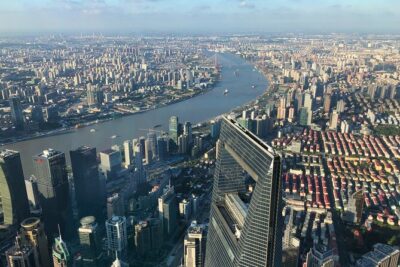
Zhujiajiao Water Town and Shanghai City Private Day Tour
Read our review →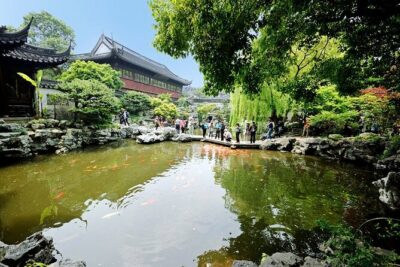
Private Shanghai Full Day City Tour with Old and New Highlights
Read our review →
Hop-on Hop-off Bus Ticket and Optional Attractions
Read our review →
Shanghai Private Tour: Zhujiajiao Water Town and Boat Ride
Read our review →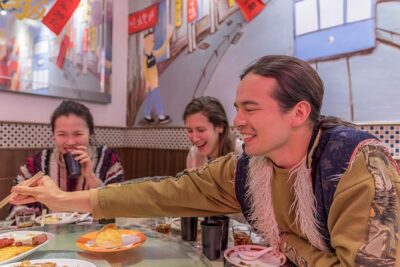
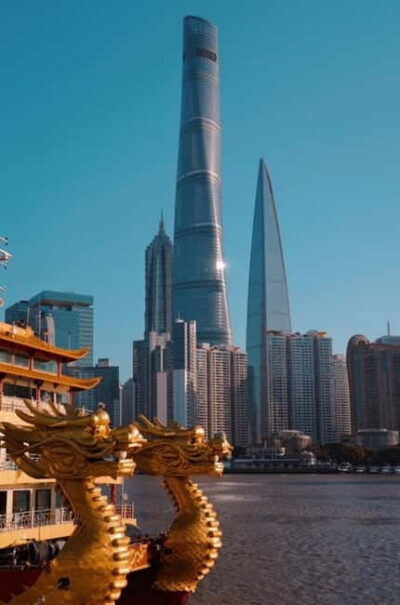
Huangpu Night Cruise: Cozy Vibe & Modern Shanghai Glow
Read our review →
Browse the lists this tour appears in