
Reviewed · GUANGZHOU TOURS
Guangzhou: Cantonese Heritage Tour with Key Cultural Stops
Bruce Lee’s ancestral home is the surprise star of this Guangzhou walk. You move from herbal stalls and old shopping arcades to opera costumes and family stories tied to one of the world’s most famous martial artists. I like the small group of up to eight, which makes it easier to ask questions, and I like the way the route connects ordinary local life with major cultural sights.
The main thing to consider is the pace. Seven stops in three and a half hours means some visits are brief, and the $6 booking price does not cover the guide’s recommended contribution of 200 RMB, or about $30, per person. It can still be good value, but you should understand the full expected cost before booking.
Key points to know before you book
- Bruce Lee’s Guangzhou connection: Visit his former family home and hear about his roots in the city.
- A useful first look at Cantonese culture: The route covers medicine, food, architecture, crafts, family history, and opera.
- Tony is the named guide: His English, local knowledge, patience with questions, and flexibility receive especially strong praise.
- Mostly a walking experience: You begin at Guangzhou Cultural Park Metro Station, Exit E, and finish at the Cantonese Opera Art Museum.
- Short visits, plenty of context: Stops generally last 20 to 45 minutes, so the guide’s explanations matter as much as the buildings.
- Very low booking price, separate guide support: The platform fee is $6, while an in-person contribution of 200 RMB per person is recommended.
Why this route works for a first look at Canton
Guangzhou can be hard to read at street level. Its Cantonese identity is not contained in one grand monument. It appears in dried herbs, old shopfronts, family traditions, regional food, opera makeup, and the way older streets have been given new life.
This tour brings those pieces together in a sensible walking route. You start near the western part of the old city, pass through commercial streets and restored lanes, then finish with Cantonese opera. That order helps you build an understanding as you go rather than simply ticking off unrelated sights.
I especially like the mix of public attractions and everyday places. Qingping Herbal Market gives you a look at a working commercial tradition. Shangxiajiu shows how Guangzhou shops and homes were built along covered arcades. Yongqing Fang adds renovated courtyards and cafés. The cultural craft street and Bruce Lee’s family connection then make the route more personal.
The guide is important here. Tony is specifically praised for his English, local knowledge, and willingness to answer questions. He also adjusts to individual requests, which is useful when you want more detail on food, architecture, martial arts, or Chinese customs.
More History Tours in Guangzhou:
- Private Historical Tour: Guangzhou City Sightseeing Including Lunch
★ 4.5 · 24 reviews - UNESCO Watchtowers World Heritage Ancient Villages Private Tour
★ 5.0 · 17 reviews - All Inclusive Kaiping Diaolou Heritage Private Day Trip from Guangzhou
★ 5.0 · 5 reviews
Qingping Herbal Market: start with the smells of old Guangzhou
The tour begins outside Exit E of Guangzhou Cultural Park Metro Station, at 文化公园地铁站. From there, you head to Qingping Herbal Market for about 30 minutes.
This is not a polished museum display. It is a place associated with traditional Chinese medicine, where the sights and smells do much of the work. You may see dried ingredients and hear about how local people use herbal products. The guide can explain the purpose of the market and point out details that would be easy to miss if you walked through alone.
This stop is valuable because it introduces a side of Cantonese culture that is still tied to daily life. You are not just hearing about old customs in a lecture. You are seeing a living trade and learning why herbal shops matter in southern Chinese communities.
Give yourself time to adjust to the aromas and crowded shopfronts. This is a short guided visit, not a detailed consultation or a shopping trip. Personal purchases are not included, so treat anything you buy as an extra expense. The best use of the stop is to ask questions and observe.
Shangxiajiu: old arcades, shops, and local flavors
The next 30-minute section takes you along Shangxiajiu Commercial Pedestrian Street. This is one of the clearest places to see Guangzhou’s arcade-style architecture, with covered walkways and older commercial façades designed for both trade and shelter from the weather.
The guide draws attention to architectural details and shares stories connected with the shopkeepers and street life. That turns a simple shopping street into a lesson in how the old city functioned. Look up as you walk. The upper floors and decorative façades often tell you as much as the store signs at street level.
Food is another reason to pay attention here. The guide can point out local delicacies and help you decide what looks authentic to try. One useful tip from the tour experience is to arrive with room for a snack, since food suggestions are part of the fun. Personal food and shopping costs are not included.
This stop may feel more commercial than cultural, and that is part of its value. Cantonese heritage is not frozen behind glass. It continues through eating, trading, and neighborhood routines. If you prefer quiet monuments, Shangxiajiu may feel busy, but if you want to see how culture operates in public, it earns its place.
Yongqing Fang: restored lanes with a modern edge
Allow about 45 minutes for Yongqing Fang, one of the longer stops. Here, older buildings and lanes meet newer cafés, courtyards, and cultural spaces.
The point is not simply to admire restored architecture. Your guide helps you notice how Guangzhou has adapted historic neighborhoods for present-day life. You may pass quiet courtyards, small businesses, and contemporary places tucked into older streets. The contrast is useful: it shows the city trying to protect its character while making room for new uses.
I would pay close attention to the transitions between the main route and the smaller lanes. The most interesting details may be away from the broad pedestrian areas. The guide’s local knowledge matters because a short walk can otherwise become a general stroll without much context.
Yongqing Fang is also a good place to ask about Guangzhou’s changing neighborhoods. The tour does not promise a long urban-planning lecture, but the setting naturally raises questions about restoration, commerce, and local identity. With only 45 minutes, you get an introduction rather than a complete examination.
A few more Guangzhou days to line up
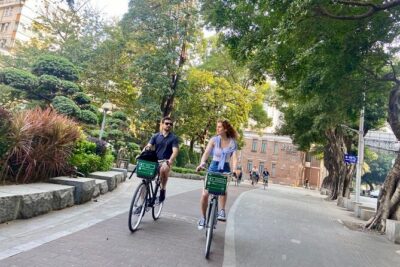
- Guided Cycle Tour of Guangzhou
★ 5.0 · 164 reviews - Customised Private Guangzhou City Tour with Flexible Itinerary
★ 5.0 · 107 reviews - Gulong Gorge Skywalk Glass Bridge and Waterfall View Private Tour
★ 5.0 · 103 reviews - Private Guangzhou Full Day City Tour with Old and New Highlights
★ 5.0 · 62 reviews
Living crafts and the Guangzhou Intangible Cultural Heritage Street
The route includes a 30-minute stop at a Guangzhou Intangible Cultural Heritage Street. This section focuses on traditions that are practiced, not merely displayed.
You may see craftspeople at work and learn about forms such as delicate embroidery. You can also watch preparations connected with lion dance, a performance tradition closely linked with festivals and public celebrations. Depending on what is happening during your visit, you may have a chance to try a craft yourself, though the exact activity is not guaranteed.
This is one of the strongest stops for families and for anyone who wants more than photographs. Making or watching something take shape gives you a clearer sense of the patience and skill behind a cultural tradition. The guide can explain what you are seeing and why it matters.
Because the stop is short, do not expect a full workshop. Think of it as a window into local craft practice. If a maker is working, give them space and listen to the guide before handling anything. That small courtesy helps keep the encounter respectful.
Bruce Lee’s ancestral home and a family story
The visit to Lixiaolong Ancestral Home, Bruce Lee’s former residence, lasts about 30 minutes. For many people, this will be the most memorable stop.
Bruce Lee is known worldwide for his martial arts films and screen presence, but this visit shifts attention to his family roots in Guangzhou. You get a more grounded connection to the man behind the legend, with the house serving as a link between a global figure and the city associated with his family.
The guide explains lesser-known parts of his life story and the Guangzhou connection. Tony’s ability to answer questions is especially useful here, since visitors often want to ask about Bruce Lee’s family, childhood, martial arts, or place in popular culture.
The residence is not presented as a large entertainment complex. Its appeal comes from the personal scale. You are looking at a family connection rather than a theme-park version of Bruce Lee. That makes the stop work even if you are only mildly interested in martial arts.
If Bruce Lee is your main reason for booking, keep your expectations measured. The visit lasts around half an hour, and the whole experience is broader than a celebrity-house tour. You are getting one part of a Cantonese heritage route, not an entire afternoon devoted to his career.
Cantonese Opera Art Museum: finish with color and symbolism
The final stop is the Cantonese Opera Art Museum, where the guided visit lasts about 20 minutes. The tour finishes here, at 粤剧艺术博物馆.
Cantonese opera can be difficult to understand at first. Costumes, painted faces, gestures, music, and movement all carry meaning, but that meaning is not always obvious to a first-time visitor. The guide explains the symbolism behind the costumes and movements, giving you a way into the art form.
The museum’s exhibits provide a calm finish after the market and shopping streets. You can focus on the visual details of the performance tradition and connect them with the wider story of Cantonese identity.
Twenty minutes is enough for an introduction, but not enough for a complete study of opera. If the art form interests you, use the guide’s explanation as a starting point and allow extra time later if your schedule permits. The tour ends at the museum, so you are not returned to the metro station.
What the timing tells you about the experience
The total duration is about three and a half hours. The listed visits add up to roughly three hours and five minutes, leaving time for walking between stops, pauses, and explanations along the way.
That is a useful format for a first day in Guangzhou. You cover several neighborhoods without committing to a full-day program. You also finish in a part of the city where you can continue exploring on your own.
The tradeoff is depth. The market and Shangxiajiu each receive about 30 minutes. The craft street and Bruce Lee’s home also receive about 30 minutes. That is enough to understand the setting, take in key details, and ask questions, but not enough to linger at every stall or exhibit.
I would book this when you want a guided orientation, not when you want a slow photography walk or a specialist museum tour. Wear comfortable shoes, keep your schedule flexible, and avoid planning a tight appointment immediately after the final museum stop.
The guide can make or break the walk
The strongest praise centers on Tony. He is described as easy to talk with, fluent in English, and able to handle many questions about Guangzhou and Chinese culture. He also introduces local foods and responds to individual interests.
That matters because several stops are more rewarding with explanation. A herbal market can look like a row of shops. Arcade buildings can pass as ordinary façades. Opera costumes can seem merely colorful. A good guide gives each place a reason to matter.
The group is limited to eight people. This is small enough for direct conversation and much less rigid than a large coach outing. You should still remember that the exact guide may vary, since Tony is the named guide associated with the experience but is not explicitly guaranteed for every departure.
The tour is in English. If you enjoy asking questions, this format should suit you. If you prefer to explore silently at your own pace, the repeated stops and guided commentary may feel more structured than you want.
Is the $6 price really the whole cost?
The advertised booking fee is $6 per person, which looks remarkably low for three and a half hours with a guide. But the fee goes to the organizing platform, while the guide is supported by an in-person contribution.
A tip of 200 RMB, or approximately $30 or £20, per person is recommended. That means you should judge the experience on the expected total contribution, not on the $6 figure alone. For a private guide, that sum might be substantial. For a small-group cultural walk lasting half a day, it can still be fair value if you make good use of the guide’s time and local insight.
I would consider it good value for three reasons:
- You visit several distinct cultural sites in one morning or afternoon.
- You receive explanations in English at places that can be hard to interpret alone.
- You get local food suggestions and the chance to ask personal questions.
Personal expenses, including food and purchases, are extra. Bring money if you want to sample something at Shangxiajiu or buy an item at the herbal market.
Who should book this Guangzhou walk?
I would recommend it to first-time visitors who want an introduction to Cantonese culture beyond major landmarks. It suits curious walkers, food-minded visitors, people interested in local customs, and anyone who wants to understand how old neighborhoods function today.
It is also a strong choice if you have limited time in Guangzhou. In one compact route, you see traditional medicine, commercial architecture, renovated lanes, crafts, Bruce Lee’s family connection, and Cantonese opera.
Families may appreciate the variety, especially the craft street and Bruce Lee stop. The small group also makes it easier to keep children engaged with questions and short visits, although the tour does involve continuous walking.
I would look elsewhere if your priority is a long museum visit, a dedicated Bruce Lee tour, or a food tour built around eating. Food is discussed and suggested, but it is not the central product. Likewise, the route gives you an introduction to opera rather than a full performance experience.
The activity has a five-out-of-five rating from 13 reviews, and the praise focuses on guide quality, clear English, detailed explanations, and flexibility. Those are exactly the features that matter most on this kind of cultural walk.
Practical details that matter
Meet outside Exit E of Guangzhou Cultural Park Metro Station. The tour is offered in English and lasts 3.5 hours, with starting times shown according to availability.
Cancellation is free up to 24 hours before the start for a full refund. You can also reserve now and pay later, which helps if your Guangzhou plans are still shifting.
The route finishes at the Cantonese Opera Art Museum, not back at the starting point. That is useful if you plan to continue sightseeing nearby, but you should allow extra time to find your next destination.
Should you book it?
Book this tour if you want a friendly, compact introduction to the everyday side of Cantonese culture, and if you value explanations more than simply collecting photos. The mix of market life, old streets, crafts, Bruce Lee’s family story, and opera gives you a much fuller picture of Guangzhou than a single landmark could.
The key decision is the guide contribution. At $6, the booking price is not the complete financial picture. If you are comfortable with the recommended 200 RMB contribution and want an English-speaking guide who can answer questions, this is a practical way to spend three and a half hours.
I would choose it early in your Guangzhou stay. You will leave with useful ideas about food, neighborhoods, and cultural sights to revisit on your own. Just keep your expectations realistic: this is a brisk introduction, not a slow, specialist tour of every stop.
FAQ
Where does the Cantonese heritage tour begin?
It begins outside Exit E of Guangzhou Cultural Park Metro Station, identified as 文化公园地铁站.
Where does the tour finish?
The tour finishes at the Cantonese Opera Art Museum, identified as 粤剧艺术博物馆.
How long does the experience last?
The tour lasts approximately 3.5 hours.
Is the tour conducted in English?
Yes. The tour includes a live English-speaking guide.
How large is the group?
The experience is offered as a small-group tour with a maximum of eight participants.
What is included in the price?
A professional tour guide and interaction with local people are included. Personal expenses are not included, and a contribution of 200 RMB, or about $30, per traveler is recommended to support the guide.
Recently listed in Guangzhou
- Chimelong International Circus Ticket with Transfer★ 5.0 · 5 reviews
- Seven Star Crag and Dinghu Mountain private day tour from Guangzhou★ 5.0 · 5 reviews
- Guangzhou: Textile Hub and Garment Factory Half-day Tour★ 5.0 · 5 reviews
- Guangzhou Private Safari Tour with Ride and Giant Panda viewing★ 5.0 · 5 reviews
- All Inclusive Kaiping Diaolou Heritage Private Day Trip from Guangzhou★ 5.0 · 5 reviews
- Guangzhou Pearl River Night Cruise and Canton Tower Night Tour★ 5.0 · 5 reviews
- Kaiping Private Day Tour From Guangzhou★ 4.8 · 6 reviews
- Guangzhou Chimelong: Safari Park/Paradise(Optional Day Tour)★ 4.7 · 6 reviews
Guangzhou Tours, compared.
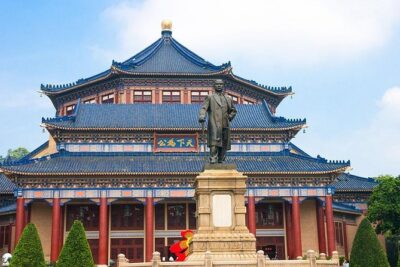
Customised Private Guangzhou City Tour with Flexible Itinerary
Read our review →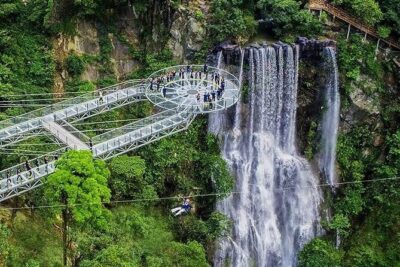
Gulong Gorge Skywalk Glass Bridge and Waterfall View Private Tour
Read our review →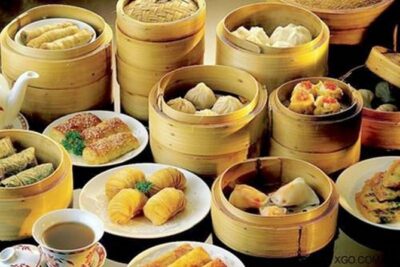
Private Guangzhou Full Day City Tour with Old and New Highlights
Read our review →
Reputable Private Guangzhou Tour Guide Service by Xaq
Read our review →
Guangzhou Baiyun Airport Guangzhou Hotels:Private with Meet & Great Service
Read our review →

Pearl River 1-hour Night Cruise (Optional Piers)
Read our review →Browse the lists this tour appears in