
Reviewed · FORBIDDEN CITY TOURS
In-depth Forbidden City tour with Royal Icehouse Lunch
The unusual treat here is lunch inside a former imperial icehouse, paired with a private walk through the Forbidden City’s grand halls, quiet courtyards, treasure rooms, and garden spaces. This is not just a quick march from the Meridian Gate to the main throne hall.
I like the private guide format, since your guide can slow down for an older family member, explain details for children, or spend extra time on the rooms that interest you most. I also like the access to places many visitors skip, including the Imperial Library, Treasure Hall, and the Nine Dragons Screen.
The main drawback is the six-hour commitment and the amount of walking. At $150 per person, this is a serious spend for Beijing, though entrance fees, private guiding, hotel transfers, and lunch are included.
Key points to know before booking
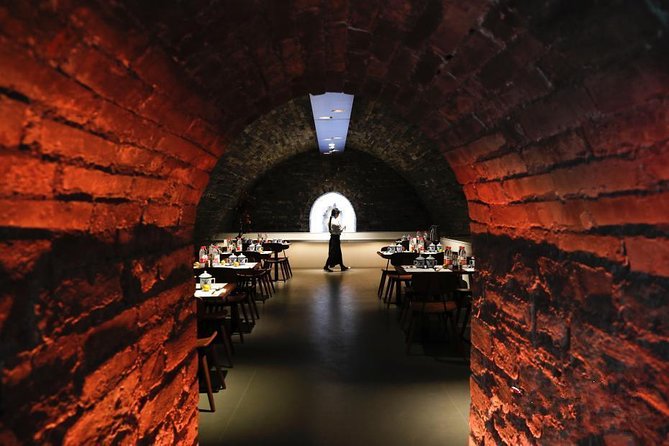
- Lunch in a former imperial icehouse: A memorable meal setting gives the tour a distinctly Beijing flavor.
- Five hours inside the Palace Museum: You have time for major halls, side buildings, exhibitions, and gardens rather than only the central axis.
- Private pacing: Guides such as Helen Zhang, Lily, Selina, Angie, and Shanshan have been praised for clear explanations and patience.
- Rare interior sights: The Imperial Library, Treasure Hall, imperial theatre, and possible corner tower visit add substance beyond the usual palace route.
- Early 7:30 am start: The schedule gives you a full morning and afternoon, but you need to be ready early.
- Hotel pickup and drop-off: This removes much of the morning transport hassle in a large, traffic-heavy city.
Why this Forbidden City tour feels different
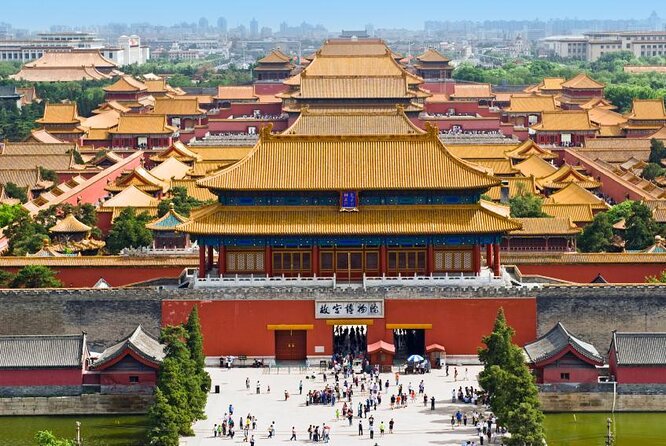
The Forbidden City can be reduced to a few famous postcard views: red walls, yellow roofs, the Meridian Gate, and the Hall of Supreme Harmony. Those sights matter, but they show only the public face of a palace complex that once contained offices, residences, gardens, theatres, religious spaces, storage buildings, and private courts.
This tour is designed to give you the longer version. You spend about five hours at the Palace Museum, with roughly six hours for the full activity including transport and lunch. That extra time matters because the palace is enormous, covering about 72 hectares, and its best details are often away from the central route.
Your guide is the key to making the scale manageable. Names noted for this experience include Selina, Helen Zhang, Lily, Shanshan, and Angie. The important point is not the individual name, since guide availability can change, but the private format. You are not tied to a large group’s pace or stuck listening to a speech at every stop.
The strongest guide experiences here combine palace history with small local observations. One guide, for example, also shared information about shops and the area near the hotel. That sort of practical conversation can make the day feel less like a museum lecture and more like a walk with a well-informed local.
More Forbidden City visits:
- Beijing: Forbidden City Tour(Group/Private)-Tickets Included
★ 4.8 · 7,974 reviews - Beijing: T-Square & Forbidden City Group or Private Tour
★ 4.8 · 4,446 reviews - All-Inclusive Tour: Tiananmen Square, Forbidden City, Great Wall
★ 5.0 · 2,873 reviews
Starting at 7:30 am and entering through the Meridian Gate
The listed start time is 7:30 am, with hotel pickup and drop-off included. You should confirm that your hotel falls within the pickup area when booking, but the central benefit is clear: you do not need to find your own way to one of Beijing’s busiest historic sites first thing in the morning.
The Meridian Gate is the main southern entrance. It is an impressive beginning, with the broad ceremonial scale you expect from the imperial palace. Your guide can explain the old belief that the meridian line ran through the gate, connecting the entrance with the central axis of imperial power.
This is also where the palace’s size begins to register. The route is not a single monument but a chain of courtyards and buildings, each with a different purpose. The best use of a private guide is to keep those changes clear, so you understand when you have moved from public ceremony into administration, residence, storage, or leisure.
Bring comfortable shoes and expect a moderate level of physical activity. The route covers a lot of ground, and the palace’s wide spaces can make distances look shorter than they are.
The Hall of Supreme Harmony and the ceremonial heart
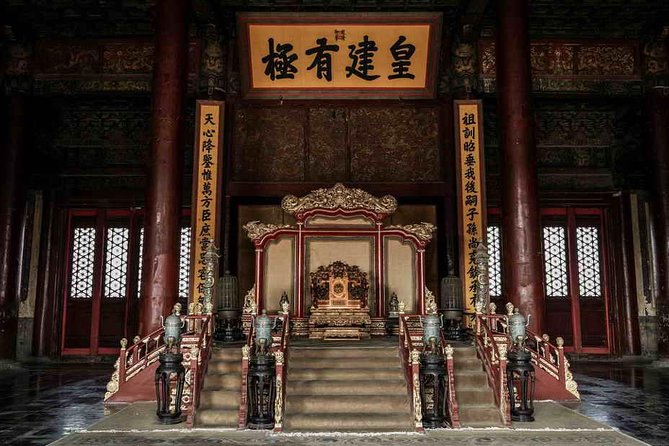
The Hall of Supreme Harmony is the grand centerpiece of the outer court. It is described as the largest wooden structure in the world and was used for major ceremonies and imperial work. This is where the Forbidden City feels most theatrical: a vast courtyard, a monumental hall, and a carefully ordered approach designed to place the emperor at the center of the universe.
A guide adds value here by explaining function, not just architecture. You can learn why the building mattered, what sort of ceremonies took place there, and how the imperial court used space to reinforce rank and authority.
The courtyard may be one of the busiest parts of the visit, especially around the main buildings. A private tour cannot remove other people from the palace, but it can prevent you from losing time while you search for the next stop or try to work out what you are seeing.
Banquets, imperial examinations, and the move into private life
Another stop concerns a building used for banquets and later for imperial examinations. The examinations tested candidates on classical and Confucian texts under imperial supervision. This is a useful reminder that the Forbidden City was not only a royal home. It was also an administrative center tied to the machinery of government.
This part of the route adds social and intellectual context to the grand architecture. The palace shaped who could approach the emperor, how officials were selected, and how power was displayed.
From there, the tour moves toward the Inner Court, where the mood changes. This was the emperor’s daily working environment and the living area for the emperor, empress, and imperial concubines. You are no longer looking only at official ceremony. You are seeing the controlled private world behind it.
The Inner Court can be more rewarding than the main halls if you enjoy human stories. Your guide can help you understand how daily affairs were handled and how palace residents occupied different levels of status and access.
More lunch stops in Beijing:
- Great Wall of China at Mutianyu Full-Day Tour Including Lunch from Beijing
★ 4.0 · 565 reviews - Mutianyu Great Wall and Summer Palace Small-Group Tour with Lunch
★ 5.0 · 316 reviews - Mutianyu Great Wall and Summer Palace Private Day Trip with Lunch
★ 5.0 · 209 reviews - Small-Group Mutianyu Great Wall and Summer Palace Tour with Lunch
★ 5.0 · 90 reviews
The Palace of Heavenly Purity and the imperial household
The largest building in the Inner Court served as the emperor’s residence. Its scale may seem surprising when compared with the idea of a private home, but that is the point. Even personal life inside the Forbidden City took place within ceremony, hierarchy, and strict rules.
This stop also helps you picture the palace as a working community. Emperors, empresses, concubines, officials, servants, guards, and craftsmen all had roles within the walls. The building names can blur together during a long visit, so a guide who explains how each space was used is especially helpful.
Families may appreciate this section because it connects architecture with people. One guide, Helen, was praised for keeping the history interesting for children while still covering the important buildings. That balance is valuable when you are touring with mixed ages.
The Imperial Library and the quieter side of the palace
The Imperial Library is one of the places that helps this tour go beyond the standard highlights. The palace was a center of learning and record keeping as well as a seat of power, and a library stop gives you a different view of the imperial household.
Exact access can depend on what is open on the day of your visit. The itinerary indicates that the tour includes the Imperial Library, but historic sites sometimes adjust interior access. Your guide should help you make the most of whichever rooms are available.
This is a good place to slow down. After the huge ceremonial courtyards, a quieter interior or scholarly building can offer a welcome change of pace. It also makes the palace feel more complete, since you see not only where the emperor appeared in public but where information and culture were preserved.
Treasure Hall, the Antiquarium, and the Qianlong area
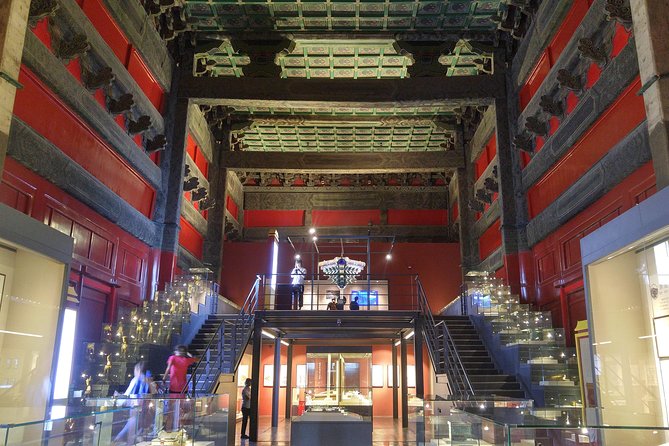
Treasure Hall, also called the Antiquarium, is one of the tour’s strongest additions. The area includes several buildings created for the abdicated Emperor Qianlong. Today, the rooms serve as exhibition spaces with themed displays and the palace’s largest imperial theatre.
The exhibitions give you a closer look at objects and court life rather than only monumental buildings. A private guide can help you understand why a particular room or object matters, which is useful when displays contain unfamiliar Chinese names and symbols.
The imperial theatre adds another layer. Court life included performances and formal entertainment, but the setting remained highly controlled and connected to rank. This is the kind of stop that rewards people who want more than the famous throne halls.
Allow time for Treasure Hall instead of treating it as a quick add-on. You have paid for a longer visit, and this section is one reason the extra hours can be worthwhile.
The Nine Dragons Screen and imperial symbolism
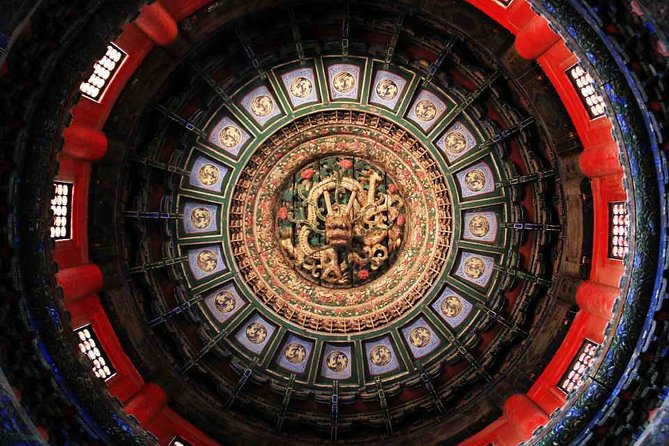
Near Treasure Hall is one of China’s three famous Nine Dragons Screens. The others are in Beihai Park and Datong. The nine dragons on the screen differ in color, making the wall both a decorative feature and a lesson in imperial symbolism.
This is a fine example of why a guide helps. At first glance, it is a beautiful glazed wall. With explanation, you can look for the individual dragons, notice the differences in color, and understand why nine was an important imperial number.
It is also an easy stop to miss if you simply follow the most obvious route through the Forbidden City. The private tour’s slower, more detailed design gives you a better chance of seeing features that do not dominate every guidebook photograph.
The imperial garden and the final stretch
The final portion includes a rectangular garden with more than 20 types of buildings, pavilions, terraces, towers, and rockeries. Four pavilions represent the four seasons. Compared with the formal outer court, this is a more compact and decorative place to finish.
The garden gives your eyes a break from broad stone courtyards and massive halls. Look for the relationship between the rockeries, pavilions, and narrow paths. This was a designed retreat, but it was still part of the palace world, with symbolism and rank built into the arrangement.
A possible corner tower visit adds another unusual detail. The towers form part of the Forbidden City’s defensive construction at each corner of the wall. Access depends on whether the wall section is open, so treat this as a possibility rather than a guarantee.
If it is open, going inside one of the towers provides a useful contrast to the ceremonial buildings. You see the palace as a defended enclosure, not simply an elegant collection of halls.
Lunch at the former Royal Icehouse
The lunch stop is the tour’s most distinctive feature. You eat at one of the former Imperial Ice Houses, a setting connected to the practical side of palace life.
The icehouses existed because the court needed a way to preserve food and keep drinks cold before modern refrigeration. The meal turns that otherwise overlooked piece of palace infrastructure into part of the day’s story.
Lunch also creates a sensible pause in a long walking tour. A temporary escape from heat can make a real difference, especially during Beijing’s warmer months. The food has been praised as delicious, but you should still think of this as a historic dining experience first and a full restaurant outing second.
The meal is included in the $150 price, along with entrance fees. That makes the cost easier to assess. You are paying for a private guide, hotel transfers, admission, a long palace visit, and a memorable meal setting. It is not the cheapest way to see the Forbidden City, but it offers far more structure and attention than simply buying admission and walking through on your own.
Who will get the most from this six-hour outing
This tour suits you if the Forbidden City is a major reason for visiting Beijing and you want to understand what you are seeing. It is especially useful for first-time visitors who do not want to spend hours studying a map or deciding which side buildings are worth the walk.
It also fits families and mixed-age groups. The private format allows your guide to adjust the pace, and Lily was specifically praised for patiently accommodating an older family member. That does not make the tour effortless, but it gives you more control than a fixed group outing.
You should think twice if you dislike long museum visits, early starts, or large historic complexes. Six hours can feel long if you want only the Meridian Gate, main halls, and a few photographs.
The tour requires a moderate level of physical fitness. Wear shoes suited to extended walking, and do not assume that hotel pickup means the day will be easy on your feet.
Price, timing, and practical value
At $150 per person, the price sits in the premium range for a Beijing sightseeing day. The value depends on how much help you want. If you are comfortable arranging admission, transport, navigation, and meals yourself, a private tour may seem expensive.
If you want a carefully planned palace visit with a guide who can explain the setting, the price becomes easier to defend. Entrance fees and lunch are included, and pickup and drop-off remove a layer of city logistics. Group discounts may also be available, which could improve the per-person value for a larger private party.
The tour is booked an average of 49 days ahead, so you should plan early if your Beijing dates are fixed. Your passport name and number are required for every participant at booking, and confirmation is provided at that time.
Free cancellation is available up to 24 hours before the local start time. A cancellation inside that window is not refundable, and last-minute changes are not accepted.
Should you book it?
Book this tour if you want the Forbidden City explained in detail, prefer a private pace, and like the idea of lunch in a place tied to imperial life. The Imperial Library, Treasure Hall, Nine Dragons Screen, garden, and possible corner tower visit give the day more substance than a basic central-axis walk.
Skip it if you want a quick palace visit or are watching every dollar. The six-hour schedule is demanding, and $150 per person is best justified when the guide, transfers, included admission, and icehouse lunch all matter to you.
For families, older relatives, and anyone fascinated by China’s imperial court, this is a strong choice. Ask for a slower pace at the start, wear practical shoes, and treat the former icehouse lunch as part of the historical experience rather than merely a meal.
FAQ
How long does the tour last?
The experience lasts approximately six hours, with about five hours allocated to exploring the Forbidden City and its museum areas.
What time does the tour start?
The listed start time is 7:30 am.
Is hotel pickup included?
Yes. Free hotel pickup and drop-off are included for convenience.
Is this a private tour?
Yes. Only your group participates in the activity.
Is lunch included?
Yes. Lunch at a former Imperial Ice House, also called the Royal Icehouse, is included.
Are entrance fees included?
Yes. The itinerary states that admission tickets are included.
What areas of the Forbidden City are visited?
The route includes the Meridian Gate, Hall of Supreme Harmony, buildings connected with banquets and imperial examinations, Inner Court residences, the Imperial Library, Treasure Hall or Antiquarium, the Nine Dragons Screen, the imperial garden, and a possible corner tower visit if it is open.
What information is required when booking?
The passport name and passport number are required for every participant. Confirmation is provided at the time of booking.
Can the tour be canceled for a full refund?
Yes, if you cancel at least 24 hours before the local start time. Cancellations made less than 24 hours before the start, or changes made within that period, are not accepted for a refund.
Recently listed in Beijing
- Beijing Mutianyu Great Wall Private Tour with Lunch★ 5.0 · 5 reviews
- Customized Private Beijing Layover City Tour★ 5.0 · 5 reviews
- Private Tour to Gubei Water Town and Simatai Great Wall with Cable Car and Lunch★ 5.0 · 5 reviews
- Forbidden City with Hutong Cuisine Private Walking Tour★ 5.0 · 5 reviews
- Beijing Acrobatics Show At Red Theater★ 4.5 · 5 reviews
- Beijing: Top Michelin Vegetarian Restaurant Reservation★ 5.0 · 5 reviews
- Exclusive Private Photography & Video Tour to The Forbidden City★ 5.0 · 5 reviews
- Cuandixia Village Day Trip with Private English Speaking Driver Service★ 4.0 · 5 reviews
Forbidden City Tours, compared.
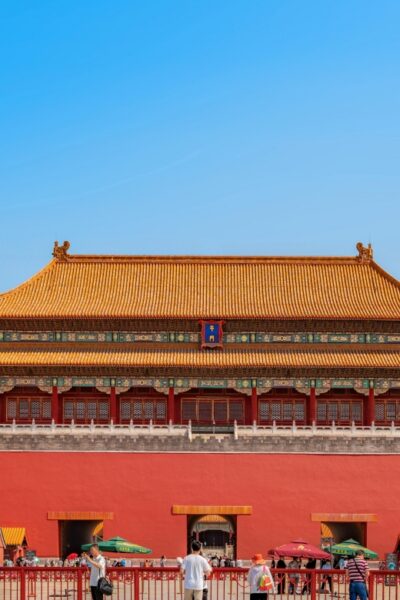
Forbidden City Tour(Group/Private)-Tickets Included
Read our review →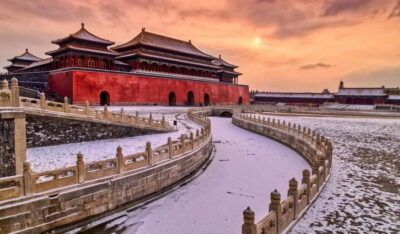
T-Square & Forbidden City Group or Private Tour
Read our review →
All-Inclusive Tour: Tiananmen Square, Forbidden City, Great Wall
Read our review →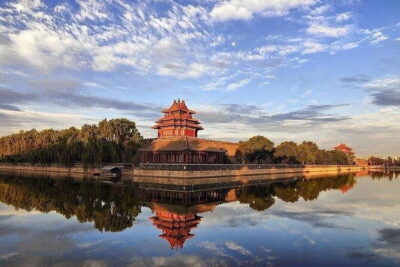
4-Hour Small Group Tour to Forbidden City with Entry Tickets
Read our review →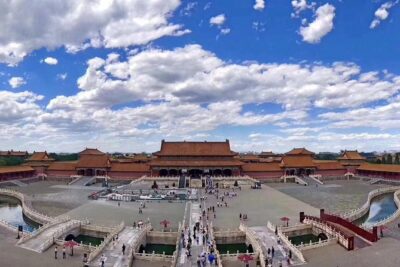
Beijing Full Day Tours: Tiananmen Sq, Forbidden City, Great Wall
Read our review →
Tianmen Square, Forbidden City & Royal Museum Tours
Read our review →
Beijing Forbidden City Ticket Booking (Optional: guide service)
Read our review →
Forbidden City and Tian’anmen Square Waking Tour
Read our review →Browse the lists this tour appears in