
Reviewed · SHANGHAI TOURS
Private 2-Hour Walking Tour of Shanghai’s Jewish Ghetto
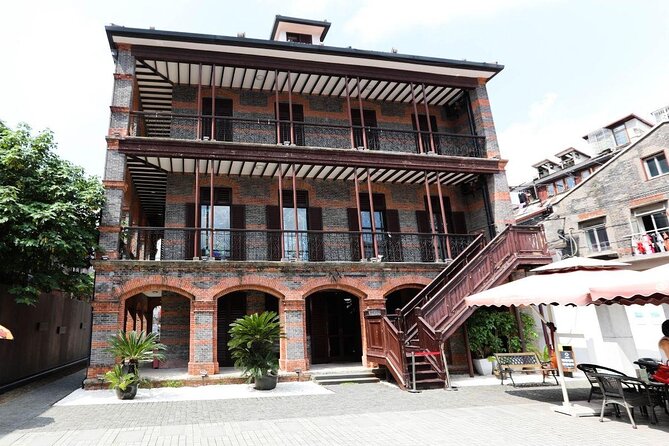
Shanghai’s Jewish Ghetto is not a polished historic district. It is a living part of Hongkou, where apartment blocks, seafood stalls, small shops, parks, and old religious sites sit beside places tied to Jewish refugees who escaped persecution in Europe. This private walk connects those pieces with a local guide, then adds the Jewish Refugees Museum and Xiahai Temple.
I like two things here. First, you get more than a museum visit: the walk shows how Jewish refugees lived alongside Chinese residents. Second, a good guide can add personal detail, such as Mason showing guests the rooms his grandfather rented to Jewish refugees. You may also be guided by Annie, Zoe, Mary, or another English-speaking local.
The main caution is focus. About half the tour centers on the museum and synagogue, while the rest covers local life and a Buddhist temple. If your only goal is Jewish history, the museum can be visited independently, and two hours may feel short.
Key points to know before you book
- Ohel Moishe Synagogue anchors the story: The Jewish Refugees Museum explains why this former synagogue became important to refugees during wartime.
- Hongkou is still a working neighborhood: You walk past everyday homes, shops, seafood stalls, and rustic restaurants rather than a reconstructed museum district.
- The private format gives you room to ask questions: Only your party takes part, so a strong guide can adjust the pace and discussion.
- Huoshan Park offers a quiet pause: Its memorial to Jewish immigrants gives the walk a place for reflection.
- Xiahai Temple changes the subject: This Buddhist temple is included, but it is not central to the Jewish story.
- Guide quality matters: Annie, Mason, and Zoe received especially warm praise for clear English, strong local knowledge, and extra help.
Why Shanghai’s Jewish Ghetto deserves two hours
Shanghai’s Jewish Ghetto is best understood on foot. The area does not present one grand monument that explains everything. Instead, the story appears in fragments: a former synagogue, a museum display, a park memorial, aid organizations, old residences, narrow streets, and the ordinary life of Hongkou today.
I like that this tour does not stop at the museum door. You see the district as a place where people still live. That matters because the refugee story was not only about arrival and survival. It was also about cramped housing, shared streets, local trade, religious practice, and the practical help that made life possible.
The tour lasts about two hours and is private for your group. At $131.28 per person, it is not a cheap casual walk, especially for one or two people. The value depends heavily on the guide. A strong guide can connect the sites, answer personal questions, help you navigate Shanghai afterward, and sometimes show you places that are difficult to find alone.
For a larger group, the private format may make more sense because group discounts are available. You are paying for time, attention, and interpretation rather than simply paying to enter a museum.
More Walking Tours in Shanghai
- Shanghai City Guided Walking Tour | China’s 1st and Best Rated
★ 5.0 · 285 reviews - Shanghai Highlights Walking Tour With A Real Local
★ 4.9 · 153 reviews - Shanghai Breakfast Walking Tour of Former French Concession
★ 5.0 · 139 reviews
Meeting on Changyang Road in Hongkou
The meeting point is on Changyang Road, written locally as Chang Yang Lu, in Yangpu District. You meet your guide there, and the tour ends back at the same meeting point. Hotel pickup and drop-off are not included, so you need to plan your way to and from the start.
This detail matters in Shanghai. The area is near public transportation, but you should allow enough time to reach the meeting place. One guest had trouble arranging the meeting details in advance, while another praised the company for sending clear directions by email the day before. I would confirm the exact meeting instructions before setting out, especially if you are unfamiliar with Shanghai’s street names.
The tour uses a mobile ticket, and confirmation is provided when you book. Service animals are allowed, and the activity is described as suitable for most people. It is a walking tour, so comfortable shoes are the sensible choice, though the available information does not give a precise distance or accessibility breakdown.
Ohel Moishe Synagogue and the Jewish Refugees Museum
The main stop is the Shanghai Jewish Refugees Museum, built on the site of Ohel Moishe Synagogue. This is the heart of the experience. The synagogue attracted Jewish refugees during periods of severe persecution and wartime upheaval, and the museum explains the role this place played in Shanghai.
You will see exhibitions connected to Jewish life in Shanghai and learn why the building mattered as a religious and community center. The story also reaches beyond European refugees alone. The Jewish population in Shanghai included people from places such as Iraq, Iran, and Russia, and the tour can help place those different communities within the city’s wider story.
The museum has its own volunteer information service, and that creates an important question about value. Several people felt the displays were clear enough to explore without paying for a private guide. Others found that a good guide made the visit more personal, especially when family history was involved.
The practical advice is simple: decide what you want from the museum before you arrive. If you mainly want to read the displays, you may prefer to spend more time on your own. If you want help connecting the exhibits to the streets outside, ask your guide to keep the museum portion focused and save time for the neighborhood.
Some tours were described as rushed inside the museum. That is a fair concern in a two-hour visit, since the museum, walking route, park, neighborhood, and temple all compete for time. Tell your guide early if the synagogue and refugee story are your main reason for booking.
Walking past refugee aid sites
The walk includes the former American Jewish Joint Distribution Committee site, where you hear about assistance given to refugees. This stop adds an essential practical layer to the story. Religious buildings explain belonging, but aid organizations help explain food, housing, medical needs, and the daily work of helping displaced people survive.
You also walk through the streets connected with the historic Jewish quarter. The guide points out the area’s role during the refugee years and explains how the district functioned. The best guides do not treat the neighborhood as a stage set. They show you how the old story sits beside current Chinese homes and businesses.
One especially memorable possibility comes from Mason’s tour. He invited guests into his home and showed them rooms his grandfather had rented to Jewish refugees. Another guide brought guests into a home where an elderly Chinese couple explained their living space through the guide. These visits are not guaranteed, but they show what a private local tour can offer when circumstances and relationships allow it.
You should also keep your expectations realistic. Not every guide will have the same access, family connection, or depth of background. Some people found the historical explanation strong, while others felt a young guide knew the set facts but could not explain the Jewish experience with enough sensitivity. The private format gives you a chance to ask direct questions, but it cannot guarantee a particular guide or a family visit.
A very different day in Shanghai:
- Authentic Local Food Tour in Central Shanghai
★ 5.0 · 1,382 reviews - Zhujiajiao Water Town and Shanghai City Private Day Tour
★ 5.0 · 1,016 reviews - Private Shanghai Full Day City Tour with Old and New Highlights
★ 5.0 · 995 reviews - Shanghai: Hop-on Hop-off Bus Ticket and Optional Attractions
★ 3.4 · 692 reviews
Huoshan Park and the refugee memorial
Huoshan Park gives the walking tour a quieter moment. You leave the tighter streets for green space and see a monument honoring Jewish immigrants. It is a useful pause after the museum because it links the personal stories inside the displays with a physical place in the district.
I like this stop because it prevents the tour from becoming a string of indoor exhibits. A short walk through the park lets you think about what you have heard and notice the contrast between memorial space and ordinary city life.
The park is not presented as a large sightseeing attraction. Its importance comes from its place in the route and the memorial it contains. If you want a full historical account of every Jewish site in Shanghai, two hours will not be enough. This walk gives you a compact introduction centered on Hongkou.
Daily life in the old quarter
The most distinctive part of the tour may be the walk through a local neighborhood. You see how people live now in an area once associated with Jewish refugees. The route can include craft shops, fresh seafood stalls, rustic restaurants, and small streets where daily routines continue without much attention to the district’s international past.
This is where the tour feels less like a standard sightseeing circuit. You are not only looking at old names and dates. You are seeing a working part of Shanghai, with local residents, traditional customs, and modest businesses.
That also means you should behave thoughtfully. This is not an open-air museum, and homes are private. If your guide points out a building or arranges a brief visit, listen carefully and ask before taking photographs. The chance to see a former refugee residence is meaningful precisely because it remains part of someone’s living environment.
Some people wanted more specific Jewish sites in the neighborhood, including additional ghetto homes and other buildings. That is a reasonable request. Before the walk begins, explain whether you want architecture, family stories, wartime history, present-day life, or all four. Your guide can then use the limited time more effectively.
Xiahai Temple, the tour’s unexpected turn
The final stop is Xiahai Temple, a Buddhist temple once known as the fish man’s temple. It is described as a remote place away from the main tourist route, and the guide explains its role in the local community and Buddhist practice.
For some people, this is a welcome addition. It shows that the old Jewish quarter is also a Chinese neighborhood shaped by local religious life. One particularly positive account praised the guide for explaining Buddhist customs while walking through the temple.
For others, the temple feels unrelated to the purpose of the tour. Several people expected the final section to stay focused on Jewish Shanghai and were disappointed when the route shifted to Buddhism. That reaction makes sense. The temple is included, but it does not explain the Jewish refugee experience in the same direct way as Ohel Moishe Synagogue, Huoshan Park, or the former aid center.
You can avoid confusion by asking at the start how much time will be spent at Xiahai Temple. If you are eager to see it, the stop adds local context. If your interest is strictly Jewish history, ask whether the guide can shorten the temple visit and use that time for neighborhood sites instead.
The guides can make or break the walk
The strongest praise goes to individual guides. Annie was singled out for excellent English, clear meeting directions, enthusiasm, and a willingness to adjust the walk to personal interests. She also helped guests understand the different Jewish communities that found refuge in Shanghai and, in one case, emailed photographs afterward.
Mason received similar praise for his command of the history and for sharing his family connection to refugee housing. Zoe was praised for answering questions, giving extra detail, and making the couple of hours feel worthwhile. Mary helped one group find the right subway after the tour, a small service that can be very useful in an unfamiliar city.
The less successful experiences point to the risk. Some guides were described as pleasant but not sufficiently prepared on Jewish history. Others presented facts without enough feeling for the subject, which can be especially troubling when discussing Nazi persecution, exile, and lost family members.
I would not book this tour expecting a Jewish guide or a scholar. The included guide is a local English speaker, and the perspective is Chinese and local rather than necessarily Jewish. That can be a strength because you see how the district fits into Shanghai’s present life, but it may not satisfy you if you want a detailed account rooted in Jewish religious or family experience.
Is $131.28 per person fair?
The price is high for a two-hour walk if you are judging it only by the number of admission tickets. Museum and temple entry are included, but food, drinks, and transportation are not. You are mainly paying for a private guide and the convenience of linking several places without having to research the route yourself.
For a larger party, group discounts can improve the calculation. A private tour also lets you ask about a relative, a particular refugee story, or the meaning of a site without competing with a large group. If the guide is as strong as Annie, Mason, or Zoe, the fee can feel justified.
If you are traveling alone or as a couple and mainly want the museum, the value is weaker. The museum can be explored independently, and the temple may not interest you. In that case, you may prefer to visit Ohel Moishe Synagogue on your own and spend your money elsewhere.
The 4.0 rating from 33 reviews reflects that split. The experience can be moving and personal, but it is not uniformly focused or equally strong with every guide.
Who should book this Shanghai walk?
I would recommend it to you if you want a short introduction to Jewish life in Shanghai and also want to see a real Hongkou neighborhood. It suits people who enjoy local streets, personal stories, and a flexible conversation more than a formal lecture.
It is particularly useful if you have a family connection to Jewish refugees. One group visited the synagogue because a parent had been there after fleeing the Nazis, and the experience became deeply personal. Even without that connection, the tour can show how Shanghai became a place of refuge during a dark period.
I would be more cautious if you want a strictly Jewish-history tour, a full scholarly account, or a longer examination of the ghetto buildings. The Buddhist temple takes time, the museum may feel rushed, and the guide’s background can vary.
Book at least a day ahead if possible. The tour is often reserved around three weeks in advance, which suggests that planning early is sensible. Free cancellation is available up to 24 hours before the start time, but changes or cancellations inside that period are not accepted.
FAQ
How long is the Jewish Ghetto walking tour?
The tour lasts approximately two hours.
What is the price of the tour?
The listed price is $131.28 per person. Group discounts are available.
Is this a private tour?
Yes. Only your group participates in the private activity.
What language does the guide speak?
The tour includes a local English-speaking guide.
Where does the tour begin?
It begins at Changyang Road, also written as Chang Yang Lu, in Shanghai.
Where does the tour end?
The activity ends back at the meeting point.
Is hotel pickup included?
No. Hotel pickup and drop-off are not included.
Is admission to the Jewish Refugees Museum included?
Yes. Admission to the Shanghai Jewish Refugees Museum is included.
Is admission to Xiahai Temple included?
Yes. Admission to Xiahai Temple is included.
Can I cancel for a full refund?
Yes, if you cancel at least 24 hours before the experience start time. Cancellations or changes made less than 24 hours before the start are not refunded or accepted.
Should you book it?
Book this tour if you want the Jewish Refugees Museum placed in the setting of Hongkou streets, local homes, Huoshan Park, and present-day Chinese life. Ask for a guide with strong Jewish-history background, and explain that the synagogue and refugee story are your priority.
Skip it if you only need the museum, dislike mixed-subject tours, or expect a specialist Jewish guide. For the right group, especially one with family ties to Shanghai’s refugees, the private format can turn a short museum visit into a more personal walk through a complicated and important part of the city.
More two hour outings in Shanghai
- 2-Hour Chinese Calligraphy with an Artist in Shanghai, China
★ 5.0 · 46 reviews - 2-Hour Private Chinese Ink and Brush Painting Workshop in Shanghai
★ 5.0 · 15 reviews - Private 2-Hour Shanghai Lanes and Alleyways Walking Tour
★ 4.5 · 14 reviews - 2-Hour “Ancient & Modern” Beijing Sidecar Tour (Day /Night)
★ 5.0 · 36 reviews
Recently listed in Shanghai
- Private Tour of Shanghai Highlights and Zhujiajiao Water Town in One Day★ 5.0 · 5 reviews
- 4-Hour Private Shanghai Shopping Tour with Local Expert★ 5.0 · 5 reviews
- Shanghai to Beijing Bullet Train Ticket with Hongqiao Station Transfer★ 5.0 · 5 reviews
- Shanghai Hongqiao Airport To Shanghai Hotel:Private transfer with Meet service★ 5.0 · 5 reviews
- Shanghai Coffee & Breakfast Tour★ 5.0 · 5 reviews
- Private Shanghai Hightlight Day Tour with English-speaking Guide★ 4.5 · 5 reviews
- Xitang Water Town Self-Guided Tour from Shanghai with Private Transfer★ 5.0 · 5 reviews
- Private Shanghai Foodie Adventures with Rooftop Bar Hopping★ 5.0 · 5 reviews
Shanghai Tours, compared.

Authentic Local Food Tour in Central Shanghai
Read our review →
Zhujiajiao Water Town and Shanghai City Private Day Tour
Read our review →
Private Shanghai Full Day City Tour with Old and New Highlights
Read our review →
Hop-on Hop-off Bus Ticket and Optional Attractions
Read our review →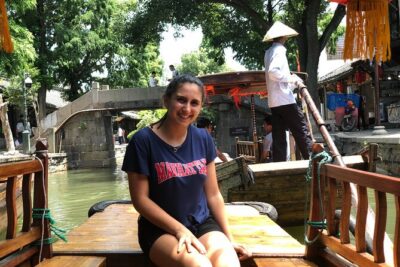
Shanghai Private Tour: Zhujiajiao Water Town and Boat Ride
Read our review →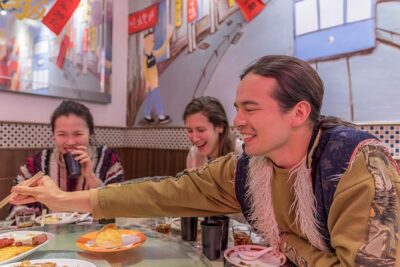
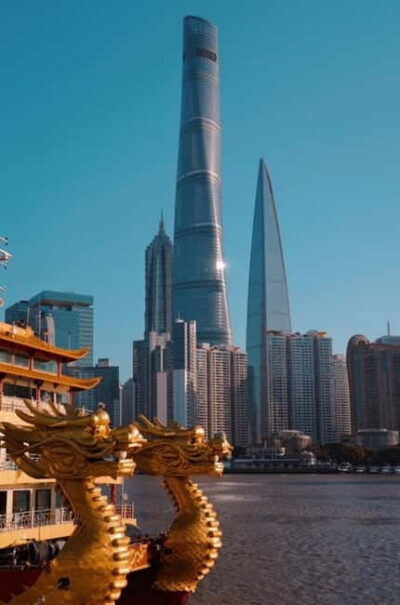
Huangpu Night Cruise: Cozy Vibe & Modern Shanghai Glow
Read our review →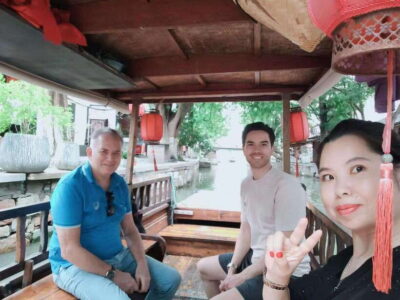
Browse the lists this tour appears in