Reviewed · BEIJING TOURS
Private Excursion Tour to East Qing Tombs from Beijing
The Eastern Qing Tombs give you a rare look at imperial China away from Beijing’s crowded center. I especially like the chance to see Qianlong’s elaborate tomb carvings and the lavish burial site of Empress Dowager Cixi, two places that reveal very different sides of Qing power. You also get the quiet setting and grand architecture without the crowds common at the Ming Tombs.
I like the practical setup: a private, air-conditioned car, hotel pickup and drop-off, entrance tickets, and an English-speaking guide are all included. Guides named Rita and Cynthia have been singled out for clear explanations and attentive service, though your assigned guide may be different.
The main drawback is the long road time. The round trip takes much of the day, and the tour lasts about eight to nine hours, with only about three hours listed at the tomb complex. Lunch is not included, and extra charges apply if the tour runs beyond nine hours.
Key Points
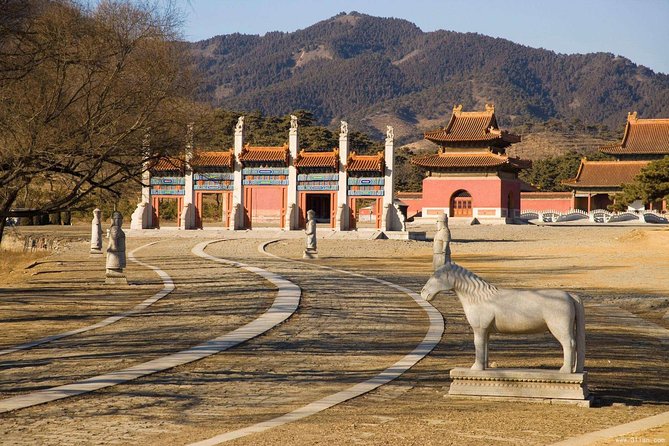
- Qing imperial grandeur: See one of China’s largest surviving royal burial complexes, built for the Manchu rulers of the Qing Dynasty.
- Qianlong and Cixi: Compare the ornate stonework linked with Emperor Qianlong to the extravagant tomb of Empress Dowager Cixi.
- Quiet alternative to the Ming Tombs: The Eastern Qing Tombs usually offer a calmer visit, giving you more space for photos and reflection.
- Private transportation: Hotel pickup, an air-conditioned vehicle, driver, fuel, tolls, parking, and hotel return are included.
- Useful historical context: Your English-speaking guide helps explain Qing design, Tibetan Buddhist elements, imperial power, and the tomb robberies of the 1920s.
- A full-day commitment: Plan on eight to nine hours, with a long drive and no included lunch or dinner.
Why the Eastern Qing Tombs Are Worth the Long Drive
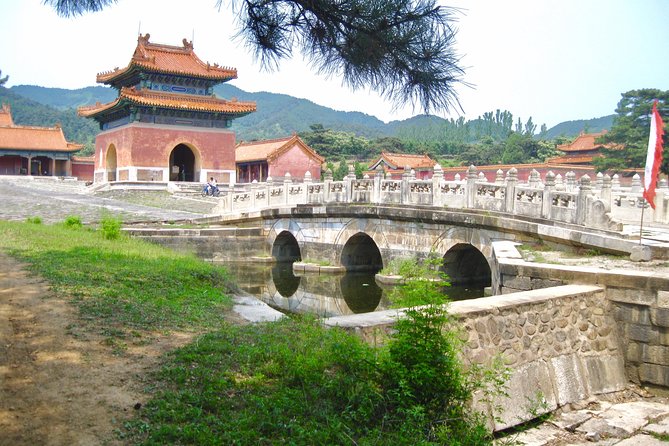
The Eastern Qing Tombs are not a quick add-on to a Beijing sightseeing day. They are a full-day outing to a broad royal burial complex built by the Qing Dynasty, which ruled China from the seventeenth century until 1912.
That distance is part of the appeal. Beijing’s best-known imperial sites can feel packed and tightly scheduled. Here, you get a quieter setting and more room to notice the scale of the stone avenues, ceremonial architecture, and burial grounds. The calm is not an accident. This is a place designed for imperial ceremony, not ordinary city life.
The Qing rulers were Manchurians from northeastern China. Their tombs were designed to match and surpass the splendor associated with the earlier Ming Dynasty. Your guide can help you read that ambition in the architecture, rather than leaving you to see only a succession of gates, carvings, and courtyards.
I would choose this tour if you have already seen Beijing’s major central sights and want a more focused look at dynastic history. It is also a strong choice for anyone with a special interest in the Qing court, imperial ritual, or historic architecture.
A few more Beijing days to line up
- From Beijing: Mutianyu Great Wall Tours with Options
★ 4.9 · 9,216 reviews - Beijing: Forbidden City Tour(Group/Private)-Tickets Included
★ 4.8 · 7,974 reviews - Beijing: T-Square & Forbidden City Group or Private Tour
★ 4.8 · 4,446 reviews
A Two-Hour Road Trip From Beijing
The drive is a serious part of the experience. One person described the journey as about two hours, so you should expect the road time to shape the day. The private, air-conditioned vehicle helps. You can travel directly from your hotel instead of making your way to a meeting point or sharing a bus with a large group.
Private transport also gives the outing a calmer rhythm. You are traveling only with your own group, guide, and driver. That matters on a day that already includes a long ride and a large historic site. You avoid waiting for other passengers and can keep the visit focused on your interests.
The tour includes fuel, tolls, and parking, which makes the quoted price easier to judge. You are not being asked to arrange separate transport or pay surprise road costs during the excursion. Hotel pickup and drop-off are also included, a useful benefit if you are staying in Beijing and do not want to navigate the city early in the morning.
The eight to nine-hour duration includes transportation and the visit itself. The listed stop is about three hours, so the remainder of the day is largely taken up by driving and transfers. I would not add another major attraction to the same day. Give the tombs the time they deserve, and leave room for traffic.
Entering the Qing Royal Burial Complex
At the tombs, your guide takes you through a site built to express royal rank and permanence. The complex is described as the largest and best-preserved surviving burial area for Chinese royal families. That scale is important: you are not visiting a single isolated grave, but a carefully planned imperial setting.
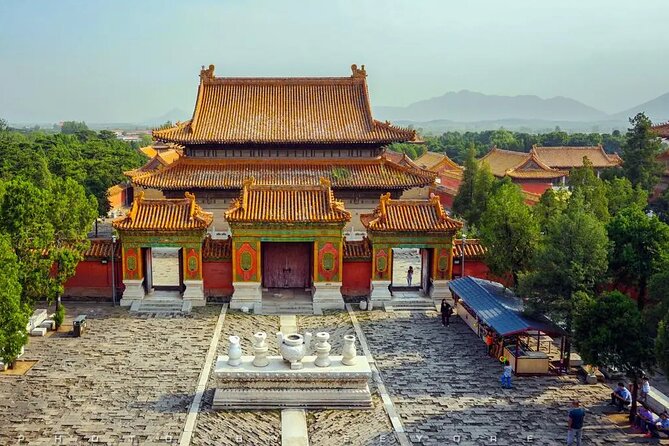
Expect broad ceremonial spaces, stone carvings, and architecture that recalls the grand style associated with the Forbidden City. The connection is useful for first-time visitors. If you have seen Beijing’s palace architecture, you may recognize similar formal details here, but the purpose is different. This is a place of burial, ritual, and remembrance rather than daily court life.
The quiet setting gives you time to look closely. You can study the carved stonework, the symmetry of the buildings, and the way the tombs project status. The peaceful atmosphere also makes the experience feel less like a checklist stop and more like a historical site you can absorb at your own pace.
Your guide is an important part of this visit. Without context, the tombs can blur together. With a good explanation, the design becomes a record of Qing politics, religion, family rank, and imperial self-image.
Qianlong’s Tomb and Its Tibetan Buddhist Details
Emperor Qianlong’s tomb is one of the main reasons to make the trip. The site is noted for its fine stone carvings and its Tibetan Buddhist influence, details that add something beyond the usual story of palace luxury.
Look for the way religious imagery and imperial decoration work together. The tomb was not only a final resting place. It was also a statement about the emperor’s authority and spiritual position. The carvings help show how the Qing court used art and religion to reinforce royal identity.
Qianlong was one of the most influential Qing emperors, and his tomb reflects that status. The decoration is meant to impress, but it also rewards patience. Your guide can point out details that are easy to miss if you simply walk through and take photographs.
This is a particularly good section for history fans and anyone interested in religious art. You do not need to be an expert before arriving. The value of the guide is that the symbolism and design can be explained as you stand in front of it, instead of being reduced to a few labels.
A very different day in Beijing:
- All-Inclusive Tour: Tiananmen Square, Forbidden City, Great Wall
★ 5.0 · 2,873 reviews - MuBus: Mutianyu Great Wall ENG/ESP/RUS Guided Bus Tour
★ 5.0 · 2,361 reviews - 4-Hour Small Group Tour to Forbidden City with Entry Tickets
★ 5.0 · 1,863 reviews - Beijing: Tiananmen Square Registration Service(Ticket)
★ 4.5 · 1,704 reviews
Cixi’s Lavish Tomb and the Story of Power
The tomb of Empress Dowager Cixi offers a different look at Qing rule. She was one of the most powerful women in Chinese history, and her burial place is described as exceptionally luxurious.
That extravagance gives the site a human edge. Imperial history can seem abstract when it is reduced to dates and dynasties. Cixi’s tomb shows how power was displayed through materials, decoration, scale, and ceremony. It also raises a practical question for you: how did the court want future generations to remember its leaders?
Your guide can place Cixi within the late Qing court and explain why her name remains so closely linked with imperial power. The tomb itself is the evidence. You see how status was expressed even after death, through a setting built to preserve rank and memory.
The contrast between Cixi’s lavish tomb and the religiously detailed tomb of Qianlong is one of the strongest reasons to visit with a private guide. You are not looking at one style repeated across the site. You are comparing personalities, periods, beliefs, and ideas of authority.
Tomb Robbery and the Site’s Troubled Past
The Eastern Qing Tombs are also tied to a major episode of twentieth-century history. Warlords robbed the tombs in the 1920s, bringing the complex wider attention.
That history changes the way you see the buildings. The site is not frozen in a perfect imperial past. It has been damaged, plundered, and pulled into the political disorder that followed the end of the Qing Dynasty. The tombs therefore tell two stories at once: the story of imperial construction and the story of what happened after the empire fell.
Ask your guide to explain the tomb robberies as you move through the complex. A private tour gives you a better chance to pause on subjects that interest you, rather than moving according to a large group’s fixed schedule.
This is also a good reminder to keep expectations realistic. You are visiting a historic complex with a complicated past, not a perfectly untouched royal showcase. The surviving architecture and carvings still make the journey worthwhile, but the site’s meaning includes loss as well as grandeur.
Three Hours at the Tombs: How to Use the Visit
About three hours are allocated to the tomb complex. That is enough for a focused visit, especially with a guide who keeps the history organized, but it is not an unlimited amount of time.
I would use the first part of the visit to understand the overall plan of the complex. Then focus on the sections connected with Qianlong and Cixi, since they offer the clearest contrast in design and imperial character. Save some time for stone carvings and photographs, especially if the quieter setting is one of your reasons for coming.
Wear smart casual clothing and sensible shoes. The dress code is listed as smart casual, and a day spent moving around a large historic site is easier when you are comfortable. Children must be accompanied by an adult, though most people can take part.
The site is described as quieter than the Ming Tombs. That does not mean you should rush. The lack of crowds is a chance to slow down, listen to the guide, and notice the formal details that make the complex different from Beijing’s central palaces.
What the Private Price Includes
The price is $176 per person. That is not the cheapest way to see the tombs, but the value depends on how many people are in your group and how much you value convenience.
The fee covers an English-speaking guide, private driver, air-conditioned vehicle, entrance tickets, hotel pickup and return, fuel, tolls, and parking. You are paying for a full-day private arrangement rather than only admission to a historic site.
For a couple or small group, the cost may make sense because you avoid arranging a long-distance taxi, buying tickets separately, and finding your way around a large complex. The guide also adds value by explaining the Qing rulers, Buddhist elements, Cixi’s tomb, and the 1920s robberies as you see the relevant places.
The price does not include lunch, dinner, accommodation, gratuities, or personal costs. Plan for your own meals and carry whatever personal items you need for the day. If the excursion goes beyond nine hours, an extra fee is requested, so keep an eye on the schedule and discuss any delay with the guide.
The Guide Can Shape the Whole Day
A private guide is not a small extra here. The site’s size and symbolism make explanation useful. You want someone who can connect architecture with Qing politics and explain why Qianlong’s and Cixi’s tombs deserve attention.
Rita is named as a guide who provided a pleasant and well-informed experience, and Cynthia is described as attentive and able to answer questions clearly. Those names give you a sense of the service standard associated with Catherine Lu Tours, but they do not guarantee which guide you will receive.
You can make the most of the private format by asking questions early. If you care most about architecture, request more detail on carvings and layout. If you prefer court history, ask your guide to focus on Qianlong, Cixi, and the final years of the Qing Dynasty.
The private setup also suits different learning speeds. You can pause for photographs, ask for a simpler explanation, or spend more time on one tomb without worrying about a bus group waiting for you.
Who Should Book This Excursion
I would recommend this tour to you if imperial history is a major reason for your Beijing visit. It is also a good fit if you have already seen the Forbidden City and want to understand how Qing royal culture looked beyond the capital’s palace walls.
Families can take part, provided children are accompanied by an adult. The private vehicle makes the day easier to manage than a large group outing, though the long drive may not suit very young children.
Photographers should appreciate the quiet setting and formal architecture. The nearly empty atmosphere described for the site gives you a better chance to frame the stone carvings, gates, and ceremonial spaces without a mass of people in the way.
I would think twice if you have only one or two days in Beijing, dislike long car rides, or want a food-focused day. This is a specialized history excursion, not a quick sightseeing stop. Lunch is not included, and the main site visit lasts about three hours within an eight to nine-hour day.
Cancellation and Practical Details
You receive confirmation when you book. The tour is private, so only your group takes part, and hotel pickup and drop-off are included.
Free cancellation is available if you cancel at least 24 hours before the experience start time. Cancellations made less than 24 hours in advance are not refunded, and changes within that period are not accepted. The cut-off follows local Beijing time.
Most people can participate, but children must be with an adult. Dress smart casual, prepare for a full day, and remember that meals and gratuities are separate from the tour price.
Should You Book the Eastern Qing Tombs Tour?
Book it if you want a quiet, serious look at Qing imperial burial culture and value having transport, tickets, and a private English-speaking guide handled in one package. The strongest parts are the contrast between Qianlong’s carved and Buddhist-influenced tomb, Cixi’s lavish burial site, and the chance to see grand architecture with fewer people around.
Skip it if your Beijing schedule is tight or a two-hour drive each way sounds exhausting. At $176 per person, the tour earns its price through privacy, convenience, and historical guidance, not through a long list of stops.
For the right visitor, this is one of those days when the road is part of the bargain. You trade time in the car for a calmer, more revealing look at the Qing world.
FAQ
How long does the Eastern Qing Tombs tour last?
The excursion lasts approximately eight to nine hours. The visit to the Eastern Qing Tombs itself is listed as about three hours, with the rest of the day covering transportation and transfers.
Does the tour include hotel pickup and drop-off?
Yes. Hotel pickup and drop-off in Beijing are included.
Is transportation private?
Yes. The tour uses an air-conditioned vehicle with a private driver, and only your group participates.
Is an English-speaking guide included?
Yes. An English-speaking tour guide service fee is included in the tour price.
Are entrance tickets included?
Yes. Entrance tickets to the Eastern Qing Tombs are included.
Are meals included?
No. Lunch and dinner are not included, so you must pay for meals separately.
What is not included in the price?
Accommodation, lunch, dinner, gratuities for the guide and driver, and personal costs are not included.
What happens if the tour lasts longer than nine hours?
An extra fee is requested after nine hours.
Can children join the tour?
Yes. Children can participate, but they must be accompanied by an adult.
Can I cancel for a full refund?
Yes, if you cancel at least 24 hours before the experience start time. Cancellations made less than 24 hours before the start time are not refunded.
Recently listed in Beijing
- Small-Group 1-day Jinshanling Great Wall 6km Hiking tour★ 5.0 · 4 reviews
- Temple of Heaven Tickets Booking★ 5.0 · 4 reviews
- Jinshangling Great Wall Of Beijing Tickets And Other Option★ 4.0 · 4 reviews
- Beijing Night Walking Tour★ 5.0 · 4 reviews
- Beijing: Private Biking Tour Along Central Axis of Beijing★ 4.8 · 4 reviews
- Private Layover Tour to Mutianyu Great Wall from Beijing Airport★ 5.0 · 5 reviews
- Fantastic Private Trip to Mutianyu Great Wall (English Service)★ 5.0 · 5 reviews
- Beijing: Private Tour to Jinshanling Great Wall with Option★ 4.7 · 5 reviews
Beijing Tours, compared.

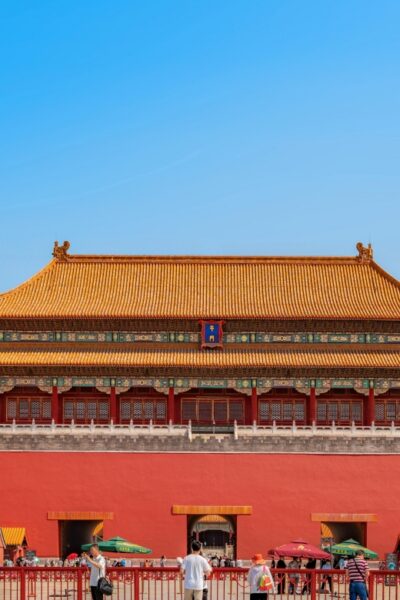
Forbidden City Tour(Group/Private)-Tickets Included
Read our review →
T-Square & Forbidden City Group or Private Tour
Read our review →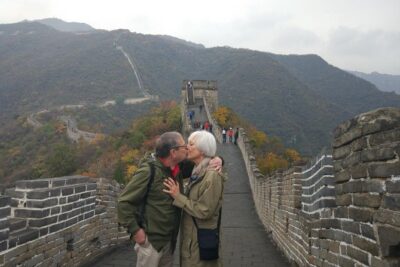
All-Inclusive Tour: Tiananmen Square, Forbidden City, Great Wall
Read our review →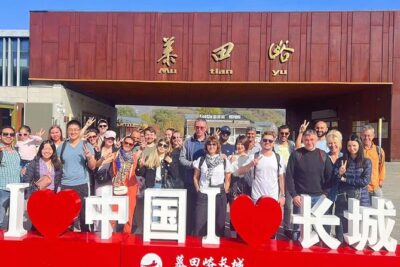
MuBus: Mutianyu Great Wall ENG/ESP/RUS Guided Bus Tour
Read our review →
4-Hour Small Group Tour to Forbidden City with Entry Tickets
Read our review →