
Reviewed · SHANGHAI TOURS
Shanghai: Private Tour of the Shanghai Museum
The most rewarding part of this private Shanghai Museum tour is the explanation behind the objects. Bronze vessels, blue-and-white porcelain, and carved jade can look beautiful on their own, but a good guide shows you what they meant in daily life, ritual, government, and burial customs.
I like two things in particular: the tour gives you a clear route through several major collections, and guides such as Vicky and Linda Chen are praised for patient answers, strong English, and lively background stories. The main consideration is time. Three hours gives you a useful introduction, not a full visit to every gallery, and special exhibitions cost extra.
Key points to know before booking
- Bronze vessels from the Shang and Zhou dynasties: Learn how ritual objects also reflected rank, power, and political order.
- Ming and Qing porcelain: See how blue-and-white designs developed and why Chinese ceramics mattered far beyond the museum walls.
- Jade with social and spiritual meaning: Discover why jade represented purity and moral integrity, not simply wealth or decoration.
- Private attention from your guide: The route can respond to your questions and interests, with English and Chinese guiding available.
- A focused three-hour format: Ideal for a first visit, though you will need more time if you want every gallery.
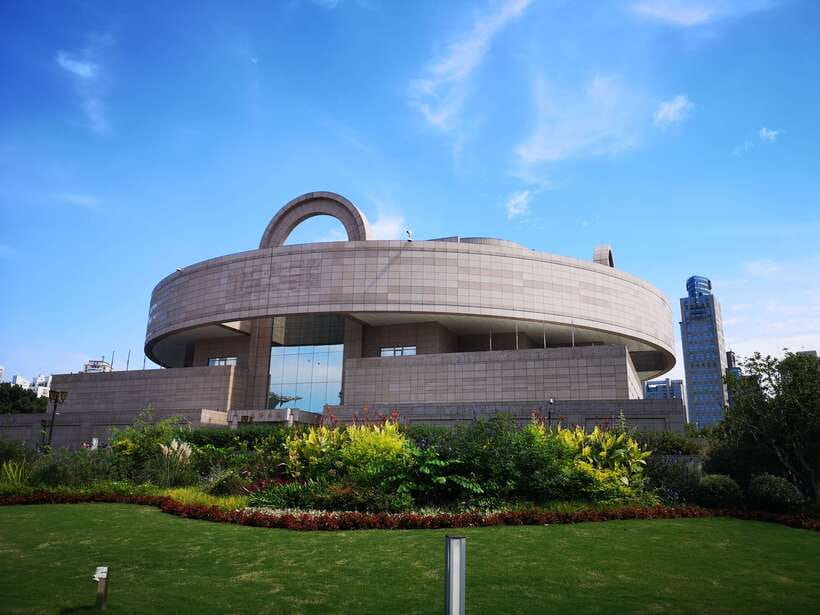
- Simple meeting plan: Meet at the Shanghai Museum East Wing entrance, where your guide holds a sign with your name.
Why a guided visit helps at the Shanghai Museum
The Shanghai Museum holds objects from across Chinese civilization, but museums of this size can be hard to read without context. A bronze vessel may seem like a finely decorated container. A guide can explain how it worked in ceremonies and what its design said about the person or group using it.
That is the real value here. You are not simply moving from one display case to the next. You are given a framework for understanding why certain materials mattered, how artistic methods changed, and how objects connected to Chinese society.
The format is private, so you can ask questions as they occur to you. The guides have also shown flexibility with personal interests. If ceramics catch your attention, you can ask for more detail there. If a particular ritual object puzzles you, you have someone beside you who can stop and explain it rather than following a fixed speech.
The tour is offered in Chinese or English. English ability matters in a museum visit, and the strongest guide feedback focuses on clear explanations, patient answers, and a broad command of the subjects on display. Vicky received special praise for her knowledge of Chinese ceramics and for answering questions in excellent English. Linda Chen was also praised for combining background stories with an easy, friendly manner.
More Museum Tours in Shanghai:
- Shanghai: Xintiandi, CCP Museum and French Concession Tour
★ 5.0 · 9 reviews - Shanghai: Natural Museum tickets with guide(optional)
★ 4.8 · 8 reviews - Private Shanghai Day Tour: Shanghai Museum, Yu Garden, Bund, Huangpu Cruise
★ 5.0 · 6 reviews
Meeting your guide at the East Wing
You meet at the entrance of the Shanghai Museum East Wing. Your guide holds a sign with your name, which keeps the arrival simple, especially if the museum entrance is busy or unfamiliar.
Hotel pickup is not included, so you make your own way to the museum. Build in enough time to arrive at the correct entrance. The activity information specifically calls for the East Wing, not a hotel lobby or another city meeting point.
Bring your passport or ID card. Cameras are not allowed, so do not plan this as a photography visit. That rule may disappoint you if you like to record every display, but it also keeps your attention on the objects and your guide’s explanation.
The museum entry is included in the $60 per person price. Drinks are not included, and entry to special exhibitions is separate. These details are easy to overlook, so check the day’s exhibition plans before booking if a temporary show is high on your list.
Bronze vessels, weapons, and the language of power
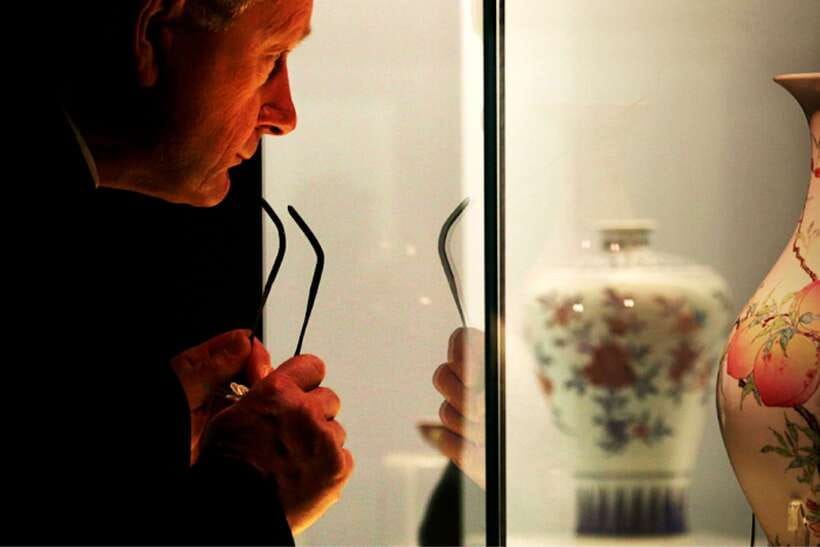
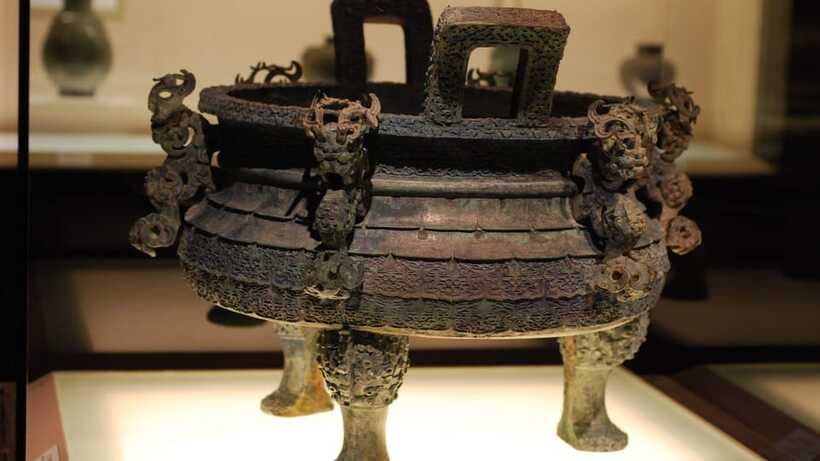
The tour begins in the Bronze Gallery, with objects from the Shang period, dated from 1600 to 1046 BC, and the Zhou period, dated from 1046 to 256 BC.
This first section gives you the best historical foundation for the rest of the visit. Your guide explains why bronze was so important in ancient China. These objects were not made only for practical use. Ritual vessels and weapons could express authority, social rank, religious duty, and the structure of government.
Look closely at the forms and decoration. A vessel’s shape, surface, and intended use all carried meaning. Your guide can help you connect the craftsmanship with the society that produced it, including the advanced casting methods used to create these objects.
I like starting here because it prevents the museum from becoming a parade of attractive antiques. You begin by seeing art as part of a working system of ceremony and power. The bronze gallery also gives you useful vocabulary for understanding later objects, since the relationship between material, status, and ritual appears again in other parts of the museum.
The limitation is that bronze can be demanding if you prefer painting or ceramics. Some pieces may look similar at first glance. Give your guide time to point out differences in form and purpose. The explanation is what turns this section from a quick walk-through into a worthwhile lesson.
Ming and Qing ceramics, with time for the blue-and-white pieces
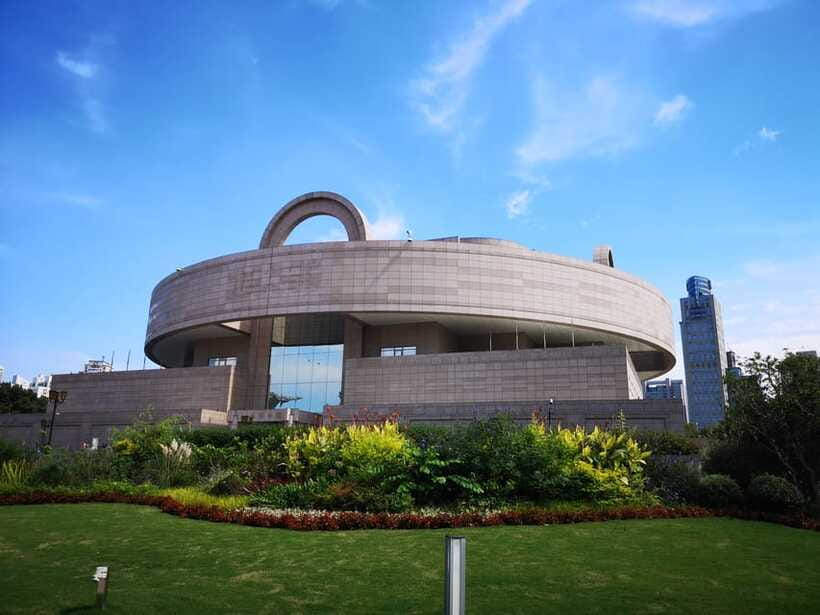
Next comes the Ceramics Gallery, where the focus shifts to porcelain from several periods, especially the Ming and Qing dynasties.
This section should appeal to almost anyone, even if you do not normally visit ceramics museums. The clean shapes, fine surfaces, and detailed decoration are easy to appreciate, while the guide supplies the wider story: how ceramic styles changed, how outside influences affected design, and how makers developed new ways to use color and pattern.
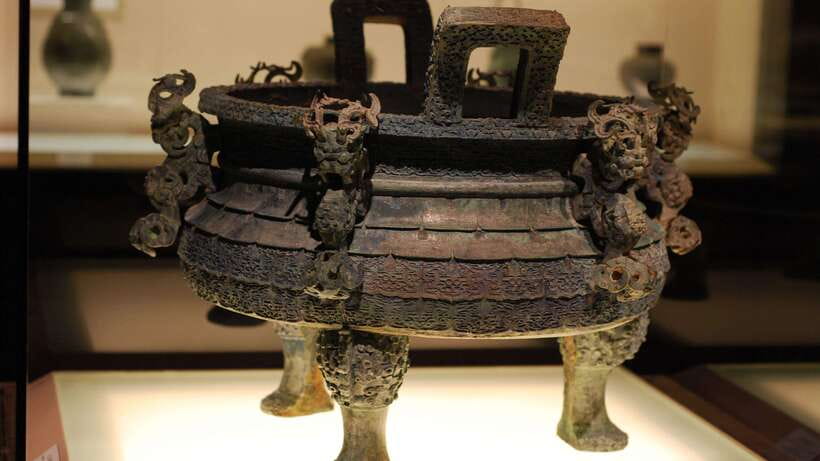
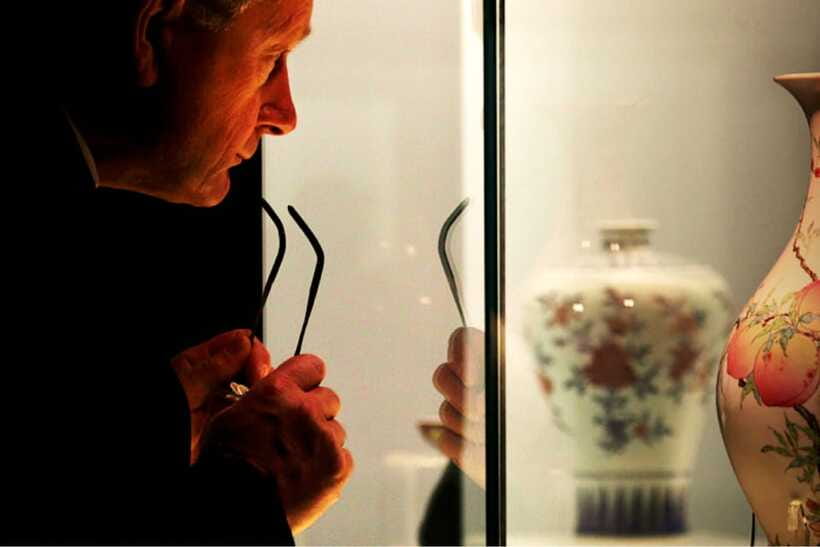
Set aside time for the famous blue-and-white porcelain. The simple color combination can look familiar to modern eyes, but the pieces have a long artistic and historical importance. Your guide helps you notice the fine painted designs and place them within the development of Chinese ceramic art.
Vicky’s special strength, according to the information available for this tour, is Chinese ceramics. If you are especially interested in porcelain, say so at the start. A private tour gives you a better chance of getting more detail on glazes, forms, decorative patterns, or the differences between periods than you would on a general group visit.
Ceramics are also a good point in the route to ask practical questions. You might want to know why blue-and-white decoration became so important, how styles changed between dynasties, or how an object’s design reflects the period that made it. You do not need specialist training to benefit. The guide’s job is to make the display understandable without turning it into a lecture packed with technical terms.
A few more Shanghai days to line up
- Authentic Local Food Tour in Central Shanghai
★ 5.0 · 1,382 reviews - Zhujiajiao Water Town and Shanghai City Private Day Tour
★ 5.0 · 1,016 reviews - Private Shanghai Full Day City Tour with Old and New Highlights
★ 5.0 · 995 reviews - Shanghai: Hop-on Hop-off Bus Ticket and Optional Attractions
★ 3.4 · 692 reviews
Jade carvings and the meaning of purity
The Jade Gallery brings a different mood and a different set of ideas. The collection includes jade objects dating back thousands of years, from burial items to ornamental pieces.
Jade mattered in Chinese culture for more than its color or hardness. It was linked with purity and moral integrity. That symbolism helps explain why jade appeared in important personal, ceremonial, and burial objects.
Your guide discusses the methods used to carve the material, which can make the pieces more impressive. Fine jade work requires patience and control, and the finished object often gives little hint of the effort behind it. Look for the relationship between the raw material, the shape chosen by the maker, and the symbolic role of the finished piece.
This gallery is a useful contrast with the Bronze Gallery. Bronze speaks strongly to ritual and authority, while jade brings questions of character, virtue, status, and the treatment of the dead. Seen together, the galleries show how materials could carry social and moral meaning.
The jade displays may be less immediately familiar than the porcelain, so listen for the cultural context. Without it, you could easily see these as small decorative carvings. With it, you begin to understand why jade held such a lasting place in Chinese tradition.
Other galleries and the value of a flexible route
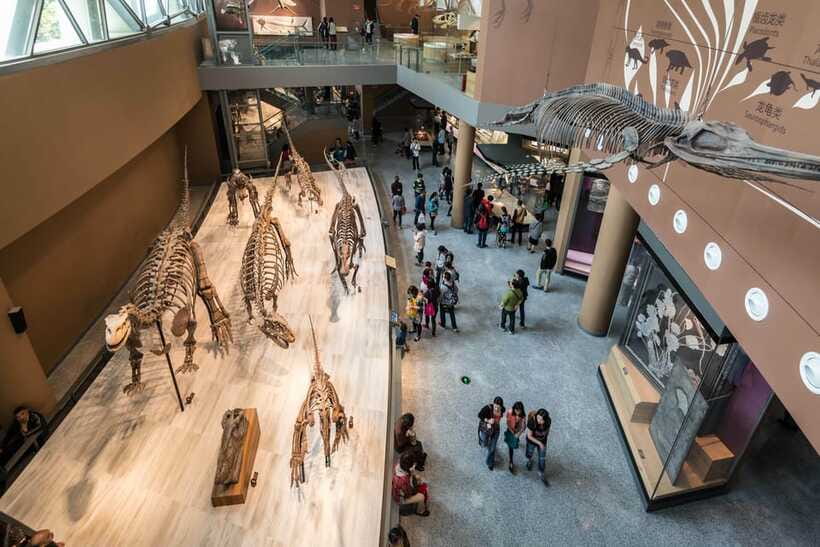
After the main bronze, ceramics, and jade sections, your guide introduces you to other galleries available on the day. The exact selection can depend on museum access and what interests you most.
That flexibility is one of the better reasons to choose a private tour. You are not locked into a single pace. If you have already studied Chinese pottery, you can spend more time with bronze or jade. If this is your first introduction to Chinese art, your guide can offer a broad overview and point out which galleries deserve a longer independent visit.
Do not expect to see every object in the museum during three hours. That is not a flaw, but it is important to set the right goal. Think of this as a guided foundation. You finish with a clearer sense of the collections and can then return to the areas that caught your attention.
The final part includes a short wrap-up and time for questions. Use it. Ask your guide which sections you should explore next, what resources are available, and whether any special exhibitions might suit your interests. Since special exhibition entry is not included, this is also a good moment to clarify what requires an additional ticket.
What the guide adds to the experience
The strongest part of this activity is the human explanation. Tom has been described as thorough, entertaining, and very helpful with arrangements. Vicky is noted for her patience, strong English, and command of many subjects. Linda Chen is praised for her enthusiasm, clear explanations, anecdotes, and ability to adjust the visit around personal interests.
You should still remember that guide quality can vary by assignment. The tour is offered with a live Chinese or English guide, but the specific guide you receive is not guaranteed in the activity details. You can, however, state your interests when arranging the visit and ask questions as you go.
The private format also helps if you dislike being hurried. You can pause at a difficult object, ask for a simpler explanation, or request more background on a dynasty or material. That kind of back-and-forth is hard to get on a large group tour.
Is $60 per person good value?
At $60 per person, this is not the cheapest way to enter a museum. The entry ticket alone is included, but the main cost is the guide’s time and interpretation.
I think the price makes sense if you want to understand the objects rather than simply see them. The Shanghai Museum’s collections cover a huge span of Chinese art, and three hours with a private guide can save you from wandering without a plan. It is especially good value for a first visit, for anyone with limited time in Shanghai, or for people who want explanations in English.
The value is weaker if you are already comfortable reading Chinese art history and prefer to move at your own pace. You may also want to budget extra if a special exhibition interests you, since that entry is not part of the tour.
Free cancellation up to 24 hours before the start gives you some planning room, and you can reserve now and pay later. The activity lasts three hours, with starting times subject to availability. It is wheelchair accessible, which helps make the format practical for more visitors.
Who should book this Shanghai Museum tour?
I would choose this tour if you:
- Want a clear first introduction to Chinese bronze, ceramics, and jade
- Prefer a private guide who can answer questions directly
- Have about three hours and want a focused museum visit
- Care about cultural meaning as much as visual beauty
- Want an English or Chinese guided experience
- Are especially interested in Chinese porcelain, ritual objects, or jade carving
I would skip it if you want a full-day museum study, guaranteed access to every collection, or a photography-focused outing. Cameras are not allowed, and three hours will leave more to see.
Final verdict: a smart first visit for art and history newcomers
Book this Shanghai Museum tour if you want the museum to make sense, not just look impressive. The bronze, ceramics, and jade route gives you a strong base, while the private format lets you shape the conversation around your interests.
The best reason to go is the guide’s interpretation. Details from Vicky, Linda Chen, and Tom show the kind of service this experience aims to provide: patient answers, clear English, personal attention, and stories that make objects easier to remember.
Just arrive at the East Wing with your passport or ID, leave the camera behind, and keep your expectations realistic. This is a focused three-hour introduction, not a complete museum survey. For a first look at one of Shanghai’s leading museums, that focus is a strength.
FAQ
How long does the Shanghai Museum private tour last?
The tour lasts three hours.
How much does the tour cost?
The listed price is $60 per person.
What does the tour include?
The price includes a live guide and entry to the Shanghai Museum.
Where do I meet the guide?
Meet at the entrance of the Shanghai Museum East Wing. The guide holds a sign with your name.
Is the tour available in English?
Yes. Live guiding is available in English and Chinese.
Do I need to bring identification?
Yes. Bring your passport or ID card.
Are cameras allowed in the museum?
No. Cameras are not allowed during this activity.
Recently listed in Shanghai
- Private Tour of Shanghai Highlights and Zhujiajiao Water Town in One Day★ 5.0 · 5 reviews
- 4-Hour Private Shanghai Shopping Tour with Local Expert★ 5.0 · 5 reviews
- Shanghai to Beijing Bullet Train Ticket with Hongqiao Station Transfer★ 5.0 · 5 reviews
- Shanghai Hongqiao Airport To Shanghai Hotel:Private transfer with Meet service★ 5.0 · 5 reviews
- Shanghai Coffee & Breakfast Tour★ 5.0 · 5 reviews
- Private Shanghai Hightlight Day Tour with English-speaking Guide★ 4.5 · 5 reviews
- Xitang Water Town Self-Guided Tour from Shanghai with Private Transfer★ 5.0 · 5 reviews
- 4-Hour Private Shanghai Walking Tour of Former French Concession★ 5.0 · 5 reviews
Shanghai Tours, compared.
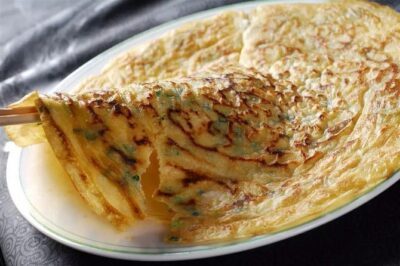
Authentic Local Food Tour in Central Shanghai
Read our review →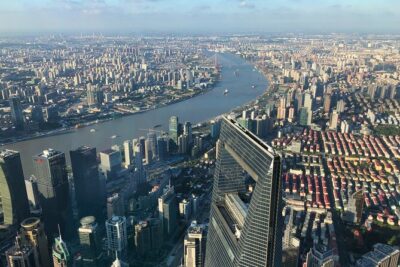
Zhujiajiao Water Town and Shanghai City Private Day Tour
Read our review →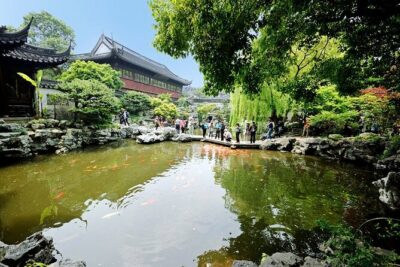
Private Shanghai Full Day City Tour with Old and New Highlights
Read our review →
Hop-on Hop-off Bus Ticket and Optional Attractions
Read our review →
Shanghai Private Tour: Zhujiajiao Water Town and Boat Ride
Read our review →
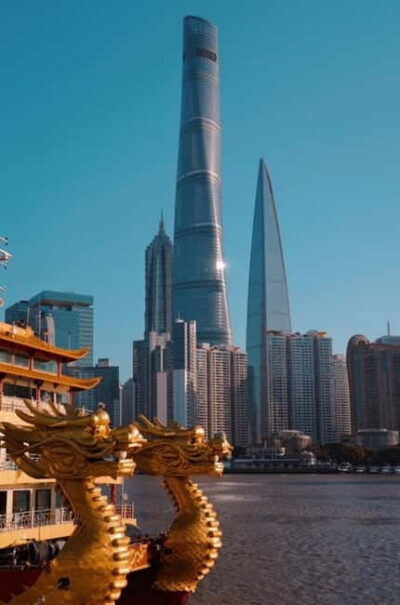
Huangpu Night Cruise: Cozy Vibe & Modern Shanghai Glow
Read our review →
Browse the lists this tour appears in