
Reviewed · TERRACOTTA WARRIORS TOURS
Terracotta Tickets With Professional Guide In English / Italian
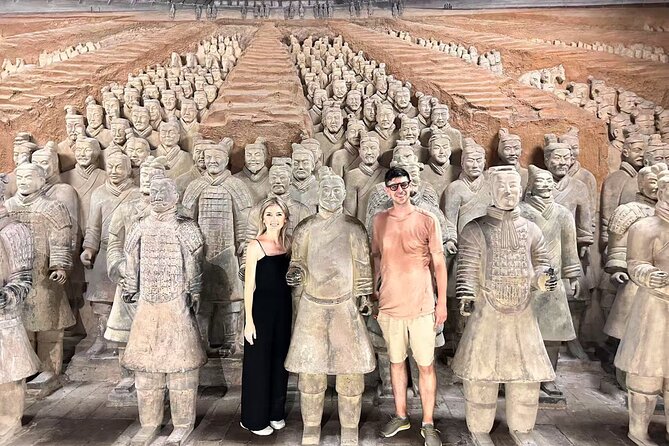
The most striking part of this six-hour visit is the chance to see Pit 1 with its huge ranks of life-sized warriors and horses, then hear the story behind the army from a guide who can point out details you would likely miss alone. The visit also includes the bronze chariots near Qin Shi Huang’s tomb, though entry to the mausoleum area is not included in the listed price.
I like the private format, since your group gets the guide’s full attention rather than being folded into a large crowd. I also like the English or Italian guiding, especially for a site where military ranks, burial customs, and Qin-era engineering can otherwise blur into a sea of clay figures.
The main catch is simple: the $47.20 price includes admission to the Terracotta Warriors museum, but not the mausoleum section. You also need to reach the meeting point at the museum yourself, so this is a guiding and ticket service, not a full city pickup tour.
Key points to know before booking

- Pit 1 is the star of the visit: See the vast battle formation with more than 6,000 life-sized warriors and horses.
- Pit 2 rewards a slower look: Its archers, cavalry, chariots, and infantry reveal more complex military planning.
- Jenny is a noted guide for this experience: She guides in English and Italian, helps with the best viewing spots, and uses short routes through the museum.
- The tour is private: Only your own group takes part, which makes questions and pacing easier.
- The mausoleum ticket costs extra: The tomb mound and bronze chariots are part of the planned visit, but admission is not included.
- You meet at the museum ticket office: Plan your own transport to Qinling Bei Lu in Lintong District.
Why a guide matters at the Terracotta Warriors
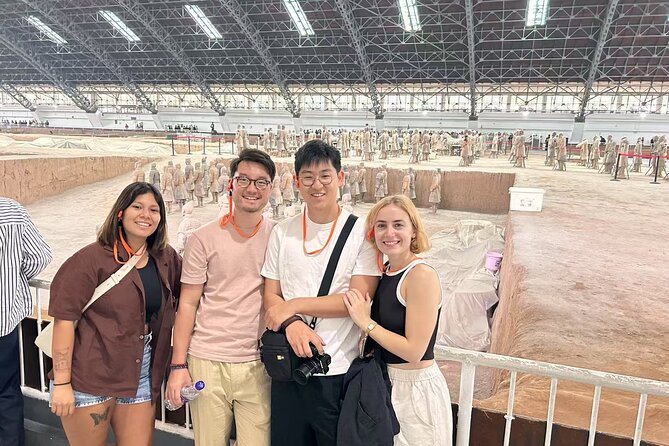
The Terracotta Warriors site is easy to admire and surprisingly easy to misunderstand. You see hundreds of figures lined beneath a vast roof, but without context it can be hard to tell which figures are infantry, cavalry, officers, archers, or part of a command unit.
A good guide turns the pits from a grand spectacle into a readable military scene. You can learn why the figures were arranged in battle formation, how the army related to Qin Shi Huang’s burial complex, and why details such as armor, rank, posture, and weapon position matter.
The guide also helps you use your limited time well. This is a large museum complex, and the most dramatic views do not always come from the first place you reach. Jenny is specifically associated with this experience and is praised for showing good photo positions, using short routes, and explaining the site with energy without rushing the group.
You should still keep your expectations practical. Skip-the-line access is promoted as part of the reason to book ahead, but the information provided does not spell out exactly how much time you will save or how access works on a particular day. Your guide handles the ticket process at the meeting point, but you should allow extra time for getting to the museum and locating the correct ticket office.
More Terracotta Warriors trips:
- Mini Group Xian Day Tour to Terracotta Army, City Wall, Pagoda and Muslim Bazaar
★ 5.0 · 1,320 reviews - Xi’an: Terracotta Army Mini Group or Private Tour
★ 5.0 · 926 reviews - Xian: Terracotta Army Ticket & Guided Bus Tour with Options
★ 4.6 · 579 reviews
Pit 1, the army at full scale
Pit 1 is the main event. It is the largest excavation pit and contains more than 6,000 life-sized warriors and horses arranged in battle formation. From the viewing area, the repeated rows create a powerful sense of scale, but the real pleasure comes from looking at individual figures within that larger pattern.
You might notice differences in posture, clothing, armor, and position. The army is not a simple collection of identical statues. The figures represent different jobs and ranks, and a guide can explain how those roles fit together.
I would give Pit 1 the most time and attention, even if the sight feels overwhelming at first. Look beyond the front rows and into the damaged sections, where archaeologists continue to work with fragments and broken formations. The contrast between the orderly ranks and the visible evidence of damage helps you understand that this was an ancient burial project, not a perfectly preserved parade ground.
The view from the main gallery is excellent, but a guide can help you find better places for photographs and explain what is worth framing. Jenny’s approach, based on the information available, includes showing visitors where to get the clearest views rather than simply walking from one display to the next.
Pit 2 and the military details
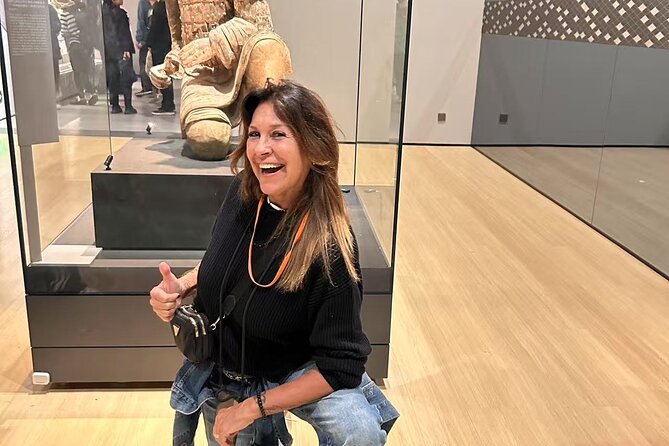
Pit 2 is smaller than Pit 1 but more varied. It includes cavalry, chariots, archers, and infantry units, making it useful for understanding how the Qin army was organized.
The kneeling archer is one of the most recognizable figures here. Its pose allows you to see details that are harder to appreciate in the massed rows of Pit 1. This is where a guide’s explanation earns its keep. You can learn why the figure is kneeling, how archers fit into the formation, and what makes certain pieces especially well preserved.
Pit 2 can also feel less immediately dramatic because parts of the excavation remain incomplete. That is not necessarily a weakness. Open areas and unfinished sections show that the site is still being studied, and they give you a clearer sense of how archaeological work differs from a finished museum display.
If you are short on energy, do not rush through this pit simply because Pit 1 made the biggest impression. The varied military units here provide some of the clearest detail in the whole complex. Ask your guide to identify the figures that best show differences in rank and function.
Pit 3 and the command post

Pit 3 is the smallest of the three main pits. It is believed to have served as a high-ranking command post, with officers and a ceremonial chariot.
Its scale makes it a quieter stop. You will not get the same broad visual impact as in Pit 1, but its smaller arrangement gives the guide a chance to explain how command may have been represented within the larger army.
I find this kind of stop useful because it prevents the visit from becoming a single repeated image of rows of soldiers. Pit 3 adds structure to the story. It suggests that the buried army included not just fighting units, but an organized hierarchy with leadership and ceremony.
The information provided allows about two hours for the Terracotta Warriors museum portion. That is enough time to see the three main pits with a guide, though your exact pace will depend on crowd levels and how many questions you ask. The private format helps here. You can slow down for the kneeling archer or move along when your group has had enough of a particular display.
A few more Xian days to line up
- Xi’an Evening Food Tour by TukTuk
★ 5.0 · 715 reviews - Customized Private Day Tour of Terracotta Warriors and Xi’an
★ 5.0 · 513 reviews - Xi’an: Exclusive Terracotta Army Tour & Local Family Lunch
★ 4.9 · 484 reviews - Half-Day Mini Group Xian Tour to Terracotta Warriors Museum
★ 5.0 · 467 reviews
The Qin Shi Huang mausoleum and bronze chariots
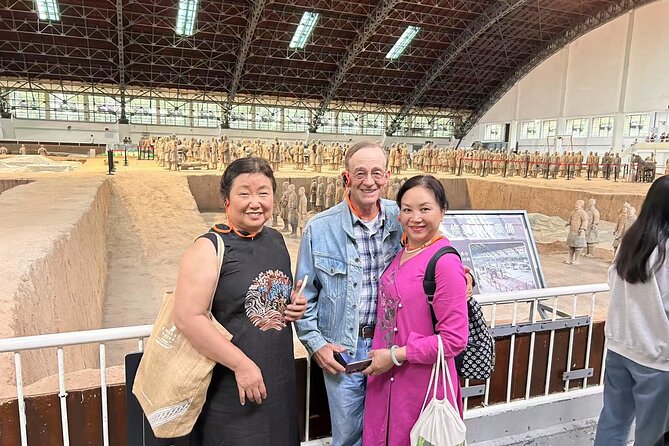
The second part of the experience takes you to the Mausoleum of the First Qin Emperor. The main tomb remains unexcavated. You can view the exterior mound, covered with vegetation, and walk around the park-like grounds, but you cannot enter the tomb itself.
That limitation matters. If you expect to walk into Qin Shi Huang’s burial chamber, you will be disappointed. The interior is sealed for preservation, and what you see is the tomb mound from outside.
The more rewarding stop here is the separate exhibition hall containing two bronze chariots and horses. Each is about half life-size and drawn by four bronze horses. Their small scale does not make them minor objects. Their fine detail and metalwork offer a close look at ancient technical skill, quite different from the massed clay figures in the pits.
This section is allotted about two hours, but admission is not included in the $47.20 price. Confirm the extra ticket cost before you go, since the published tour price covers the Terracotta Warriors museum admission but excludes the mausoleum section.
The mausoleum visit also changes the tone of the day. The pits are crowded with visual information and large indoor galleries. The tomb mound area gives you more open space and a chance to think about the scale of the whole burial project. You will not see the hidden palace and treasures said to lie inside, but the sealed mound is an important part of the story.
A private tour with English or Italian guidance
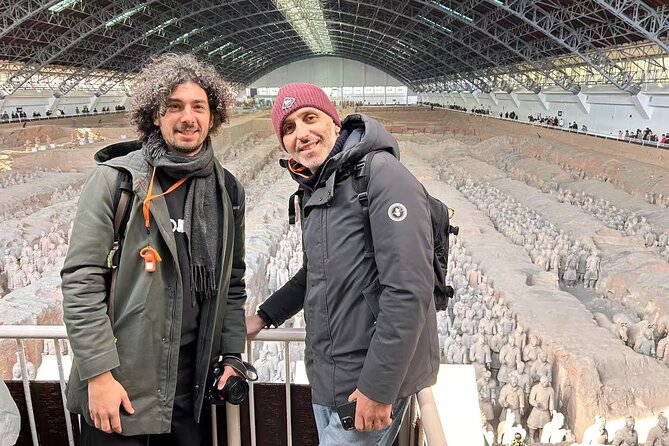
The private setup is one of the strongest practical features. Only your group takes part, so you can ask for clarification, pause at a favorite figure, or keep moving if a room feels too crowded.
The listed languages are English and Italian. Jenny is named in connection with the experience and is described as an English-speaking guide who also speaks Italian. Her style appears to combine history with practical help: she points out photo locations, uses short routes, and keeps the visit moving when time is limited.
That combination is useful at a major archaeological site. You do not need a lecture at every object, but you do need enough explanation to understand why the figures were made, how the pits differ, and what the tomb complex meant to Qin Shi Huang.
The experience is described as a guided visit with time to explore at your own pace. That wording suggests a good balance, but you should still tell the guide early if you want more time for photographs or more historical detail. The total duration is approximately six hours, with about two hours assigned to each main stop and remaining time for movement and the structure of the visit.
What the $47.20 price delivers

At $47.20 per person, this is not simply a museum admission ticket. You are paying for the ticket service, a professional guide, and a private group arrangement.
The value is strongest if you are visiting Xi’an without a local identification document or Chinese payment method. Booking major attractions in China can be awkward from abroad, and popular sites can involve long waits. Having the entry handled through a local service reduces that uncertainty.
The guide is also part of the value. The difference between seeing clay figures and understanding the Qin army is considerable. You can visit alone and enjoy the spectacle, but you may miss the military formations, the role of Pit 3, and the fine differences among the figures.
The price is less attractive if you only want a quick admission visit or if you already have a specialist guide. It is also important to add the mausoleum admission, which is not included. For a full day of sightseeing, check the extra cost and your transport plan before booking.
Meeting point, timing, and practical planning
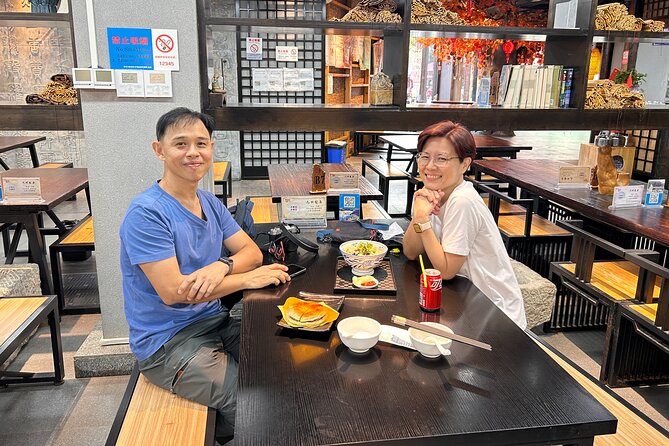
You meet at the Museum of the Terra-cotta Warriors and Horses of Qin Shihuang ticket office on Qinling Bei Lu in Lintong District, Xi’an. The activity ends back at the meeting point.
This location detail is important. The experience does not list hotel pickup, airport pickup, or city-center transport. You need to arrange your own way to the museum and arrive at the correct ticket office.
The published opening information covers Monday through Saturday from 6:00 AM to 11:30 PM for the stated operating period, from April 7, 2025 through February 14, 2027. Those hours are broad, but your booked start time still controls the cancellation deadline and the guide’s schedule.
Your mobile ticket is convenient, especially if you are managing several China bookings on your phone. Confirmation is provided at booking. I would keep the confirmation easy to access and arrive with enough time to identify the meeting point rather than trying to find it at the last minute.
Service animals are allowed, and the experience is near public transportation. Most people can participate, but the site is large and involves substantial walking through museum areas and outdoor grounds. The details provided do not specify wheelchair routes, seating, or the exact surface conditions, so ask the provider if you have mobility concerns.
Food and hands-on extras
The description also refers to optional cultural touches after the museum, including trying to make your own terracotta finger and tasting local Biangbiang noodles and drinks.
These details are appealing because they connect the archaeological visit with everyday Xi’an culture. Biangbiang noodles are a local specialty, and a simple hands-on clay activity gives you a playful way to remember the figures after seeing thousands of them in formal displays.
Still, treat these elements as extras rather than the core promise of the tour. The clearest confirmed parts are the museum visit, the guide, and the mausoleum-related sights. The available information does not explain exactly how the food tasting and finger-making activity are scheduled, included, or priced. If those extras are important to you, confirm the details before you pay.
Who will get the most from this experience
I would choose this tour if you are visiting the Terracotta Warriors for the first time and want the site explained in clear English or Italian. It also suits anyone who dislikes sorting out Chinese attraction tickets, payment systems, and entry procedures alone.
Families and small groups may appreciate the private format. A guide can adjust the pace, answer questions from children, and help older relatives find manageable routes. One guide associated with the experience is also described as helping with bags, which suggests a considerate approach, though you should not assume that every guide will provide the same personal assistance.
History fans will appreciate the detail in Pit 2 and Pit 3, while casual sightseers can rely on the guide to identify the essential views. If you have only a short window in Xi’an, the guide’s ability to focus on the most important sections can be especially useful.
I would think twice if you want transportation included, a full city tour, or guaranteed access to the inside of Qin Shi Huang’s tomb. None of those is part of the stated service.
Cancellation and final booking advice
You can cancel for a full refund up to 24 hours before the experience starts. Cancellations or changes made within 24 hours are not accepted for a refund, and the cut-off uses local time.
I would book this experience if you want an efficient, explained visit to one of China’s major archaeological sites and are comfortable arranging your own transport to the museum. The private English or Italian guiding, named guide Jenny, photo advice, and ticket support make the price reasonable for a first visit.
Before confirming, check three points: the exact meeting time, the extra admission for the mausoleum, and what is included in the food and clay-making portion. If those details fit your plans, this is a practical way to see the Terracotta Warriors without trying to decode the site on your own.
FAQ
How long does the experience last?
The experience lasts approximately six hours.
What language is the guide available in?
The guide is available in English or Italian. Jenny is specifically associated with the experience and is described as speaking both languages.
Where does the tour begin?
It begins at the Museum of the Terra-cotta Warriors and Horses of Qin Shihuang ticket office on Qinling Bei Lu in Lintong District, Xi’an.
Where does the activity end?
The activity ends back at the meeting point.
Is the Terracotta Warriors museum admission included?
Yes. Admission to the Museum of Qin Terra-cotta Warriors and Horses is included.
Is admission to Qin Shi Huang’s mausoleum included?
No. Admission to the Mausoleum of the First Qin Emperor is not included.
Is this a private tour?
Yes. Only your group participates in the activity.
Can I cancel for a full refund?
Yes. You can cancel at least 24 hours before the experience start time for a full refund. Cancellations within 24 hours are not refunded.
Is the experience suitable for most people?
Yes. Most people can participate, and service animals are allowed. The experience is near public transportation.
Recently listed in Xian
- Private High-speed Train Arrival Transfer: Xi’an Bei (North) Station to Hotel★ 5.0 · 5 reviews
- Customizable Terracotta Warriors Day Tour in Xian★ 5.0 · 5 reviews
- 1 Day Beijing to Xi’an Terracotta Warriors Tour by Air★ 5.0 · 5 reviews
- Xi’an Vegetarian Food Tour★ 5.0 · 5 reviews
- Xi’an: Hua Shan Mountain Private day Tour★ 4.9 · 5 reviews
- Xian: Terracotta Army Admission Ticket★ 4.6 · 5 reviews
- Private Tour Guide or Transfer for Terracotta Warriors and Xi’an★ 5.0 · 5 reviews
- Xi’an Private Day Tour Terracotta Army, Big Wild Goose Pagoda★ 4.0 · 5 reviews
Terracotta Warriors Tours, compared.

Mini Group Xian Day Tour to Terracotta Army, City Wall, Pagoda and Muslim Bazaar
Read our review →
Terracotta Army Ticket & Guided Bus Tour with Options
Read our review →
Customized Private Day Tour of Terracotta Warriors and Xi’an
Read our review →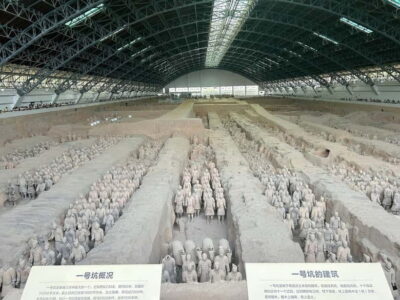
Exclusive Terracotta Army Tour & Local Family Lunch
Read our review →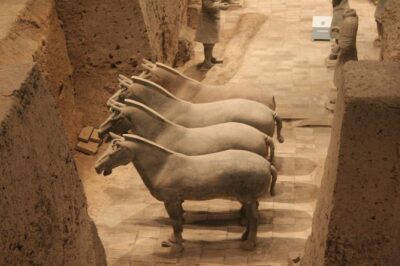
Half-Day Mini Group Xian Tour to Terracotta Warriors Museum
Read our review →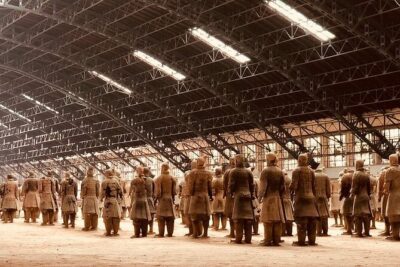

Private Customizable Terracotta Warriors Day Tour with Options
Read our review →Browse the lists this tour appears in