
Reviewed · TIBET TOURS
4 Days Lhasa City Essential Group Tour
Lhasa gives you some of Tibet’s most important sights in a compact four-day trip, from the hilltop Potala Palace to the prayer wheels and old lanes around Jokhang Temple. The schedule also makes room for Drepung, Sera, the Tibet Museum, and Norbulingka, so you see more than the postcard view.
I like the practical setup: your Tibet Travel Permit, hotel, airport or railway transfer, guide, and entrance tickets are handled together. I also like the small group limit of 12, plus the chance to choose a 3-star or 4-star hotel. The main caution is time. Four days is enough for Lhasa’s key sights, but not enough for a slow visit or an extended trip beyond the city.
Key points to know before booking
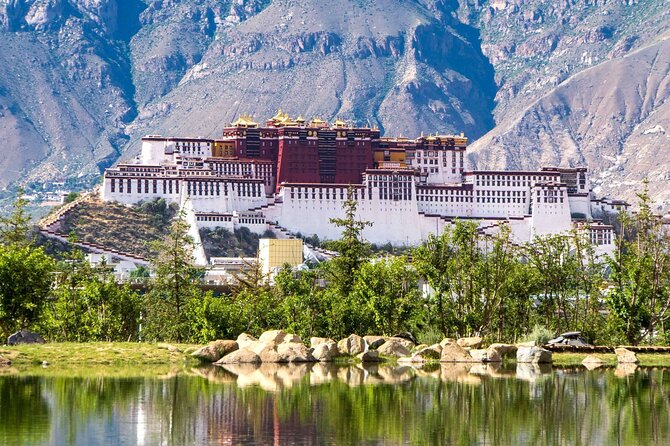
- Potala Palace and Jokhang Temple receive a full sightseeing day, with Barkhor Street added for a look at daily life in old Lhasa.
- Drepung, Sera, Tibet Museum, and Norbulingka give you a broader view of Tibetan religion, art, customs, and former royal life.
- Airport pickup runs at three scheduled times, while the airport ride takes about 90 minutes.
- Railway station transfers are quicker, taking about 20 minutes to the hotel.
- Groups are limited to 12 people, and an English-speaking local guide leads the visits.
- The price includes three hotel nights, breakfast each morning, permits, transport, and attraction admissions, but not lunch, dinner, or travel to and from Lhasa.
Why four days works for a first Lhasa visit
At $605 per person, this tour is not simply a sightseeing package. It combines the paperwork needed for Tibet with local transport and a guided route through Lhasa’s major sites. That matters because independent arrangements can be difficult when a Tibet Travel Permit is required.
You receive three nights in a 3-star or 4-star hotel, three breakfasts, airport or railway station transfers, an air-conditioned vehicle, bottled water, and an English-speaking guide. Entrance tickets are included for Drepung Monastery, Norbulingka, and the main sites listed in the sightseeing program.
Meals are limited. You get breakfast each day and one welcome dinner is advertised as a tour highlight, but the inclusion details specifically list breakfast and do not list the welcome dinner under the included items. I would confirm that point before paying. Lunch, most dinners, personal expenses, and transportation to and from Lhasa are not included.
The timing also deserves attention. You need to provide passport details at booking, including your name, number, birth date, expiry date, and country. The local operator asks you to book at least 12 working days ahead so the travel permit can be arranged. Since the experience is booked on average 94 days ahead, early planning is sensible.
More four day trips in China:
- 4-Day Zhangjiajie Tour to All Highlight Attractions with VIP Lift
★ 5.0 · 74 reviews - 4 Days Lhasa Impression Small Group Tour
★ 4.5 · 67 reviews - 4 Days Guilin Essence and Yangshuo Countryside Tour
★ 5.0 · 18 reviews
Day one: getting from the airport or train to Lhasa
Your arrival day is intentionally light. A representative collects you at Lhasa Gonggar Airport or the railway station and takes you to the hotel.
From the airport, the transfer takes about 90 minutes. Airport pickup is offered at 9:30 a.m., 1 p.m., and 4 p.m. From the railway station, the journey takes about 20 minutes. The stated meeting point and start time are Lhasa Airport at 9 a.m., but the actual airport pickup schedule has three later options, so you should confirm the correct arrival arrangement after booking.
Once at the hotel, you have time to settle in. That is useful in Lhasa, where the first hours should not be overloaded with sightseeing. You might find the free period welcome after a flight or train journey, especially before the first full day at high altitude.
The first day does not include scheduled attractions. This is less a weakness than a sensible buffer. You can organize your room, drink water, and prepare for walking without racing straight into a packed program.
Day two: Drepung, Tibet Museum, and Norbulingka
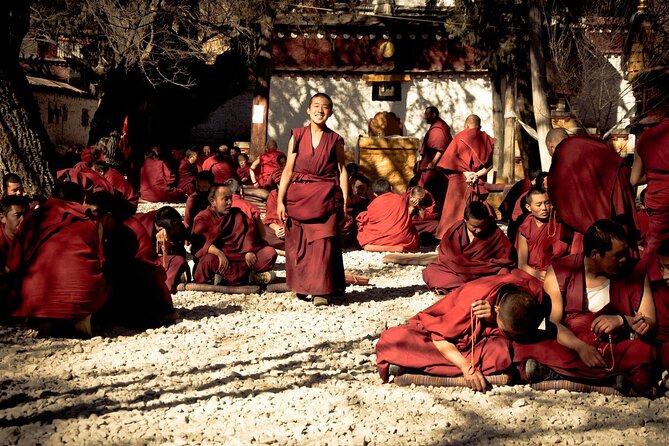
The first full sightseeing day begins with Drepung Monastery, about two hours on the schedule. Drepung was once home to more than 10,000 monks and is described as the largest Tibetan monastery in the program’s background information. Its scale gives you a strong introduction to Tibetan monastic life.
The visit is not just a quick photograph outside a religious building. You have time to look at the monastery complex and absorb the setting with a guide explaining what you are seeing. Comfortable shoes matter because the tour includes walking, and the day has several substantial stops.
In the afternoon, the Tibet Museum offers a different kind of context. The displays cover daily life, clothing, house design, and festival customs. After a morning focused on religion, this stop helps connect Tibetan culture to ordinary routines and material life.
The museum admission is free, but the visit still takes about two hours. That length makes it more useful than a short stop, though museum fans may want to ask how much of the collection is covered during the guided visit.
Norbulingka follows, with another two-hour visit. This Tibetan-style royal garden served as the Dalai Lama’s summer residence. It gives the day a change of pace after the monastery and museum, with a look at the spaces used for seasonal life and official residence.
The order makes sense: Drepung introduces monastic tradition, the museum adds cultural background, and Norbulingka shows another side of Tibet’s leadership and court life. You get a more rounded picture of Lhasa than a route focused only on famous religious buildings.
The drawback is the amount of walking and the full day of sightseeing. The program does not specify a lunch stop, and lunch is not included, so plan to pay for that meal yourself and ask your guide about the timing.
Day three: Potala Palace, Jokhang Temple, and Barkhor Street
The third day is the tour’s main event. By now, you will have had time to settle in and adjust to Lhasa’s altitude, which is one reason Potala Palace is scheduled after the first sightseeing day.
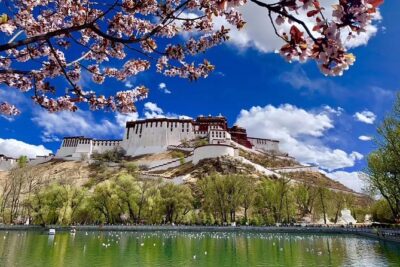
Potala Palace receives about two hours. It was the winter palace of the Dalai Lama and is the most recognizable sight in Lhasa. Inside, you can expect a serious cultural and religious visit rather than a casual palace stroll. The route may involve stairs and steady walking, so wear shoes with good support.
Two hours is enough to see the principal areas included in the visit, but it is not a leisurely half-day exploration. If Potala Palace is your main reason for coming to Lhasa, you may wish the schedule offered more time. Still, placing it on a dedicated morning gives the site the attention it deserves.
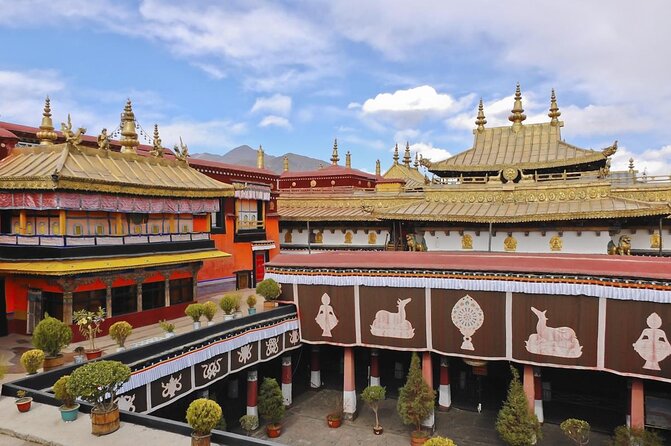
The afternoon moves to Jokhang Temple, the center of Tibetan Buddhism. The description highlights Buddhist prayer wheels, reclining deer, and golden sutra streamers. These details help show why Jokhang feels different from a palace or museum: it is an active religious setting with strong visual symbols.
You have about two hours there. A guide can help explain the meaning behind the objects and layout, which is valuable when a temple’s details are not obvious at first glance. Remember that this remains a religious site, so follow the guide’s instructions and dress appropriately.
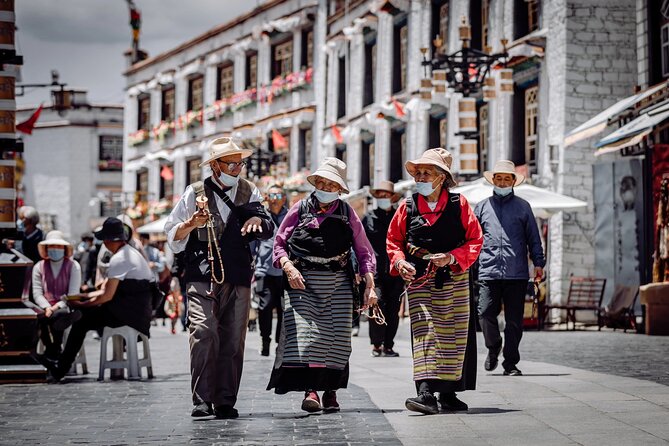
After Jokhang Temple, you walk through Barkhor Street for about two hours. This is the most everyday part of the route. You can drink sweet tea, chat with local people, and bargain with street vendors. The old lanes offer a chance to see Lhasa as a lived-in place rather than a string of monuments.
Barkhor Street is also where the tour becomes less scripted. The schedule gives you room to look around, shop, pause for tea, or simply watch the flow of local life. Since personal expenses are not included, bring money for drinks or purchases.
The day is full, and the combination of Potala Palace, Jokhang Temple, and Barkhor Street may feel intense. Yet it is a strong arrangement for a short visit. You see the city’s best-known landmark, its central Buddhist temple, and the surrounding old quarter in one carefully planned day.
A few more China days to line up
- Tibet Tour 8 Days Lhasa to Everest Base Camp Small Group Tour
★ 5.0 · 578 reviews - 7 Days Lhasa to Kathmandu Overland Small Group Tibet Tour via EBC
★ 5.0 · 188 reviews - 10 Days Tibet Everest Base Camp and Namtso Small Group Tour
★ 5.0 · 108 reviews - 6 Days Central Tibet Culture Small Group Tour
★ 5.0 · 53 reviews
Day four: a simple departure morning
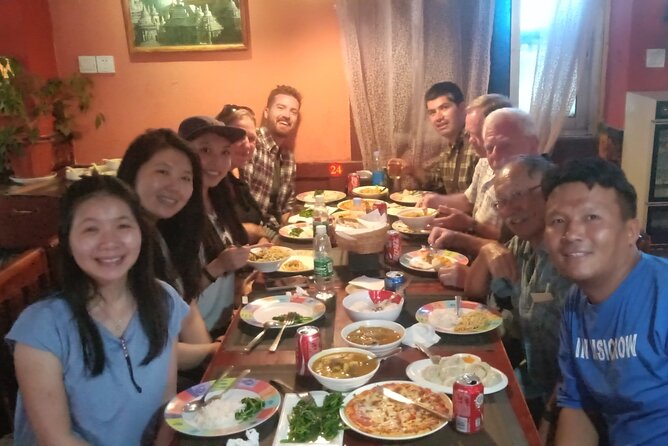
Breakfast is included on the final morning, and the rest of the morning is free before your transfer to Lhasa Airport or the railway station.
Airport drop-off is offered at 8:30 a.m., 12:30 p.m., and 2:30 p.m. The operator also provides departure transfers to the railway station. Since additional transfer service costs extra, confirm that your departure time matches one of the scheduled departures.
A free morning is handy for packing and taking one last walk near the hotel, but the tour does not promise a final sightseeing visit. If you have a late departure, ask whether the hotel can hold your luggage and verify the transfer time.
What the $605 price really covers
The price is easiest to judge as a convenience package. You are paying for three nights of lodging, local transport, a guide, a travel permit service, entrance tickets, breakfasts, airport or railway transfers, and basic insurance and taxes.
That can be good value if you want a ready-made first visit to Lhasa. The permit is especially important. The operator handles the Tibet Travel Permit and express service, and that removes one major planning task from your hands.
The hotel choice adds flexibility. A 3-star hotel should suit a budget-minded visitor, while a 4-star option may appeal if comfort matters after long sightseeing days. The exact hotels are not specified, so ask for the hotel names and room details before booking.
The package does not cover international flights to China or the domestic flight or train needed to reach Lhasa. It also excludes lunch, dinner, personal spending, and a single-room supplement. If you travel alone, check the supplement carefully. The fee can be returned if another person later shares your room, according to the booking terms.
Two bottles of mineral water per person per day are included. That is a small detail, but useful on a walking-heavy route. The vehicle is air-conditioned, and parking fees, guide and driver lodging, government tax, and agency liability insurance are included as well.
The small group and guide service
The maximum group size is 12. That is large enough to keep the price below a private tour while still being small enough for a guide to manage questions and movement through busy sites.
An experienced local English-speaking guide is included. The named staff connected with the tour include Beatrice, Tenzin, and Dorji. Tenzin is identified as a guide, while Beatrice and Dorji are part of the local hosting and support team. If having a particular guide matters to you, do not assume a specific person is guaranteed. Ask the operator when you book.
A small group also makes transfers easier and can reduce waiting time compared with a large coach. The tradeoff is that you will follow the group’s pace. A private tour would offer more control over meal breaks, walking speed, and time at each site, but it would likely cost more.
The service has received a five-star rating from 25 reviews, with 100 percent recommending it. That is a strong signal for satisfaction, but the sample is still modest. I would use it as reassurance about the overall setup, not as a guarantee that every hotel, guide, or group match will suit you.
Altitude, walking, and practical comfort
The tour is designed for sightseeing at high elevation, and the schedule deliberately leaves the arrival day open. You should still take the pace seriously. Day two includes three major stops, and day three includes Potala Palace, Jokhang Temple, and Barkhor Street.
Wear comfortable walking shoes, as requested by the operator. Bring clothing suitable for changing weather because the tour operates in all weather conditions. The information does not specify a required dress code, but religious sites call for respectful clothing.
The tour says most people can participate. It does not provide specific accessibility details, and Potala Palace may involve stairs and walking. If you have mobility concerns, contact the operator before booking and ask about the exact routes and vehicle arrangements.
The program does not list altitude medicine, medical support, or a detailed acclimatization plan. That does not mean you cannot visit, but you should make your own health preparations and speak with a medical professional if high-altitude travel is a concern.
Who should book this Lhasa tour
I would choose this trip if you want a first look at Lhasa without handling every permit, transfer, and admission on your own. It suits people who prefer a set schedule and want the main cultural sights covered in four days.
It also works well for mixed-age groups, since the group can include people from different age ranges and is capped at 12. You will need to be comfortable walking, keeping to a group timetable, and arranging your own lunches and most dinners.
This is not the best fit if you want long, quiet hours at each monument, a private guide, or travel beyond Lhasa. It also may not suit you if you need guaranteed hotel details before booking or if your flight times do not match the scheduled airport transfers.
The tour is especially practical for first-time visitors arriving by air or train. Airport pickup takes longer, but it removes the stress of finding your hotel after an international journey. Railway station pickup is much shorter at about 20 minutes.
Booking, cancellation, and final advice
Confirmation is sent within 48 hours, subject to availability. Book at least 12 working days ahead for permit processing, and earlier is wiser if your travel dates are fixed.
You can receive a full refund if you cancel at least six full days before the start time. Cancellation two to six full days ahead gives a 50 percent refund, while cancellation less than two full days ahead receives no refund. Changes follow similar cutoffs, so read the local-time deadline carefully.
I would book this tour if you want Lhasa’s essential sights, a handled permit, and a small guided group at a reasonable all-in local price. I would skip it only if your priority is a private, flexible schedule or extra days for slower exploration. For a first four-day visit, the route is sensible, the included services remove real planning headaches, and the mix of monasteries, museums, royal spaces, temples, and old streets gives you a useful view of Lhasa rather than only its most famous building.
FAQ
How long is the Lhasa City Essential Group Tour?
The tour lasts approximately four days and includes three nights of hotel accommodation.
What is included in the $605 price?
The price includes three nights in a 3-star or 4-star hotel, airport or railway station transfers, an air-conditioned vehicle, the Tibet Travel Permit and express service, an English-speaking local guide, listed entrance tickets, three breakfasts, bottled water, parking fees, taxes, and travel agency liability insurance in China.
Are meals included?
Three breakfasts are included. Lunch and dinner are not included, although one welcome dinner is listed among the tour highlights. Confirm the welcome dinner details before booking because it is not listed in the detailed included-items section.
Does the tour include transportation to Lhasa?
No. International flights to and from China and domestic flights or trains to and from Lhasa are not included.
Where does the tour start?
The stated starting point is Lhasa Airport, China, at 9 a.m. Pickup is also available from Lhasa railway station.
How long does the airport transfer take?
The transfer from Lhasa Gonggar Airport to the hotel takes about 90 minutes. Pickup is offered at 9:30 a.m., 1 p.m., and 4 p.m. on the first day.
How long does the railway station transfer take?
The transfer from Lhasa railway station to the hotel takes about 20 minutes.
What attractions are included?
The route includes Drepung Monastery, Tibet Museum, Norbulingka, Potala Palace, Jokhang Temple, and Barkhor Street.
How large is the group?
The tour has a maximum of 12 participants.
How far ahead should I book?
You should book at least 12 working days ahead so the operator can arrange the Tibet Travel Permit. Confirmation is provided within 48 hours, subject to availability.
Recently listed in China
- Nanjing By Night: Qinghuai River Cruise with Authentic Dining Experience★ 5.0 · 5 reviews
- 1 day Car Hire in Shenzhen with Driver (10 hours)★ 3.0 · 5 reviews
- Beijing Mutianyu Great Wall Private Tour with Lunch★ 5.0 · 5 reviews
- Flexible Hangzhou Private Day Tour with Lunch★ 5.0 · 5 reviews
- Customized Private Beijing Layover City Tour★ 5.0 · 5 reviews
- Private Tour of Shanghai Highlights and Zhujiajiao Water Town in One Day★ 5.0 · 5 reviews
- 4-Hour Suzhou Private Flexible Tour with Garden and Boat Ride Option★ 5.0 · 5 reviews
- Private Tour to Gubei Water Town and Simatai Great Wall with Cable Car and Lunch★ 5.0 · 5 reviews
Tibet Tours, compared.
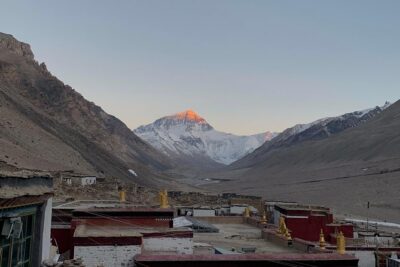
Tibet Tour 8 Days Lhasa to Everest Base Camp Small Group Tour
Read our review →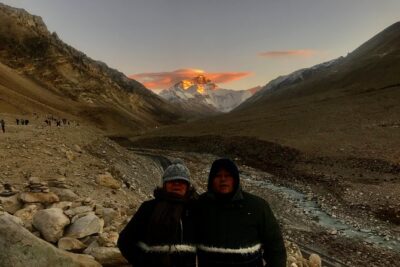
7 Days Lhasa to Kathmandu Overland Small Group Tibet Tour via EBC
Read our review →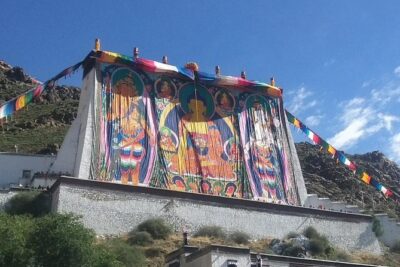
10 Days Tibet Everest Base Camp and Namtso Small Group Tour
Read our review →
8 Days Lhasa Gyantse Shigatse Mt Everest Group Tour
Read our review →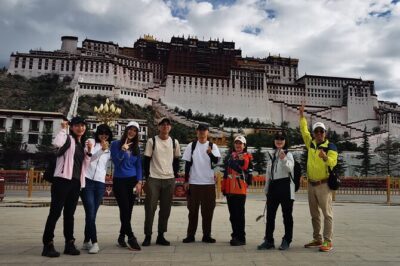
Private Guided Day Tour Potala Palace and Sera Monastery
Read our review →
9 Days Lhasa Gyantse Shigatse Everest Namtso Group Tour
Read our review →Browse the lists this tour appears in