
Reviewed · TIBET TOURS
Tibet Tour 8 Days Lhasa to Everest Base Camp Small Group Tour
The finest part of this eight-day Tibet journey is its route. You begin among Lhasa’s great temples and palaces, then cross high mountain passes, pass blue Yamdrok Lake and Karo La Glacier, and finish facing Mount Everest from Rongbuk and Base Camp. It packs a lot of Tibet into one carefully linked trip.
I like the small group of no more than 12 people, which gives you a better chance to hear your guide and ask questions. I also like the practical setup: permits, hotels, transport, entrance fees, breakfasts, drinking water, and an oxygen cylinder for the vehicle are included. The trade-off is a demanding schedule, high altitudes, long drives, and several meals left for you to arrange.
Key points to know before booking
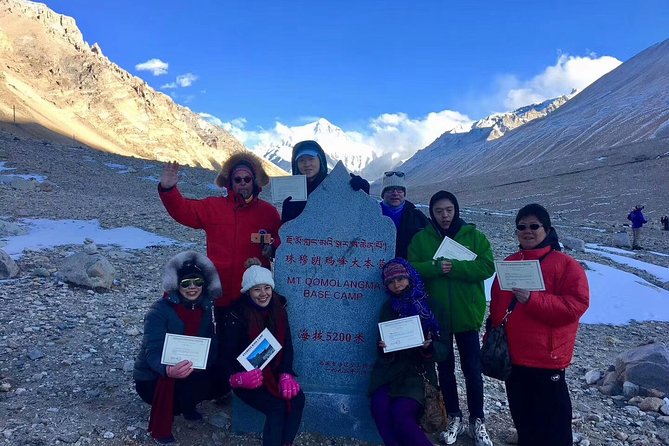
- Everest is reached by road from Lhasa: Day 5 is a very long travel day, listed at about 12 hours, but it delivers the tour’s biggest view.
- Lhasa’s essential sights come first: Potala Palace, Jokhang Temple, Barkhor Street, Drepung Monastery, and Sera Monastery give you a strong introduction to Tibetan religious life.
- The group stays small: A maximum of 12 people means less crowding inside the vehicle and easier contact with the English-speaking Tibetan guide.
- Altitude is part of the experience: The route crosses Gampala Pass at 4,790 meters, Gyatsola Pass at 5,248 meters, and visits places above 4,000 meters.
- The price covers major trip mechanics: At $949 per person, the package includes necessary Tibet permits, accommodation, transport, many entrance fees, breakfasts, and the Everest Base Camp shuttle bus.
- You need to prepare early: Passport and China visa copies are required in advance, and the operator asks you to book at least 10 working days ahead for permit arrangements.
Why this Lhasa to Everest route works
Tibet is not a place where you can simply show up and improvise a road trip. Permits, restricted areas, long distances, and limited transport options make an organized trip useful. Here, the operator connects Lhasa, Gyantse, Shigatse, and the Everest region in a single overland route.
That matters most after you leave Lhasa. The sights are spread far apart, and several days involve long drives rather than a string of short stops. You save the effort of arranging vehicles, hotels, permits, and entrance tickets one by one.
The tour receives a 4.9 rating from 579 reviews, with 98 percent recommended. The strongest praise focuses on the guide and driver, especially their role in keeping the journey safe, organized, and enjoyable. Since the guide’s name is not provided in the tour details, you should not expect to choose a particular guide when booking.
The vehicle carries a 4-liter or 7-liter oxygen cylinder, depending on the arrangement, and drinking water is supplied. That does not remove the need to take the high-altitude setting seriously, but it is a useful practical provision on a route that reaches several high passes.
A few more China days to line up
- 7 Days Lhasa to Kathmandu Overland Small Group Tibet Tour via EBC
★ 5.0 · 188 reviews - 10 Days Tibet Everest Base Camp and Namtso Small Group Tour
★ 5.0 · 108 reviews - 4 Days Lhasa Impression Small Group Tour
★ 4.5 · 67 reviews
Day 1: A gentle arrival in Lhasa
Your Tibetan guide meets you at the airport or train station and transfers you to a downtown Lhasa hotel. The drive follows the Yarlung Tsangpo River and gives you an early look at the broad, high-country setting before you reach the city.
This first day is intentionally light. You are not rushed into monuments or long walks, which is welcome after arriving in Tibet. You also receive a welcome dinner when the group meets in Lhasa, giving you a chance to meet the guide and the other members of the group.
Airport and train station pickup are included, but the supplier needs to arrange them. Contact details and arrival information should be supplied early, especially because the Tibet permit process depends on your travel plans.
Day 2: Potala Palace, Jokhang Temple, and the Barkhor circuit
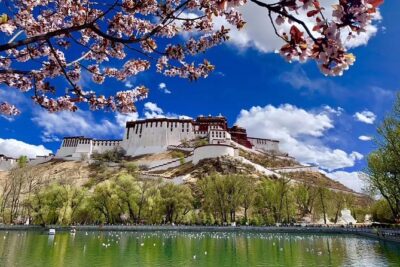
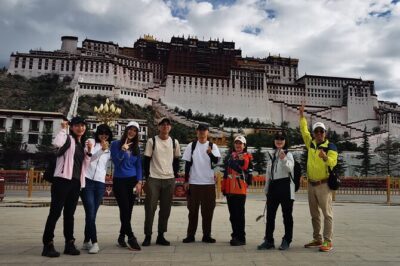
Potala Palace is the headline visit. The former winter palace of the Dalai Lama rises above Lhasa and has been in use since the seventh century, when Tibet’s 33rd great king founded the original royal center. Your visit is scheduled for about 90 minutes.
The palace is not a quick photo stop. Its religious rooms, artwork, and collections reward a guide who can explain what you are seeing. The tour details say the entrance ticket is included in the overall package, although individual stop descriptions mark admission as not included. I would confirm this point before departure, since the general inclusion list says entrance fees for all listed sites are covered.
After lunch, you visit Jokhang Temple for another 90 minutes. This is one of the most important religious sites in Tibet, and its central image is a statue of Buddha Sakyamuni shown at age 12. The visit gives you a different experience from Potala Palace: less royal grandeur, more direct contact with active Buddhist devotion.
Barkhor Street circles Jokhang Temple. You have about 30 minutes here to walk the kora, a religious circuit made by pilgrims and local people, and to explore the old market area. The schedule is short, so treat it as an introduction rather than a full afternoon of wandering.
The tour also notes the chance to taste Tibetan tea with local people in a tea house. That detail matters because it takes you beyond the usual monument checklist and into an everyday social setting. Still, keep your expectations realistic: half an hour does not allow much unplanned shopping or slow exploration.
Day 3: Village life, Drepung, and Sera’s monk debates
The third day begins with a visit to Dadong Village, described as an old Tibetan village about 25 kilometers southwest of central Lhasa. The stop is connected with the Drepung Monastery visit in the schedule, and the description allows about three hours.
Drepung is one of Tibet’s great Gelug monasteries, though the supplied schedule labels this stop as Drepung Monastery and also describes Dadong Village. Ask the guide how the morning is divided so you know how much time you will spend in the village and at the monastery.
In the afternoon, Sera Monastery receives about two hours. It is another of the great three Gelug monasteries, and its best-known activity is the monks’ debate, usually held around 3 to 5 p.m. The animated exchanges make Sera especially appealing for people who want to see religious training in action rather than only look at buildings.
The timing is important. If you care about the debate, confirm that the day’s driving and morning visits still get you there during the stated window. Sera also has a traditional stone kitchen, according to the tour description, adding a small working detail to the visit.
A very different day in China:
- From Beijing: Mutianyu Great Wall Tours with Options
★ 4.9 · 9,216 reviews - Beijing: Forbidden City Tour(Group/Private)-Tickets Included
★ 4.8 · 7,974 reviews - Beijing: T-Square & Forbidden City Group or Private Tour
★ 4.8 · 4,446 reviews - Beijing: Mutianyu Great Wall Daily Tour with Ticket & Lunch
★ 5.0 · 3,056 reviews
Day 4: Yamdrok Lake, Karo La Glacier, and Gyantse
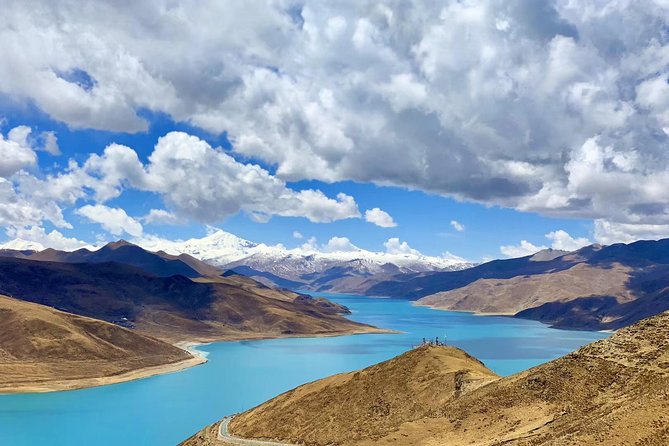
Day 4 takes you from Lhasa toward Shigatse. The road crosses Gampala Pass at 4,790 meters before reaching Yamdrok Yumtso, also called Yamdrok-tso, at about 4,400 meters.
The lake is surrounded by snow-capped mountains and is one of the route’s major scenic stops. You have about 30 minutes here. That is enough for photographs and a brief look, but not for a long lakeside walk or a leisurely picnic.
The road then passes Karo La Glacier, visible from the roadside, with another 30-minute stop. At Manak Dam Lake, the schedule mentions hanging prayer flags at Simila Mountain Pass. These short roadside stops break up the driving and let you see how travel in Tibet is shaped by altitude, weather, and distance.
In Gyantse, you visit Pelkor Chode Monastery and the Gyantse Kumbum, with about 90 minutes allocated. You also get a view of Gyantse Fortress before continuing to Shigatse, Tibet’s second-largest city.
This is one of the most varied days, but it is also a driving day. You should be comfortable spending much of your time in a van or minibus. The benefit is that the road itself becomes part of the experience, linking sacred sites, mountain passes, glacier views, and old towns that would be difficult to arrange independently.
Day 5: The long road to Everest Base Camp
Day 5 is the tour’s hardest day on paper. The Mount Everest Base Camp portion is listed at about 12 hours, beginning after the required Alien’s travel permit is obtained and continuing through Lhatse, where you can stop for lunch.
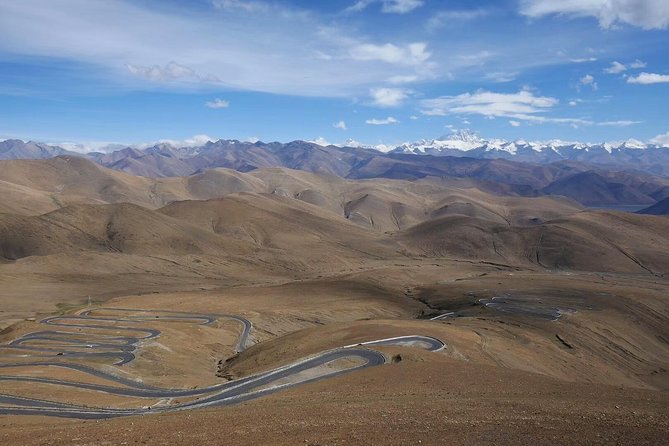
You then cross Tsola Pass at about 4,600 meters and Gyatsola Pass at about 5,248 meters before entering the Everest region. These elevations explain why the schedule feels demanding. You need a moderate level of physical fitness, patience for long road travel, and enough flexibility to handle changing conditions.
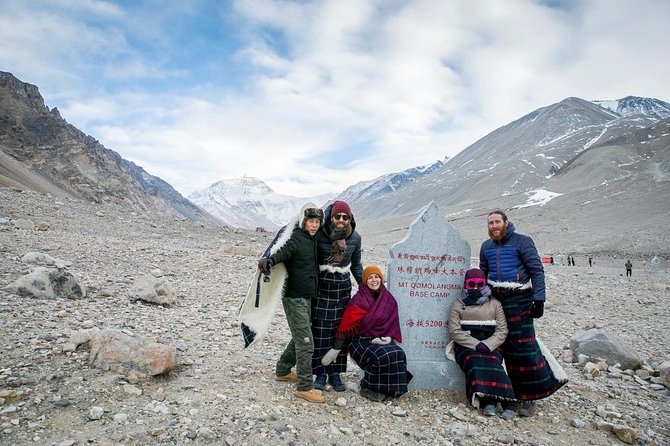
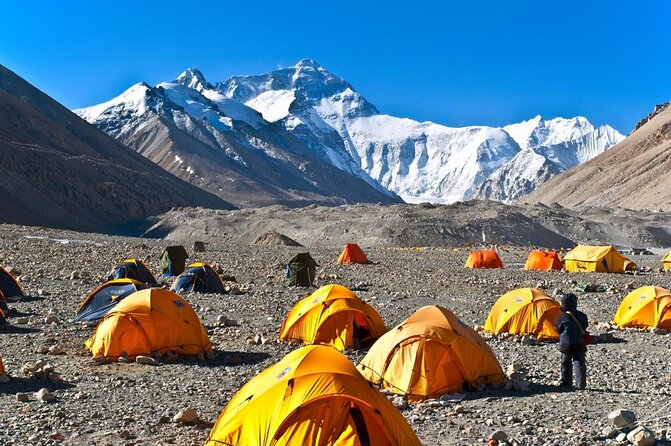
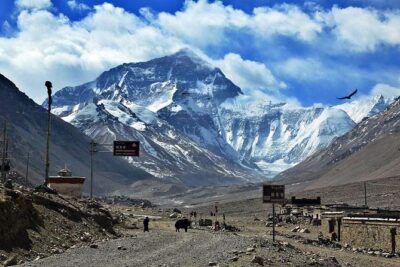
At Base Camp, the road reaches the great prize: a view toward Mount Everest. The tour includes the Everest Base Camp echo bus, which is the shuttle used to reach the viewing area. You do not simply walk up from the main road, so this inclusion saves you another transport arrangement.
The schedule calls the stop Mount Everest Base Camp, but the full experience is not just a single viewpoint. The route through the passes, the changing mountain views, and the approach to the Everest region are part of the day. If weather blocks the mountain, the operator says a different date or full refund may be offered when poor weather forces cancellation. You should still understand that mountain visibility cannot be guaranteed.
Accommodation in the Everest region is at Rongbuk Guest House. From November 15 to February 15, winter service includes a hot-water bottle and electric blanket. That is a useful seasonal detail, since conditions at Rongbuk can be much colder than in Lhasa.
Day 6: Sunrise near Rongbuk Monastery
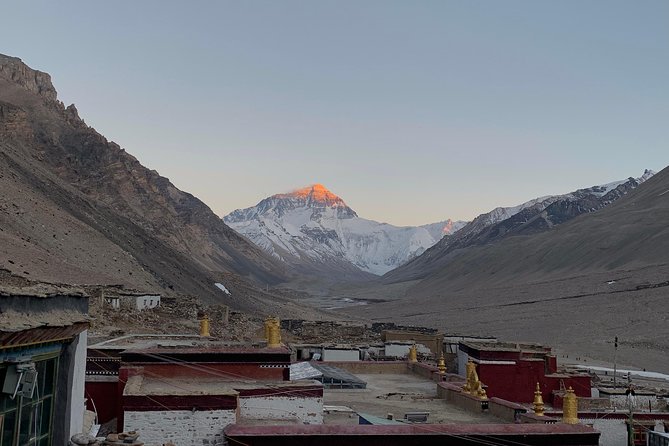
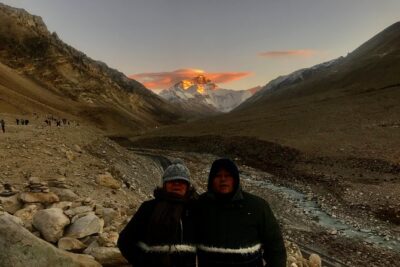
The next morning begins at Rongbuk Monastery, with about an hour set aside. The stated aim is to see sunrise appear on Mount Everest and enjoy the full view of the peak, described as a snow-capped pyramid in front of Rongbuk.
This is the tour’s most rewarding early start. The mountain is the reason many people choose this route, and a clear morning near Rongbuk gives you a stronger encounter than a quick daytime roadside photograph.
The short schedule also means you should be ready when the group departs. There is little room for a slow breakfast or an extra walk. The winter hot-water bottle and electric blanket service applies during the stated November to February period, but you should still pack for cold conditions.
Day 7: Tashilunpo and the return to Lhasa
The final sightseeing day begins at Tashilunpo Monastery in Shigatse. You have about two hours to visit this important monastery, the seat of Tibet’s second-highest incarnation, the Panchen Lama.
Afterward, the group drives about 280 kilometers back to Lhasa. The return is by road, not by a short flight, so Day 7 remains a substantial travel day even after the monastery visit.
This arrangement gives you one last major religious site before returning to the capital. It also means you should not plan an important evening activity in Lhasa unless you have confirmed the arrival time with the operator.
Day 8: Departure from Tibet
The tour ends when you leave Tibet by air or train. The permit for this tour is limited to the booked program, so you cannot assume you can remain in Tibet for extra sightseeing without arranging another tour.
Airport or railway drop-off can be arranged through the supplier. Ask about this before the last day, particularly if you have a tight departure schedule.
What the $949 price really covers
At $949 per person, the value depends on how much of the trip’s administration you would otherwise need to handle yourself. The package includes the Tibet Travel Permit and other necessary Tibet permits, a Chinese visa invitation letter if needed, transport with an experienced local driver, an English-speaking Tibetan guide, airport or train station transfers, and accommodation.
Hotels in Lhasa and Shigatse are based on twin sharing and include breakfast. Six breakfasts are included, along with the welcome dinner. Entrance fees for the listed sights and the Everest Base Camp echo bus are also included in the package information.
The price leaves out your flight or train to Lhasa, lunches and most dinners, tips, and a single-room supplement. One lunch and one welcome dinner are mentioned in the details, so confirm exactly which meals are supplied before you budget.
For a route covering Lhasa, Gyantse, Shigatse, and Everest Base Camp, the included permits and transport make the price reasonable. The main extra costs are food, personal purchases, tips, and getting to Lhasa. If you want your own room, ask about the single supplement before paying.
Group size, guide, and practical comfort
A maximum of 12 people is a useful middle ground. You get the efficiency of a shared trip without being placed in a large coach group. A smaller group also makes it easier to hear the guide at Potala Palace, Sera, and the monasteries.
The guide speaks English and is Tibetan, which is valuable when visiting active religious sites. The strongest praise attached to this experience centers on the guide and driver’s service, safety, and organization. Those roles matter here because road conditions, permits, entrance times, and high-altitude stops all require steady coordination.
Transport is by comfortable van or minibus, with fuel included. Drinking water is provided, and an oxygen cylinder is carried in the vehicle. These details will not make the long Day 5 drive short, but they do reduce the number of arrangements you need to make yourself.
You should have moderate physical fitness and be prepared for high passes. The exact schedule may need to respond to weather, road conditions, or permit timing. Pack clothing for both Lhasa and the colder Everest region, especially if you travel during the winter service period.
Permits and arrival rules you cannot ignore
Book at least 10 working days ahead so the operator can obtain your Tibet Permit. Passport and China visa copies are required in advance, with the details asking for them at least 20 days before departure.
Your visa route depends on how you enter Tibet. If you fly from Kathmandu, do not apply for a China L Visa in advance. You need to apply for a Tibet Group Visa through a travel agency at the China Embassy in Kathmandu, using an invitation letter from the tour supplier.
If you fly or take a train to Lhasa from another Chinese city, you need to apply for the China L Visa through the Chinese Embassy in your home country. This is the sort of detail that can derail an otherwise well-planned trip, so settle it before booking flights.
Confirmation normally arrives when you book, unless you book within one day of departure. Last-minute confirmation is subject to availability, and the permit timetable makes a late booking a poor gamble.
You can cancel for a full refund at least six full days before the local start time. Cancellation two to six days before departure receives a 50 percent refund, while cancellations less than two days before departure are not refunded. Weather cancellations may result in another date or a full refund.
Who should book this experience
I would choose this tour if you want Tibet’s major sights without managing permits, long-distance transport, hotels, and local drivers yourself. It is especially suited to someone who wants both Lhasa’s cultural sites and a serious attempt at seeing Everest from the north.
It is less suitable if you want slow travel, independent wandering, or long stays in each town. The schedule moves quickly, with several short stops and two especially demanding road days.
The tour also suits people who value structure. You know where you are going each day, what transport is arranged, and which major entrance fees are covered. You give up some freedom, but you gain a workable route through a difficult region.
Should you book the Lhasa to Everest Base Camp tour?
Book it if the combination of Potala Palace, Jokhang Temple, Tibetan monasteries, high mountain passes, and Everest is your main goal. The $949 price is attractive because it includes permits, transport, accommodation, guide services, entrance fees, breakfasts, and the Base Camp shuttle.
Before committing, confirm the meal details, single-room cost, airport or train transfers, and the precise division of time on Day 3 between Dadong Village and Drepung Monastery. Then check that your visa documents and travel dates allow enough time for permits.
If you accept long drives, high altitudes, basic scheduling limits, and a few meals paid separately, this is a practical way to see a remarkable stretch of Tibet in eight days.
FAQ
How long is the Tibet tour from Lhasa to Everest Base Camp?
The tour lasts eight days, beginning with pickup at the Lhasa airport or train station and ending when you leave Tibet by air or train.
What is the maximum group size?
The group can include up to 12 people.
Is pickup from the Lhasa airport or train station included?
Yes. Pickup and transfer to your downtown Lhasa hotel are included, but the supplier must arrange the service.
Is the Tibet Travel Permit included?
Yes. The Tibet Travel Permit and other necessary Tibet permits are included. The Chinese L Visa itself is not included.
What documents are required before departure?
You must provide photocopies of your passport and China L Visa in advance. The operator asks for these documents at least 20 days before travel.
Are meals included?
Six breakfasts and one welcome dinner are included. The tour details also mention one included lunch, while regular lunches and dinners are otherwise excluded.
Is accommodation included?
Yes. Hotels in Lhasa and Shigatse are included, based on twin sharing with breakfast. A single-room supplement may apply.
Does the tour include entrance fees at the main sights?
The package information says entrance fees for all listed tourist sites are included, along with the Everest Base Camp echo bus and platform service fee. Confirm the details with the supplier because some individual stop descriptions show admission as not included.
What happens if bad weather cancels the tour?
If the experience is canceled because of poor weather, you are offered a different date or a full refund.
Recently listed in China
- Nanjing By Night: Qinghuai River Cruise with Authentic Dining Experience★ 5.0 · 5 reviews
- 1 day Car Hire in Shenzhen with Driver (10 hours)★ 3.0 · 5 reviews
- Beijing Mutianyu Great Wall Private Tour with Lunch★ 5.0 · 5 reviews
- Flexible Hangzhou Private Day Tour with Lunch★ 5.0 · 5 reviews
- Customized Private Beijing Layover City Tour★ 5.0 · 5 reviews
- Private Tour of Shanghai Highlights and Zhujiajiao Water Town in One Day★ 5.0 · 5 reviews
- 4-Hour Suzhou Private Flexible Tour with Garden and Boat Ride Option★ 5.0 · 5 reviews
- Private Tour to Gubei Water Town and Simatai Great Wall with Cable Car and Lunch★ 5.0 · 5 reviews
Tibet Tours, compared.
7 Days Lhasa to Kathmandu Overland Small Group Tibet Tour via EBC
Read our review →
10 Days Tibet Everest Base Camp and Namtso Small Group Tour
Read our review →
8 Days Lhasa Gyantse Shigatse Mt Everest Group Tour
Read our review →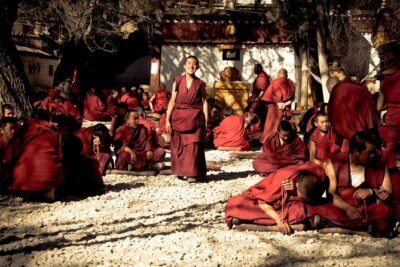
Private Guided Day Tour Potala Palace and Sera Monastery
Read our review →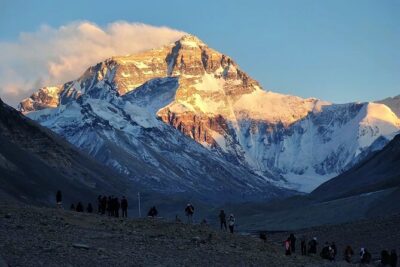
9 Days Lhasa Gyantse Shigatse Everest Namtso Group Tour
Read our review →Browse the lists this tour appears in