
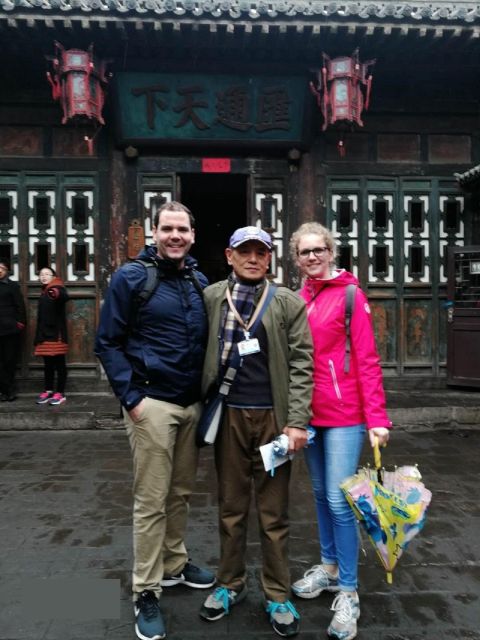
Reviewed · WALKING TOURS
Pingyao Ancient City Full-Day Walking Tour
Pingyao’s great strength is how much of its old town you can read at walking speed. Brick walls, gray-tiled roofs, narrow lanes, courtyard homes, old banks, and government halls all sit within a compact historic city. The city wall views give you the quickest sense of the place, while the Rishengchang Exchange Bank explains why Pingyao once mattered to China’s growing trade networks.
I like the private format for two reasons. First, you can ask about anything that catches your eye, from roof decoration to the layout of a courtyard. Second, your guide can adjust the pace. Mike stopped for photographs and rests, while other guides helped with show tickets, restaurant choices, and questions about daily life.
The main thing to consider is cost. At $229 for a group of up to six, this is not a budget walk for one person, and admission costs another 125 RMB per adult. It becomes much better value when shared by a family or small group, especially if you want context rather than just a map and a list of buildings.
Key points at a glance
- Walk the city wall for the best overview: Look down over Pingyao’s low tiled roofs and enclosed courtyards.
- See China’s first exchange bank: Rishengchang introduces the financial side of the old city, not just its temples and lanes.
- Enter a 300-room yamen: The former government compound included offices, courtrooms, homes, gardens, meeting rooms, and a prison.
- Follow the old scholar’s route: Pingyao Confucian Temple connects the city to the imperial examination system.
- Get a private, adjustable day: Guides including Lisa, Grace, Mike, Leo, Johanna, and Joanna have led bookings, with time for questions and photos.
- Plan for extra admission: The 125 RMB ticket is not included, though the guide helps buy it on the day.
Why Pingyao works best on foot
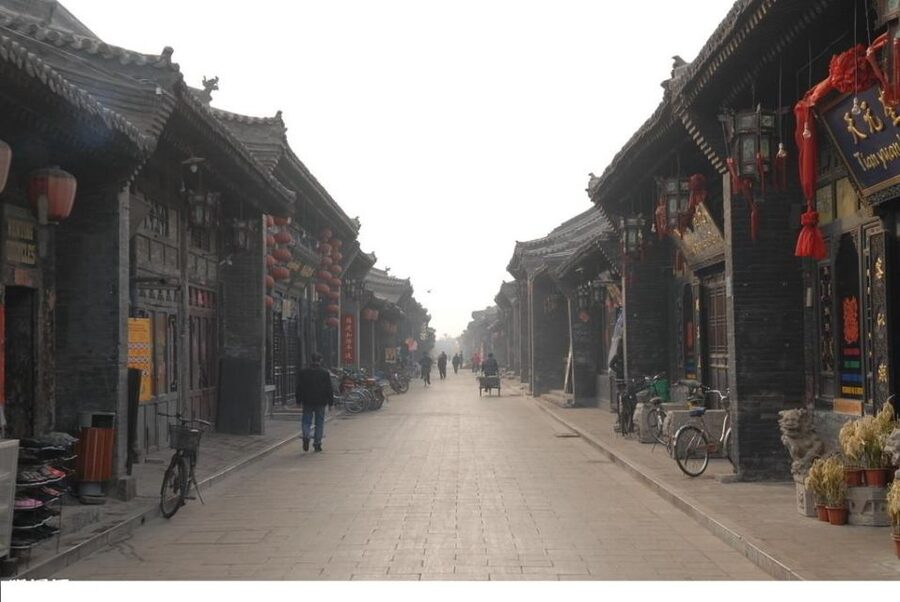
Pingyao is a UNESCO World Heritage Site and one of China’s best-preserved ancient cities. Its appeal comes from the way the pieces fit together. You are not seeing one isolated monument, then returning to a modern street. The streets themselves, the shopfronts, courtyards, walls, and public buildings form one large historical setting.
The city is also low-rise. From the wall, you can look over a broad spread of gray roofs and down into domestic courtyards. On the ground, narrow streets lead past shops and houses built in the brick-and-stone style associated with the Ming and Qing periods.
That makes a walking guide useful. Without one, you can still admire the architecture, but it is harder to understand why a bank, temple, government office, and private security company all mattered in the same small city. An English-speaking guide turns the old town from a collection of attractive buildings into a picture of work, belief, law, family life, and trade.
The walking also keeps the day flexible. You are not locked into a large group’s timetable, and you can pause for photographs or rest. The tour lasts eight hours, with about six hours set aside for sightseeing, so you should expect a full day on your feet.
More Walking Tours in China:
- Beijing Hutong Walking Food and Beer Tour at Hidden Restaurants
★ 5.0 · 1,132 reviews - Hong Kong: Dark Side of Hong Kong Caged Homes Walking Tour
★ 4.8 · 790 reviews - Private Beijing Walking Tour of the Forbidden City with 7 Options
★ 5.0 · 675 reviews
Meeting your guide inside Pingyao
Pickup is arranged in Pingyao. If your hotel is inside the ancient city, your English-speaking guide meets you in the hotel lobby. If you stay outside the old town, the meeting point is inside the ancient city instead.
The experience provider lists English and Chinese as available guide languages, with the advertised tour led in English. Guides connected with recent bookings include Lisa, Grace, Mike, Leo, Johanna, and Joanna. The exact guide is not fixed in the information provided, but the guide’s role goes beyond reciting dates. You can ask about architecture, famous people, old customs, and ordinary life.
Communication before the tour matters here because the old city has different access points and accommodation locations. The organizer contacted one group in advance to arrange the meeting, and the guide arrived at the hotel on time. I would still confirm your hotel location and meeting point before the day begins.
There is no hotel accommodation, meal, or transfer included. Pickup is included in the sense that the guide meets you, but the tour does not promise a private vehicle. The core experience is a walking tour within Pingyao.
Climbing Pingyao’s ancient city wall
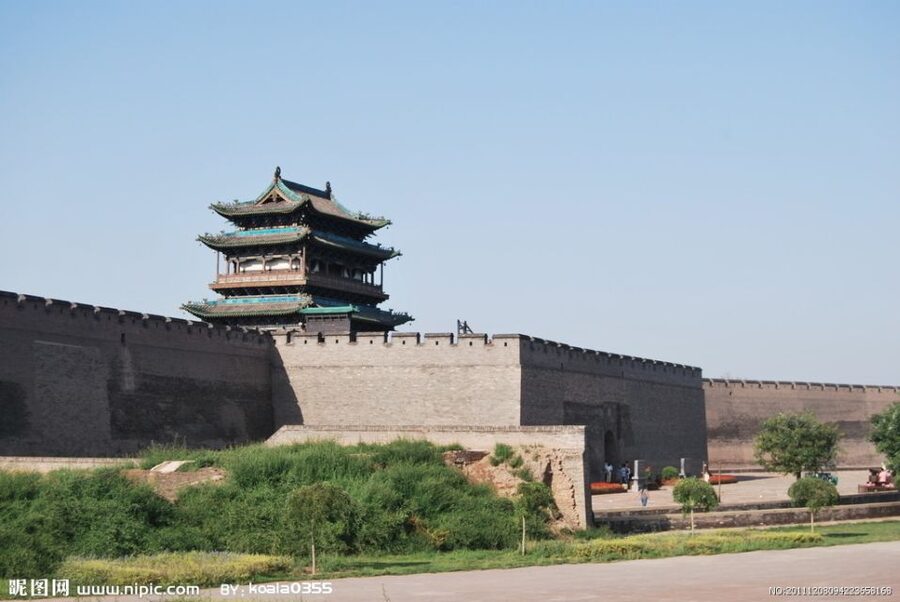
The wall is the best opening chapter because it helps you understand the city’s shape before you walk through it. Built from bricks and stones, it surrounds the historic core and gives you a higher view across the tightly packed roofs.
Look for the contrast between public defenses and private homes. From above, the city feels orderly and enclosed. From street level, it becomes more intimate, with courtyards, small shops, and lanes turning in unexpected directions.
The wall is also a practical orientation point. Pingyao’s historic center contains many sights, and a first-time visitor can easily lose a sense of direction among similar-looking streets. Seeing the old town from above gives you a mental map for the rest of the day.
Your guide can explain how the wall relates to the city’s layout and former security needs. One guide, Mike, was especially praised for explaining the wall and the way the city was arranged. That sort of explanation is more useful than simply being told the construction date.
You should expect some walking and possible stairs or uneven historic surfaces. The tour description does not give accessibility details, so anyone with mobility concerns should ask the provider in advance. Build in time for water, comfortable shoes, and pauses.
Rishengchang Exchange Bank and Pingyao’s money trail
Rishengchang Exchange Bank gives the tour an important change of pace. Pingyao is often presented through temples and old houses, but this stop shows the city as a place of business.
Rishengchang is described as China’s first exchange bank. The old compound helps explain how money moved across a large country before modern banking and electronic transfers. Rooms that may look plain at first become easier to read when your guide explains their commercial purpose and how the institution fit into Pingyao’s economy.
This is one reason I prefer a guide here. A bank courtyard does not always announce its significance through grand decoration. The value lies in the story of what happened there, who used it, and why Pingyao became important enough to support this kind of financial institution.
The stop also balances the religious and official buildings later in the day. You see the city not only as a preserved architectural set, but as a place where merchants, officials, scholars, guards, and families once worked.
More full day trips in China:
- Beijing Full Day Tours: Tiananmen Sq, Forbidden City, Great Wall
★ 5.0 · 1,634 reviews - Private Shanghai Full Day City Tour with Old and New Highlights
★ 5.0 · 995 reviews - Beijing Classic Full-Day Tour including the Forbidden City, Tiananmen Square, Summer Palace and Temple of Heaven
★ 4.0 · 610 reviews - Beijing Essential Full-Day Tour including Great Wall at Badaling, Forbidden City and Tiananmen Square
★ 4.5 · 609 reviews
The private security escort company
The Ancient Security Guard Company offers another useful piece of the city’s commercial story. It was the only private organization of armed escort in Pingyao’s history and one of the two most famous during the Ming and Qing dynasties.
That detail adds a human edge to the banking stop. Money and goods needed protection as they moved through the country. The escort company shows the risks behind long-distance trade and the private services that grew around commerce.
The supplied tour information does not specify how long you spend inside the compound or which rooms the guide emphasizes. Ask questions about the guards, their work, and their connection to the exchange banks. This is a good place to let your guide follow your interests instead of rushing from one ticketed building to the next.
Walking Ming and Qing Street
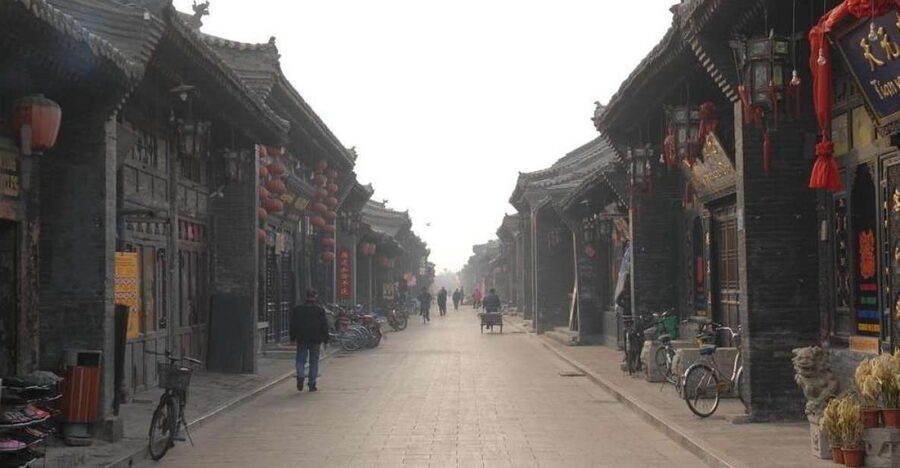
Ming and Qing Street is the most straightforward place to appreciate Pingyao’s street architecture. Traditional shops and houses remain in place, built with brick and stone and shaped by the styles of those periods.
You will see the old city as a working street rather than only as a museum compound. Shopfronts, homes, lanes, and upper roofs create a continuous scene. The narrow scale helps you imagine how daily business and domestic life once shared the same urban space.
The drawback is that a historic commercial street can also feel like a sightseeing corridor. The tour description does not promise specific shopping stops or tastings, so do not book this experience expecting a food tour or a retail itinerary. Its strength is visual and historical: your guide explains what you are looking at and how the buildings fit into the city.
This is also a useful stretch for photographs. Claire’s guide, Johanna, was patient with extended photo sessions, and Mike was happy to stop for pictures along the way. A private group gives you more freedom to spend a few extra minutes on a doorway, statue, roofline, or courtyard.
Inside the Pingyao Yamen
The Pingyao Yamen is one of the day’s most substantial stops. A yamen was a local government office, and Pingyao’s dates from 1346, during the Yuan Dynasty.
This was not simply an office block. The compound once held more than 300 rooms, including administrative offices, a court, meeting rooms, residential quarters, a garden, and a prison. It housed the magistrate, who served as mayor, judge, and senior official.
Enter through the ceremonial gate and the city’s system of government becomes easier to picture. The layout shows how official work, legal judgment, domestic life, and confinement could all exist within one compound. You are seeing the physical structure of authority, not just a sign explaining that an official once worked there.
Give yourself time here. The many rooms can blur together if you rush, so listen for the guide’s explanation of how the compound functioned. Grace was praised for explaining architecture, symbolism, history, and the historical figures connected with Pingyao. Those are exactly the details that help a large complex make sense.
Pingyao Confucian Temple and the scholar’s path
The Confucian Temple brings a different mood to the day. Its layout reflects the importance of education and public learning in traditional Chinese society.
A particularly evocative detail is the path once used by the top scholars of the annual imperial examinations, known as Zhuangyuan. Walking along it gives the temple a personal connection to ambition, study, and public honor. You are not only looking at an old religious or educational site. You are following the route associated with those who reached the highest level of the examination system.
The temple’s sophisticated layout rewards a slower pace. Ask your guide to explain the arrangement and the meaning of the spaces rather than treating it as another quick photo stop. The information provided does not list every hall or object, so the guide’s interpretation is central to what you take away.
For anyone interested in Chinese education, philosophy, or government, this may be the most meaningful stop. It also complements the yamen. The yamen shows how authority operated, while the Confucian Temple helps explain the ideals that shaped official culture.
A private day with room for real questions
The strongest reason to book this tour is the private group format. Your party can include up to six people, and the guide can respond to your pace and interests.
That flexibility shows up in small but useful ways. Lisa helped one group with tickets for a local show and questions about ordinary life. Mike stopped for photos, suggested an excellent restaurant for lunch, and paused whenever needed. Leo was described as attentive and kind, while Joanna was praised for clear English and covering the important places.
Those details matter because Pingyao is not just a checklist of five sights. You may want more time at the wall, extra help understanding the banking system, or a slower visit to the temple. A private guide can make those choices easier.
The tour is not presented as a food experience, and lunch is not included. Still, the guide may help you choose a restaurant, as Mike did for one group. You pay for your own meal, but local advice can save time and help you avoid treating lunch as an afterthought during a long day.
Price, tickets, and what the day really costs
The advertised price is $229 per group of up to six. For six people, that works out to roughly $38 per person before admission. For two people, the guide fee is about $115 per person, and for a solo visitor it is the full $229. The value changes sharply with group size.
Admission is separate at 125 RMB per adult, with children paying half price and the guide entering free. The guide helps you buy the entrance tickets on the tour day, which removes one small task, but you should budget for the ticket on top of the tour fee.
Meals, hotel accommodation, and transfers are also excluded. Since the experience centers on walking, the lack of a vehicle may not matter if you are staying in or near the old city. It matters more if you expect door-to-door transport from a distant hotel.
You can cancel for a full refund up to 24 hours before the tour, and the reserve-now, pay-later option keeps your plans flexible. Starting times depend on availability, so check the schedule before booking.
Who will get the most from this tour
I would choose this tour if you want the old city explained as a connected place. It suits first-time visitors, families, couples, and small groups who prefer asking questions instead of following a large crowd.
It is especially useful for you if:
- You want an English-speaking guide for history and architecture.
- You care about the meaning of buildings, not only photographs.
- You prefer a private pace with time for rests and pictures.
- You are staying in Pingyao and want a full day focused on the old city.
- You want help connecting the wall, bank, temple, street, and government compound.
You may want something else if you prefer to wander alone, shop at your own pace, or spend most of the day eating and browsing. The price is harder to justify for one person, and the admission fee and lunch are extra.
Should you book the Pingyao walking tour?
Book it if you have a small group and want Pingyao’s buildings to make sense. The city is attractive on its own, but the best parts of this experience are the connections: banking leads to security, government connects to law, the Confucian Temple connects to education, and the wall reveals how the whole town fits together.
The guide quality appears to be the main strength. Lisa, Grace, Mike, Leo, Johanna, and Joanna are named in the supplied booking experiences, with praise focused on clear English, historical explanations, patience, punctuality, photo stops, and practical help. Since guides can vary, confirm your language and meeting arrangements in advance.
For a solo visitor, compare the cost with a self-guided visit. For four to six people, the private fee becomes much easier to defend. Add the 125 RMB admission ticket, plan for lunch and a full day of walking, and you have a well-focused introduction to Pingyao’s old town.
FAQ
Where does the tour begin?
The tour begins in Pingyao. If your hotel is inside the ancient city, the guide meets you in the hotel lobby. If your hotel is outside the old town, you meet inside the ancient city.
How long does the experience last?
The full activity lasts eight hours. The sightseeing portion is listed as six hours, with the remaining time covering the start and end of the day.
Is this a private tour?
Yes. The experience is for a private group of up to six people.
Which languages are available?
English and Chinese are listed as available guide languages. The tour is described as using an English-speaking guide.
Is hotel pickup included?
Pickup is included from a hotel in Pingyao when the hotel is inside the ancient city. For hotels outside the old town, the meeting point is inside the ancient city.
Is transportation included?
No transfer is included. The experience is described as a walking tour, and transfer is listed among the exclusions.
Are entrance tickets included?
No. Admission costs 125 RMB per person. Children pay half price, and the guide enters free. The guide helps you purchase the tickets on the tour day.
Are meals included?
No. Meals are not included. A guide may help you choose a restaurant, but you pay for lunch yourself.
Can I request specific places or interests?
Yes. You can leave a message with special visiting preferences, and the tour can be arranged around them.
What is the cancellation policy?
You can cancel up to 24 hours in advance for a full refund. The reserve-now, pay-later option lets you book without paying immediately.
Recently listed in China
- Nanjing By Night: Qinghuai River Cruise with Authentic Dining Experience★ 5.0 · 5 reviews
- Flexible Hangzhou Private Day Tour with Lunch★ 5.0 · 5 reviews
- 1 day Car Hire in Shenzhen with Driver (10 hours)★ 3.0 · 5 reviews
- Beijing Mutianyu Great Wall Private Tour with Lunch★ 5.0 · 5 reviews
- Customized Private Beijing Layover City Tour★ 5.0 · 5 reviews
- Private Tour of Shanghai Highlights and Zhujiajiao Water Town in One Day★ 5.0 · 5 reviews
- 4-Hour Suzhou Private Flexible Tour with Garden and Boat Ride Option★ 5.0 · 5 reviews
- Private Tour to Gubei Water Town and Simatai Great Wall with Cable Car and Lunch★ 5.0 · 5 reviews
Walking Tours, compared.
Beijing Hutong Walking Food and Beer Tour at Hidden Restaurants
Read our review →
Dark Side of Hong Kong Caged Homes Walking Tour
Read our review →
Private Beijing Walking Tour of the Forbidden City with 7 Options
Read our review →
Dark Side of Hong Kong – Kowloon Caged Homes Walking Tour
Read our review →
Forbidden City Private Walking Tour with Optional Sights
Read our review →
Shanghai City Guided Walking Tour | China’s 1st and Best Rated
Read our review →
Hong Kong Day Tour: Priority Peak Tram, City Walk & Dim Sum
Read our review →Browse the lists this tour appears in