
Reviewed · HONG KONG TOURS
Dark Side of Hong Kong – Kowloon Caged Homes Walking Tour
Hong Kong’s glittering towers tell only half the story. This two-hour Kowloon walk takes you through Sham Shui Po, where cramped subdivided flats, rooftop structures, old markets, and million-dollar apartments sit close together. The contrast is not polished for tourists, and that is the point.
I like the tour’s clear look at how land scarcity, post-war growth, and Hong Kong’s economic model fed the housing crisis. I also like the human scale: guides such as Alice, Isaac, Grace, Summer, Michael, and Wind explain the issue through real housing choices, not just statistics.
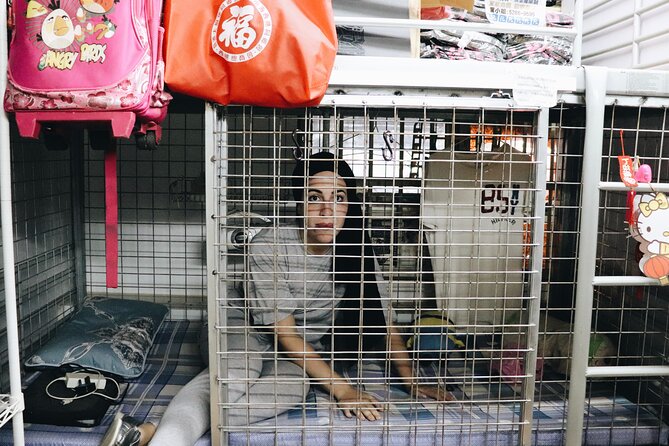
The main consideration is simple: this is not a cheerful sightseeing stroll, and you do not enter occupied cage homes. The small flat shown on the route is a staged display unit, so book this for context and discussion rather than a dramatic interior visit.
Key points to know before you go
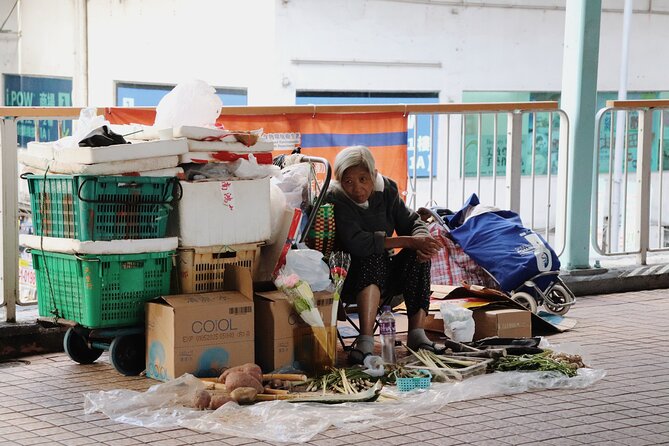
- A rare look at Sham Shui Po: Walk through lower-income streets, traditional markets, and back lanes far removed from Hong Kong’s postcard image.
- The housing crisis becomes physical: See how a typical 500-square-foot apartment can be split into five units of about 100 square feet each.
- The staged flat matters: You can view a model subdivided home and a cage-home setup, but not an occupied private residence.
- Strong guides shape the experience: Alice, Isaac, Grace, Summer, Michael, and Wind are among the guides praised for clear English, thoughtful answers, and a balanced approach.
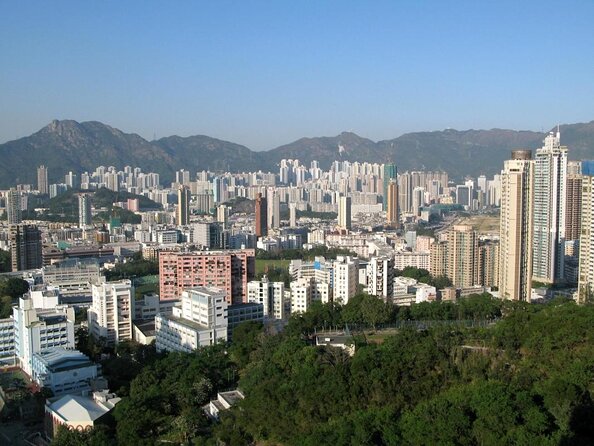
- A rooftop view with a purpose: From Pei Ho Street, look across dense housing and see how old and new homes crowd together.
- A useful price point: At $32.82 per person, the value rests in the guide’s explanation and access to places you would likely pass without understanding.
Why this Kowloon walk changes your view of Hong Kong
Most first-time visits to Hong Kong focus on Victoria Harbour, skyscraper viewpoints, temples, shopping streets, and dim sum. Those are worthwhile. Yet the city’s high-rise shine can hide the harder question: how do ordinary workers afford to live here?
This tour puts that question at street level. You start near Prince Edward on Nathan Road at 11:00 a.m., then move through parts of Kowloon toward Sham Shui Po. You will see shops, markets, housing blocks, and side streets while your guide explains the pressure behind them.
The subject is serious, but the format is practical. You are not asked to stare at people’s private lives. Instead, you learn how housing is divided, who gets pushed into the smallest spaces, and why the problem remains so difficult to solve.
I especially value the urban planning angle. The tour connects high property prices to limited land supply and decades of population growth. It also explains how a low-tax, capitalist economic model shaped the city’s housing choices. That wider frame helps you understand Hong Kong as a working city, not just a collection of famous sights.
More Walking Tours in Hong Kong
- Hong Kong: Dark Side of Hong Kong Caged Homes Walking Tour
★ 4.8 · 790 reviews - Hong Kong Day Tour: Priority Peak Tram, City Walk & Dim Sum
★ 4.5 · 266 reviews - Introduction to Hong Kong: Central Tip Based Walking Tour
★ 5.0 · 202 reviews
Cedar Street and the mathematics of cramped homes
The first stop on Cedar Street introduces the basic numbers. Hong Kong is described as the world’s least affordable city, and the guide shows how a normal 500-square-foot apartment may be divided into five units of roughly 100 square feet.
The numbers are stark because they are easy to picture. A 100-square-foot space may need to hold a bed, cooking area, storage, and daily life. For a minimum-wage family, that can mean several functions squeezed into one small room.
Your guide also explains why subdivided units exist. High rents and limited supply force people to choose between distance, privacy, safety, and cost. The discussion moves beyond the familiar phrase housing crisis and shows what it means inside an ordinary building.
This stop is mostly explanation rather than a major attraction. That is worth knowing if you prefer tours packed with famous buildings. The reward comes from paying attention to the guide and looking at the surrounding blocks with new eyes.
Ki Lung Street and the forces behind the crisis
At Ki Lung Street, the story widens. Post-war population growth, scarce land, and Hong Kong’s economic system are treated as connected forces rather than separate facts.
This part is useful because it prevents an overly simple explanation. The housing problem is not presented as the result of one bad decision or one careless group. You get a picture of a city shaped by strong demand, restricted space, property pressure, and a large gap between incomes and housing costs.
The guide-led discussion is also where questions matter most. Past participants have highlighted guides such as Isaac and Alice for taking questions seriously and explaining economic and political issues in clear English. If you enjoy asking how policies affect daily life, this may be one of the strongest sections.
You should not expect a lecture hall or formal presentation. The information arrives in short stops along the street. In warm or wet weather, that can make the walk tiring, although one account notes that much of the explanation took place indoors or in air-conditioned areas.
The 100-square-foot display flat
Back on Cedar Street, you step into a 100-square-foot subdivided flat display. It is designed to show how a kitchen, bed, and living area might fit into the same tiny space for a minimum-wage household.
The display gives the housing issue a physical shape. You can see the lack of room instead of merely hearing a figure. It also helps explain the difference between a subdivided flat and a cage home, which are often treated as the same thing by outsiders.
Here is the important limitation: this is a staged display, not an occupied home. You will not enter an actual resident’s cage room or photograph someone’s private living space. Some people may find the lack of access disappointing, but I consider the boundary appropriate.
That distinction also tells you how to judge the tour. It is not poverty tourism. It uses a model space, public streets, and guide explanation to discuss a sensitive subject without turning private hardship into an attraction.
A very different day in Hong Kong:
- Hong Kong: Victoria Harbor Symphony Unlimited Drink Cruise
★ 4.3 · 1,873 reviews - Lantau Island Day Trip – Big Buddha & Tai O
★ 4.5 · 1,328 reviews - Hong Kong: Victoria Harbour Evening Cruise with Drinks
★ 4.6 · 1,260 reviews - Hong Kong: City Highlights Guided Tour w/Entry Fees & Lunch
★ 4.4 · 1,178 reviews
Lui Seng Chun and a personal housing view
At Lui Seng Chun, the guide brings the issue closer to home by discussing the practical difficulty of finding housing in one of the world’s toughest property markets. This stop gives the broader statistics a personal point of reference.
The exact tone can vary with the guide. Alice has been praised for being genuine and clear, while Grace has been noted for thoughtful answers to both basic and philosophical questions. Isaac is described as engaging and good at pacing the information. Guides change, but the experience depends heavily on who leads your group.
That makes the maximum group size of 30 worth considering. Thirty people is not an intimate private tour, and it may be harder to hear in a noisy street. Still, the walking route and repeated stops give you chances to stay near the guide and ask questions.
Yee Kuk Street and Sham Shui Po’s back lanes
Yee Kuk Street takes you into the backstreets of Sham Shui Po. Here, the guide discusses the area’s illicit links between the drug and sex trades, adding another layer to the economic pressure already described.
This is not a stop for sensational stories. Its value is in showing how poverty, unstable housing, and marginal work can overlap in a dense urban district. The subject matter is adult and unsettling, so families should decide if the tone suits younger children.
The streets also provide some of the tour’s best visual material. One guide, Grace Wu, has been praised for pointing out small details that reveal larger stories. If you enjoy street photography, bring a camera, but use good judgment and avoid photographing people in vulnerable situations.
Sham Shui Po can feel much more direct than central Hong Kong. You may find peeling facades, narrow passages, market activity, and signs of daily work packed into a small area. The tour asks you to observe carefully without treating the neighborhood as a stage set.
Hai Tan Street and the million-dollar contrast
At Hai Tan Street, the guide points out new apartments priced around US$1.5 million beside dense clusters of subdivided units and cage homes. Few explanations are needed once you see those buildings together.
This is one of the tour’s clearest visual comparisons. Hong Kong’s housing divide is not hidden in a distant suburb. Expensive new homes and severely cramped units can share the same few blocks.
The contrast also raises a useful question about value. A $32.82 walking tour cannot solve the city’s housing problem, but it can show you why the issue is so hard to ignore once you understand the geography. You are paying for interpretation, not admission to a major attraction.
If you have already spent your trip visiting free markets and walking Kowloon independently, you may find the price harder to justify. If you want the political, economic, and social explanation behind what you see, the fee is reasonable for a local guide and two hours of focused attention.
Pei Ho Street and the rooftop view
At Pei Ho Street, the route rises to a rooftop in central Sham Shui Po. From there, you look across dense housing and see a side of Hong Kong that rarely appears on travel brochures.
The rooftop stop gives the tour a pause from street-level detail. You can connect the narrow interiors discussed earlier with the larger pattern of packed buildings, limited open space, and competing property values.
Do not expect a sweeping harbor panorama. This is a working-city view, not a skyline photo stop. Its strength is the way it shows the scale of the housing problem and the older, less polished side of Kowloon.
For many people, this is the most memorable stop because the visual information arrives all at once. You see how close the buildings are, how much space is being used, and how little separation exists between different income groups.
Kweilin Street and SoCo’s possible solutions
The final stop takes you to SoCo, a charity with 50 years of work advocating for marginalized people. The conversation turns from problems to possible solutions and the city’s future.
That ending matters. A tour about hardship can leave you feeling helpless if it only lists grim conditions. At SoCo, the guide discusses advocacy and the work of an organization trying to improve life for people pushed to the edges of the housing system.
The stop also gives you a chance to test your own view of the issue. You may leave thinking about public housing, land use, rent controls, redevelopment, or the cost of growth. The tour does not pretend that one simple answer will fix Hong Kong.
By ending with civic action, the route keeps its purpose clear. You are not touring poverty for entertainment. You are learning how a city functions and considering who benefits from its success.
What the guides do best
The most praised feature of this experience is the guiding. Names vary by date, but Alice, Isaac, Grace, Summer, Michael, Wind, and Simeone Lo have all led tours described as engaging, factual, friendly, and open to questions.
That praise points to what you should look for during the walk: a guide who can explain facts without turning the tour into a political rant, and who can discuss hardship without using people’s suffering as a spectacle.
The best guides also pace the material. There is a lot to take in, from housing types to economic history and social issues. A clear explanation at each stop makes the information easier to remember than a long speech delivered all at once.
You should still keep your expectations realistic. The tour is only about two hours, and each stop lasts roughly 10 to 15 minutes. It offers a strong introduction, not a full academic study of Hong Kong housing.
Practical details, comfort, and group size
The meeting point is on Nathan Road near Prince Edward, with the tour ending at Sham Shui Po MTR Station. That makes the finish convenient for continuing your day by public transport, and you can explore the neighborhood or eat nearby afterward.
You need a moderate level of physical fitness. This is a walking tour with street movement and a rooftop visit, so wear comfortable shoes. Hong Kong weather can make the route feel harder, especially in heat or rain.
The tour accepts mobile tickets and includes a local guide. Hotel pickup and drop-off are not included, so you need to reach the Prince Edward starting point yourself.
Groups can reach 30 people. A smaller group may offer easier conversation, while a larger one can make the experience feel less personal. If the guide is speaking in a noisy street, stay close enough to hear and save detailed questions for quieter stops.
The tour has a free cancellation policy up to 24 hours before the start time. Changes or cancellations inside that window are not refunded. The experience may also be canceled for poor weather or if the minimum number of participants is not met, with a different date or full refund offered.
Who should book this experience?
I recommend this tour to you if you want to understand Hong Kong beyond shopping, temples, and skyscrapers. It is especially suited to people interested in urban planning, economics, social policy, migration, photography, or the daily realities behind high property prices.
It can also work well for older teenagers. One family brought a 16-year-old and found the subject difficult but worthwhile. The material is serious, so talk with younger children beforehand about why the tour visits sensitive places.
You may want to skip it if you want upbeat sightseeing, major landmarks, or access inside real occupied homes. The tour includes no famous-ticket attraction, and one stop uses a staged display rather than an actual residence.
Should you book the Dark Side of Hong Kong tour?
Book it if your goal is understanding the city, not collecting another postcard view. At $32.82, the tour offers good value when the guide is strong, because the streets alone cannot explain why homes are divided into spaces barely larger than a parking spot.
The biggest strength is its balance of street observation, personal explanation, housing history, and social context. The biggest weakness is the limited physical access to real homes, plus the possibility that a group tour will feel less intimate than expected.
I would place it early in a Hong Kong visit. Afterward, ordinary apartment blocks, rooftop structures, markets, and property signs will mean more. You will still enjoy the city’s bright side, but you will understand who pays the price for it.
FAQ
How long is the Dark Side of Hong Kong tour?
The walking tour lasts approximately two hours.
Where does the tour start and finish?
It starts on Nathan Road near Prince Edward at 11:00 a.m. It ends at Sham Shui Po MTR Station.
Does the tour enter actual cage homes?
No. The route includes a staged display of a subdivided flat and a cage-home setup. It does not visit occupied private cage homes.
What does the tour include?
The tour includes a local guide and mobile ticketing. Hotel pickup and drop-off are not included.
How many people can join the tour?
The maximum group size is 30 people.
Can I cancel for a full refund?
Yes, if you cancel at least 24 hours before the experience start time. Poor weather or an insufficient number of participants may also lead to a rescheduled experience or full refund.
Recently listed in Hong Kong
- Small-Group Gong Relaxation Experience in Hong Kong★ 5.0 · 5 reviews
- Family-Friendly Tolo Harbour Cycling Adventure★ 4.0 · 5 reviews
- Different Tastes of Hong Kong★ 4.5 · 5 reviews
- Hong Kong Private Departure Transfer: Hotel to Airport★ 4.5 · 5 reviews
- Hong Kong Layover City Tour with 2-way Airport Express Transfer★ 3.0 · 5 reviews
- Ma On Shan Climbing Adventure★ 5.0 · 5 reviews
- Small-Group Tour: Hong Kong Local Markets Hopper [PROMOTION]★ 4.0 · 5 reviews
- Hong Kong Night Tour with a Local: Private & 100% Personalized★ 5.0 · 5 reviews
Hong Kong Tours, compared.

Victoria Harbor Symphony Unlimited Drink Cruise
Read our review →

City Highlights Guided Tour w/Entry Fees & Lunch
Read our review →
Dukling, Antique Boat Tour in Victoria Harbour
Read our review →
Big Bus Hong Kong Open Top Hop-On Hop-Off Sightseeing Tour
Read our review →
Big Bus Hop-On Hop-Off Tour & Optional Peak Tram
Read our review →
Hong Kong Day Tour: City Landmarks & Highlights
Read our review →Browse the lists this tour appears in