
Reviewed · FORBIDDEN CITY TOURS
Beijing Wangfujing Calligraphy Class by Forbidden City
Chinese calligraphy turns a simple lesson into a small cultural event. At this Wangfujing class, you learn how brush pressure, ink, paper, and rhythm shape each character, then practice writing Chinese words such as 福, meaning happiness. The class takes place near the Forbidden City, in a bookstore setting with air conditioning and tea.
I like the hands-on format, since you do not merely watch a demonstration. I also like that children and adults can work together, with enough room to ask questions and make several attempts. The main consideration is that the experience is an art lesson, not a tour of the Forbidden City, and the advertised duration can vary from 30 minutes to two hours depending on the option you book.
Key points to know before booking
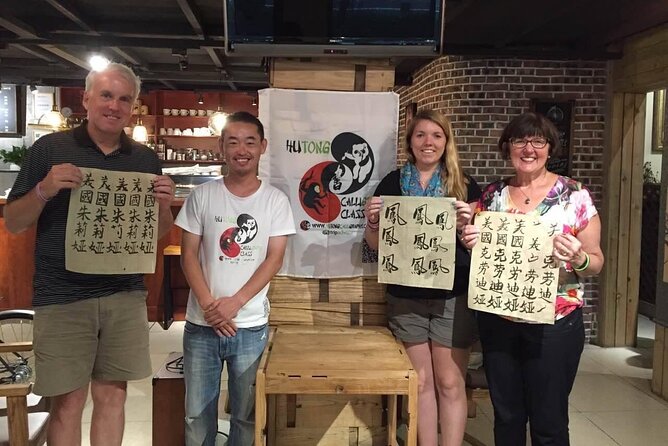
- Write your own Chinese characters: Practice with brushes, ink, and rice paper rather than simply observing a demonstration.
- Choose your class length: Options are listed for 30 minutes, one hour, 90 minutes, and two hours.
- Meet in Wangfujing: The meeting point is Hilton Beijing Wangfujing at No. 8 Wangfujing Dongjie.
- Richard may be your teacher: The experience includes an English-speaking calligraphy teacher, and Richard is specifically named in the available feedback.
- Good for families: One child chose the class instead of visiting major sights, and the family found it a worthwhile afternoon activity.
- Small group setting: The maximum group size is 15 people, which leaves room for questions but does not promise private instruction.
What this Wangfujing calligraphy class really offers
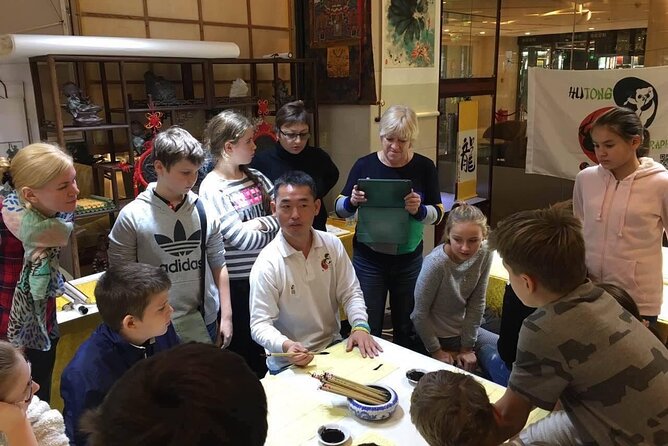
Beijing gives you no shortage of palaces, museums, and monumental sights. This class offers something quieter: a chance to understand Chinese culture through the physical act of writing.
Chinese calligraphy is not simply handwriting in another language. The shape of a character depends on the order, direction, speed, and pressure of each stroke. Your brush movement leaves a visible record of your control, hesitation, and rhythm. That makes the class useful even if your finished characters look more like enthusiastic experiments than museum pieces.
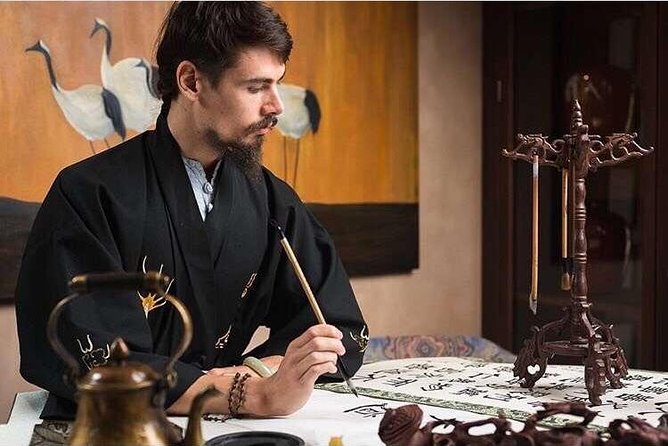
The lesson covers the basic tools of the art. You learn about brushes, ink, rice paper, inkstones, and seal carvings. These objects matter because calligraphy is built around the relationship between material and movement. A brush held too stiffly behaves differently from one allowed to flex. Ink that is too wet spreads across the paper, while a drier brush creates a lighter, more textured line.
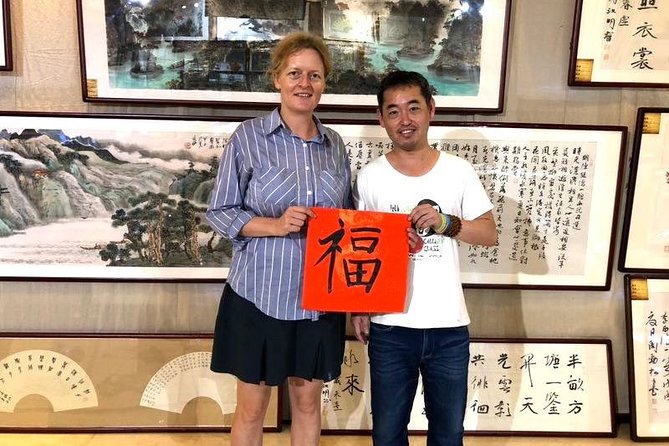
The class also gives you a practical connection to Chinese characters. Instead of seeing 福 on a doorway or souvenir and simply hearing that it means happiness, you can try to create it yourself. That personal effort gives the symbol more meaning, especially for children.
More Forbidden City visits:
- Beijing: Forbidden City Tour(Group/Private)-Tickets Included
★ 4.8 · 7,974 reviews - Beijing: T-Square & Forbidden City Group or Private Tour
★ 4.8 · 4,446 reviews - All-Inclusive Tour: Tiananmen Square, Forbidden City, Great Wall
★ 5.0 · 2,873 reviews
Meeting at Hilton Beijing Wangfujing
The class begins at Hilton Beijing Wangfujing, No. 8 Wangfujing Dongjie, in central Beijing. This is the Wangfujing area, close to the Forbidden City, but the class itself does not include admission to the palace complex or a guided visit there.
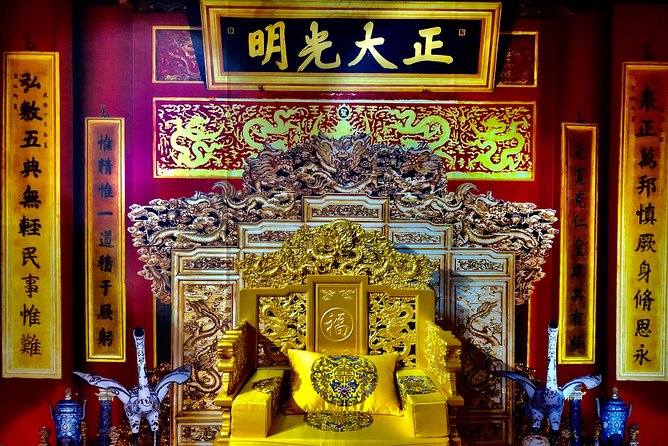
That distinction matters. The title may catch your eye because of the Forbidden City, yet the main attraction is the calligraphy lesson. Plan it as a cultural activity that fits neatly into a day in central Beijing, not as a substitute for sightseeing inside the Forbidden City.
The class is held in a bookstore, according to the detailed experience feedback. That setting gives the activity a more relaxed feel than a formal museum room. You can also expect air conditioning and tea, two small comforts that matter after walking around Beijing, especially during hot or cold weather.
The supplied meeting information says the activity ends back at the meeting point. That makes planning simple. You do not need to arrange a separate return transfer, though you remain responsible for getting to and from the Wangfujing area.
The lesson begins with tools and technique
The class starts by introducing the materials used in traditional calligraphy. You handle the supplies provided for the lesson, so you do not need to arrive with your own brush, ink, or paper.
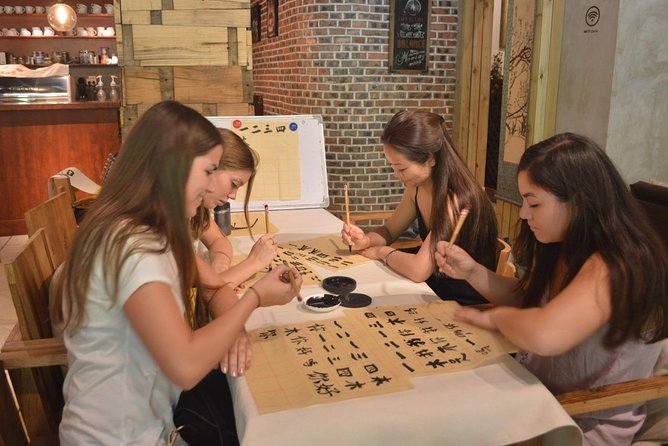
The teacher explains the role of each item before you begin writing. This is a useful step because the tools may feel unfamiliar. A Chinese calligraphy brush is not used like a ballpoint pen. You work with the brush tip, the amount of ink, and the pressure of your hand. The paper also responds quickly, so a slow or uncertain stroke can show immediately.
An English-speaking teacher leads the class, and Richard is named as one instructor associated with the experience. The English instruction is important for first-time students. You can ask why a stroke is made in a particular direction, how a character is assembled, or what a particular word means without relying on guesswork.
The class also includes an introduction to the age and importance of calligraphy in Chinese culture. The exact depth depends on the length you select, but even a short lesson can give you a better sense of why calligraphy is treated as an art form rather than ordinary writing.
From practice strokes to a finished character
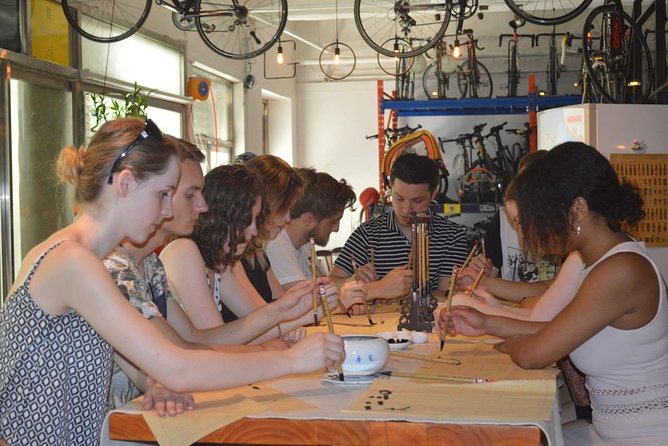
Expect to spend part of the lesson repeating basic strokes and characters. This is where the activity becomes more rewarding, and occasionally more challenging, than it first appears.
You may produce a few uneven lines before your hand starts to understand the brush. That is normal for a beginner. The teacher can show you how to adjust your grip and movement, then help you compare one attempt with the next. The goal is not perfect calligraphy in one sitting. The useful part is seeing how small changes improve the result.
The class can include writing characters in Mandarin. One particularly memorable focus is 福, the character for happiness or good fortune. A family used the lesson to write it, then went beyond practice by painting the characters on a decorative board. If your chosen class includes enough time and the activity offers the same option on the day, that kind of finished piece can become a meaningful souvenir.
Do not assume that every booking includes a decorative board or a particular character. Those details come from individual experience information, while the standard inclusions promise calligraphy supplies for use during the class. If creating a finished board matters to you, ask about it before booking.
More workshops and classes in Beijing:
- Beijing Calligraphy Class
★ 4.9 · 112 reviews - Chinese Calligraphy Class for Small Group
★ 5.0 · 104 reviews - Beijing: Dumpling Making Workshop with Meal and Tea
★ 4.7 · 69 reviews - Online Cooking Class Beijing Dumplings and Cuisine by Sunflowerli Renowned Chef
★ 5.0 · 65 reviews
Why the class works well for families
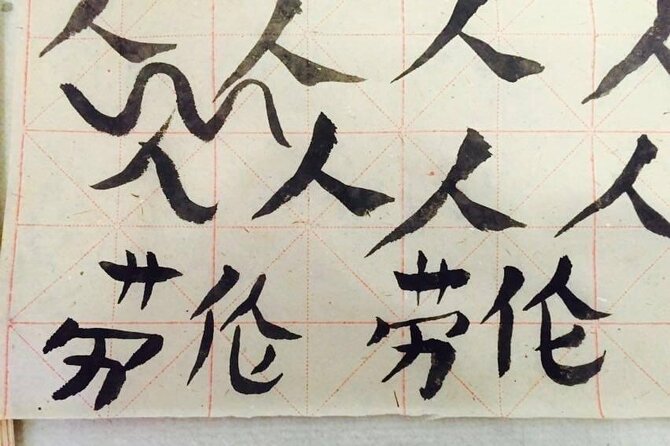
The activity is one of the better choices for a family looking for a break from major Beijing sights. A child reportedly chose this class instead of visiting other famous sites, and the family spent an enjoyable afternoon learning and practicing together.
That makes sense. Calligraphy gives children an immediate task, a visible result, and a cultural subject they can take home in their memory or on paper. Adults can work at their own level, ask questions, and enjoy the slower pace.
It is also a useful option when your group has mixed interests. One person might enjoy the artistic side, another might like the language connection, and a child might simply enjoy using a brush and making a recognizable character. The class does not require prior experience, and the additional information says most people can participate.
Still, the group format has limits. The maximum is 15 people, so this is not automatically a one-to-one lesson. If several people need close correction at the same time, the teacher’s attention must be shared. That is a fair trade-off at this price, but private students should set their expectations accordingly.
Picking the right class length
The experience is sold with several duration choices: 30 minutes, one hour, 90 minutes, and two hours. The tour summary lists approximately one hour, while the included options tell you to choose the length when booking.
Check the exact option carefully before paying. A 30-minute session may suit you if you are fitting the activity between other plans or want a quick introduction. It may be enough for a basic explanation, a few practice strokes, and an attempt at a character.
The one-hour class is the most balanced choice for many people. It should give you time to hear about the art, learn the tools, practice, and ask questions without turning the activity into a major time commitment.
The 90-minute and two-hour options make more sense if you want repeated practice or hope to create a more finished piece. Longer sessions may also be better for families, since children often need time to settle into the technique. The provided information does not specify exactly what extra activities are included in each longer option, so confirm what changes with the added time.
The value of $20 in central Beijing
At about $20 per person, this is a reasonably priced cultural activity, particularly when you consider the central location, English-speaking instruction, tea, and use of calligraphy supplies.
The value is strongest if you want participation rather than a short explanation from behind a barrier. You are paying for instruction and materials, not just entry into a room. The chance to ask questions and try the art yourself gives the experience more substance than a quick photo stop.
The value changes with the selected duration. If the $20 price applies to a one-hour option, it is a sensible purchase for a compact cultural lesson. If you select a longer version, check whether the price changes and what additional work time or materials are provided.
Gratuities are not included and are recommended. Other expenses not listed are also excluded. Keep a little flexibility in your budget, especially if the teacher gives you extra personal help or your group wants a finished item beyond the standard supplies.
What I like, and what I would watch
I like the way the class connects a cultural idea with a physical action. You do not just hear that calligraphy is important. You feel the brush respond to your hand and see the result appear on the paper.
I also like the calm indoor setting. The bookstore, tea, and air conditioning make this an appealing pause in a full day around Wangfujing. It is practical for families and for anyone who needs an activity that does not involve another long walk or crowded attraction.
Richard receives specific praise as a teacher, and the experience provides an English-speaking instructor. That gives you a clear point of contact for questions and basic corrections. Still, the teacher assigned to your class may not be Richard, so book with the expectation of an English-speaking art teacher rather than a guaranteed named instructor unless your reservation confirms it.
The biggest limitation is the vague timing. Several class lengths are offered, while the public summary describes the activity as about an hour. You should verify your selected duration and what it includes. Also remember that the class is near the Forbidden City, not a Forbidden City tour.
Who should book this experience?
I would recommend it to families, couples, and solo visitors who want a cultural activity with a real hands-on element. It suits you especially well if you enjoy learning a craft, asking questions, or bringing home a small piece of your own work.
It is also a good choice for a rainy, cold, or very hot day because the class takes place indoors. The air-conditioned bookstore setting and tea make it an easy addition to a Wangfujing schedule.
You may want to skip it if your priority is seeing as many major sights as possible. Even the one-hour version takes time away from the Forbidden City, the National Museum, or other Beijing attractions. It is best treated as a deliberate change of pace.
The activity has a maximum of 15 people, so it can feel personal without being fully private. Most people can participate, and confirmation is received at booking. Free cancellation is available if you cancel at least 24 hours before the local start time. After that point, the payment is not refunded, and late changes are not accepted.
Should you book the Wangfujing calligraphy class?
Book it if you want to do something distinctly connected to Chinese culture rather than simply look at another famous building. For about $20, you get a teacher, supplies, an indoor Wangfujing location, and time to practice a character such as 福.
I would choose the one-hour option for a first visit and the longer version if you care about repeated practice or a decorative finished piece. Confirm the exact duration and any special artwork before booking.
Skip it only if your Beijing schedule is already too tight or you specifically want a Forbidden City tour. For everyone else, this is a friendly, low-cost way to slow down, use your hands, and leave central Beijing with a better understanding of how Chinese writing becomes art.
FAQ
Where does the calligraphy class meet?
The meeting point is Hilton Beijing Wangfujing, No. 8 Wangfujing Dongjie, in Beijing’s Wangfujing area.
Does the class take place inside the Forbidden City?
No. The class is located in the Wangfujing area near the Forbidden City. Forbidden City admission is not listed as part of the activity.
How long does the experience last?
The available choices are 30 minutes, one hour, 90 minutes, and two hours. Check the option you select when booking, since the general description gives an approximate one-hour duration.
Is an English-speaking teacher provided?
Yes. An excellent English-speaking calligraphy teacher is included. Richard is named as a teacher associated with the class, but confirm the assigned instructor if having him specifically matters to you.
Are calligraphy materials included?
Yes. Calligraphy supplies are provided for use during the class. The lesson covers brushes, rice paper, ink, inkstones, and seal carvings.
Can children participate?
Yes. The activity is described as suitable for both adults and children, and most people can participate.
What is the maximum group size?
The class can have a maximum of 15 participants.
Does the activity include tea or air conditioning?
The class takes place in a bookstore setting with air conditioning, and tea is available according to the experience details.
Where does the activity finish?
The class ends back at the meeting point at Hilton Beijing Wangfujing.
Can I cancel for a full refund?
Yes, if you cancel at least 24 hours before the experience start time. Cancellations made less than 24 hours in advance are not refunded, and late changes are not accepted.
Recently listed in Beijing
- Small-Group 1-day Jinshanling Great Wall 6km Hiking tour★ 5.0 · 4 reviews
- Temple of Heaven Tickets Booking★ 5.0 · 4 reviews
- Jinshangling Great Wall Of Beijing Tickets And Other Option★ 4.0 · 4 reviews
- Beijing Night Walking Tour★ 5.0 · 4 reviews
- Beijing: Private Biking Tour Along Central Axis of Beijing★ 4.8 · 4 reviews
- Private Layover Tour to Mutianyu Great Wall from Beijing Airport★ 5.0 · 5 reviews
- Fantastic Private Trip to Mutianyu Great Wall (English Service)★ 5.0 · 5 reviews
- Beijing: Private Tour to Jinshanling Great Wall with Option★ 4.7 · 5 reviews
Forbidden City Tours, compared.
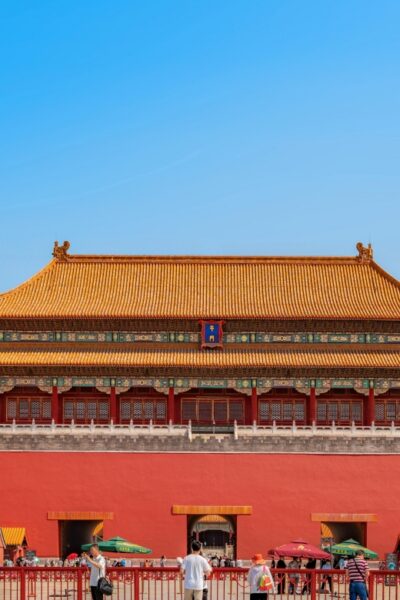
Forbidden City Tour(Group/Private)-Tickets Included
Read our review →
T-Square & Forbidden City Group or Private Tour
Read our review →
All-Inclusive Tour: Tiananmen Square, Forbidden City, Great Wall
Read our review →
4-Hour Small Group Tour to Forbidden City with Entry Tickets
Read our review →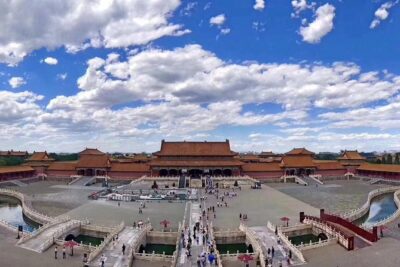
Beijing Full Day Tours: Tiananmen Sq, Forbidden City, Great Wall
Read our review →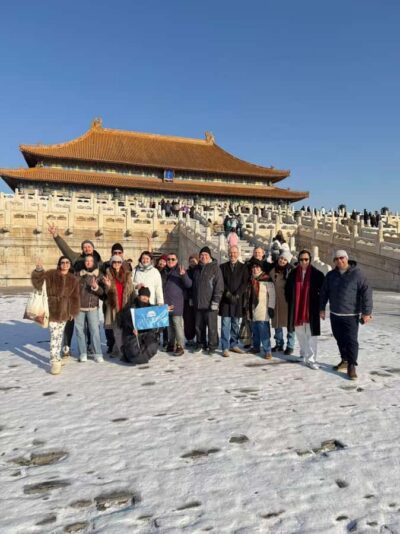
Tianmen Square, Forbidden City & Royal Museum Tours
Read our review →
Beijing Forbidden City Ticket Booking (Optional: guide service)
Read our review →
Forbidden City and Tian’anmen Square Waking Tour
Read our review →Browse the lists this tour appears in