
Reviewed · BEIJING TOURS
Chinese Calligraphy Class for Small Group
Chinese calligraphy is not just handwriting with a fancy brush. In this Beijing class, you learn how posture, breathing, balance, and brush pressure shape each stroke. The lesson begins at Hilton Beijing Wangfujing and can include a short standing exercise, instruction in Yin-yang ideas, and practice before you create a final piece to take home.
I like the small-group setting, which gives the teacher time to correct your grip and posture. I also like the choice of class lengths, from 30 minutes to two hours, and the chance to leave with a personal Chinese calligraphy keepsake rather than just a few photographs.
The main consideration is timing. Thirty minutes can feel rushed if you want more than a quick introduction, and the meeting location may need careful checking because the map can lead you only to the surrounding road rather than the exact entrance.
Key points to know before booking
- Choose from five class lengths: Sessions are offered for 30 minutes, 45 minutes, one hour, 1.5 hours, or two hours.
- Meet near Wangfujing: The class starts in the lobby of Hilton Beijing Wangfujing, with the activity ending at the same meeting point.
- Expect hands-on teaching: You practice brush use, posture, and basic strokes before working on a final piece.
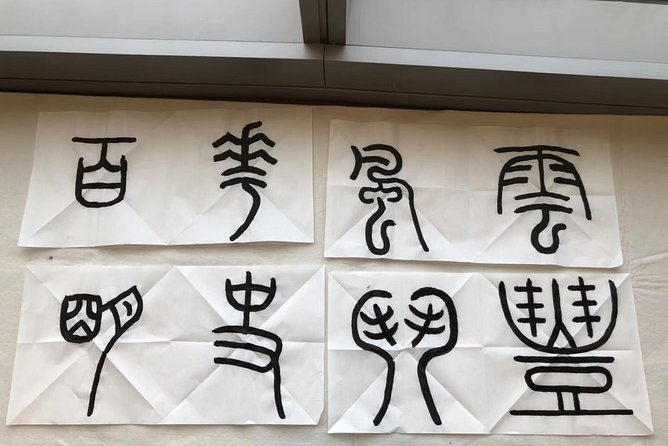
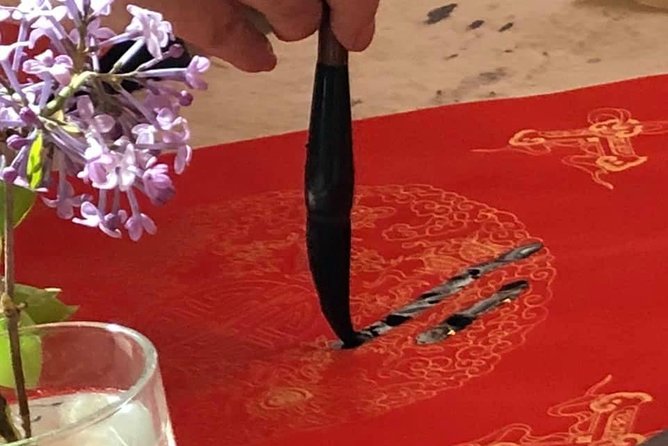
- Your artwork becomes a souvenir: Several participants took home a canvas or red hanging ornament with a Chinese character or phrase.
- Richard is often praised for patience: David and Robert Lee are also named as possible instructors, so confirm the assigned teacher if that matters to you.
- The price is modest: At $20 per person, the class offers a low-cost cultural activity, though longer sessions may be the better buy for serious beginners.
A calm introduction to Chinese calligraphy near Wangfujing
This class offers a useful change of pace from Beijing’s major sights. After crowded streets, long palace visits, and busy shopping areas, sitting down with ink and paper gives you a quieter way to connect with Chinese culture.
The setting is convenient for anyone staying near Wangfujing. You meet the art teacher in the lobby of Hilton Beijing Wangfujing, at 8 Wangfujing East Street in Dongcheng District. From there, the class focuses on calligraphy rather than a long sightseeing route.
The lesson is built for beginners. You do not need to read Chinese or arrive with artistic training. The teacher explains how to hold the brush, how to sit or stand correctly, and how to control each stroke. You then repeat the movements until the brush begins to feel less awkward.
That last part matters. Chinese calligraphy is a physical skill, not simply a matter of copying a printed symbol. The amount of ink, the angle of the brush, and the speed of your hand all affect the result. A patient teacher can make the difference between a frustrating first attempt and a satisfying one.
More workshops and classes in Beijing:
- Beijing Calligraphy Class
★ 4.9 · 112 reviews - Beijing: Dumpling Making Workshop with Meal and Tea
★ 4.7 · 69 reviews - Online Cooking Class Beijing Dumplings and Cuisine by Sunflowerli Renowned Chef
★ 5.0 · 65 reviews
The three-part lesson: stillness, posture, and practice
The class begins with an exercise described as immersion standing. You stand quietly as a way to settle down and let go of hurried energy. This connects the activity with ideas from Yin-yang philosophy and the Chinese search for inner balance.
You should not expect a long meditation session. It is a short opening that sets the tone for the lesson. Some people will enjoy this slower start, especially after a full day of sightseeing. If you prefer to get straight to painting, it may feel a little unusual, but it gives the class more cultural meaning than a basic craft workshop.
The second stage covers posture and brush handling. The teacher shows you the correct position for calligraphy practice, then explains the basic strokes. This is where personal instruction is most useful. A brush can bend, spread, or release ink in ways that are hard to understand from a book or video.
You learn by watching the teacher and trying the movement yourself. The class is not designed to turn you into a master in one hour. Its goal is to give you a feel for the method and enough practice to produce a finished piece with help.
The final stage is hands-on work. You practice on supplied materials before attempting the final artwork. The teacher may set small challenges to help you improve control and confidence. By the end, you have something more personal than a souvenir bought in a shop.
Why the small-group format matters
The class allows a maximum of 15 people, though the experience is presented as a small-group activity. That is not the same as a private lesson, so the amount of individual attention can vary with attendance.
Still, calligraphy benefits from close correction. The teacher can watch your wrist, point out a posture problem, and show you how much pressure to use. Several accounts describe Richard as patient, attentive, friendly, and good at explaining the technique to beginners. David is also described as attentive, with teaching that includes Chinese culture as well as writing.
One account names Robert Lee as the instructor. Since more than one teacher is connected with the experience, the person leading your class may not always be Richard. If a particular instructor is important to you, contact the provider before booking rather than assuming.
The small-group format also works well for families and friends. Children must be accompanied by an adult, and most people can take part. Parents can practice alongside children instead of watching from the side. The activity is challenging enough to hold attention, but not so demanding that beginners need special preparation.
Picking the right class length
You can book a 30-minute, 45-minute, one-hour, 1.5-hour, or two-hour version. This flexibility is useful if your Beijing schedule is tight, but the options are not equal in value.
The 30-minute session is best for a quick cultural introduction. You can learn the basic idea, try the brush, and perhaps begin a final design. The tradeoff is limited practice time. One participant specifically advised choosing the one-hour option because 30 minutes was not enough.
The 45-minute class gives you a little more breathing room. It may suit families with young children or anyone fitting the class between other plans. You still should not expect a long, detailed study of calligraphy.
The one-hour class is the sensible middle choice for most people. It allows time for the opening exercise, instruction, repeated practice, and a final piece without taking too much of your day. At $20 per person, that length offers especially good value if the listed price applies to your selected option.
The 1.5-hour and two-hour sessions make more sense if you enjoy slow, careful practice. People who began with a shorter session sometimes added time because they were enjoying the process. Longer classes can also help families work at different speeds, since a child or first-time adult may need repeated demonstrations.
Check the exact duration and price when booking. The supplied details list $20 per person, but they also present several class lengths, so do not assume every option costs the same.
A few more Beijing days to line up
- From Beijing: Mutianyu Great Wall Tours with Options
★ 4.9 · 9,216 reviews - Beijing: Forbidden City Tour(Group/Private)-Tickets Included
★ 4.8 · 7,974 reviews - Beijing: T-Square & Forbidden City Group or Private Tour
★ 4.8 · 4,446 reviews - All-Inclusive Tour: Tiananmen Square, Forbidden City, Great Wall
★ 5.0 · 2,873 reviews
What you can take home
The final artwork is one of the strongest reasons to choose this activity. After practicing on ordinary materials, you may paint a character or phrase on a larger piece such as a canvas or red hanging ornament.
Several finished works centered on the idea of happiness. That gives you a meaningful keepsake, even if your brushwork is far from perfect. The value is not in producing museum-quality calligraphy. It is in knowing that you made the piece after learning what the strokes represent and how they are formed.
The red format also fits Chinese decorative tradition and makes the result easy to display at home. One family described taking pieces home for both the children’s and parents’ rooms. You should treat the final work as a personal souvenir, not a professionally framed artwork.
Supplies for use during the class are included. The available details do not promise that every material becomes yours, so ask the teacher what is included in the take-home piece if that is important to your packing plans.
Tea, conversation, and the cultural side of the class
The activity is not limited to brush technique. The teacher also explains Chinese cultural ideas, including Yin-yang philosophy and the meaning behind the practice. This gives the lesson more depth than a simple lettering demonstration.
Tea may also be offered. Richard is described as serving hot tea and, in one case, meeting participants at the subway and offering tea and conversation before the lesson. These touches depend on the teacher and circumstances, so I would treat them as possible extras rather than guaranteed inclusions.
The cultural discussion can be particularly helpful if you know little about Chinese calligraphy. You begin to see why balance, spacing, posture, and controlled movement matter. You also get a small window into how an ancient art can be used as a calming daily practice.
The class may suit you if you want a personal exchange with a local teacher. It is less suitable if your main goal is a formal art course with a fixed academic syllabus. The emphasis is on an enjoyable first experience, cultural understanding, and a finished souvenir.
Finding the meeting point at Hilton Beijing Wangfujing
The stated meeting point is the Hilton Beijing Wangfujing lobby. The listed address is Wangfujing East Street 8, Dongcheng District, Beijing, postal code 100006. The area is near public transportation, making it practical to reach without arranging a separate transfer.
Give yourself extra time to locate the exact entrance. One participant found that the map led only to the road, not directly to the building entrance. The actual class space was described as being in an arts centre, sharing an entrance with a mixed martial arts club and located between restaurants.
This is a useful detail. If you arrive at the general road location and do not see the class immediately, check building numbers and nearby signs. The teacher may also come outside to help locate you. The activity ends back at the meeting point, so you do not need to arrange a second pickup location.
Communication appears to be an important part of the operation. In one case, Richard waited when a delayed bus caused a late arrival from the Great Wall and stayed late to provide the booked 1.5-hour lesson. You should not rely on that happening every time, but it suggests that contacting the provider quickly is wise if your plans change.
Who will get the most from this Beijing activity
I would recommend this class to first-time visitors who want a cultural activity that takes about an hour rather than half a day. It fits easily around Wangfujing shopping, a meal, or visits to nearby sights.
It is also a good match for families. Children can create something tangible, and adults can practice alongside them. The need for an accompanying adult is the only stated child requirement.
Couples and small groups of friends should also find the format appealing. You can compare your strokes, laugh at the early attempts, and take home different versions of a meaningful character. Group discounts are available, which may improve the value for a larger party.
This is not the best choice if you want a private, advanced workshop or a long tour through historic Beijing. The activity remains in and around the meeting location, and the total class time can be as short as 30 minutes.
Price, flexibility, and overall value
At $20 per person, this is an inexpensive way to add hands-on culture to a Beijing itinerary. The price includes an art teacher and calligraphy supplies, so you are not paying only for a demonstration.
The value improves with the one-hour or longer options. A short class may provide a pleasant taste, but you need enough time to practice before making your final piece. If your schedule allows it, I would choose at least one hour.
You can also make the most of the price by treating the class as both an activity and a souvenir. A purchased calligraphy decoration may cost more and tell you less. Here, the finished work carries the memory of learning the brush movements yourself.
The experience is booked an average of 23 days ahead, so advance planning is sensible, especially if you need a particular time. Morning, afternoon, and evening sessions are offered. Free cancellation is available until 24 hours before the start time, giving you some protection if your Beijing plans shift.
Should you book the Chinese Calligraphy Class?
Book it if you want a relaxed, affordable cultural activity with personal instruction and a take-home keepsake. I especially like it for families, couples, and first-time visitors who want more than a photo at a famous sight.
Choose the one-hour option if possible. The 30-minute class is fine for a quick introduction, but it may leave you wishing for more practice. Also, confirm the meeting instructions and allow time to find the arts-centre entrance near the Hilton.
You should skip it if you want a private advanced course or a full historical tour. For everyone else, this is a smart way to slow down, learn a traditional skill, and bring home something you made in Beijing.
FAQ
Where does the Chinese calligraphy class meet?
The stated meeting point is the lobby of Hilton Beijing Wangfujing, at Wangfujing East Street 8 in Beijing’s Dongcheng District. The activity ends back at the meeting point.
How long does the class last?
You can choose a 30-minute, 45-minute, one-hour, 1.5-hour, or two-hour session when booking.
How much does the class cost?
The listed price is $20 per person. Several class lengths are offered, so check the price for your selected option during booking.
What happens during the lesson?
The class covers a standing exercise, correct posture, brush handling, basic calligraphy strokes, and repeated practice. You then create a final piece with the teacher’s guidance.
Are calligraphy materials included?
Calligraphy supplies for use during the class are included. The finished artwork may be taken home, though you should confirm the exact take-home materials for your chosen session.
Can children participate?
Yes. Children can take part, but they must be accompanied by an adult. Most people can participate.
Can I cancel the booking for a refund?
You can cancel at least 24 hours before the local start time for a full refund. Cancellations or changes made less than 24 hours before the experience are not accepted for a refund.
Recently listed in Beijing
- Small-Group 1-day Jinshanling Great Wall 6km Hiking tour★ 5.0 · 4 reviews
- Temple of Heaven Tickets Booking★ 5.0 · 4 reviews
- Jinshangling Great Wall Of Beijing Tickets And Other Option★ 4.0 · 4 reviews
- Beijing Night Walking Tour★ 5.0 · 4 reviews
- Beijing: Private Biking Tour Along Central Axis of Beijing★ 4.8 · 4 reviews
- Private Layover Tour to Mutianyu Great Wall from Beijing Airport★ 5.0 · 5 reviews
- Fantastic Private Trip to Mutianyu Great Wall (English Service)★ 5.0 · 5 reviews
- Beijing: Private Tour to Jinshanling Great Wall with Option★ 4.7 · 5 reviews
Beijing Tours, compared.

Forbidden City Tour(Group/Private)-Tickets Included
Read our review →
T-Square & Forbidden City Group or Private Tour
Read our review →
All-Inclusive Tour: Tiananmen Square, Forbidden City, Great Wall
Read our review →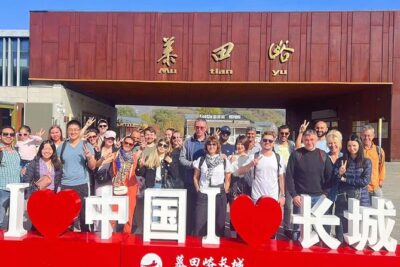
MuBus: Mutianyu Great Wall ENG/ESP/RUS Guided Bus Tour
Read our review →
4-Hour Small Group Tour to Forbidden City with Entry Tickets
Read our review →
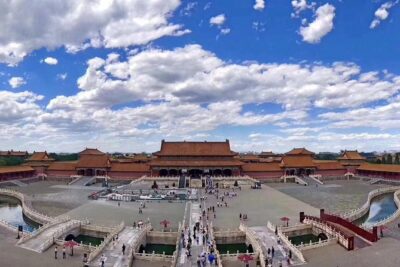
Beijing Full Day Tours: Tiananmen Sq, Forbidden City, Great Wall
Read our review →Browse the lists this tour appears in