
Reviewed · LAMA TEMPLE TOURS
Beijing: Lama Temple, Confucius Temple and Guozijian Museum
The most striking sight here is a 54-foot Maitreya Buddha carved from one sandalwood log. At the Lama Temple, you do not simply look at statues behind glass. You watch people light incense, bow, and pray, giving the visit a living religious setting. I like the way the tour links Buddhism with Confucian learning, then carries the story into Beijing’s hutong lanes.
I also like the private format and the focus on explanation. Guides such as Anne, Cassie, Mike, Ranee, and Aurora have been praised for clear English, patient storytelling, and keeping the visit moving on crowded days. The main consideration is transport: hotel pickup is included, but taxi or subway travel is your responsibility unless you select the private-car option. The four-hour schedule also gives you a useful introduction, not an exhaustive study of the area.
Key points to know before booking
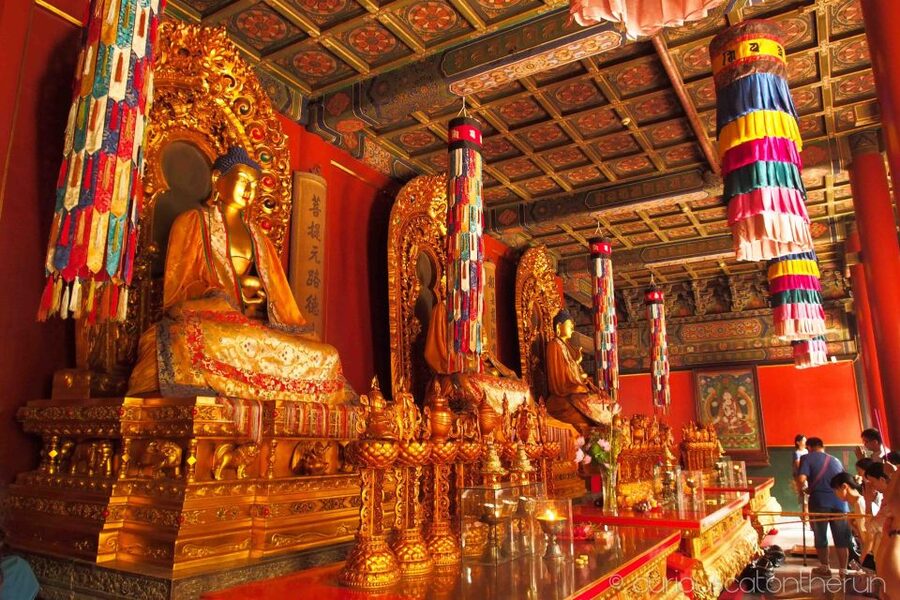
- See a 54-foot sandalwood Buddha: The Maitreya statue at Lama Temple was carved from a single precious white sandalwood log from Nepal.
- Watch active worship: You can observe local visitors lighting incense and practicing Buddhist rituals rather than seeing only silent monuments.
- Visit Beijing’s former imperial academy: The Imperial College, now part of the Guozijian Museum, was built in 1306 and served the Yuan, Ming, and Qing dynasties.
- Walk quiet hutong lanes: The route connects the temples through narrow alleys and ends near Wudaoying Hutong.
- Get a private English-speaking guide: Hotel lobby pickup is included, and the group is private rather than shared.
- Choose your level of convenience: Taxi or subway travel is possible, while private transfer and a dim sum meal are available as selected options.
Why this four-hour route works
Beijing can feel overwhelming at first. Huge imperial compounds, busy roads, and long distances make it hard to connect one site to another. This tour keeps the focus tight: Buddhist worship, Confucian education, and hutong life all appear within one northern Beijing neighborhood.
I like that the route is arranged as a story rather than a random list of sights. You begin with religious practice at Lama Temple, move into the intellectual and political world of Confucian education, then finish with ordinary residential streets. That sequence helps you see three sides of old Beijing in a single morning or afternoon.
The private format matters here. You can ask why a statue looks a certain way, pause when something catches your attention, or request a slower explanation. The guide also helps with the transitions between sites, which is useful in an area where a short walk can lead to a very different part of the city.
This is not a full-day grand tour of Beijing. You will not cover the Forbidden City, the Great Wall, or the city’s major imperial gardens. Instead, you get a compact cultural outing that works well early in a Beijing stay, especially if you want context before exploring more sites on your own.
More Museum Tours in Beijing
- Beijing: Tianmen Square, Forbidden City & Royal Museum Tours
★ 4.6 · 1,288 reviews - Beijing:Jingshan Park (Palace Museum Garden) Ticket
★ 4.5 · 185 reviews - Beijing Half Day: National Museum of China In-depth Tour with Subway Transfer
★ 5.0 · 70 reviews
Entering Lama Temple and its active Buddhist courtyards
The tour begins with a meeting in your hotel lobby. Your English-speaking guide holds a sign with your name, then takes you to Lama Temple by taxi or subway unless you have chosen private transportation.
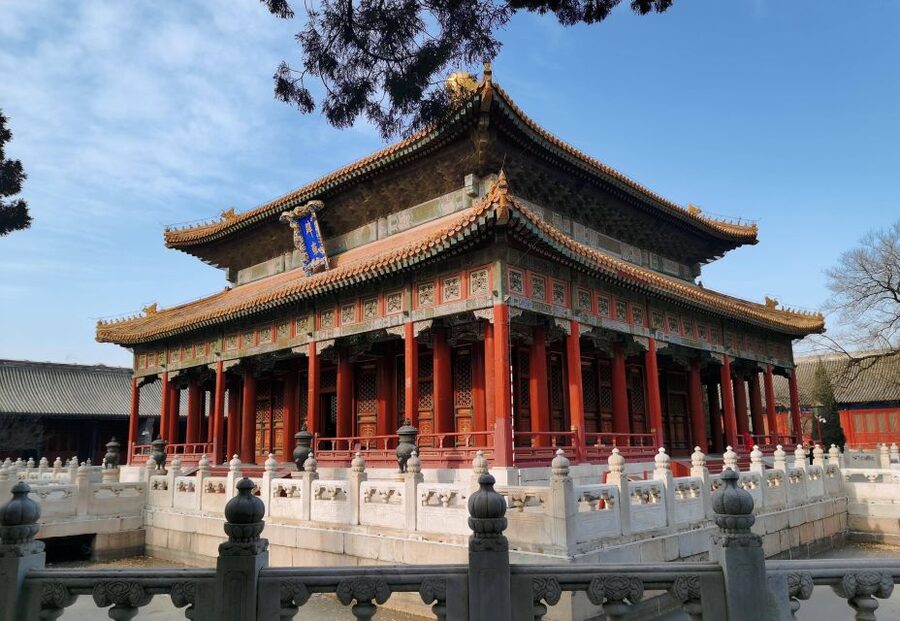
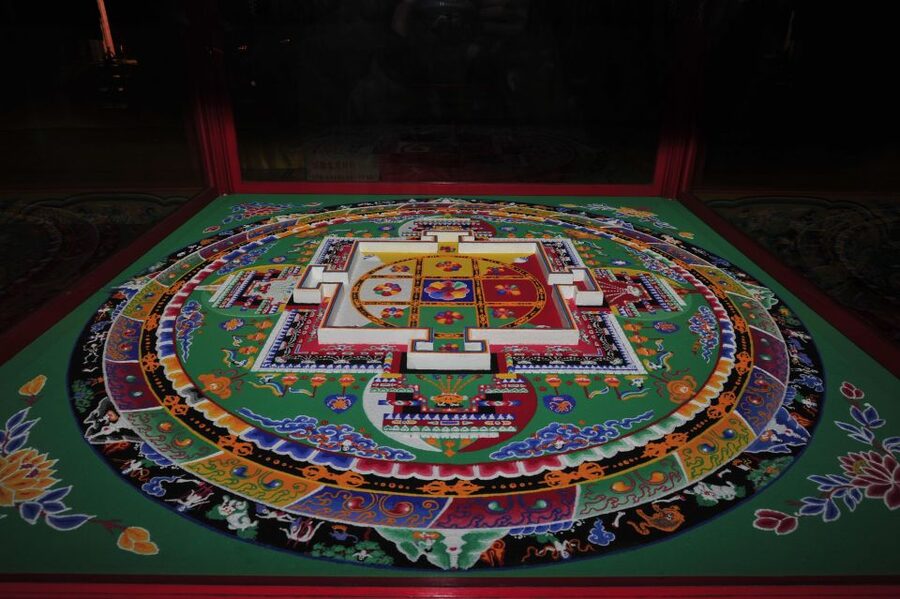
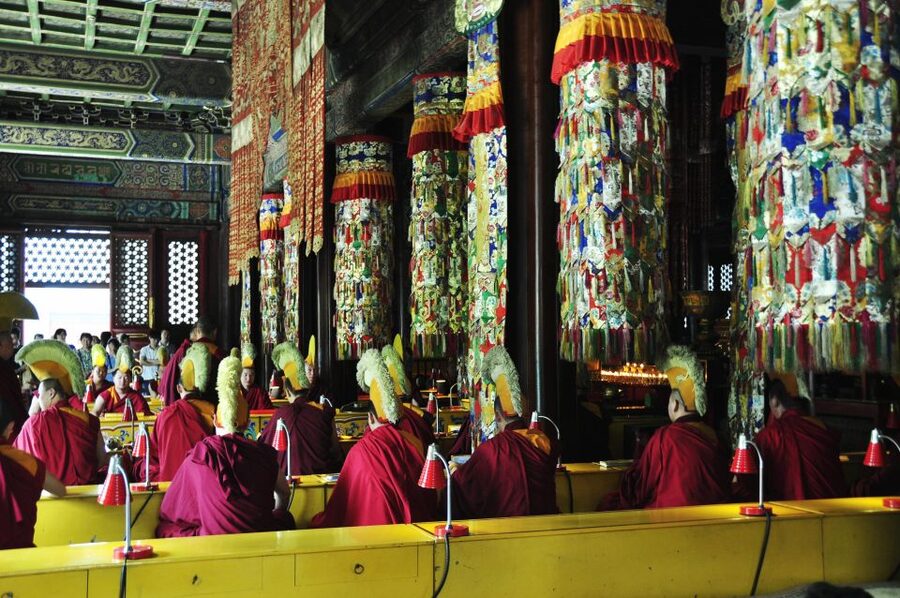
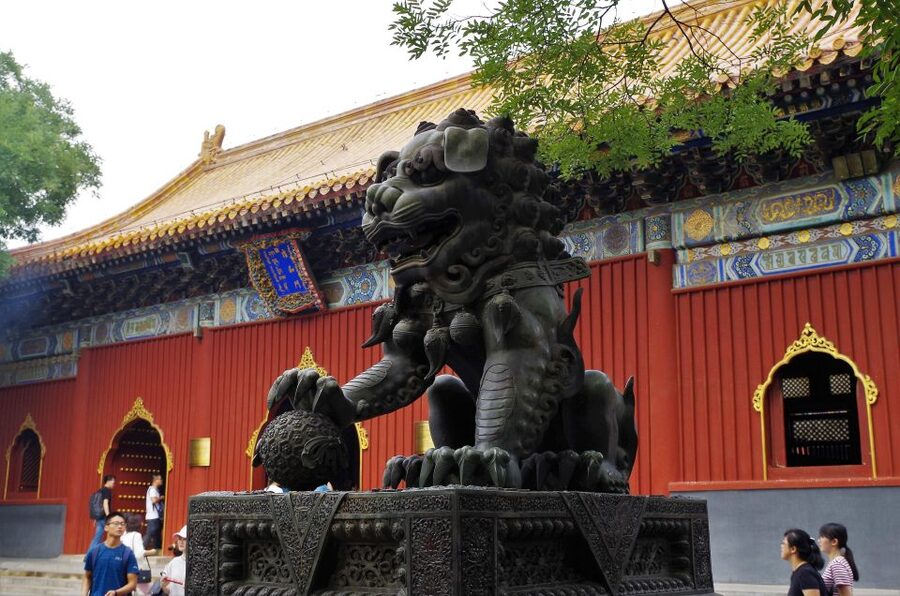
At the temple, expect a series of courtyards and halls rather than one single building. Your guide leads you through the complex, pointing out Buddhist figures and explaining their place in Chinese religious life. The value here is not just architectural. You can watch local worshippers burn incense and pray, which gives the site a present-day purpose.
That living use makes Lama Temple different from a museum. You should be respectful, keep your voice low in the active worship areas, and follow your guide’s advice about where to stand. The experience is observational. You are there to understand what is happening, not to turn a religious ceremony into a performance.
The guide’s explanations are especially helpful because Buddhist imagery can be difficult to read without context. A statue may represent a particular figure, teaching, or moment, but those details are easy to miss when walking alone. Clear narration turns the courtyards into a connected lesson instead of a procession of unfamiliar faces.
The temple can also be crowded. Anne was praised for keeping the visit organized on a busy day, while several guides were singled out for explaining complicated material in simple English. That points to an important strength of this experience: the guide can make a crowded place feel manageable, even if the setting itself remains busy.
The 54-foot Maitreya Buddha
The high point of Lama Temple is the Maitreya Buddha. The statue is described as 54 feet high and carved from one precious white sandalwood log brought from Nepal. It is also identified as the world’s largest wooden Buddha.
You will want to look up rather than simply walk past. The scale is impressive, but the construction detail is just as important. A single-log carving makes the statue a lesson in material, craft, and religious devotion at the same time.
This is where a guide adds real value. Without an explanation, you may see a very large Buddha and move on. With the background, you understand why the statue is unusual and why this particular hall deserves extra time.
The tour does not treat the Buddha as an isolated photo stop. It places the statue within the wider temple visit, alongside other halls and Buddhist figures. That wider setting helps you understand how the temple functions as a religious complex.
Photography rules and visitor behavior can vary within religious sites, so follow the instructions given on the day. The supplied information does not specify photography permissions, and it is best not to assume that every hall allows photographs.
Walking from Buddhism to Confucian learning
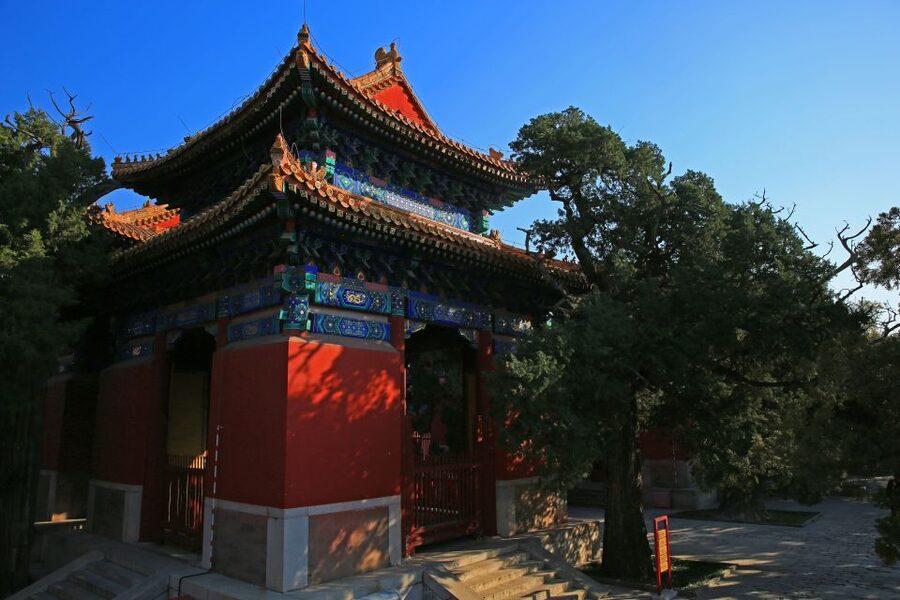
After Lama Temple, you walk through a quiet hutong alley toward the Temple of Confucius and Imperial College, also called the Guozijian Museum. This connection is one of the most appealing parts of the route.
The short walk changes the mood. Lama Temple centers on Buddhist devotion, while the next stops explain Confucian learning and the education of officials. Instead of treating Chinese culture as one single tradition, the tour gives you a chance to see different systems of thought side by side.
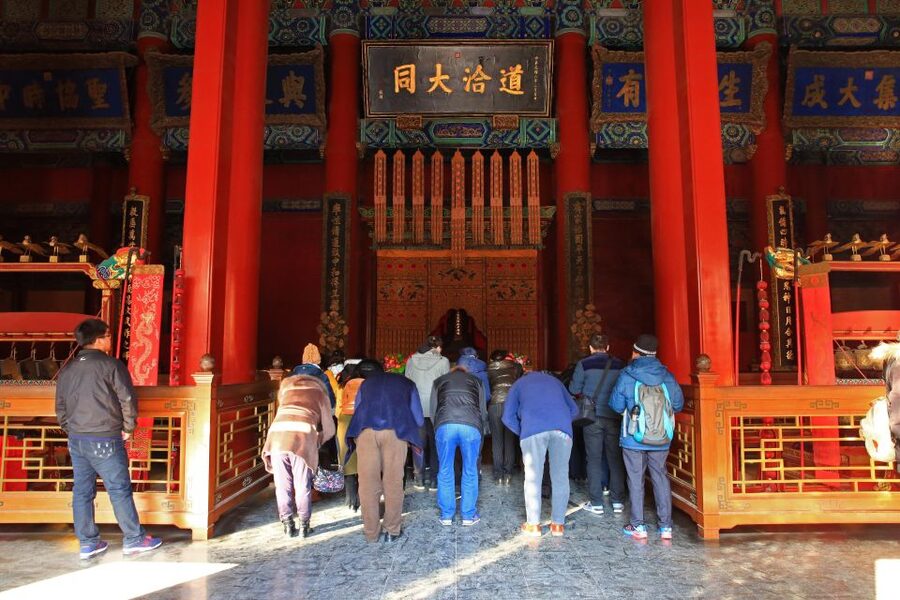
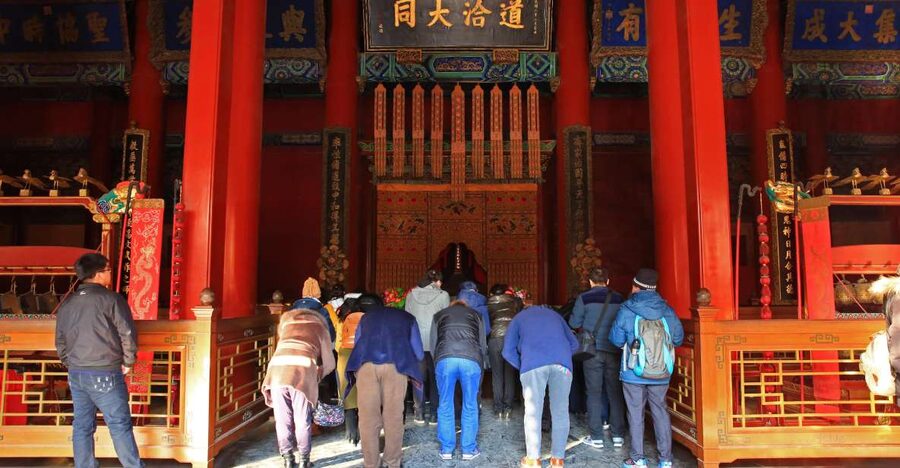
The Temple of Confucius is linked to the ideas and teachings of Confucius, while the adjacent Imperial College was the highest academy during the Yuan, Ming, and Qing dynasties. The college was built in 1306 by the grandson of Kublai Khan, giving the site a long connection with imperial government and education.
Your guide explains the stories behind the buildings and their role in earlier Chinese society. This is useful because the meaning of an old academy is not always obvious from its courtyards alone. You learn that education was tied closely to government service and the imperial system.
The Guozijian Museum name can be confusing because the site is both a historic institution and a museum setting. Listen for the distinction between the physical college, its past role, and the exhibits or interpretation you see during the visit.
The tour’s strongest educational feature is this contrast. At Lama Temple, you observe people practicing religion. At the Imperial College, you consider how learning, exams, and official service shaped public life. The two stops give you more useful context than either one would provide alone.
More Lama Temple visits:
- Temple Heaven, Lama Temple, Summer Palace & Peking Duck Bus Tour
★ 5.0 · 377 reviews - Temple Heaven, Summer Palace, Lama Temple, Hutong Bus Tour
★ 4.7 · 319 reviews - Temple of Heaven, Summer Palace, Lama Temple, Hutong Tours
★ 5.0 · 311 reviews - Beijing: Lama Temple (Yonghe Temple) Admission Ticket
★ 4.8 · 297 reviews
Hutong alleys and everyday Beijing
The final part of the tour takes you through Beijing’s hutong alleys. These narrow lanes offer a look at a type of urban life that is easy to miss if you stay only on the city’s main avenues.
Your guide explains the history of hutong streets and the way people have lived in them. The information provided does not promise entry into private homes or a staged neighborhood activity, so think of this as a guided walk through the public lanes.
That distinction is important. You are observing the character of the area, not receiving a guaranteed home visit. The appeal comes from seeing the scale and feel of local streets after visiting large religious and educational compounds.
The route ends in the area, and you can stay longer to explore Wudaoying Hutong. Your guide can suggest how to reach your next destination, which makes this a practical finish if you want to continue independently.
Wudaoying Hutong also gives you flexibility. You can end the formal tour after the walk, continue around the area, or select the option that combines the experience with a dim sum meal. Since the meal is an added option rather than part of every booking, check the exact choice you are reserving.
Guides, language, and the private format
The tour is conducted in English and designed for a private group. That is useful at sites where a large shared group could make it harder to hear or ask questions.
The strongest praise has focused on the guides’ explanations. Ranee was described as making the visit pleasant through strong subject knowledge. Mike was praised for presenting Chinese culture and ways of thinking in an entertaining way, while Cassie was credited with providing clear context and making the day joyful.
Aurora was noted for explaining details in an understandable manner. Anne received particular praise for excellent English, historical and cultural insight, and keeping the tour running smoothly on a crowded day. Another visitor highlighted an excellent narrative, and a French-speaking participant appreciated a guide’s patience.
Guide assignments can change, so you should not book expecting one specific person unless the provider confirms it. Still, the repeated pattern is useful: this tour depends heavily on the quality of its guide, and the available feedback points to clear communication and good storytelling as major strengths.
A private guide also lets you set the pace within reason. You can ask for more detail at the Buddha, request help understanding Confucian ideas, or keep the hutong walk moving if you have dinner plans. The total duration remains four hours, so a private group does not turn this into an open-ended visit.
Transport, timing, and what the $80 covers
The listed price is $80 per person for four hours. Included are the English-speaking guide, hotel pickup, and entrance fees. If you select the related private-car option, private transfer is also included.
Without private transportation, you travel to Lama Temple by taxi or subway with the guide. Transfer and hotel drop-off are not included in that version. This is the main cost detail to examine before booking, since the headline price does not cover every movement unless you choose the car option.
For the right person, the price can be good value. You receive a private guide, three connected cultural stops, entrance fees, and hotel pickup. Paying separately for transport may still keep the total reasonable, but you should compare the convenience of the private-car option with the flexibility and lower cost of using public transport or a taxi.
The four-hour length is another part of the value. It is long enough to cover Lama Temple, the Confucian sites, and the hutong walk without consuming a full day. It is a good fit if you have limited time in Beijing or want an organized half-day between larger sightseeing plans.
The tradeoff is depth. You will get an informed introduction to each place, but you should not expect long independent exploration at every hall. Crowds, walking speed, and questions from your private group can affect how much time you spend at each stop.
Hotel pickup makes the start easy, especially if you are new to Beijing. The guide meets you in the lobby with a sign bearing your name. Drop-off is not included in the non-car option, but guidance toward your next destination is provided at the end.
Booking terms are flexible: you can cancel up to 24 hours before the activity for a full refund, and the reserve-now, pay-later option lets you delay payment. Starting times depend on availability, so check the date and time that suit your plans.
Who will get the most from this tour
I would choose this outing if you want cultural explanation more than a checklist of famous landmarks. It is especially suitable for first-time visitors who want help understanding Buddhist worship, Confucian education, and Beijing’s old residential lanes.
It also fits families and small private groups that prefer to ask questions as they go. The English-language format and repeated praise for clear, patient explanations should help if you want history presented in plain terms rather than in a formal lecture.
This may not be the best pick if your priority is free time, shopping, or a long food-focused experience. The dim sum meal is an optional combination, and the tour itself follows a set four-hour route.
You should also consider your transport preference. Select the private-car version if you want the simplest door-to-door arrangement. Choose the standard version if you are comfortable using a taxi or subway and do not need hotel drop-off.
Should you book the Lama Temple and Guozijian tour?
Book it if you want a focused half-day with a private English-speaking guide and a clear cultural theme. The 54-foot sandalwood Buddha is the visual centerpiece, but the real strength is the connection between active Buddhist worship, imperial education, and hutong life.
The $80 price is most attractive when you value private guiding and included entrance fees. Add the private car if convenience matters more than keeping the basic cost down, and consider the dim sum combination if you want your meal built into the outing.
Skip it if you want Beijing’s biggest headline sights or several hours of unstructured wandering. For a compact introduction to northern Beijing’s religious, academic, and neighborhood life, this is a well-focused choice with guides who have shown strong skill in clear, engaging explanation.
FAQ
How long does the tour last?
The activity lasts four hours.
What sites are included?
The route includes Lama Temple, the Temple of Confucius, the Imperial College or Guozijian Museum, and a walk through nearby hutong alleys.
Is the Maitreya Buddha included?
Yes. At Lama Temple, you see the 54-foot Maitreya Buddha carved from one white sandalwood log from Nepal.
Is the tour conducted in English?
Yes. The tour includes a live English-speaking guide.
Is this a private tour?
Yes. The group type is private.
Does hotel pickup come with the tour?
Yes. The guide meets you in your hotel lobby while holding a sign with your name.
Is transportation included?
Private transfer is included only if you select the related private-car option. Without that option, you travel by taxi or subway, and transfer and hotel drop-off are not included.
Can I cancel or pay later?
You can cancel up to 24 hours in advance for a full refund. The reserve-now, pay-later option allows you to book without paying immediately.
Recently listed in Beijing
- Beijing Mutianyu Great Wall Private Tour with Lunch★ 5.0 · 5 reviews
- Customized Private Beijing Layover City Tour★ 5.0 · 5 reviews
- Private Tour to Gubei Water Town and Simatai Great Wall with Cable Car and Lunch★ 5.0 · 5 reviews
- Forbidden City with Hutong Cuisine Private Walking Tour★ 5.0 · 5 reviews
- Beijing Acrobatics Show At Red Theater★ 4.5 · 5 reviews
- Beijing: Top Michelin Vegetarian Restaurant Reservation★ 5.0 · 5 reviews
- Exclusive Private Photography & Video Tour to The Forbidden City★ 5.0 · 5 reviews
- Cuandixia Village Day Trip with Private English Speaking Driver Service★ 4.0 · 5 reviews
Lama Temple Tours, compared.
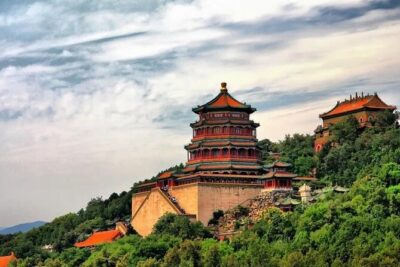
Temple Heaven, Lama Temple, Summer Palace & Peking Duck Bus Tour
Read our review →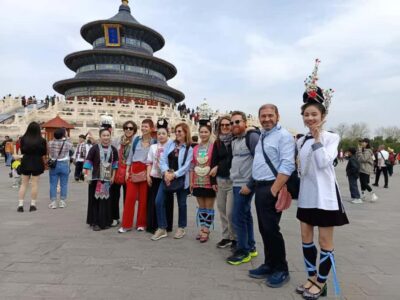
Temple Heaven, Summer Palace, Lama Temple, Hutong Bus Tour
Read our review →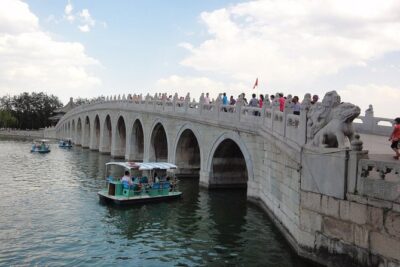
Temple of Heaven, Summer Palace, Lama Temple, Hutong Tours
Read our review →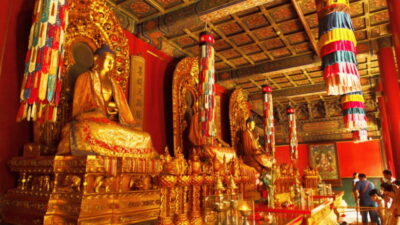
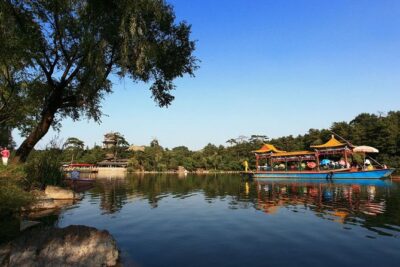
Beijing Historical Tour II including Summer Palace, Lama Temple & Panda Garden
Read our review →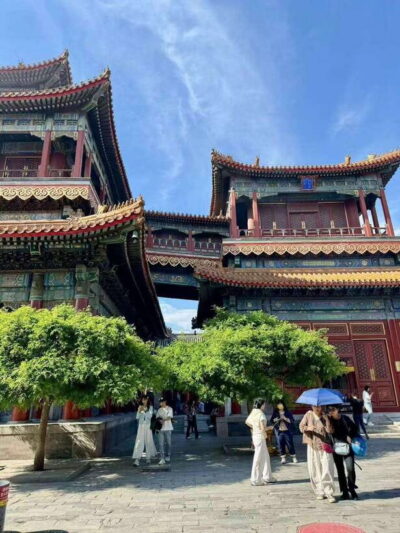
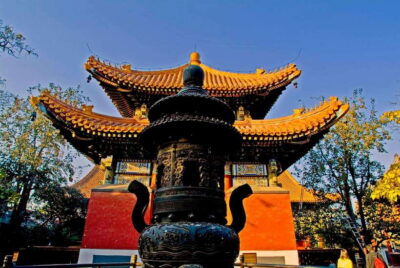
Beijing Lama temple ticket; #1 efficacious; limited Discount
Read our review →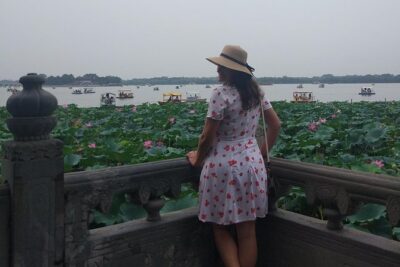
Panda House, Temple of Heaven, Lama Temple, Summer Palace & Lunch
Read our review →Browse the lists this tour appears in