
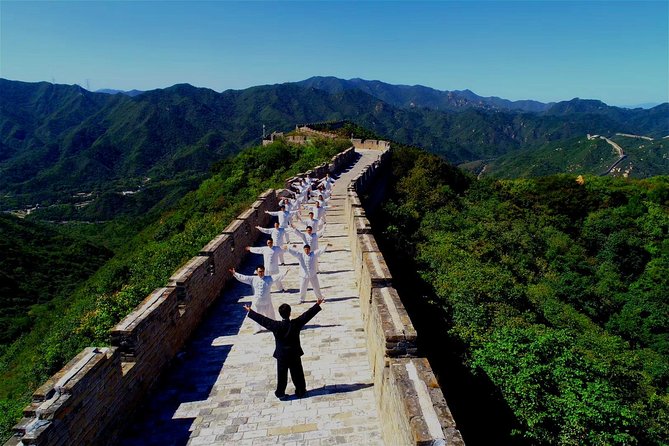
Reviewed · BEIJING TOURS
Beijing Private Tai Chi Class
Beijing’s Temple of Heaven provides an unusually fitting setting for a first Tai Chi lesson. In 1.5 hours, an English-speaking master guides you through a nine-step form, standing meditation, push hands, and simple self-massage, while explaining the Yin Yang and Taoist ideas behind the movements.
I like the private format, which gives the instructor room to correct your posture and answer questions. I also like the cultural side of the class: you are not simply copying slow motions, but learning why breath, balance, relaxation, and controlled movement matter. The main consideration is that the class is short, so it offers an inviting introduction rather than full mastery.
Key points at a glance
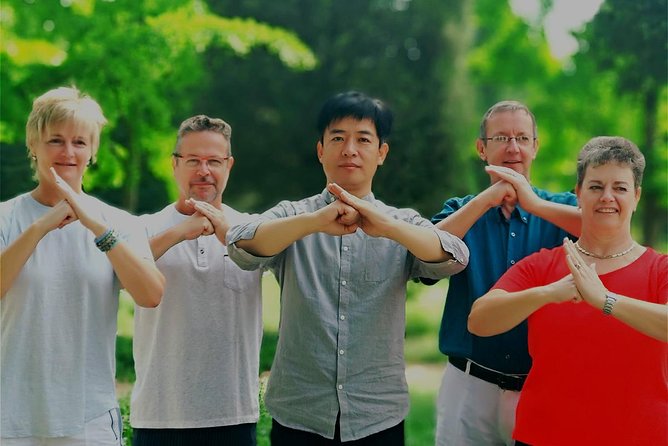
- Temple of Heaven meeting point: Meet at the east gate ticket office, just 50 meters from Exit A of Tiantan Dongmen Station on Subway Line 5.
- Beginner-friendly nine-step form: The teacher breaks the movements into manageable parts instead of expecting prior experience.
- More than movement practice: The session includes Tai Chi culture, Yin Yang, Taoist ideas, standing meditation, and push hands.
- English-speaking instruction: Instructors such as Eric and Master Lui have been praised for patient explanations and fluent English.
- Useful relaxation techniques: You learn self-massage methods aimed at easing daily stress and minor aches.
- Private 1.5-hour session: The format suits couples, friends, and solo visitors who want direct attention rather than a large group class.
Why this Tai Chi class works for first-timers
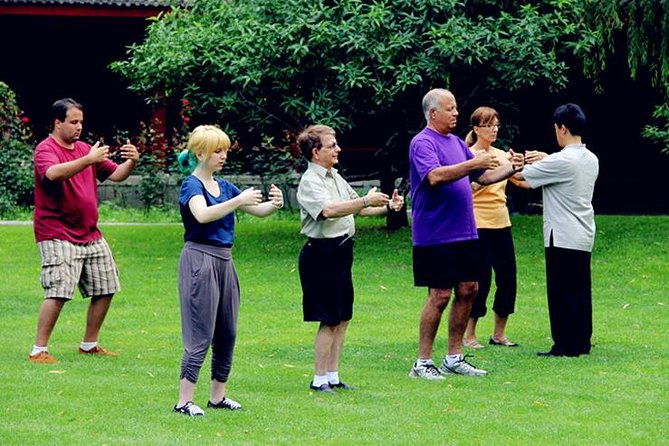
Tai Chi can look simple from a distance. The slow turns and soft arm movements seem easy until you try to coordinate your feet, hands, posture, breathing, and attention at the same time. This class is built for that first attempt.
The teacher uses a step-by-step method. You begin with an introduction to Tai Chi culture, then move into practical exercises. That order matters. It gives you a reason for the movements instead of making the lesson feel like a string of gestures to memorize.
I appreciate the effort to connect Tai Chi with Yin Yang and Taoist thought. The class presents Tai Chi as an internal martial art, not just gentle exercise. You are introduced to the idea of cultivating Qi, or energy, through natural movement and focused attention.
The language support is a real advantage. English and Chinese are offered, and the instructors are described as fluent English speakers. Eric is particularly noted for patient teaching and clear explanations. Master Lui is also praised for making the basic principles accessible. If you have never studied Tai Chi, careful instruction can make the difference between a calming lesson and a confusing one.
More workshops and classes in Beijing:
- Beijing Calligraphy Class
★ 4.9 · 112 reviews - Chinese Calligraphy Class for Small Group
★ 5.0 · 104 reviews - Beijing: Dumpling Making Workshop with Meal and Tea
★ 4.7 · 69 reviews
Meeting at the Temple of Heaven east gate
Your starting point is the ticket office at the east gate of the Temple of Heaven, written in Chinese as 天坛东门售票处. The nearest subway stop is Tiantan Dongmen Station on Line 5. Leave through Exit A, and the east gate is about 50 meters away.
This is a practical meeting place because it is easy to identify and close to public transport. Still, give yourself enough time to find the correct gate. The Temple of Heaven has several entrances, and showing the Chinese name to a taxi driver or using it in a map app can help.
The Temple of Heaven setting adds a cultural layer to the class, even though the activity itself lasts only 1.5 hours. You begin and end at the same east gate, so there is no complicated transfer during the lesson.
The entrance fee to the Temple of Heaven is not included. Food, drinks, and hotel pickup and drop-off are also excluded. Plan for those costs separately, and check how the class meeting instructions fit with your wider visit to the park.
The first lesson: Tai Chi culture before the form
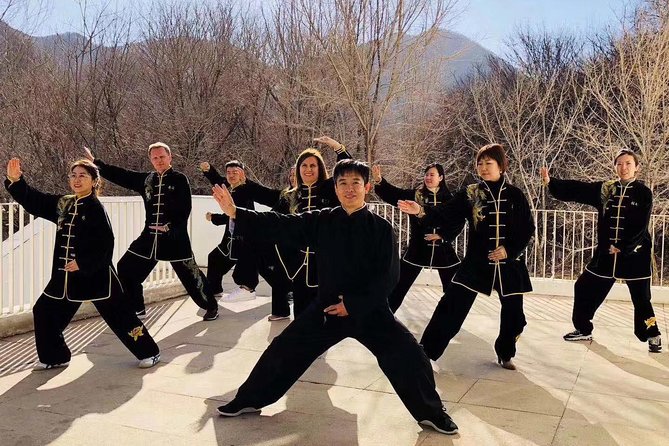
The class begins with a presentation on Tai Chi culture. This part helps explain the connection between physical movement and Chinese ideas about balance, energy, relaxation, and awareness.
I find this useful because it gives the exercises context. A beginner may otherwise wonder why the teacher emphasizes softness, grounded posture, or slow transitions. The cultural introduction helps you see that Tai Chi is not meant to be rushed.
The class also introduces Taoist ideas and the Yin Yang concept. These terms can sound abstract, but the practical value is simple: Tai Chi asks you to work with balance, changing weight, controlled movement, and a calm mind.
Do not expect an academic lecture. The focus remains practical, with the teacher using the ideas to help you understand what your body is doing. That keeps the session approachable for someone who is curious about Chinese culture but has no background in philosophy.
Learning the nine-step Tai Chi form
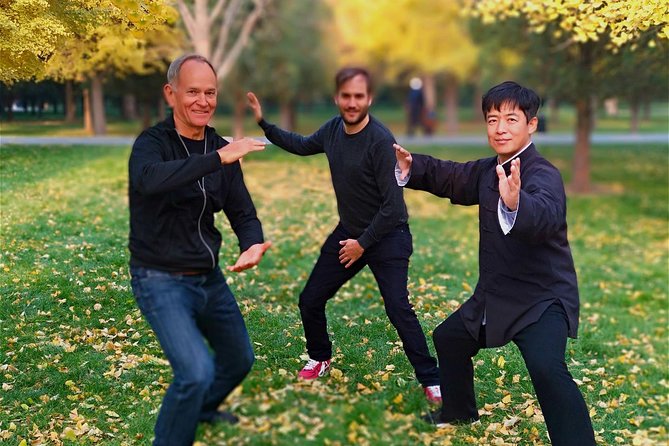
The main physical lesson is a nine-step Tai Chi form. A short form is a sensible choice for visitors. You can experience the rhythm and structure of Tai Chi without needing to remember a long sequence of movements.
The instructor demonstrates each part and helps you follow along. You will likely spend time working on basic coordination, weight shifts, arm positions, and the flow from one movement to the next. The aim is not speed. The slow pace gives you time to notice tension and adjust your posture.
This is where the private format pays off. An instructor can focus on your particular difficulties, explain a movement again, and offer corrections that may be missed in a larger class. If you are attending with a friend, you can learn together while still receiving direct guidance.
The class is suitable for complete beginners. No previous Tai Chi practice is required in the information provided, and the lesson is specifically designed as an introduction. You should still keep your expectations realistic. In 90 minutes, you can learn the foundations of a short form, but you will not become proficient in the full art.
The best result is that you leave with a repeatable starting point. You can remember several movements, understand the basic purpose of the practice, and decide if you want to continue studying.
A few more Beijing days to line up
- From Beijing: Mutianyu Great Wall Tours with Options
★ 4.9 · 9,216 reviews - Beijing: Forbidden City Tour(Group/Private)-Tickets Included
★ 4.8 · 7,974 reviews - Beijing: T-Square & Forbidden City Group or Private Tour
★ 4.8 · 4,446 reviews - All-Inclusive Tour: Tiananmen Square, Forbidden City, Great Wall
★ 5.0 · 2,873 reviews
Standing meditation and push hands
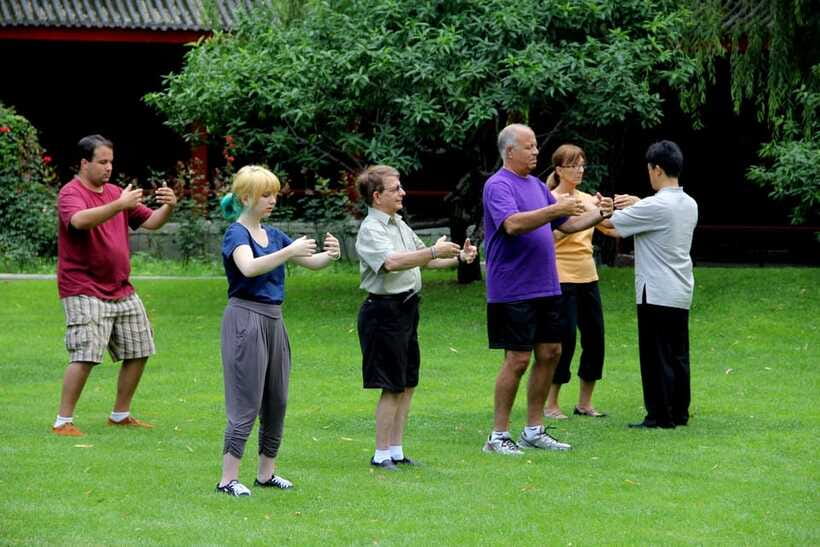
The lesson goes beyond a moving sequence with standing meditation and push hands. These exercises show two different sides of Tai Chi.
Standing meditation asks you to remain still while paying attention to posture, breathing, balance, and physical tension. For many first-timers, this can be harder than the moving form. Stillness makes you aware of where you hold stress in your shoulders, neck, legs, or hands.
The teacher’s guidance matters here. Without explanation, standing in place can feel vague. With clear instruction, it becomes a way to notice how relaxation and alignment affect movement.
Push hands is a partner exercise linked to Tai Chi’s martial roots. It introduces sensitivity, balance, and response through controlled contact. The supplied information does not specify the exact format or intensity, so you should treat it as an introductory experience rather than combat training.
I like that both exercises are included. The moving form gives you a visible sequence to practice. Standing meditation and push hands show that Tai Chi also concerns awareness, balance, and how you respond to another person’s movement.
Self-massage for daily tension
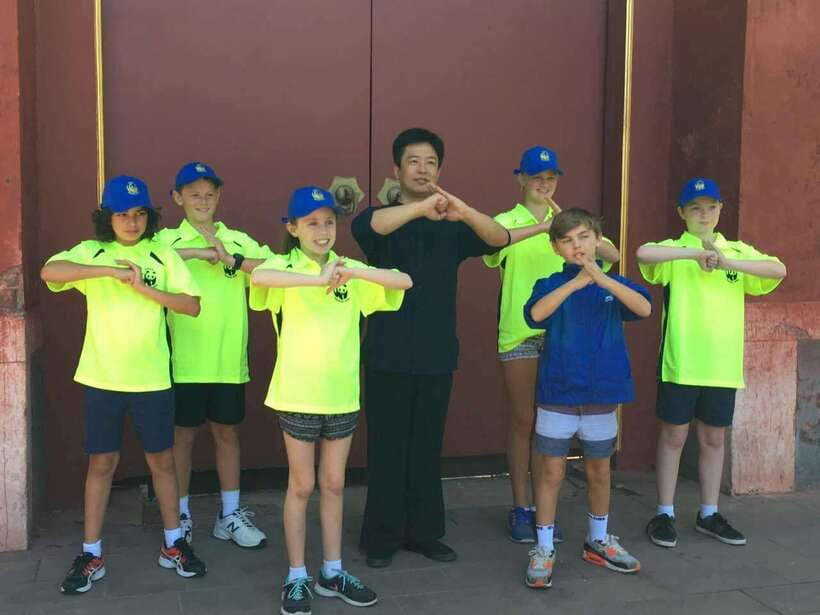
The class also covers methods of self-massage intended to relieve pain and stress in daily life. This is one of the more practical parts for a short visitor activity.
You are not simply learning something for the duration of the class. The self-massage techniques may give you simple tools to use after a long day of sightseeing or during a demanding travel schedule. The information does not specify which body areas or exact methods are taught, so ask the instructor to repeat any technique you want to remember.
This section also fits the general purpose of the lesson. Tai Chi is presented as a way to connect body and mind, and self-massage gives you a direct method for easing tension. It is a useful addition for visitors who are interested in relaxation as much as martial arts.
The instructors and teaching style
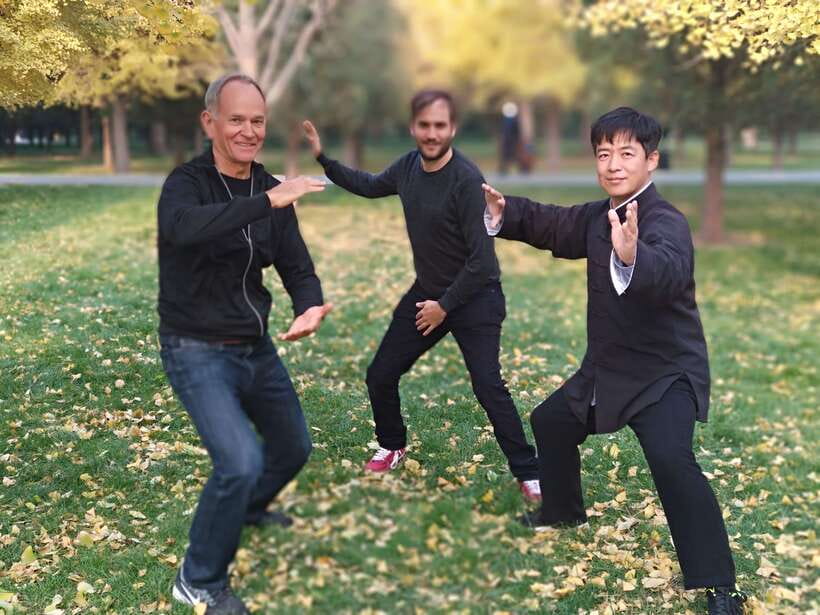
The experience is led by qualified English-speaking Tai Chi masters from Beijing Sanfeng Tai Chi Club. Names associated with the class include Eric, Leo, and Master Lui, depending on the instructor assigned to your booking.
Eric is described as patient, polite, and very clear in English. His teaching includes both the movements and the ideas behind them. Master Lui is also praised for explaining basic principles in a way that suits beginners. Leo is named as the instructor for one highly rated lesson.
The strongest theme is patient instruction. That matters because Tai Chi depends on small adjustments that are difficult to see in a quick demonstration. You may need the teacher to slow down, repeat a transition, or explain how your weight should shift.
The class is also described as amusing and interactive. That suggests a relaxed teaching style rather than a stern training session. Still, the exact personality of your lesson will depend on which master leads it.
What the private format means for you
This is a private group activity, not a large public class. You can book it for yourself and your companions, which makes it easier to ask questions and set the pace around your needs.
For a solo visitor, private instruction offers focused attention. For two friends, it creates a shared activity that is quieter and more active than a standard sightseeing stop. Couples may also like the chance to learn a calm physical practice together.
The format has one tradeoff: private teaching can cost more per person than joining a large group. At $58 per person, the value depends on how much you want personal instruction and cultural explanation. You are paying for a short lesson with an English-speaking master, not simply access to a public exercise session.
I consider the price reasonable for a visitor who wants a tailored introduction and has a genuine interest in learning. It is less compelling if you only want a quick photo or a brief demonstration. The class asks you to participate, listen, and practice.
Timing, transport, and practical limits
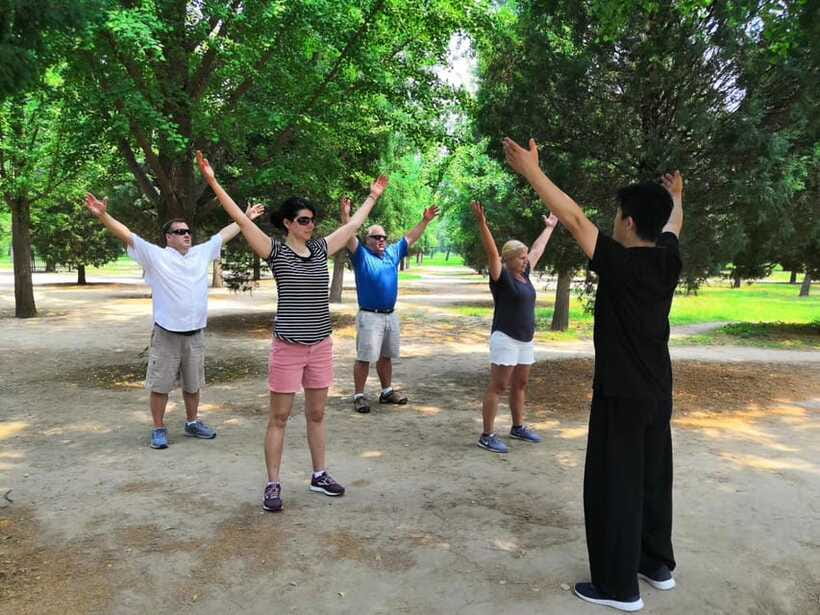
The activity lasts 1.5 hours and returns to the east gate of the Temple of Heaven. Starting times vary, so you need to check availability for your chosen date.
There is no hotel pickup or drop-off. You are responsible for reaching the meeting point and arranging your onward transport. The subway route is straightforward: take Line 5 to Tiantan Dongmen Station, use Exit A, and walk roughly 50 meters to the east gate.
The Temple of Heaven entrance fee is not included. This is an important detail if you are building a full sightseeing day around the class. Food and drinks are also not provided, so plan those outside the activity.
Pregnant women should not book this class. The activity information gives no further suitability restrictions, but you should consider your own comfort with standing, slow movement, and partner exercises.
Cancellation is flexible up to 24 hours before the activity for a full refund. You can also reserve now and pay later, which helps if your Beijing schedule is still changing.
Who should book this experience
I would choose this class if you are curious about Tai Chi but do not know where to begin. It gives you movement practice, cultural background, meditation, partner work, and self-massage in one compact session.
It is also a good choice if you have already seen Beijing’s main sights and want an activity connected to Chinese culture. The Temple of Heaven meeting point makes it easy to combine with other plans, though you must account for the separate entrance fee.
The class suits solo visitors, couples, friends, and small private groups. English-speaking instruction makes it accessible to people who cannot follow a Chinese-only lesson.
I would not choose it if you want an advanced martial arts workout, a long training session, or a fully developed course. The nine-step form is an introduction, and the 1.5-hour schedule limits how far the teacher can take you.
Should you book the Beijing Private Tai Chi Class?
Book it if you want a calm, personal introduction to Tai Chi with clear English instruction and more cultural context than a simple demonstration. The combination of the nine-step form, standing meditation, push hands, and self-massage gives the lesson real range.
The main reason to book is the teaching. Instructors such as Eric and Master Lui are praised for patience, fluent English, and careful explanations. The main reason to hesitate is the short duration and the extra Temple of Heaven entrance fee.
For a first encounter with Tai Chi in Beijing, $58 buys more than a photo opportunity. You get a practical starting point and a better sense of why this traditional art is practiced slowly, with attention to balance and calm. If that sounds like the kind of cultural experience you want, this private class is a sensible choice.
FAQ
Where does the Beijing Private Tai Chi Class begin?
The class begins at the Temple of Heaven east gate ticket office, 天坛东门售票处.
How do I reach the meeting point by subway?
Take Subway Line 5 to Tiantan Dongmen Station. Leave through Exit A, and the east gate is about 50 meters away.
How long does the Tai Chi class last?
The class lasts 1.5 hours.
Is the class suitable for beginners?
Yes. The session is specifically designed for beginners and teaches Tai Chi with a simple, step-by-step method.
What will I learn during the class?
You will receive an introduction to Tai Chi culture, study a nine-step Tai Chi form, try standing meditation and push hands, and learn self-massage methods for daily pain and stress.
Is the instructor able to speak English?
Yes. Instruction is available in English and Chinese, and the class is led by an English-speaking Tai Chi master.
Is this a private group activity?
Yes. The group type is private.
Is the Temple of Heaven entrance fee included?
No. The entrance fee is not included in the activity price.
Can I cancel for a full refund?
Yes. You can cancel up to 24 hours in advance for a full refund. You can also reserve now and pay later.
Recently listed in Beijing
- Beijing Mutianyu Great Wall Private Tour with Lunch★ 5.0 · 5 reviews
- Customized Private Beijing Layover City Tour★ 5.0 · 5 reviews
- Private Tour to Gubei Water Town and Simatai Great Wall with Cable Car and Lunch★ 5.0 · 5 reviews
- Forbidden City with Hutong Cuisine Private Walking Tour★ 5.0 · 5 reviews
- Beijing Acrobatics Show At Red Theater★ 4.5 · 5 reviews
- Beijing: Top Michelin Vegetarian Restaurant Reservation★ 5.0 · 5 reviews
- Exclusive Private Photography & Video Tour to The Forbidden City★ 5.0 · 5 reviews
- Cuandixia Village Day Trip with Private English Speaking Driver Service★ 4.0 · 5 reviews
Beijing Tours, compared.

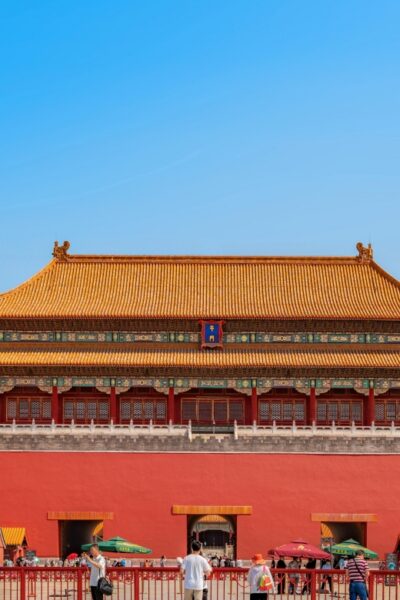
Forbidden City Tour(Group/Private)-Tickets Included
Read our review →
T-Square & Forbidden City Group or Private Tour
Read our review →
All-Inclusive Tour: Tiananmen Square, Forbidden City, Great Wall
Read our review →
MuBus: Mutianyu Great Wall ENG/ESP/RUS Guided Bus Tour
Read our review →
4-Hour Small Group Tour to Forbidden City with Entry Tickets
Read our review →
Beijing Full Day Tours: Tiananmen Sq, Forbidden City, Great Wall
Read our review →Browse the lists this tour appears in