
Reviewed · GUANGZHOU TOURS
All Inclusive Kaiping Diaolou Heritage Private Day Trip from Guangzhou
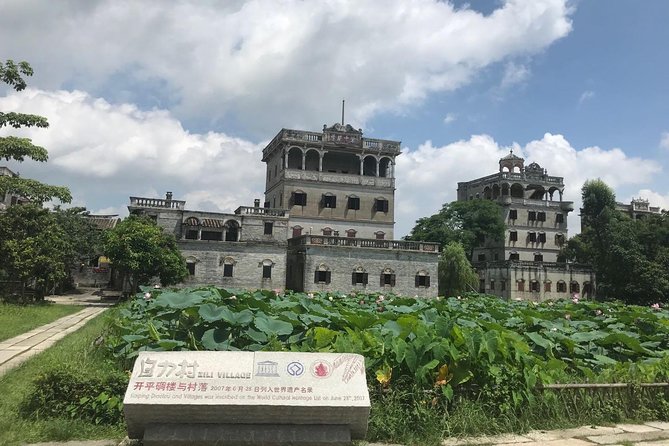
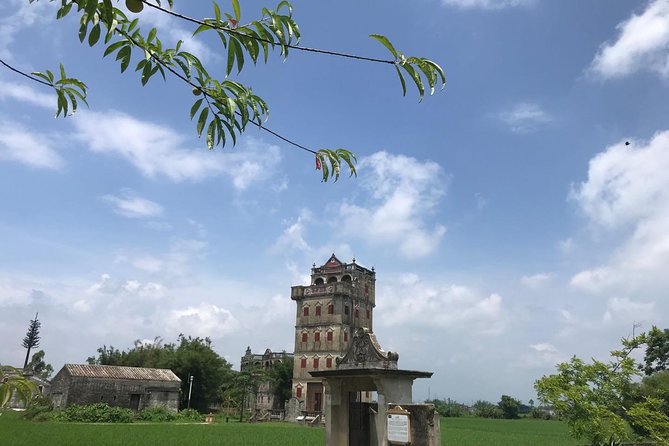
Kaiping’s diaolou are not ordinary old houses. These tall stone towers rise from rice fields and village lanes like small castles, built by overseas Chinese families as homes, lookout posts, and safe places during floods or attacks. The mix of Chinese planning and Western details makes this one of Guangdong’s most unusual day trips.
I like two things right away: the private vehicle and guide, which make a long rural day far easier, and the chance to climb inside several towers for wide views over the fields. Lunch, admission fees, bottled water, and hotel pickup are included, so the price is easier to judge.
The catch is the road time. Kaiping is roughly two hours from Guangzhou each way, leaving you with a full day in the car and at the sights. This is a good trade for history and countryside, but not for anyone seeking a short outing.
Key points to know before you book
- Zili Village gives you the clearest look at classic diaolou architecture, including towers built by overseas Chinese families with Western-inspired details.
- Li Garden mixes formal gardens, canals, bridges, pavilions, and fortified buildings, giving the day more variety than a series of watchtowers.
- A private guide makes the long drive useful, since the history and purpose of the towers are much easier to understand with explanation.
- The day begins at 8:00 am, a smart start for reaching the villages before larger groups arrive.
- Lunch, entrance tickets, water, transport, and hotel transfers are included, reducing the need to manage extra payments during the day.
- The final rural stop may be described as Ma-Xianglong or Jingjiangli, so confirm the exact route with SilkRoadTrips before departure.
Why Kaiping’s towers are worth the long drive
Kaiping’s diaolou tell a story of movement, money, danger, and family duty. From the 14th to the 17th centuries, some of the earliest towers served as communal refuges, residential forts, or warning posts against bandits. Many later buildings date from the late 19th and early 20th centuries, when people from Kaiping who had worked overseas sent money home and built grander houses.
That outside influence is easy to see. A single tower may combine Chinese roofs and courtyards with arched windows, decorative columns, balconies, and other Western-style features. The result is not a polished European imitation. It is a local building tradition shaped by families who had seen other parts of the world.
I find this setting more rewarding than a single museum display. The towers are still tied to villages, fields, bamboo, waterways, and old family homes. You are not just looking at an isolated monument. You are seeing why these buildings were placed where they were and how they fit into daily life.
The cultural importance is recognized by UNESCO, which listed the Kaiping Diaolou and Villages in 2007. That status helps explain the care given to the main sites, but the appeal is not only official. The towers have a strong sense of place, especially when you see them spread across open farmland rather than packed into a city street.
More History Tours in Guangzhou:
- Private Historical Tour: Guangzhou City Sightseeing Including Lunch
★ 4.5 · 24 reviews - UNESCO Watchtowers World Heritage Ancient Villages Private Tour
★ 5.0 · 17 reviews - Guangzhou: Cantonese Heritage Tour with Key Cultural Stops
★ 5.0 · 13 reviews
Leaving Guangzhou at 8:00 am
Your guide meets you at your Guangzhou hotel at 8:00 am. You then travel by private, air-conditioned vehicle toward rural Guangdong province.
The drive takes about two hours each way. That is the main time commitment of the trip, so I would treat the ride as part of the experience rather than an inconvenience to hide. You get a look at the change from Guangzhou’s urban setting to the smaller villages and open fields around Kaiping.
A private car matters here. You do not need to find a bus station, arrange local transfers, or keep checking the time for a return departure. Your guide can also provide background during the journey, including the three main types of diaolou: communal towers built by several families, private residential fortresses, and watchtowers used to warn villagers of danger.
The early departure has another benefit. One detailed account praised starting before larger tour groups reached the sites. That can make a real difference at narrow stairways, rooftop viewpoints, and smaller village paths.
Zili Village and its watchtower group
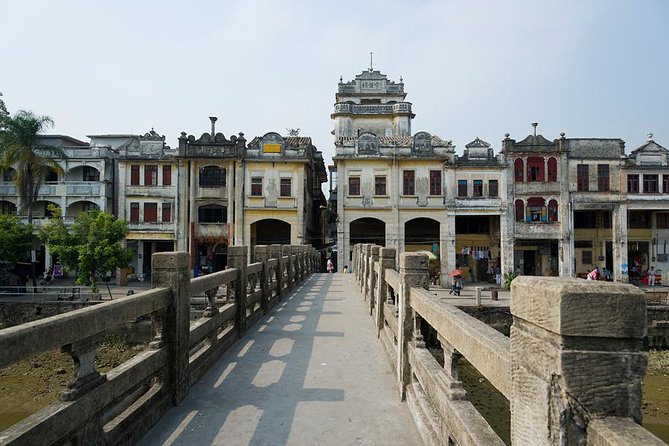
Zili Village is usually the first major stop and receives about two hours. It is one of the best-preserved diaolou villages in the Kaiping area, with towers and old houses set among fields and village scenery.
This is where the architecture comes into focus. You can see the way towers were designed for protection, then notice the decorative choices added by families who had made money abroad. Some buildings feel stern and defensive from a distance, yet their details become more personal as you get closer.
The tour includes entry into the towers, where permitted, and access to rooftop viewpoints. Be ready for stairs and uneven village paths. The reward is a bird’s-eye view over the surrounding fields and homes, a perspective that shows how scattered towers worked together as part of a wider settlement.
I would not rush this stop. Look at the relationship between the towers and the village rather than treating each building as a separate photo subject. Your guide can help explain which structures served as homes, which offered protection, and why the buildings grew so tall.
The towers are not all identical, and that is part of the pleasure. Some are more imposing, while others show a lighter decorative touch. The blend of Chinese and colonial-era design gives Zili a visual character you will not find in the usual historic districts of Guangzhou.
The main drawback is that the most interesting parts may require climbing. If you have trouble with stairs, ask your guide what can be seen from ground level. The activity information says most people can participate, but it does not promise full step-free access.
Li Garden, where fortresses meet canals
Next comes Li Garden, also called Liyuan Garden, with about two hours set aside for the visit. This is a change of pace after Zili Village.
Li Garden combines ornamental planting, canals, bridges, pavilions, and fortified buildings. One memorable feature is a birdcage-shaped pavilion, an unusual detail that helps the garden feel more personal and playful than a purely defensive village.
I like this stop because it shows how wealth changed the idea of the diaolou. At Zili, you focus on village protection and family homes. At Li Garden, gardens and water features frame the buildings, creating a more planned and decorative setting.
You can wander at an easy pace here, taking in the bridges and canals as well as the towers. The garden gives you a chance to slow down, and it breaks up the day visually. If your main interest is architecture, pay attention to how the buildings sit within the garden. If you prefer scenery, the paths and water offer a calmer interlude.
Two hours is enough for a useful visit, but not so much that the garden takes over the whole day. The site is best appreciated as part of the larger Kaiping story. It shows what overseas Chinese families could build when they combined local traditions, imported ideas, and money earned elsewhere.
More day trips in Guangzhou:
- Private Shenzhen Day Trip from Guangzhou by Roundway Bullet Train
★ 5.0 · 6 reviews - Lantau Island Day Trip – Big Buddha & Tai O
★ 4.5 · 1,328 reviews - Suzhou and Zhouzhuang Water Village Day Trip from Shanghai
★ 4.0 · 426 reviews - Suzhou Private Day Trip from Shanghai with Bullet Train Option
★ 5.0 · 366 reviews
Lunch and the rural road onward
Lunch at a local restaurant is included. The supplied details do not specify the menu, so you should regard it as a practical local meal rather than a reason to book the tour by itself.
That is still valuable on a long day. You do not need to search for a restaurant between sites, and the schedule can continue without losing time. Bottled water is also included, a small but useful touch during a day spent walking through villages and climbing towers.
After lunch, the route continues to another historic village area. The tour description names Ma-Xianglong Village, with old houses spread among bamboo, while the detailed stop information identifies the final area as Jingjiangli, or Jinjiangli, known for its carefully designed old houses.
Because both names appear in the route details, I would confirm the exact final stop when booking. This is not a major concern about the style of the outing, since both locations fit the same theme of rural Kaiping architecture, but it is useful to know precisely where you will go.
Ma-Xianglong or Jingjiangli: a quieter final stop
The final village visit is intended to be quieter than the better-known Zili stop. In Ma-Xianglong, you are set to view older houses among bamboo and rural greenery. In Jingjiangli, the focus is on a group of well-designed old houses and diaolou.
This part of the day gives you a less formal look at Kaiping. The towers matter, but so do the ordinary homes, lanes, plants, and village spaces around them. I appreciate that the route does not end after the most famous attraction. You get another chance to see how historic buildings fit into a living rural setting.
Do not expect the same concentration of major sights at every stop. The value here is contrast. Zili offers the strongest tower experience, Li Garden adds formal beauty, and the last village gives you a quieter look at old houses and countryside.
After roughly two hours at this stop, you return to Guangzhou by private vehicle. The day ends with hotel drop-off.
What the $269 price buys you
At $269 per person, this is not a budget day trip. The value depends heavily on your group size and what you would otherwise need to arrange.
You are paying for a private air-conditioned vehicle, a local guide, hotel pickup and drop-off, entrance tickets, lunch, and bottled water. You also get a full day away from Guangzhou without having to coordinate rural transport or work out which villages to combine.
For one or two people, the cost may feel high compared with a shared bus outing. For a larger private group, group discounts may improve the value, and the cost of a dedicated vehicle can make more sense. One past booking included nine business colleagues from the United States, Canada, and Europe, showing that the format can work well for a small company or association group.
The private setup also buys flexibility in attention, even if the main route is fixed. You can ask questions as you go, spend more time at a tower that interests you, and avoid being tied to strangers. That matters at sites where the architecture rewards careful looking rather than a quick photo stop.
I would book this for the overall day, not for any single attraction. If you only want a brief look at a historic building, the price and driving time are hard to justify. If you want a guided introduction to several UNESCO-listed village sites, the package is more reasonable.
Timing, comfort, and practical limits
The experience is advertised as about eight to nine hours, while the route is also described as a full 10-hour day. In practice, you should reserve most of the day, including the two-hour drive each way and possible traffic.
The private, air-conditioned vehicle is a major comfort advantage. You will spend a substantial part of the day on the road, and private transport makes that time easier to manage.
Wear shoes suited to village paths and stairs. The tour includes tower interiors and rooftop views, so comfortable footwear is more useful than city dress shoes. Bring a phone or camera, but do not let photography replace looking at the structures themselves. The best details are often around windows, balconies, roofs, and defensive features.
Most people can take part, according to the provided activity information. Still, the towers may involve stairs, and the village paths may not be perfectly even. If mobility is a concern, contact the provider before booking and ask what access is possible at each stop.
Free cancellation is available up to 24 hours before the start time. Changes or cancellations inside that period are not accepted for a refund, so keep the local cutoff time in mind.
Who will get the most from this day trip
I would recommend this experience to you if you:
- Want to leave Guangzhou for a full day of rural culture and architecture
- Like old houses, unusual buildings, and stories about migration
- Prefer a private guide to a large scheduled group
- Are comfortable with a long drive and some walking
- Want admissions, lunch, and transport handled in one booking
- Are traveling with family, friends, or a small work group
I would hesitate if you have only a few free hours in Guangzhou, dislike long car rides, or want a food-focused day. Kaiping is rewarding because the sites are spread across the countryside, not because they are close together.
The strongest reason to go is the combination of setting and architecture. You see fortified towers in fields, Western-influenced details on Chinese family buildings, and gardens that show a more elegant side of the same building tradition.
Should you book the Kaiping private day trip?
Book it if you want a serious day outside Guangzhou and the price fits your group. Zili Village is the main draw, Li Garden adds variety, and the quieter final village helps you see more than one polished heritage site.
I especially like the early start, private transport, rooftop views, and included lunch and admissions. The two-hour drive each way is the price of reaching Kaiping, so accept that before you book.
Before confirming, ask SilkRoadTrips whether the final stop will be Ma-Xianglong or Jingjiangli, and clarify the expected total duration. If those details suit your plans, this is a useful, well-organized way to see one of Guangdong’s most distinctive cultural areas without trying to arrange the countryside on your own.
FAQ
What time does the Kaiping private day trip start?
The tour starts at 8:00 am, with pickup from your Guangzhou hotel.
How long does the experience last?
The tour is listed as approximately eight to nine hours, while the full route is also described as a 10-hour private trip. You should allow most of the day.
How long is the drive from Guangzhou to Kaiping?
The journey takes about two hours each way.
Which places are included?
The main attractions are Zili Village, Li Garden, and a further historic village area identified as Ma-Xianglong Village in one description and Jingjiangli in the detailed route. Confirm the exact final stop before departure.
What is included in the price?
The price includes lunch, a local guide, hotel pickup and drop-off, private vehicle transport, entrance fees, and bottled water.
Is this a private tour?
Yes. Only your own group participates, and transport is provided by private vehicle.
Recently listed in Guangzhou
- Private flexible Guangzhou City Sightseeing Tour with Dim-Sum Tasting★ 5.0 · 5 reviews
- Chimelong International Circus Ticket with Transfer★ 5.0 · 5 reviews
- Seven Star Crag and Dinghu Mountain private day tour from Guangzhou★ 5.0 · 5 reviews
- Guangzhou: Textile Hub and Garment Factory Half-day Tour★ 5.0 · 5 reviews
- Guangzhou Private Safari Tour with Ride and Giant Panda viewing★ 5.0 · 5 reviews
- Guangzhou Pearl River Night Cruise and Canton Tower Night Tour★ 5.0 · 5 reviews
- Kaiping Private Day Tour From Guangzhou★ 4.8 · 6 reviews
- Guangzhou Chimelong: Safari Park/Paradise(Optional Day Tour)★ 4.7 · 6 reviews
Guangzhou Tours, compared.
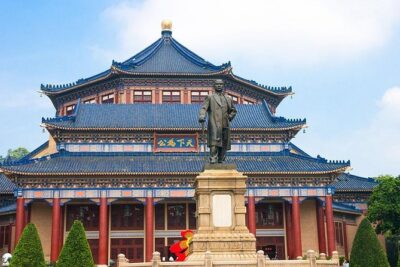
Customised Private Guangzhou City Tour with Flexible Itinerary
Read our review →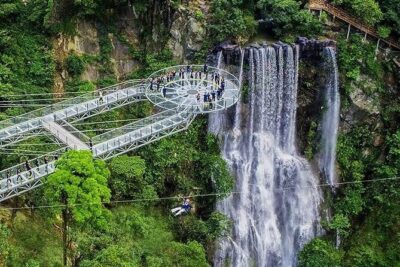
Gulong Gorge Skywalk Glass Bridge and Waterfall View Private Tour
Read our review →
Private Guangzhou Full Day City Tour with Old and New Highlights
Read our review →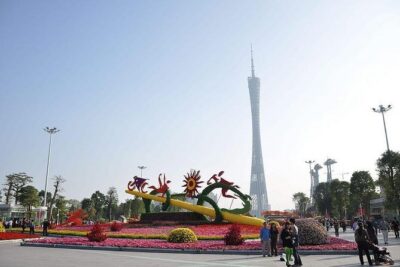
Reputable Private Guangzhou Tour Guide Service by Xaq
Read our review →
Guangzhou Baiyun Airport Guangzhou Hotels:Private with Meet & Great Service
Read our review →

Pearl River 1-hour Night Cruise (Optional Piers)
Read our review →Browse the lists this tour appears in