
Reviewed · HONG KONG TOURS
Between Capitalism & Communism: Hong Kong History Tip Based Tour
Hong Kong’s story gets much clearer when you walk through the places where power was made. This two-hour tour links the Court of Final Appeal, Statue Square, HSBC, St. John’s Cathedral, the Mid-Levels Escalator, Hollywood Road, and Man Mo Temple into one sharp lesson about colonial rule, Chinese sovereignty, money, religion, and daily life.
I like the personal guide stories, especially the way guides such as Alice, Andy, and Armie connect public events to life in Hong Kong. I also like the route’s practical shape: it begins in Central, uses the city’s famous escalator, and ends at Man Mo Temple with a street food tasting and a restaurant recommendation.
The main drawback is the pace. Eight stops in about two hours means you will hear plenty but rarely linger. The route also includes hills, stairs, and city walking, so bring water and wear shoes you can trust.
Key points before you book
- Hong Kong politics made local: The tour explains how One Country, Two Systems works through courts, public buildings, and the handover from Britain to China.
- A feng shui story with real financial stakes: Statue Square and HSBC reveal how belief, architecture, and banking collide in Central.
- Personal guides add a human angle: Alice, Andy, and Armie are among the named guides praised for their stories and steady flow of information.
- A useful first-day route: You move from Central to Hollywood Road, gaining a practical introduction to several major districts.
- Street food is included: This adds a small taste of local life rather than making the outing only a lecture.
- Excellent value at $2.63: For a two-hour guided walk with food tasting, the price is unusually low, though the group can reach 30 people.
Why this walk makes Hong Kong easier to read
Hong Kong can feel like several cities packed into one small area. Glass towers rise beside colonial buildings. A church faces banks. Ancient temples sit near art shops and high-rent offices. This tour helps you connect those contrasts instead of seeing them as unrelated sights.
The focus is not simply on dates and rulers. You look at how Britain took control of Hong Kong, how the territory developed under colonial rule, and how it was returned to China. The discussion then moves toward present politics and the question at the heart of Hong Kong’s modern identity: how does the city remain part of China while keeping its own legal and social systems?
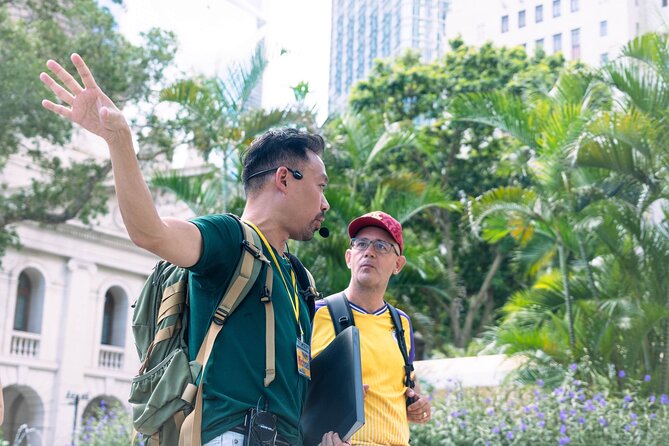
That subject can be sensitive, so the guide matters. The strongest part of the experience is the chance to hear a local perspective rather than relying only on monuments and plaques. Alice, Andy, and Armie are named guides associated with the experience, and their approach is described as personal, lively, and full of stories.
You should not expect a formal lecture with a microphone. This is a street-level history walk. The city supplies the classroom, and each stop gives the guide a new object to explain.
More History Tours in Hong Kong
- Hong Kong Heritage – Past to Present
★ 4.6 · 22 reviews - Group Vegetarian Food & Cultural Tour
★ 5.0 · 16 reviews - Private tour – Hong Kong’s major sites and history
★ 5.0 · 13 reviews
Court of Final Appeal: where the political question begins
The walk starts near Central MTR Station and heads to the Court of Final Appeal. This is a smart opening stop because it puts law before architecture and politics before sightseeing.
Here, you examine the practical meaning of One Country, Two Systems. The subject is not treated as a vague slogan. The court gives the guide a place to discuss how Hong Kong operates within China and why its legal system matters.
You spend about 10 minutes here, with no admission fee. That short stop is enough for a clear introduction, but not a detailed legal seminar. If you want a full account of constitutional change, you will need to read more afterward.
Still, I like beginning here. It prepares you to look at every later building as part of a political story, not just as an attractive backdrop.
Statue Square: banking, empire, and feng shui
Statue Square brings you into the financial heart of Central. The square once reflected colonial power, and today it sits among banks, offices, and some of the most expensive real estate in Hong Kong.
The guide’s feng shui story gives this stop its hook. Two banking giants are said to have fought a symbolic battle through building design and placement. The point is not simply that Hong Kong takes feng shui seriously. It is that belief, money, status, and architecture can all shape decisions in a major financial district.
You have about 10 minutes here. Look up as you listen. The buildings are part of the explanation, and Central makes the story easy to picture.
This is also a good place to consider the tour’s style. It mixes serious political history with memorable local details. You get colonial power and banking strategy, but also the kind of odd, specific story that helps a place stick in your mind.
HSBC Main Building: lions, money, and a city built outward
The HSBC Main Building is the next stop, and the famous bronze lions provide an easy visual anchor. The guide explains their place in the bank’s identity and uses the building to discuss Hong Kong’s financial system.
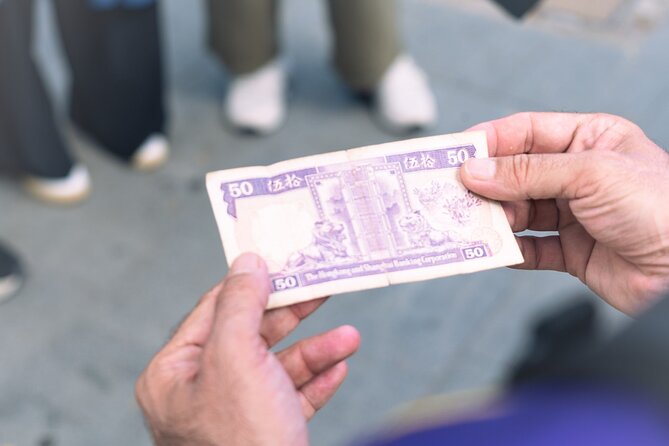
One particularly useful point is that Hong Kong has no central bank that prints money in the usual sense. The city’s banknote system, banking power, and economic growth all become part of the conversation here.
The stop lasts about 10 minutes and remains outside, so you should not expect a building tour. The value comes from learning how the bank fits into the city around it. Hong Kong has repeatedly expanded into the harbor, and the guide connects that growth to the pressures of limited space and rising demand.
This is one of the tour’s best examples of turning something familiar into something worth a second look. You may already know the building or have photographed the lions. The guide gives you reasons to notice what they represent.
A very different day in Hong Kong:
- Hong Kong: Victoria Harbor Symphony Unlimited Drink Cruise
★ 4.3 · 1,873 reviews - Lantau Island Day Trip – Big Buddha & Tai O
★ 4.5 · 1,328 reviews - Hong Kong: Victoria Harbour Evening Cruise with Drinks
★ 4.6 · 1,260 reviews - Hong Kong: City Highlights Guided Tour w/Entry Fees & Lunch
★ 4.4 · 1,178 reviews
St. John’s Cathedral: a quiet pause in Central
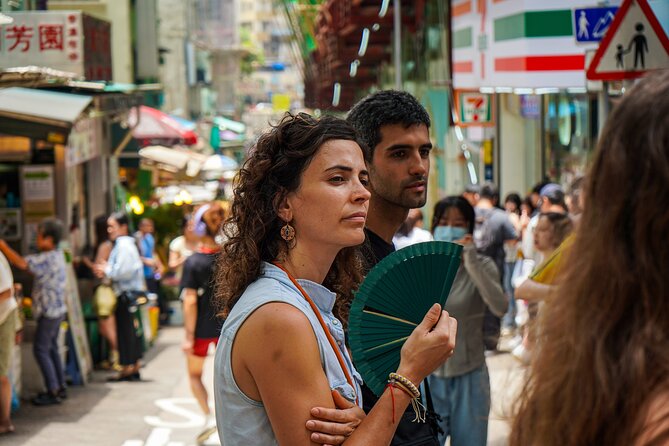
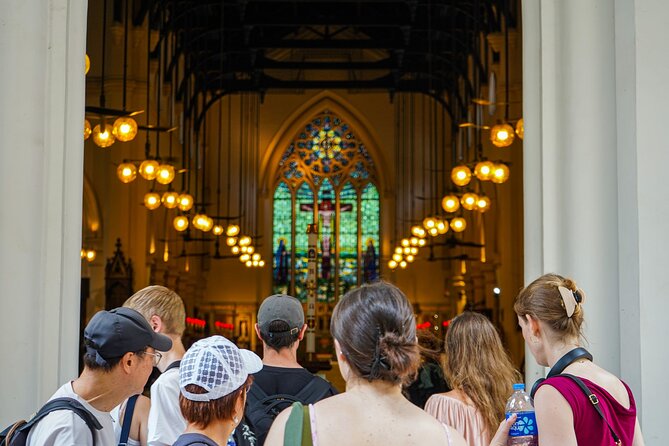
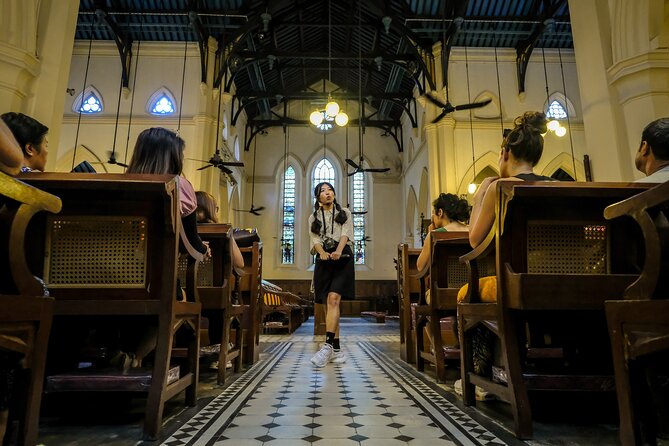
After the banks, St. John’s Cathedral changes the mood. It is Hong Kong’s oldest church and one of the clearest reminders of the British colonial period.
The 20-minute stop is the longest on the route. That gives the guide more room to explain the church, colonial society, and the personal story connected with the site. The setting also offers a quieter break from Central’s traffic and office towers.
You should keep your expectations in check. This is not described as a full religious tour or a long interior visit. The focus is historical context, personal stories, and the way the church fits into Hong Kong’s past.
I like the contrast here. Hong Kong’s history is not only about trade, government, and finance. Religious buildings also show who held authority, which communities lived here, and how colonial institutions took root.
Queen’s Road Central: Hong Kong at full speed
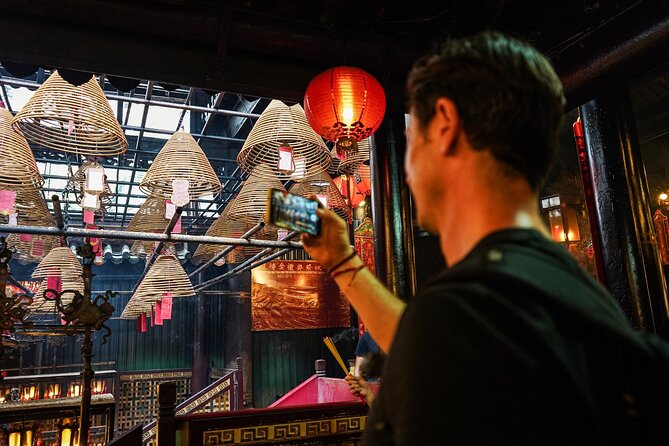
The route then reaches Queen’s Road Central, one of the city’s key commercial streets. Here the guide shifts from grand institutions to daily pressure: power suits, high rents, tight space, and the constant movement that defines Central.
You spend roughly 10 minutes on this stop. That is enough to explain why the street matters, but you will not have much time to browse shops or pause for photographs.
The strength of this part is its directness. Instead of treating Hong Kong as an abstract financial center, the guide places you in the middle of the working city. Offices, traffic, pedestrians, and expensive property all become evidence of how the city functions.
This section may be less visually dramatic than the cathedral or temple. Its value is interpretive. You begin to understand why Hong Kong feels compressed, fast, and intensely practical.
Mid-Levels Escalator: engineering shaped by the hills
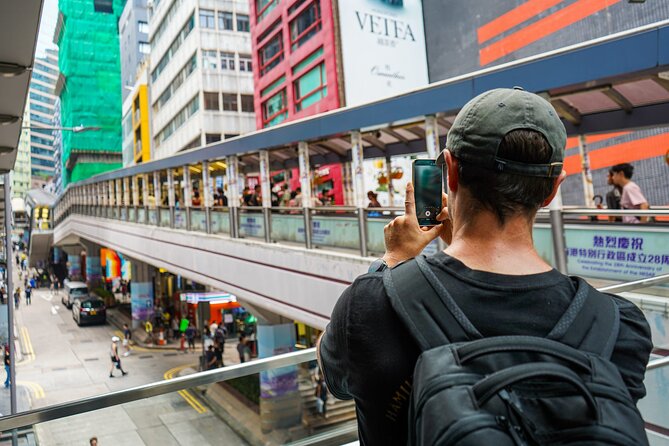
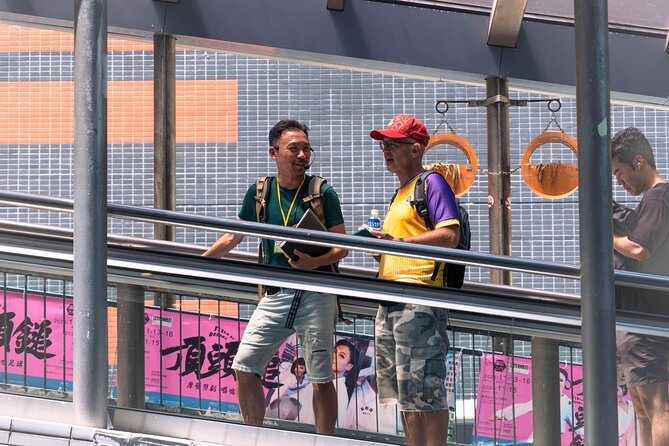
The Central-Mid-Levels Escalator adds movement to the walk. At about 800 meters, it is presented as the world’s longest outdoor escalator and as a major response to Hong Kong’s steep hills.
You ride for about 10 minutes. This is not just a novelty stop. The escalator shows how the city adapts to difficult terrain and how transport systems influence the way districts connect.
Expect a change in pace here, but do not assume the escalator removes all physical effort from the tour. The full route still requires walking, and the experience asks for moderate physical fitness. Comfortable shoes are a sensible choice.
This is also one of the most useful stops for getting your bearings. You see how Central rises toward the Mid-Levels, and you begin to understand why Hong Kong’s streets can feel vertical as well as crowded.
Hollywood Road: from colonial divide to creative district
Hollywood Road takes you away from the polished banking core and into an older part of the city. The guide explains how the area developed from a colonial divide into a district known for art, food, and street life.
The stop lasts about 10 minutes. You may want more time here, especially if you enjoy galleries, small shops, or browsing at your own speed. That is one of the trade-offs of a tightly scheduled walking tour: you get the story, but independent exploring comes later.
The road works well as a bridge between Hong Kong’s past and present. Colonial planning, commercial change, creative businesses, and local food all meet here. The guide’s job is to show the connections without pretending the old and new parts of the district are separate worlds.
If you plan to return after the tour, note the area for a slower wander. The route ends nearby, so it is easy to continue on your own.
Man Mo Temple: religion, law, and the final stop
The walk ends at Man Mo Temple on Hollywood Road. This temple provides a strong closing image because it brings together education, justice, religion, and civic life.
The guide explains how scholars once prayed for success and how the temple connects with Hong Kong’s changing legal and social story. It is a very different setting from HSBC, yet both places reflect ideas about power and order.
You spend about 10 minutes here. The tour does not include a long temple visit, so use the final stop as a starting point for further looking. The address is 124 to 130 Hollywood Road in Sheung Wan, making it a useful base for continuing your afternoon.
The tour also ends with a recommendation for a local restaurant lunch. That small piece of advice can be valuable after a morning of walking, particularly if you want to continue with local food rather than retreat to a familiar chain.
What the guides add to the two-hour format
The guide is the deciding factor here. The route itself is good, but the experience depends on how well each person explains sensitive topics and keeps the group moving.
The strongest guide style appears to be personal without losing focus. Alice is associated with sharing her life in Hong Kong, while Andy and Armie are noted for clear, constant information and engaging stories. A guide who can connect personal experience with public history gives you more than a list of dates.
The tour is described as having a maximum of 30 people. That is a manageable size for city walking, but it is not an intimate private tour. You may need to stay close to the guide at busy crossings and crowded sidewalks.
The pace is also worth noting. Stops are mostly 10 minutes, with 20 minutes at St. John’s Cathedral. You will hear a steady stream of information from start to finish, so this suits you if you enjoy a focused introduction. It may feel rushed if you prefer long photo stops or quiet time inside each site.
Price, food, and practical value
At $2.63 per person, this is an unusually inexpensive way to spend two hours in central Hong Kong. The price includes a professional local guide and a street food tasting, while admission to each listed stop is free.
That low cost makes sense for a walking tour with no hotel pickup, no private transport, and no paid monument entries. You are paying mainly for the guide’s time and interpretation. At this price, the tour offers strong value even if you use it only to plan the rest of your stay.
The food tasting is included, though the available details do not specify the dish, location, or portion. Think of it as a small introduction rather than a full food tour. If lunch is important to you, use the guide’s local restaurant suggestion as the more substantial part of your food planning.
The meeting point is Central MTR Station, Exit K, at 11:00 a.m. The end point is Man Mo Temple. Since you finish in Sheung Wan rather than returning to Central, the route helps you continue sightseeing without backtracking.
The experience requires good weather and a minimum number of people. If poor weather or low enrollment cancels it, you are offered another date, another experience, or a full refund. You can cancel for a full refund up to 24 hours before the start time. Changes or cancellations made inside that window are not accepted.
Who should book this Hong Kong walk?
I would choose this tour for a first visit, especially if you want political and social context before exploring Hong Kong on your own. It suits curious adults, history fans, and anyone who looks at a bank, court, church, or temple and wants to know why it is there.
It is also a good pick if you want a guide who can discuss recent events and current politics in a personal way. That subject may not suit every mood, but it gives the tour more weight than a standard sightseeing circuit.
You should think twice if you want a relaxed stroll, extensive temple time, or a private guide. The route is short but information-heavy, and a group of up to 30 can make close conversation harder.
Should you book it?
Yes, if you want a low-cost orientation to Hong Kong that goes beyond skyline photos. The best reasons to book are the guide-led political context, the unusual feng shui banking story, the contrast between Central and Hollywood Road, and the chance to hear local experiences from guides such as Alice, Andy, or Armie.
Book it early in your stay if possible. You will leave with a clearer sense of how Hong Kong’s courts, banks, colonial buildings, hills, temples, and food districts fit together. Just allow extra time afterward for lunch and independent exploring, and arrive ready to walk at a steady pace.
FAQ
Where does the tour start?
It starts at Central MTR Station, Exit K, on an unnamed road in Central, Hong Kong.
What time does the tour begin?
The scheduled start time is 11:00 a.m.
Where does the tour end?
It ends at Man Mo Temple, 124 to 130 Hollywood Road, Sheung Wan, Hong Kong.
How long does the experience last?
The walking tour lasts approximately two hours.
What is included in the price?
The price includes a professional local guide and a street food tasting.
Is hotel pickup included?
No. Hotel pickup and drop-off are not included.
How much does the tour cost?
The listed price is $2.63 per person.
How large can the group be?
The experience can include a maximum of 30 people.
Is the tour physically demanding?
You should have a moderate level of physical fitness. The route includes city walking, hills, and the Central-Mid-Levels Escalator area.
Can you cancel for a full refund?
Yes. You can cancel at least 24 hours before the local start time for a full refund. Cancellations or changes made less than 24 hours before the start time are not accepted.
Recently listed in Hong Kong
- Small-Group Gong Relaxation Experience in Hong Kong★ 5.0 · 5 reviews
- Family-Friendly Tolo Harbour Cycling Adventure★ 4.0 · 5 reviews
- Different Tastes of Hong Kong★ 4.5 · 5 reviews
- Hong Kong Private Departure Transfer: Hotel to Airport★ 4.5 · 5 reviews
- Hong Kong Layover City Tour with 2-way Airport Express Transfer★ 3.0 · 5 reviews
- Ma On Shan Climbing Adventure★ 5.0 · 5 reviews
- Small-Group Tour: Hong Kong Local Markets Hopper [PROMOTION]★ 4.0 · 5 reviews
- Hong Kong Night Tour with a Local: Private & 100% Personalized★ 5.0 · 5 reviews
Hong Kong Tours, compared.
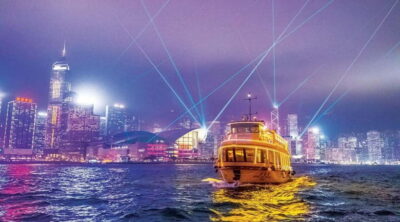
Victoria Harbor Symphony Unlimited Drink Cruise
Read our review →

City Highlights Guided Tour w/Entry Fees & Lunch
Read our review →
Dukling, Antique Boat Tour in Victoria Harbour
Read our review →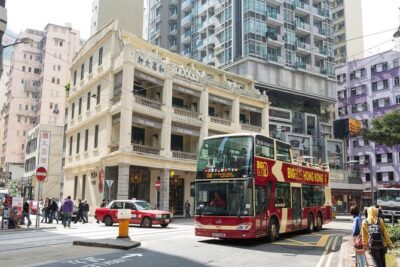
Big Bus Hong Kong Open Top Hop-On Hop-Off Sightseeing Tour
Read our review →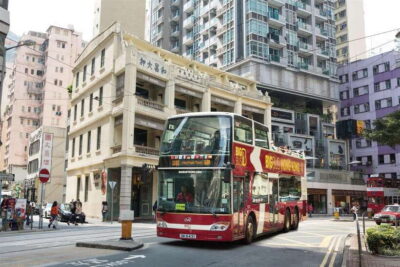
Big Bus Hop-On Hop-Off Tour & Optional Peak Tram
Read our review →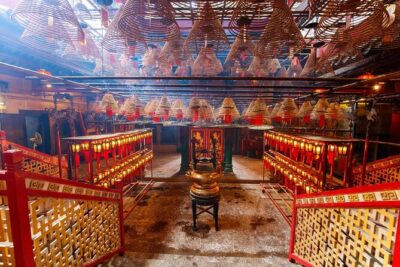
Hong Kong Day Tour: City Landmarks & Highlights
Read our review →Browse the lists this tour appears in