
Reviewed · HONG KONG TOURS
Private Half-Day Walking Tour of the New Territories Region in Hong Kong
Hong Kong’s New Territories reveal a side of the city that skyscraper fans often miss. On this private walk, you follow the Ping Shan Heritage Trail through old villages, temples, study halls, and ancestral buildings, ending near Yuen Long MTR Station. The setting changes quickly from modern transport links to narrow village lanes and centuries-old clan sites.
I like the private format, since you can ask questions as the story unfolds instead of trying to keep up with a large group. I also like the route’s mix of major sights and small details, from Tsui Shing Lau Pagoda to the Shrine of the Earth God. The main drawback is physical: expect about 5 kilometers of walking, including some steep slopes, with no food or drinks included.
Key points to know before you book
- Hong Kong’s oldest pagoda: Begin at Tsui Shing Lau, a small but important landmark on the Ping Shan Heritage Trail.
- A private four-hour outing: Your own group stays with an English-speaking licensed guide throughout the walk.
- Old villages still shape the route: Walk through Sheung Cheung Wai, a 200-year-old walled village, along with Hang Tau Tsuen and Hang Mei Tsuen.
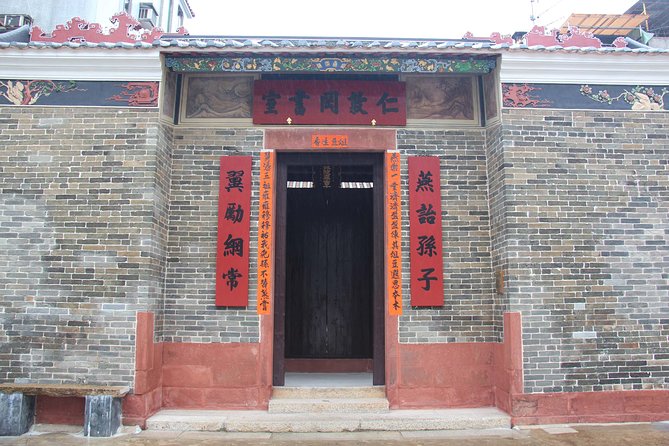
- Temples and clan buildings: Visit Yeung Hau Temple, Hung Shing Temple, Tang Ancestral Hall, Kun Ting Study Hall, and Ching Shu Hin.
- Easy public transport connection: Start at Tin Shui Wai MTR Station and finish at Yuen Long MTR Station, with hotel pickup offered.
- Best for active sightseers: The route is manageable for most people, but steep sections and warm weather can make it tiring.
Why the New Territories make a good half-day
Hong Kong is often presented through Victoria Harbour, neon streets, shopping districts, and high-rise neighborhoods. Those sights are worthwhile, but they tell only part of the city’s story. The New Territories offer a slower, more local setting where clan buildings, village lanes, temples, and small religious shrines remain part of the everyday scene.
The Ping Shan Heritage Trail is especially useful for a short visit because many important sites are close together. You are not spending half the morning on a coach between attractions. Instead, the guide links the buildings through a walk that explains how the villages fit together.
That private setting matters here. The sites are not all large or self-explanatory. A pagoda, ancestral hall, or Earth God shrine can look modest if you pass it without context. With a guide beside you, you can ask about the buildings, local customs, and daily life in the villages.
This is also a good choice if your Hong Kong schedule is tight. The tour lasts about four hours and begins at 10:00 a.m. It gives you a substantial look at the New Territories without taking the entire day.
More Walking Tours in Hong Kong
- Hong Kong: Dark Side of Hong Kong Caged Homes Walking Tour
★ 4.8 · 790 reviews - Dark Side of Hong Kong – Kowloon Caged Homes Walking Tour
★ 5.0 · 418 reviews - Hong Kong Day Tour: Priority Peak Tram, City Walk & Dim Sum
★ 4.5 · 266 reviews
Starting at Tin Shui Wai and reaching the trail
The usual meeting point is Tin Shui Wai, Hong Kong, with the tour starting at Tin Shui Wai MTR Station. Hotel pickup is offered, but you should confirm the exact arrangement when booking rather than assume it is included for every hotel.
Tin Shui Wai is well connected by public transport, and the tour ends at Yuen Long Railway Station. That start-to-finish arrangement is practical. You do not need to return to the original meeting point after the walk, and your guide can help with directions if you plan to continue exploring on your own.
The morning start also makes sense. Hong Kong can be hot and humid, and walking is more comfortable before the strongest afternoon heat. Wear shoes with a good sole, bring water, and allow extra time for the trip to Tin Shui Wai if you are staying on Hong Kong Island or in Kowloon.
Tsui Shing Lau Pagoda begins the story
The first major sight is Tsui Shing Lau Pagoda, described as one of Hong Kong’s oldest pagodas. It is included within the Ping Shan Heritage Trail and provides an immediate sense of what makes this outing different from a standard city tour.
The pagoda is not a giant monument. Its value comes from its place in the old village setting and the traditions connected with it. This is one of those stops where a guide’s explanation adds real value, since the structure itself may not take long to view.
You have about 10 minutes listed for the pagoda, so this is a focused stop rather than a long visit. Bring a camera, but do not expect a large museum or extensive indoor display. The appeal is the compact landmark, its age, and its relationship to the surrounding villages.
From there, the route moves through Hang Tau Tsuen and Hang Mei Tsuen. Walking between the sights helps you see the area as a connected community rather than a collection of isolated monuments.
Sheung Cheung Wai and the village lanes
Sheung Cheung Wai is a 200-year-old walled village and one of the route’s most distinctive stops. Its walls and layout offer a clear contrast with the open streets and tall apartment blocks associated with much of Hong Kong.
The visit is brief, around 10 minutes, but the village is important because it brings local life into the tour. You are not only looking at formal temples and historic halls. You are also seeing how older communities were organized and how village life still forms part of the New Territories.
The route passes through several village areas, so expect narrow lanes and a changing walking surface. This is not a polished attraction designed solely for sightseeing. That is part of its appeal, but it also means you should stay close to the guide and be mindful of residents.
A very different day in Hong Kong:
- Hong Kong: Victoria Harbor Symphony Unlimited Drink Cruise
★ 4.3 · 1,873 reviews - Lantau Island Day Trip – Big Buddha & Tai O
★ 4.5 · 1,328 reviews - Hong Kong: Victoria Harbour Evening Cruise with Drinks
★ 4.6 · 1,260 reviews - Hong Kong: City Highlights Guided Tour w/Entry Fees & Lunch
★ 4.4 · 1,178 reviews
Yeung Hau Temple and the religious sites
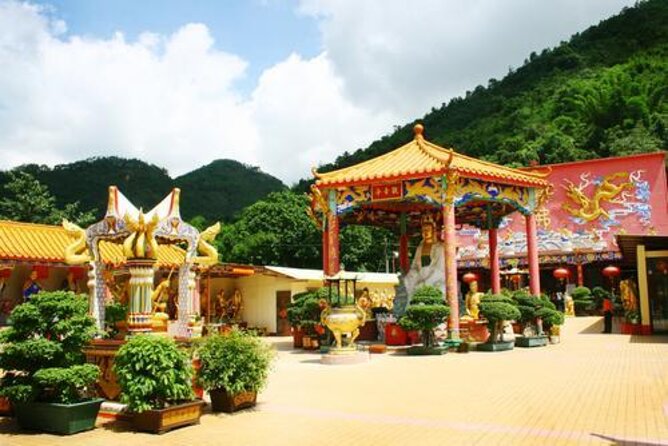
Yeung Hau Temple receives about 20 minutes on the route. Along with Hung Shing Temple, it shows the religious side of the Ping Shan area and gives your guide room to explain local beliefs and worship practices.
The tour also points out the Shrine of the Earth God along Tsui Sing Road. It is a small detail, but one I would not want to miss. Small roadside shrines can be easy to walk past, especially when you are focused on larger buildings. The guide helps you notice these less obvious parts of the route.
Hung Shing Temple is another 20-minute stop. Together, the temples create a useful picture of village religious life, while the walk between them keeps the experience from feeling like a series of disconnected indoor visits.
Keep in mind that religious sites are active places, not just photo stops. Follow your guide’s instructions about where to stand and how to behave. The supplied information does not promise a ceremony or special access, so book this for cultural context and sightseeing rather than a scheduled religious event.
Ancestral halls and the old education system
The ancestral buildings are among the most useful stops for understanding the social structure of the area. The route includes Yu Kiu Ancestral Hall and Tang Ancestral Hall, with about 10 and 20 minutes respectively.
These halls connect the tour to the clans that built and maintained the villages. They are also a reminder that education, family identity, and community affairs were closely linked. You will get more from these buildings if you listen for the explanation of how they functioned, rather than judging them only by their architecture.
Kun Ting Study Hall receives about 20 minutes. This stop adds an education theme to the religious and family sites. The inclusion of a study hall gives the walk more range, since you are seeing more than temples and old homes.
Ching Shu Hin is also part of the route and receives about 20 minutes. The program lists it alongside the ancestral halls and study hall, so your guide can help place it within the wider village story. Exact details about access and interior viewing are not provided, so expect the guide to determine what can be seen during the visit.
A historic police station and everyday local life
The tour also includes a historic police station in the area. It is not given a separate timed stop in the schedule, but it adds another layer to the walk. The route is not limited to religious or clan buildings. It also touches on the civic side of the old community.
Your guide talks about local people and everyday life as you pass through the villages. That may be the most valuable part for you if you prefer tours that connect buildings to living communities. The focus is not only on dates and names. It is on how the area works and how older village patterns remain visible.
At the same time, you should keep expectations realistic. This is a walking tour, not a museum visit with extensive exhibits. Some sites may be viewed from the outside or visited briefly, depending on local conditions. The experience works best when you enjoy observation, questions, and small details.
What the private format is worth at $213.20
The price is $213.20 per person. That is a serious amount for a four-hour walking tour, especially when the admission tickets are free and food and drinks are not included.
The value comes from the private guide rather than paid entry. You are paying for a licensed English-speaking guide, local commentary, a route that is easy to follow, and the ability to choose your group size. A private tour can be good value for a family or small group that wants to ask questions and move at its own pace.
It is harder to justify the cost if you are a solo budget traveler who is comfortable navigating the MTR and reading about the trail independently. The public route itself does not require an admission fee. You are paying for interpretation, convenience, and personal attention.
The tour also offers group discounts, so check the final per-person price for your party. Since the booking average is about 25 days in advance, popular dates may fill before a last-minute plan works.
You should budget for personal expenses as well. The tour information suggests about $20 USD or $150 HKD for the duration. Food and drinks are not included, and transportation to or from attractions is also excluded unless arranged as part of pickup.
Walking conditions, timing, and comfort
The walk covers around 5 kilometers and includes some steep slopes. Most people can participate, but this is not the right outing if you want a flat, low-effort morning.
Wear comfortable walking shoes and bring water. A hat or sun protection is sensible, particularly in warmer months, though the tour requires good weather and may be canceled if conditions are poor. If that happens, you are offered another date or a full refund.
The four-hour estimate includes the trail and its many stops. You will not spend 20 minutes at every building in complete isolation from the walking time. Expect a steady sequence of short visits, explanations, and movement through the villages.
The tour ends at Yuen Long MTR Station. That is helpful if you want to continue your day elsewhere, but it also means you should plan your onward route before starting. Your guide can help with directions at the end.
Who will enjoy this tour most
I would recommend this outing to anyone who has already seen Hong Kong’s central sights and wants a different setting. It is also a strong choice for visitors who prefer buildings, local customs, and village stories over shopping or panoramic viewpoints.
Families may appreciate the private arrangement, especially if younger or older members need short pauses. Small groups can also make better use of the guide’s time and the available group discount.
This tour is less suitable for anyone with limited walking ability, heat sensitivity, or a strong preference for indoor attractions. The information says most people can participate, but the 5-kilometer distance and slopes should be taken seriously.
It is also not a food tour. There are no included meals or drinks, and the focus remains firmly on the Ping Shan trail and its cultural sites.
Booking, cancellation, and practical details
Confirmation is sent within 48 hours of booking, subject to availability. The experience has mobile ticketing, which is useful when you are moving between MTR stations and meeting points.
You can cancel free of charge up to 24 hours before the local start time for a full refund. Changes made less than 24 hours before the start are not accepted, and late cancellations are not refunded.
If you have dietary requirements, provide them when booking, even though food is not included. This gives the operator the information in advance if any related arrangements are needed.
The tour is operated by Big Foot Tour. It is a private activity, so only your group participates. The guide is an English-speaking licensed professional, and the strongest praise attached to the experience focuses on a guide who was kind, well informed, and able to make the walk fun while covering many interesting sites.
Should you book the Ping Shan walking tour?
Book it if you want Hong Kong beyond the harbor and towers, value a personal guide, and can handle a half-day walk with slopes. The route has a good balance: an old pagoda, temples, clan halls, a study hall, a walled village, a police station, and ordinary village streets.
Skip it if $213.20 per person feels too high for free-entry sights, or if you want a relaxed ride with little walking. You can follow the trail independently, but you will give up the guide’s explanations and the ease of a private route.
For the right visitor, this is a useful four-hour look at a quieter, older side of Hong Kong. The best reason to book is not one spectacular monument. It is the way the guide connects small places and local life into a clear story.
FAQ
How long is the New Territories walking tour?
The tour lasts approximately four hours.
Where does the tour begin?
The standard meeting point is Tin Shui Wai MTR Station in Hong Kong, with a listed start time of 10:00 a.m.
Where does the tour end?
The tour ends at Yuen Long Railway Station in Yuen Long, Hong Kong.
Is hotel pickup available?
Pickup is offered, but you should confirm the arrangement and details when booking.
How much walking is involved?
You should expect around 5 kilometers of walking, including some steep slopes.
Is this a private tour?
Yes. Only your group participates, and you can choose your private group size.
What is included in the price?
The tour includes an English-speaking licensed guide, expert commentary and local insights, and the private tour itself.
Can I cancel for a full refund?
Yes. You can cancel at least 24 hours before the local start time for a full refund. Cancellations made later are not refunded.
More half day trips in Hong Kong
- Half-Day Private Custom Tour of Hong Kong
★ 5.0 · 202 reviews - Private Half-Day Real Hong Kong Walking Tour
★ 5.0 · 70 reviews - Peaks to Piers, Half-Day Private Customised Tour In Hong Kong
★ 5.0 · 69 reviews - Hong Kong Half-Day Private Walking Tour with a Local Guide
★ 5.0 · 9 reviews
Recently listed in Hong Kong
- Small-Group Gong Relaxation Experience in Hong Kong★ 5.0 · 5 reviews
- Family-Friendly Tolo Harbour Cycling Adventure★ 4.0 · 5 reviews
- Different Tastes of Hong Kong★ 4.5 · 5 reviews
- Hong Kong Private Departure Transfer: Hotel to Airport★ 4.5 · 5 reviews
- Hong Kong Layover City Tour with 2-way Airport Express Transfer★ 3.0 · 5 reviews
- Ma On Shan Climbing Adventure★ 5.0 · 5 reviews
- Small-Group Tour: Hong Kong Local Markets Hopper [PROMOTION]★ 4.0 · 5 reviews
- Hong Kong Night Tour with a Local: Private & 100% Personalized★ 5.0 · 5 reviews
Hong Kong Tours, compared.

Victoria Harbor Symphony Unlimited Drink Cruise
Read our review →

City Highlights Guided Tour w/Entry Fees & Lunch
Read our review →
Dukling, Antique Boat Tour in Victoria Harbour
Read our review →
Big Bus Hong Kong Open Top Hop-On Hop-Off Sightseeing Tour
Read our review →
Big Bus Hop-On Hop-Off Tour & Optional Peak Tram
Read our review →
Hong Kong Day Tour: City Landmarks & Highlights
Read our review →Browse the lists this tour appears in