
Reviewed · SHANGHAI TOURS
2.5hrs Chinese Kitchen Cooking Class: Xiaolongbao Soup Dumplings
The trick in xiaolongbao is not simply folding a dumpling. It is getting hot, savory soup inside a thin wrapper without losing it on the way to the steamer. This 2.5-hour Shanghai class walks you through that clever process, from dough and filling to steamed and pan-fried dumplings.
I like two things here: the small maximum of 15 people keeps the class personal, and the teachers, including Cici and Yin, are praised for patient English instruction and a good sense of humor. The class also welcomes children and can accommodate vegetarian or vegan preferences if you request them when booking.
The main drawback is the meeting information. The general description points to Changshu Road, while the detailed meeting address lists Guangyuan Road in Xuhui District. Confirm the exact studio location before you set out, and allow time to find it in the lane.
Key points at a glance
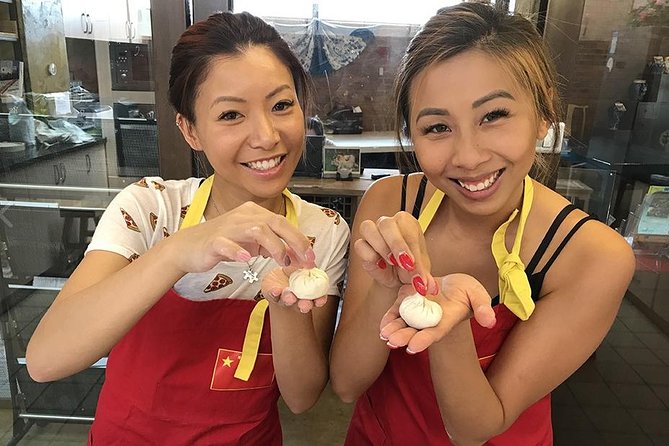
- Soup goes inside the dumpling: Learn the special method that gives xiaolongbao its broth-filled center.
- Two cooking styles: Prepare the dumplings steamed and pan-fried, then compare the results over lunch.
- Teachers who work at your pace: Cici and Yin are noted for clear English, patience, humor, and hands-on help.
- A true small-group class: The maximum is 15 people, with enough room for questions and individual guidance.
- Family-friendly and flexible: Children are welcome, and vegan or vegetarian versions are available on request.
- Local setting, not a polished show kitchen: The studio is small and functional, located in an older Shanghai lane.
Why xiaolongbao makes such a good Shanghai cooking lesson
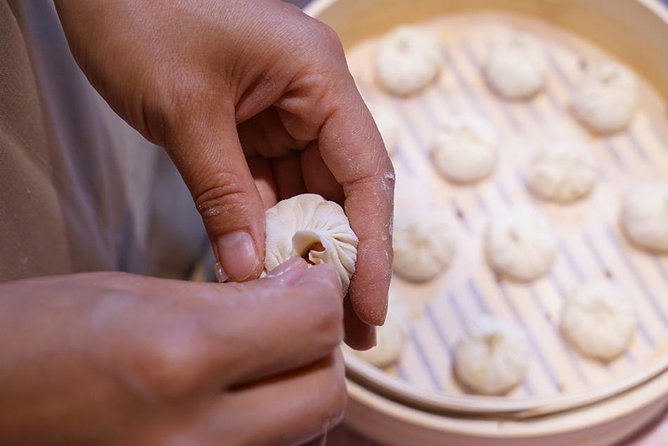
Shanghai’s famous xiaolongbao, also called soup buns or soup dumplings, looks modest. It is a small, pleated parcel with a thin skin. The surprise comes when you bite into it and find hot broth inside.
That hidden soup makes this dish more technical than an ordinary filled dumpling. You need dough with the right texture, a wrapper thin enough to be delicate, and a filling that can hold liquid during cooking. The class explains how soup is wrapped into the dumpling rather than simply adding a wet filling and hoping for the best.
I like this format because you learn a dish closely tied to Shanghai food culture, not just a generic Chinese recipe. You also get a useful kitchen lesson: careful shaping matters as much as the ingredients. Your first few dumplings may have a generous, lopsided pleat count. That is part of the fun, and the teachers are there to help.
The class includes fragrant Chinese spices, a filling, dough, and a dipping sauce. The exact ingredient list is not specified in the available details, so you should think of this as a practical introduction to the method rather than a formal recipe course with a full pantry tour.
More Cooking Classes in Shanghai
- Shanghai-Cooking Dumpling & Meal in Local Family-w/Vegan
★ 4.9 · 36 reviews - Private Cooking Class: Make Your Own Dim Sum In Shanghai
★ 5.0 · 27 reviews - Private Home Cooking Class with Shanghai Mama
★ 5.0 · 14 reviews
Meeting at 10:00 am and finding the studio
The scheduled start is 10:00 am. The class meets at the cooking studio and ends at the same place, with no hotel pickup or drop-off.
The location is described as being near public transportation and easily accessible from Changshu Road. However, the detailed address gives Guangyuan Road, Guang Yuan Lu, in Shanghai’s Xuhui District. Those details do not match perfectly, so I would confirm the precise meeting point with the operator before the morning of the class.
This matters in Shanghai, where a short address can still leave you searching through an alley or lane. One class participant found the entrance unsettling at first because it led through an old, abandoned-looking kitchen area. Inside, the studio was reported to be clean, small, and functional. That contrast is worth knowing before you arrive.
Do not expect a grand culinary school with a glossy storefront. The setting appears to offer a more local look at everyday Shanghai life. If you like polished facilities and clear street signage, the entrance may test your patience. If you enjoy seeing how ordinary neighborhoods work behind the main roads, the older lane adds character.
10:20 am: Food culture and local ingredients
After introductions, the class turns to Chinese cooking culture and local ingredients. This gives the activity a little more context than a simple recipe demonstration.
The timing is useful. You meet at 10:00 am, then have about 20 minutes for orientation before the main cooking begins. The teacher introduces the dish and explains what makes xiaolongbao different from other dumplings and baozi.
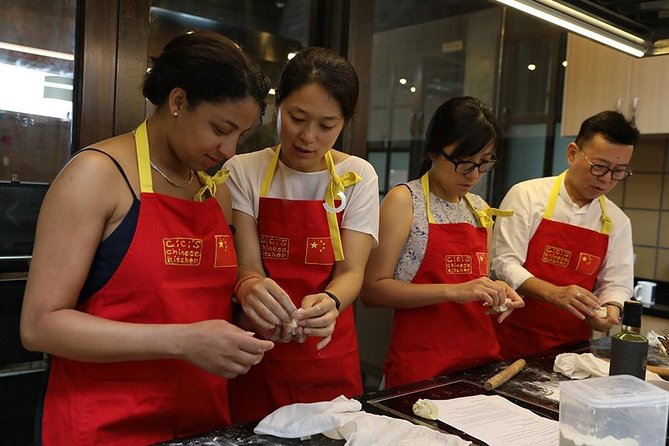
This part is also where an English-speaking chef can make a real difference. Cici is described as fluent in English, organized, funny, and patient. Yin is praised for her teaching style, cooking skill, and engaging personality. The available information refers to both Cici and Yin, so your instructor may depend on the date and staff schedule.
Expect the cultural discussion to support the cooking rather than replace it. This is not presented as a long lecture. The appeal is that you hear why the dish works while you are about to make it yourself.
11:00 am: Making the dough and filling
The hands-on cooking session begins at about 11:00 am. You work with the dough and prepare the filling with Chinese spices.
Making dough is a valuable part of the class because it gives you a better sense of texture than watching someone else do it. You can see and feel when the dough is becoming workable. The class is suitable for beginners, and one teacher, Cici, is specifically described as working at each person’s pace and skill level.
That is important for families and first-time cooks. Children as young as 3 are welcome, and children under 3 can join for free according to the supplied details. Very young children may not handle every step independently, but the age policy makes this a possible family activity rather than an adults-only workshop.
The filling is another chance to learn how flavor is built. The recipe uses fragrant Chinese spices, and the class includes a sauce to serve with the finished dumplings. Vegetarian and vegan options are available, but you need to write down your preference at booking. Do not wait until you arrive, especially if your diet is strict.
A very different day in Shanghai:
- Authentic Local Food Tour in Central Shanghai
★ 5.0 · 1,382 reviews - Zhujiajiao Water Town and Shanghai City Private Day Tour
★ 5.0 · 1,016 reviews - Private Shanghai Full Day City Tour with Old and New Highlights
★ 5.0 · 995 reviews - Shanghai: Hop-on Hop-off Bus Ticket and Optional Attractions
★ 3.4 · 692 reviews
The difficult part: putting soup inside
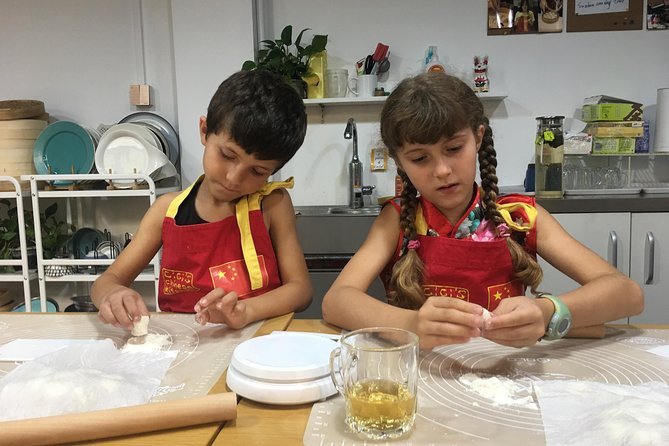
The central lesson is how to wrap soup into xiaolongbao. This is the part that gives the class its identity.
A successful dumpling has a delicate skin around a savory broth. It must hold together during cooking, yet open easily enough for you to enjoy the soup. The teacher demonstrates the technique, then you try it yourself.
You will likely spend time learning the pleats and sealing the top. The class is not aimed at producing identical restaurant dumplings on your first attempt. It is designed to let you practice the hand movements with a teacher nearby.
I especially like that the lesson does not stop at folding pre-made wrappers. You make the dough and filling as well, so the finished dumpling represents the whole process. The downside is that the class may feel more active and messy than a quick demonstration. If you prefer to sit back and take photographs, this is not the best use of your morning.
The small-group limit helps here. With no more than 15 participants, the chef has a better chance of spotting a loose seal or a wrapper that has become too thin. In a larger group, you might receive a demonstration and little else. Here, the stated format points toward direct participation.
Steamed and pan-fried dumplings at noon
You cook the xiaolongbao in two ways. One batch is steamed, the classic method for soup dumplings. The other is pan-fried, giving the bottom a browned, crisp texture.
The comparison makes the meal more interesting. Steaming highlights the soft wrapper and broth. Pan-frying adds a firm base and a different bite. The class does not simply teach you how to shape the dumpling, then send you home. You learn how cooking changes the result.
At about noon, you sit down and eat with the class. Complimentary tea is included, and you serve the dumplings with the Chinese dipping sauce prepared during the session.
The meal is a practical reward for the work. It also lets you see which dumplings held their soup and which ones need more practice. Several people found the final dumplings delicious, including one participant who made both steamed and pan-fried versions and did not want the class to end.
Keep your expectations sensible. This is a cooking class, not a restaurant tasting menu. Your dumplings will reflect your own folding skills, and that is precisely why the meal feels satisfying.
A small studio with a local feel
The studio’s size is both a benefit and a limitation. A small room can make instruction more direct, and the maximum group size keeps the experience from becoming anonymous.
It can also feel plain. The setting has been described as an old lane with an unpromising entrance. One person was unsure where to meet until Yin found them in the alley and led them inside. The studio itself was clean and functional, but not luxurious.
I would treat this as part of the experience rather than a flaw that ruins it. Shanghai is full of glossy attractions designed for quick consumption. A modest neighborhood cooking space gives you a brief look at how the city’s older residential areas feel.
Still, practical planning helps. Keep the meeting instructions handy, confirm the exact address, and arrive early enough to deal with the lane. The operator provides mobile tickets and confirmation at booking, but the address should be checked carefully because the supplied information names both Changshu Road and Guangyuan Road.
What $98.88 buys you
At $98.88 per person, this is not the cheapest way to eat xiaolongbao in Shanghai. You can buy soup dumplings at local restaurants for far less.
The value is in the instruction and participation. You spend around two and a half hours learning dough, filling, soup wrapping, pleating, cooking, sauce preparation, and food culture. You also eat the result, receive tea, and leave with the recipe.
For a visitor who only wants lunch, the price is high. For someone who wants a practical memory and a skill to take home, it is easier to justify. The recipe matters because it extends the experience beyond the meal. You can try making the dumplings again, though the supplied details do not specify whether ingredients or a prepared kit are provided for home use.
Group discounts may be available, which can help families or friends booking together. The class is often booked about 18 days ahead, so you should not assume you can wait until the last morning of your Shanghai stay.
The rating is 4.8 from 12 ratings, with 92 percent recommending the experience. That is a strong result, though the number of ratings is still fairly small. I would place more weight on the repeated practical themes: patient instruction, enjoyable teachers, delicious dumplings, and a memorable hands-on format.
Who will enjoy this class most
This works best for you if you like doing rather than watching. You should be ready to roll dough, prepare filling, fold dumplings, and eat a lunch you helped make.
It suits:
- First-time cooks who want patient guidance
- Families with children
- Couples and friends looking for a shared activity
- Visitors curious about Shanghai food culture
- Vegetarians and vegans who request suitable ingredients in advance
- People who want a recipe and technique to use at home
The class may be less suitable if you have limited mobility in your hands, dislike group activities, or want a luxury cooking-school setting. The available information confirms that the studio is near public transportation, but it does not provide detailed accessibility information for the lane or kitchen. Ask the operator directly if that is important for you.
The class also has a wide age range, from children to adults up to age 100. That signals a relaxed format, but it does not mean every part is designed specifically for toddlers. Younger children may need close help during dough handling and folding.
Useful planning details before you book
The activity lasts approximately two hours and 30 minutes. The schedule is:
- 10:00 am: Meet at the studio
- 10:20 am: Introduction to Chinese cooking culture and ingredients
- 11:00 am: Cooking session
- 12:00 pm: Eat the dumplings together
- 12:30 pm: Finish with the recipe
Tea and the cooking class are included. Hotel transportation and personal expenses are not.
Your booking confirmation is sent at the time of booking, and a mobile ticket is available. The tour requires a minimum number of participants. If the operator cancels because that minimum is not reached, you are offered another date or experience, or a full refund.
Your own cancellation rules are strict. The experience is non-refundable and cannot be changed for any reason. Check your Shanghai schedule carefully before paying.
Dietary preferences should be written down at booking. Vegetarian and vegan versions are available on request, but the details do not promise that every allergy can be accommodated. If you have a serious allergy, contact the provider before booking rather than relying on a general dietary note.
Should you book the xiaolongbao class?
Book it if you want a friendly, hands-on morning centered on one of Shanghai’s signature foods. The strongest reasons are the patient English-speaking teachers, the small group, the chance to make soup dumplings from dough onward, and the two cooking methods at the end.
The class is especially good for families and friends. You do not need expert kitchen skills, and the teachers are described as willing to work at your pace. The finished meal gives the lesson a clear payoff.
Think twice if you only want an inexpensive meal, need a highly polished studio, or cannot tolerate uncertainty about the meeting address. Confirm whether the actual location is at Changshu Road or Guangyuan Road, then decide if the $98.88 price fits your plans.
For the right visitor, this is a useful Shanghai experience: part lunch, part cooking lesson, and part look at local life in an older lane. Just arrive prepared to work for your dumplings.
FAQ
How long does the xiaolongbao cooking class last?
The class lasts approximately 2 hours and 30 minutes, from 10:00 am to about 12:30 pm.
What time does the class begin?
You meet at the cooking studio at 10:00 am.
Where does the class meet?
The activity is described as meeting near Changshu Road, while the detailed address lists Guangyuan Road in Xuhui District, Shanghai. Confirm the exact location before attending.
Does the activity include hotel pickup?
No. Hotel pickup and drop-off are not included. The class begins and ends at the meeting point.
How many people can join the class?
The maximum group size is 15 people.
Are children allowed to participate?
Yes. The experience is open to children, and children under 3 years old can join for free according to the supplied information.
Are vegetarian and vegan options available?
Yes. Vegan and vegetarian options are available on request. State your food preference when booking.
What will I learn to make?
You learn to make the dough and filling, wrap soup inside xiaolongbao, prepare a Chinese dipping sauce, and cook the dumplings in two ways.
Is food included?
Yes. You eat the handmade xiaolongbao with the class, and complimentary tea is included.
What happens if the class is canceled because there are not enough participants?
If the minimum number of participants is not reached, you are offered a different date or experience, or a full refund. Your own cancellation or amendment is otherwise non-refundable.
More workshops and classes in Shanghai
- 2-Hour Private Chinese Ink and Brush Painting Workshop in Shanghai
★ 5.0 · 15 reviews - Unlock Chinese Tea: Culture, Science, Tasting & Hands-on Brewing
★ 5.0 · 12 reviews - Zhujiajiao Water Town: Boat Ride, Opt for Hands-on Dumpling Meal
★ 5.0 · 7 reviews - 2.5hrs Chinese Kitchen Cooking Class: Art Steamed Dumplings
★ 4.5 · 5 reviews
Recently listed in Shanghai
- Private Tour of Shanghai Highlights and Zhujiajiao Water Town in One Day★ 5.0 · 5 reviews
- 4-Hour Private Shanghai Shopping Tour with Local Expert★ 5.0 · 5 reviews
- Shanghai to Beijing Bullet Train Ticket with Hongqiao Station Transfer★ 5.0 · 5 reviews
- Shanghai Hongqiao Airport To Shanghai Hotel:Private transfer with Meet service★ 5.0 · 5 reviews
- Shanghai Coffee & Breakfast Tour★ 5.0 · 5 reviews
- Private Shanghai Hightlight Day Tour with English-speaking Guide★ 4.5 · 5 reviews
- Xitang Water Town Self-Guided Tour from Shanghai with Private Transfer★ 5.0 · 5 reviews
- 4-Hour Private Shanghai Walking Tour of Former French Concession★ 5.0 · 5 reviews
Shanghai Tours, compared.
Authentic Local Food Tour in Central Shanghai
Read our review →
Zhujiajiao Water Town and Shanghai City Private Day Tour
Read our review →
Private Shanghai Full Day City Tour with Old and New Highlights
Read our review →
Hop-on Hop-off Bus Ticket and Optional Attractions
Read our review →
Shanghai Private Tour: Zhujiajiao Water Town and Boat Ride
Read our review →

Huangpu Night Cruise: Cozy Vibe & Modern Shanghai Glow
Read our review →
Browse the lists this tour appears in