
Reviewed · HUTONG TOURS
Beijing Hutongs Walking Tour
Beijing’s grand palaces tell only part of the city’s story. This walk takes you into the hutongs, narrow lanes lined with gray courtyard homes, where old trees, modest doorways, and local street life replace imperial scale. I like the relaxed pace and the chance to hear how ordinary homes connect with figures such as Puyi and Empress Wanrong.
I also like the guide-led storytelling. Roy Li, one guide named in the feedback, speaks good English and uses questions and historical details to keep the walk active rather than turning it into a long lecture. The main drawback is practical: the route depends on everyone finding the right metro exit and arriving on time, and one booking ended badly after the group left a late arrival behind.
Key points to know before booking

- Yuan Dynasty lanes: Begin around Nanluoguxiang, one of Beijing’s best-known hutong areas, with traditional courtyard buildings and old trees.
- Mao’er Hutong stories: See the former residence associated with Wanrong, the last emperor Puyi’s empress.
- Small-group setting: The group can reach 15 people, giving you a better chance to ask questions than on a large coach tour.
- A useful first-day walk: The guide covers local life, Chinese time-keeping, and the fate of Puyi, making this a good orientation to Beijing.
- Metro-friendly meeting point: Meet at Nanluoguxiang station, Exit E, on Line 6 or Line 8.
- Two-hour commitment: Plan for roughly 1 hour 30 minutes to 2 hours, ending near the Drum Tower, with admission charges not included.
Why Beijing’s hutongs are worth your morning
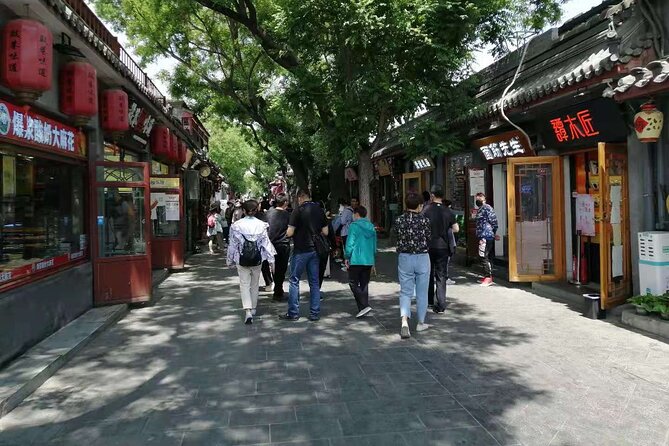
The word hutong refers to Beijing’s traditional lanes and the courtyard houses arranged along them. In the center of the city, these lanes offer a sharp change from the monumental avenues and formal buildings associated with imperial Beijing.
I find the appeal simple: you get to see how the city was organized at street level. Instead of looking only at palaces, gates, and public squares, you notice entrances, walls, rooflines, trees, and the way one lane leads into another. The architecture is restrained, with many gray facades and enclosed courtyards, but the effect is intimate.
A guide matters here because the hutongs can look like a maze. Without local context, you may walk past a plain gate without realizing that the home behind it once belonged to an important political figure. You may also miss the difference between a historically significant residence and an ordinary lane that simply gives you a feel for older Beijing.
This tour is designed around that human scale. It is not a fast parade of major sights. You walk, stop, listen, and have a chance to ask about the buildings and stories in front of you.
More Walking Tours in Beijing
- Beijing Hutong Walking Food and Beer Tour at Hidden Restaurants
★ 5.0 · 1,132 reviews - Private Beijing Walking Tour of the Forbidden City with 7 Options
★ 5.0 · 675 reviews - Forbidden City Private Walking Tour with Optional Sights
★ 5.0 · 400 reviews
Meeting at Nanluoguxiang Station Exit E
The meeting point is at the south end of Nanluoguxiang, near Nanluoguxiang metro station. Use Line 6 or Line 8 and look for Exit E. The meeting information gives the Chinese location as 南锣鼓巷南口 or 南锣鼓巷地铁站E出口.
This is the kind of detail you should copy into your phone before leaving your hotel. Beijing’s metro stations can have several exits, and using the wrong one can put you on a different street from the guide. Arrive early enough to identify Exit E rather than trying to sort it out at 10:00 a.m.
The tour begins at 10:00 a.m. That timing gives you a useful morning introduction before the rest of your sightseeing day. You could pair it with nearby attractions afterward, but the supplied details do not promise entry to any additional site, so plan the rest of your day separately.
One important warning is worth taking seriously. The guide reported waiting at the meeting point with four other people during one missed connection, while the customer said they waited about 25 minutes before leaving. The lesson is not complicated: confirm the station exit, keep your phone available, and arrive on time. In a small group, the guide cannot spend half the morning searching for one person.
Nanluoguxiang and its Yuan Dynasty setting
The first major section takes place around Nanluoguxiang, a lane connected with Beijing’s Yuan Dynasty urban plan. The area is known for vernacular courtyard houses, gray-colored walls, and mature trees.
The value here is visual and structural. You begin to see how Beijing’s older residential quarters differ from the ceremonial center. Courtyard homes turn inward, with rooms arranged around an interior space, while the lanes create a network of neighborhood connections outside.
Nanluoguxiang is not presented as a museum frozen in time. It is a real urban area, and the experience comes from seeing old architectural forms within a living part of downtown Beijing. The guide can help explain what you are looking at, which keeps the walk from becoming a simple stroll down a photogenic street.
Expect a moderate amount of walking through lanes rather than a formal indoor tour. The listed duration is approximately 1 hour 30 minutes to 2 hours, so this is easy to fit into a morning, but it is still worth wearing comfortable shoes. The route is built around walking and conversation, not sitting in one place.
Mao’er Hutong and the Empress’s Mansion
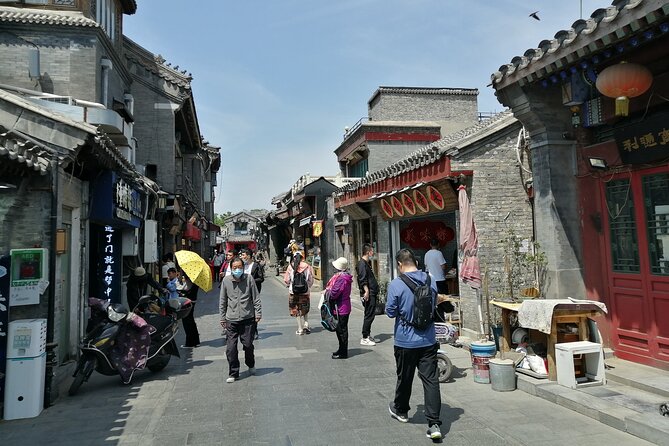
From Nanluoguxiang, the route continues along Mao’er Hutong. This lane is important for its buildings and the stories connected to them, especially the former residence associated with Wanrong, Empress of Puyi.
The stop offers a useful bridge between architecture and modern Chinese political history. Puyi is often introduced through palaces and films, but this walk points you toward the personal and residential side of the final imperial era. Seeing the former home of Wanrong gives the story a physical setting, even if the tour does not include an elaborate palace visit.
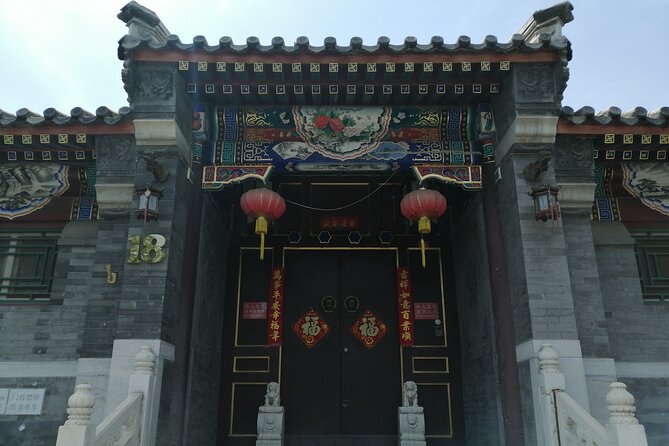
You should expect to stop for photographs at the Empress’s Mansion. The information describes it as the former residence of Wanrong, Puyi’s empress, so this is one of the clearest named sights along the walk. It is also the kind of stop where a good guide can add meaning by explaining who lived there and what happened to China’s final emperor.
Roy Li received specific praise for his English and his command of hutong stories. Another account describes a guide who used questions to involve the group, rather than simply speaking at everyone. That approach suits this neighborhood well. A question about a doorway, a lane, or an imperial figure can lead naturally into a larger explanation of Beijing’s past.
Keep your expectations realistic. This is a walking visit to historic lanes and exterior locations, not a guaranteed full tour of private courtyard interiors. Admission tickets are not included, and the supplied information does not promise entry into the Empress’s residence or other buildings.
More hutong walks:
- Temple Heaven, Summer Palace, Lama Temple, Hutong Bus Tour
★ 4.7 · 319 reviews - Temple of Heaven, Summer Palace, Lama Temple, Hutong Tours
★ 5.0 · 311 reviews - Beijing Private Hutong Food Walking Tour
★ 5.0 · 299 reviews - The Hutong Experience by Bike
★ 5.0 · 163 reviews
Time-keeping, Puyi, and the stories between the stops
The tour goes beyond names and dates. Its subject matter includes Chinese time-keeping and the fate of Puyi, along with the history of the lanes and courtyard homes around you.
That combination is useful because it connects daily routines with major events. A discussion of time-keeping can show how older Beijing measured the day, while the story of Puyi adds a political thread. You are not simply collecting building names. You are getting a sense of how the city’s social life, customs, and ruling system once fitted together.
The best way to use this part of the experience is to ask questions. If you want a basic introduction to Beijing, ask about how courtyard houses were used, who lived in the lanes, and how the old neighborhoods changed. If you already know the broad story of Puyi, ask for local details rather than a repeat of a standard biography.
The small-group design helps here. The maximum is 15 people, which is not a private tour, but it is far more manageable than a large group. You should have a reasonable chance of hearing the guide in the lanes and asking for clarification. Group size can vary, and the tour is not guaranteed to be limited to only a few people.
Following the water toward Houhai
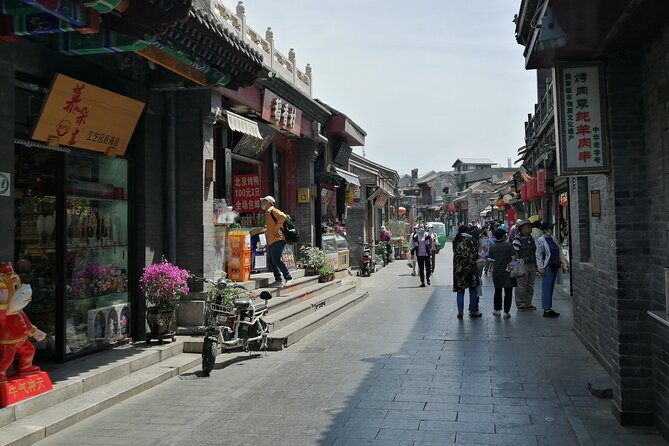
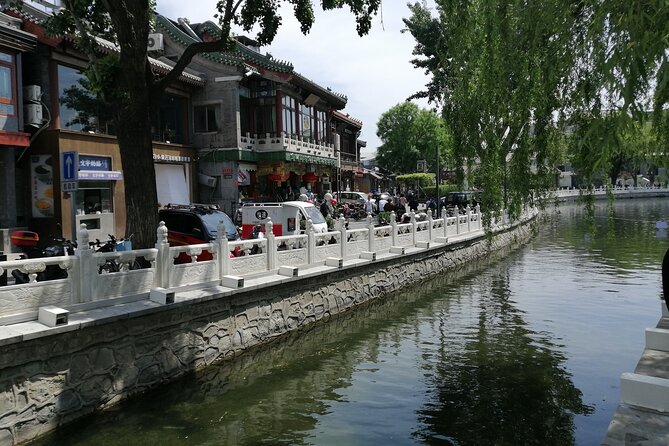
The route continues toward the narrow water channel joining Qianhai Lake and Houhai Lake. These waters are part of the old central Beijing area, and they give the walk a change of mood after the enclosed lanes of Nanluoguxiang and Mao’er Hutong.
This section helps you understand that the hutongs are not isolated alleys. They connect with open water, public spaces, and major city landmarks. The move from courtyard lanes to the lakeside area also gives the walk a natural sense of progression.
The endpoint information needs a little care. The route details mention Houhai, while the meeting and ending notes say the tour finishes at the Drum Tower. Treat the Drum Tower area as the practical finish point, with the walk passing through the Houhai area along the way.
That finish is convenient if you want to continue sightseeing in central Beijing. It also gives you a clear place to separate from the group rather than ending in an anonymous residential lane. Still, no transport after the tour is included, so you will need to arrange your own onward plans.
What the $30 price really covers
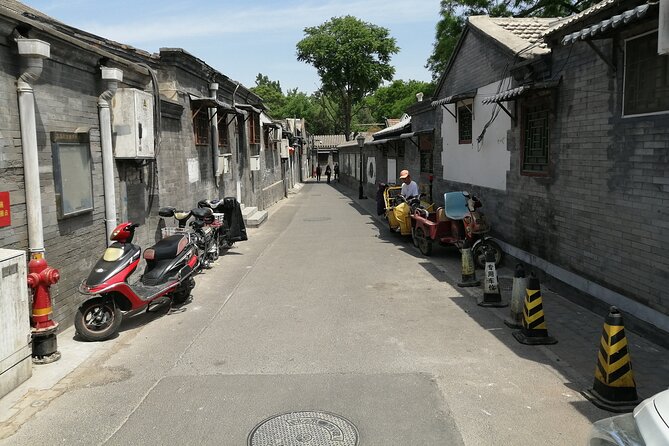
At $30 per person, the main thing you are buying is access to a guide who can make sense of a confusing residential district. The English-speaking guide is included, along with the small-group format and the walking route.
I consider that fair value if you are new to Beijing and want context more than a long list of headline attractions. The route covers Nanluoguxiang, Mao’er Hutong, Wanrong’s former residence, the waterway near Houhai, and the Drum Tower area. Those places can be visited independently, but the historical links are easier to grasp with a guide.
The price is less compelling if you only want photographs or a quick self-guided walk. Nanluoguxiang is accessible by metro, and independent visitors can explore its lanes at their own pace. You are paying for explanation, orientation, and a structured route, not for entrance tickets or transportation.
Admission is not included. Since the provided details do not identify a required ticketed site, bring the understanding that any optional or separate entry fee would be your responsibility. The experience itself is primarily a guided walk.
Who will get the most from this walk
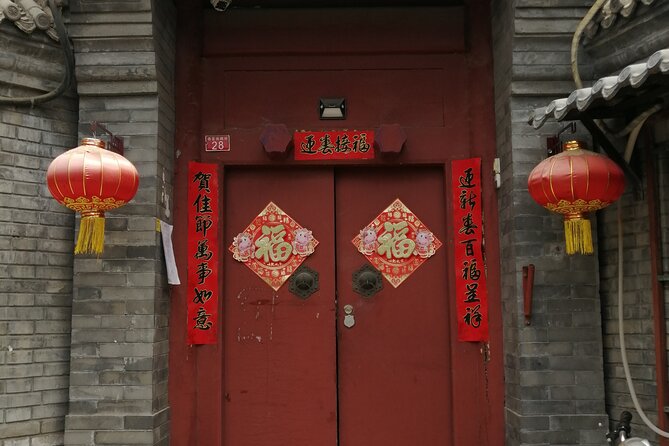
I would choose this tour for a first or second day in Beijing, especially if you want an introduction to the city before tackling larger imperial sites. One booking described it as a good way to begin a Beijing trip because it connected present-day life with older stories. That is exactly where this experience makes sense.
It also suits you if you like:
- Traditional architecture more than polished modern attractions
- Short walking tours with historical explanation
- Small groups instead of coaches
- Local neighborhoods and residential lanes
- Guides who invite questions and use simple stories
- A morning activity that leaves the rest of the day open
You may want something else if you need a private guide, guaranteed interior access, or a full-day itinerary. The group can reach 15 people, and the walk is a general introduction rather than a specialist architectural study.
The tour is described as suitable for most people and near public transportation. Service animals are allowed. The supplied information does not give detailed mobility notes about lane surfaces, steps, or restroom access, so ask the operator if those points matter to you.
Timing, group size, and simple ways to avoid trouble
Allow the full two hours even though the stated range begins at 1 hour 30 minutes. A guide may finish sooner, but scheduling your next activity with a little space is sensible.
Use a mobile ticket and keep the booking confirmation accessible. The activity sends confirmation at booking, and the meeting point is specific enough that you should not rely on recognizing the guide by chance.
At the station, check that you are at Exit E before calling or messaging the guide. If you are delayed, contact the operator immediately. The one missed meeting described in the feedback shows how quickly a small-group tour can move on.
Free cancellation is available if you cancel at least 24 hours before the local start time. Cancellations or changes inside that window are not refunded, and the operator may cancel if the minimum group size is not reached, offering another date or a full refund.
Should you book the Beijing Hutongs Walking Tour?
Book it if you want a calm, story-led introduction to old Beijing and you value a guide who can explain what lies behind ordinary courtyard walls. The combination of Nanluoguxiang, Mao’er Hutong, Wanrong’s former residence, and the route toward Houhai gives you a clear look at a side of the city that is easy to rush past.
The strongest reasons to go are the personal scale of the walk, the English-language guiding, and the chance to connect hutong homes with Puyi-era history. Roy Li received especially positive attention for his English and subject knowledge, though the assigned guide may vary.
Skip it if you prefer to explore independently, need a private itinerary, or expect admission to historic interiors. And take the meeting instructions seriously. Arrive at Nanluoguxiang station Exit E before 10:00 a.m., and this $30 walk should give you useful bearings for the rest of your Beijing stay.
FAQ
Where does the Beijing Hutongs Walking Tour begin?
The tour begins at the south end of Nanluoguxiang, near Nanluoguxiang metro station Exit E. The station is served by Line 6 and Line 8.
What time does the tour start?
The stated start time is 10:00 a.m.
How long does the walk last?
The tour lasts approximately 1 hour 30 minutes to 2 hours.
Where does the tour finish?
The tour finishes at the Drum Tower area. The route also passes through the Houhai area and near the channel joining Qianhai Lake and Houhai Lake.
Are admission tickets included?
No. Admission tickets are not included. The included service is an English-speaking guide.
How large can the group be?
The activity has a maximum group size of 15 people.
Can I cancel for a full refund?
Yes, if you cancel at least 24 hours before the local start time. Cancellations or changes made less than 24 hours before the start are not refunded.
Recently listed in Beijing
- Temple of Heaven Tickets Booking★ 5.0 · 4 reviews
- Small-Group 1-day Jinshanling Great Wall 6km Hiking tour★ 5.0 · 4 reviews
- Beijing Night Walking Tour★ 5.0 · 4 reviews
- Jinshangling Great Wall Of Beijing Tickets And Other Option★ 4.0 · 4 reviews
- Private Layover Tour to Mutianyu Great Wall from Beijing Airport★ 5.0 · 5 reviews
- Beijing: Private Biking Tour Along Central Axis of Beijing★ 4.8 · 4 reviews
- Fantastic Private Trip to Mutianyu Great Wall (English Service)★ 5.0 · 5 reviews
- Beijing: Private Tour to Jinshanling Great Wall with Option★ 4.7 · 5 reviews
Hutong Tours, compared.
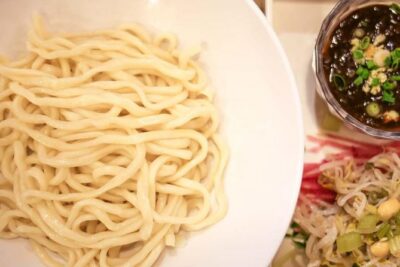
Beijing Hutong Walking Food and Beer Tour at Hidden Restaurants
Read our review →
Temple Heaven, Summer Palace, Lama Temple, Hutong Bus Tour
Read our review →
Temple of Heaven, Summer Palace, Lama Temple, Hutong Tours
Read our review →



Beijing City Walk: Explore Hutongs Life and Old Beijing
Read our review →Browse the lists this tour appears in