
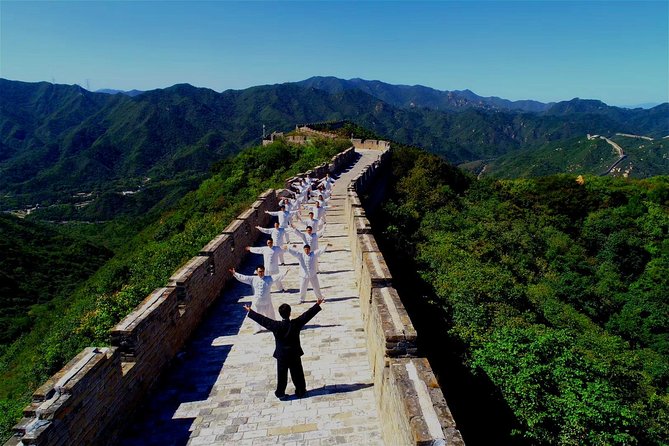
Reviewed · BEIJING TOURS
Beijing Private Tai Chi Class
Tai chi here is more than a sequence of slow movements. In a private 90-minute lesson, you learn a nine-step form, standing meditation, push hands, self-massage, and the ideas of yin and yang that shape this Chinese martial art. The pace is gentle, but the subject has real depth.
I like the one-on-one attention, especially if you have never tried tai chi and need patient correction. I also like the mix of movement and culture: your instructor explains Taoism and the idea of Qi instead of simply showing you a set of poses. The main consideration is that this is an introductory class, not a full martial arts course, and the outdoor meeting location means weather can affect the booking.
Key points at a glance
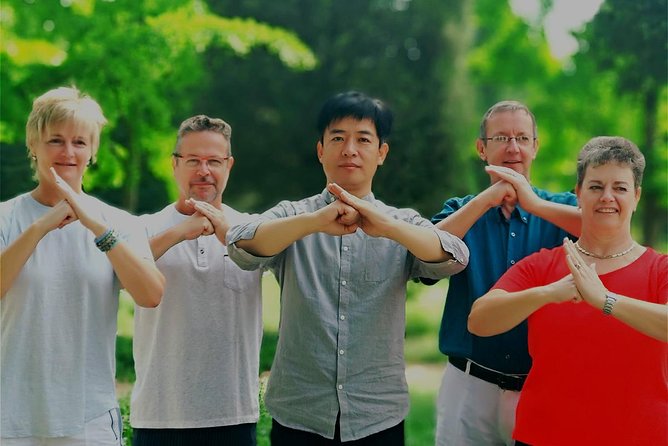
- A private beginner class: Your group receives the instructor’s full attention rather than following a large public lesson.
- More than forms: The class includes breathing, standing meditation, push hands, and self-massage for everyday stress and discomfort.
- An English-speaking instructor: Eric Liu is specifically praised for clear, patient teaching and explanations of tai chi philosophy.
- Morning or afternoon timing: You can choose the class period that fits your Beijing schedule.
- A central Beijing setting: The listed meeting point is at 旻园1, Tiantan Dong Lu, in Dongcheng District.
- Good value for a focused lesson: At $58 per person, the price makes the most sense for couples, families, or small groups wanting private instruction.
What this Beijing tai chi class is really like
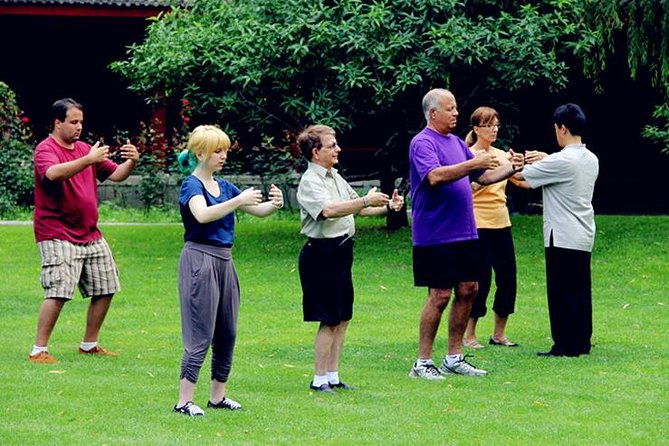
This experience is designed for beginners, including people who know almost nothing about tai chi. You do not need to arrive flexible, athletic, or familiar with Chinese martial arts. The lesson begins with the foundations, then builds toward a short sequence you can remember after class.
The private format matters. In a group lesson, you might spend much of your time watching someone else receive corrections. Here, the instructor can adjust the pace for your ability and answer questions as they come up. That is especially useful because tai chi depends on small details: balance, relaxed shoulders, steady breathing, and controlled weight shifts.
The lesson is also intended to explain why the movements look and feel the way they do. You will hear about Taoism, yin and yang, and the traditional idea of Qi, or internal energy. You should treat those concepts as part of the cultural and philosophical side of the class, not as a medical promise.
More workshops and classes in Beijing:
- Beijing Calligraphy Class
★ 4.9 · 112 reviews - Chinese Calligraphy Class for Small Group
★ 5.0 · 104 reviews - Beijing: Dumpling Making Workshop with Meal and Tea
★ 4.7 · 69 reviews
Beginning with tai chi culture and Taoist ideas
The first part of the lesson introduces tai chi and its cultural background. This gives you a useful frame before the physical practice starts. Tai chi is often described as an internal martial art, and the class connects its slow movements with balance, breath, awareness, and relaxed control.
The discussion of yin and yang helps explain the constant shifts within the exercises. One side of the body gives way while the other supports. Weight moves from one leg to the other. Tension yields to relaxation. You may find this explanation more useful than memorizing a string of Chinese terms because it gives you something to watch for as you move.
The instructor also discusses Taoist ideas. That can make this experience more appealing to someone who wants a cultural activity rather than another sightseeing stop. You are not simply copying an exercise routine. You are learning why tai chi is practiced with patience, softness, and concentration.
The cultural portion is not likely to satisfy someone looking for a long academic lecture. The class lasts about an hour and a half, and much of that time is reserved for practice. Think of the philosophy as a practical introduction that makes the movements easier to understand.
Learning the nine-step tai chi form
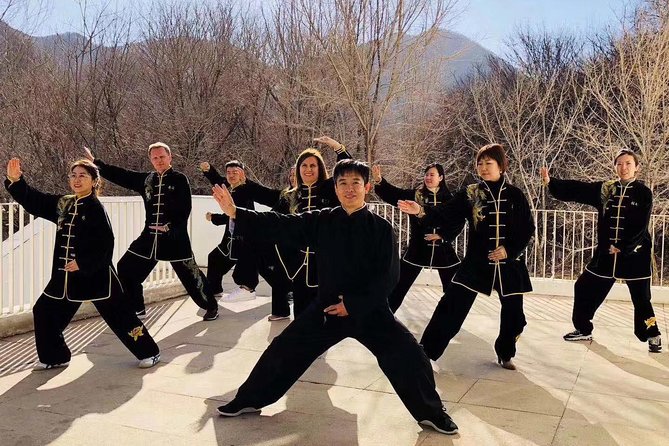
The central physical portion is a nine-step tai chi form taught in a simple, gradual way. Your instructor demonstrates each movement, then guides you as you repeat it. The small number of steps makes this a sensible first encounter, since you can focus on the quality of each motion rather than rushing through a long routine.
Tai chi can look effortless when performed by an experienced practitioner. For a beginner, the challenge is keeping the movement slow without becoming stiff. You will work on deliberate actions, deep breathing, and attention to your body. The private format gives the instructor room to remind you about posture and help you stay relaxed.
Eric Liu receives particular praise for being patient with beginners and for using demonstrations to make the lesson easier to follow. That is useful if you feel awkward at first. Tai chi is not a performance, and you are not expected to look polished during your first class.
The nine-step form also gives the lesson a clear shape. You start with individual actions, connect them, and begin to sense how one movement flows into the next. You may not leave with a complete practice routine, but you should have a basic sequence and enough understanding to continue exploring tai chi.
Standing meditation and the quieter side of class
Standing meditation is one of the more distinctive parts of the session. Instead of moving through a form, you hold a stable position and focus on breathing, balance, and awareness. It sounds simple. It is not always easy to remain relaxed and attentive while standing still.
This exercise shows why tai chi is not only gentle gymnastics. Concentration plays a major role. You learn to notice tension in your shoulders, uneven balance, or shallow breathing. Those observations can be useful even if you never study tai chi again.
The class presents standing meditation as a way to work with Qi and the internal side of the art. Again, the value is partly cultural. You are getting an introduction to how tai chi practitioners understand energy and attention, while also trying a calm physical exercise for yourself.
If you prefer constant movement, this part may feel slow. I think it works well in the middle of a Beijing sightseeing schedule because it asks you to stop, listen, and pay attention. Just allow yourself to be a beginner. Trying to force the posture defeats the purpose.
A few more Beijing days to line up
- From Beijing: Mutianyu Great Wall Tours with Options
★ 4.9 · 9,216 reviews - Beijing: Forbidden City Tour(Group/Private)-Tickets Included
★ 4.8 · 7,974 reviews - Beijing: T-Square & Forbidden City Group or Private Tour
★ 4.8 · 4,446 reviews - All-Inclusive Tour: Tiananmen Square, Forbidden City, Great Wall
★ 5.0 · 2,873 reviews
Push hands and self-massage techniques
Push hands gives you a chance to experience tai chi as a martial art rather than only as a slow solo form. The exercise focuses on sensitivity, balance, and responding to another person’s movement. It is not presented as a fighting lesson, and you should not expect combat training in this introductory session.
This section can help you understand the practical side of tai chi. The same relaxed control used in the form becomes a way to maintain balance and awareness with a partner. Since the class is private, the activity is limited to your own group and instructor.
The self-massage section shifts toward everyday comfort. You learn methods intended to relieve pain and stress from daily life. The supplied details do not specify which body areas or exact techniques are covered, so you should regard this as an introduction rather than a therapeutic treatment.
That distinction is important. The class may leave you feeling relaxed, and several descriptions of the experience emphasize that calm feeling. Still, it is not a substitute for medical care, physiotherapy, or professional massage.
Why the private format is worth considering
The price is $58 per person. For a short public demonstration, that would be expensive. For a private lesson with an English-speaking tai chi master, the value is easier to see, especially if you are booking for two or more people and can make use of group discounts.
You are paying for instruction, not transportation or a meal. An entrance ticket is included, but hotel pickup and drop-off are not. You will need to reach the meeting point yourself and return from there when the class ends.
I see the strongest value in the personal teaching. A private lesson can be adjusted for a complete beginner, a family group, or someone who wants to ask many questions about tai chi philosophy. It also avoids the pressure of keeping up with a large class.
The cost may be less attractive if you are already an experienced tai chi practitioner. The session is built for beginners, so advanced students may find the nine-step form and basic cultural introduction too limited. For a first lesson, though, the focused setting makes sense.
Meeting at 旻园 in Dongcheng District
The listed starting point is 旻园1, Tiantan Dong Lu, Dongcheng District, Beijing, 100061. The activity ends back at the meeting point. You should check the exact meeting instructions after booking and allow enough time to arrive without rushing.
The location is connected with the Temple of Heaven area, and one class arrangement described in the feedback took place in a park setting. That gives the lesson a more natural feel than practicing in a hotel meeting room. Outdoor tai chi also fits the tradition of seeing people practice in Beijing parks.
The trade-off is weather. This experience requires good conditions, so rain or other poor weather can lead to a new date or a full refund. Bring comfortable shoes, since the class involves standing and controlled movement rather than sitting through a demonstration.
Do not count on hotel transportation. Pickup and drop-off are not included, and the meeting point is also the return point. This is easy enough to plan as part of a day in Dongcheng District, but it should not be treated as a door-to-door activity.
Choosing morning or afternoon
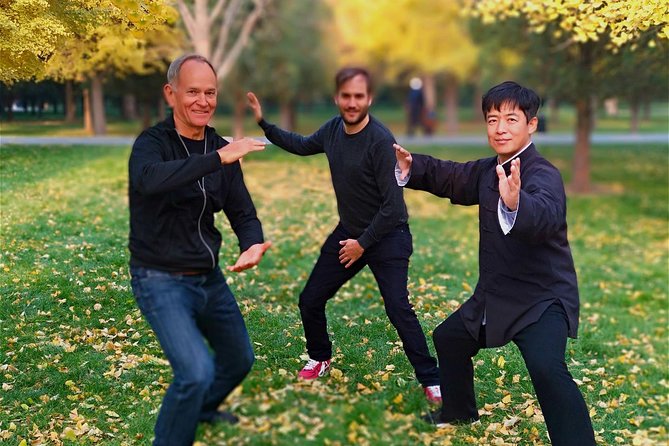
You can choose a morning or afternoon class. That flexibility helps you fit tai chi around major Beijing sights, meals, or jet-lag recovery. A morning session may work well if you want a quiet start before a day of sightseeing, while an afternoon class can provide a slower break after visiting nearby attractions.
The available information does not give exact start times, so confirm the options when you book. The class lasts about 90 minutes, which is long enough for instruction and practice without taking over your entire day.
Plan to wear clothing that lets you move comfortably. Special uniforms are not listed as required, and comfortable shoes are recommended. You do not need to prepare as if you are attending a strenuous workout, but you should be ready to stand and repeat movements.
Children can participate when accompanied by an adult. Most people can take part, though anyone with a health concern should use personal judgment and ask a medical professional if needed.
What the teaching style may mean for you
The instructor is an English-speaking tai chi master, and the experience is supplied by Beijing San Feng Tai Chi Club. Eric Liu is named in the feedback and is described as friendly, patient, and helpful. His teaching includes basic movements, demonstrations, and explanations of philosophy.
That combination is valuable for an English-speaking beginner. You can ask why a movement is performed in a certain way instead of relying on imitation alone. The repeated praise for patience also matters because tai chi can feel unfamiliar at first, particularly when you are asked to move slowly and stay relaxed.
The lesson is not meant to turn you into a skilled practitioner in one visit. Its better purpose is to give you a solid first taste, help you understand the body mechanics, and show you how tai chi connects movement with attention and culture.
You may also arrange the meeting in different places around Beijing, according to the information provided in the feedback. Since the official meeting point is 旻园1, Tiantan Dong Lu, confirm any alternate arrangement directly before relying on it.
Who should book this experience
I would recommend this class to a first-time visitor who wants a calm cultural activity with real instruction. It suits couples, families, and small private groups better than people seeking a large social class.
It is also a good choice if you are curious about Taoism, meditation, or traditional Chinese exercise but do not want a full-day commitment. The 90-minute format leaves plenty of time for other plans.
This may not be the right pick if you want intense martial arts training, advanced forms, or a long lesson focused only on physical technique. The class covers several areas, including culture, meditation, push hands, and self-massage, so the treatment of each topic is necessarily introductory.
I also would not book it without a weather backup in mind. Since poor conditions can cancel the class, leave room in your schedule if possible. Free cancellation is available up to 24 hours before the start time, but changes or cancellations inside that window are not accepted and are not refunded.
Final recommendation: a worthwhile first lesson
Book the Beijing Private Tai Chi Class if you want personal instruction, a gentle physical activity, and a window into the philosophy behind tai chi. The strongest reasons are the private format, the English-speaking teaching, and the mix of a nine-step form with meditation, push hands, and self-massage.
At $58 per person, it is best viewed as a focused cultural lesson rather than a cheap activity. You will get the most from it if you arrive curious, wear comfortable shoes, and accept that the goal is not mastery in 90 minutes. For a beginner who wants to slow down and learn something rooted in Chinese culture, this is a sensible addition to a Beijing itinerary.
FAQ
How long does the Beijing private tai chi class last?
The class lasts approximately 1 hour and 30 minutes.
Is the class private?
Yes. Only your group participates in the activity.
Is this tai chi class suitable for beginners?
Yes. The class is specifically designed for beginners and teaches the basics step by step.
What will I learn during the class?
You will learn about tai chi and its culture, a nine-step tai chi form, standing meditation, push hands, and self-massage methods intended to relieve daily pain and stress.
Is the instructor English-speaking?
Yes. The class is taught by a qualified English-speaking tai chi master. Eric Liu is identified as an instructor associated with the experience.
Where does the class start and end?
The listed meeting point is 旻园1, Tian Tan Dong Lu, Dongcheng District, Beijing, China, 100061. The activity ends back at the meeting point.
What happens if the weather is poor?
Because the activity requires good weather, it may be canceled in poor conditions. You will be offered a different date or a full refund.
Recently listed in Beijing
- Small-Group 1-day Jinshanling Great Wall 6km Hiking tour★ 5.0 · 4 reviews
- Temple of Heaven Tickets Booking★ 5.0 · 4 reviews
- Jinshangling Great Wall Of Beijing Tickets And Other Option★ 4.0 · 4 reviews
- Beijing Night Walking Tour★ 5.0 · 4 reviews
- Beijing: Private Biking Tour Along Central Axis of Beijing★ 4.8 · 4 reviews
- Private Layover Tour to Mutianyu Great Wall from Beijing Airport★ 5.0 · 5 reviews
- Fantastic Private Trip to Mutianyu Great Wall (English Service)★ 5.0 · 5 reviews
- Beijing: Private Tour to Jinshanling Great Wall with Option★ 4.7 · 5 reviews
Beijing Tours, compared.

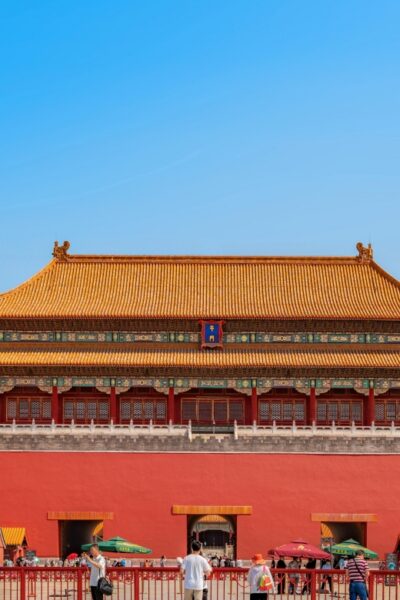
Forbidden City Tour(Group/Private)-Tickets Included
Read our review →
T-Square & Forbidden City Group or Private Tour
Read our review →
All-Inclusive Tour: Tiananmen Square, Forbidden City, Great Wall
Read our review →
MuBus: Mutianyu Great Wall ENG/ESP/RUS Guided Bus Tour
Read our review →
4-Hour Small Group Tour to Forbidden City with Entry Tickets
Read our review →

Beijing Full Day Tours: Tiananmen Sq, Forbidden City, Great Wall
Read our review →Browse the lists this tour appears in