
Reviewed · HONG KONG TOURS
Hong Kong: Street Food Tour with Locals – Dim Sum and Wonton
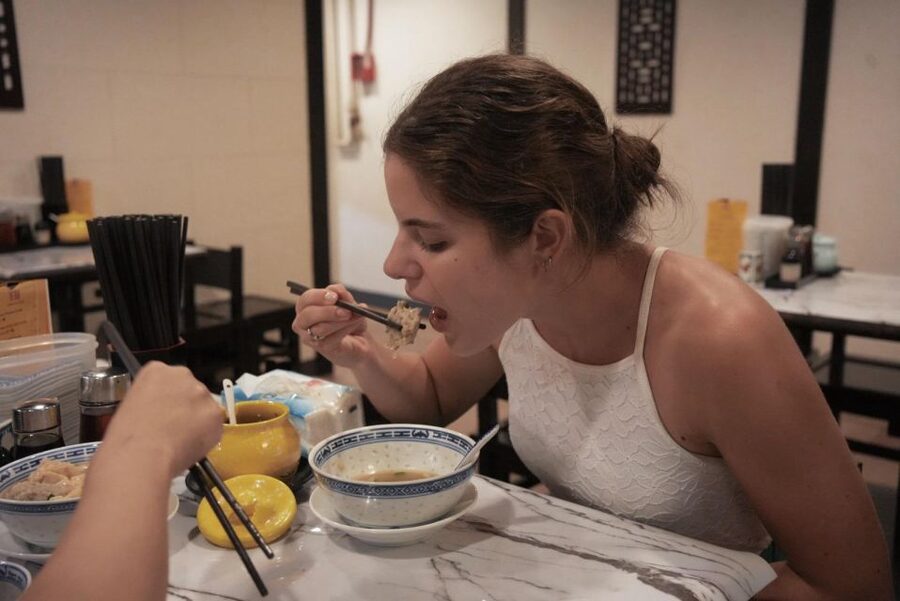
Hong Kong’s food story comes alive one bite at a time on this three-hour walk through Sheung Wan and Central. You move from dried seafood shops and old tea stalls to dim sum counters, noodle kitchens and cha chaan teng cafés, while a Hong Kong-born guide explains how the city grew from an opium port into a labor hub and financial center.
I like the range of food here, from har gow and shrimp wontons to roast pork, egg tarts, egg waffles and local teas. I also like the way the route links food to place and history, especially around Wing Lok Street, where luxury dried seafood reveals an older side of Hong Kong.
The main drawback is clear: this is not a tour for vegetarians, and halal food is not provided. You should also arrive hungry, wear comfortable shoes, and expect a moderate amount of walking in busy city streets.
Key points at a glance
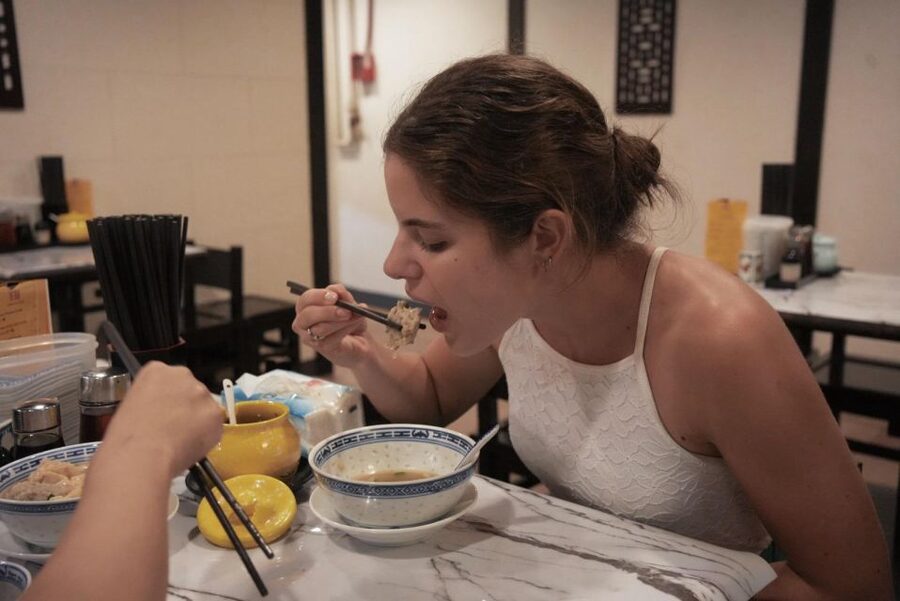
- Ten or more tastings: Expect dim sum, wonton noodles, BBQ pork, egg tarts, herbal tea, egg waffles and other local snacks.
- Sheung Wan history: Walk through dried seafood streets tied to trade, Chinese labor migration and Hong Kong’s early growth.
- Local food settings: Stops include small cafés, street kiosks, markets and restaurants rather than only polished dining rooms.
- Guide-led context: Guides such as Michael, Jasmine, Stephen, Alice, Hody and Wing explain customs, ingredients and personal food memories.
- A filling three hours: The tastings add up. Several people found they had little room for dinner afterward.
- Strict dietary limits: The tour cannot accommodate dietary restrictions, is not suitable for vegetarians, and does not provide halal food.
Why this Hong Kong food walk works
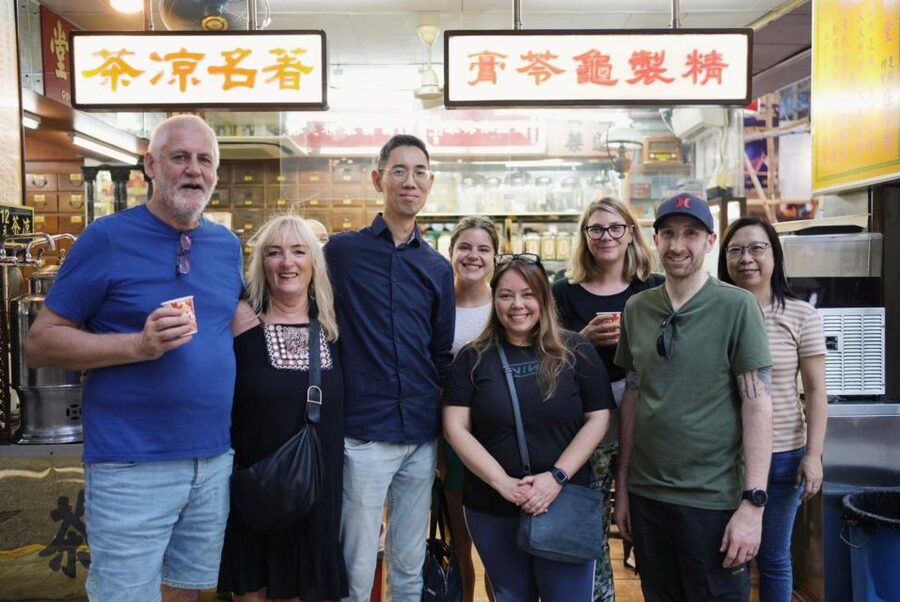
This is a food tour, but it is also a compact introduction to Hong Kong Island. In three hours, you walk through Sheung Wan, one of the city’s older districts, and finish near Central Market. The route gives you food, street life and a useful sense of how Hong Kong changed over time.
The strongest feature is the connection between what you eat and where you eat it. A wonton is not presented as just a tasty dumpling. You learn about Chiu Chow-style noodle making, shrimp fillings and flounder fish broth. Dim sum is tied to the old tea-house tradition and the way small dishes moved from an upper-class custom into everyday life.
That approach matters because Hong Kong food can seem confusing at first. Menus may offer unfamiliar ingredients, regional styles and drinks that do not fit neat Western categories. A local guide helps you understand what belongs together, how dishes are eaten and which customs matter at the table.
The tour has earned a 4.8 rating from 673 bookings, with especially strong praise for the guides, the amount of food and the mix of eating with sightseeing. The guide matters a great deal here. Michael is praised for personal childhood stories and a calm pace. Jasmine is known for lively energy and taking groups to many small stops. Stephen is often singled out for clear explanations and careful attention to the group. Alice, Hody, Wing and others have also led highly rated outings.
Because the guide changes, the tone may vary slightly. The common thread is a local English-speaking host who does more than point out dishes. You get explanations, answers to questions and, in some cases, memories of growing up with the food.
More Food Tours in Hong Kong
- Hong Kong’s Tin Hau Hidden Eats Food Tour with 7+ Local Tastings
★ 5.0 · 352 reviews - Small-Group Hong Kong Island Food Tour
★ 5.0 · 343 reviews - Hong Kong Food Tour: Central and Sheung Wan Districts
★ 5.0 · 333 reviews
Starting at Sheung Wan MTR Station
The meeting point is Sheung Wan MTR Station Exit E2. Pay attention when leaving the train: Exit E is on the platform level, and you cannot reach it after entering the concourse for exits A through D.
That detail is easy to miss and can cause a rushed start. I would check the station signs before you leave the train and allow a little extra time to find the correct platform exit.
From there, the walk begins in the historic Chinese quarter. Sheung Wan is a good starting point because it quickly shows you a side of Hong Kong that is less polished and more tied to trade, neighborhood commerce and traditional food shops.
You will be walking through active streets, not a museum set aside for sightseeing. Keep close to the guide, watch traffic, and wear shoes that can handle several hours on pavement. The route is described as involving a moderate amount of walking, so this is not a sit-down tasting with a few short transfers.
Wing Lok Street and the dried seafood trade
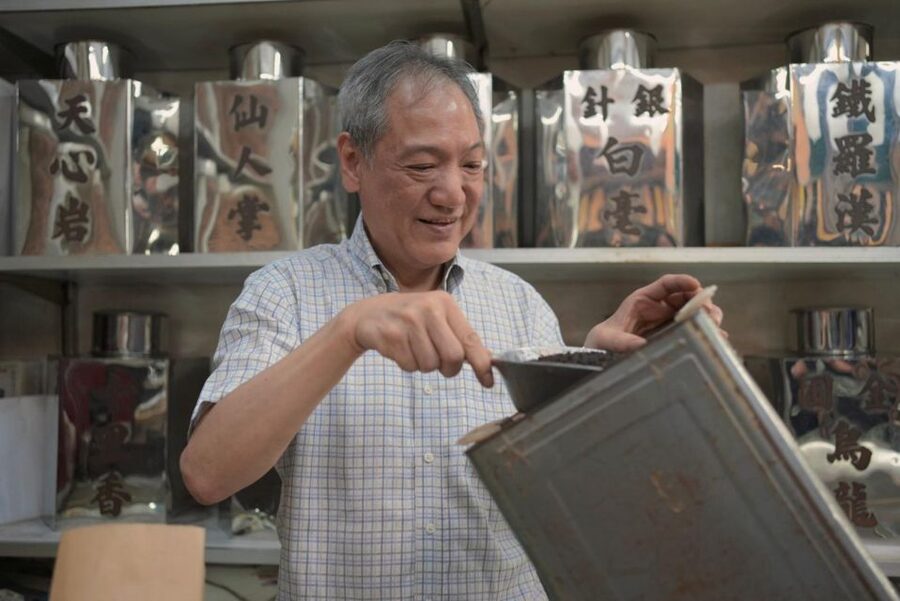
Wing Lok Street is one of the most distinctive parts of the route. The area is known for Chinese luxury dried seafood, including shark fin, bird’s nest and rare cordyceps. A small quantity of cordyceps can cost as much as HKD 200,000 per catty, a striking reminder that Chinese food culture includes prized medicinal and status ingredients as well as inexpensive noodles and snacks.
The point is not simply to admire expensive goods in shop windows. You learn how these products fit into Chinese ideas of hospitality, health and prestige. The guide can also explain why dried seafood shops became such an important part of Sheung Wan’s identity.
This stop also gives the tour its broader historical frame. Hong Kong’s growth was tied to trade, the opium business and the movement of Chinese laborers overseas. The streets around Sheung Wan were part of a city that sent workers to places such as the United States and Malaysia, helping fuel Hong Kong’s rise as a commercial center.
I find this useful because it avoids treating local dishes as isolated curiosities. Food, migration, money and work are connected. A city known today for finance was once shaped by shipping, labor and crowded neighborhood commerce.
The stop lasts about 40 minutes, including guided walking and tasting. Since the exact menu can change with availability, you should think of the listed dishes as a guide to the experience rather than a fixed promise.
Tea shops, cha chaan tengs and the silk-stocking myth
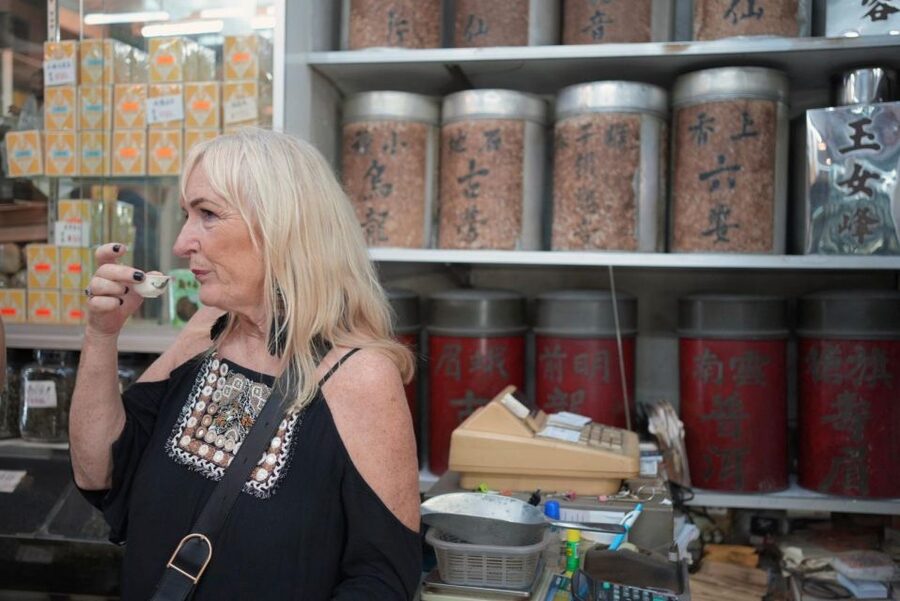
One of the tour’s memorable drinks is Hong Kong-style milk tea, often called silk-stocking tea because it is strained through a long cloth filter. The name makes it sound as if actual stockings are involved. They are not. The cloth sack is part of the preparation method, and the guide explains the process and the myth.
You may also try a local café classic such as crispy French toast. The name is misleading, since the dish is not French in the usual sense. That is part of the fun of cha chaan teng food. These cafés developed as practical post-war eating places, combining inexpensive ingredients and Western-influenced formats for local customers.
This food tells you something about Hong Kong’s social history. Cha chaan teng culture grew during a period when many people had limited money but still wanted quick, filling meals. The result was a distinctly Hong Kong menu of milk tea, toast, noodles, baked dishes and sweet snacks.
The tour also includes tea and may feature drinks such as Five Flowers tea or the notably bitter 24 Flavors herbal tea. These are not designed to please every palate. The guide gives you context, which makes it easier to try a small serving without expecting a sweet café drink.
The tea portion takes about 20 minutes. It is a welcome pause between food stops, though anyone sensitive to bitter or herbal flavors should be prepared for something very different from standard black tea.
A very different day in Hong Kong:
- Hong Kong: Victoria Harbor Symphony Unlimited Drink Cruise
★ 4.3 · 1,873 reviews - Lantau Island Day Trip – Big Buddha & Tai O
★ 4.5 · 1,328 reviews - Hong Kong: Victoria Harbour Evening Cruise with Drinks
★ 4.6 · 1,260 reviews - Hong Kong: City Highlights Guided Tour w/Entry Fees & Lunch
★ 4.4 · 1,178 reviews
Wonton noodles and Chiu Chow technique
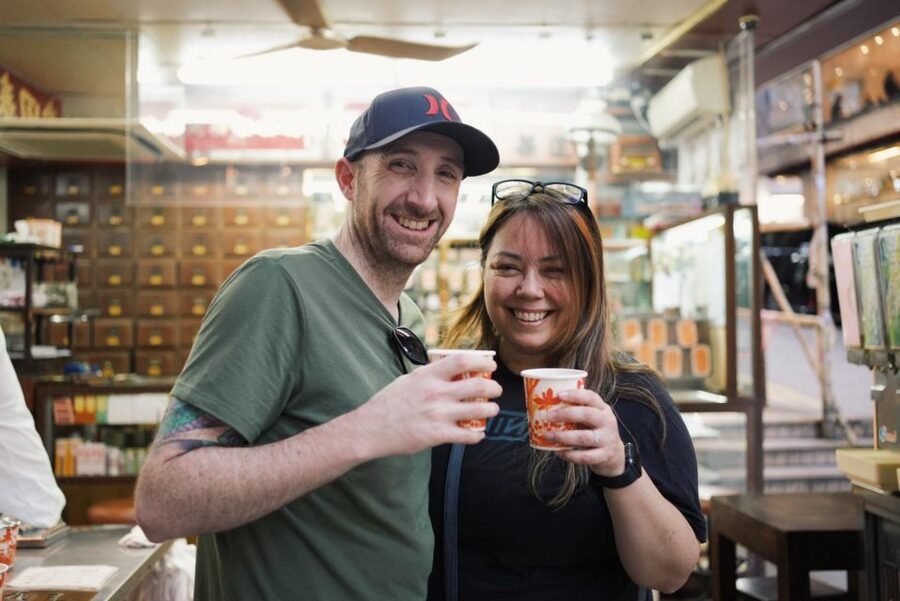
The wonton section is one of the clearest reasons to book this experience. You may see noodle makers prepare shrimp-filled wontons and taste them with broth made from flounder. The dish looks simple in the bowl, but the guide points out the details that make it local: the texture of the wrapper, the shrimp filling, the noodles and the broth.
This is also where the tour moves beyond simply eating. You get a look at how a classic is assembled and why the flavor is balanced in a particular way. A good guide can help you notice the difference between a delicate wonton and a heavy dumpling, or between a clean fish broth and a strongly seasoned soup.
The tastings are usually small rather than full restaurant portions, but the number of stops makes the meal substantial. Several people found themselves full before the final option, so skipping lunch is sensible if you want to sample everything.
There is no promise that every named dish will appear on every departure. Menus change according to availability. Still, the usual range includes wonton noodles, dim sum, BBQ meats, tea and sweets, so you get a broad look at Hong Kong’s everyday food rather than one narrow specialty.
Dim sum in a local setting
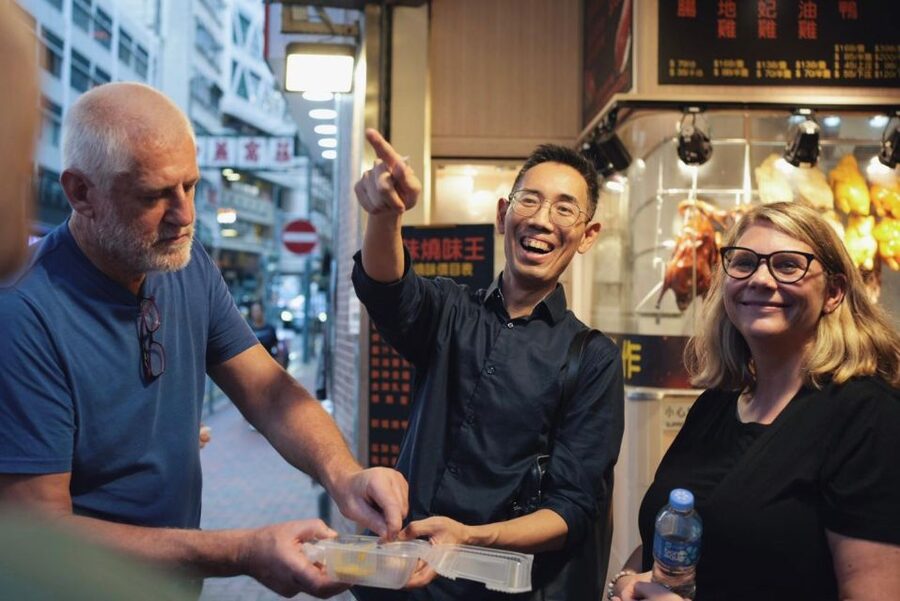
Dim sum is central to the experience. You can expect bamboo-steamed har gow, the translucent shrimp dumpling that is one of Cantonese cuisine’s best-known classics. You may also encounter other small steamed or savory dishes, depending on the day.
The guide explains how dim sum developed from a tea-house snack into a daily meal. That history helps you understand why dim sum is built around sharing, small portions and repeated rounds of food. It also gives meaning to the bamboo baskets and fast service you see at the table.
Har gow rewards close attention. The wrapper should be delicate but strong enough to hold the shrimp. One especially useful detail is that the wrapper may contain sweet potato, a fact even some people of Cantonese background had not known before taking the tour.
The dim sum stops are not presented as a formal banquet. You are likely sharing space with the ordinary rhythm of local dining, which is exactly what makes the experience useful for a first visit. You can later return to a dim sum restaurant with a better idea of what to order and how to approach the menu.
BBQ pork, egg tarts and Hong Kong sweets
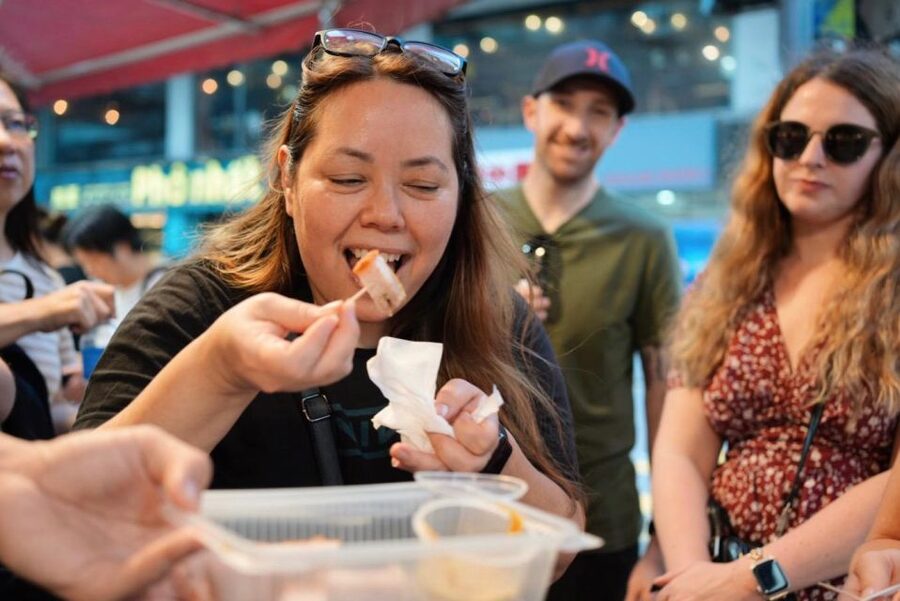
The savory dishes are balanced by familiar Hong Kong comfort foods. BBQ pork is often a favorite, and roast pork and pork belly may also appear. These tastings give you a chance to compare sweet, roasted meat with crisp-skinned pork and richer cuts.
The tour also includes egg tarts, a Hong Kong bakery staple with a soft custard center and pastry shell. It is a good example of how outside influences were reshaped into a local favorite. The same goes for egg waffles, with their distinctive round pockets and crisp edges.
You may encounter other local desserts and snacks along Queen’s Road Central. The route includes roughly seven or eight stops, with about 50 minutes allocated to food tasting in the Queen’s Road Central portion. That is a large share of the tour, and it explains why the experience feels like a full introduction rather than a quick sample.
The sweet courses are important for pacing. After dumplings, noodles and roast meats, an egg tart or waffle gives the final part of the walk a different texture and flavor. You are not simply repeating the same kind of tasting at every stop.
From Sheung Wan to Queen’s Road Central
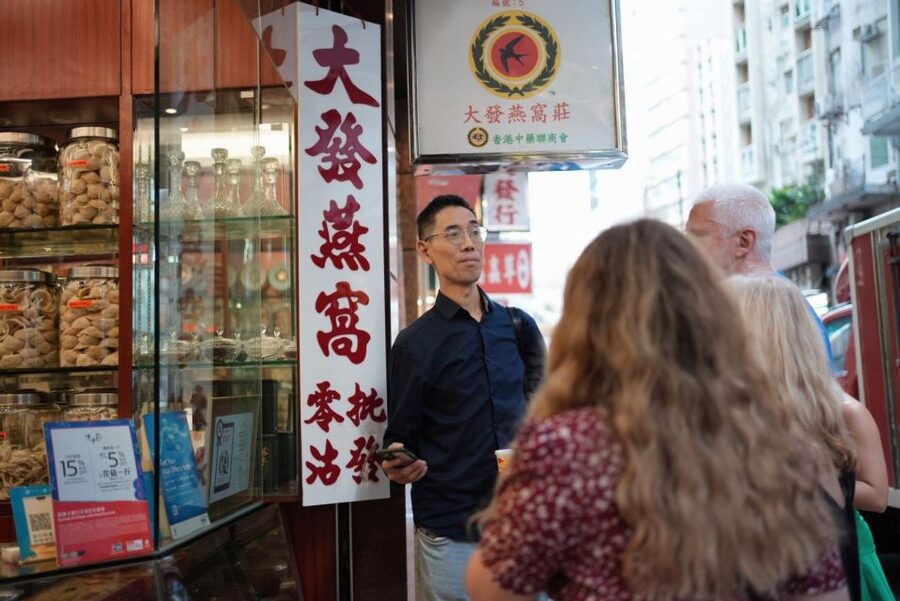
The walk gradually carries you from the older commercial streets of Sheung Wan toward Queen’s Road Central. This shift mirrors the city’s larger change from port and labor center to finance and international business capital.
The route includes Sheung Wan Cultural Square and a stop at Sun Yuen Restaurant, where the tasting lasts about 15 minutes. Other locations are described by their activity rather than a fixed public name, which reflects the changing nature of food tours. A vendor may not be available on a particular day, and the guide may adjust the menu.
Queen’s Road Central provides the final major run of tastings before the walk ends at Central Market. You see how old food traditions sit alongside the modern commercial center. That contrast is one of the tour’s best sightseeing elements.
The route is generally easy to follow because the stops are within the same broad area, but city walking is not always smooth. Expect crowds, traffic and frequent pauses. The guide also gives instructions about being considerate around pedestrians, vendors and road crossings.
What $51 buys you
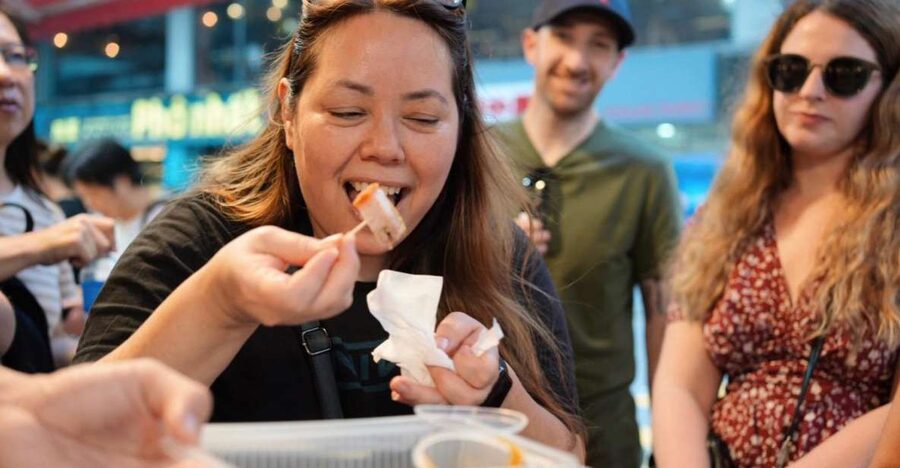
At $51 per person, the tour is not the cheapest way to eat in Hong Kong. You could buy individual snacks for less, especially if you already know where to go and what to order.
The value comes from the combination of food, interpretation and access to places you might not find on your own. Ten or more bites across seven or eight stops can easily replace several small meals. You also avoid ordering blindly, learn how the dishes fit into local culture, and finish with a practical list of places you may want to revisit.
I see the price as fair for a first day in Hong Kong, especially if you want a guided introduction rather than a restaurant crawl built around one cuisine. It is less compelling for a confident Hong Kong food fan who already knows Sheung Wan, local noodle shops and dim sum customs.
The strongest value is the guide’s time. People praised the relaxed pacing, the generous servings and the personal stories. You are paying for someone to connect the food to the city and help the group move through several different kinds of businesses without wasting time.
Who should book this tour
This tour suits first-time visitors who want a fast but meaningful introduction to Hong Kong food. It also works well for solo visitors, since the guided walk gives you company and removes much of the uncertainty around ordering.
Families with older children can enjoy it too. A 13-year-old was reported to have enjoyed the experience, and the variety helps keep the tour interesting for people who are not ready for three hours of one unfamiliar dish.
Food lovers who prefer small local cafés, stalls and traditional restaurants will get the most from the route. The tour is also a good choice if you want history with your meal rather than a list of dishes with no explanation.
You should reconsider it if you are vegetarian, require halal food, or need the operator to manage several dietary restrictions. The activity specifically says it cannot accommodate dietary restrictions. Allergies may be discussed with a guide, but you should not assume that substitutions are available.
Practical details before you go
The tour lasts three hours and is conducted in English. Hotel pickup and drop-off are not included, so you make your own way to Sheung Wan MTR Station Exit E2 and leave from the Central Market area at the end.
Wear comfortable shoes and avoid eating a large meal beforehand. The amount of food is generous enough that you may want to skip dinner or keep it very light.
The tasting menu changes according to availability. Weather can also affect the tour. If poor conditions lead to cancellation, you are offered another date or a full refund.
You can cancel up to 24 hours in advance for a full refund, and the reserve-now, pay-later option lets you hold a place without paying immediately. Starting times depend on availability, so check the schedule that suits your day.
Should you book the Sheung Wan food tour?
I would book this tour if you want to understand Hong Kong through everyday food, not just photograph famous buildings. The mix of wonton noodles, dim sum, roast meats, milk tea, herbal drinks and sweets is broad, filling and tied closely to the neighborhoods you walk through.
The best reason to go is the combination of local stops and explanation. Guides such as Michael, Jasmine, Stephen, Alice, Hody and Wing have been praised for warmth, humor, personal stories and clear food knowledge. The exact guide and menu may change, but the format gives you a strong start in Hong Kong’s food culture.
Skip it if you have strict dietary needs or already know the city’s classic dishes well. For everyone else, $51 is a reasonable price for three hours of tastings, history and useful guidance. Arrive hungry, take the correct MTR exit, and leave room for one more egg tart.
FAQ
Where does the Hong Kong food tour meet?
The meeting point is Sheung Wan MTR Station Exit E2. Exit E is on the platform level, so look for it when leaving the train. You cannot reach Exit E after entering the concourse for exits A through D.
How long does the tour last?
The tour lasts three hours. Starting times depend on availability, so check the available options when booking.
What food will be included?
You can expect 10 or more tastings, including dim sum, wonton noodles, BBQ pork, egg tarts, egg waffles, herbal drinks, local tea and other snacks. The final menu can change based on availability.
Is the tour suitable for vegetarians?
No. The tour is not suitable for vegetarians. Halal food is not provided, and the activity cannot accommodate dietary restrictions.
Is hotel pickup included?
No. Hotel pickup and drop-off are not included. You make your own way to Sheung Wan MTR Station and finish at Central Market.
What should I bring?
Bring comfortable shoes because the tour involves a moderate amount of walking. The activity may be canceled in poor weather, in which case you can choose another date or receive a full refund.
Recently listed in Hong Kong
- Small-Group Gong Relaxation Experience in Hong Kong★ 5.0 · 5 reviews
- Family-Friendly Tolo Harbour Cycling Adventure★ 4.0 · 5 reviews
- Different Tastes of Hong Kong★ 4.5 · 5 reviews
- Hong Kong Layover City Tour with 2-way Airport Express Transfer★ 3.0 · 5 reviews
- Hong Kong Private Departure Transfer: Hotel to Airport★ 4.5 · 5 reviews
- Ma On Shan Climbing Adventure★ 5.0 · 5 reviews
- Small-Group Tour: Hong Kong Local Markets Hopper [PROMOTION]★ 4.0 · 5 reviews
- Hong Kong Night Tour with a Local: Private & 100% Personalized★ 5.0 · 5 reviews
Hong Kong Tours, compared.

Victoria Harbor Symphony Unlimited Drink Cruise
Read our review →

City Highlights Guided Tour w/Entry Fees & Lunch
Read our review →
Dukling, Antique Boat Tour in Victoria Harbour
Read our review →
Big Bus Hong Kong Open Top Hop-On Hop-Off Sightseeing Tour
Read our review →
Big Bus Hop-On Hop-Off Tour & Optional Peak Tram
Read our review →
Hong Kong Day Tour: City Landmarks & Highlights
Read our review →Browse the lists this tour appears in