
Reviewed · HONG KONG TOURS
Small-Group Hong Kong Island Food Tour
Hong Kong’s best food often hides behind plain signs, crowded dining rooms, and menus you may not be able to read. This four-hour walk takes you from Sheung Wan to Wan Chai for dim sum, wonton noodles, milk tea, char siu, and egg tarts, with local guides such as Ivy, Andy, Mel, and Sinclair leading the way.
I like two things right away: you eat in old family-run places instead of polished tourist restaurants, and the food comes with useful context about Cantonese cooking and British-era habits. The small group of no more than nine also gives you a better chance to ask questions and keep up at busy stops.
The main drawback is the pace and the menu. You should arrive genuinely hungry, walk for several hours, and be comfortable with seafood, wheat, and meat. This is not a suitable choice for vegetarians, people avoiding gluten, or anyone with a seafood allergy.
Key points to know before booking
- Five substantial food stops: Expect dim sum, wonton noodle soup, milk tea, roasted meat with rice, and an egg tart, plus traditional dried-fruit sweets.
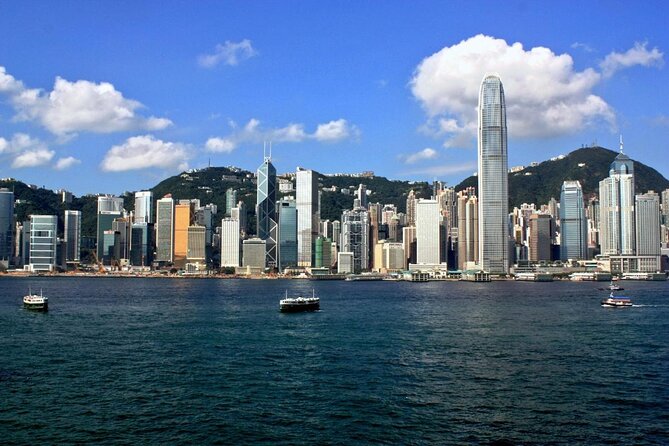
- A local route across Hong Kong Island: The tour begins in Sheung Wan and finishes in Wan Chai, with stops around markets, old shops, Central, and the Mid-Levels Escalator.
- The Ding Ding tram is part of the experience: You ride one of Hong Kong’s famous double-decker trams between Central and Wan Chai. The fare may be at your own expense, so confirm this when booking.
- Strong guiding is central to the tour: Ivy, Andy, Mel, Sinclair, Alex, and Jane are among the guides associated with the experience, with food, culture, and local history forming a large part of the walk.
- Come without breakfast: The portions add up quickly. The advice to skip breakfast is practical, not theatrical.
- Good value for a first taste: At $115.52 per person, the price covers several dishes, a guide, the tram experience, and a useful introduction to Hong Kong Island.
Starting with dim sum in old Sheung Wan
Meet at 9:30 am on Des Voeux Road West in Sheung Wan. You receive directions after booking, and the area is close to public transportation, but allow time to find the exact meeting point. Hong Kong streets can feel confusing when you are still learning the city’s layout.
Sheung Wan is a smart place to begin. It mixes old Chinese businesses with newer shops, traditional medicine stores, dried seafood sellers, and food stalls. You get an immediate sense that Hong Kong is not one tidy cultural package. Its food grew from Cantonese roots, overseas trade, migration, and British rule.
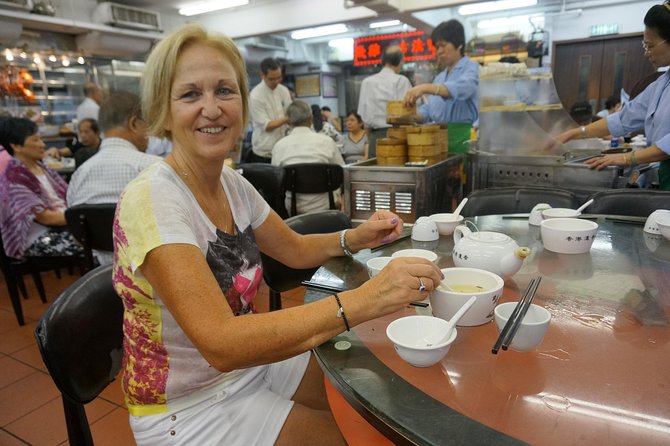
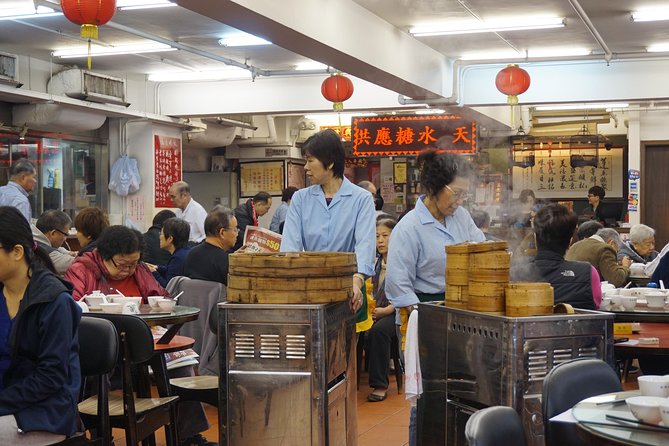
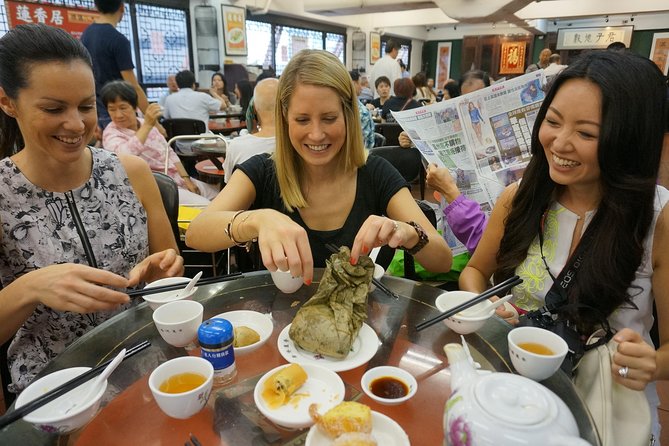
Your first meal is yum cha, or dim sum, served from a trolley in an old tea house. The setting matters here. Rather than simply receiving a plate of dumplings, you see the social side of a Hong Kong breakfast, with tea, conversation, movement, and a busy dining room.
The restaurant is described as having almost a century of history. That does not mean the room will be quiet or comfortable in a Western sense. It is likely to be crowded and energetic, which is part of the point. Your guide helps you understand what is being served and makes the process less awkward if you are new to trolley-style dim sum.
This is also where the no-breakfast rule begins to make sense. Dim sum may be the first course, but it is not the only food you will eat.
More Food Tours in Hong Kong
- Hong Kong: Street Food Tour with Locals – Dim Sum and Wonton
★ 4.8 · 673 reviews - Hong Kong’s Tin Hau Hidden Eats Food Tour with 7+ Local Tastings
★ 5.0 · 352 reviews - Hong Kong Food Tour: Central and Sheung Wan Districts
★ 5.0 · 333 reviews
Dried seafood, tea sweets, and the working side of Sheung Wan
The route continues to Seafood Street, the local name for the part of Des Voeux Road West known for dried seafood shops. Dried fish, scallops, shrimp, and other preserved ingredients are common in Cantonese cooking and traditional tonics.
You may not spend long here, but the stop gives useful background. Food in Hong Kong is tied to shopping habits, medicine, family custom, and ideas about nourishment. A dried seafood store can look mysterious if you are passing alone. With a guide, you can ask what the products are used for and why this trade gathered in Sheung Wan.
Next comes Kai Fat Tea, a family-run shop that has sold tea and Chinese sweets for more than 30 years. You try preserved fruit sweets and other traditional candies. This is a small tasting, but it breaks up the savory dishes and shows another side of Cantonese eating.
Do not expect a long sit-down visit at every stop. The itinerary includes brief visits of 10 to 20 minutes in several places. That keeps the tour moving, but it also means you should be ready to eat, listen, and leave without lingering over every dish.
Graham Street Market and the city at street level
Graham Street Market has more than a century of history and offers a look at everyday shopping in Central. Food stalls sell fresh vegetables and live seafood, and the sloped street gives you a sense of how Hong Kong’s older neighborhoods fit around the hills.
The market stop is short, listed at about 10 minutes, so treat it as a quick orientation rather than a full market tour. You will not have much free time to browse or shop. Its value is in seeing the setting between food stops and understanding where local ingredients enter the city’s daily routine.
The route also passes Gough Street and the Central and Western District. These streets sit near the old boundary between European and Chinese communities, and the mix of colonial buildings, older lanes, shops, and newer restaurants helps explain Hong Kong’s layered identity.
This is one of the better features of the tour for first-time visitors. You are not only moving from restaurant to restaurant. You are also learning how food connects with the neighborhoods where it is bought, prepared, and eaten.
Wonton noodles and the art of doing something simple well
One of the central tastings is wonton noodle soup at a family-run business dating from the 1960s. The restaurant is recommended by the Michelin Guide, but the dish itself is deliberately simple: noodles, broth, and wontons.
That simplicity is useful. Wonton noodles are a good test of balance. The noodles need the right texture, the broth needs character without becoming heavy, and the wontons need to be carefully made. Your guide can explain the ingredients and the local style while you eat.
Several guide-led experiences associated with this tour place real emphasis on explaining food as you go. Ivy is described as speaking English and Chinese and explaining both Cantonese dishes and recent Hong Kong history. Alex is noted for answering questions about ingredients, including those connected with Chinese herbal medicine. That kind of help is especially valuable in a small restaurant where ordering alone could feel uncertain.
The tour is conducted in English. If you want a food lesson rather than a silent tasting, this matters. The guide is there to explain what you are eating, help with language barriers, and keep the group fed as the dishes arrive.
A very different day in Hong Kong:
- Hong Kong: Victoria Harbor Symphony Unlimited Drink Cruise
★ 4.3 · 1,873 reviews - Lantau Island Day Trip – Big Buddha & Tai O
★ 4.5 · 1,328 reviews - Hong Kong: Victoria Harbour Evening Cruise with Drinks
★ 4.6 · 1,260 reviews - Hong Kong: City Highlights Guided Tour w/Entry Fees & Lunch
★ 4.4 · 1,178 reviews
Milk tea and the British thread in Hong Kong cooking
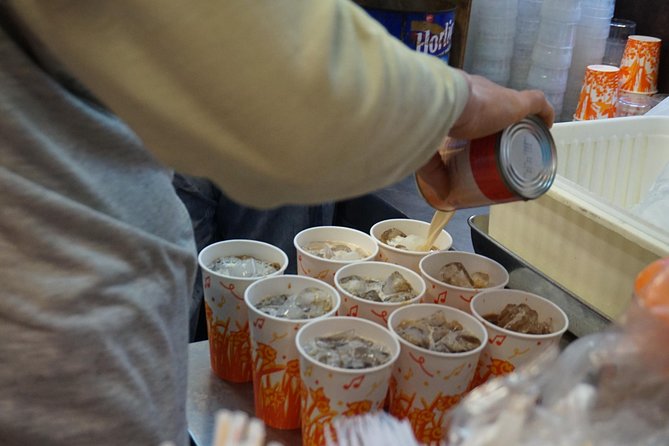
The next tasting is Hong Kong-style milk tea. It is one of the clearest food reminders of the city’s British past, though it has become distinctly local rather than simply copied from Britain.
The drink is not a grand attraction, but it gives the tour a useful pause. You can compare it with tea drinks you know while hearing how British influence entered Hong Kong’s cafés and everyday food culture from the 1950s onward.
This historical thread is one of the reasons the tour feels broader than a list of snacks. Cantonese cooking provides the main foundation, but Hong Kong food also reflects colonial trade, Western ingredients, bakery traditions, and local adaptations. The food tells that story more clearly than a lecture alone.
Riding the Ding Ding from Central toward Wan Chai
The tour then uses Hong Kong’s electric tramway, known locally as the Ding Ding. The system began operating in 1904 under British rule and uses double-decker trams, making the ride a small attraction in its own right.
The tram connects the walking sections and gives your feet a break. It also lets you see the city from a different height as you move toward Wan Chai. The ride is listed at about 20 minutes, though exact timing can depend on the route and city traffic.
The booking information says the tram ride is included, while the detailed description says the ride is at your own expense. Because those notes do not fully match, confirm the fare arrangement before you go. Either way, carry a small amount of local payment or ask the operator what is covered.
The tram is not just transport. It is one of the tour’s most memorable city experiences, especially if you have not yet used Hong Kong’s older public transport. Sit back, watch the streets, and let the guide point out what you are passing.
Char siu in a Wan Chai family restaurant
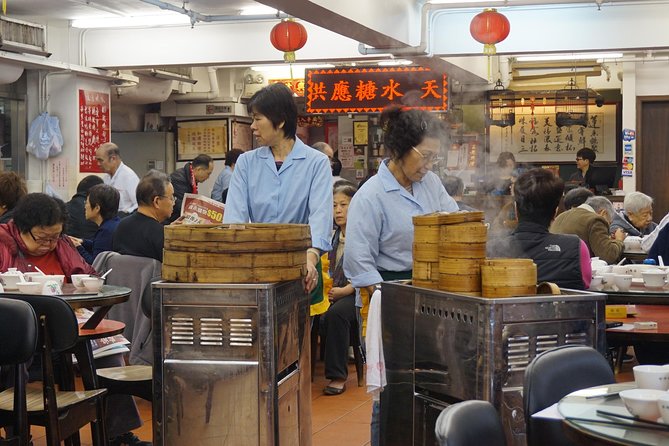
In Wan Chai, you visit another family-run restaurant with roots reaching back to the Qing dynasty. It is known for English char siu, or roasted barbecue pork, and serves the meat with rice and homemade sauces.
The phrase English char siu may sound odd, but it refers to a Hong Kong version shaped by local and Western influences. The tasting lets you compare roast meat with the noodles and dim sum from earlier in the morning. It is a more filling course, which is why a light start to the day is wise.
This stop also shows the practical value of the guide. Old local restaurants may have limited English, unfamiliar ordering systems, or dishes that are easy to misread. A guide who knows the food can explain what you are trying and help the group share the meal.
Expect the portions to build. The experience includes four main food categories plus milk tea, but additional tastings can appear. One guide, Mel, is particularly associated with adding sweets or adjusting the route when the group shows interest in traditional medicine and fabric markets. Do not count on every extra stop, but stay open to small changes.
Egg tarts and a final taste of Wan Chai
The last featured food is the dan tat, or Hong Kong egg tart. It is a Chinese adaptation of the English custard tart, and it neatly brings the tour’s Cantonese and British threads together.
You visit a bakery with about 60 years of local history, known as a favorite of a former Hong Kong governor. The stop is brief, around 10 minutes, so the egg tart is more of a final bite than a long bakery visit.
Afterward, the route includes Southorn Playground, a Wan Chai gathering place where office workers, sportsmen, spectators, and local residents spend time. The stop helps you see the neighborhood as a lived-in part of the city rather than just a restaurant district.
The tour ends in Wan Chai, not back in Sheung Wan. That is convenient if you plan to continue exploring the eastern side of Hong Kong Island. It also means you should not leave a bag, shopping, or other belongings near the starting point unless you have a plan to retrieve them.
What the walking and timing feel like
The tour lasts about four hours and covers several districts. The route includes Sheung Wan, the Western District, Central, the Mid-Levels Escalator, the tram ride, and Wan Chai.
You should expect a mixture of walking, standing, eating, and short rides. The Mid-Levels Escalator stop lasts about 15 minutes. It is an 800-meter outdoor escalator that climbs 135 meters toward Conduit Road, offering an efficient way to understand Hong Kong’s steep central neighborhoods.
The schedule is active, but the food breaks keep it from feeling like a sightseeing march. Guides such as Sinclair are praised for covering a lot of ground while adding local culture and folklore. Andy is noted for helping groups stay comfortable and for offering practical local advice, including bathroom recommendations.
A small group makes a difference in this setting. Nine people is small enough for questions and restaurant seating, but it is still a group experience. If you want long private conversations at every stop, book a private tour instead.
Is $115.52 a fair price?
At $115.52 per person, this is not a bargain breakfast. You are paying for more than the food itself: the guide, language help, access to places you might hesitate to enter alone, neighborhood context, and the tram portion of the route.
The value is strongest if this is your first visit to Hong Kong or your first serious introduction to Cantonese food. Four main tastings can easily become an expensive series of mistakes if you order blindly, and the guide helps you use your morning well.
It is also useful for solo visitors. The small group gives you company without the scale of a large bus tour, and the food is shared rather than served as one enormous individual meal at each stop.
The value is weaker if you already know Hong Kong’s food scene, speak Cantonese, or mainly want one specific dish. You may prefer to spend the same money eating slowly at one restaurant. This tour is about range, explanation, and access, not a leisurely restaurant lunch.
Who should book this Hong Kong food tour?
I would choose this tour for a first or second day in Hong Kong. It gives you a practical orientation to Sheung Wan, Central, and Wan Chai while showing how local food connects with the city’s past.
It suits curious eaters who want dim sum, noodles, roast meat, tea, and pastries in one morning. It also suits you if you feel unsure about ordering in small local restaurants or want a guide to explain unfamiliar ingredients.
It is a poor match for vegetarians, anyone with a seafood allergy, and people who need gluten-free food. Children five and under are not suitable for this group tour, and the operator advises booking a private food tour instead.
Guides vary, but the named guides associated with this experience include Ivy, Andy, Mel, Sinclair, Alex, and Jane. The strongest part of the guiding style is the mix of food explanation, local stories, and practical help. If you want a quiet, formal lecture, this may not be your ideal morning.
Final call: book it if you want context with your breakfast
Book this tour if you want to eat widely, understand what is on your plate, and see several sides of Hong Kong Island in one morning. The old tea house, Michelin-recommended noodle shop, dried seafood street, tram ride, roast-meat restaurant, and egg tart bakery create a useful first taste of the city.
Skip it if you need a vegetarian or allergy-friendly menu, dislike crowded local restaurants, or prefer to set your own pace. For everyone else, the best preparation is simple: arrive at the Sheung Wan meeting point on time, wear comfortable shoes, bring a camera, and do not eat breakfast.
FAQ
How long does the Hong Kong Island food tour last?
The tour lasts approximately four hours.
What time does the tour begin?
It begins at 9:30 am.
Where does the tour start?
The meeting point is at 28 Des Voeux Road West in Sheung Wan, Hong Kong. Directions are sent after booking.
Where does the tour finish?
The tour ends in Wan Chai.
What food is included?
The included tastings are dim sum or yum cha, wonton noodle soup, Hong Kong milk tea, char siu or barbecue pork with rice, and an egg tart. Traditional dried-fruit sweets are also included.
Is the Ding Ding tram ride included?
The included services list a Ding Ding tram ride. The detailed tour information also says the tram is at your own expense, so confirm the fare arrangement before departure.
How many people can join the tour?
The group has a maximum of nine people per booking.
Is the tour suitable for vegetarians or people with food allergies?
The tour is not suitable for vegetarians, people requiring gluten-free food, or people with seafood allergies.
Can children join the tour?
Children aged five and under are not suitable for this group tour. A private food tour is recommended instead.
Is hotel pickup included?
No. Hotel pickup and drop-off are not included.
What happens if I need to cancel?
You can receive a full refund if you cancel at least 24 hours before the experience start time. Cancellations or changes made less than 24 hours in advance are not refunded or accepted.
Recently listed in Hong Kong
- Small-Group Gong Relaxation Experience in Hong Kong★ 5.0 · 5 reviews
- Family-Friendly Tolo Harbour Cycling Adventure★ 4.0 · 5 reviews
- Different Tastes of Hong Kong★ 4.5 · 5 reviews
- Hong Kong Private Departure Transfer: Hotel to Airport★ 4.5 · 5 reviews
- Hong Kong Layover City Tour with 2-way Airport Express Transfer★ 3.0 · 5 reviews
- Ma On Shan Climbing Adventure★ 5.0 · 5 reviews
- Small-Group Tour: Hong Kong Local Markets Hopper [PROMOTION]★ 4.0 · 5 reviews
- Hong Kong Night Tour with a Local: Private & 100% Personalized★ 5.0 · 5 reviews
Hong Kong Tours, compared.

Victoria Harbor Symphony Unlimited Drink Cruise
Read our review →

City Highlights Guided Tour w/Entry Fees & Lunch
Read our review →
Dukling, Antique Boat Tour in Victoria Harbour
Read our review →
Big Bus Hong Kong Open Top Hop-On Hop-Off Sightseeing Tour
Read our review →
Big Bus Hop-On Hop-Off Tour & Optional Peak Tram
Read our review →
Hong Kong Day Tour: City Landmarks & Highlights
Read our review →Browse the lists this tour appears in