
Reviewed · SHANGHAI TOURS
4-Hour Private Shanghai Art and History Tour
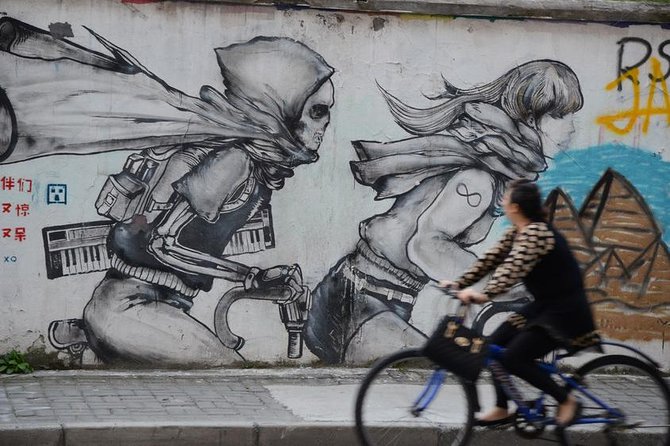
Shanghai’s art story is much wider than sleek galleries and famous skyline views. This private tour takes you from M50’s converted factory studios to Tianzifang’s old Shikumen lanes, then into a small museum filled with 20th-century propaganda posters. It gives you a useful look at how Shanghai’s creative life changed over time.
I like the private format, since you can move at a sensible pace instead of being tied to a large group. I also like the mix of modern art, old neighborhood streets, and political poster art. The main drawback is time: three stops in roughly four hours can feel brisk, especially if you want to shop or study every exhibit.
Key Points
- M50 in a former factory: See one of Shanghai’s best-known art districts in a repurposed industrial setting.
- The poster museum: Spend about an hour with Chinese political and cultural posters from the 1910s through the 1970s.
- Tianzifang’s Shikumen lanes: Walk through old alley housing now lined with shops, studios, and places to browse.
- Private transport included: Groups of one to four use a local premium Uber, while larger groups get an air-conditioned minivan.
- Downtown hotel pickup: Pickup is included for hotels in central Shanghai, but outlying districts require a downtown meeting point.
- A useful history layer: Guide Mason is praised for linking the art stops to Chinese history and culture.
Why This Shanghai Art Tour Works

This is a smart choice if you have already seen the Bund, Pudong, and the city’s grand commercial avenues. The tour shifts attention to smaller creative spaces and to the images China used to explain itself during the 20th century.
You are not simply looking at paintings. At M50, you see how old industrial property became an art quarter. At the Shanghai Propaganda Poster Art Centre, you get a visual record of political messaging and everyday ideals. In Tianzifang, you walk through a historic housing style that now shares space with modern shops and galleries.
That range is the real strength. The three stops are different enough to keep the half-day moving, yet connected by Shanghai’s changing identity. You see industry, politics, architecture, and modern creativity in one compact outing.
The tour is private, so your group is the only group participating. That matters in places where rooms are small or lanes are crowded. You can ask for more explanation at the poster museum, keep your time short at a shop, or spend longer at an artwork that catches your eye.
Still, private does not mean unlimited. The advertised duration is three to four hours, with about one hour planned at each stop. If you linger at M50, traffic or transfers can reduce your time in Tianzifang. A surcharge of $15 applies after four hours, so agree on the timing before the tour runs long.
More History Tours in Shanghai:
- Tour of Jewish Shanghai led by a Jewish History Expert
★ 5.0 · 106 reviews - Private Full Day Tour: Shanghai Colonial History Tour
★ 5.0 · 6 reviews - Shanghai Propaganda and History Walking Tour
★ 5.0 · 5 reviews
Starting at M50’s Converted Factory Studios
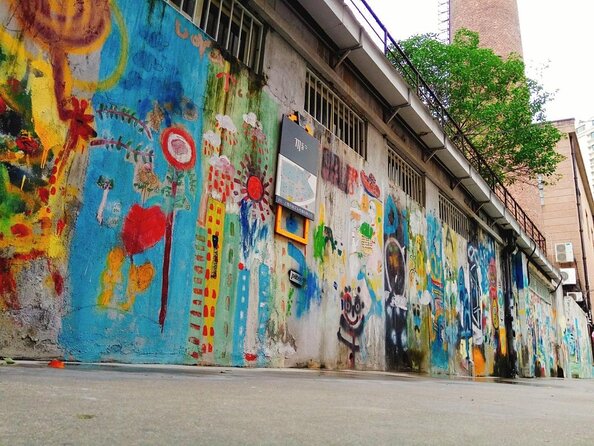
M50, also called Moganshan Road’s creative district, is the modern art anchor of the tour. It grew from an old industrial setting, and that factory background is part of its appeal. Instead of entering a purpose-built museum, you are walking through a former work site that has been given a new artistic role.
The tour allows about an hour here, and there is no separate admission fee. Your guide can help you make sense of the district rather than leaving you to wander without context. That is useful in a place where the appeal may come as much from the buildings and changing creative spaces as from any single work.
You might find a range of contemporary work, since M50 is known for varied styles and modes of expression. The supplied details do not promise a fixed list of galleries or artists, so do not book this expecting a specific exhibition. The art scene can change, and the value here is the setting and overall feel of Shanghai’s creative quarter.
I would use this first stop to ask broad questions. How did the industrial site become an art district? What kind of work is common in Shanghai today? How does the guide connect contemporary art with the city’s past? If Mason is your guide, expect useful background on Chinese culture and history, based on the strong praise attached to his explanations.
One practical point: M50 is a walking stop. Comfortable shoes are specifically advised, and that is good advice for the full tour. You will also be outdoors between buildings and stops, so dress for the weather. The tour operates in all weather conditions.
Reading Shanghai’s 20th-Century Story at the Poster Centre
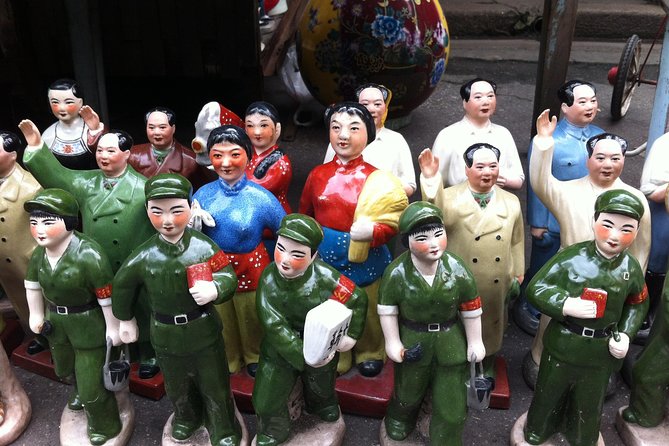
The Shanghai Propaganda Poster Art Centre gives the tour its strongest historical edge. This private museum holds posters dating from the 1910s through the 1970s, making it a place to look at political art as both design and historical evidence.
The visit lasts about an hour, and admission is included. That makes this a more focused stop than a quick photo opportunity. You have time to look at the images and ask what they were meant to communicate, who they addressed, and how visual messages changed across different periods.
For many people, this will be the most distinctive stop. Shanghai has plenty of shopping streets and grand buildings, but a private collection devoted to propaganda posters offers a different view of China’s past. The posters can help you think about government messaging, public ideals, national identity, and the use of color and composition.
I would not treat the museum as a substitute for a full history class. The tour is short, and the available information does not give a detailed catalog of the collection or promise a particular display. But with a good guide, the visit can put the images into a clearer cultural frame. The experience with Mason is praised for adding helpful material about Chinese history and culture, which is exactly the sort of support this stop needs.
The museum is also a good reason to choose this tour over a basic contemporary art walk. M50 shows what artists are doing now. The poster centre shows how art and public messaging worked in earlier decades. Together, they make the day more thoughtful than a simple gallery crawl.
Walking Tianzifang’s Shikumen Lanes
The final stop is Tianzifang, described here as part of the Former French Concession area. This neighborhood is known for its Shikumen alley houses, a Shanghai housing style that combines Chinese and Western architectural influences.
You will spend about an hour walking through the lanes. The old housing remains important, but the district has also become a place for modern shops, art spaces, souvenirs, and local browsing. That mixture gives you a more everyday view of Shanghai than a formal museum does, although it also means the area can feel commercial.
I like Tianzifang as the closing stop because it lets you slow down after the museum. You can look closely at the alley layout, inspect the older doorways and housing details, and browse for small purchases. The tour information mentions local fine shopping and souvenirs, but personal purchases are not included in the price.
Keep your expectations realistic. Tianzifang is not presented as an untouched historic quarter. Its charm comes from the blend of old Shikumen buildings and newer businesses. If you want quiet streets and a purely residential setting, this may feel too shop-oriented. If you enjoy seeing historic structures adapted for present-day use, it is a useful finish.
This is another place where the private setup helps. You can tell your guide if you want more time to browse or if you would rather keep moving. Just remember the four-hour limit and the extra charge for going beyond it.
A few more Shanghai days to line up
- Authentic Local Food Tour in Central Shanghai
★ 5.0 · 1,382 reviews - Zhujiajiao Water Town and Shanghai City Private Day Tour
★ 5.0 · 1,016 reviews - Private Shanghai Full Day City Tour with Old and New Highlights
★ 5.0 · 995 reviews - Shanghai: Hop-on Hop-off Bus Ticket and Optional Attractions
★ 3.4 · 692 reviews
Transport, Pickup, and the Shape of the Half-Day
The tour includes hotel pickup from downtown Shanghai. That is convenient, especially if you are still getting used to the city or prefer not to arrange a taxi to a meeting point.
The downtown rule matters. Pickup does not cover outlying areas such as Jiading, Songjiang, Qingpu, Jinqiao, or Chuansha in Pudong. If your hotel is outside the covered zone, the guide will provide instructions for meeting downtown. Check this before booking, since the phrase hotel pickup can otherwise sound broader than it is.
For groups of one to four people, local transportation is provided by a premium Uber. Groups larger than four use an air-conditioned minivan. This arrangement keeps the tour private while matching the vehicle to the group size. Hotel drop-off is not included, so plan to finish in the city and make your own onward arrangements.
The tour offers morning and afternoon start times. That gives you room to fit it around other plans, though the supplied details do not specify exact departure hours. Confirmation is sent within 48 hours of booking, subject to availability, so do not leave this until the last moment if your Shanghai schedule is tight. The experience is booked an average of 18 days ahead, which suggests planning early is sensible.
Traffic can affect any Shanghai outing. The tour’s three-hour estimate may work smoothly, while the full four hours gives more breathing room. If you need to be at a station, airport, or timed attraction soon afterward, leave extra space rather than booking a tight connection.
Is $85 Per Person Good Value?
At $85 per person, this is not the cheapest way to see a neighborhood or one small museum. The price makes more sense when you count what is bundled: a private English-speaking guide, local transport, hotel pickup within the central area, entrance fees, and three different stops.
The value is strongest for two to four people. A private vehicle and guide can be costly when arranged separately, while this format keeps the outing focused on your own group. A larger party may also benefit from the private minivan, though the per-person price should be compared with other private half-day options in Shanghai.
You are paying for interpretation as much as transport. M50 and Tianzifang can be visited independently, and the poster museum may be possible to reach on your own. The guide is what connects those places. If you care about art but do not know much about Chinese history, that context can make the ticket worthwhile.
The price is less attractive if you only want shopping time or if you prefer to wander without a schedule. Tianzifang is the only stop with a clear shopping focus, and one hour is not enough for an unhurried retail afternoon. Likewise, serious art fans may want longer than an hour at M50.
The included entrance fees help keep the final cost predictable. Personal expenses, such as souvenirs or other purchases, are separate. There is also no included hotel drop-off, and a $15 surcharge is added if you continue past four hours.
Who Should Book This Experience?
I would recommend it to first-time Shanghai visitors who want something beyond the main landmarks. It gives you a compact introduction to modern art, political poster art, and a historic neighborhood without requiring you to plan three separate visits.
It also suits couples, families with older children, and small groups of friends who value privacy. Children must be accompanied by an adult, and everyone should have a moderate level of fitness. The tour involves walking at all three stops, so it is not a good fit for anyone seeking a vehicle-only sightseeing trip.
Art lovers will appreciate the range, but you do not need an art background. The guide’s role is especially useful at the poster centre, where a little historical explanation can change how you read the collection.
You may want another type of tour if your priority is Shanghai’s major architecture, food, nightlife, or the Bund. This experience is tightly focused on art and neighborhood character. It also may not satisfy you if you want long, quiet visits at each location.
The free cancellation policy is helpful: you can cancel up to 24 hours before the start time for a full refund. Changes or cancellations made less than 24 hours ahead are not accepted for a refund, and cut-off times use Shanghai local time.
Should You Book the Shanghai Art and History Tour?
Book it if you want a private half-day that links contemporary galleries, political posters, and old alley housing. The combination is well chosen, and the included transport and admissions remove much of the planning work.
I would especially choose it when you have limited time in Shanghai and want an informed introduction to the city’s less obvious cultural side. Ask for Mason if guide availability allows, since his ability to connect art with Chinese history and culture is a valuable part of the experience.
Skip it if your idea of a perfect afternoon is a slow museum visit or an extended shopping session. The three-stop structure is efficient, not leisurely. For most small groups interested in how Shanghai changed and expressed itself, though, $85 buys a useful and distinctive four hours.
FAQ
How long does the tour last?
The tour lasts approximately three to four hours. A $15 surcharge applies if it continues beyond four hours.
What locations are included?
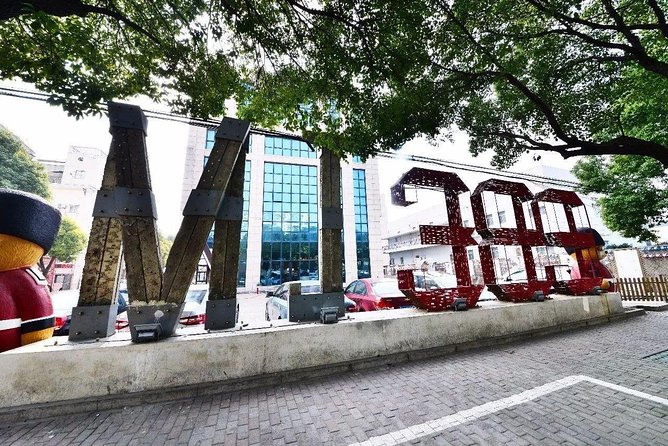
The tour visits M50 Creative Park, the Shanghai Propaganda Poster Art Centre, and Tianzifang in the Former French Concession area.
Is the tour private?
Yes. Only your group participates in the activity.
Is hotel pickup included?
Pickup is included for hotels located in downtown Shanghai. Hotels in outlying areas, including Jiading, Songjiang, Qingpu, Jinqiao, and Chuansha in Pudong, are not included in the pickup area.
What happens if my hotel is outside downtown Shanghai?
Your guide will provide instructions for meeting at a downtown location.
Is hotel drop-off included?
No. Hotel drop-off is not included.
What transportation is provided?
Groups of one to four people use local premium Uber transportation. Groups larger than four receive an air-conditioned minivan.
Are admission fees included?
Yes. Entrance fees for the included attractions are covered.
Are morning and afternoon departures available?
Yes. You can choose between morning and afternoon tour times.
What should I wear?
Wear comfortable walking shoes and dress appropriately for the weather. The tour operates in all weather conditions.
Recently listed in Shanghai
- Private Tour of Shanghai Highlights and Zhujiajiao Water Town in One Day★ 5.0 · 5 reviews
- 4-Hour Private Shanghai Shopping Tour with Local Expert★ 5.0 · 5 reviews
- Shanghai to Beijing Bullet Train Ticket with Hongqiao Station Transfer★ 5.0 · 5 reviews
- Shanghai Hongqiao Airport To Shanghai Hotel:Private transfer with Meet service★ 5.0 · 5 reviews
- Shanghai Coffee & Breakfast Tour★ 5.0 · 5 reviews
- Private Shanghai Hightlight Day Tour with English-speaking Guide★ 4.5 · 5 reviews
- Xitang Water Town Self-Guided Tour from Shanghai with Private Transfer★ 5.0 · 5 reviews
- Private Shanghai Foodie Adventures with Rooftop Bar Hopping★ 5.0 · 5 reviews
Shanghai Tours, compared.
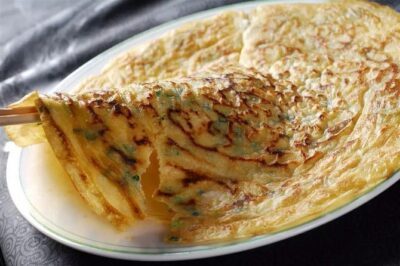
Authentic Local Food Tour in Central Shanghai
Read our review →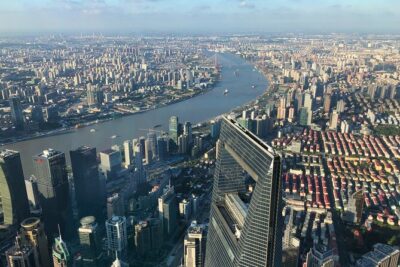
Zhujiajiao Water Town and Shanghai City Private Day Tour
Read our review →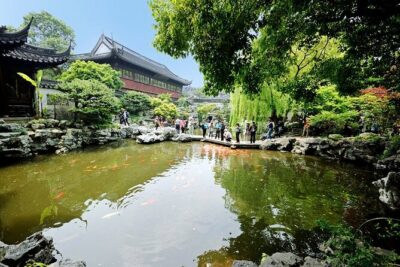
Private Shanghai Full Day City Tour with Old and New Highlights
Read our review →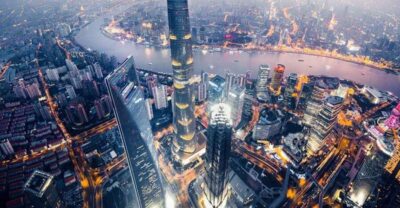
Hop-on Hop-off Bus Ticket and Optional Attractions
Read our review →
Shanghai Private Tour: Zhujiajiao Water Town and Boat Ride
Read our review →
Huangpu Night Cruise: Cozy Vibe & Modern Shanghai Glow
Read our review →
Browse the lists this tour appears in