
Reviewed · SHANGHAI TOURS
Tour of Jewish Shanghai led by a Jewish History Expert
Shanghai’s Jewish story is unusual: a Baghdadi-Jewish business community, European refugees escaping the Holocaust, Chinese residents, and wartime upheaval all meet in one four-hour route. You begin at the Bund, then head to Hongkou, once called the Shanghai Ghetto, where the past is found in a museum, a park, and ordinary residential lanes.
I like the way the tour connects Jewish history to Shanghai’s wider growth, rather than treating the community as an isolated footnote. I also like the human scale: Dvir, Andy, or Anfisa can point out a former refugee home and explain how people lived, not just recite dates. The main consideration is that this is history-led sightseeing. If you want grand buildings or a purely visual walking tour, parts of Hongkou may feel modest.
Key points to know before booking
- The tour begins on the Bund: Meet near the Peace Hotel, formerly the Cathay Hotel, for an introduction to Shanghai’s Baghdadi-Jewish legacy.
- Hongkou provides the central setting: The route covers the former Jewish refugee district, its back lanes, Huoshan Park, and a former Chinese home used by refugees.
- Ohel Moishe Synagogue is now a museum: Admission to the Shanghai Jewish Refugees Museum is included.
- The guide is the main attraction: Dvir is repeatedly praised for his clear explanations, dry humor, energy, and command of the subject. Andy and Anfisa are also named as guides.
- Morning is the safer choice: The tour lasts about four hours, and the operator recommends morning departures because of daylight and the route length.
- It is a small-to-medium group experience: The maximum is 22 people, with private transportation and an air-conditioned vehicle included.
Starting at the Peace Hotel and the Bund
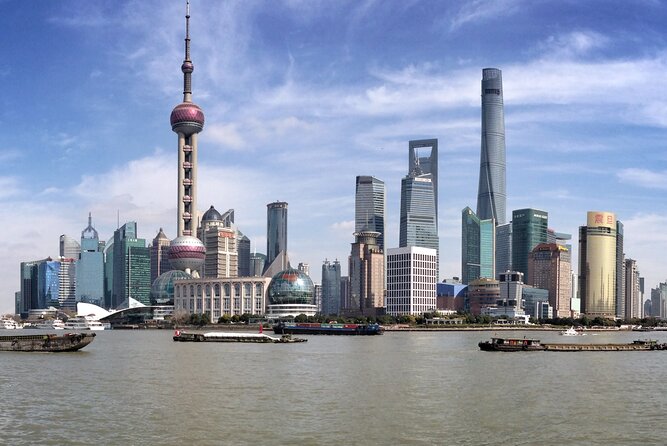
The tour starts at 9:30 am near Nanjing Road East, by the Peace Hotel on Shanghai’s famous riverfront Bund. The hotel was formerly the Cathay Hotel, built by Sir Victor Sassoon, a Baghdadi-Jewish real estate developer whose career helps open the first chapter of the tour.
This is a smart starting point. Before you reach Hongkou, you get the economic and social background for Jewish life in Shanghai. Your guide explains the Baghdadi-Jewish presence and places it within the city’s larger story. The Bund gives you an immediate sense of Shanghai as an international port, which helps explain how different communities could establish roots here.
You should pay attention during this opening talk. It is not just a brief orientation before the real tour begins. The Bund section explains one wave of Jewish immigration, while Hongkou reveals another, very different chapter involving refugees from war-torn Europe.
The meeting point is convenient if you are already sightseeing around the Bund or Nanjing Road. The activity ends back at the meeting point, so you do not need to arrange a complicated pickup afterward. Hotel pickup and drop-off are not included, so plan your own way to Nanjing Road East.
More History Tours in Shanghai:
- 4-Hour Private Shanghai Art and History Tour
★ 5.0 · 8 reviews - Private Full Day Tour: Shanghai Colonial History Tour
★ 5.0 · 6 reviews - Shanghai Propaganda and History Walking Tour
★ 5.0 · 5 reviews
Understanding the different Jewish communities in Shanghai
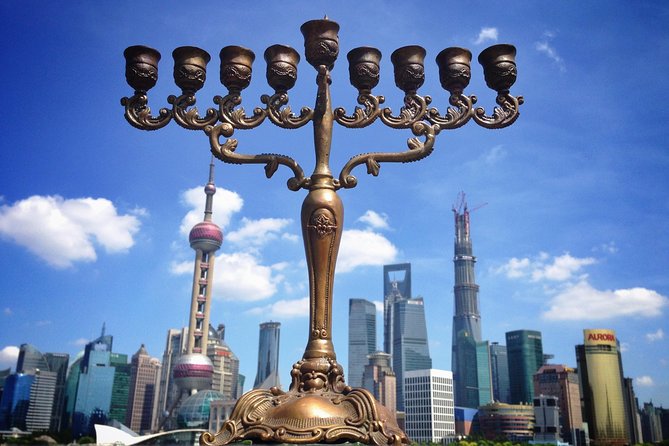
One of the best features of this experience is its structure. You are not given a single, flattened story about Jews in China. Instead, the guide explains the different waves of immigration and the different reasons people arrived.
The Baghdadi-Jewish community is tied to commerce, property, and Shanghai’s international business world. The European refugees who arrived before and during World War II came under far more desperate conditions. Their story is connected to escape, uncertainty, and the unusual fact that Shanghai offered a route out when many other destinations were closed or difficult to reach.
That contrast gives the tour its shape. At the Bund, you hear about influence and enterprise. In Hongkou, you encounter the wartime refugee experience. Along the way, your guide also discusses Chinese migrant workers and the local population who shared this part of the city.
Dvir is the guide most often named in the supplied material, and the descriptions of his approach are consistent: he gives long, detailed explanations but keeps the tone lively with humor and personal energy. One especially useful quality is his ability to connect Jewish events with general Shanghai history. That makes the tour worthwhile even if you are interested in the city as a whole, not only Jewish heritage.
Entering Hongkou, the former Shanghai Ghetto
From the Bund, private transportation takes you toward Hongkou. The air-conditioned vehicle matters here, especially in Shanghai’s heat, rain, or winter chill. It also lets the guide move the group between the major sites without turning the entire experience into a long urban walk.
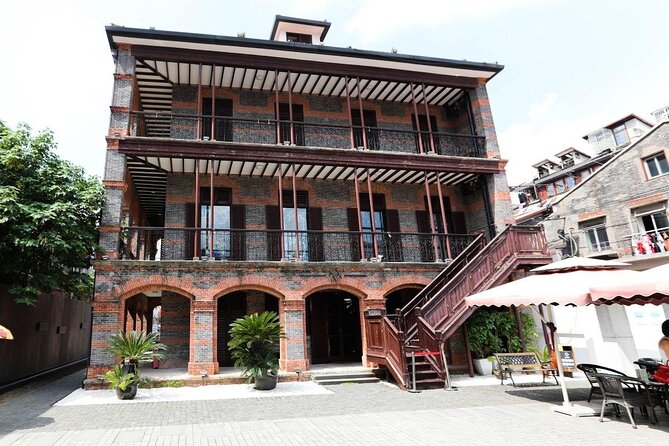
Hongkou is where the subject becomes more tangible. The district is not presented as a preserved historical compound. It is a living urban area, and the former Jewish quarter is mixed into today’s city. You may see ordinary residential streets and back lanes rather than a polished open-air museum.
That is both the strength and the limitation of this stop. You get a clearer sense of how refugees lived among local residents, but you should not expect every building to be marked or restored. The guide’s explanations do much of the work. Without that context, the lanes could look like any other part of Shanghai.
The route includes a visit to a Chinese home where Jewish refugees once lived. This detail helps move the story from institutions and memorials to daily life. It also shows that the refugee district was not a sealed Jewish enclave in the modern sense. People’s lives intersected in crowded, changing surroundings.
The walking is broken up by vehicle transfers and periodic sitting, according to the tour experience described by previous participants. Still, wear comfortable shoes and be ready for uneven or ordinary city streets. The tour operates in all weather, so bring suitable clothing and do not treat the morning as an indoor-only outing.
Seeing the Shanghai Jewish Refugees Museum
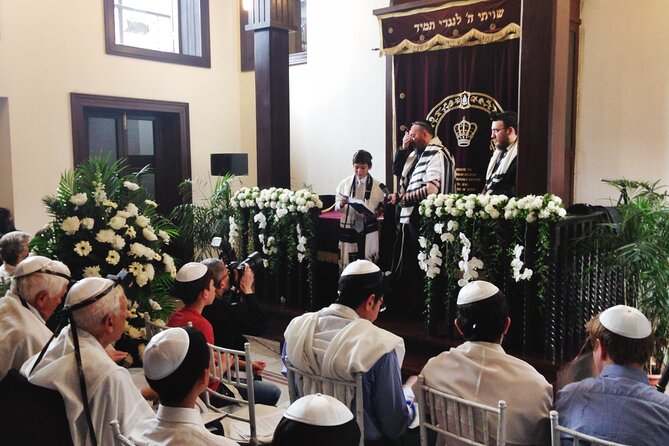
The central indoor stop is the Shanghai Jewish Refugees Museum, housed in the former Ohel Moishe Synagogue. Admission is included, and the building gives you a direct link to the wartime Jewish community in Hongkou.
A former synagogue carries weight beyond its exhibits. It was a place of worship and community life, and now it preserves the story of refugees who found themselves in Shanghai during World War II. Your guide helps explain the setting rather than leaving you to read disconnected panels on your own.
This is one reason I would choose a guide-led visit over seeing the museum alone. The tour builds a timeline before you enter, then connects the museum to the streets and homes outside. You can better understand why the synagogue matters and how it fits into the wider refugee district.
The museum may be the most clearly defined attraction on the route, but do not judge the whole experience by the size of this stop. The tour is about connections between places. The former synagogue, the park memorial, the lanes, and the home form a larger picture.
The supplied details do not give an exact amount of time inside the museum. The full experience lasts about four hours, and the route includes several stops, transportation, and discussion. If you want to spend a long time reading every display, you may need to visit separately or accept a faster museum pace during the tour.
A few more Shanghai days to line up
- Authentic Local Food Tour in Central Shanghai
★ 5.0 · 1,382 reviews - Zhujiajiao Water Town and Shanghai City Private Day Tour
★ 5.0 · 1,016 reviews - Private Shanghai Full Day City Tour with Old and New Highlights
★ 5.0 · 995 reviews - Shanghai: Hop-on Hop-off Bus Ticket and Optional Attractions
★ 3.4 · 692 reviews
Huoshan Park and the memorial to wartime refugees
Huoshan Park contains a monument to the Jewish refugees of World War II. It is a quieter stop than the Bund and a useful pause after the museum.
A memorial in a public park makes the history feel part of the city rather than confined to a museum building. Your guide can explain what the monument represents and how it relates to the refugee community that lived in Hongkou.
This stop is also a reminder that the tour is not designed around spectacular sights. The memorial may be modest, and the surrounding park is not presented as a major Shanghai attraction. Its value comes from the story attached to it.
If you are interested in Holocaust history, refugee routes, or the history of Shanghai during the war, this is an important part of the route. The tour presents Shanghai as an escape route for European Jews, a subject that is often missing from standard city sightseeing.
Walking the back lanes and former refugee homes
The back-lane portion gives the tour its most personal feel. Instead of seeing only formal landmarks, you move through the district where people actually lived.
The route includes a Chinese home where Jewish refugees used to live. That stop helps you picture housing as a shared, practical matter rather than an abstract statistic. It also highlights the connection between refugees and the Chinese residents of Hongkou.
You should come with realistic expectations. This is not a restored apartment furnished as a perfect period set, at least no such presentation is promised in the supplied details. The appeal is the explanation of the place and its setting. You are looking at a neighborhood that has continued to change.
Some people will find this powerful because the city remains present around the history. Others may feel there is little to see without the guide’s narration. I would not book this tour if you prefer large monuments and self-explanatory sights. I would book it if you value context, local streets, and stories tied to specific locations.
What the guide adds to the four-hour route
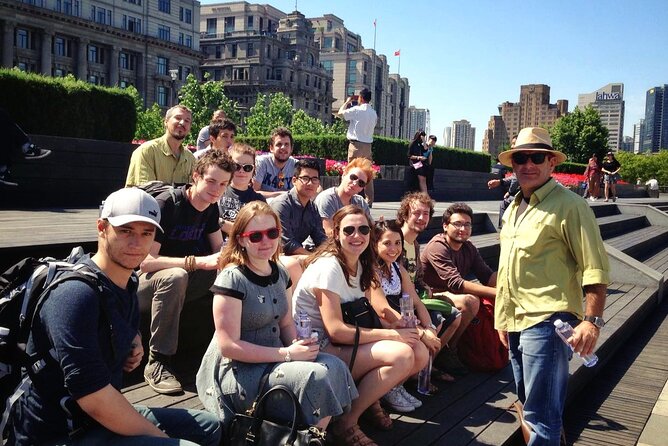
The guide can make or break a history tour, and this experience depends heavily on that role. Dvir is repeatedly singled out for his command of the subject, clear English, dry sense of humor, and sympathy when discussing a painful period. Andy and Anfisa are also identified as guides who brought strong historical background and an engaging manner.
The best praise focuses on explanation and pacing. One participant described a small group of ten, which made it easy to hear the guide. Another noted that the pace worked well. A separate account said the tour included regular chances to sit, even though it is described as a walking tour.
That matters because four hours of continuous standing and listening can be tiring. The combination of private transportation, short walks, museum time, and seated explanations appears more manageable than the basic tour label suggests. Group size can reach 22, though smaller departures may feel more personal.
Ask for the morning departure in the special requirements field. Afternoon tours are available, but the operator recommends morning because of the route length and daylight. A morning start also leaves your afternoon open for the Bund, another museum, or a meal elsewhere in Shanghai.
Is the $96 price fair?
At $96 per person, this is not a bargain-priced city walk. The fee includes private transportation, an air-conditioned vehicle, a historical expert guide, and admission to the Jewish Refugees Museum. Food, drinks, hotel pickup, and hotel drop-off are not included.
The value depends on what you want from the day. If you only want to see the former synagogue from outside and walk through Hongkou, the price may feel high. If you want a clear account of several Jewish communities, the Baghdadi-Jewish legacy, the wartime refugee district, Chinese residents, and the city’s wider history, the guided format makes more sense.
A four-hour private-transport route also saves you from piecing together Hongkou on your own. You are paying for movement, interpretation, and access to a story that is not always obvious from the streets.
The tour is booked an average of 82 days ahead, so advance planning is sensible. Confirmation is sent within 48 hours, subject to availability. Free cancellation is available until 24 hours before the start time. If the minimum group size is not met and the activity is canceled, you are offered another date or experience, or a full refund.
Who should book this Shanghai history tour?
I would recommend it most strongly to people with an interest in Jewish history, World War II, migration, refugee stories, or the less familiar chapters of Shanghai’s past. It also suits repeat visitors who have already seen the Bund and want a more focused look at the city.
Families with older children may find the subject meaningful, but the tour is lecture-heavy and deals with war and displacement. People who prefer light sightseeing should know that the main reward is learning.
The experience works particularly well for visitors who want a guide with subject knowledge rather than a general city orientation. It is less suitable if your main goal is shopping, food, architecture, or a fast list of famous Shanghai sights.
One three-star assessment objected that there was little to see and that the experience was mainly a history lesson. That is a fair warning, not a flaw to hide. The physical remains are limited, and the Jewish community described on the tour is chiefly a historical one. Book for the story, not for a parade of intact landmarks.
Should you book Tours of Jewish Shanghai?
Yes, if you want to understand how Shanghai became a refuge for European Jews and how several Jewish communities shaped different parts of the city. The tour’s strongest feature is the guide’s ability to link the Bund, Hongkou, Ohel Moishe Synagogue, Huoshan Park, and former homes into one clear account.
Choose the morning departure, wear comfortable shoes, and allow four hours for a thoughtful history lesson with some walking and vehicle time. At $96, it is a specialist tour rather than a cheap introduction to Shanghai, but for the right reader it offers access to a part of the city you would be unlikely to understand from sightseeing alone.
FAQ
Where does the tour start?
The tour starts at 9:30 am near Nanjing Road East in Shanghai, by the Peace Hotel on the Bund.
Where does the tour end?
The activity ends back at the meeting point.
How long does the tour last?
The tour lasts approximately four hours.
Is hotel pickup included?
No. Hotel pickup and drop-off are not included, so you need to make your own way to the meeting point.
Is transportation included during the tour?
Yes. Private transportation in an air-conditioned vehicle is included.
Is admission to the Jewish Refugees Museum included?
Yes. Admission to the Shanghai Jewish Refugees Museum, housed in the former Ohel Moishe Synagogue, is included.
What places does the tour visit?
The route includes the Bund area near the Peace Hotel, Hongkou, the Shanghai Jewish Refugees Museum, Huoshan Park, back lanes in the former Shanghai Ghetto, and a Chinese home where Jewish refugees once lived.
Is a morning departure recommended?
Yes. Morning and afternoon tours operate, but a morning tour is recommended because of the route length and daylight. You can state your preference in the special requirements field when booking.
Can I cancel for a full refund?
Yes. You can cancel at least 24 hours before the local start time for a full refund. Changes or cancellations made less than 24 hours before the start time are not accepted for a refund.
Recently listed in Shanghai
- Private Tour of Shanghai Highlights and Zhujiajiao Water Town in One Day★ 5.0 · 5 reviews
- 4-Hour Private Shanghai Shopping Tour with Local Expert★ 5.0 · 5 reviews
- Shanghai to Beijing Bullet Train Ticket with Hongqiao Station Transfer★ 5.0 · 5 reviews
- Shanghai Hongqiao Airport To Shanghai Hotel:Private transfer with Meet service★ 5.0 · 5 reviews
- Shanghai Coffee & Breakfast Tour★ 5.0 · 5 reviews
- Private Shanghai Hightlight Day Tour with English-speaking Guide★ 4.5 · 5 reviews
- Xitang Water Town Self-Guided Tour from Shanghai with Private Transfer★ 5.0 · 5 reviews
- 4-Hour Private Shanghai Walking Tour of Former French Concession★ 5.0 · 5 reviews
Shanghai Tours, compared.

Authentic Local Food Tour in Central Shanghai
Read our review →
Zhujiajiao Water Town and Shanghai City Private Day Tour
Read our review →
Private Shanghai Full Day City Tour with Old and New Highlights
Read our review →
Hop-on Hop-off Bus Ticket and Optional Attractions
Read our review →
Shanghai Private Tour: Zhujiajiao Water Town and Boat Ride
Read our review →
Huangpu Night Cruise: Cozy Vibe & Modern Shanghai Glow
Read our review →
Browse the lists this tour appears in