
Reviewed · TIBET TOURS
8 Day Tibet Classic Tour
Tibet’s great appeal is packed into this 8-day route from Lhasa to Everest Base Camp. You move from palace chapels and prayer wheels to high lakes, glaciers, monasteries, and wide-open mountain country. The schedule also includes Namtso, Yamdrok Lake, and Tashilunpo Monastery, so you see much more than Lhasa alone.
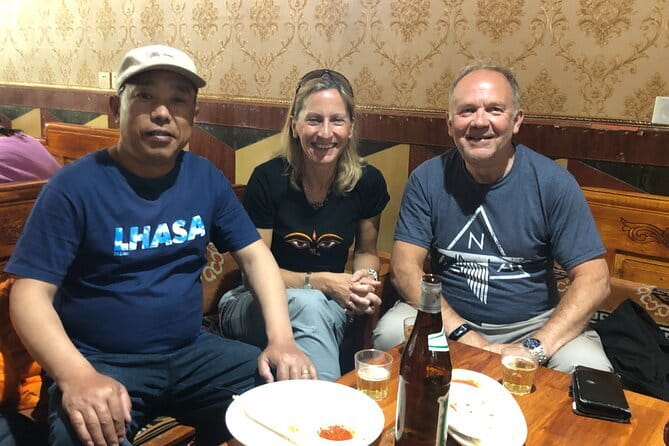
I like the practical setup: the Tibet Travel Permit, transport, hotels, breakfasts, and admission fees are included, and the local company has offices in Lhasa and Chengdu. I also like the human touch. Guides such as Zhaba and Xiao Bu are praised for clear advice, safety reminders, and help at high altitude.
The catch is the pace and altitude. Several days involve long drives, with Rongbuk Monastery and Everest Base Camp each taking about eight hours. You must be comfortable with thin air, basic mountain-town conditions, and a plan that leaves little spare time.
Key points to know before booking
- Everest is the headline: Spend time at Rongbuk Monastery and travel by local bus toward Everest Base Camp.
- Lhasa begins gently: Potala Palace, Jokhang Temple, and Barkhor Street give you a strong cultural start before the longest drives.
- High-altitude planning matters: The first day is set aside for rest, and guides help explain precautions at Everest and other high stops.
- The price covers major essentials: At $1,280 per person, you get four-star hotels, transport in Tibet, permits, entrance fees, a guide, and seven breakfasts.
- You can choose your style: Group departures hold up to 12 people, while 6 to 10 person groups and private custom trips are available.
- Meals are mostly your responsibility: Lunches and dinners are not included, so allow extra money and time for them.
Why this Tibet route works in eight days
This tour is designed for someone who wants Tibet’s best-known sights without building every transfer from scratch. You start and finish in Lhasa, but the route reaches Yamdrok Lake, Gyantse, Rongbuk, Everest, Shigatse, and Namtso.
That range is the main value. A shorter Lhasa visit can show you Tibetan religious life and imperial architecture, but it will not give you the same sense of distance. Here, you spend time on high roads, cross wide grasslands, and watch the scenery change from city streets to glacier country.
The tradeoff is simple: more sights mean more time in the vehicle. The tour is not a relaxed hotel-to-hotel holiday. It is a sightseeing circuit for you if mountain roads, changing scenery, and major cultural sites matter more than slow mornings.
The maximum group size is 12, which is small enough to keep transfers and guide talks manageable. You can also ask about a private custom option if your family needs a slower rhythm. One particularly useful detail is that the company offers itinerary planning and help with train and flight bookings, which can remove much of the paperwork around reaching Tibet.
A few more China days to line up
- Tibet Tour 8 Days Lhasa to Everest Base Camp Small Group Tour
★ 5.0 · 578 reviews - 7 Days Lhasa to Kathmandu Overland Small Group Tibet Tour via EBC
★ 5.0 · 188 reviews - 10 Days Tibet Everest Base Camp and Namtso Small Group Tour
★ 5.0 · 108 reviews
Day 1: Arrive in Lhasa and let your body catch up
Your guide meets you in the arrival hall and transfers you to the arranged hotel. That sounds routine, but on a high-altitude trip it is one of the most important parts of the plan.
You are advised to rest rather than head straight out. Follow that advice. The first day is not wasted time. It gives you a chance to settle in before the sightseeing begins, and it keeps the tour from asking too much of you immediately.
The hotel is rated four-star, and breakfast is included throughout the stay. The package does not include lunch or dinner, so you will need to handle those meals separately from the start.
Day 2: Potala Palace, Jokhang Temple, and Barkhor Street
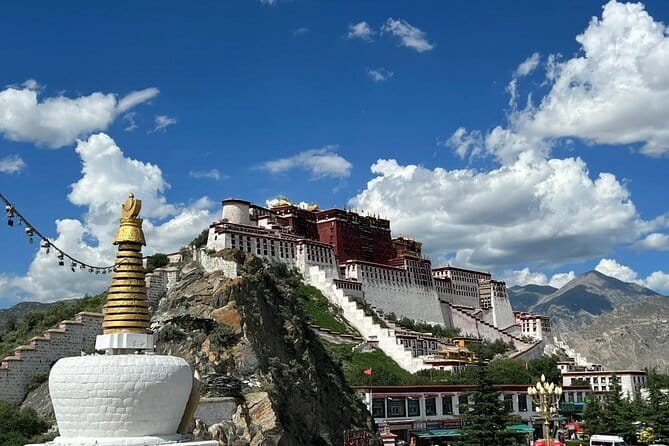
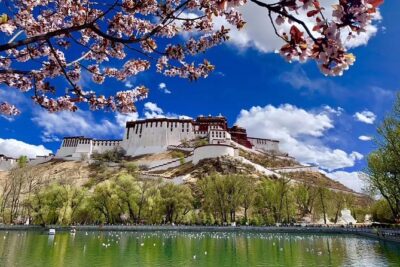
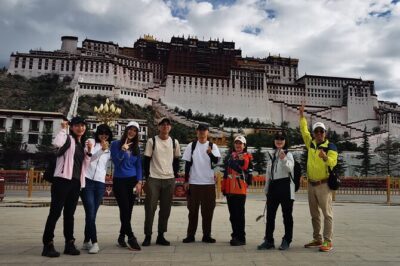
The first full day puts Lhasa’s central sights in the right order. Potala Palace comes in the morning, when you have the best chance of approaching the visit with fresh energy.
Allow about two hours inside. The palace is not just a grand exterior for photographs. You see audience halls, chapels, and the jeweled golden burial stupas of past Dalai Lamas. There are many rooms and religious objects, so a guide adds useful structure to what could otherwise feel like a long sequence of ornate spaces.
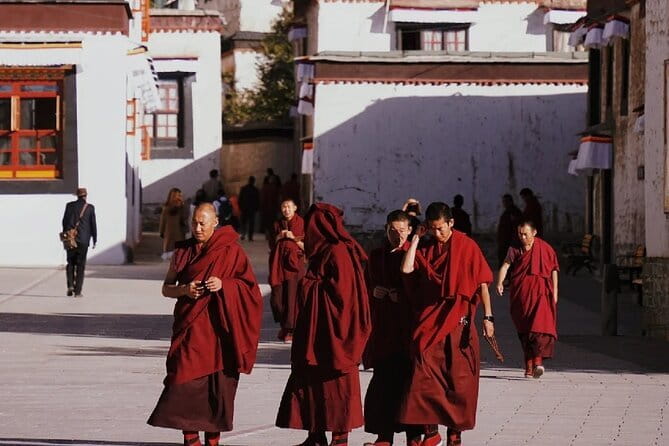
After lunch, you visit Jokhang Temple for about 90 minutes. This is one of the most sacred Buddhist sites in Tibet. Its design reflects Tibetan, Tang, Nepalese, and Indian influences, giving you a visible reminder that Lhasa’s religious world developed through contact across Asia.
You then have about an hour around Barkhor Street. The traditional way to walk around Jokhang is clockwise, following the flow of pilgrims. You can browse the handicraft market or simply take in the street life and prayer activity.
This is one of the tour’s strongest sections because the three stops balance each other. Potala gives you scale and ceremony. Jokhang gives you a working religious center. Barkhor lets you slow down and observe the city at street level.
Day 3: Yamdrok Lake and the road toward Gyantse
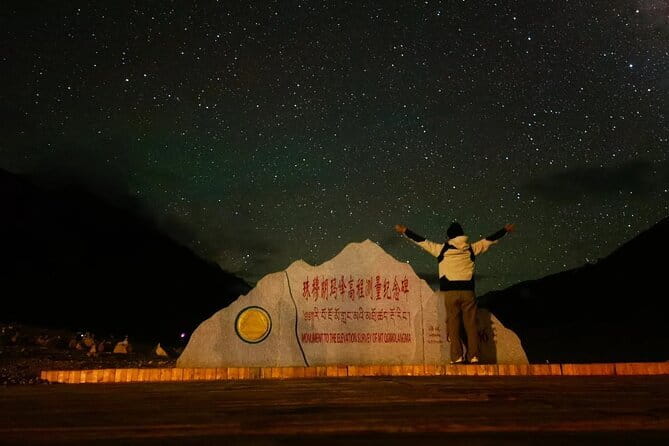
The route leaves Lhasa for Yamdrok Lake, one of Tibet’s three sacred lakes. The lake sits at about 4,441 meters, so the view comes with a serious altitude warning.
You spend about an hour at the lake. The stop is short compared with the drive, but that is normal for a route where the road itself is part of the experience. You see open country, high passes, and changing light around the water rather than a single tightly managed attraction.
Later, you pass the Karola Glacier and get a distant view of its ice and cloud-covered mountain setting. This is another one-hour stop, and the wording matters: you are viewing the glacier from a distance, not taking a long glacier walk.
The day ends in or near Gyantse, described as a heroic city of Tibet. The appeal here is the transition from Lhasa’s dense religious core to a more open, road-based journey. The drawback is that altitude can make even a scenic outing tiring. Keep your pace slow and listen closely to the guide’s advice.
A very different day in China:
- From Beijing: Mutianyu Great Wall Tours with Options
★ 4.9 · 9,216 reviews - Beijing: Forbidden City Tour(Group/Private)-Tickets Included
★ 4.8 · 7,974 reviews - Beijing: T-Square & Forbidden City Group or Private Tour
★ 4.8 · 4,446 reviews - Beijing: Mutianyu Great Wall Daily Tour with Ticket & Lunch
★ 5.0 · 3,056 reviews
Day 4: A long approach to Rongbuk Monastery
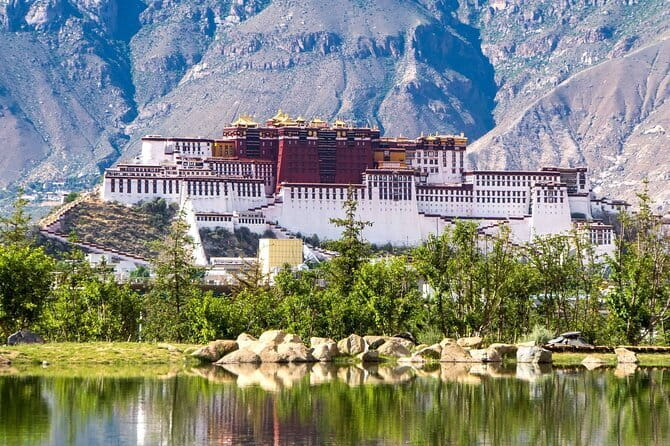
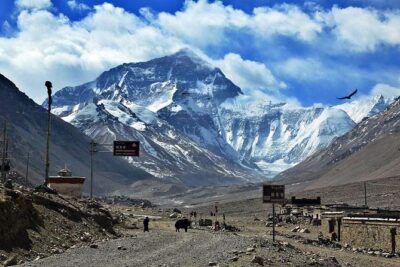
Day four is a road day. You drive west along the Friendship Way toward Tingri, then continue roughly 90 kilometers from Tingri to Rongbuk Monastery.
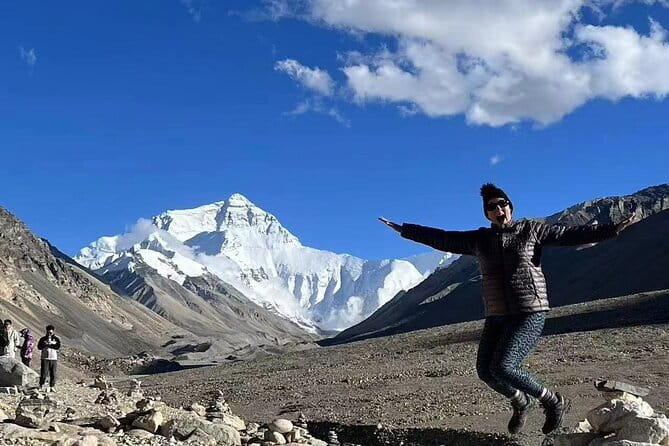
The route passes grassland, rivers, and high mountains. In clear weather, you may catch a glimpse of Everest. That last point is important: mountain views depend on conditions, so you should treat them as a possibility rather than a promise.
The stop at Rongbuk is listed at about eight hours, which tells you how much of the day goes into getting there and seeing the area. Rongbuk Monastery is special because of its location near Everest, but it is not a quick city attraction. You need patience for the road, the altitude, and the changing weather.
This is the day most likely to test your comfort. If you dislike long transfers, this route may feel too demanding. If the idea of reaching the Everest region is central to your trip, the drive is the price of admission.
Day 5: Sunrise at Rongbuk and Everest Base Camp
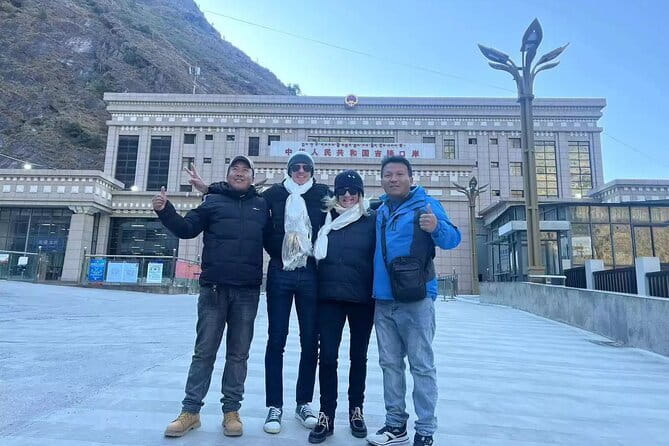
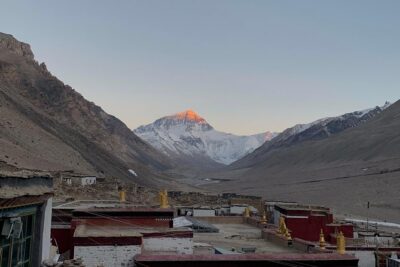
You begin early to see sunrise from Rongbuk and view Mount Everest. The schedule allows about eight hours for the Everest portion, so the day is not limited to a quick photograph and a return to the hotel.
After walking, you take a local bus for about half an hour to Everest Base Camp. The base camp admission is listed as free, but the local bus is part of the practical access arrangement described for the visit.
Altitude, temperature, and oxygen levels become especially important here. Xiao Bu is specifically praised for explaining safety matters and answering questions about conditions at Everest Base Camp. That kind of guidance is valuable when you are deciding how much to walk, when to rest, and how to respond if you feel unwell.
Do not judge this day only by the famous name. The real experience is a combination of early light, distance, cold, high roads, and the possibility of seeing Everest clearly. Clouds can change the view. The setting may be magnificent, but comfort is not guaranteed.
Day 6: Tashilunpo Monastery and the return toward Lhasa
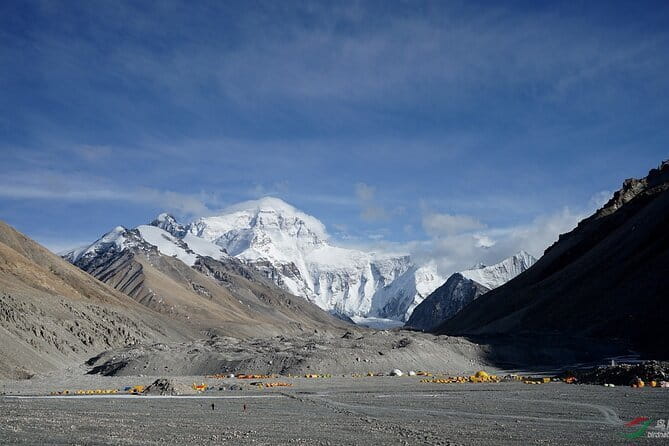
Before the roughly four-hour drive back to Lhasa from Shigatse, you visit Tashilunpo Monastery. The visit takes about two hours.
Tashilunpo is presented as the largest monastery in West Tibet and as the final major historic site on the route. It gives you another look at Tibetan religious architecture after Potala and Jokhang, but the setting and scale are different enough to make it worthwhile.
This stop also breaks up the return journey. Four hours in a vehicle is still a substantial transfer, yet visiting the monastery gives the day a clear purpose. You are not simply retracing the road.
The sequence may feel busy after Everest. That is why the first day’s rest and the guide’s altitude advice matter. You should expect some tiredness by this point, especially if you have been waking early and spending long hours outside.
Day 7: Namtso and northern Tibet
The final full day takes you north through broad grasslands and along the Qinghai-Tibet Highway toward Namtso. You cross a pass listed at 5,190 meters, another reminder that this is a high-altitude route from start to finish.
The visit to Lake Namtso lasts about three hours. Prayer flags, open grassland, and the lake give the day a different feel from the Everest section. Instead of focusing on one famous peak, you spend time with the scale of northern Tibet.
Namtso is a strong final outing because it returns the emphasis to water, sky, and distance. Still, the altitude makes it no light excursion. You should expect the drive and the high pass to be tiring, even if the stop itself is peaceful.
The route does a good job of varying the sights. Lhasa offers concentrated culture. Yamdrok and Namtso offer sacred lakes. Everest provides the major mountain goal. Tashilunpo adds another important monastery. You get a broad sample of Tibet in one week of sightseeing.
What the $1,280 price really includes
At $1,280 per person, the price is easiest to judge by looking at what you do not have to arrange separately. The package includes:
- All admission fees
- Transportation within Tibet
- A Tibetan English-speaking guide
- Tibet Travel Permit
- Four-star hotels
- Seven breakfasts
- Pickup and arrival or departure transfer support
The permit is a major practical benefit. Tibet travel requires specific arrangements, and having the agency manage the Tibet Travel Permit can make the trip far less complicated.
The price does not include lunch, dinner, international airfare, or tips for the guide and driver. You should budget for those separately. The lack of included dinners can be useful if you prefer choosing your own food, but it means the advertised price is not the full cost of every day.
For value, I see this as a strong package for someone who wants a guided trip with the major infrastructure handled. It is less attractive if you already have transport, hotels, and permits arranged or if you want complete control over every stop.
Guides, group size, and the practical feel
The company operates offices in Lhasa and Chengdu and has more than 20 years in the travel business. That local presence matters most when transport, permits, or altitude plans need attention.
The service is offered in groups of 6 to 10 people, with a maximum of 12, and private custom tours are also available. A small group can make long transfers easier, though the experience still depends on the group’s pace and ability to handle high altitude.
The guides named in the feedback include Zhaba and Xiao Bu. Zhaba is praised for enthusiasm and for helping make the trip feel personal. Xiao Bu is noted for reminders about safety, cold, thin air, and conditions around Everest. You should confirm who will lead your departure, since guide assignments can vary.
Families are also a possible fit. One family had the itinerary adjusted for children and elderly parents, including hotel and tour arrangements. That does not mean the standard route is easy for every age, but it does suggest you should ask about a private or modified plan if your group needs a gentler schedule.
The main drawbacks to weigh
The biggest issue is not the sights. It is the physical shape of the trip.
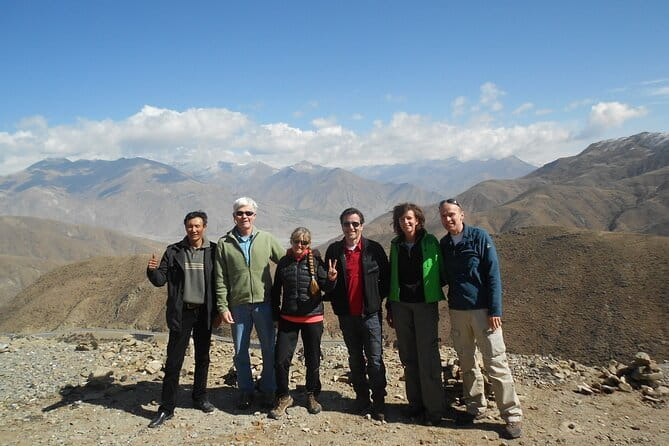
You have long drives on days four, five, six, and seven. You reach very high places, including Yamdrok Lake at 4,441 meters and a pass at 5,190 meters. The first day is reserved for rest, but the itinerary becomes demanding once you leave Lhasa.
Weather can also affect the Everest experience. Clear skies may offer a view from the road or Rongbuk, while cloud can hide the mountain. That is part of visiting the Himalayas, not a flaw unique to this tour, but you should be emotionally ready for conditions to change.
Finally, meals are not included beyond breakfast. That is easy to overlook when comparing prices. Ask for current details about meal stops and payment arrangements before you go, especially if you have dietary needs.
Who should book this tour?
You should consider it if you want the main sights of Tibet in one organized trip, value help with permits and transport, and accept long road days. It is especially well suited to first-time visitors who want Lhasa, Everest, sacred lakes, and major monasteries without arranging each leg independently.
Families may benefit from asking for a private custom version. The same applies if you want more rest time, have older relatives, or are worried about keeping up with a fixed group.
I would hesitate if you need a slow holiday, dislike early starts, or find high-altitude travel stressful. In that case, a Lhasa-focused trip with fewer distant stops may suit you better.
For the right person, this is a well-priced route with impressive variety. Book it for the access to Everest and the wider Tibetan journey, not because eight days will feel leisurely.
FAQ
How long is the Tibet Classic Tour?
The tour lasts approximately eight days, from arrival in Lhasa through departure on the final day.
What is included in the tour price?
The price includes admission fees, transportation within Tibet, a Tibetan English-speaking guide, the Tibet Travel Permit, four-star hotels, and seven breakfasts.
Are lunch and dinner included?
No. Lunches and dinners are not included in the tour price.
Is airport or train station pickup offered?
Yes. On arrival, the guide meets you in the arrival hall and transfers you to the arranged hotel. On day eight, the driver transfers you from the hotel to Lhasa Airport or the train station.
What major places does the tour visit?
The route includes Potala Palace, Jokhang Temple, Barkhor Street, Yamdrok Lake, Karola Glacier, Rongbuk Monastery, Everest Base Camp, Tashilunpo Monastery, and Namtso.
How large is the tour group?
The activity has a maximum of 12 travelers. The operator also offers 6 to 10 person group tours and private custom tours.
Is the Tibet Travel Permit included?
Yes. The Tibet Travel Permit is included in the tour package.
What is the cancellation policy?
You can receive a full refund if you cancel at least three full days before the experience start time. Cancellations within three days are not refunded, and changes within that period are not accepted.
Recently listed in China
- Nanjing By Night: Qinghuai River Cruise with Authentic Dining Experience★ 5.0 · 5 reviews
- 1 day Car Hire in Shenzhen with Driver (10 hours)★ 3.0 · 5 reviews
- Beijing Mutianyu Great Wall Private Tour with Lunch★ 5.0 · 5 reviews
- Flexible Hangzhou Private Day Tour with Lunch★ 5.0 · 5 reviews
- Customized Private Beijing Layover City Tour★ 5.0 · 5 reviews
- Private Tour of Shanghai Highlights and Zhujiajiao Water Town in One Day★ 5.0 · 5 reviews
- 4-Hour Suzhou Private Flexible Tour with Garden and Boat Ride Option★ 5.0 · 5 reviews
- Private Tour to Gubei Water Town and Simatai Great Wall with Cable Car and Lunch★ 5.0 · 5 reviews
Tibet Tours, compared.
Tibet Tour 8 Days Lhasa to Everest Base Camp Small Group Tour
Read our review →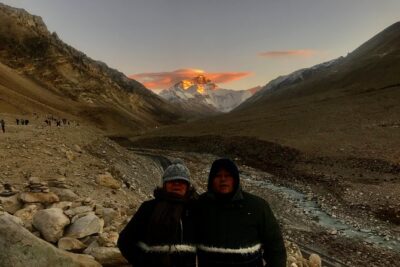
7 Days Lhasa to Kathmandu Overland Small Group Tibet Tour via EBC
Read our review →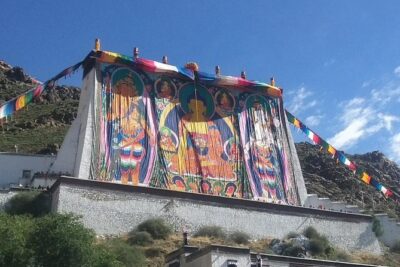
10 Days Tibet Everest Base Camp and Namtso Small Group Tour
Read our review →
8 Days Lhasa Gyantse Shigatse Mt Everest Group Tour
Read our review →
Private Guided Day Tour Potala Palace and Sera Monastery
Read our review →Browse the lists this tour appears in