
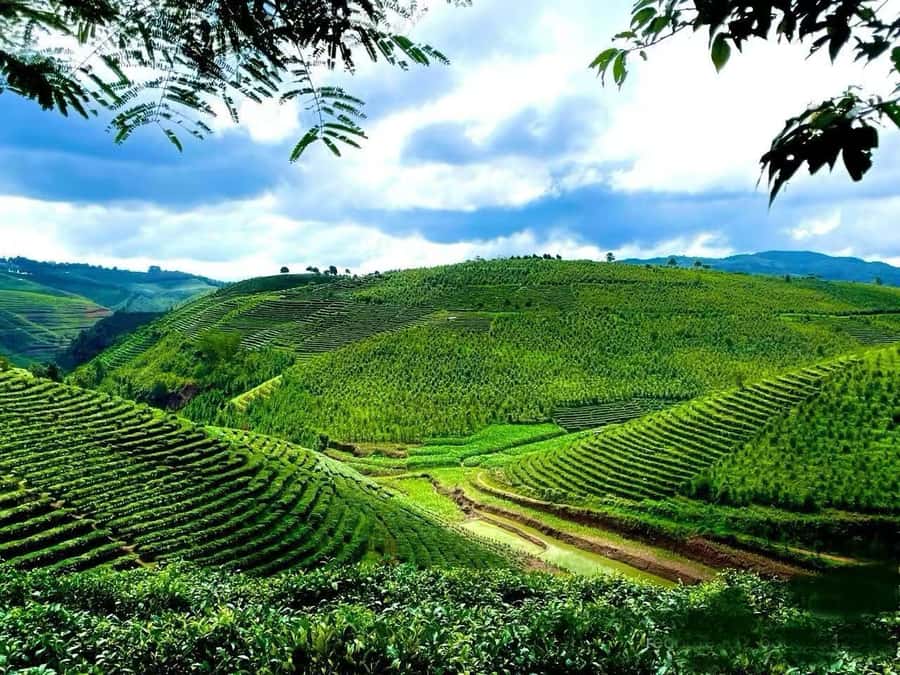
Reviewed · FOOD & DRINK
Puer Tea Picking and Tasting | 6 Hour Morning Trip
The best part of this six-hour outing is that you do not just look at tea bushes and hear a short talk. You pick the leaves yourself, then help turn them into tea through withering, rolling, and drying. The visit connects the green fields with the finished drink in your cup.
I like the personal scale, with no more than six people, and I like that guide Maxime works closely with the local plantation host. You get time for questions, translation, tea tasting, and photos rather than being hurried from one stop to the next. The main drawback is timing: the trip can run five to seven hours, and the optional food and coffee stops may make it difficult to fit around a train or fixed afternoon plan.
Key points at a glance
- 300 grams of tea to take home: You pick and process your own tea during the visit.
- A real working farm: See withering, rolling, and drying rather than only tasting finished tea.
- Small groups of up to six: The format leaves room for questions and translation.
- Maxime leads the outing: He speaks English, French, German, and Italian and has a direct relationship with the plantation host.
- Pickup from Jinghong or Pu’er: Transport is by VW ID.4 for up to three people, or a six-seat minivan for larger groups.
- Tea, coffee, and Dai food: The main focus is Pu’er tea, with some departures including a coffee farm visit and local lunch.
A quiet road from Jinghong or Pu’er
The day starts with pickup in Jinghong or Pu’er. For up to three people, the vehicle is a VW ID.4. Groups of more than three use a comfortable six-seat minivan. That is a useful detail if you care about a relaxed ride, since you are not being placed on a large coach with a crowd.
The drive is part of the experience. You leave the city and pass through Yunnan’s green countryside on the way to the plantation. The precise starting time depends on availability, and the total outing is listed as five to seven hours, so I would keep the rest of your day open.
This is especially important if you are catching a train or have another booked activity. One participant had to leave early for a train and wished for more time. That tells you something practical: the visit rewards lingering, asking questions, and tasting slowly. It is not a quick photo stop.
Maxime is an important part of the experience. He can guide in English, French, German, or Italian, and he translates questions between visitors and the plantation owner. That matters at a working farm, where the best information may come through conversation rather than a polished museum display.
More Food Tours in China:
- Authentic Local Food Tour in Central Shanghai
★ 5.0 · 1,382 reviews - Beijing Hutong Walking Food and Beer Tour at Hidden Restaurants
★ 5.0 · 1,132 reviews - Xi’an Evening Food Tour by TukTuk
★ 5.0 · 715 reviews
Walking the Pu’er tea fields
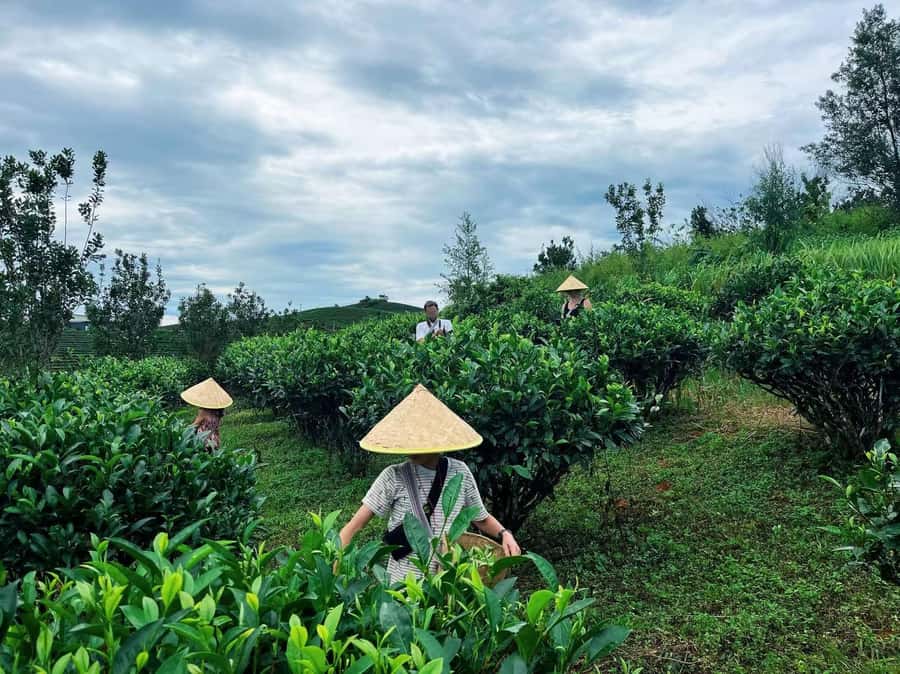
At the plantation, you begin with a guided walk through the tea fields and nearby area. This gives you a sense of where Pu’er starts, before anyone talks about brewing temperatures or aging.
The guide explains the place of Pu’er tea in local life and introduces the methods used to select leaves. You will be shown how to choose suitable growth from the bushes, then try picking for yourself. The work is simple to understand but surprisingly useful: once you have handled the leaves, you notice how much care goes into the raw material.
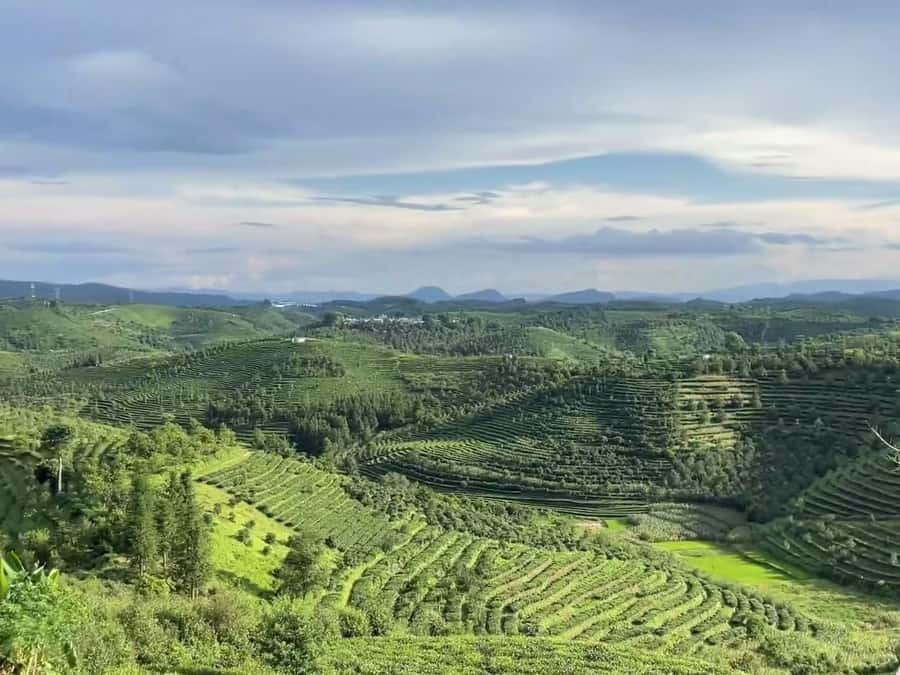
The setting is calm, with rolling tea fields and broad views across cultivated land. You should wear comfortable shoes, since the activity takes place outdoors and includes walking through the plantation. There is no indication that special equipment or technical hiking ability is needed.
This section suits curious beginners as well as people who already drink Chinese tea. If you know only the name Pu’er, you will get the basic context. If you already know the difference between raw and aged tea, you can use the small-group format to ask more specific questions.
From fresh leaves to finished tea
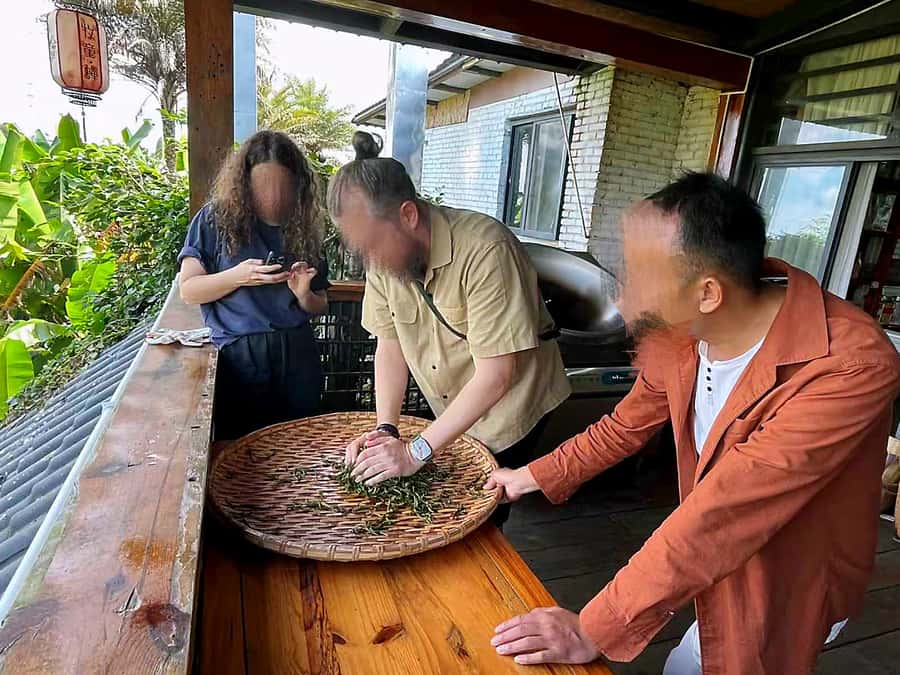
The farm visit is where the outing earns its price. You see the steps that turn a picked leaf into something you can brew: withering, rolling, and drying. Skilled local workers demonstrate the process, and you have the chance to try parts of it yourself.
The hands-on work helps you understand why tea is not simply picked and packaged. Each stage changes the leaf’s shape, moisture, scent, and final taste. You may not leave as a tea maker, but you will have a clearer idea of why two teas from nearby fields can taste different.
The supplied experience includes 300 grams of Pu’er tea picked and processed by the participants. That is more than a token sample. It gives you a useful amount to share, drink at home, or use as a reminder of the visit. It also adds a personal touch: you are not just buying a product made somewhere else.
There is one point to clarify before booking. The experience details say the 300 grams you pick and process are included, while gifts and souvenirs are not included. Additional tea purchased at the farm is separate. The tea is not pushed on you, and the available information indicates that purchases are optional. Still, ask the operator to confirm exactly what your 300 grams includes and how any extra tea is priced.
Tasting raw, aged, and red teas
The tasting session brings the process together. You sample freshly processed Pu’er and learn how varieties and brewing methods affect the cup. The tea selection can include raw tea, aged tea, candy tea, and red tea, depending on the day and the farm’s available stock.
This is not only a drinking break. The point is to taste tea after seeing the plants and production steps. A fresh tea may seem more direct or sharp, while an aged tea can show a different character. The guide can explain the differences, but you should also trust your own palate. You do not need specialist vocabulary to take part.
Multiple pours are possible, giving you time to notice how the flavor changes as the leaves open and the tea is brewed again. That makes the session more useful than a single cup served with no explanation.
The farm setting also keeps the tasting grounded. You are tasting tea made in the same area you have just visited, with the producer close by to answer questions. For anyone interested in Chinese tea culture, this connection between field, workshop, and cup is the heart of the morning.
More early starts in China:
- Shanghai Half Day Morning or Afternoon Sightseeing Tour
★ 3.5 · 110 reviews - Morning Tour – Deluxe Hong Kong Island Tour with Hotel Pickup in Kowloon
★ 4.0 · 70 reviews - Xi’an: Morning Terracotta Army Tour with Local Family Lunch
★ 5.0 · 47 reviews - Xi’an Morning Food & Market Tour by TukTuk
★ 5.0 · 46 reviews
Lunch, Dai food, and the possible coffee extension
The supplied details describe lunch in two different ways. One section lists lunch at the farm as included, while the fuller description calls it optional and gives a price of 60 yuan per person. Confirm this when you reserve, since the meal arrangement may depend on the exact booking.
The food is local Yunnan cuisine, with Dai specialties available in the plantation setting. That can make the outing feel more connected to the region than a standard restaurant meal. The farm meal is also useful if your visit runs toward the longer five-to-seven-hour range.
Some schedules include a stop at a coffee plantation south of Pu’er. There, you may see coffee harvested from the surrounding fields, learn how it is processed on site, and taste different coffees. The day can then continue through the area known for coffee production, with larger processing facilities visible along the route.
This coffee portion is a bonus, not the clearest promise of the core tea trip. If tea is your main reason for booking, make sure you understand whether the coffee farm is part of your departure. If you enjoy both drinks, it can add real value and show another side of Yunnan agriculture.
The combination of tea and coffee also makes this more than a single tasting. You see two crops, two processing traditions, and local food in one outing. The tradeoff is time. A longer day may be enjoyable, but it leaves less room for a relaxed return or another afternoon plan.
Why the small group matters
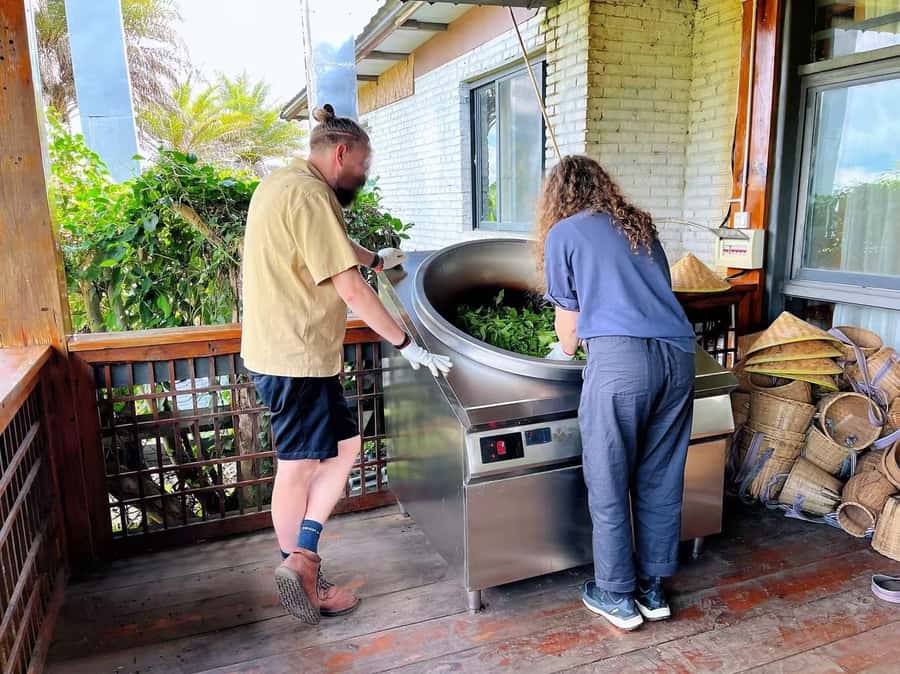
The group limit is six people. Pickup is in a small vehicle, and the format allows more conversation than a standard bus tour.
That matters most during the plantation visit. You can ask the host about tea cycles, local farming, and processing without waiting behind a long line of people. If you need translation, Maxime can handle questions as they come up rather than rushing through a fixed script.
The small group also helps if you are traveling alone. Eunice, a solo visitor from Singapore, contacted Maxime before booking and received reassurance about the arrangement. The available details also show that he has adapted the outing to family needs, including a group with three children.
Do not read that as a promise that every request can be accommodated. The experience is not suitable for babies under one year or people over 70, and pets are not allowed. Those limits should be taken seriously when planning for a mixed-age group.
What makes the guide part of the value
Maxime’s role goes beyond driving. He explains the tea cycle, translates between you and the farm host, and can discuss local Dai culture and language. He also takes photos during the day when appropriate, giving you a record of the picking and farm visit.
His relationship with the plantation host is useful because it makes the conversation more direct. You can ask questions through someone who knows both the local producer and the needs of international visitors. The language options are also unusually broad for a specialized farm visit: English, French, German, and Italian are available.
The guide does not replace the farm owner’s experience. That is a strength. The local host shows the work, while Maxime helps you understand it. The result is more personal than a scripted explanation delivered only from the vehicle.
Is $82 a fair price?
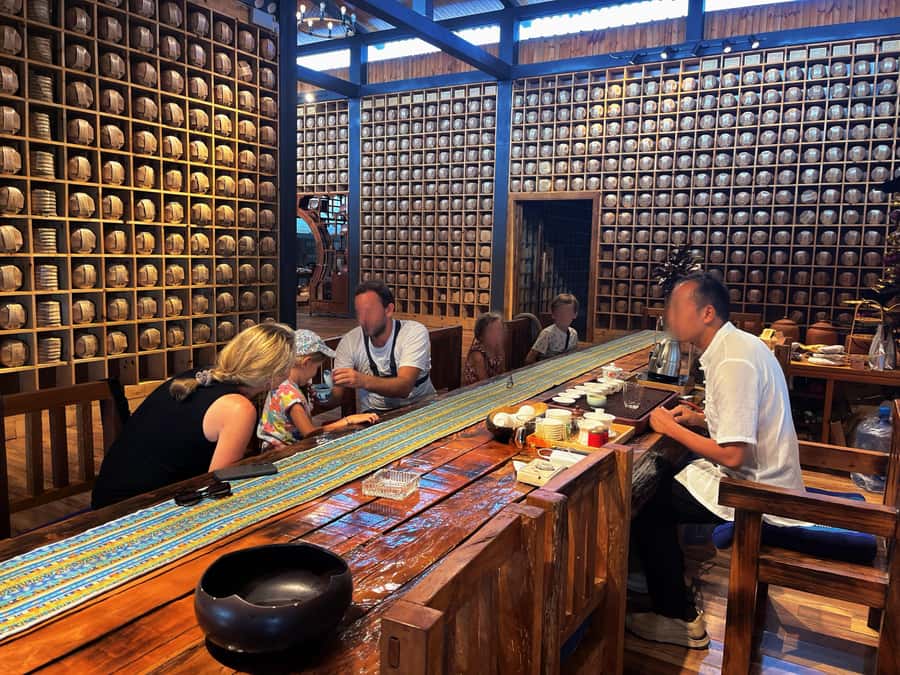
At $82 per person, this is not the cheapest way to see tea fields in Yunnan. But the price covers more than transport to a viewpoint. You get pickup and return, a guided plantation visit, hands-on picking and processing, tea tasting, and 300 grams of tea that you worked on yourself.
For up to three people, the VW ID.4 gives the trip a private, comfortable feel. Larger parties use a six-seat minivan, while the group remains small. The guide’s translation and local connections also have genuine value, particularly if you do not speak Chinese.
The value is strongest if you care about how tea is made and want direct contact with a working farm. It is weaker if you only want a short scenic outing or a quick tasting. The optional lunch may cost another 60 yuan per person, and extra tea purchases are not covered, so include those expenses in your budget.
Free cancellation is available up to 24 hours before the activity for a full refund, and you can reserve now and pay later. Those terms make it easier to fit the outing into a changing Yunnan itinerary, but you still need to check the available start time and confirm the lunch arrangement.
Who should book this plantation visit?
I would choose this for a tea drinker, a food-focused visitor, or anyone who prefers meeting producers over ticking off major sights. It also suits solo visitors and couples who want a small group, a flexible conversation, and a quieter day outside town.
It is a good match for people who enjoy learning by doing. Picking a few leaves and watching a demonstration is one thing. Picking and processing 300 grams of tea gives you a clearer memory of the work and a useful souvenir to take home.
Families may find the flexible guide helpful, but check the age rules before booking. The experience is not suitable for babies under one year or people over 70. Comfortable shoes are the only required item listed, yet outdoor clothing suited to a farm visit is sensible.
I would be cautious about booking it on a tight schedule. The duration can stretch to seven hours, especially if you add lunch or coffee. If you have a train, flight, or another fixed appointment, confirm the return time with Maxime before committing.
Should you book the Pu’er tea experience?
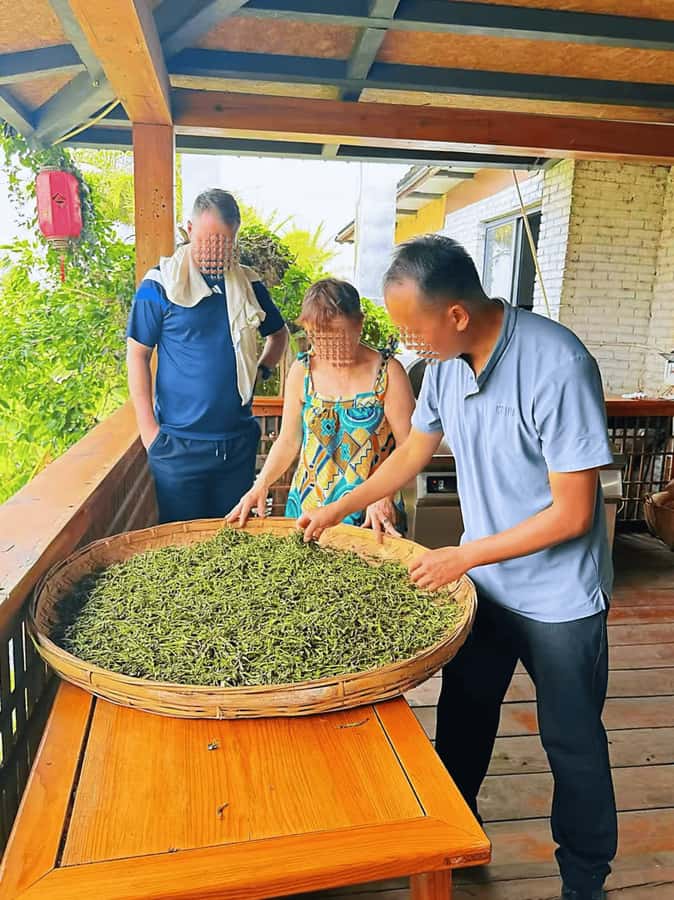
Book it if you want a personal introduction to Pu’er that connects the plant, the processing room, the tasting table, and the local meal. The strongest features are the hands-on work, the 300 grams of tea you take home, the small group, and Maxime’s ability to translate and explain.
Skip it if you want a short, highly structured attraction with no possibility of a longer day. Also confirm whether lunch is included in your booking, since the published details describe it both as included and as an optional 60-yuan meal.
For most tea enthusiasts, the $82 price is justified by the transport, access to a working farm, personal instruction, and tea you help produce. Keep the afternoon free, wear comfortable shoes, and arrive ready to ask questions. That is how you get the most from this outing.
FAQ
Where does the tea plantation trip start?
Pickup is available from Jinghong or Pu’er. Return transport to the same city is provided.
How long does the activity last?
The stated duration is five to seven hours. Starting times depend on availability.
What vehicle is used?
Pickup is provided in a VW ID.4 for up to three people. Groups larger than three use a comfortable six-seat minivan.
How many people can join the group?
The activity is limited to six participants.
Which languages can the guide speak?
Guiding is available in English, French, German, and Italian.
Do I take tea home after picking it?
Yes. The experience includes 300 grams of Pu’er tea picked and processed by the participants. Extra gifts, souvenirs, or tea purchases are not included.
Is lunch included?
The activity information is not fully consistent on this point. One section lists lunch as included, while another describes an optional local meal costing 60 yuan per person. Confirm the meal arrangement when booking.
Recently listed in China
- Nanjing By Night: Qinghuai River Cruise with Authentic Dining Experience★ 5.0 · 5 reviews
- 1 day Car Hire in Shenzhen with Driver (10 hours)★ 3.0 · 5 reviews
- Beijing Mutianyu Great Wall Private Tour with Lunch★ 5.0 · 5 reviews
- Flexible Hangzhou Private Day Tour with Lunch★ 5.0 · 5 reviews
- Customized Private Beijing Layover City Tour★ 5.0 · 5 reviews
- Private Tour of Shanghai Highlights and Zhujiajiao Water Town in One Day★ 5.0 · 5 reviews
- 4-Hour Suzhou Private Flexible Tour with Garden and Boat Ride Option★ 5.0 · 5 reviews
- Private Tour to Gubei Water Town and Simatai Great Wall with Cable Car and Lunch★ 5.0 · 5 reviews
Food & Drink, compared.
Authentic Local Food Tour in Central Shanghai
Read our review →
Beijing Hutong Walking Food and Beer Tour at Hidden Restaurants
Read our review →
Street Food Tour with Locals – Dim Sum and Wonton
Read our review →
Hong Kong’s Tin Hau Hidden Eats Food Tour with 7+ Local Tastings
Read our review →
Browse the lists this tour appears in