
Reviewed · CHENGDU TOURS
Half-Day steamed Buns Cooking Class with a Local Market Visit
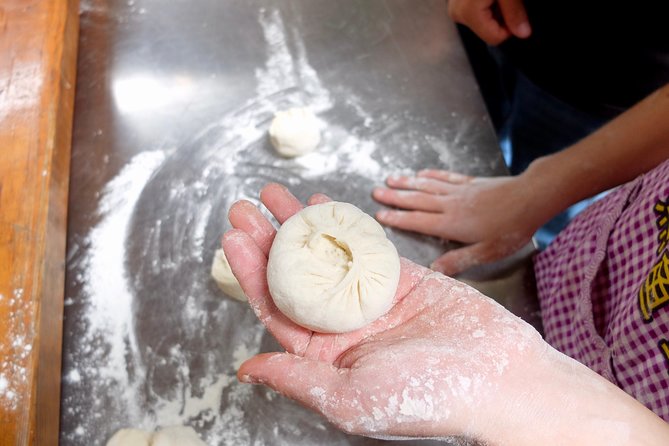
The best part of this Chengdu experience comes before the cooking. You enter a local market, meet unfamiliar Sichuan spices and ingredients, and use a few Chinese words as you shop and learn. Then you carry that market knowledge into a traditional courtyard kitchen and make baozi, the soft, filled steamed buns you later eat for lunch or dinner.
I like the market-to-table format and the fact that you do real work instead of simply watching a chef. I also like the warm, social finish: your own buns arrive with tea, beer, or other drinks. The main consideration is time. At $80 per person, this is more than a basic cooking lesson, and the four to five hour schedule may feel long if you only want a quick food stop.
Key points to know before booking
- The market comes first: Visit Chilli Cool China to see Sichuan spices and ingredients before cooking with them.
- Baozi is the main skill: Learn to prepare, fill, shape, and steam traditional Chinese buns with a professional chef.
- The setting feels local: The class takes place in a traditional Sichuan-style courtyard kitchen.
- Tea is part of the welcome: You are served Sichuan tea in the local custom of hosting friends and visitors.
- Guides can add personal help: Lance and Jerry are named guides associated with the experience, including language support and photos.
- The group stays manageable: A maximum of 15 people keeps this from becoming a huge class, though it is not a private lesson.
Why this Chengdu food class works so well
Many cooking classes begin with ingredients laid out on a table. This one gives you a reason to care about them first. The opening market visit introduces the raw materials, spices, and vegetables that shape Sichuan cooking, so the later lesson has more meaning.
I like this order. You are not just told that a spice is important. You see it in the place where local people buy food, hear its name, and then connect it with the dish you make. The market also gives you a small window into daily Chengdu life that a restaurant meal cannot provide.
The experience is designed for people who want to take part. You get an English-speaking guide, food ingredients, refreshments, and instruction from a professional chef. At the end, you eat what you made rather than leaving with a recipe and an empty stomach.
The focus is baozi, commonly written as bao or bao zi. These are filled steamed buns, not the plain bread rolls sometimes served beside Chinese meals. The class gives you a practical introduction to dough, filling, shaping, and steaming, although the supplied details do not promise a specific filling or a full recipe booklet.
More Cooking Classes in Chengdu
- Half-Day Chengdu Cooking Class with a Local Market Visit
★ 5.0 · 465 reviews - Chengdu: Cooking Class with Fresh Market Half Day Experience
★ 5.0 · 42 reviews - Half-Day Professional Mapo Tofu Cooking with a Local Market Visit
★ 5.0 · 19 reviews
Stop one: Chilli Cool China and the local spice market
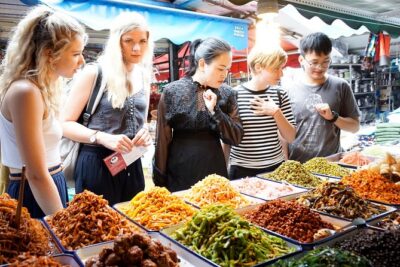
The first stop, Chilli Cool China, is the market portion of the outing. Expect an authentic local spice market visit with small challenges designed to help you notice and identify Sichuan ingredients.
This is where the guide matters most. Unfamiliar vegetables and spices can be hard to sort out when labels are in Chinese. One account of the experience specifically describes Jerry patiently translating unknown vegetables and answering questions. That kind of help turns a quick walk through market stalls into a useful lesson.
You may also get a chance to use a little Chinese. That is a modest detail, but it can make the visit more memorable. You do not need to speak Chinese to take part, since an English-speaking guide is included, but trying a few words gives the market visit a playful purpose.
The market is not just a shopping detour. Sichuan food depends on a particular balance of heat, aroma, salt, and fermented flavors. Seeing the ingredients before you cook helps you understand why the food tastes the way it does. I would pay attention to the spices the guide points out, then ask which ones are essential and which ones are regional or optional.
Do not expect this to be a free period for browsing at your own speed. It is a guided visit with challenges and explanations, followed by a set cooking class. If you prefer unstructured market wandering, the group format may feel a little directed. If you want context and help with translation, that structure is useful.
Wear comfortable walking shoes. The instructions say the experience operates in all weather, so bring clothing suited to the forecast. The market is outdoors or market-based enough that weather can affect your comfort, even though the activity goes ahead in rain or other conditions.
Stop two: Chilli Cool’s traditional courtyard kitchen
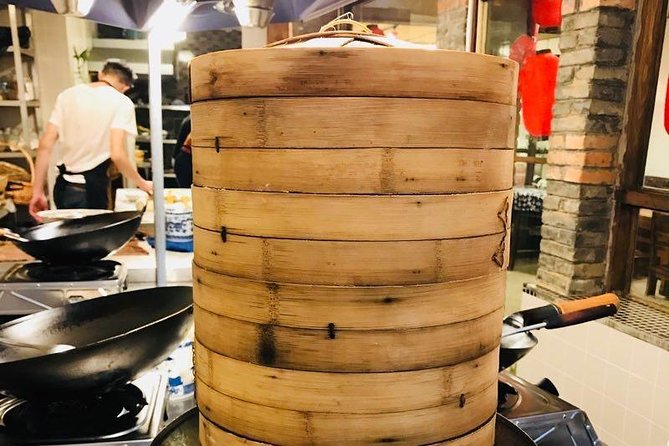
After the market, you move to Chilli Cool’s Kitchen for the cooking section. The setting is described as a traditional Sichuan-style courtyard, with a cozy kitchen rather than a large commercial teaching room.
The welcome begins with local Sichuan tea. Tea is part of the custom of receiving friends and visitors, so this small pause helps set the tone before the hands-on work starts. It also gives you a chance to settle in after the market and ask questions about what you have just seen.
A professional chef then guides you through the baozi-making process. The supplied information does not list every cooking step, so I would not book this expecting a fixed menu or advanced pastry training. You can expect instruction focused on the buns themselves, using ingredients connected to the earlier market visit.
The practical value is clear. Baozi looks simple when it arrives at a restaurant, but the dough, filling, folds, and steaming all affect the final result. You get to practice the process rather than only observe it. For a first Chinese cooking class, that makes the lesson more useful than a demonstration alone.
The class is suitable for beginners because the experience is built around guided preparation. Still, cooking with a group means you may not receive one-on-one attention at every moment. The maximum group size is 15, which is fairly reasonable for a shared class, but it is not the same as booking a private chef.
Making baozi, then eating the results
The reward comes at the end, when you eat the steamed buns you prepared. Lunch or dinner is included depending on the class schedule, along with beverages or beer and light refreshments.
I value this finish because it turns the lesson into a complete meal. You can judge the texture of the buns, see how the filling worked, and enjoy the results while the cooking is still fresh in your mind. The food is not an extra purchase after the class, which makes the $80 price easier to assess.
The meal is also social. Tea begins the kitchen visit, while beer or other drinks accompany the final tasting. If you are meeting other people in Chengdu, the shared table gives the class a natural ending without forcing you to find another restaurant afterward.
Vegetarian food is available, but you must request it when booking. The same applies to specific dietary needs. Do not wait until you arrive, since the kitchen needs advance notice to plan the ingredients.
More Market Tours in Chengdu
- Half-day Dandan Noodles Cooking Class with a Local Market Visit
★ 5.0 · 8 reviews
What the $80 price includes
At $80 per person, this is a midrange food experience rather than a cheap local meal. The price includes the English-speaking guide, market tour, ingredients, beverages or beer, light refreshments, and lunch or dinner based on the class time.
I see the value in the combination. You are paying for two connected activities, a guide who helps with market language and food context, professional instruction, and a meal. Booking these parts separately would also take time and could be harder if you do not speak Chinese.
The value is strongest if you want active participation. If you only want to taste baozi, a local restaurant will cost much less. If you want to understand ingredients, practice a Chinese specialty, and eat your own work afterward, the price is more defensible.
Group discounts are available, which may help families or friends booking together. The group limit is 15 people, so ask about the discount and final group arrangements when you reserve. The experience is booked, on average, about 14 days in advance, so I would not leave it until the last day of a short Chengdu visit.
Who will enjoy this experience most
This class suits food-focused visitors who want more than a restaurant meal. It is also a good choice if you enjoy local markets, guided cultural activities, and learning a dish you can try to make again at home.
Families may find the format appealing because the minimum age is five. Younger children may need help with the dough and shaping, but the activity offers more to do than a class based only on watching. The group setting and food preparation can work well for mixed-age parties, provided everyone is comfortable with the four-hour schedule.
Vegetarians can join if they give notice. Anyone with allergies or other dietary requirements should also state them at booking. The available information confirms that requests can be advised in advance, but it does not guarantee that every diet can be accommodated.
This is less suited to someone with very limited time in Chengdu. The tour lasts about four hours, with the overall description allowing four to five hours. Add time for reaching the meeting point at 167 Yi Huan Lu Bei San Duan in Jin Niu District.
Guides, group size, and the human touch
The named guides connected with this experience include Lance and Jerry. Lance is associated with taking photos during the activity, which is useful because your hands will be busy during the cooking. Jerry is described as patient with translation and explanations during the market visit.
Guide quality matters here more than it would on a standard restaurant booking. The market can be difficult to understand without help, and the cooking class depends on clear instructions. An English-speaking guide should make the experience accessible, while the chef leads the technical cooking portion.
Photos are a pleasant bonus, not the main reason to book. If Lance is leading your session, you may have someone documenting the activity while you cook. Guide assignments can vary, so treat the names as examples rather than a promise that one particular person will lead your date.
With a maximum of 15 participants, the group is large enough for a social mood but small enough to avoid the feel of a coach tour. The tradeoff is that the chef cannot watch every fold or movement closely. Ask questions as you go, especially if you want to repeat the baozi technique at home.
Timing, meeting point, and practical preparation
The activity begins and ends at 167 Yi Huan Lu Bei San Duan, Jin Niu District, Chengdu, Sichuan, postal code 610051. The tour does not list transportation from hotels, so you should plan your own way to the start point and allow extra time to find it.
Confirmation is received when you book. Passport name, passport number, expiry date, and country are required for every participant at booking, so have those details ready.
The class operates in all weather. Comfortable walking shoes are specifically advised, and sensible clothing will help during the market visit and kitchen work. Since the schedule includes a market and a meal, avoid treating this as a quick indoor workshop.
The cancellation terms are fair but firm. You receive a full refund if you cancel at least 24 hours before the local start time. Cancellations or changes made within 24 hours are not refunded or accepted.
The main drawbacks to weigh
The first drawback is the price. At $80, you need to care about the market visit and the teaching, not just the food. This is a poor value if your main goal is an inexpensive plate of baozi.
The second is the broad four to five hour timing. A guided market, tea welcome, cooking lesson, and meal make the schedule understandable, but the experience will occupy a substantial part of your day.
The third is that the exact recipe and filling are not specified. If you want to master one precise baozi recipe for home use, ask what you will make before booking. The class clearly centers on steamed filled buns, but the available details do not promise a printed recipe, a particular meat or vegetable filling, or take-home ingredients.
Those limits do not cancel out the strengths. They simply help you book with the right expectations.
Should you book this Chengdu baozi class?
I would book it if you want a hands-on introduction to Sichuan food and have half a day to spare. The combination of a real market visit, spice guidance, professional cooking instruction, tea, and a meal gives you more substance than a stand-alone demonstration.
I would especially choose it for a first visit to Chengdu, a family group with children aged five or older, or anyone who likes food experiences that connect cooking with local life. The accounts tied to Lance and Jerry point to two useful extras: patient market translation and photos while you cook.
I would skip it if you want an inexpensive meal, a private class, or a tightly timed activity under two hours. For everyone else, the $80 cost is reasonable when you use all parts of the experience. Go ready to walk, ask questions, try a few Chinese words, and shape imperfect buns. The final plate will taste better for the work you put into it.
FAQ
How long does the baozi cooking experience last?
The activity lasts approximately four hours, with the detailed description allowing four to five hours.
What is included in the price?
The price includes an English-speaking guide, the market tour, food ingredients, beverages or beer, light refreshments, and lunch or dinner depending on the class schedule.
Where does the experience start and finish?
It starts at 167 Yi Huan Lu Bei San Duan, Jin Niu District, Chengdu, Sichuan, China. The activity ends back at the meeting point.
Is a vegetarian option available?
Yes. You must advise the provider when booking if you require vegetarian food. You should also provide advance notice of any other dietary requirements.
What is the minimum age and group size?
The minimum age is five. The activity accepts a maximum of 15 participants.
Can I cancel for a full refund?
Yes, if you cancel at least 24 hours before the local start time. Cancellations or changes made less than 24 hours before the start are not refunded or accepted.
More workshops and classes in Chengdu
- Half-Day Sichuan Cooking Class Experience in Chengdu
★ 4.0 · 17 reviews - Private Panda Tour with Cooking Class One-day Trip
★ 5.0 · 11 reviews - Half day Chengdu Dumpling Class: Make from Scratch
★ 5.0 · 8 reviews - Beijing Calligraphy Class
★ 4.9 · 112 reviews
More shopping trips in Chengdu
- Mini Group Xian Day Tour to Terracotta Army, City Wall, Pagoda and Muslim Bazaar
★ 5.0 · 1,320 reviews - Shanghai Day Tour to Zhujiajiao Water Town, Yu Garden, Bazaar, Bund
★ 5.0 · 162 reviews - Hong Kong: Kowloon Street Market & Food Culture Walking Tour
★ 5.0 · 105 reviews - Organic Chinese Dumpling Class with Market Walk
★ 5.0 · 88 reviews
Recently listed in Chengdu
- Full-Day Tour of Leshan’s Giant Buddha from Chengdu★ 5.0 · 5 reviews
- Unique One-Day Tour: Interactive Experience with Red Pandas★ 5.0 · 5 reviews
- Chengdu Nightlife Experience with a Local: Bars, Clubs & Culture★ 5.0 · 5 reviews
- Half-Day Tour at Chengdu Panda Breeding Research Base★ 4.0 · 5 reviews
- Private Day Tour: Dujiangyan Panda Base Volunteering from Chengdu★ 4.0 · 5 reviews
- Private Day Tour: Chengdu Panda and Leshan Buddha★ 4.0 · 5 reviews
- One Day Giant Panda Leisure Private Tour in Chengdu★ 5.0 · 5 reviews
- Chengdu: Giant Panda Base Reservation and Entry★ 5.0 · 5 reviews
Chengdu Tours, compared.

Half-Day Chengdu Cooking Class with a Local Market Visit
Read our review →

Private Half-Day Chengdu Panda Breeding Center Tour with Optional Volunteer
Read our review →
Sichuan Opera Shu Feng Yan Yun Evening Show Ticket
Read our review →
Private Chengdu Day Tour: Giant Pandas and Jinsha Site Museum
Read our review →
Visiting Dujiangyan Yaan Wolong Panda Base Optional Volunteering
Read our review →
Chengdu Sichuan Opera Show Ticket – Shu Feng Ya Yun
Read our review →Browse the lists this tour appears in