
Reviewed · HUTONG TOURS
Beijing Hutong Walking Tour History, Architecture and Local Life
Beijing’s old hutongs make the city easier to understand, and this three-hour walk links them with temples, a church, a pagoda, and a modern financial district. You’ll see how siheyuan courtyard homes were arranged, why door details matter, and how old neighborhoods still fit into daily life.
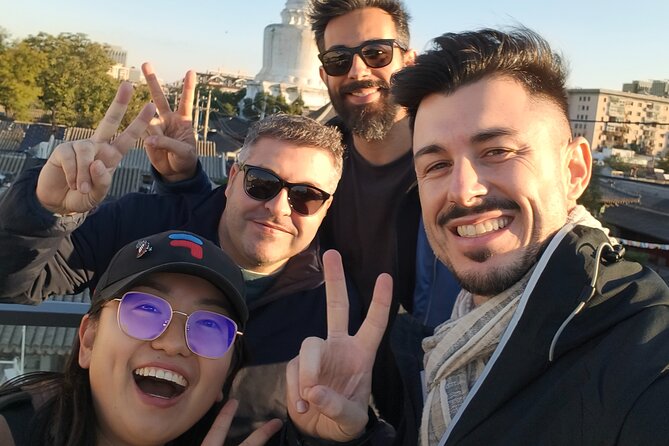
I like the small maximum of 10 people, which gives you room to ask questions, and I like the mix of landmarks that many standard sightseeing walks skip. Guides Lori and Dee are noted for making the walk personal, answering questions, and giving useful lunch and city advice. The main drawback is that this is a walking tour with no private transport, and some stops may be brief or closed.
Key points to know before you book
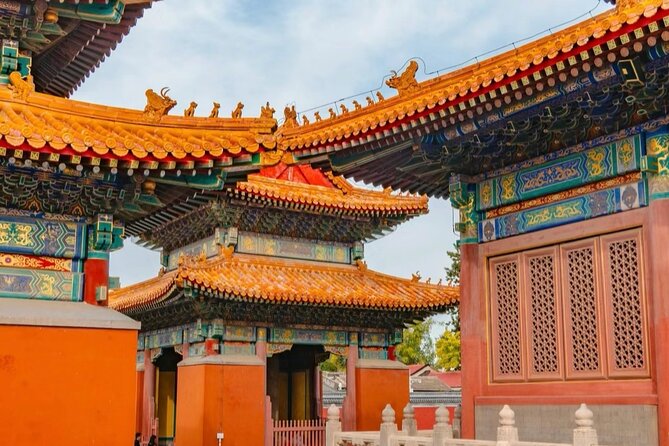
- A compact old-Beijing route: The walk connects Xishiku Church, Guangji Temple, a Yuan Dynasty brick pagoda, Zhuanta Lane, an imperial temple, and the White Stupa area.
- A small group: The tour accepts no more than 10 people, making it easier to speak with the guide.
- Useful local advice: You receive restaurant suggestions, travel tips, bottled water, and a traditional Beijing drink.
- Architecture with variety: You’ll compare church design, Buddhist temple buildings, siheyuan homes, pagodas, and imperial structures.
- A true point-to-point walk: You start at Xisi Subway Station and finish near Fuchengmen Station, Line 2.
- Good advance planning: It is booked about 17 days ahead on average, so last-minute availability may be limited.
Why this Beijing walk works so well
This is not a tour built around one grand sight. Its value comes from the connections between smaller places. In three hours, you move from a church with Chinese design touches to a Buddhist temple, then through an old hutong and on to imperial architecture. You finish near Beijing’s modern financial center, where the old city and new city meet.
I like that range. Beijing can feel like a collection of huge monuments, but this route gives you a look at the city between those monuments. You see doors, lanes, courtyards, neighborhood streets, religious buildings, and public spaces. Those details help you understand how the capital developed.
The tour costs $49 per person. That is fair if you want a guide who explains the sites and also helps you get oriented in Beijing. You are paying for a small group, entrance fees where applicable, a drink, water, and local suggestions, not for transportation or a long list of major-ticket attractions.
The walk lasts about three hours, including the time spent moving between locations. The scheduled stops add up to roughly 100 minutes, so expect a good portion of the tour to take place on foot between sites. Wear comfortable shoes and treat the route as a neighborhood walk, not a bus tour with frequent seating.
More History Tours in Beijing
- Beijing Historical Tour II including Summer Palace, Lama Temple & Panda Garden
★ 4.0 · 187 reviews - Beijing Historical Tour I – Forbidden City, Tiananmen Square & Temple of Heaven
★ 4.0 · 120 reviews - Beijing Historic City Guided Walking Tour + Calligraphy Creation
★ 5.0 · 59 reviews
Starting at Xisi Subway Station
The meeting point is in Xisi, in Beijing’s Xicheng District. The walk begins near Xisi Subway Station and ends near Fuchengmen Station on Line 2, at Exit C and the southeast side of the station area.
That point-to-point design is useful. You do not have to return to the starting place, and the route helps you learn how Beijing’s subway and central districts connect. It also means you should plan your day around the finish rather than assume you will end near your hotel.
Your mobile ticket and booking confirmation are accepted for the experience. Since the start and finish are different, check the meeting details before leaving and allow enough time to reach Xisi. The organizer provides no private transportation, so subway access and walking are part of the plan.
The group limit is 10 people. That is small enough for a guide to explain architectural details without turning the walk into a large procession. It also matters at the hutong stops, where narrow lanes can make a large group awkward.
Xishiku Church and Beijing’s Chinese Catholic style
The first stop is Xishiku Church, described as Beijing’s earliest church. You spend about 10 minutes here, with no separate admission charge.
The interesting point is not only the church’s religious role. Your guide explains how the building carries a Chinese touch, giving you an early example of how an imported faith and local architectural culture met in Beijing. That makes it a useful opening stop because it widens your view of the city beyond palace roofs and Buddhist temples.
Ten minutes is enough for an introduction and a look at the exterior or immediate setting, but it is not a full church tour. If you want a long architectural study, this stop may feel short. On this route, its purpose is to establish one part of Beijing’s religious and cultural story before you move on.
Guangji Temple and old temple details
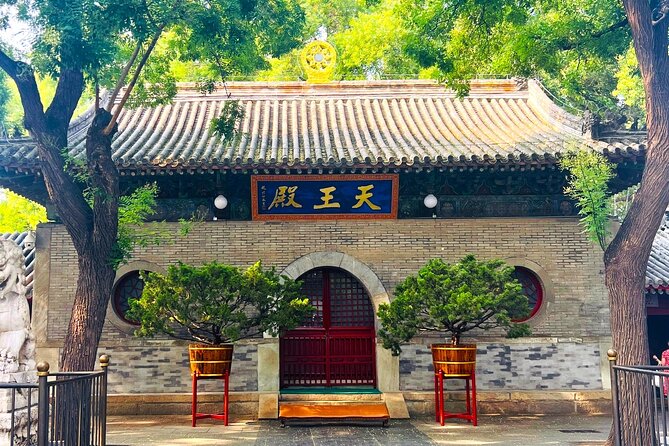
Next comes Beijing Guangji Temple, with about 20 minutes to see its traditional Chinese temple architecture and ancient finger paintings. Admission is free.
This is one of the stronger stops for travelers who want more than street scenery. The temple gives you a chance to look at the basic features of Chinese religious architecture while your guide explains why they matter. The finger paintings add a less obvious detail and give the stop an artistic side.
Twenty minutes is a sensible amount of time for a focused visit, though it will not cover every corner of a large temple complex. Temple schedules and access can change, so keep your expectations flexible. The tour description specifically identifies this as a visit, unlike the White Stupa stop, where the guide views the structure from a nearby cafe balcony.
A guide is particularly useful here. Temple buildings can look similar at first glance, and you may not know which roof lines, courtyards, or painted details deserve attention. This is where the walk’s educational approach earns its fee.
More Walking Tours in Beijing
- Beijing Hutong Walking Food and Beer Tour at Hidden Restaurants
★ 5.0 · 1,132 reviews - Private Beijing Walking Tour of the Forbidden City with 7 Options
★ 5.0 · 675 reviews - Forbidden City Private Walking Tour with Optional Sights
★ 5.0 · 400 reviews - Beijing Private Hutong Food Walking Tour
★ 5.0 · 299 reviews
The Yuan Dynasty pagoda at Zhengyang Shuju
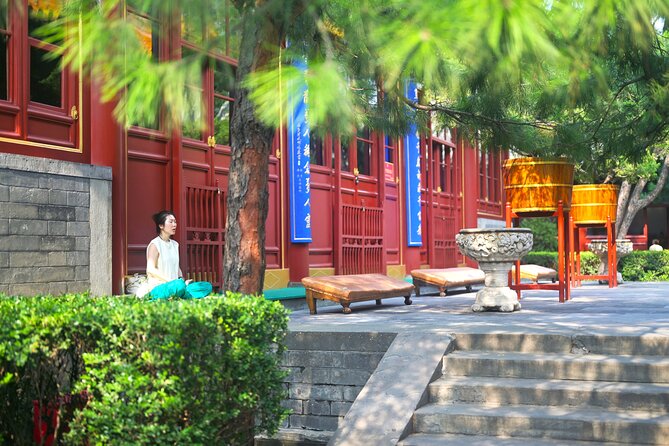
At Zhengyang Shuju, you see the Wansong Brick Pagoda, which dates from the Yuan Dynasty, and explore a collection of old Beijing images in a siheyuan. The stop lasts about 20 minutes.
The pagoda gives the route a strong historical anchor. Instead of hearing about old Beijing only in broad terms, you see a surviving structure tied to a specific period. The brick construction also adds variety after the painted and timber-based temple architecture.
The siheyuan is just as important. These courtyard homes are central to the traditional hutong pattern, with rooms arranged around an open center. Your guide explains how the homes were laid out and why door design matters. That kind of explanation helps you read the neighborhood as you walk through it.
The old Beijing images add context to the streets outside. They let you compare the city shown in earlier photographs with the lanes and buildings you see today. Since the stop lasts only 20 minutes, you should expect an introduction rather than a full museum visit.
Zhuanta Lane and the feel of an old hutong
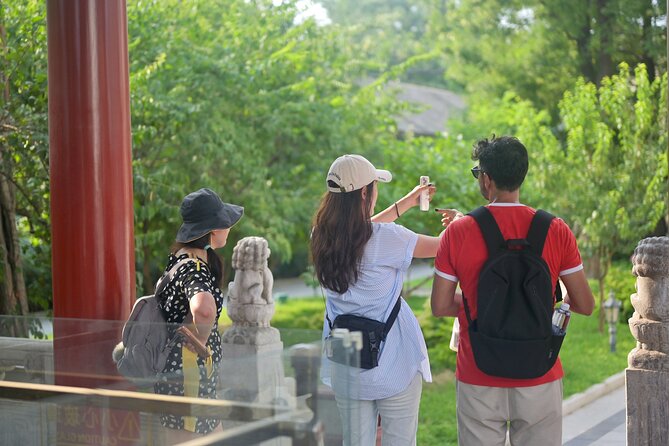
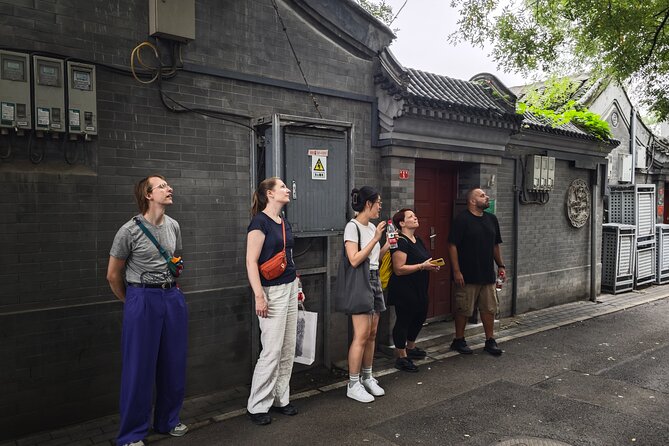
The route then moves into Beijing Zhuanta Lane, described as one of the city’s oldest hutongs. You spend about 15 minutes walking through the lane and observing local daily life.
This is likely the most atmospheric part of the walk. A hutong is not just an old street preserved for sightseeing. It is a pattern of lanes and courtyard homes that reveals how people once lived close together, and in some places still do. You may see ordinary neighborhood activity rather than a polished attraction.
The short timing is worth noting. Fifteen minutes gives you a taste of the lane, but not an unhurried neighborhood wander. The route has several stops, so the guide must keep the group moving. I would treat this section as a practical introduction to hutong life rather than a chance to explore every side alley.
The guide’s comments about doors and layout can make a real difference here. Without that context, you may notice only narrow streets and old walls. With it, you can look for clues about household design, status, privacy, and the way courtyards shaped community life.
Imperial architecture at the Temple of Previous Dynasties
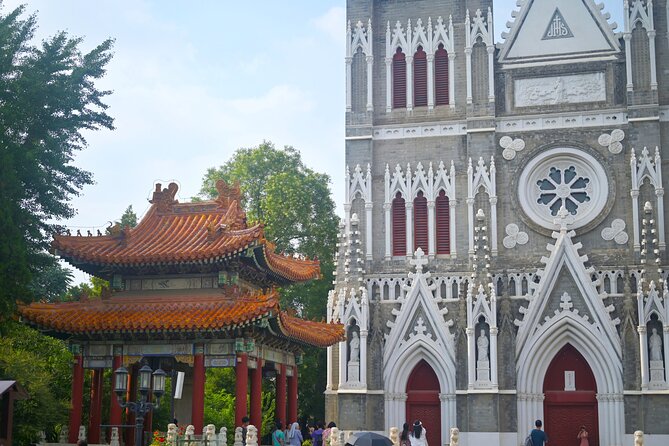
The Temple of Previous Dynasties, also called Lidai Diwang Miao, is the next major stop. You spend about 20 minutes here, and admission is included when the site is open.
This temple helps explain how Chinese culture honors earlier rulers and ancestors. Its palatial structures give you a different visual experience from the intimate scale of a hutong. Here, the buildings are meant to express ceremony and authority rather than everyday domestic life.
The phrase if open matters. You should not treat access as guaranteed on every departure. If the temple is closed, the guide may need to adjust the visit, but the supplied details do not promise a replacement stop. That uncertainty is a small risk for anyone choosing the tour mainly for this site.
Still, the stop earns its place in the route. You have just seen how families occupied courtyard homes. Now you see architecture connected with official memory and imperial tradition. The contrast makes both places easier to understand.
Viewing the White Stupa from above
The final listed stop is the White Stupa Temple, also called Miaoying or Baita Si. Rather than entering the temple, your guide shows you the exterior design of the White Stupa from a nearby cafe balcony and explains different kinds of Chinese pagodas. The stop lasts about 15 minutes, with no separate admission charge.
This is a clever way to finish a walking route. The balcony view lets you see the stupa’s overall shape, which can be harder to appreciate from ground level. The explanation of pagoda types also ties together the religious and architectural subjects introduced earlier.
You should know what you are buying here. This is an exterior viewing opportunity, not a full visit inside the White Stupa Temple. If entering the temple is essential to you, this tour may not meet that particular goal. If you want a concise architectural explanation and a final look at a major local landmark, it fits the route well.
The cafe setting also gives you a short pause after the walking sections. The supplied information does not say that a cafe purchase is included, so do not assume your drink there is covered. The included refreshment is bottled water and a complimentary traditional Beijing drink.
What the guides add to the walk
The guide is the main reason to choose this experience instead of simply following a map between the same neighborhoods. Lori is praised for explaining hutong layouts and the meaning of doors. Dee is described as personable, ready to answer many questions, and helpful with ideas for lunch and other places to visit.
Those details matter because this tour is built around interpretation. The church, temples, pagoda, and lanes are more rewarding when someone explains how they fit together. You can also use the time to ask questions about getting around Beijing, eating nearby, or shaping the rest of your visit.
The included advice is especially useful at the start of a Beijing trip. A three-hour walk gives you a first sense of the city’s central districts, while restaurant suggestions and transport tips can help you plan the next few days. If you already know Beijing well, the architecture and hutong focus will probably matter more than the general orientation.
Is $49 a good value?
At $49, this is not the cheapest way to walk through a hutong. You could visit some public areas independently, and several stops have free admission. The price makes more sense when you value explanation, a small group, a planned route, and practical advice.
All fees and taxes are included, along with bottled water and a traditional Beijing drink. Admission to the Temple of Previous Dynasties is included when that stop is open. There is no private vehicle, so you are not paying for a chauffeur or transfers.
I see the strongest value in the variety. A cheaper self-guided walk may show you hutong lanes, but it may not explain siheyuan planning, door details, imperial ancestor worship, pagoda types, and the link between old neighborhoods and the financial district. The tour also saves you the work of choosing a sensible three-hour route.
The price is less attractive if you want long visits at each site, extensive interior access, or a transport-based sightseeing experience. The stops are short, and some are primarily exterior views. You are buying a guided introduction, not a full architectural survey.
Who should book this experience?
I would recommend it to a first-time visitor who wants a quick orientation with real neighborhood content. It is also a good fit if you have already seen Beijing’s biggest attractions and want to understand the city’s older residential fabric.
The walk suits people who like architecture, local history, religious sites, and practical conversation with a guide. A maximum of 10 people should appeal to anyone who dislikes large tour groups.
You should think twice if walking for three hours is difficult, if you need private transportation, or if you want guaranteed entry at every location. The tour requires good weather, and the Temple of Previous Dynasties may not be open. Most people can participate, and service animals are allowed, but the route still involves regular walking between stops.
Book ahead if your schedule is fixed. The experience is booked about 17 days in advance on average, which suggests that waiting until the last moment may not be wise. Free cancellation is available if you cancel at least 24 hours before the start time. Weather or minimum-group cancellations offer a different date or a full refund.
Final verdict: a smart introduction to old Beijing
Book this walk if you want to see how Beijing’s homes, temples, religious buildings, and official monuments relate to one another. The route is compact, varied, and easy to fit into a busy itinerary.
I especially like the combination of Zhuanta Lane and the siheyuan visit. Those stops give you a sense of ordinary urban life, while the pagoda, church, temples, and imperial structures add the larger story. The advice from guides such as Lori and Dee makes the experience useful beyond its three hours.
Skip it if you want a slow, immersive site visit, private transportation, or guaranteed access to the Temple of Previous Dynasties. For most first-time visitors who can manage a steady walk, the $49 fee is a reasonable price for a small-group introduction to Beijing’s older streets and the people-oriented details that large sightseeing tours often miss.
FAQ
Where does the Beijing Hutong Walking Tour begin?
The tour begins at Xisi Subway Station in Xicheng District, Beijing. The listed starting location is in the Xisi area.
Where does the tour end?
The walk ends near Fuchengmen Station on Line 2, at Exit C and the southeast side of the station area in Beijing’s Financial Street district.
How long does the experience last?
The tour lasts approximately three hours. This total includes the time spent walking between the different locations.
What is included in the price?
The $49 price includes all fees and taxes, bottled water, and a complimentary traditional Beijing drink. Private transportation is not included.
Is the Temple of Previous Dynasties always open during the tour?
No. The visit is offered if the temple is open, so access to that stop is not guaranteed for every departure.
Can I cancel for a full refund?
Yes. You can cancel for a full refund up to 24 hours before the experience begins. Cancellations or changes made less than 24 hours before the start time are not refunded or accepted.
More hutong walks
- Temple Heaven, Summer Palace, Lama Temple, Hutong Bus Tour
★ 4.7 · 319 reviews - Temple of Heaven, Summer Palace, Lama Temple, Hutong Tours
★ 5.0 · 311 reviews - The Hutong Experience by Bike
★ 5.0 · 163 reviews - Beijing: Hutong Culinary Walking Tour with 15+ Tastings
★ 5.0 · 162 reviews
Recently listed in Beijing
- Beijing Mutianyu Great Wall Private Tour with Lunch★ 5.0 · 5 reviews
- Customized Private Beijing Layover City Tour★ 5.0 · 5 reviews
- Private Tour to Gubei Water Town and Simatai Great Wall with Cable Car and Lunch★ 5.0 · 5 reviews
- Forbidden City with Hutong Cuisine Private Walking Tour★ 5.0 · 5 reviews
- Beijing Acrobatics Show At Red Theater★ 4.5 · 5 reviews
- Beijing: Top Michelin Vegetarian Restaurant Reservation★ 5.0 · 5 reviews
- Exclusive Private Photography & Video Tour to The Forbidden City★ 5.0 · 5 reviews
- Cuandixia Village Day Trip with Private English Speaking Driver Service★ 4.0 · 5 reviews
Hutong Tours, compared.

Beijing Hutong Walking Food and Beer Tour at Hidden Restaurants
Read our review →
Temple Heaven, Summer Palace, Lama Temple, Hutong Bus Tour
Read our review →
Temple of Heaven, Summer Palace, Lama Temple, Hutong Tours
Read our review →



Beijing City Walk: Explore Hutongs Life and Old Beijing
Read our review →Browse the lists this tour appears in