
Reviewed · HONG KONG TOURS
Hong Kong: MingCha Tea Tasting and Pairing Workshop
The clever part of this Hong Kong experience is that tea becomes more than a drink. At MingCha Tea House, you study the leaf, smell it dry and wet, taste several brews, and learn how climate and processing shape the cup. It is a compact lesson in Chinese tea, not just a string of samples.
I especially like the hands-on brewing and the thoughtful food pairings. You do not simply watch a tea master work. You brew tea for yourself and others, then see how a crisp, floral snack can change the way a tea tastes. The main consideration is the location: this is a working building in Chai Wan, not a scenic teahouse in central Hong Kong.
- Four to five tea styles: Expect a selection that may include green, scented green, red, oolong, white, or puer tea.
- Five to six brews per tea: Repeated steepings show how aroma, strength, and texture change over time.
- Gungfu brewing practice: Use a gaiwan, the lidded bowl central to many traditional Chinese tea sessions.
- Tea with snacks: Pairings such as rose honey toast add texture and floral sweetness to the tasting.
- Personal guidance: Vivian Mak and hosts such as Vanessa lead an interactive session in English, Cantonese, or Mandarin.
- Easy MTR access: The tea house is about a five-minute walk from Chai Wan Station, Exit C.
A Tea Lesson That Uses All Five Senses
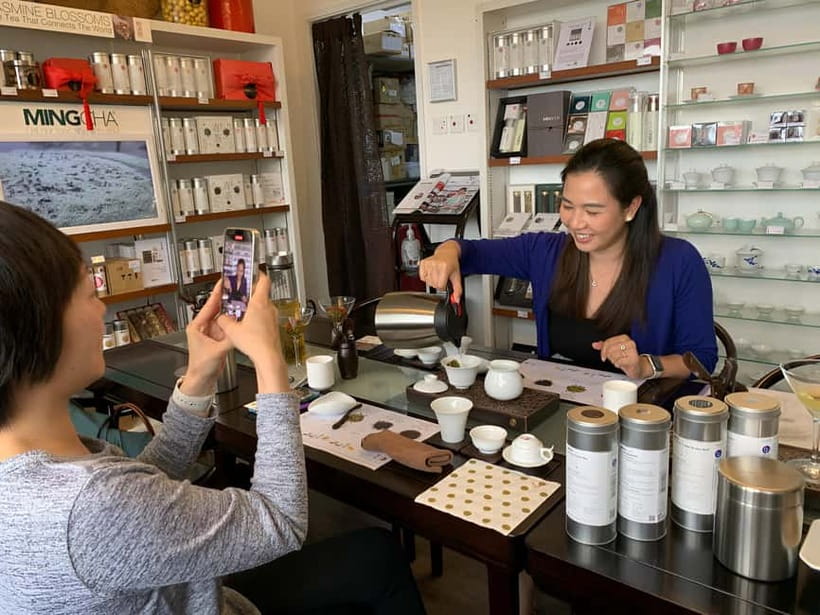
MingCha’s workshop begins by slowing you down. Instead of pouring tea and moving on, the tea master asks you to examine the leaves, smell them before brewing, listen to the pour, feel the leaf texture, and taste the liquor carefully.
That method matters because Chinese tea can be subtle. A green tea may show fresh, grassy notes, while a roasted oolong may feel rounder and warmer. A scented tea brings another layer, and puer can have an earthy character that is easier to understand after several steepings.
You will usually taste four premium handcrafted teas, though the wider selection can include four to five styles. The exact lineup may change, which is useful if you already know one category well. You may encounter green, scented green, red, oolong, white, and puer teas, giving the session a broad look at Chinese tea rather than a narrow focus on one region or method.
I like this format for beginners because you are not expected to arrive with a trained palate. The tea master explains what to notice without turning the session into a test. If you already drink Chinese tea, the value comes from comparing production methods and seeing how much flavor remains in the leaves after the first cup.
What Happens During the 90-Minute Session
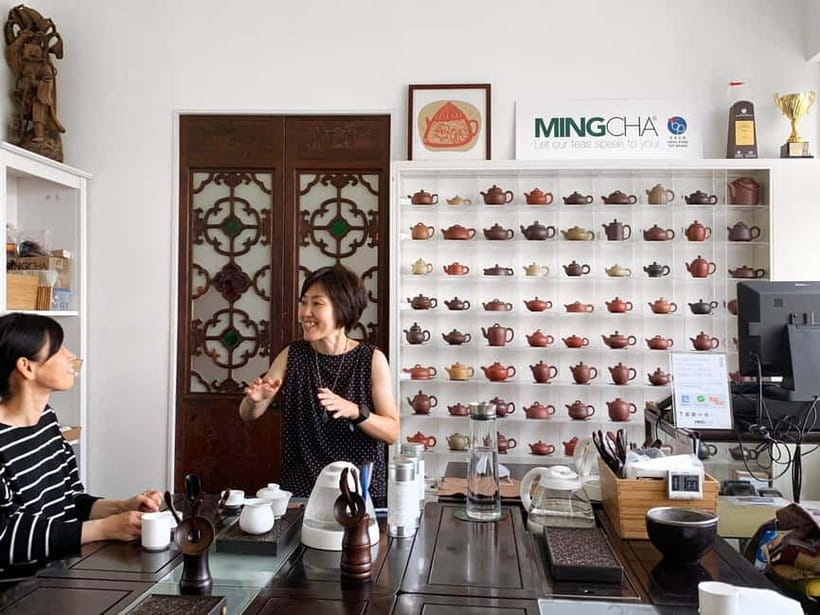
The scheduled workshop lasts about one and a half hours, so the pace is purposeful. You have enough time to understand the basics and practice brewing, but not enough time for a long historical lecture or a full survey of every tea family.
The opening section covers the history, botany, classification, and production of tea. You learn that the same broad plant can produce very different teas depending on harvest timing, growing conditions, and the handling of the leaves afterward. Climate, oxidation, drying, shaping, and roasting all affect the finished cup.
This background gives the tasting some meaning. Instead of hearing that an oolong is different from a green tea and taking it on faith, you begin to connect the production process with what you smell and taste. The lesson also helps you understand why two teas made from similar leaves can have very different colors, aromas, and mouthfeel.
The tasting itself is not rushed. Each tea may be brewed five or six times, with the character changing from one round to the next. The first infusion may seem light, while later brews bring out sweetness, fragrance, or a drier finish. You are encouraged to observe these changes rather than search for one correct answer.
One account of the experience described a session lasting closer to three hours, but the stated duration is 1.5 hours. If you have a tight Hong Kong schedule, plan around the official time and leave a little breathing room afterward.
More Food Tours in Hong Kong
- Hong Kong: Street Food Tour with Locals – Dim Sum and Wonton
★ 4.8 · 673 reviews - Hong Kong’s Tin Hau Hidden Eats Food Tour with 7+ Local Tastings
★ 5.0 · 352 reviews - Small-Group Hong Kong Island Food Tour
★ 5.0 · 343 reviews
Learning to Use a Gaiwan
The practical brewing segment is one of the strongest reasons to book this workshop. You learn the gungfu style, a traditional approach that uses a small gaiwan, or lidded bowl, and short infusions.
A gaiwan looks simple, but handling it neatly takes practice. You need to control the water, steeping time, lid, and pour without burning your fingers or leaving tea trapped in the bowl. The session lets you practice under guidance rather than trying to copy a technique from a video at home.
You also brew for other people. That small social element improves the lesson because you have to pay attention to serving, not just to making one cup for yourself. It turns tea preparation into a shared act and makes the method easier to remember.
I would not book this expecting to become a tea professional in 90 minutes. You will learn useful basics, not every regional technique or piece of specialist equipment. Still, you leave with a method you can repeat at home using a gaiwan and better judgment about steeping time.
Why Repeated Brews Matter
Many casual tastings stop after one cup. MingCha’s method keeps returning to the same leaves, which gives you a clearer view of how tea develops.
A tea can change in several ways. The aroma may become more open. The flavor may lose its sharp edge. A later infusion may reveal a sweeter finish even as the color becomes lighter. These changes are especially helpful when you are comparing tea styles that initially seem alike.
This is also where the workshop becomes useful for people who are only mildly interested in tea. One of the strongest comments about the session was that it works for people with tea experience and for those who are not especially committed tea drinkers. That makes sense. The repeated brewing gives you something concrete to notice, rather than asking you to admire a cup simply because it is described as premium.
The tea master also discusses where each tea comes from and how it is made. You gain cultural context without having to memorize a long list of names and dates. The useful lesson is the connection between place, plant, method, and taste.
Tea and Rose Honey Toast
The food pairing adds a welcome twist. Tea is often served with neutral or dry snacks, but MingCha uses combinations designed to bring out particular qualities in the cup.
A sample pairing is rose honey toast. Its crisp texture and gentle floral sweetness can play against the tea’s aroma and finish. The point is not to fill you up. This is a tasting portion meant to show how food changes your perception of a drink.
I like this part because it gives you something practical to take home. You can think about pairing a floral tea with a lightly sweet snack, or using texture to contrast with a softer, rounder tea. Vivian Mak is known for working with less obvious food matches, and that creative approach keeps the session from feeling like a standard tea lecture.
Do not book this as a meal. The included food is limited to complementary snacks, and anything beyond the pairing is not covered. If you are hungry, eat beforehand or plan another meal after the workshop.
More Tea Ceremonies in Hong Kong:
- Tea Tasting and Pairing Concept Workshop
★ 5.0 · 57 reviews - Tea Tasting & Brewing Experience
★ 5.0 · 10 reviews - Traditional Chinese Tea Ceremony Experience
★ 4.7 · 74 reviews - Beijing Culture: Tea Ceremony, Heritage Instrument & Calligraphy
★ 5.0 · 57 reviews
Vivian Mak’s Approach to Chinese Tea
MingCha was founded by Vivian Mak, an artist and designer who moved into tea. That background helps explain the workshop’s attention to presentation, sensory detail, and unexpected pairings.
The tea house has received Hong Kong Top Brand recognition and has been named by FOOD & WINE Magazine among the world’s best tea shops. Those honors may interest tea fans, but they are less important than the way the workshop is organized. You are given a clear path from basic observation to practical brewing.
The teaching team includes tea hosts such as Vivian and Vanessa. The session is offered in English, Cantonese, and Mandarin, so you can choose the language that makes technical explanations easiest to follow. The group can reach up to 20 people. That is not a private lesson, but the brewing practice and interactive format give you more involvement than a simple demonstration.
If you want a quiet, highly personal consultation, a group of 20 may feel larger than ideal. If you enjoy asking questions and learning alongside others, the size should still work well. The experience is designed to be participatory, not formal or distant.
Finding the Tea House in Chai Wan
The tea house is in the Fortune Factory Building, Block B, on the 15th floor, Unit B2. The approach is practical rather than picturesque.
From Chai Wan MTR Station, use Exit C and allow about five minutes to walk. The building entrance is green and also serves as a parking lot. Walk in, turn left, and look for Block B, marked by a stainless steel sign. Enter Block B, turn left again, and take the passenger lift to the 15th floor.
When you leave the lift, look for the brown door. The doorbell is on the right. These directions are worth saving before you go because a factory building can feel less obvious than a street-level shop, especially if you arrive in a hurry.
The location is both a drawback and a useful reminder that Hong Kong has more than its famous shopping streets and harbor views. This is a destination for the activity itself. You are not paying for a polished historic setting or a view from a grand tearoom.
Is the 63 Dollar Price Fair?
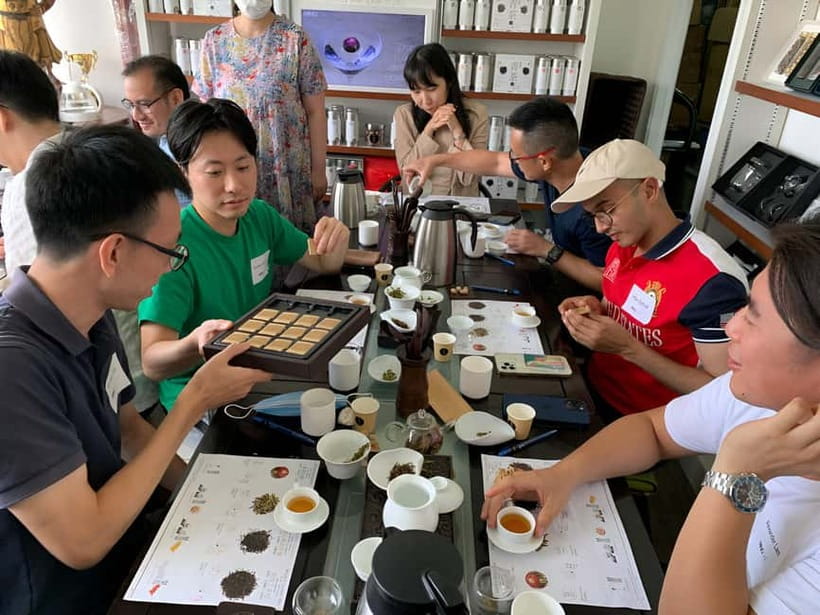
At $63 per person, the workshop is not a bargain cup of tea. It is priced as a guided cultural activity, with four premium teas, several rounds of brewing, food pairings, and hands-on instruction included.
I think the price makes the most sense if you value explanation and participation. Four teas in a shop would cost less if all you wanted was a drink, but that comparison misses the point. Here, the tea master explains production, guides your senses, teaches a brewing method, and shows how food affects the experience.
The value is weaker if you already know gungfu brewing and simply want to buy tea. You may learn a few new pairing ideas, but much of the session covers foundations that an experienced tea drinker may already understand.
For a first serious introduction to Chinese tea, the cost is reasonable. You get enough variety to compare styles, enough repeated brews to see change, and a practical skill you can use later. The free cancellation up to 24 hours before the session and the reserve-now, pay-later option also make it easier to fit into a changing Hong Kong schedule.
Who Will Enjoy This Most?
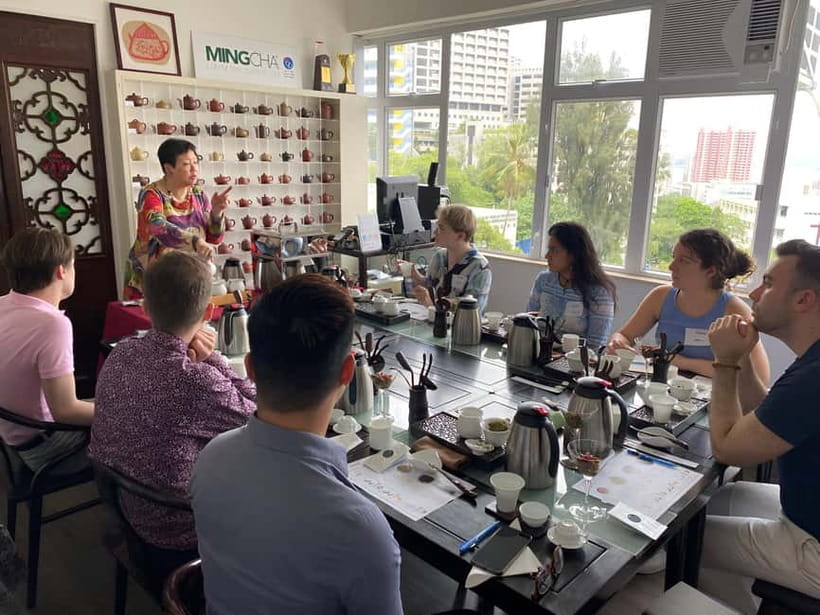
This is a good choice for several kinds of visitors:
- Tea beginners: You receive a clear introduction without needing prior knowledge.
- Food and drink fans: The pairings add a creative side to the tasting.
- Culture seekers: The workshop connects tea with botany, production, custom, and daily practice.
- Rainy-day planners: The indoor setting offers a useful activity when Hong Kong weather turns wet.
- Couples and small groups: Brewing for one another creates an easy shared activity.
- Experienced tea drinkers: You may appreciate the range of teas and the focus on multiple infusions.
The experience is less suitable if you want a quick tasting near the main tourist areas, a full meal, or a grand old teahouse setting. It also may not suit someone who dislikes guided tastings or repeated discussion of aroma and flavor.
Practical Tips Before You Go
Keep the session length in mind. The official duration is 1.5 hours, and the group may contain up to 20 people. If the teaching becomes especially interactive, you may spend longer than expected, so avoid booking a tight connection immediately afterward.
Wear something comfortable for sitting and brewing. The workshop includes handling hot water and a small gaiwan, so focus on the demonstration before copying the technique.
Arrive with a curious but relaxed palate. You do not need to identify every aroma. Instead, compare the teas and note what changes between the first and later infusions.
If you have dietary concerns, the provided information only confirms complementary snacks such as rose honey toast. Ask the host directly before booking if you need specific food details.
Finally, save the building directions. The green entrance, Block B sign, 15th-floor lift, and brown door make the final approach manageable, but you should not expect a large street sign announcing the tea house.
Should You Book MingCha Tea House?
I would book this if you want a focused Hong Kong activity that teaches you something useful. The best features are the repeated brewing, the chance to use a gaiwan yourself, and the way Vivian Mak’s tea pairings connect the drink with food.
The main tradeoff is setting and price. You travel to Chai Wan and enter a factory building, then pay $63 for a 1.5-hour lesson rather than a simple cup of tea. For someone who wants atmosphere above all else, that may not feel right.
For tea beginners, curious food lovers, and anyone needing a thoughtful indoor activity, I think it is a strong choice. You leave with a better sense of how Chinese tea is made, how to taste it, and how to brew it at home. That practical payoff gives this compact workshop real value.
FAQ
Where is MingCha Tea House located?
It is in Fortune Factory Building, Block B, 15/F, Unit B2, about a five-minute walk from Chai Wan MTR Station, Exit C.
How long does the tea workshop last?
The stated duration is approximately 1.5 hours. One session was described as lasting longer, so allow some extra time if your schedule is tight.
How many teas are included?
The experience includes a tasting of four premium handcrafted teas. The selection may cover four to five tea styles, including green, scented green, red, oolong, white, and puer varieties.
Is brewing practice included?
Yes. You practice traditional gungfu-style brewing with a gaiwan and learn how to prepare tea for yourself and others.
What languages are available?
The workshop is conducted in English, Cantonese, and Mandarin.
Can I cancel the booking?
You can cancel up to 24 hours in advance for a full refund. A reserve-now, pay-later option is also available.
More workshops and classes in Hong Kong
- Organic Chinese Dumpling Class with Market Walk
★ 5.0 · 88 reviews - Organic Xiao Long Bao Soup Dumpling Class & Market Walk
★ 5.0 · 62 reviews - Hong Kong Market Walking Tour & Chinese Cooking Class
★ 5.0 · 24 reviews - Photography Workshop and Photowalk (FIND YOUR DIRECTION)
★ 5.0 · 19 reviews
Recently listed in Hong Kong
- Small-Group Gong Relaxation Experience in Hong Kong★ 5.0 · 5 reviews
- Family-Friendly Tolo Harbour Cycling Adventure★ 4.0 · 5 reviews
- Different Tastes of Hong Kong★ 4.5 · 5 reviews
- Hong Kong Layover City Tour with 2-way Airport Express Transfer★ 3.0 · 5 reviews
- Hong Kong Private Departure Transfer: Hotel to Airport★ 4.5 · 5 reviews
- Ma On Shan Climbing Adventure★ 5.0 · 5 reviews
- Small-Group Tour: Hong Kong Local Markets Hopper [PROMOTION]★ 4.0 · 5 reviews
- Hong Kong Night Tour with a Local: Private & 100% Personalized★ 5.0 · 5 reviews
Hong Kong Tours, compared.

Victoria Harbor Symphony Unlimited Drink Cruise
Read our review →

City Highlights Guided Tour w/Entry Fees & Lunch
Read our review →
Dukling, Antique Boat Tour in Victoria Harbour
Read our review →
Big Bus Hong Kong Open Top Hop-On Hop-Off Sightseeing Tour
Read our review →
Big Bus Hop-On Hop-Off Tour & Optional Peak Tram
Read our review →
Hong Kong Day Tour: City Landmarks & Highlights
Read our review →Browse the lists this tour appears in