
Reviewed · HONG KONG TOURS
Private Food Tour: Hong Kong Island
Hong Kong’s food story makes most sense on foot, one small plate at a time. This private tour links Sheung Wan, Central, and Wan Chai through dim sum, wonton noodles, roast meats, milk tea, and an egg tart, with local shops and markets filling in the gaps between meals.
I like the personal pace and the mix of famous staples with ordinary neighborhood stops. I also like that guides such as Andy and Mel bring in food, colonial-era customs, family businesses, and street life instead of treating lunch as the whole show.
The main caution is the price: $236.69 per person is a serious spend for four hours, especially since public transport costs extra. It also is not suitable for vegetarians, gluten-free diners, or anyone with seafood allergies.
Key points to know before booking
- Five main tastings: Dim sum, wonton noodles, milk tea, roast meats with rice, and a traditional egg tart.
- A private format: Only your group participates, so the guide can adjust the pace and conversation.
- Old Hong Kong neighborhoods: Sheung Wan, Central, and Wan Chai provide the setting for the food.
- Public transport is part of the experience: You may ride the Ding Ding tram, and hotel pickup still means a walking tour.
- A strong introduction for first-time visitors: The route combines food, markets, temples, old shops, and city transport.
- Come hungry: The tour advises skipping breakfast, and the tastings are spread across several stops.
Why this food tour works as a Hong Kong introduction
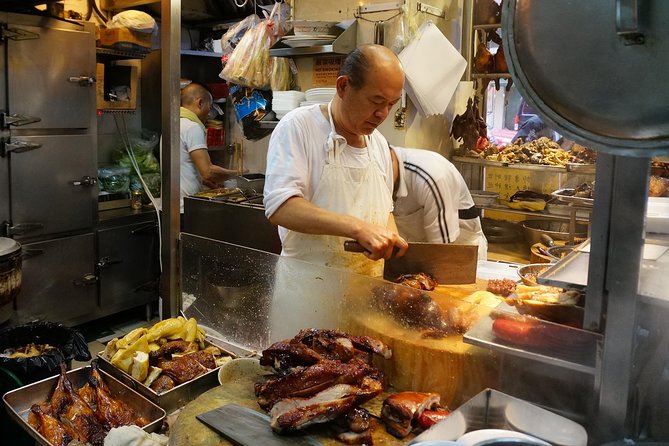
The best feature here is the route. You do not sit in one restaurant and call it a city tour. You move through Sheung Wan’s traditional businesses, Central’s steep lanes, and Wan Chai’s mix of old buildings and newer restaurants. Food gives the walk a purpose, while the guide explains why each dish belongs in Hong Kong.
The cuisine is mainly Cantonese, but it also shows the city’s Chinese and British connections. Milk tea and egg tarts are the clearest examples. Roast meat known as char siu reflects Cantonese cooking, while the custard tart is a Chinese version of an English bakery classic.
This approach suits you if you want help making sense of Hong Kong early in your visit. You get a neighborhood orientation, a first look at the tram system, and a list of foods to seek out later. It is also useful for a cruise stop, since the four-hour length gives you a focused taste of Hong Kong Island without asking you to commit to a full-day excursion.
The private setting matters. A guide can spend more time on questions about ingredients, customs, or local history, and can set a comfortable pace for your group. One family of four arranged transportation around a cruise visit, and the experience was described as a good way to spend a port day.
More Food Tours in Hong Kong
- Hong Kong: Street Food Tour with Locals – Dim Sum and Wonton
★ 4.8 · 673 reviews - Hong Kong’s Tin Hau Hidden Eats Food Tour with 7+ Local Tastings
★ 5.0 · 352 reviews - Small-Group Hong Kong Island Food Tour
★ 5.0 · 343 reviews
Starting in Sheung Wan with dim sum
The meeting point is at 28 Des Voeux Road West in Sheung Wan, with hotel pickup available under certain booking arrangements. Directions are sent after booking, and the area is close to public transport.
Sheung Wan is a useful place to begin because it feels connected to older commercial Hong Kong. Traditional Chinese businesses, food shops, tea sellers, and neighborhood stalls sit alongside newer restaurants and boutiques. The route gives you context before the first proper meal.
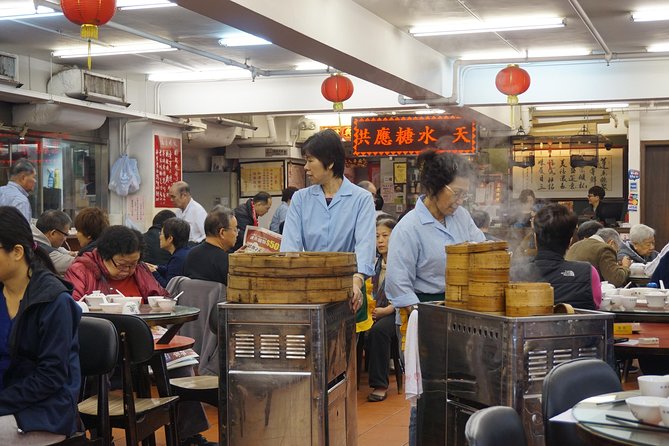
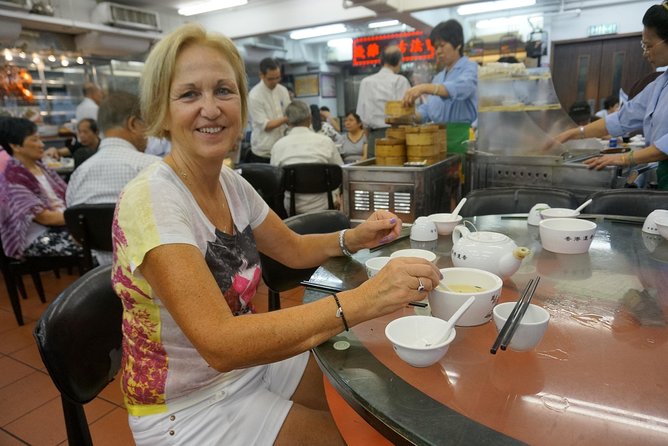
Your opening tasting is a traditional dim sum breakfast, or yum cha. It is served in a tea house by trolley, a style that lets you see dishes moving through the dining room rather than choosing everything from a menu. The restaurant has been operating for nearly a century, and its busy atmosphere is part of the point.
You can expect a variety of dim sum rather than a single item. Dim sum is built for sharing, so a private group can sample several small dishes without ordering for a large room. The guide can explain what you are eating and how the meal fits into Cantonese dining.
This is one reason you should not eat breakfast before the tour. The first stop is not a token bite. It is a proper start, and eating beforehand will make the rest of the morning less comfortable.
Seeing the dried seafood trade on Seafood Street
After dim sum, the route passes through the dried seafood district along Des Voeux Road West. This area is known for shops selling dried seafood used in Chinese cooking and traditional tonics.
You may see unfamiliar ingredients in shop windows, and the guide can explain how this trade fits into local food culture. The stop lasts about 20 minutes, so it is more of a guided look than a shopping session.
For many visitors, this is where the tour becomes more useful than a simple restaurant crawl. Food in Hong Kong is tied to markets, preserved ingredients, family remedies, and long-running trade networks. You see the raw materials and neighborhood businesses behind the dishes you have just eaten.
The seafood focus also explains one of the tour’s limits. Seafood allergies are specifically listed as a restriction. Even if a particular tasting seems safe, the route and restaurant choices are built around local food traditions that often include seafood.
Tea, sweets, and the old-market route
Kai Fat Tea is tucked along a narrow road in Sheung Wan. The shop sells tea, assorted candies, and Chinese sweets made from fruit and other natural ingredients. The visit is short, around 15 minutes, but it adds another side of the city’s food culture.
This stop is not one of the five principal tastings, so think of it as a chance to look, ask questions, and sample assorted candies or local snacks. It also breaks up the heavier dishes with something small and sweet.
The route continues toward Graham Street Market, described as having more than a century of local market life. Food stalls line the sloped street, with produce and live seafood among the goods on offer. You will not simply be shown a polished attraction. The value is in seeing how everyday food is bought and sold.
Gough Street adds another change of mood. Its colonial-style buildings, boutiques, restaurants, and slower pace reflect the meeting of European and Chinese communities on Hong Kong Island. You might find this section especially appealing if you want photographs and neighborhood atmosphere between tastings.
A very different day in Hong Kong:
- Hong Kong: Victoria Harbor Symphony Unlimited Drink Cruise
★ 4.3 · 1,873 reviews - Lantau Island Day Trip – Big Buddha & Tai O
★ 4.5 · 1,328 reviews - Hong Kong: Victoria Harbour Evening Cruise with Drinks
★ 4.6 · 1,260 reviews - Hong Kong: City Highlights Guided Tour w/Entry Fees & Lunch
★ 4.4 · 1,178 reviews
Wonton noodles and the craft of simplicity
One of the most anticipated food stops is a family-run noodle shop dating from the 1960s. It has been recommended in the Michelin Guide and is known for wonton noodles.
Wonton noodle soup can look modest: noodles, broth, and dumplings in a bowl. That simplicity makes the dish a good test of technique. The tour presents it as food that must be perfected by a master, rather than dressed up with a long list of ingredients.
I like this stop because it shows how Hong Kong food often depends on texture and balance. The point is not an extravagant plate. It is the quality of a few basic parts working together.
Portions across the tour are meant for tasting, but you should still arrive hungry. Dim sum, noodles, roast meat, and an egg tart add up. If you are not used to a large breakfast followed by several savory stops, the private format gives you a better chance to discuss pacing with your guide.
Milk tea and Hong Kong’s British connection
The milk tea stop is small but important. Traditional Hong Kong milk tea is one of the most familiar drinks in the city, and its place here reflects the influence of British rule on local eating and drinking habits.
The tour includes a cup of traditional milk tea, not simply a beverage purchased for convenience. Your guide can connect it to the city’s café culture and explain why it became such a common part of daily life.
This is a good example of the tour’s broader method. You eat something ordinary, then learn why it belongs to Hong Kong. The same idea returns later with the egg tart, a Chinese adaptation of an English pastry.
Central, the Mid-Levels Escalator, and Tai Kwun
The Central District section lasts about an hour and covers one of Hong Kong Island’s oldest and most active areas. Sloped streets and narrow lanes make comfortable footwear a sensible choice.
The route may include the Mid-Levels Escalator, an outdoor escalator system that runs about 800 meters and rises through the city. The ride itself lasts around 15 minutes. It is a practical way to move through Central, but it is also a moving view of daily city life.
Tai Kwun is another notable point along the route. The restored Central Police Station compound now includes heritage, art, performances, and lifestyle spaces. The former police complex includes several declared monuments, giving the guide a useful place to discuss how Hong Kong handles old buildings in a modern city.
Do not expect a long formal museum visit unless your guide adjusts the plan. These places are woven into a walking food route. The main purpose is to connect the city’s streets, buildings, and transport with the food you are eating.
Riding the Ding Ding to Wan Chai
The Hong Kong tramway, known locally as the Ding Ding, is part of the tour’s transport between districts. The system began operating in 1904 under British rule and uses double-decker trams.
The tram fare is at your own expense. That is a small extra cost, but it is worth knowing before you book. Hotel pickup also needs careful reading: pickup does not turn the experience into a private car tour. You still walk and use Hong Kong’s public transport system.
I like this part because transport becomes part of the sightseeing. You are not sealed inside a vehicle while the guide talks. You move through the city in the same public system used by local residents, then continue on foot in Wan Chai.
Wan Chai brings another shift in tone. Old tenement buildings, temples, newer restaurants, bars, and fashionable shops sit close together. The district’s mix of old and new gives the final food stops a fitting setting.
Roast meats and the final egg tart
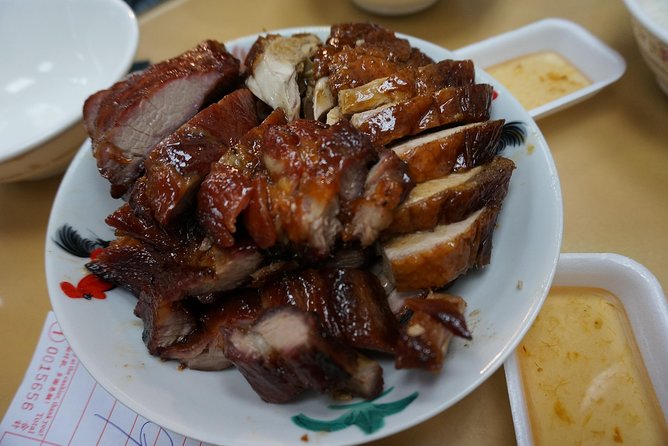
The roast-meat stop takes you to another family-run restaurant with roots reaching back to the Qing dynasty. It is known for English roast meat, including char siu, served with rice and homemade sauces.
You sample a mixture of traditional roasted meats. This is a more substantial tasting than milk tea or candy, and the sauces help show how the restaurant puts its own mark on familiar food.
The final stop is a bakery on Hennessy Road with a 60-year history. It is associated with a former Hong Kong governor’s personal preference, though the real reason to stop is the egg tart itself.
Known as dan tat in Cantonese, the egg tart is a Chinese interpretation of the English custard tart. It makes a neat ending because it brings the tour’s food theme full circle: Cantonese cooking, British influence, family businesses, and local habits all meet in one small pastry.
The tour finishes in Wan Chai near Southorn Playground, an open recreational space where office workers, sports players, and spectators gather. The setting gives you a final look at ordinary city life after the bakery stop.
The guide makes the private format worthwhile
The strongest feature of this experience is the guide. Andy is described as funny, pleasant, and highly capable in English, with a calm pace that worked well for a group of four people over 65. That detail matters if your group prefers frequent pauses rather than a brisk food march.
Mel also receives strong praise for combining food with history, culture, and general orientation to Hong Kong. A family group found the tour customizable, and another visitor singled out Mel’s humor and English.
You cannot guarantee a particular guide unless the operator confirms one, so book this for the private structure and local route rather than for a named person alone. Still, the guide appears to be central to the experience. Without good explanations, the dried seafood shops, tram ride, markets, and old districts would feel like separate stops. With a good guide, they form one story.
Price, pace, and who gets good value
At $236.69 per person, this is not a cheap way to eat in Hong Kong. You are paying for a private guide, five main food tastings, local snacks, route planning, and a tailored four-hour introduction to Hong Kong Island.
The value is strongest for a first visit, a short port call, or a group that wants personal attention. Four adults sharing a private guide can also find the price easier to justify than a solo visitor. Hotel pickup can help with the start, but remember that the tour remains a walking and public-transport experience.
The tour is booked an average of 60 days ahead, so early planning makes sense if your dates are fixed. Free cancellation is available up to 24 hours before the start time. Changes or cancellations inside that window are not accepted for a refund.
Bring a camera and wear shoes suited to slopes and walking. The route covers Sheung Wan, Central, and Wan Chai, and its appeal depends on moving through real streets rather than staying inside one dining room.
Should you book the Hong Kong Island food tour?
Book it if you want a private, food-led introduction to Hong Kong that also explains neighborhoods, markets, transport, and the city’s Chinese and British influences. It is especially well suited to first-time visitors, cruise passengers, families, and older adults who may appreciate a guide setting the pace.
Skip it if you need a vegetarian, gluten-free, or seafood-free menu, or if $236.69 feels too high for several tastings. You can find individual dishes for less on your own, but you will not get the same ready-made route, local context, or private conversation.
For most suitable groups, this is a practical first-day experience. Come hungry, ask for the pace you want, and let the guide turn a few famous dishes into a better understanding of Hong Kong.
FAQ
How long does the private food tour last?
The tour lasts approximately four hours.
Where does the tour start?
It starts at 28 Des Voeux Road West in the Sheung Wan district of Hong Kong Island. Hotel pickup may be available depending on the booking arrangement.
Where does the tour finish?
The tour finishes in Wan Chai, with an egg tart served as the final dessert.
What food is included?
The included food consists of a variety of dim sum, wonton noodles, roast meats with rice, milk tea, and an egg tart. Assorted candies and local snacks are also included.
Is transportation included?
The tour is primarily a walking experience using Hong Kong’s public transport. The Ding Ding tram ride is at your own expense. Hotel pickup does not change the tour into a car tour.
Is this a private tour?
Yes. Only your group participates in the activity.
Is the tour suitable for vegetarians or people with food allergies?
No. The tour is not suitable for vegetarians, gluten-free diners, or people with seafood allergies.
What is the cancellation policy?
You can cancel up to 24 hours before the experience start time for a full refund. Cancellations or changes made less than 24 hours before the start time are not accepted for a refund.
Recently listed in Hong Kong
- Hong Kong Photography Masterclass – Private Photography Lesson★ 5.0 · 5 reviews
- Small-Group Gong Relaxation Experience in Hong Kong★ 5.0 · 5 reviews
- Family-Friendly Tolo Harbour Cycling Adventure★ 4.0 · 5 reviews
- Different Tastes of Hong Kong★ 4.5 · 5 reviews
- Hong Kong Layover City Tour with 2-way Airport Express Transfer★ 3.0 · 5 reviews
- Hong Kong Private Departure Transfer: Hotel to Airport★ 4.5 · 5 reviews
- Ma On Shan Climbing Adventure★ 5.0 · 5 reviews
- Small-Group Tour: Hong Kong Local Markets Hopper [PROMOTION]★ 4.0 · 5 reviews
Hong Kong Tours, compared.

Victoria Harbor Symphony Unlimited Drink Cruise
Read our review →
City Highlights Guided Tour w/Entry Fees & Lunch
Read our review →
Dukling, Antique Boat Tour in Victoria Harbour
Read our review →
Big Bus Hong Kong Open Top Hop-On Hop-Off Sightseeing Tour
Read our review →
Big Bus Hop-On Hop-Off Tour & Optional Peak Tram
Read our review →
Hong Kong Day Tour: City Landmarks & Highlights
Read our review →Browse the lists this tour appears in